
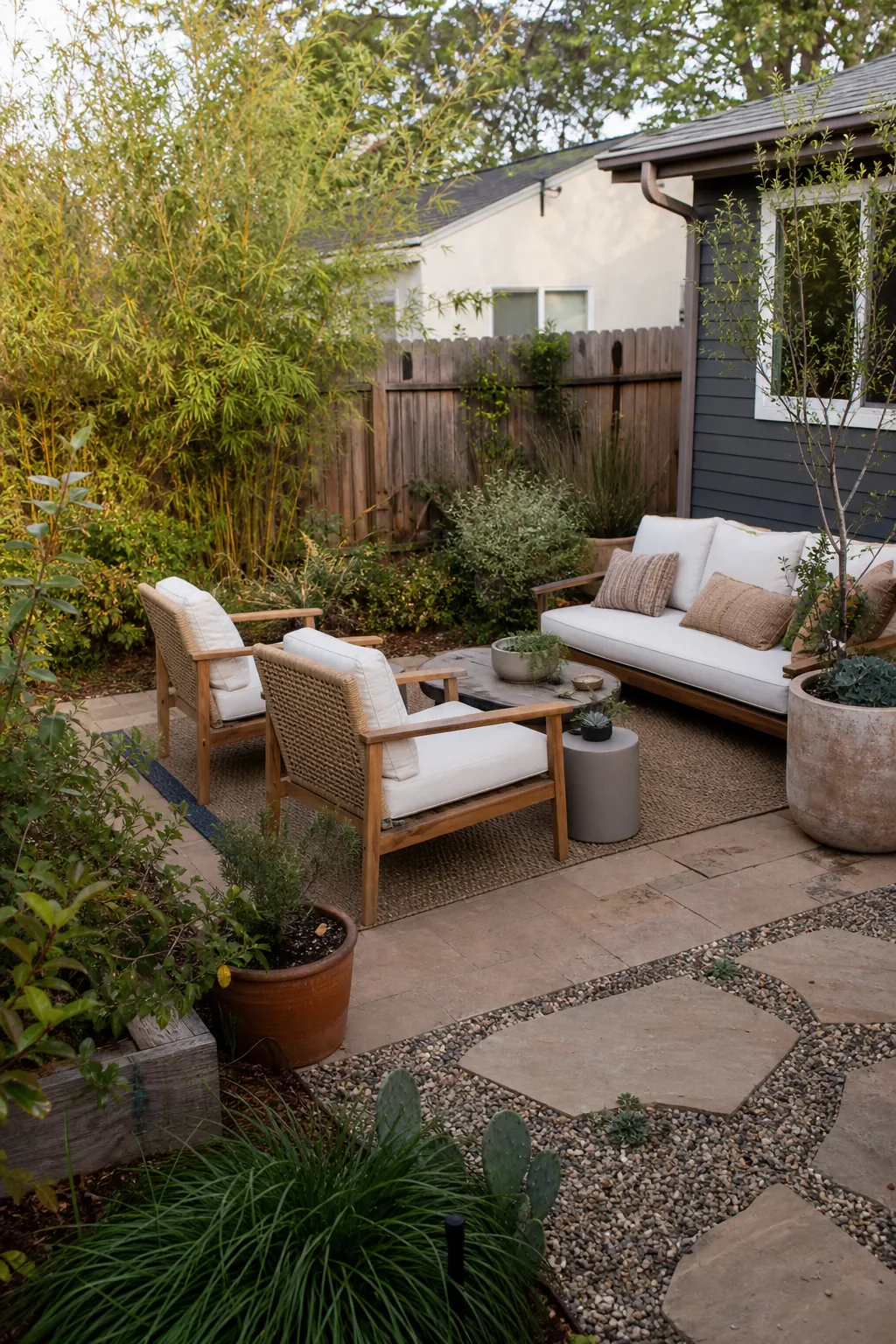
A backyard can have pavers, string lights, and a few chairs and still feel strangely empty. The problem is usually not that you need more stuff. It is that the yard has no clear place to gather, no vertical shape, no softened edges, and no reason for the eye to move from one spot to another. The fastest outdoor refresh is to make the backyard feel like a set of small, useful outdoor rooms instead of one leftover rectangle.
These outdoor decor ideas are built for the homeowner who looks outside and thinks, “I have space, but I do not know what to do with it.” The goal is not a perfect designer yard or a high-maintenance garden. The goal is a backyard that feels alive, comfortable, and intentional enough for weeknight dinners, quiet coffee, family backyard time, and casual weekends outside.
Start With One Strong Seating Anchor
If the yard feels too empty, start with outdoor seating before you buy extra decor. A seating anchor gives the space a job. It tells people where to land, where conversation happens, and which part of the yard matters most. This can be a pair of lounge chairs with a small table, a bench under a tree, a sectional on the patio, or four chairs around a low fire table.
The mistake is scattering chairs around the edges and hoping the middle will feel complete. It usually makes the yard look more unfinished. Pull seating into a close enough arrangement that people can talk without raising their voices. Even in a larger backyard, a tighter seating group feels more welcoming than furniture pushed far apart.
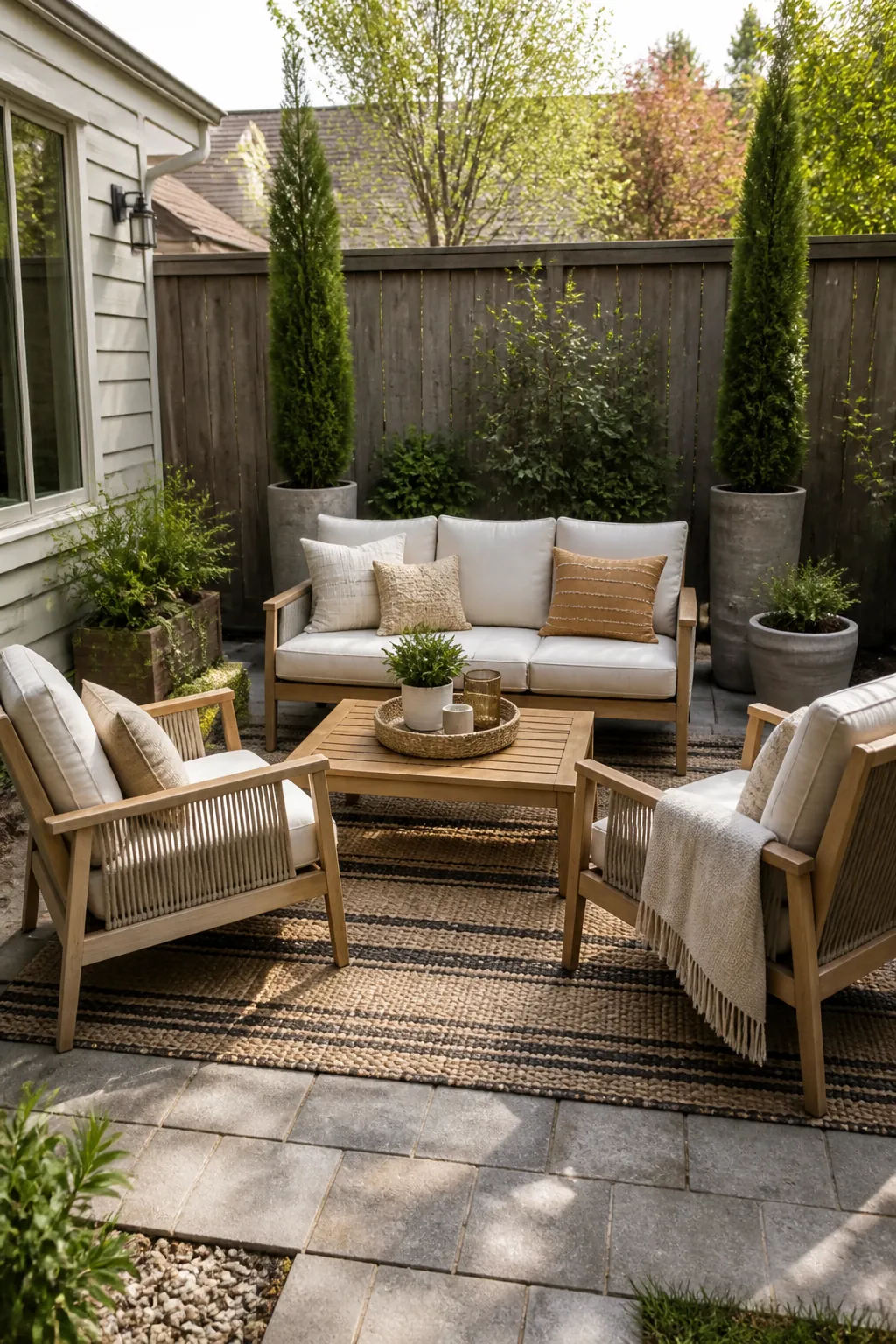
For a small patio, keep the pieces slim and open so the layout does not block movement. For a wide lawn, use a larger rug, pavers, or gravel border to keep the seating area from floating visually. The point is simple: one finished place to sit is better than five half-started backyard ideas.
Define the Outdoor Room Before Decorating It
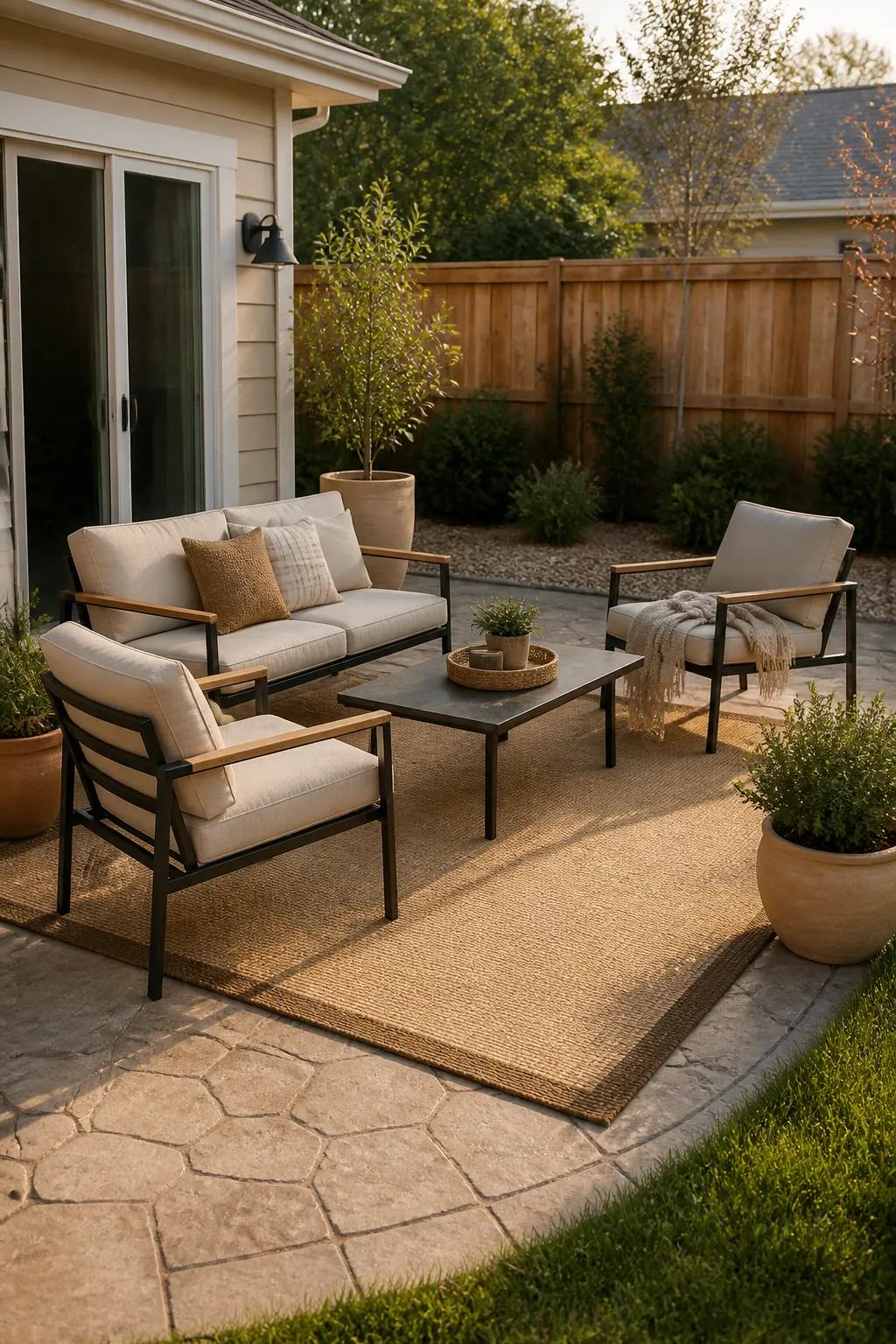
Patio styling works best when the floor plane is clear. Indoors, a sofa area usually has a rug, a coffee table, and walls or windows nearby. Outdoors, you need to create those cues yourself. A large outdoor rug, a gravel pad, a paver square, or even a mulch border can make the seating area feel like a room instead of furniture dropped onto a slab.
Use the floor to show the boundary, then repeat materials so the look feels connected. If your patio has gray pavers, add charcoal planters or a gray-green rug. If the fence is warm wood, bring in tan cushions, woven baskets, bamboo accents, or teak details. Backyard decor feels polished when the same few materials repeat in different ways.
- For a bare concrete patio: add an outdoor rug large enough for the front legs of the main furniture to sit on it.
- For a lawn that feels like an empty rectangle: create a gravel or paver destination away from the house.
- For a narrow side yard: use stepping stones, edging, and plants to make it read as a path, not a leftover strip.
- For a deck that does all the work: add one smaller ground-level zone so the rest of the yard stops feeling wasted.
Add Height So the Yard Stops Feeling Flat
Many empty backyards are not actually empty. They are flat. Everything sits at knee height: lawn, pavers, low chairs, small pots, and a table. The eye has nowhere to climb, so the whole space feels unfinished even after you add patio decor.
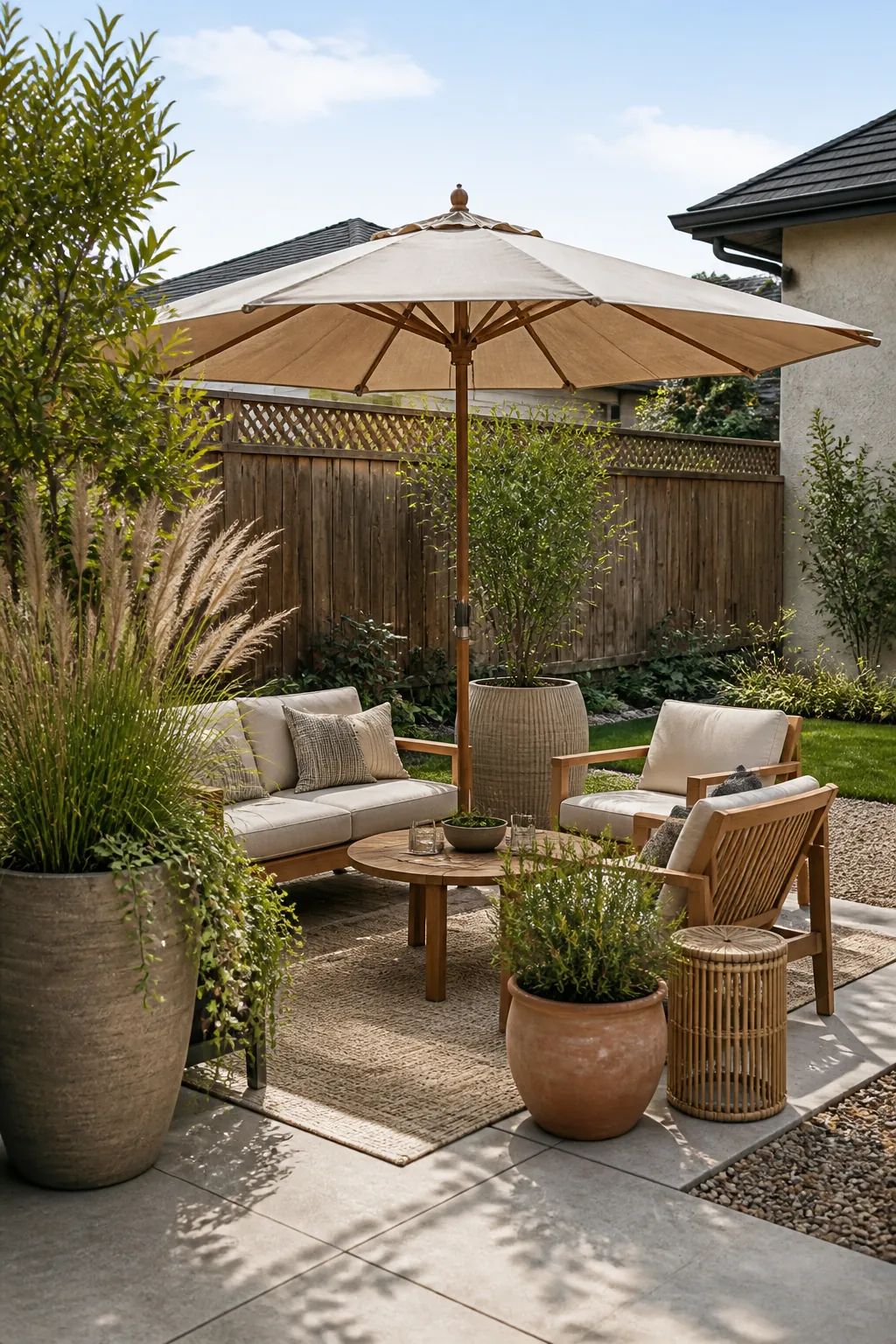
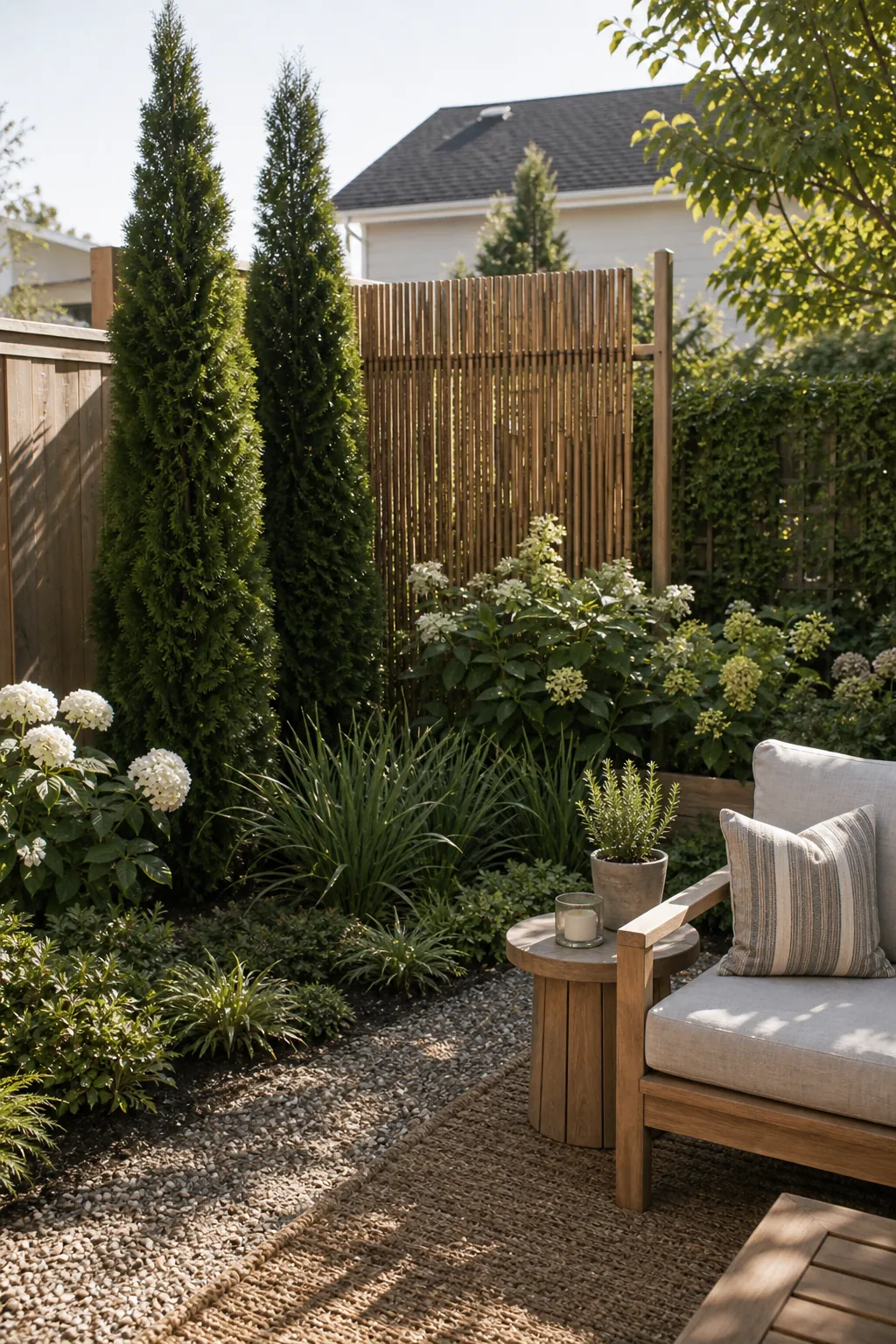
Add height in three ways: shade, planting, and structure. A market umbrella, sail shade, pergola, tall trellis, or pair of slender trees can change the feeling of the yard immediately. It creates a ceiling, which makes outdoor living feel more protected. Tall planters near a seating area also help the patio feel tucked in without building a wall.
Do not overdo the height everywhere. Pick one or two vertical moments, then let the rest of the yard breathe. Homeowners often worry that privacy planting will make the yard feel smaller. That can happen if every edge becomes a solid wall. A better garden design is layered: one tall element, a few medium shrubs, and low grasses or flowers around the base.
Use Greenery Like Architecture, Not Filler
When a backyard feels empty, the usual instinct is to buy many small plants. That often creates more clutter, more watering, and very little structure. A stronger outdoor refresh starts with fewer, better-placed plant groups. Think of greenery as architecture: it frames the patio, softens the fence, guides a path, hides an awkward view, and gives the seating area a sense of enclosure.
Use odd-number groupings for planters and shrubs, but keep them practical. A large planter with a tall grass, a medium flowering plant, and a trailing edge can do more than six tiny pots lined up along a fence. If maintenance is a concern, choose hardy plants suited to your sun, soil, and climate instead of chasing a single inspiration photo.
The backyard should look better in real life than it does on the day you shop. Some privacy plants and shrubs will look sparse at first, but they can become more balanced and easier to maintain than an overfilled bed that looks good for only one season.
Make Awkward Paths Feel Intentional
Side yards, fence gaps, and dirt strips are where an otherwise nice backyard can start to feel neglected. The fix is not always full paving. Sometimes the most charming answer is a stepping-stone path with ground cover, mulch, gravel, or low planting along the sides. It gives the eye a line to follow and makes movement through the yard feel planned.
For a narrow passage, keep the path simple and let one material dominate. Use stepping stones with planted joints for a softer garden feel, pea gravel with metal edging for a cleaner look, or bark mulch with simple pavers for a budget-friendly refresh. Add a few repeated plants along the edge so it feels connected to the rest of the yard.
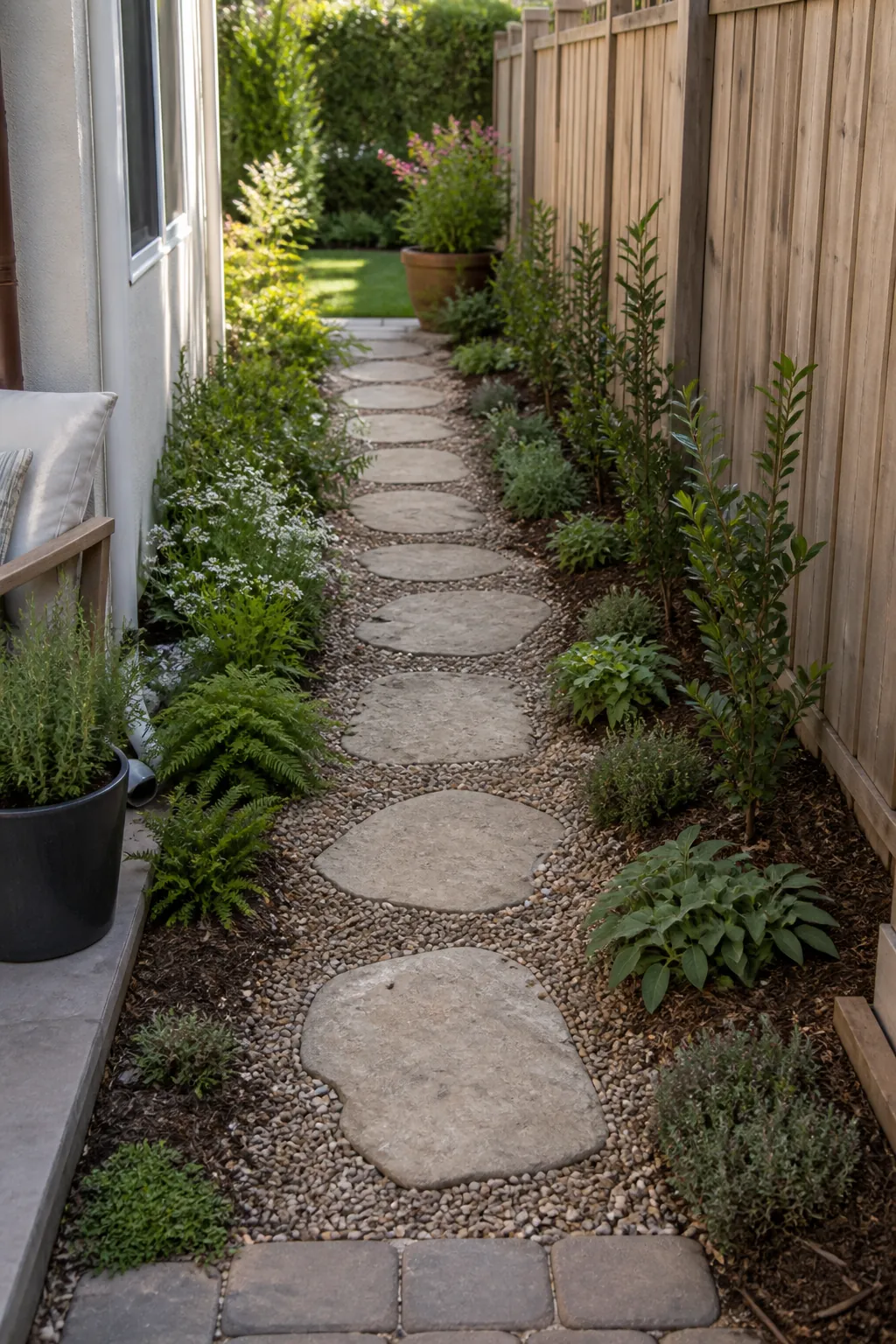
A path does not need to be dramatic to matter. It only needs to make the awkward area look like it belongs. Once the passage feels intentional, the whole backyard feels more finished.
Solve Privacy Where You Actually Sit
Privacy ideas get expensive when you try to block every view from every angle. A six-foot fence, a full hedge, or a wall of trees can be useful, but it is not always the first move. Start by asking one practical question: where do people sit, and what do they see from that seat?
If the neighbor’s driveway is visible only from one chair, solve that one view. A tall planter, an outdoor screen, a trellis with vines, a pair of evergreen shrubs, or a pergola side panel may do enough. If the road is the issue, place screening closer to the patio rather than planting randomly in the middle of the lawn. Privacy works best when it protects the experience, not just the property line.
Keep airflow and maintenance in mind. Solid panels can make a small patio feel boxed in. A mix of open fencing, vertical plants, and layered shrubs usually feels softer. If deer, wind, kids, pets, or easements are part of your reality, choose materials that can survive the way your family backyard actually works.
Layer Lighting for a Backyard That Feels Alive at Night
String lights are popular for a reason, but they work best as one layer, not the whole plan. A backyard that feels warm at night usually has light at different heights: overhead glow, lanterns near seating, path lights at the ground, and maybe a soft uplight on a tree or planter.
Keep the color warm and the placement gentle. Bright white light can make a patio feel like a parking lot. Warm bulbs, shaded lamps, and low lanterns make outdoor living feel more like an extension of the home. Light the places people use, not every inch of the yard.
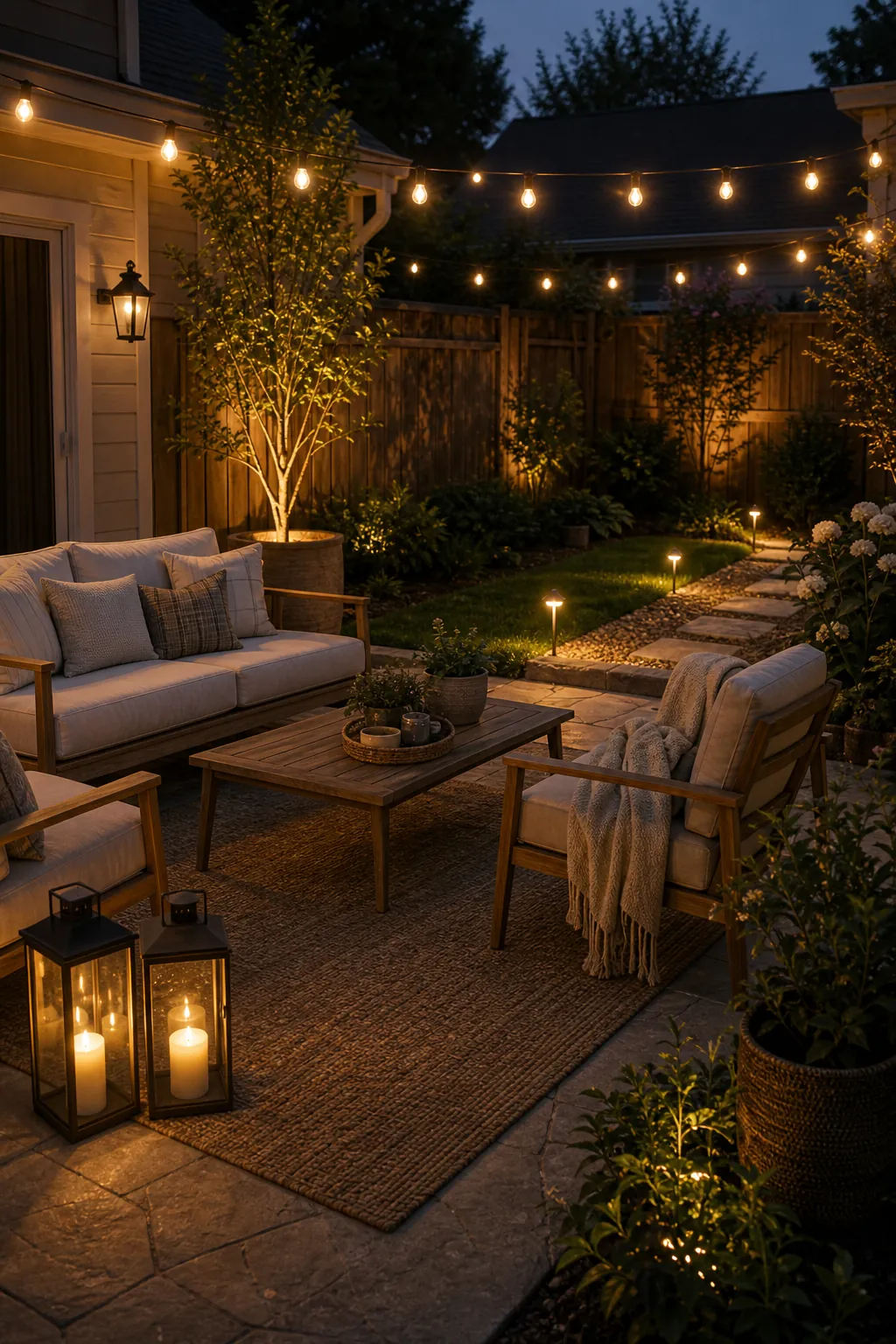
A good night setup can be simple: string lights over the seating area, two lanterns by the chairs, and low solar lights along the path. That small combination gives the yard depth, safety, and atmosphere without turning the whole space into a project.
Choose Decor That Can Handle Real Backyard Life
The prettiest patio decor will become annoying if it needs constant rescue. Before buying pillows, rugs, planters, or furniture, think about sun, rain, storage, pets, kids, wind, and how often you want to clean. Outdoor fabrics, washable cushion covers, weather-resistant wood, powder-coated metal, and sturdy planters are not glamorous details. They are what keep the backyard usable.
Also be honest about rocks, mulch, and edging. Decorative stone can look clean, but it needs a contained border. Mulch can soften beds, but it may blow around in exposed areas. Grass can be beautiful, but it may fail in deep shade, heavy traffic, or poor soil. The best backyard ideas are the ones that match your maintenance tolerance.
A Simple Weekend Plan for an Empty Backyard
If the yard feels overwhelming, use a phased plan instead of trying to finish everything at once. First, sketch the yard on paper and mark the sunny spots, shady spots, ugly views, doors, paths, and existing seating. Then choose one primary zone to finish first.
- Pick the main outdoor living zone. Choose the patio, deck, or best corner for seating.
- Define the floor. Add a rug, gravel pad, paver edge, or mulch border so the zone feels deliberate.
- Add seating in a tight conversation shape. Keep enough clearance for people to walk through comfortably.
- Add one vertical element. Use shade, a trellis, a tall planter, or a small tree to break the flatness.
- Soften the edges. Place greenery where it frames the seating or hides a specific problem view.
- Finish with light and texture. Add warm lighting, washable cushions, a side table, and one natural material such as bamboo, rattan, teak, stone, or clay.
Once that first zone works, the rest of the backyard gets easier. You can add a path, a vegetable bed, a dining corner, or a privacy screen later because the yard already has a center of gravity.
The Real Test: Does the Yard Invite You Outside?
A finished backyard does not need to be packed with decor. It needs to answer a few human questions: Where do I sit? What feels private? Where is the shade? What do I look at? Can I move through the space easily? Does it feel good in the evening?
When those answers are clear, even simple backyard decor feels elevated. A rug, two chairs, a tall planter, a warm lantern, a path, and one softened fence line can change the entire mood. The yard stops feeling empty when every visible piece has a reason to be there.