
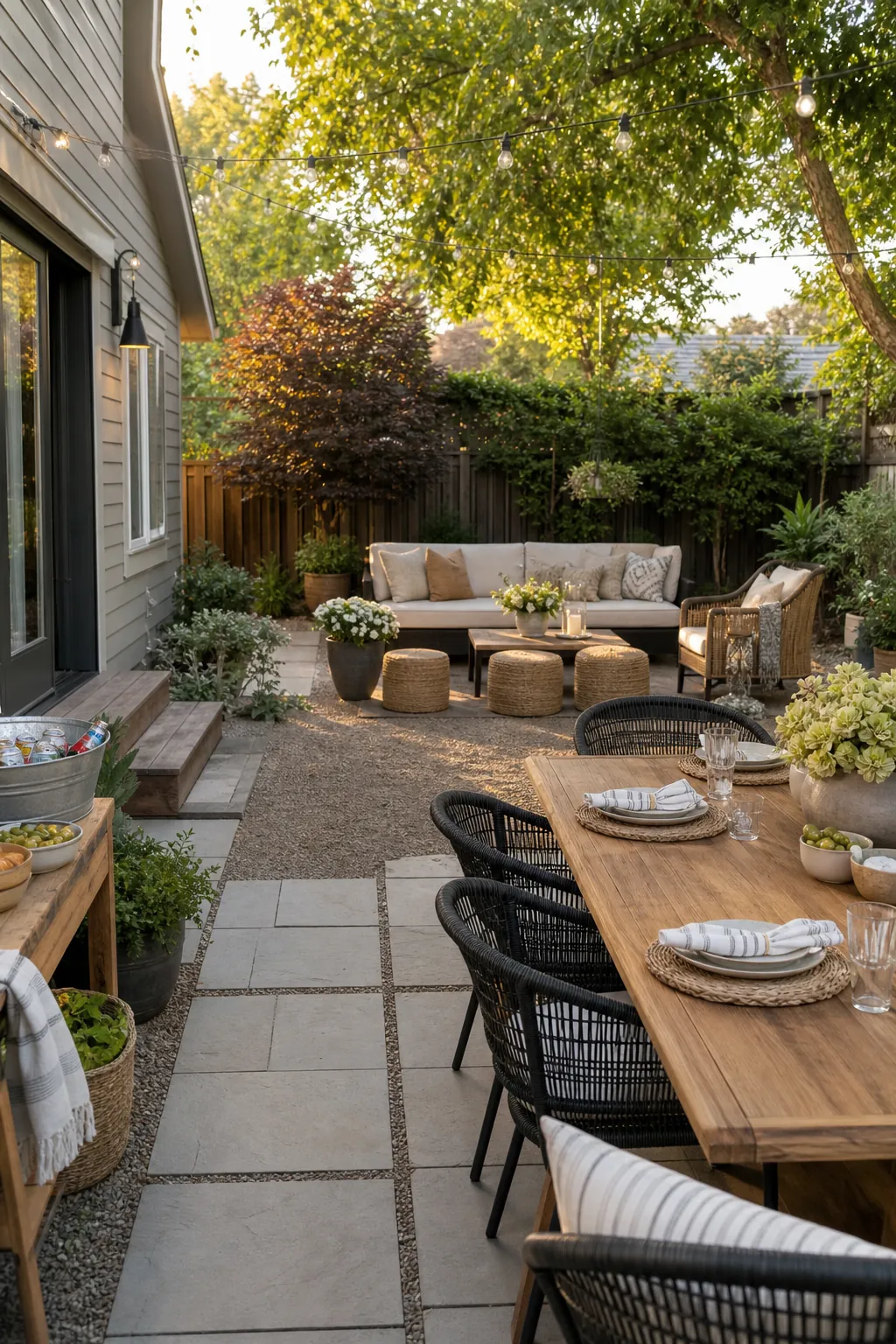
A relaxed backyard party rarely comes from having the biggest patio, the newest furniture, or the most dramatic garden design. It comes from a layout that quietly answers the same questions guests ask without saying them: Where do I put my drink? Where should I sit? How do I get food without squeezing past someone? Where can the kids move without knocking into the grill?
That is why the best backyard layout ideas for hosting start with movement, not decor. Once the traffic flow, outdoor zones, seating, shade, food, and cleanup spots make sense, the patio decor feels easier and the whole space becomes calmer. You do not need a perfect yard. You need a family backyard that tells people where to go next.
Start With the Party Path, Not the Furniture
Before buying another chair, umbrella, planter, or outdoor rug, stand at the door guests use most. Walk the exact route they will take to the food, drinks, seating, bathroom, trash, and lawn. If that route cuts through the middle of a dining table or behind the person cooking, the layout will feel stressful no matter how pretty it looks.
The simplest hosting layout is built around a clear loop: house to food, food to dining, dining to lounge, lounge back to the house. This keeps people circulating instead of forming a tight knot at the doorway. It also keeps the host from feeling trapped because every errand has a predictable lane.
- Keep the door zone open. Do not place the deepest chair, cooler, or plant stand directly outside the main exit.
- Give the grill a work edge. The cook needs prep space, a landing surface, and a path that does not cross the main seating cluster.
- Place drinks slightly away from the food. A separate drink station naturally pulls guests out of the kitchen-and-grill bottleneck.
- Leave one obvious route through the yard. If guests have to turn sideways, the layout is already asking too much.
Build Three Outdoor Zones Before Adding Extras
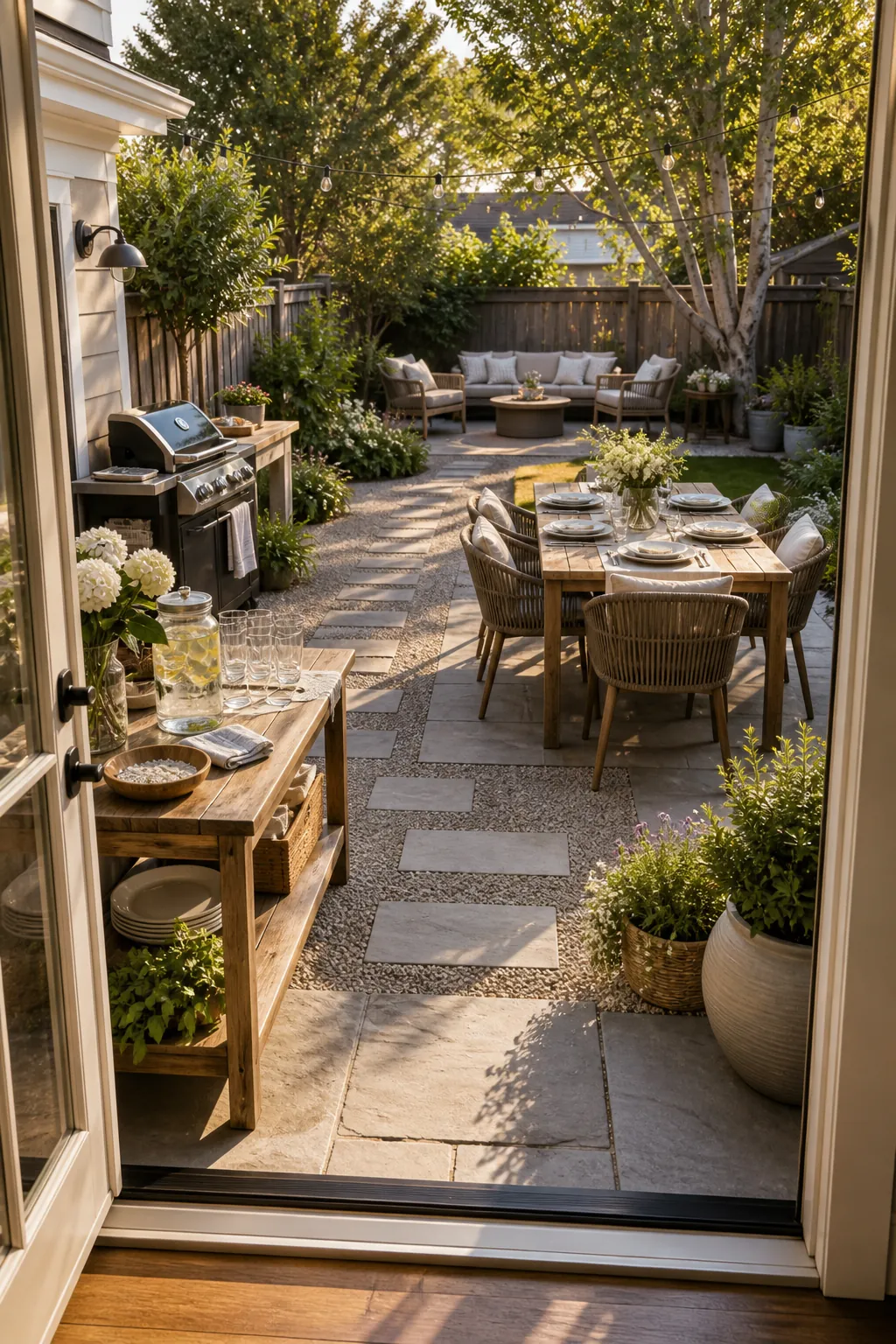
A backyard meant for outdoor entertaining does not need ten destinations. Too many zones make hosting feel like stage management. Most homes work better with three strong outdoor zones: a cooking or serving zone, a dining zone, and a conversation zone. Everything else should support those zones instead of competing with them.
The cooking zone belongs close enough to the house for supplies, but not so close that smoke, heat, and traffic crowd the doorway. The dining zone should sit near the food so plates travel a short distance. The conversation zone can be a little farther away, especially if you want guests to linger after dinner while the table gets cleared.
Use soft boundaries instead of hard walls. A line of planters, a change from pavers to gravel, an outdoor rug, a bench back, or a low screen can tell guests, this is a different part of the backyard, without chopping the yard into awkward pieces.
- Small patio: combine dining and serving, then create one flexible lounge corner with two chairs and a small table.
- Medium yard: keep dining near the house, put the lounge around a coffee table or fire pit, and leave a lawn strip open.
- Long narrow yard: run zones in a sequence instead of spreading them across the width: serving, dining, lounge, garden.
- Sloped backyard: let levels become natural rooms, but connect them with safe, visible paths and lighting.
Make Seating Face People, Not the Fence
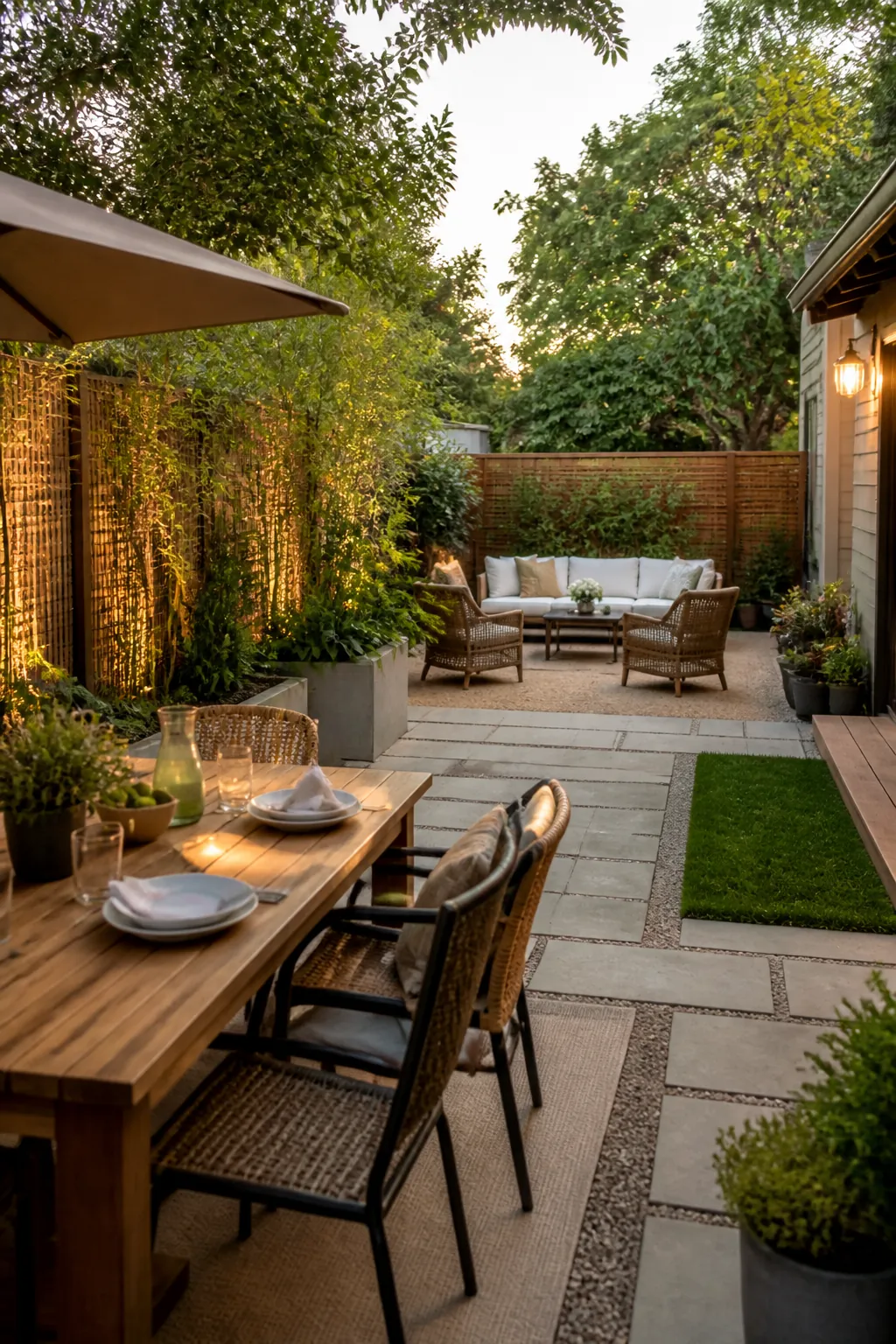
One common backyard hosting mistake is lining furniture along the edge because it seems to leave more room in the middle. The center may look open, but conversation becomes stretched and stiff. Guests end up twisting sideways, moving chairs, or standing because the seating does not invite them in.
For a calmer backyard layout, create one clear conversation center. It can be a coffee table, fire pit, low ottoman, garden view, or even a blank open space between chairs. The point is not the object itself. The point is that seats face slightly inward so people can talk at a normal volume.
A good hosting test is simple: sit in every seat and imagine holding a plate and drink. Can you reach a table? Can someone pass behind you? Can you stand up without making another guest move? If not, the patio decor is not the issue. The spacing is doing too much work.
- For four to six guests: try a sofa with two chairs across from it, or four chairs in a loose circle.
- For family backyard use: mix a bench with chairs so adults and kids have different ways to settle.
- For summer party overflow: keep folding stools or stackable chairs nearby, but do not let them dominate the everyday layout.
- For small patios: choose fewer pieces with better spacing instead of squeezing in a seat for every possible guest.
Put Food, Drinks, and Trash Where Guests Actually Need Them
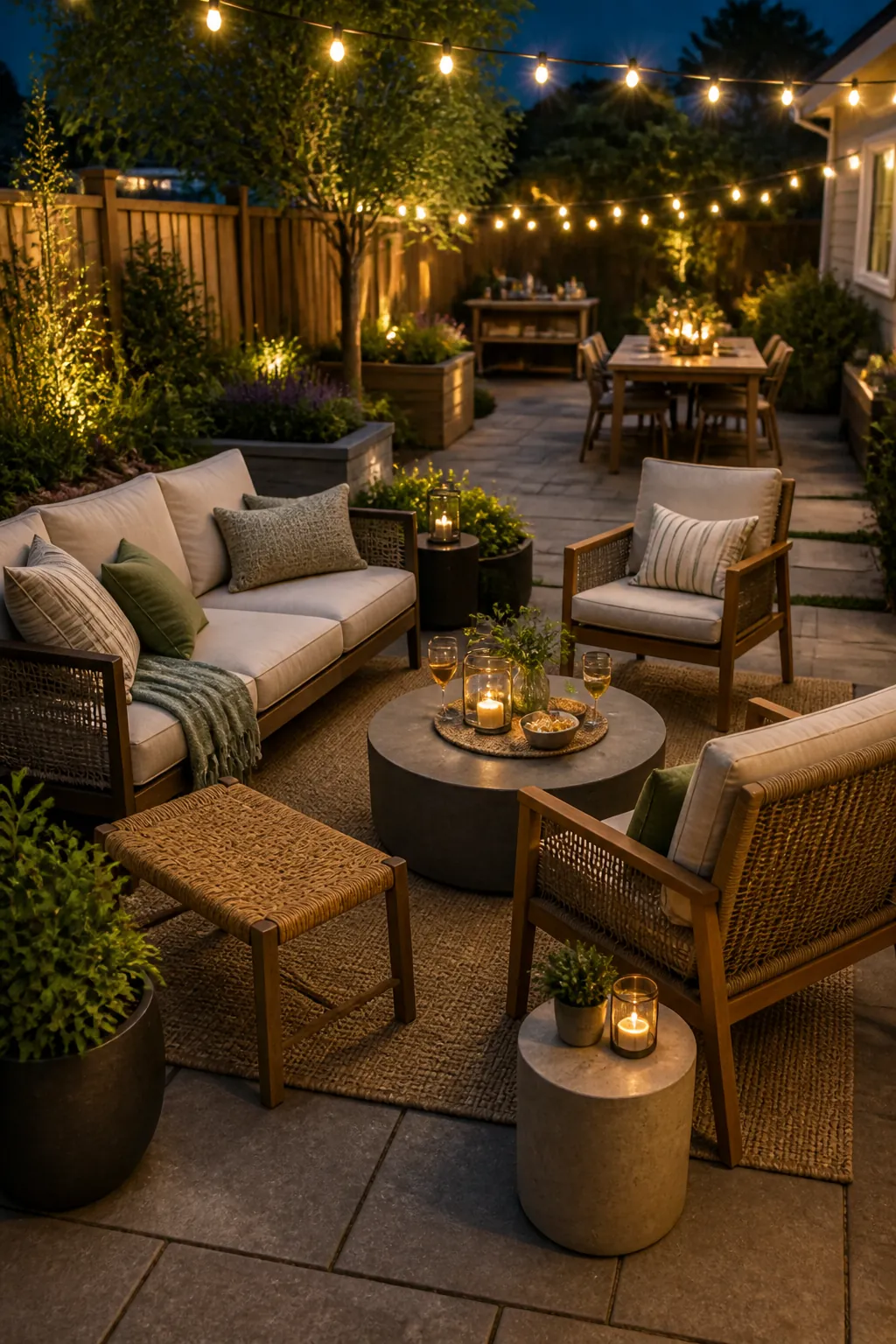
Backyard hosting gets stressful when every small need points back to the host. Someone needs ice. Someone asks where to put plates. Someone is looking for napkins. Someone has an empty can. The fix is not more hosting energy. It is a layout that makes the answers visible.
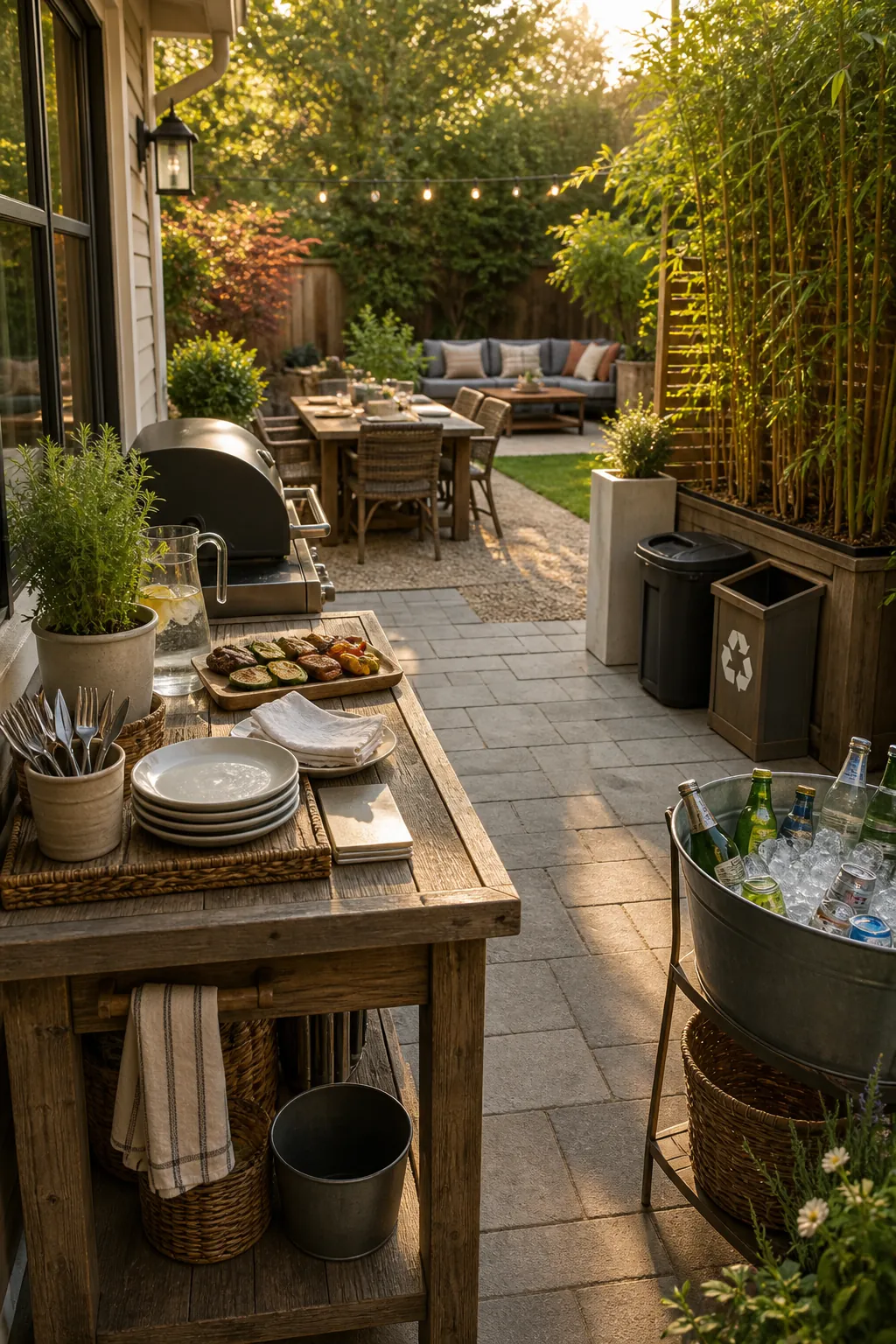
Create a serving station that works like a small outdoor kitchen even if it is only a console table. Give it a tray for plates, a basket for napkins, a bin for utensils, and a small landing area for food coming off the grill. Then place drinks in a separate but obvious spot, ideally close to the path between the house and lounge. That separation keeps guests moving and prevents the buffet from becoming a traffic jam.
Trash and recycling deserve a planned spot too. Hide them lightly with a screen, tall planter, or side table, but do not hide them so well that guests give up. A visible waste station prevents the end-of-night cleanup pile.
- Grill zone: grill, prep surface, tools, hot-food landing area.
- Dining zone: table, shade, nearby serving surface, easy chair pull-out room.
- Drink zone: cooler or beverage tub, cups, bottle opener, water pitcher, small trash spot.
- Cleanup zone: trash, recycling, dish tub, extra bags, towel, and a path back indoors.
Plan Shade, Light, and Comfort Like Part of the Layout
Outdoor living falls apart when comfort is treated as a finishing touch. A beautiful dining table in harsh afternoon sun will sit empty. A lounge with no evening light will clear out early. A fire pit too close to plants, fences, or traffic paths can turn a cozy idea into a problem.
Look at the yard at the time you actually host. If most gatherings happen at five or six in the evening, do not design only for noon. Notice where the sun lands, where mosquitoes gather, where the wind moves smoke, and which corner feels naturally comfortable. Then place the most-used zone there.
Shade can come from a pergola, umbrella, sail, tree canopy, porch roof, or tall planting. Lighting should mark edges and movement first: door, steps, path, serving area, dining table, and lounge. Decorative string lights are useful, but they work best after the safety and task lighting are handled.
- Use shade where people sit longest. Dining and lounge zones need more comfort than a pass-through path.
- Light the route, not just the table. Guests should see steps, chair legs, and changes in surface.
- Keep heat sources intentional. Leave room around fire pits and avoid placing them where plants, roots, or tight paths make them risky.
- Add soft layers last. Cushions, throws, and rugs matter more once the sun and movement problems are solved.

Leave One Flexible Zone for Real Life
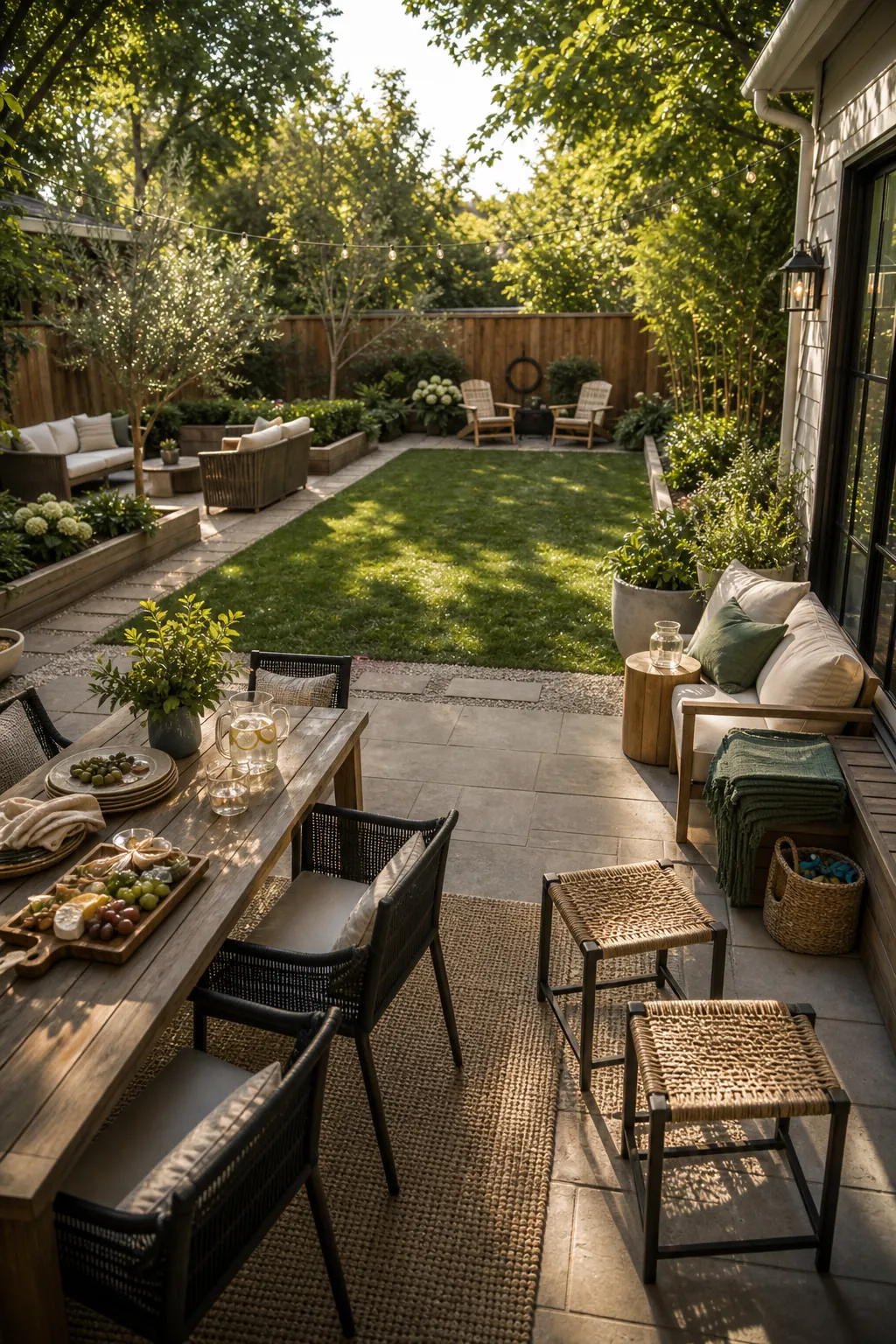
The most useful backyard ideas leave a little breathing room. A yard that is packed with permanent features can look finished but feel exhausting during real gatherings. Hosts need a flexible place for kids to move, dogs to wander, a game to start, extra chairs to open, or a small table to appear when the menu changes.
This flexible zone does not have to be large. It can be a simple lawn patch, open gravel area, clear deck corner, or wide path that doubles as overflow space. The key is to protect it from becoming storage. If every empty square foot fills with planters, bins, or extra furniture, the backyard loses its ability to adapt.
For families, this is often the difference between a patio that photographs well and a patio that actually works. Hosting without stress means the layout can absorb normal mess, movement, and last-minute changes.
- Keep one open area visible from seating. Adults can relax while kids still feel included.
- Use lightweight pieces there. Folding stools, small side tables, and movable planters can shift as the party changes.
- Protect the storage edge. Give cushions, toys, tools, and party bins a defined home away from the main view.
- Let the garden soften the boundaries. Planting can frame the flexible zone without making it feel fenced in.
A Low-Stress Backyard Hosting Layout You Can Copy
If your yard feels blank, crowded, or awkward, use this order before buying anything else. It works for a patio, deck, side yard, or mixed garden design because it starts with behavior instead of style.
- Mark the main path. Keep a clear lane from the house to food, dining, lounge, and cleanup.
- Choose the main hosting zone. Decide where people should spend the most time, then give that zone the best comfort.
- Place dining near food. Do not make guests carry full plates across the entire yard unless the path is wide and obvious.
- Group seating for conversation. Aim chairs inward and give every seat a nearby landing surface.
- Separate drinks from the grill. This one change can reduce crowding fast.
- Add shade and evening light. Make the layout usable during the hours you actually host.
- Preserve one flexible area. Leave room for kids, games, extra chairs, or a quieter moment away from the table.
Once those pieces are in place, patio decor becomes the easy part. Add planters where you need boundaries, rugs where you want a zone to feel grounded, lighting where people move, and cushions where people linger. The goal is not a backyard that looks staged. The goal is a backyard layout that lets the host enjoy the party too.