
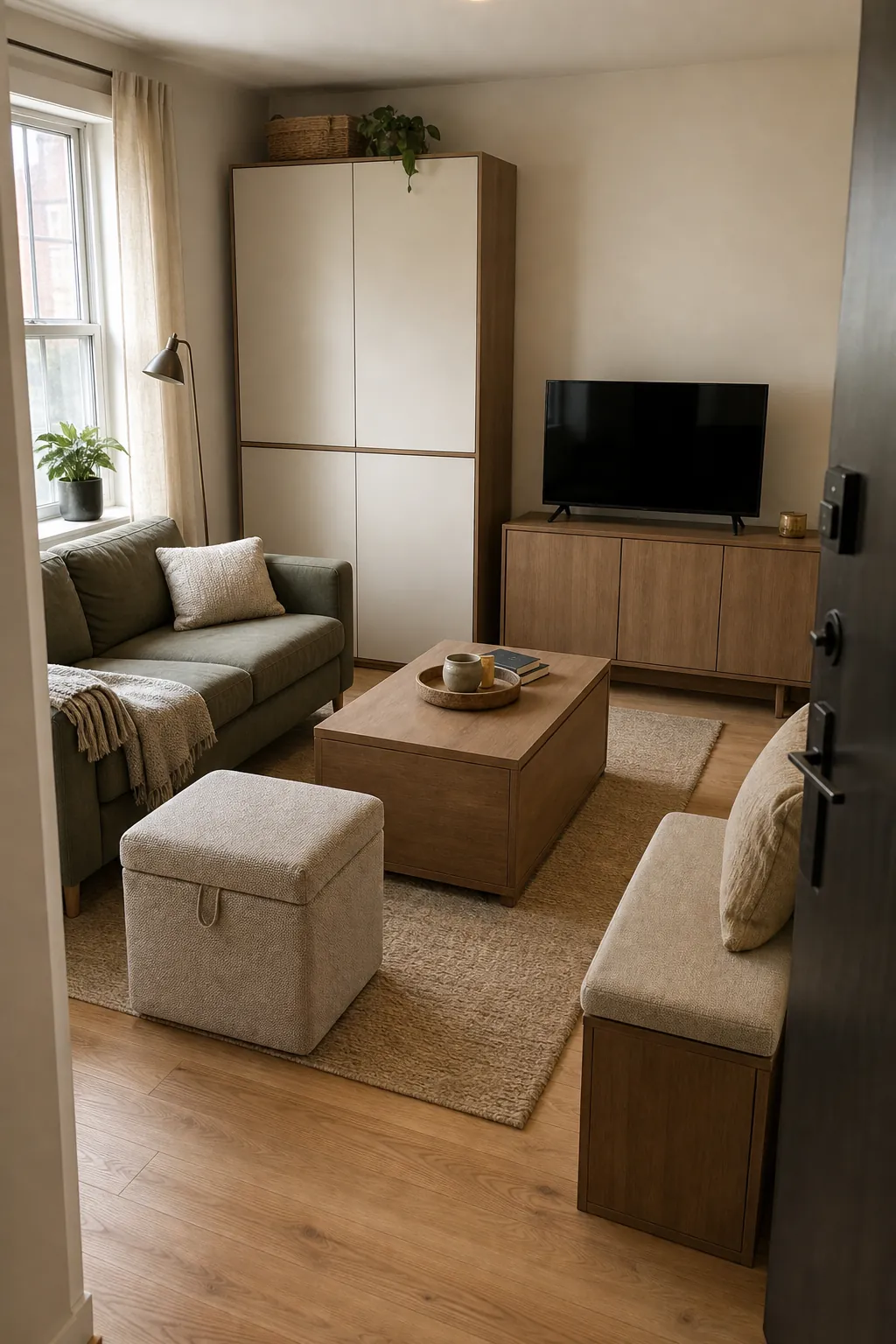
If a room still feels crowded after you have bought bins, hooks, and extra shelves, the problem is usually not one missing organizer. It is that too much storage is visible, too many surfaces are acting as temporary parking, and too many pieces of furniture are using floor space without doing a second job.
The best hidden storage ideas do two things at once: they give belongings a clear home, and they lower the amount of visual noise in the room. That is the difference between a room that is technically organized and a room that actually feels calm when you walk into it.
Start With What Makes the Room Feel Full
Before buying another storage furniture piece, stand in the doorway and name what your eye notices first. In crowded rooms, the answer is often not a single messy item. It is a pattern: open cube shelves, small things on every surface, bags on the floor, hobby supplies in view, shoes near the door, cables around a charging spot, or baskets that are doing storage work but still look busy.
Use this quick filter: daily items deserve the easiest access, weekly items can sit behind a door, and occasional items should disappear into deeper hidden storage. When everything gets equal access, everything stays visible. That is how a small space storage plan turns into clutter.
- Keep out: the few things you touch every day, such as a remote, current book, water glass, or work bag.
- Hide nearby: chargers, pet supplies, extra blankets, games, hobby tools, and paperwork.
- Store deep: seasonal bedding, spare decor, memory boxes, guest linens, and anything you keep only because it is useful someday.
Choose Closed Storage Where Your Eye Rests
Open shelving can be beautiful, but it rarely fixes a crowded room unless the shelves are styled with restraint. For a real crowded room fix, focus closed storage where the eye naturally lands: across from the sofa, beside the bed, near the entry, or along the longest uninterrupted wall.
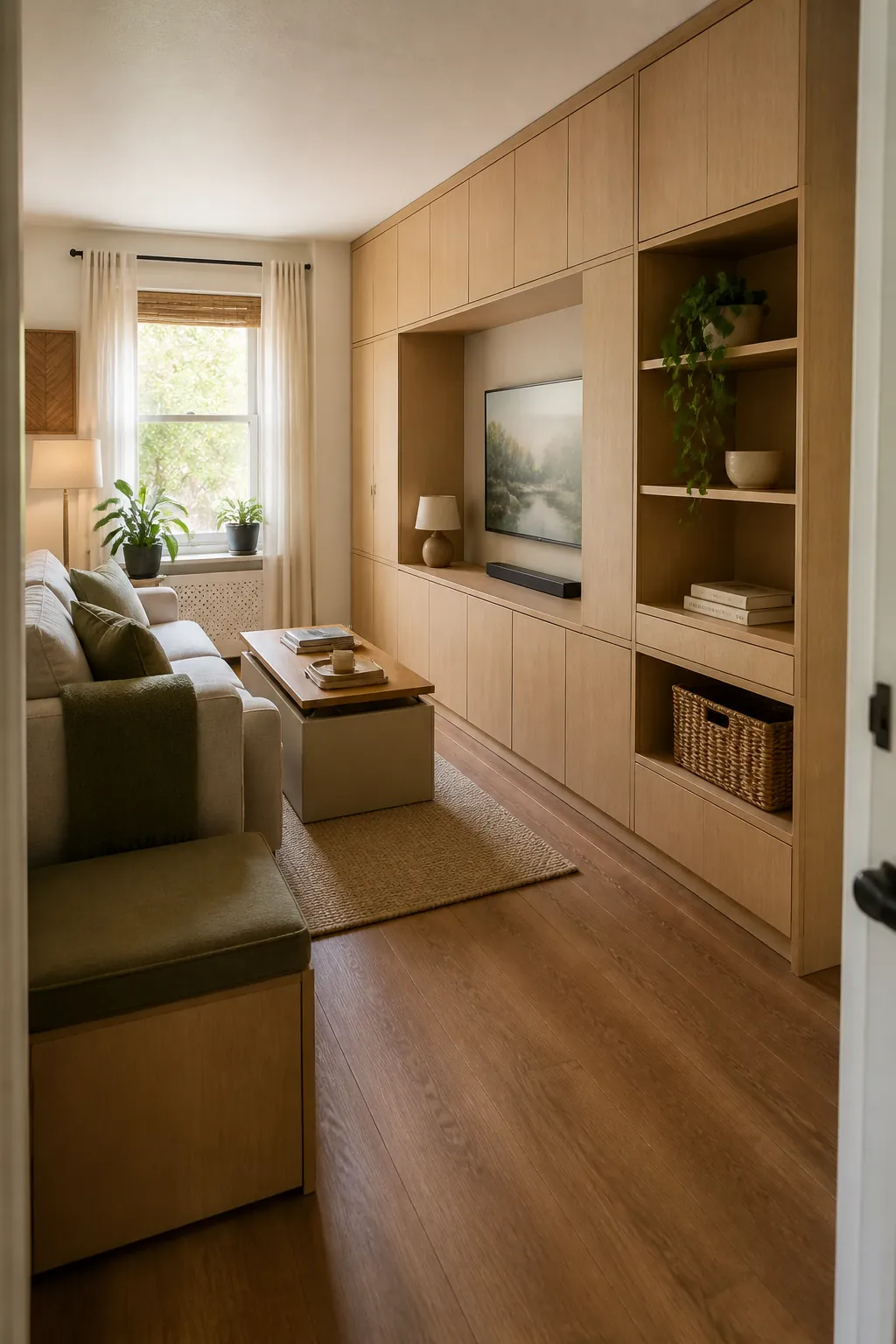
A cabinet with doors usually calms a room more than another open bookcase. A TV console with drawers hides cords, games, remotes, and extra candles. A tall wardrobe-style cabinet can hold craft supplies, board games, printer paper, or folded linens without making the living area look like a storage aisle.
The rule is simple: if the contents are mixed, colorful, or hard to style, put them behind an opaque front. Use open shelves for a few favorite objects, not for every object that needs a home.
Let Furniture Earn Its Footprint
In a small living room, every furniture piece should answer two questions: what does it do on the outside, and what can it hide on the inside? This is where storage furniture makes the room feel less crowded instead of simply adding another bulky object.

- Storage ottoman: hides throws, toys, games, or exercise bands while working as a footrest or extra seat.
- Lift-top coffee table: hides remotes, notebooks, coasters, and charging cables, and can double as a casual work surface.
- Bench with a lid: works at the foot of a bed, under a window, or by an entry while hiding shoes, bags, or blankets.
- Bed with drawers: turns the largest footprint in the room into bedroom storage without adding another dresser.
Avoid the trap of buying tiny storage pieces because the room is tiny. Five small pieces can make a room feel more crowded than one well-scaled cabinet. Fewer, more useful pieces usually look calmer than a collection of little fixes.
Use Under-Bed Storage Without Making the Floor Look Messy
Under-bed storage is one of the most useful hidden storage zones in a bedroom, but it only works visually if it looks intentional. Clear plastic tubs can be practical, but when they are visible from the doorway, they can make the room feel unfinished. Opaque drawers, fabric bins, or matching rolling boxes give the same capacity with less visual clutter.
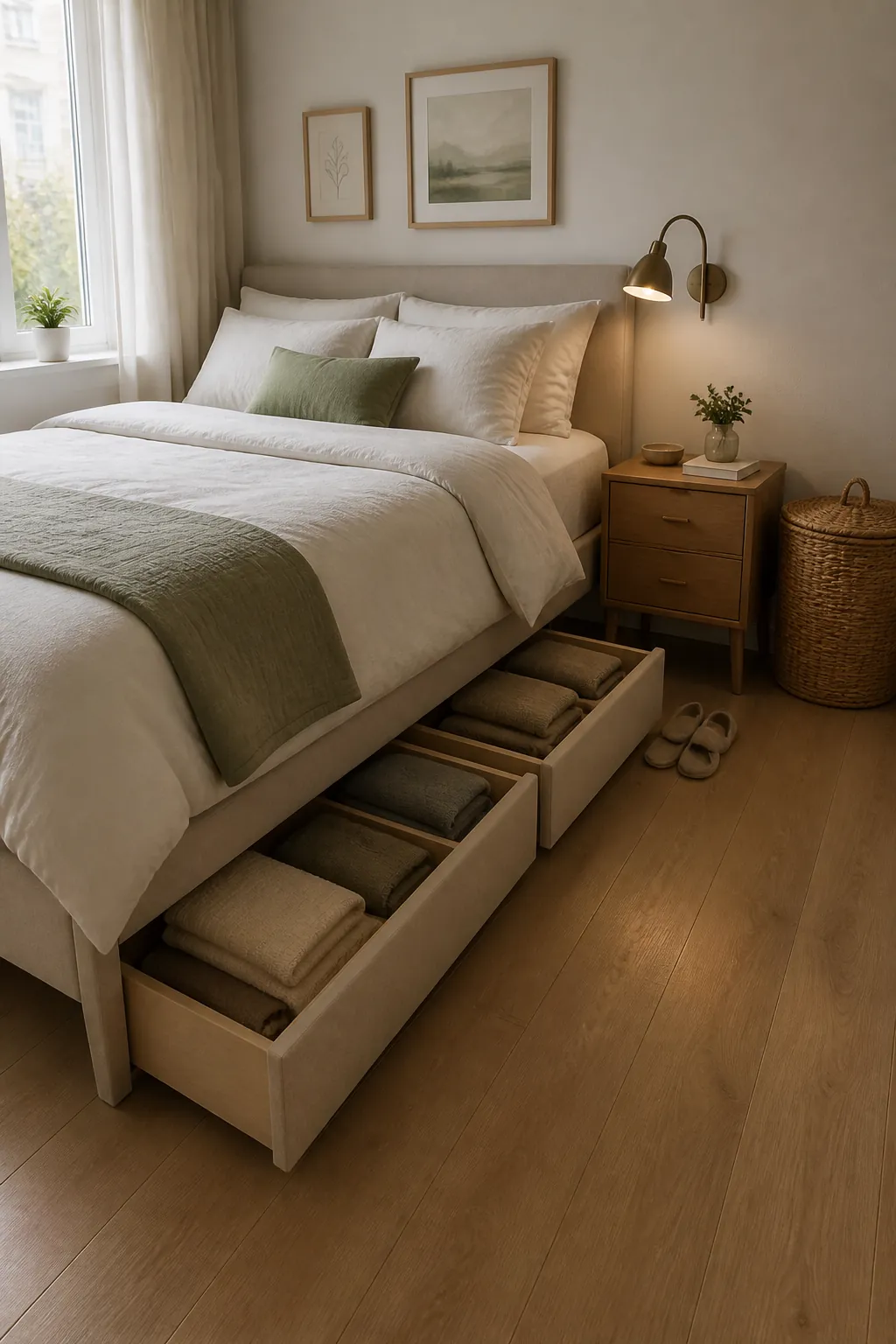
Use this zone for items that do not need daily access: extra bedding, off-season clothes, sentimental boxes, craft overflow, or guest towels. Keep one category per container and label the side that faces out. The goal is not to hide chaos. The goal is to make home organization easier because each hidden container has a job.
If the bed is too low, risers can help, but use them carefully. A raised bed that exposes a row of mismatched bins can make a small bedroom feel more crowded. A simple bed skirt, fitted drawers, or a frame designed for storage usually looks cleaner.
Build Up, But Do Not Turn the Wall Into More Clutter
Vertical storage is often the best move in a small apartment storage plan. Tall storage uses wall height instead of stealing more floor area. The mistake is filling every vertical surface with exposed items. A wall can hold storage without shouting storage.
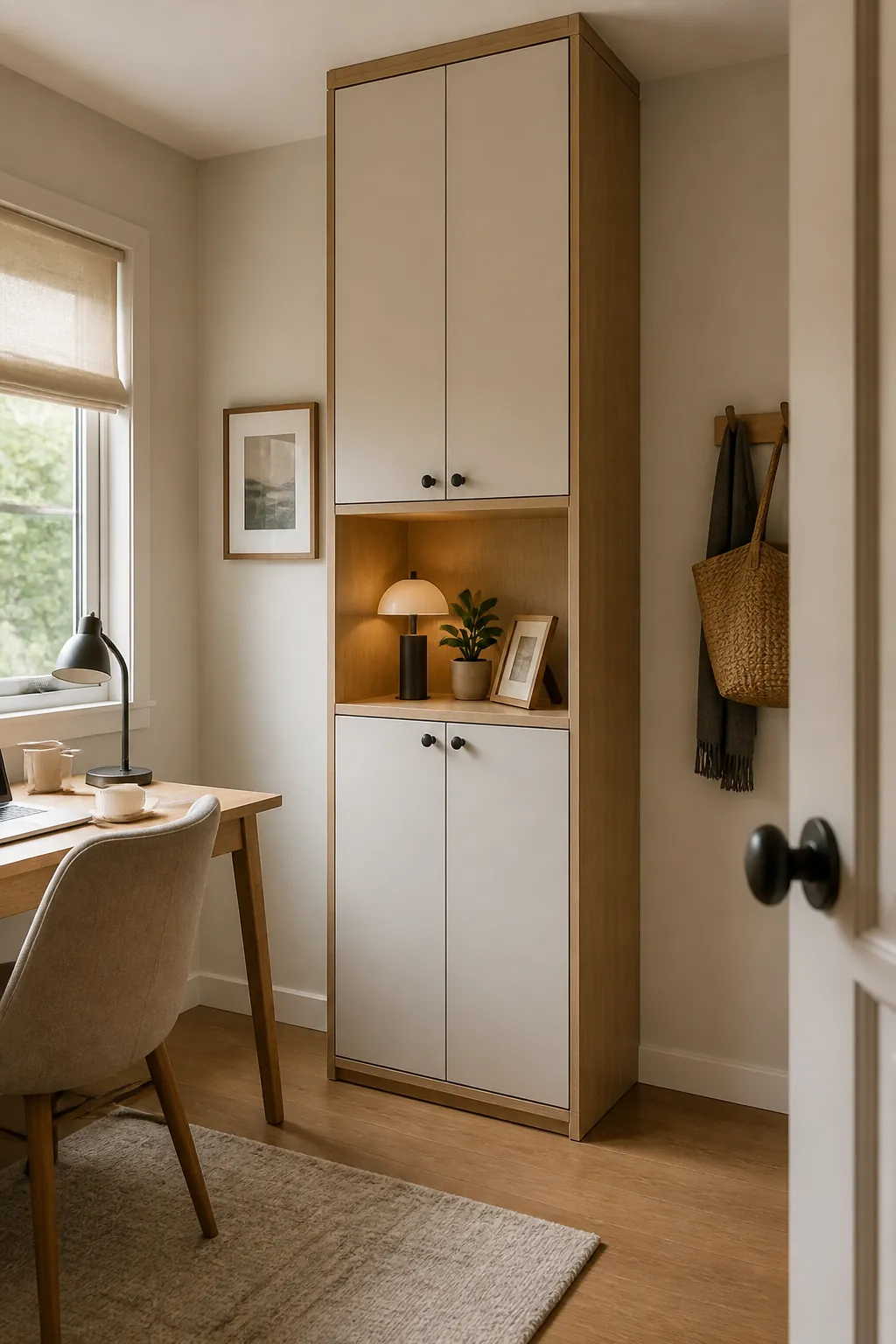
Choose tall cabinets, closed-door bookcases, floating cabinets, or wall-mounted nightstands when floor space is tight. If you use open floating shelves, keep them shallow and disciplined. Two useful objects and one decorative object usually read better than a shelf packed edge to edge.
The higher the storage, the calmer the contents should look. Store messy categories behind doors. Use baskets only when they are large enough to hide the full category. If the basket is too small and items stick out, the basket becomes visible clutter instead of decorative storage.
Create a Hidden Landing Zone for Daily Clutter
Many crowded rooms are not crowded all day. They become crowded at the exact moment life happens: keys land on the console, mail lands on the table, shoes land by the door, and chargers land wherever there is an outlet. A hidden landing zone stops daily clutter before it spreads.
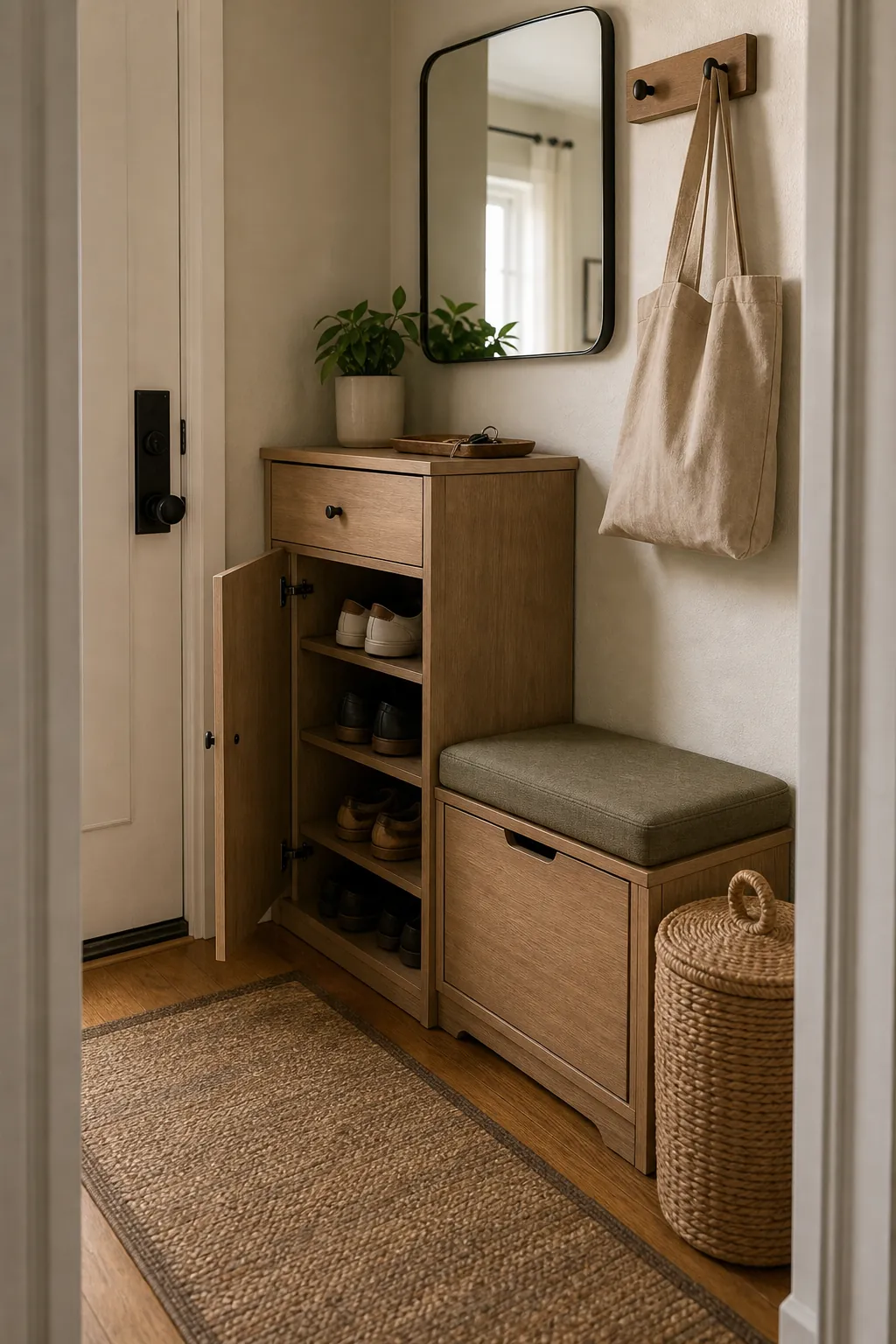
- Entry: a closed shoe cabinet, a small drawer for keys, and one hook per person.
- Sofa area: a lidded basket for throws and a drawer or box for remotes and chargers.
- Bedroom: a nightstand with drawers instead of an open shelf for medicine, cords, and books.
- Desk corner: one closed box for paperwork and one tray for active items only.
This is not about making the room perfect. It is about making the easiest action the tidy action. If putting something away takes less effort than dropping it on a surface, the room stays clearer without a full reset every night.
Use Storage to Define Zones in Awkward Rooms
Some rooms feel crowded because everything is pushed into one cluster. The storage might be necessary, but the layout makes it feel busy. In a studio, open-plan living room, or long narrow apartment, a storage piece can act as a quiet divider.
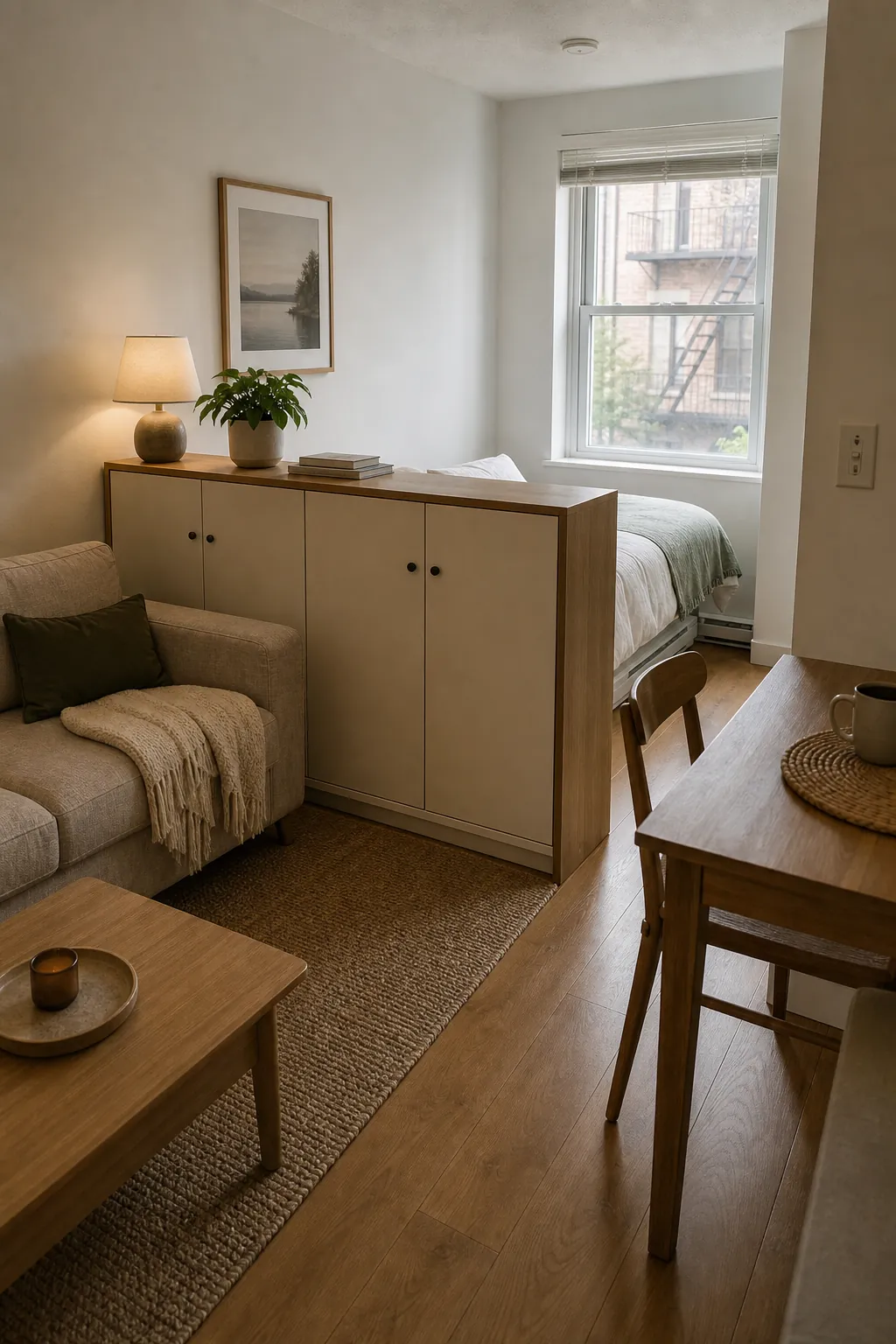
A low cabinet behind a sofa can separate the living area from a dining corner while hiding linens, hobby supplies, or office tools. A closed cube unit can divide a bed zone from a lounge zone if the back is finished and the proportions feel intentional. A narrow console with drawers can turn an empty wall into a practical drop zone without blocking movement.
The key is to protect walkways. Hidden storage should make movement easier, not create a maze. Leave breathing room around door swings, closet doors, and the path from entry to seating.
Keep a Rotation Bin for Decor and Sentimental Items
A clutter free room does not have to be a personality-free room. The problem is usually too many small objects competing for attention at the same time. Instead of forcing yourself to give everything away, create a rotation bin for decor, books, collectibles, candles, and sentimental pieces that you still enjoy.
Keep your favorite few items on display and store the rest in one closed container. Every month or season, swap a few pieces. This keeps the room personal while giving surfaces a calmer rhythm. It also makes dusting easier and helps you notice what you actually miss.
The Simple Test Before You Buy Anything
Before buying a new basket, cabinet, ottoman, or shelf, ask three questions:
- What exact category will this hide? If the answer is “random stuff,” the storage will become a clutter drawer.
- Will it reduce visible clutter from the doorway? If not, it may organize the room without making it feel calmer.
- Does it earn the floor space it uses? In a crowded room, storage furniture should usually add seating, surface area, zoning, or vertical capacity.
Hidden storage works best when it is specific. A storage ottoman for blankets, a shoe cabinet for the entry, a drawer bed for off-season clothes, a closed cabinet for hobby supplies, and a small tray for active mail will do more than ten vague bins. The room feels less crowded because the storage is not just holding things. It is making the room easier to live in.