
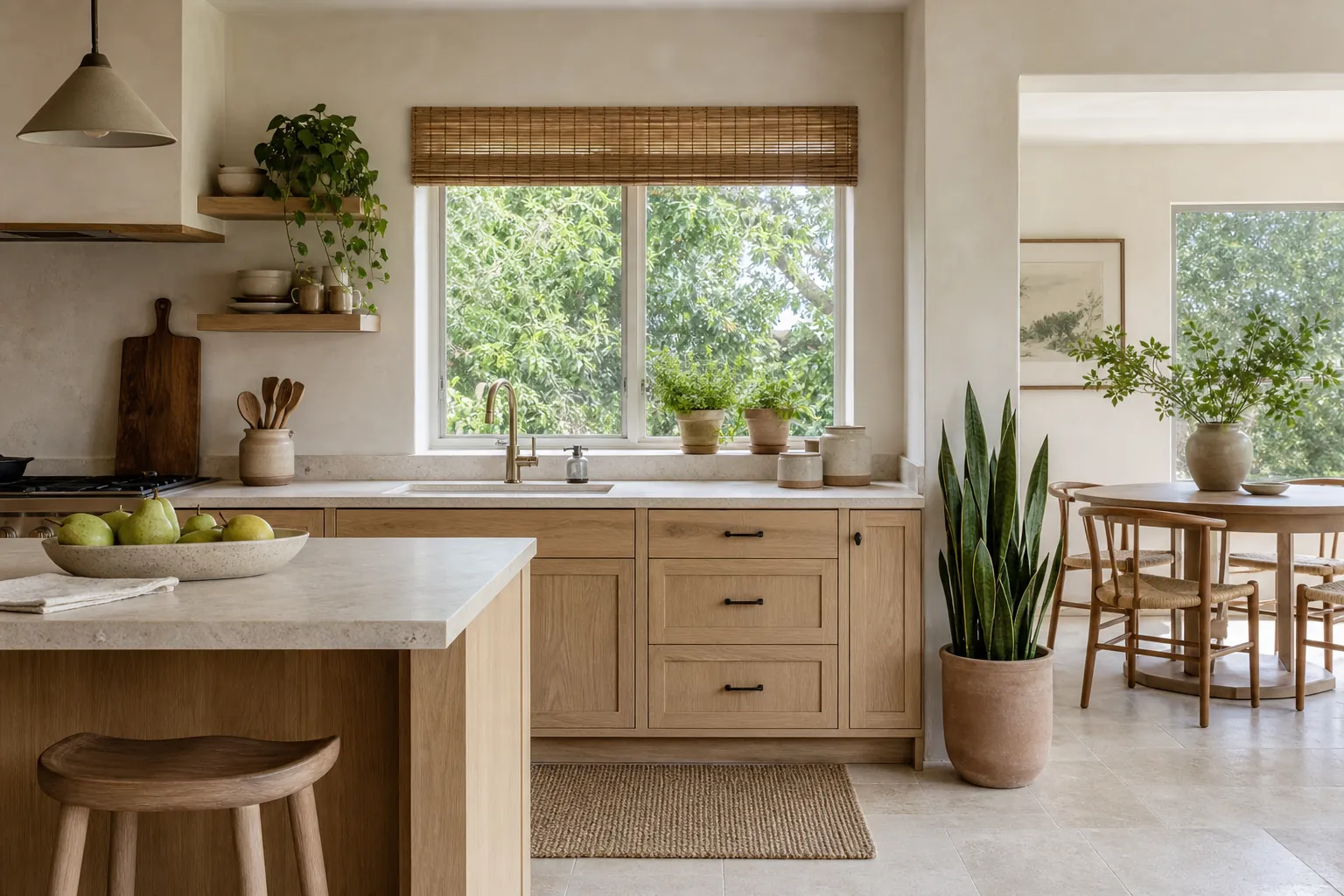
A natural kitchen works best when it feels grown in, not decorated all at once. Wood brings warmth, greenery brings movement, and a few useful organic pieces make the room feel calm without turning the counters into a display shelf. The goal is a kitchen that still works hard: open space for chopping, clear sightlines, plants that match the light, and materials that connect the cooking area to nearby dining room decor.
These natural kitchen styling ideas focus on realistic changes: wood kitchen accents, kitchen plants, window plants, ceramic storage, woven texture, and simple plant decor that can soften a white kitchen, a small apartment kitchen, or a newer space that feels too polished.
Let Wood Set The Warmth
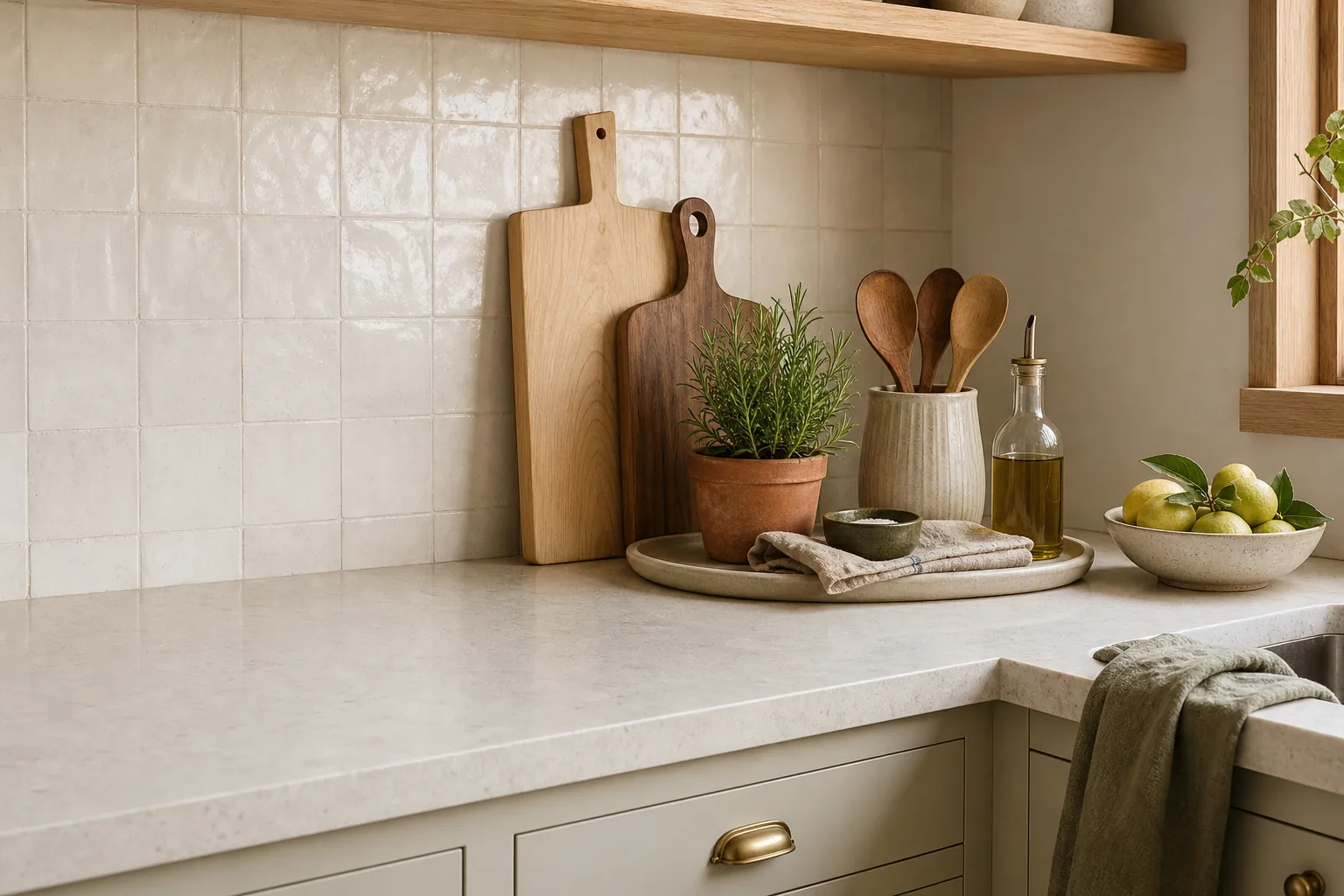
Wood is the fastest way to make a kitchen feel warmer because it changes the room before any color is added. Bring it in where the hand naturally lands: a cutting board, a stool, a shelf, a utensil tray, or a small round dining table near the kitchen edge. A simple formula is one vertical wood element, one horizontal wood element, and one everyday wood object.
Choose Kitchen Plants By Light, Not Just Looks
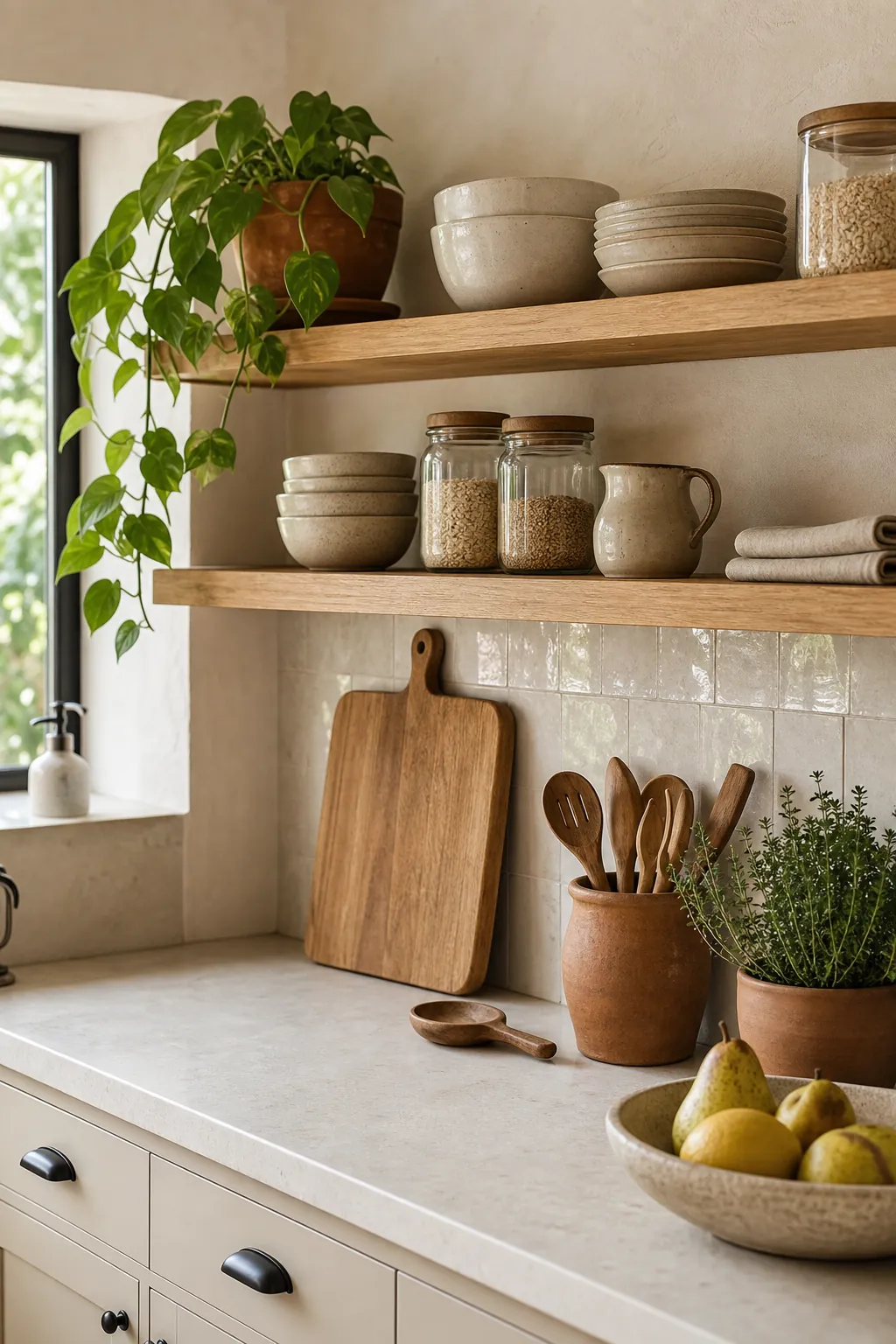
Kitchen plants look effortless when they are chosen for the room you actually have. A bright window can handle herbs and sun-loving pots. Moderate light is better for pothos, spider plants, philodendron, and some ferns. A lower-light kitchen needs tougher choices like snake plant, ZZ plant, or pothos placed close to the available light.
Turn The Window Into A Working Green Moment
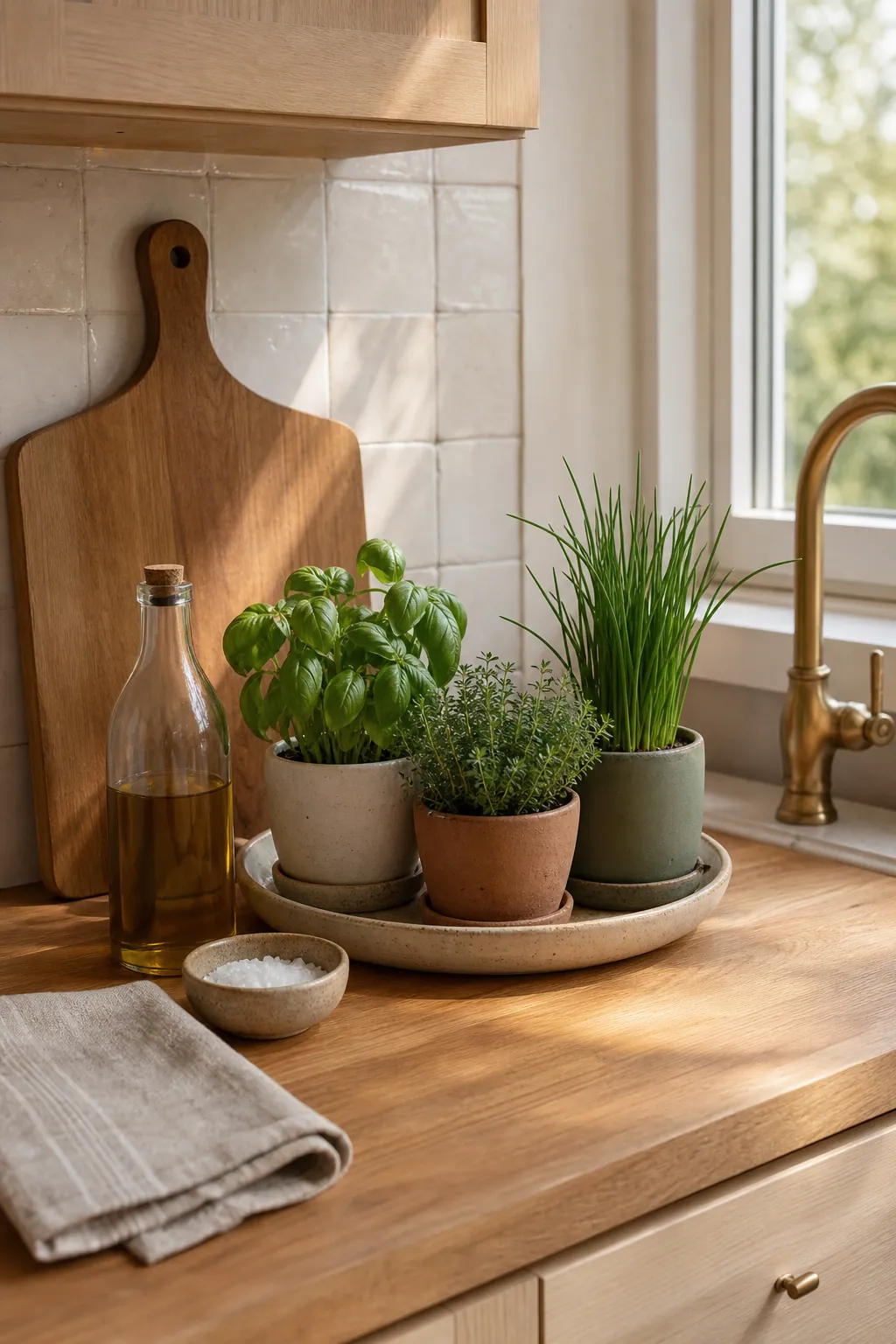
Window plants are one of the easiest ways to make a kitchen feel alive, but they need to stay practical. Use a long drip tray, a narrow shelf, or matching saucers so watering does not damage the sill or counter. Keep the pots low enough to open the window and leave space near the faucet if the window is above the sink.
Keep Counters Warm But Clear
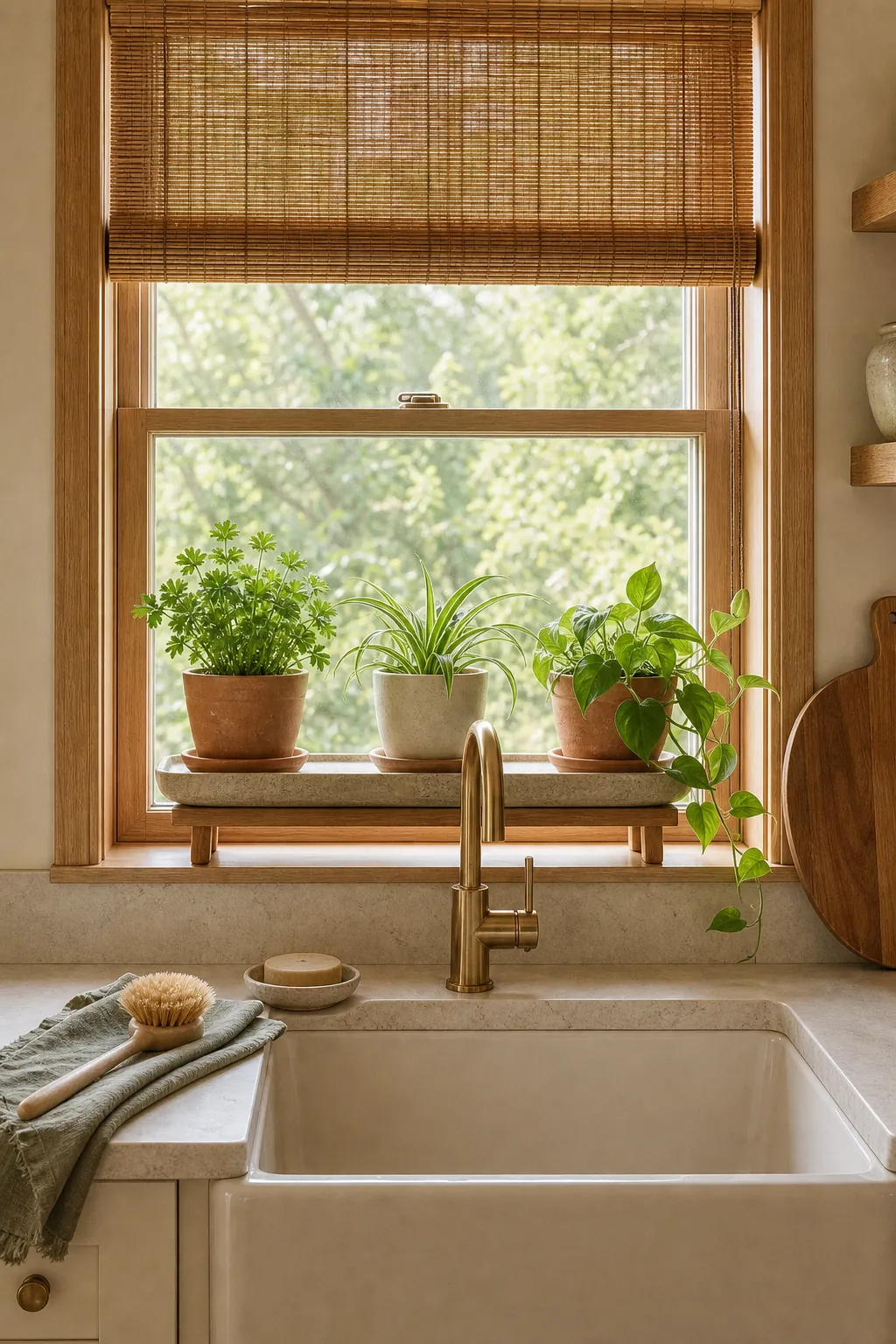
A natural kitchen should not require moving five decorative objects every time you cook. Group warmth into one or two useful zones: a tray beside the range, a corner by the coffee maker, or a shelf with everyday bowls. Warmth comes from material, not quantity.
Soften The Dining Edge With Organic Texture
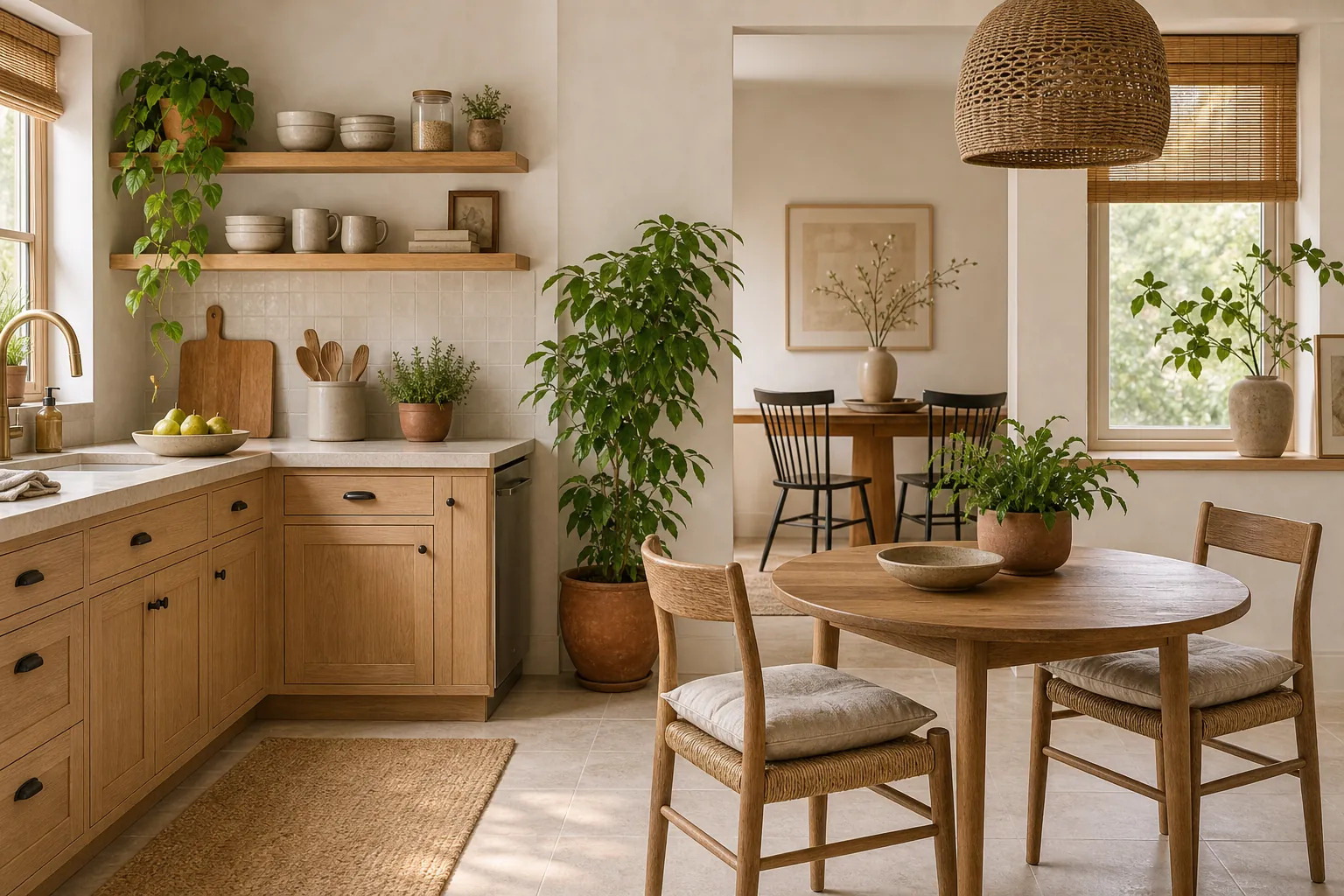
Many kitchens are visible from the dining room, so the styling needs to carry across both spaces. Repeat wood tones between shelves, chairs, boards, blinds, or a table. Greenery helps too: one plant on the dining table, a larger pot near the doorway, or a trailing plant near the eating area creates a softer edge between cooking and gathering.
Make The Look Easy To Maintain
The most livable natural kitchens are edited. Wipe leaves when you clean counters, rotate herbs so they grow evenly, empty drip trays after watering, and remove any plant that blocks cooking or cleaning. In a small kitchen, vertical styling helps greenery move upward while the main prep surface stays open.
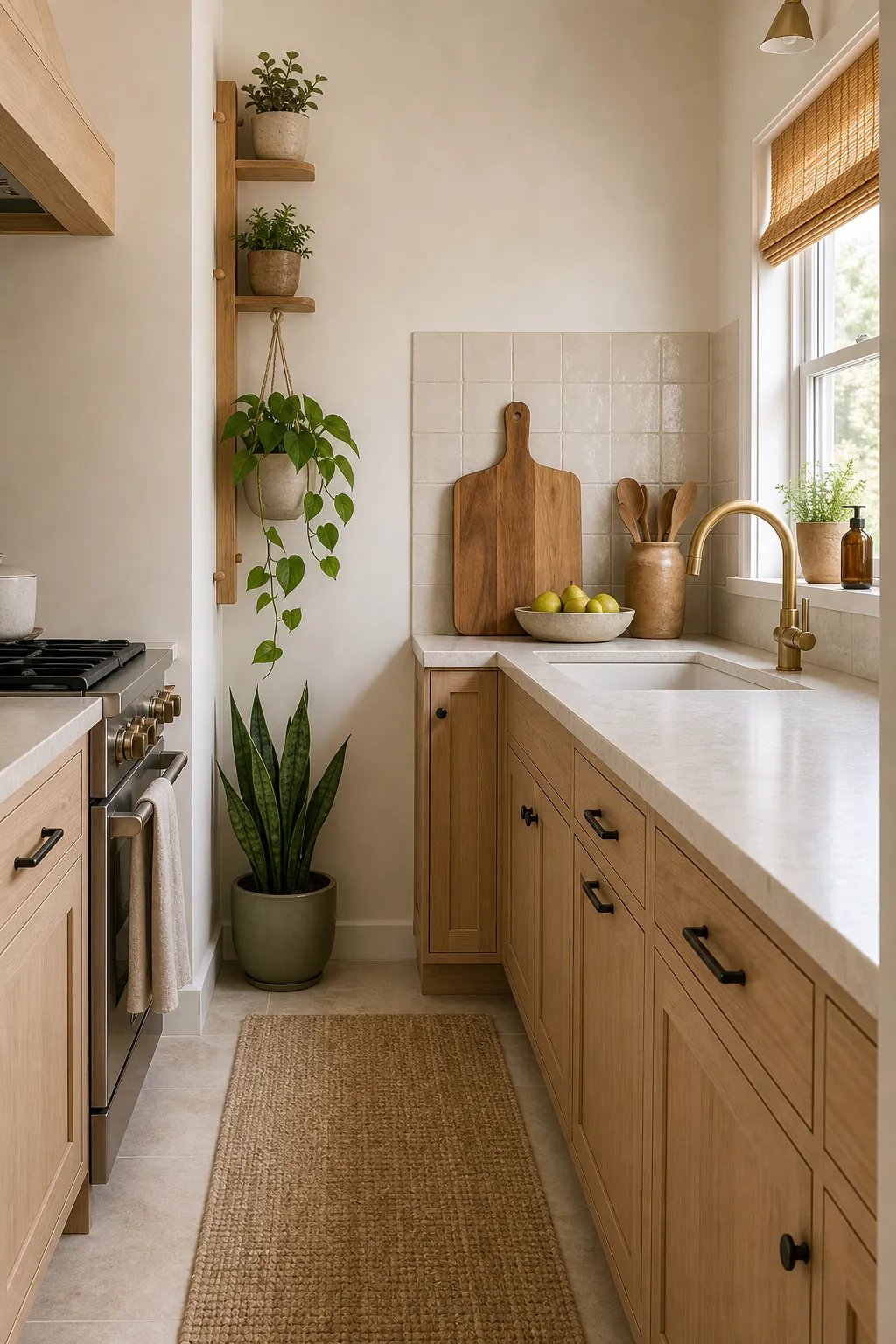
To pull the whole look together, repeat three cues: one wood tone, one green tone, and one handmade texture. Once those choices repeat, the kitchen feels organic and welcoming even when the cabinets, appliances, and layout are simple.