
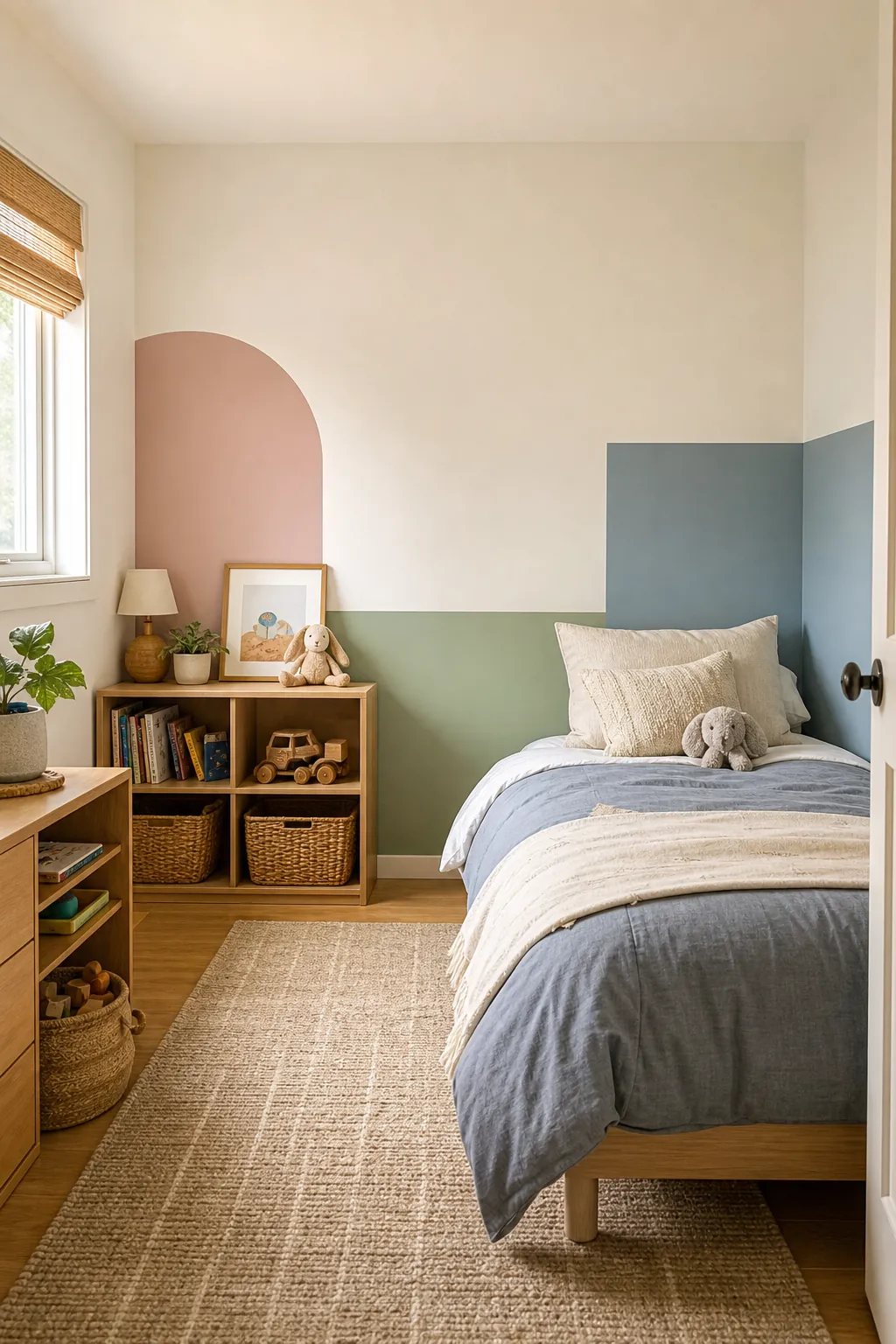
A kids bedroom can carry color without turning into a room everyone wants to repaint six months later. The trick is not to make every wall compete. Soft color blocking works best when paint supports the way the room is used: sleep on one side, play in one corner, storage where the mess collects, and enough quiet wall space for the room to breathe.
That is why this approach is stronger than a single loud accent wall. It gives you the fun of Kids Bedroom Paint and Color Blocking, but keeps the palette gentle enough for bedtime, shared rooms, and decor changes as your child grows. These wall paint ideas use Soft Colors, real furniture placement, and practical finishes so the finished Kids Bedroom feels styled instead of themed.
Start With One Quiet Anchor Color
The safest way to begin is with one soft anchor shade across most of the room, then add blocks in related colors. Think warm white with clay blush, misty blue with sage, oatmeal with dusty peach, or pale gray-green with buttercream. The anchor color should be calm enough to cover three walls without stealing sleep from the space.
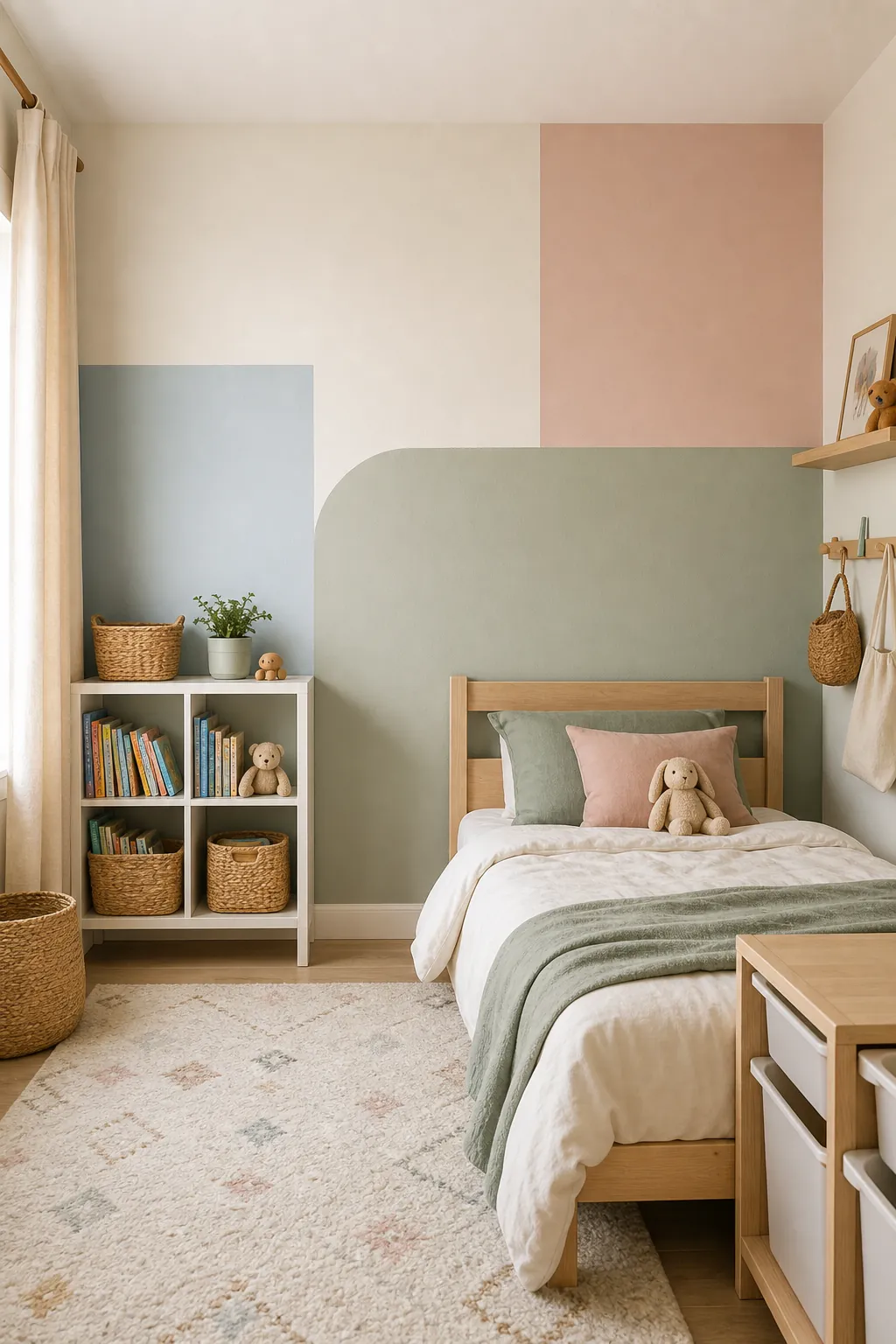
Parents often start with the bright color their child picked, then try to soften the room afterward. Reverse that order. Choose the calm base first, then let the child choose one or two accents inside a limited family of colors. It still gives them ownership, but it avoids the classic problem of a color looking charming on a card and overwhelming once it covers a wall.
- Use related undertones. Dusty blue, sage, and warm white usually sit together more easily than sky blue, emerald, and cool gray.
- Keep the strongest shade below eye level or behind furniture. This gives personality without visual noise at bedtime.
- Repeat each paint color at least once in Kids Room Decor. A pillow, rug stripe, lamp, or storage bin can make the wall feel intentional.
Put the Strongest Block Where the Bed Already Creates a Focal Point
If you want an Accent Wall, the bed wall is usually the easiest place to control it. The bed already anchors the room, so a painted rectangle, arch, half wall, or softened geometric shape can frame the headboard without making the whole Kids Bedroom feel busy.
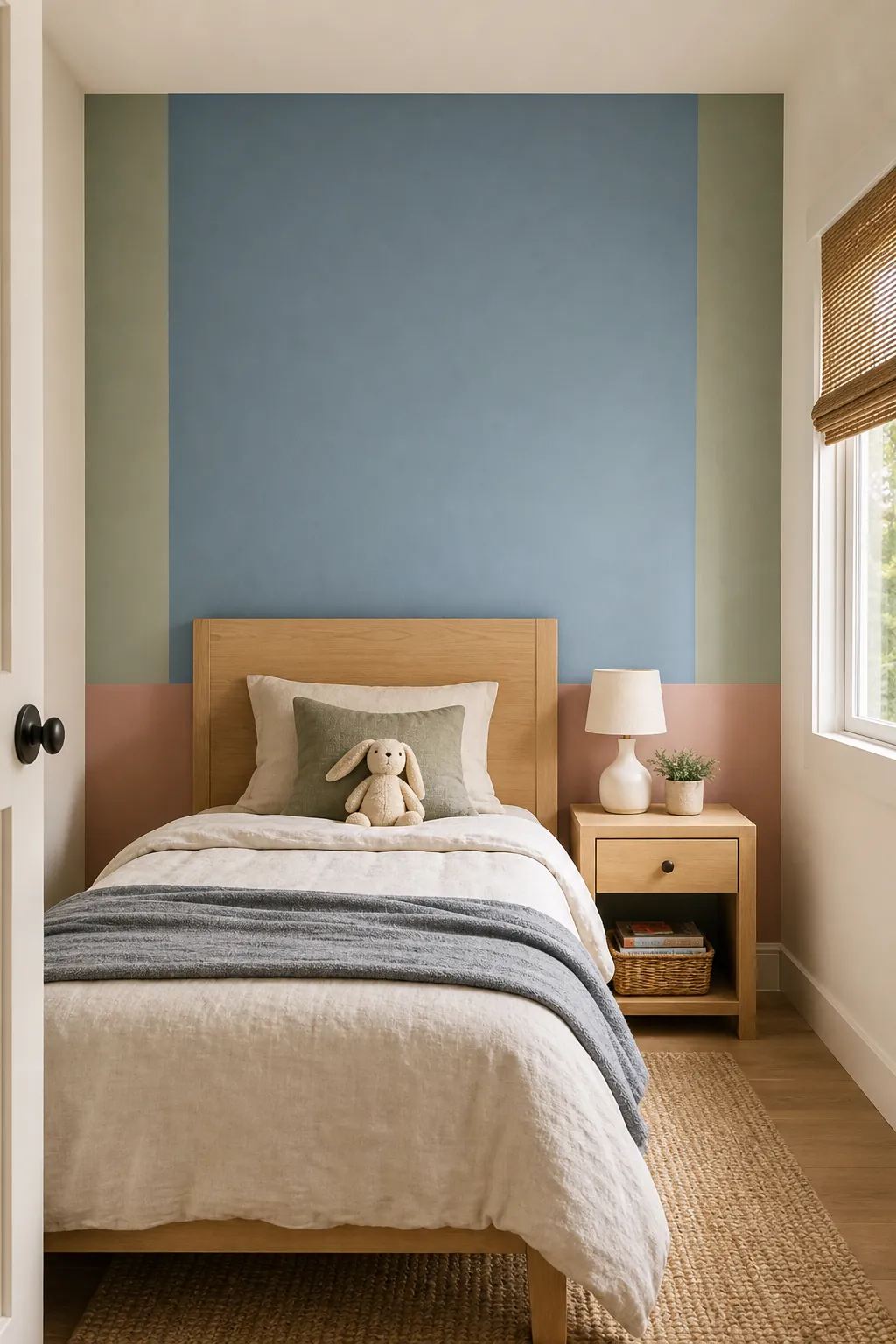
A soft block behind the bed also solves a styling problem: it gives the wall presence when you do not want a heavy headboard, oversized art, or busy wallpaper. Match the width of the painted shape to the bed plus the nightstand, not to the full wall. That keeps the design connected to the furniture instead of floating randomly.
For a softer look, skip hard primary colors and use softened versions: chalky coral instead of red, muted aqua instead of turquoise, pale olive instead of bright green, and powder blue instead of cobalt. These shades still read as color, but they are easier to pair with bedding and Bedroom Styling later.
Use Low Blocks to Make a Practical, Wipeable Base
The lower half of a child’s wall takes the most wear. Shoes brush it. Toys hit it. Sticky hands land there. A low color block gives you a practical reason to paint, not just a decorative one. Use the deeper or more wipeable shade on the lower third or lower half, then keep the upper wall pale and restful.
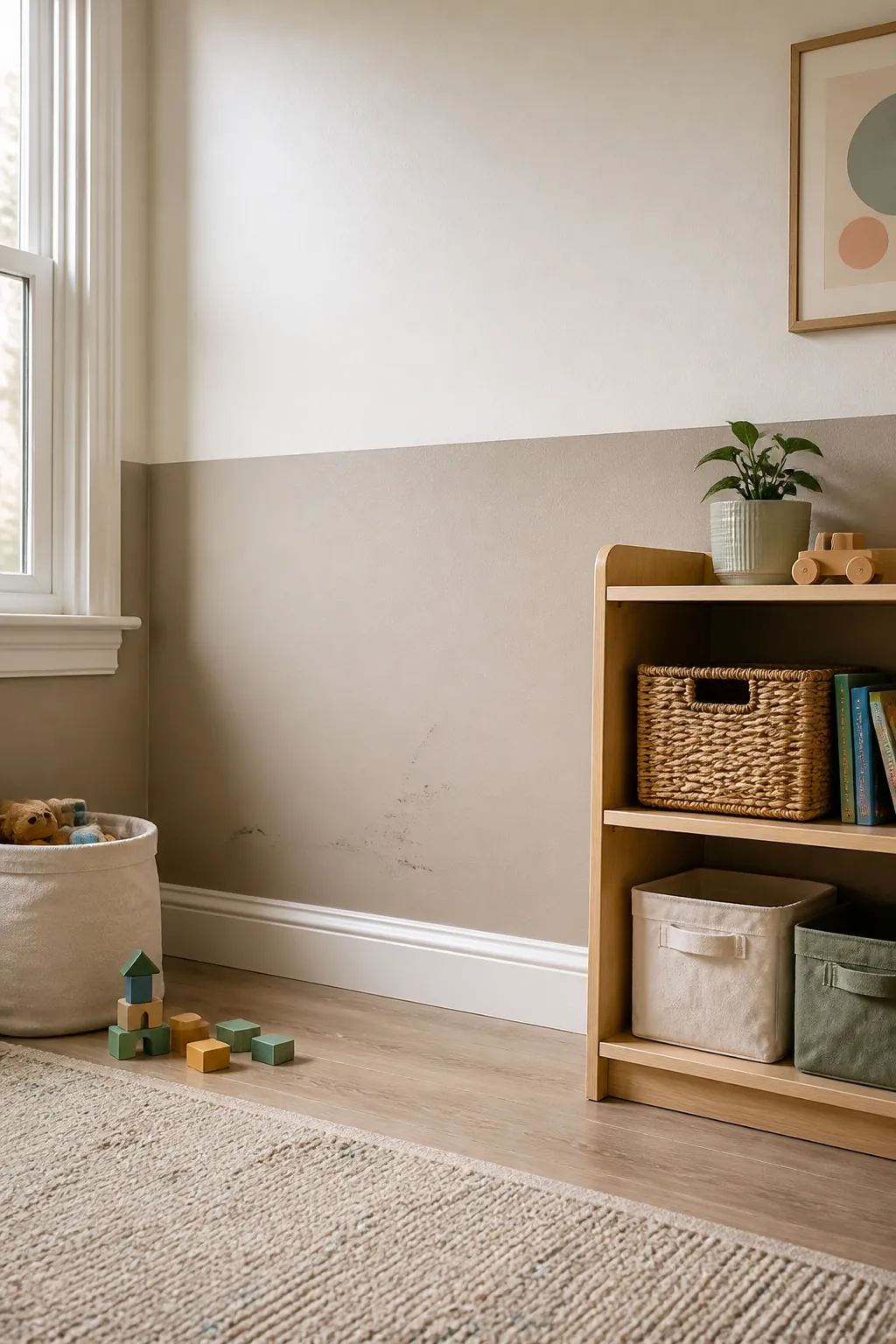
This is one of the most useful Kids Room Ideas for renters, small bedrooms, and rooms that need to survive daily play. A clay, sage, mushroom, denim, or muted mauve lower block can hide scuffs better than pure white. Above it, a soft neutral keeps the ceiling feeling higher.
Keep the dividing line deliberate. It can sit at windowsill height, align with the top of a low bookcase, or run just behind a row of wall hooks. When the line connects to something architectural or functional, the Color Blocking looks designed rather than accidental.
Wrap a Corner for Reading, Play, or Homework
Soft color blocking is especially good at zoning. Instead of painting one full feature wall, wrap a gentle shade around two meeting walls to mark a reading nook, Playroom Decor corner, desk space, or pretend-play area. The color tells the child what the zone is for without adding more furniture.
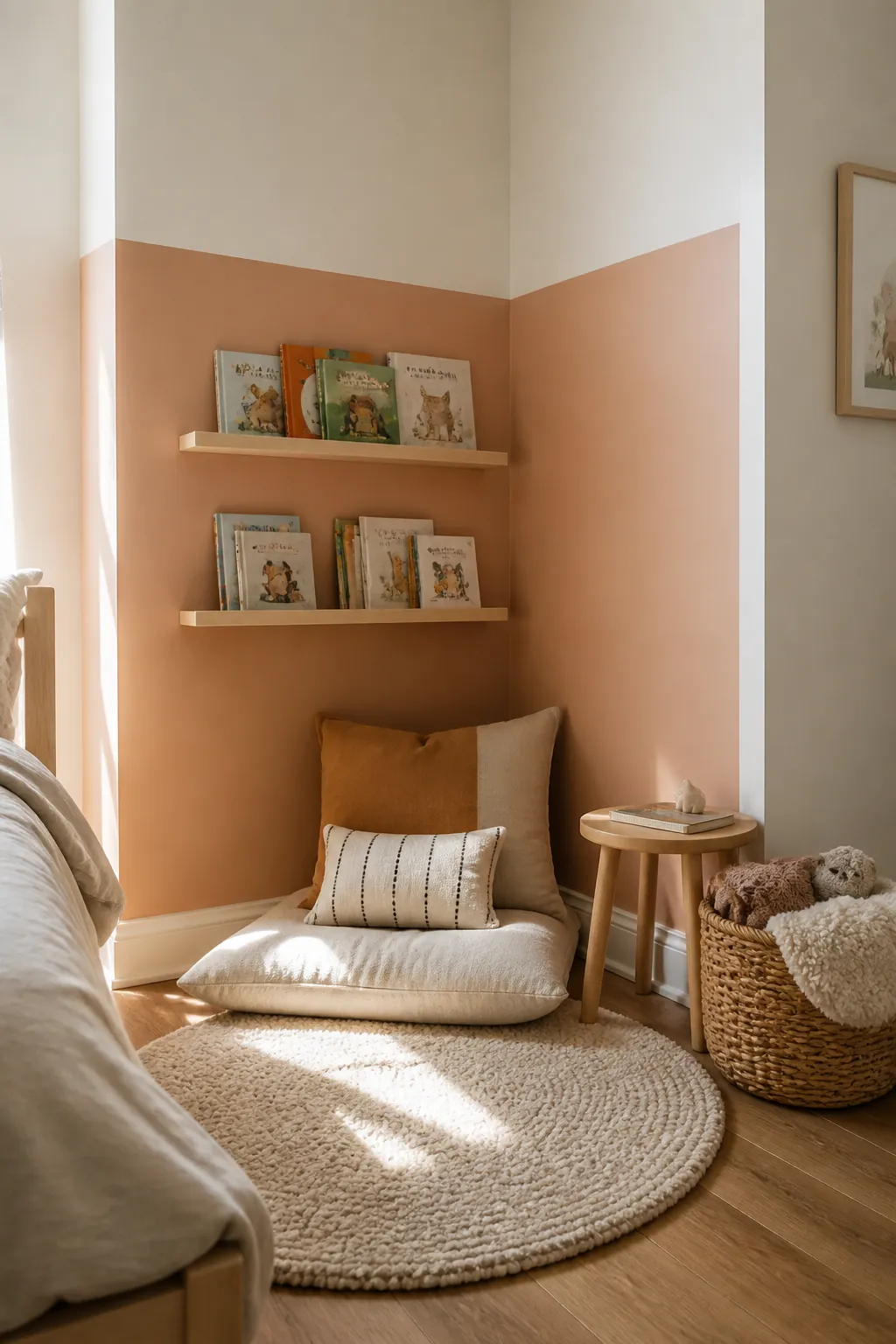
For this idea, the block does not have to be symmetrical. A wide blush panel behind a low shelf, a sage corner around floor cushions, or a soft blue band behind a small desk can be enough. The goal is to give the room rhythm, not to draw a mural.
Use slightly warmer colors for play zones and cooler colors for sleep zones. Peach, muted yellow, and clay feel cheerful in daylight. Blue-green, foggy lavender, and sage are easier near the bed. This lets one room support different moods without using harsh contrast.
Let Shared Rooms Have Personality Without Competing Walls
Shared kids bedrooms are where color blocking can do real work. Two children may want different colors, but painting every wall in separate themes can make the room feel divided. A better compromise is one quiet base color with two soft personal blocks, each tied to a bed, shelf, or reading light.
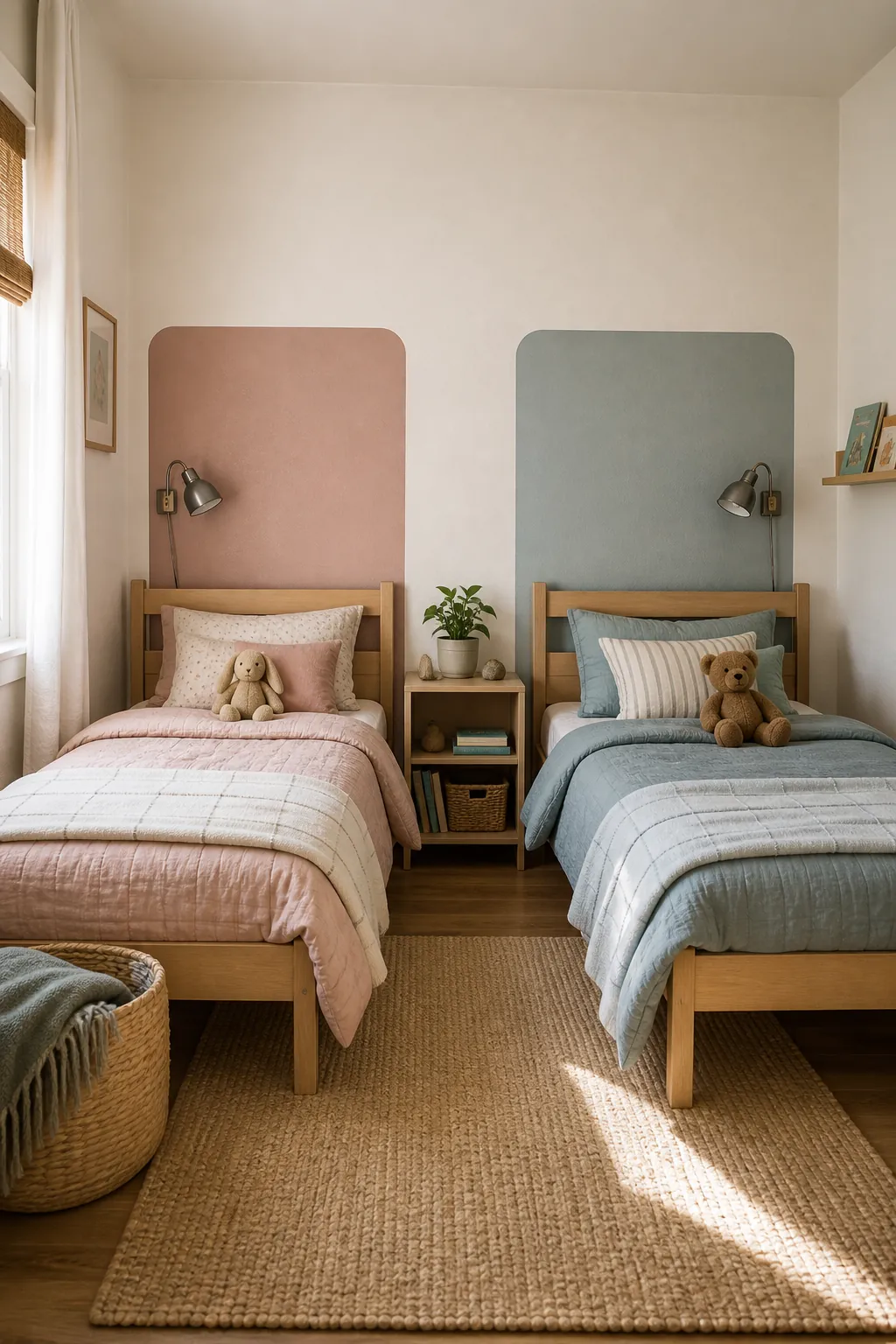
Keep the size and placement of the blocks similar, even if the colors are different. One child might choose dusty rose and the other muted blue, but the matching proportions make the room feel fair and calm. This is also easier to restyle later because you can repaint one block without reworking the entire room.
For bunk beds, consider a single vertical block behind the ladder or a soft band that lines up with the bunks. The paint should clarify the furniture, not fight it. In a small shared room, that restraint matters.
Use Vertical Blocks When the Room Feels Small or Low
Horizontal bands can make a room feel wider, but vertical shapes can help a low ceiling or compact Kids Bedroom feel taller. Try a soft painted arch behind a dresser, a narrow color column behind wall shelves, or a ceiling-height block behind a wardrobe. The vertical line draws the eye up without needing a dark dramatic color.
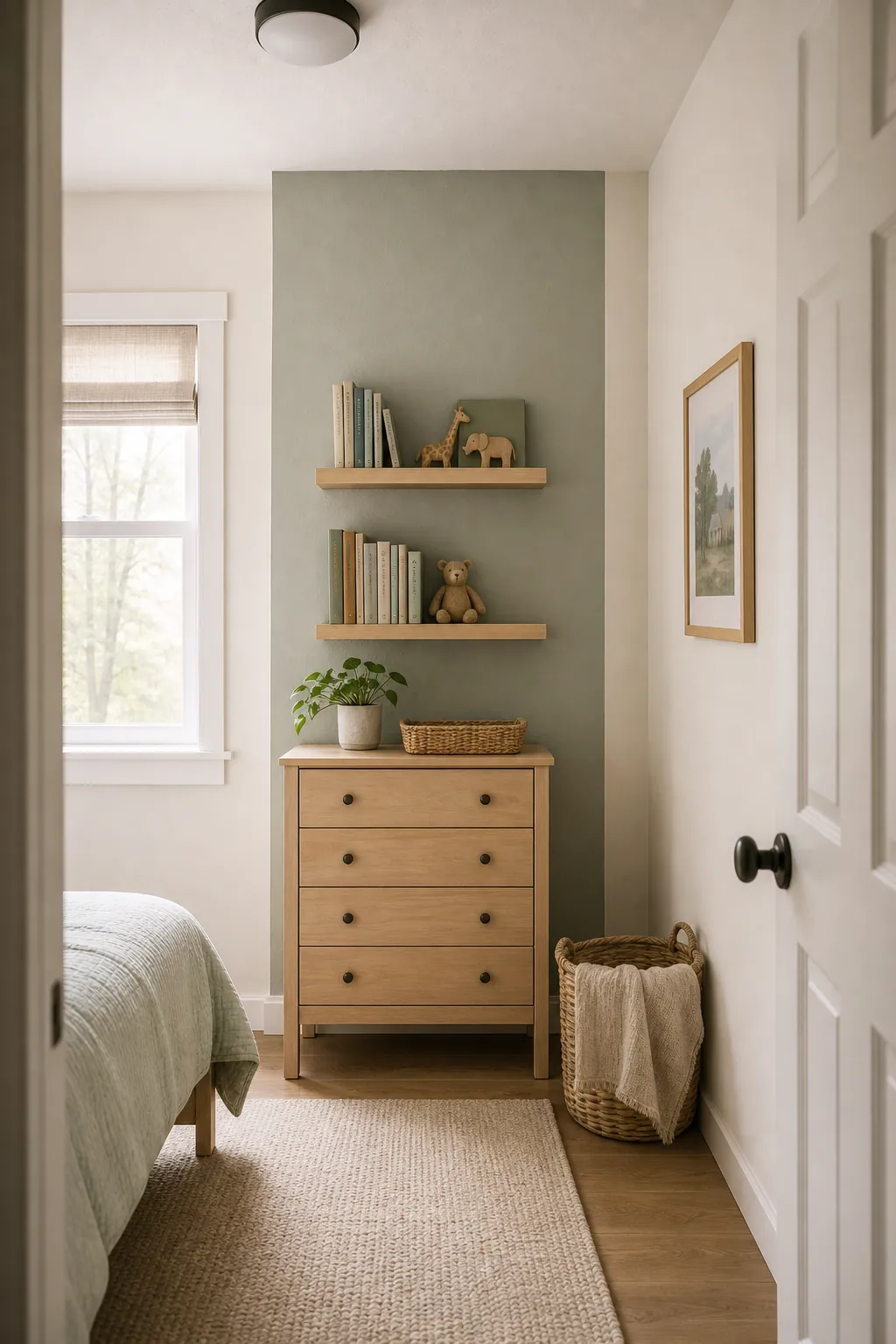
This works best when the shape has a job. Put a vertical block behind a mirror, book ledges, peg rail, or tall lamp. If the block is only decorative, it can feel random. If it frames something useful, it becomes part of the Bedroom Styling.
In very small rooms, limit the palette to two paint colors and let texture do the rest. Pale wood, woven baskets, linen bedding, and a low-pile rug will make the soft wall paint feel richer without adding more visual clutter.
Pull the Palette From Bedding, Rugs, and Storage
Paint is harder to change than a duvet cover, so let the movable pieces guide the wall. Before committing, lay out the bedding, rug, curtains, and storage bins you already own or plan to buy. The best soft color blocking palette usually repeats colors that are already in the room, just quieter on the wall.
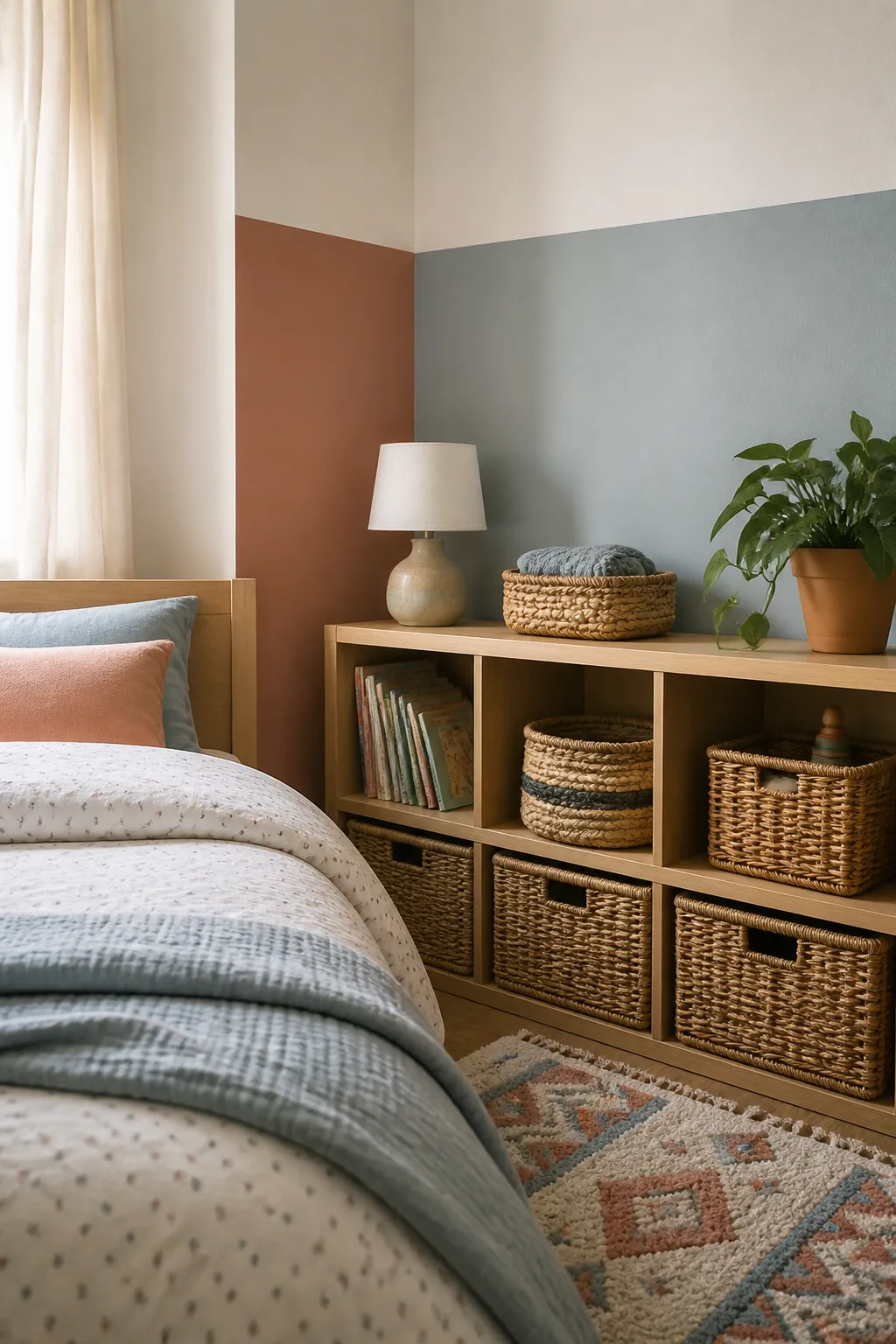
If the rug has terracotta, cream, and soft blue, use the cream as the base and let the blue or terracotta become a small block. If the bedding is already patterned, keep the wall shapes larger and calmer. Tiny painted shapes plus busy textiles can make a room feel restless.
- For a cozy room: warm white, clay, oatmeal, muted pink, and honeyed wood.
- For a calm room: soft blue, sage, warm gray, ivory, and pale oak.
- For a playful room: butter yellow, dusty coral, mint, chalk white, and natural storage baskets.
Test the Paint Like the Room Will Be Lived In
The biggest mistake with soft colors is assuming they will look soft in every light. Many Reddit decorating threads circle around the same surprise: a color that looked muted online or on a chip can turn brighter, colder, or muddier on the actual wall. Paint large samples where the blocks will go, then check them in morning light, afternoon light, and lamp light.
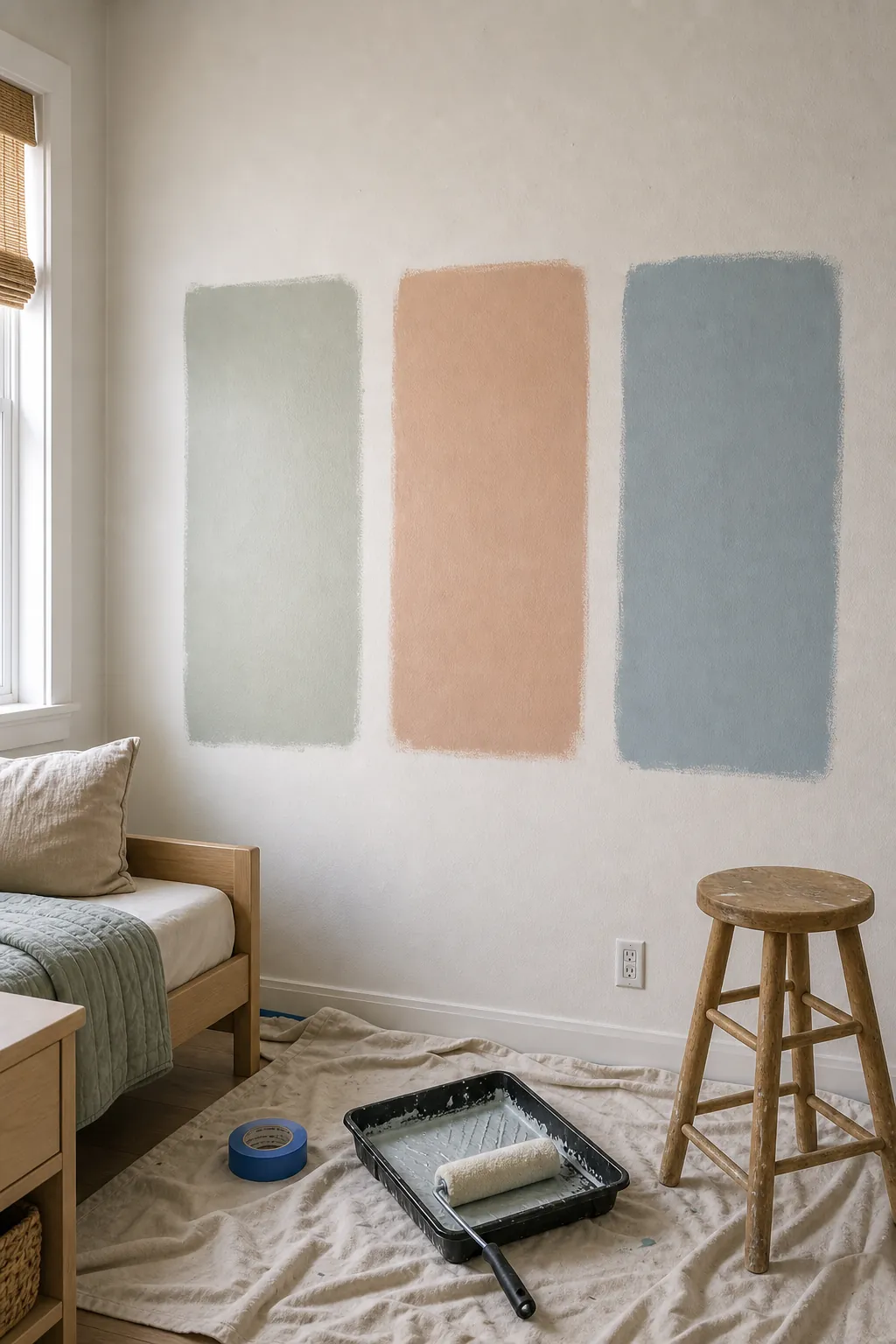
For kids rooms, the finish matters as much as the color. Eggshell and satin are common choices because they balance a softer look with easier cleaning. If you are painting a nursery, toddler room, or space used by children with sensitivities, choose low-VOC or zero-VOC paint when possible, ventilate well, and keep children out of the room while paint cures according to the product directions.
Use painter’s tape slowly, press the edge firmly, and remove it before the paint fully hardens so the line stays clean. Color blocking does not need to be complicated, but it does reward patience. A simple soft band with a crisp edge usually looks better than an ambitious pattern with messy lines.
Keep the Room Flexible Enough to Grow
The best Kids Bedroom Paint Ideas do not freeze the room at one age. They give children color now and leave parents a path to update later. Soft color blocking does that because you can repaint a block, change bedding, or move the play corner without stripping the whole concept away.
Start with calm walls, add color where it has a purpose, and let the strongest choices live in smaller blocks. That balance keeps the room playful for kids, manageable for parents, and stylish enough to sit comfortably with the rest of the home.