
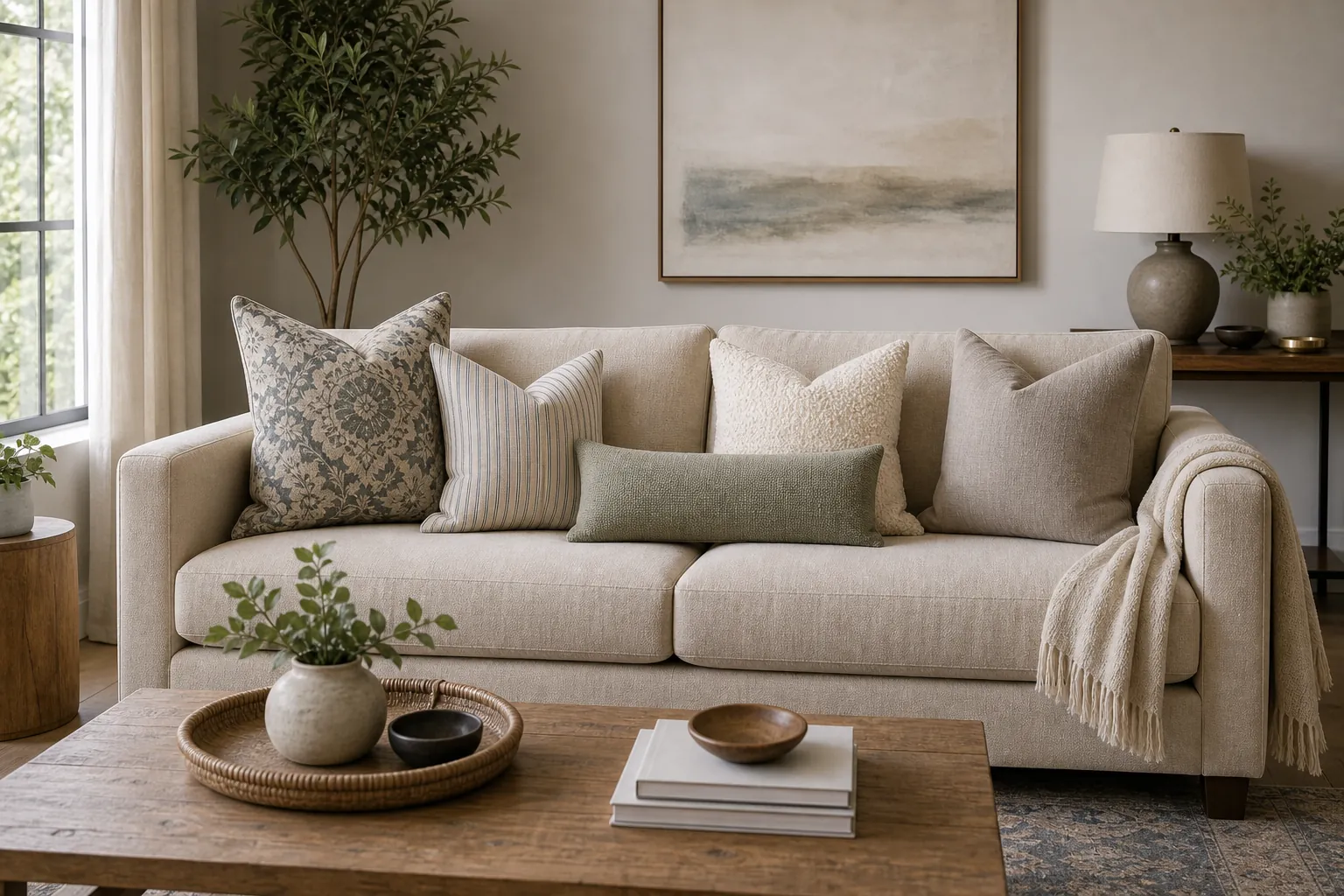
Mixing throw pillows should make a sofa feel finished, not crowded. The problem usually is not that the pillows are colorful or patterned. The problem is that too many pillows are trying to be the main thing at the same time.
A calm pillow combination has hierarchy. One pillow gets to be bold. One or two support it. The rest give the sofa texture, comfort, and breathing room. When every pillow has a different color, scale, pattern, and personality, the sofa starts to look busy even if each pillow is attractive on its own.
Use these sofa styling rules when you want pattern mixing, color balance, and layered soft decor without visual clutter.
Pick a Palette Before You Pick a Pattern
The easiest way to keep throw pillows from looking busy is to limit the palette first. Choose two main colors and one quiet neutral. The neutral can be cream, beige, taupe, gray, brown, or white. The two colors should come from something already in the living room: the rug, art, curtains, lamp, chair, or wood tone.
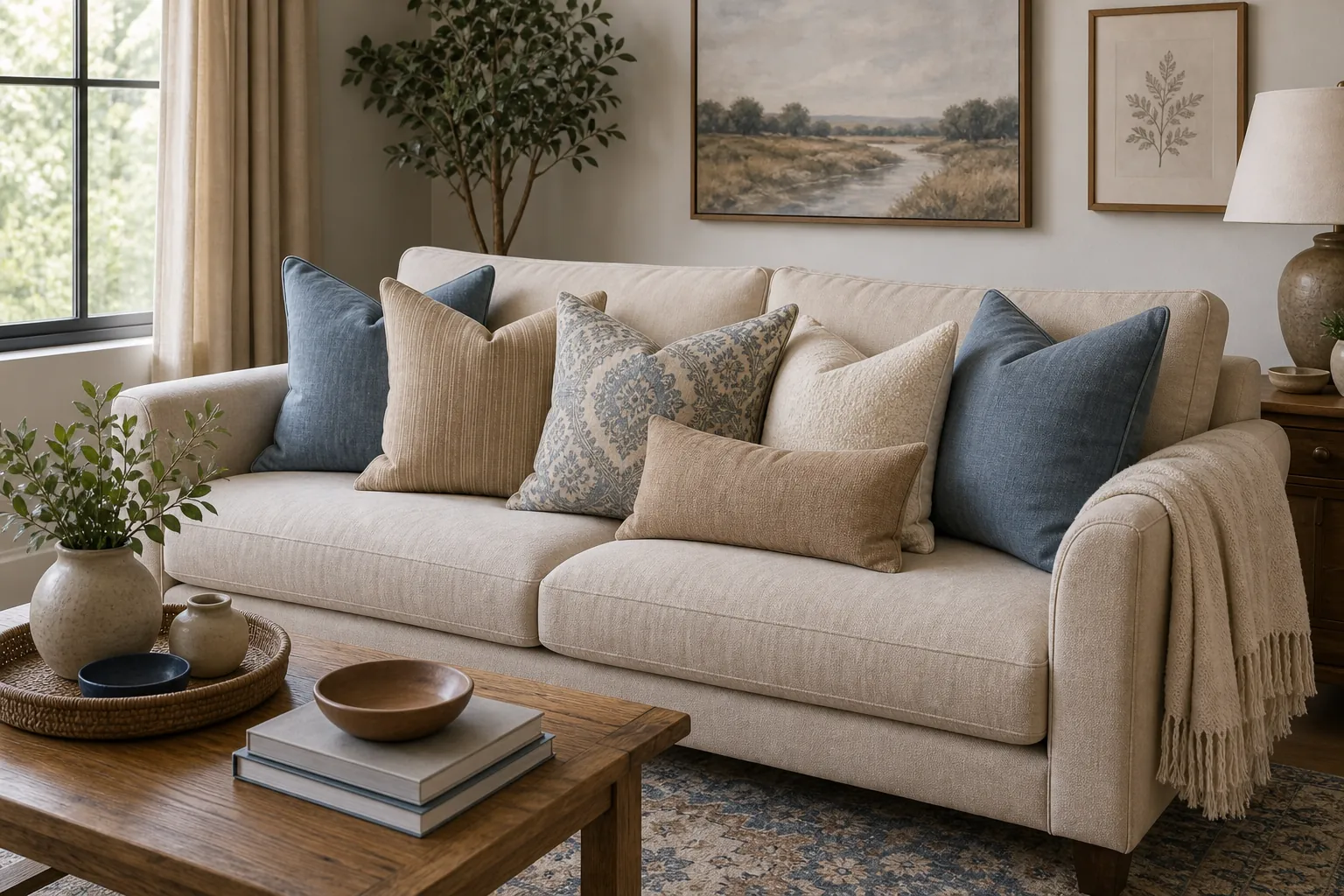
For example, if your rug has soft blue and warm tan, a blue patterned pillow, a tan textured pillow, and a cream solid pillow will feel connected. If your art has olive and black, use olive as the soft accent and black as a small contrast detail. The sofa looks styled because the pillows repeat the room instead of introducing a new color story.
If you are unsure, keep the biggest pillows neutral and use the strongest color on the smaller pillows. This gives the sofa energy without turning the whole seating area into a color block.
Let One Pillow Be the Hero
A mixed pillow combination needs a lead piece. This is usually the pillow with the largest pattern, strongest color, or most interesting fabric. Once you choose the hero pillow, every other pillow should support it instead of competing with it.
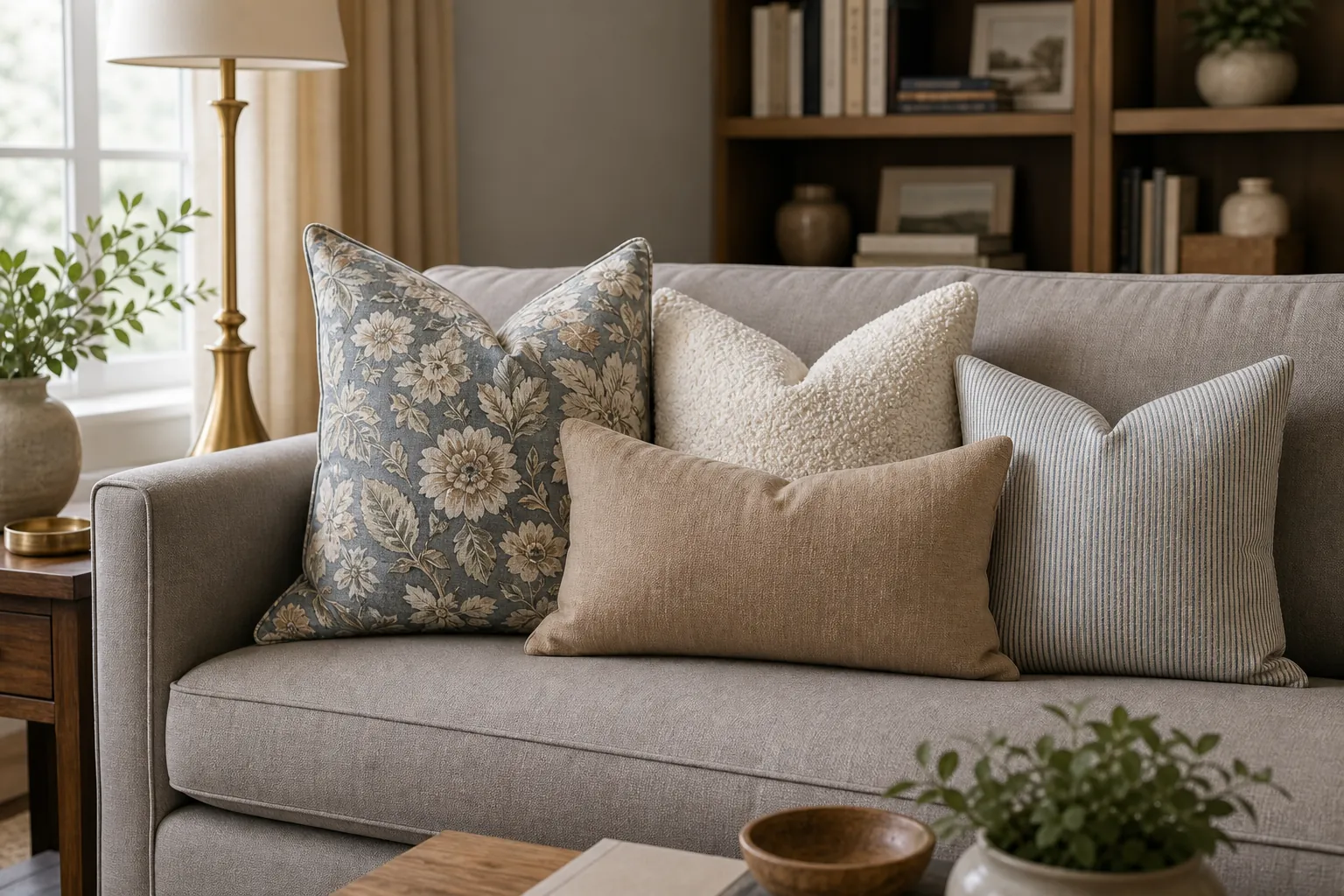
A hero pillow might be a large floral, block print, abstract pattern, woven kilim, plaid, stripe, or embroidered design. Look at the colors inside that pillow and repeat only one or two of them. If the hero pillow has blue, cream, and tan, the support pillows can be cream boucle, tan linen, and a tiny blue stripe. That is enough.
The hero rule is especially helpful when you are drawn to several patterns. Put the boldest one on the sofa first. If the second bold pattern makes the first one less clear, it belongs in another room or another season.
Mix Pattern Scale, Not Pattern Volume
Pattern mixing looks busy when every pattern is the same size. A medium floral, medium stripe, medium check, and medium geometric all ask for equal attention. Instead, vary the scale. Use one large pattern, one small pattern, and one solid or heavily textured pillow.
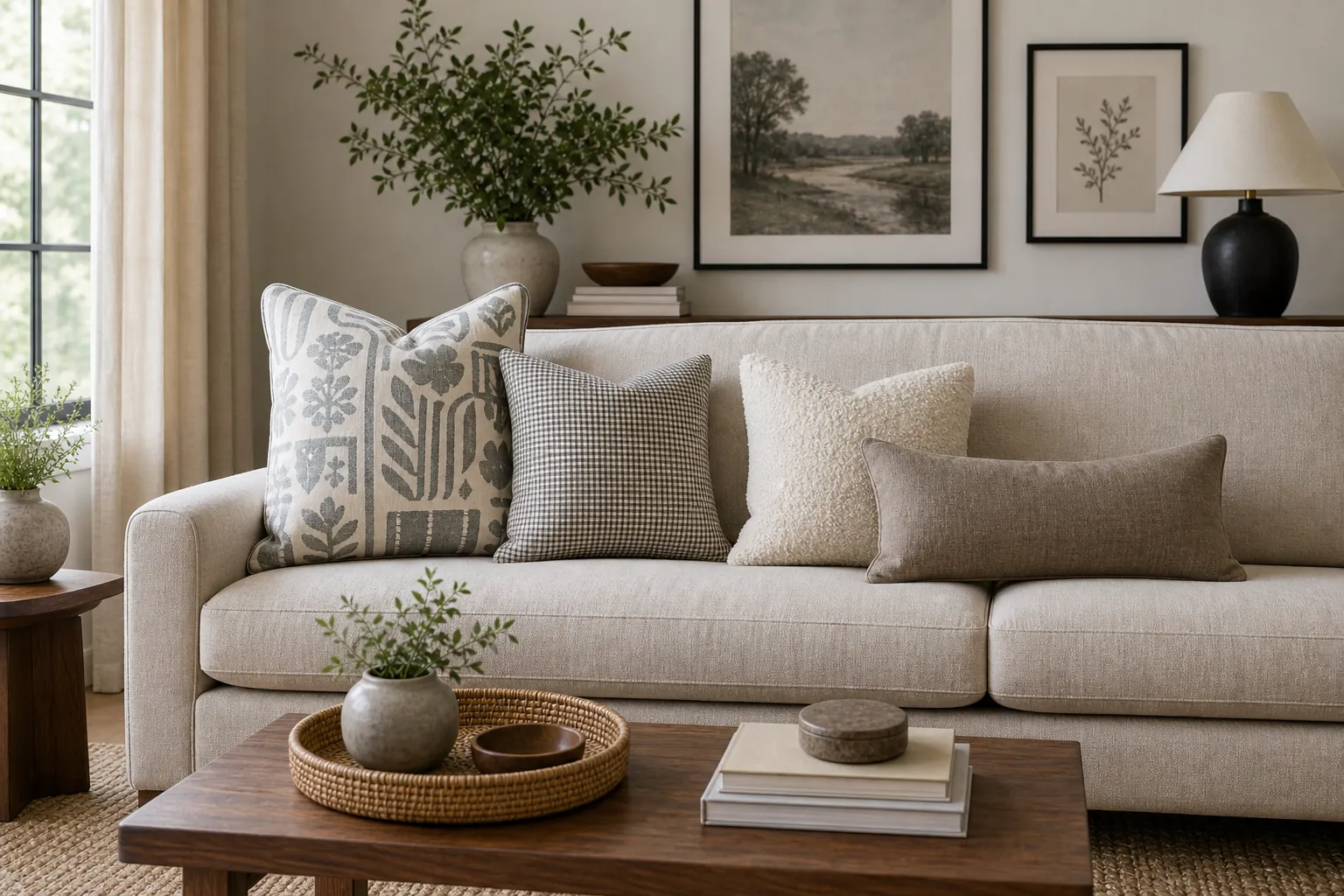
Think of it like this:
- Large scale: oversized floral, broad stripe, abstract shape, large plaid, or block print.
- Small scale: pinstripe, tiny check, small dot, fine herringbone, or narrow geometric.
- Solid texture: boucle, linen, velvet, woven cotton, chenille, corduroy, or wool.
The small pattern should read almost like texture from across the room. That is what keeps the sofa from feeling loud. A tiny stripe or mini check gives the eye detail up close, while the hero pattern carries the style from a distance.
Use Texture as the Quiet Middle Ground
Texture is the easiest way to add depth without making the sofa busier. If you already have a patterned rug, patterned curtains, or colorful art, your pillow combination may need more texture and fewer prints.
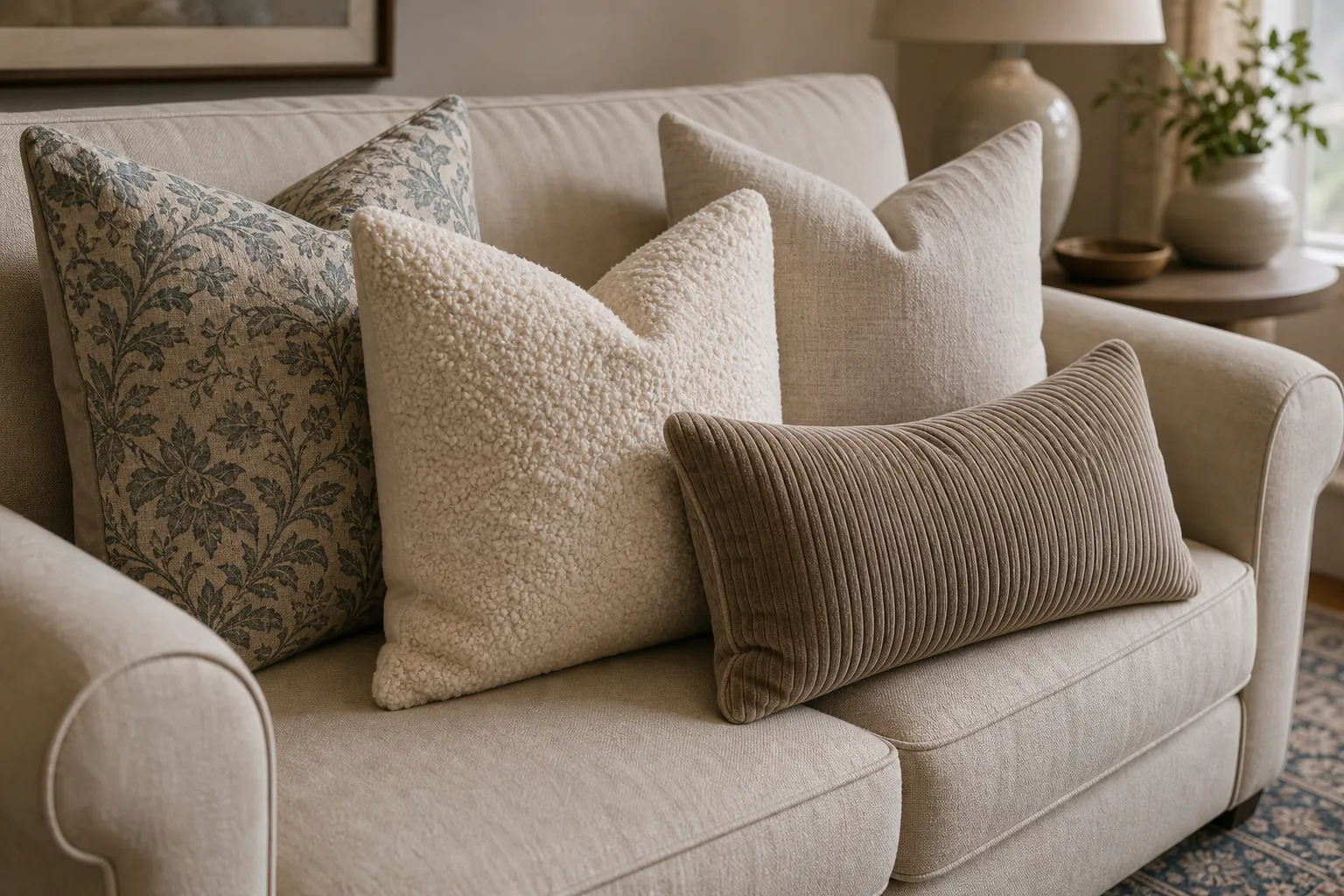
Use texture to bridge the gap between plain and patterned pillows. A cream boucle pillow softens a bold floral. A ribbed velvet lumbar adds depth next to a stripe. A slub linen pillow keeps the mix relaxed. These pieces do not shout, but they stop the sofa from looking flat.
If your pillow combination feels almost right but slightly chaotic, remove one printed pillow and replace it with texture in a color already in the room. Most busy sofas improve immediately with that one change.
Leave Space for the Sofa to Show
Too many pillows can make even a beautiful sofa look like a display shelf. Leave some seat and back cushion visible. Negative space is what lets the pillow combination breathe.
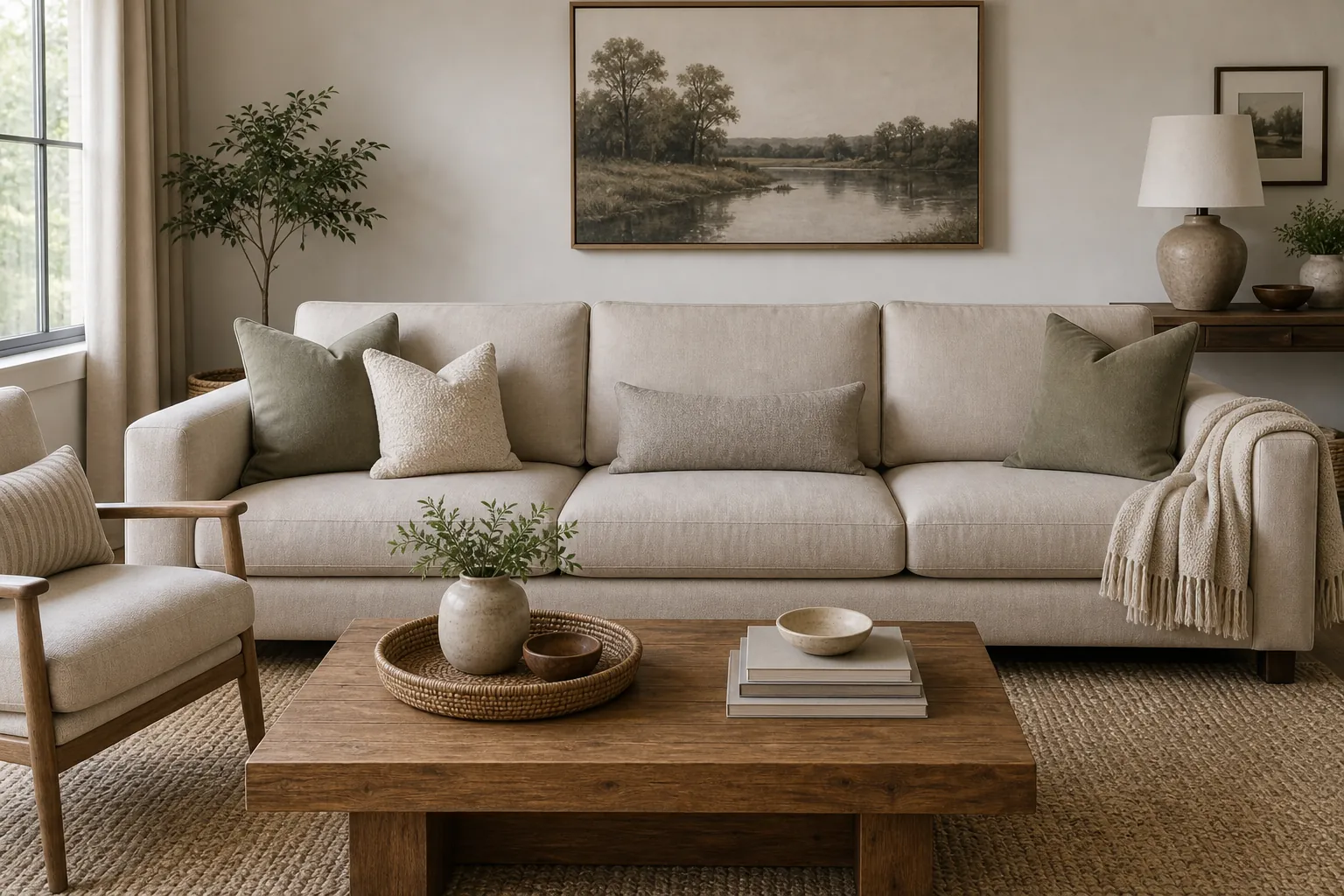
For a standard sofa, three to five pillows is usually enough. Try two larger pillows in the corners, one smaller pillow layered in front, and one lumbar pillow in the center. If the sofa is small, stop at three. If it is a long sofa or sectional, you can use more, but keep each cluster simple.
There is also a practical test: people should not have to move a pile of pillows before they can sit down. A sofa that looks good only when no one uses it is not good home styling.
Repeat One Detail Across the Combination
A pillow mix feels intentional when one detail repeats. It might be color, piping, fabric texture, pattern shape, or warmth level. The repetition does not need to be obvious. It just needs to be present enough that the eye understands why the pillows belong together.
Good examples include cream backgrounds across multiple pillows, black piping repeated on two pieces, warm tan appearing in both a stripe and a floral, or linen texture repeated in different colors. This is a cleaner strategy than trying to match everything exactly.
Edit the Mix From Across the Room
After you arrange the pillows, step back. A pillow combination can look balanced up close but busy from across the room. The across-the-room view shows whether the sofa has a clear focal point, whether the colors are balanced, and whether one side feels heavier than the other.
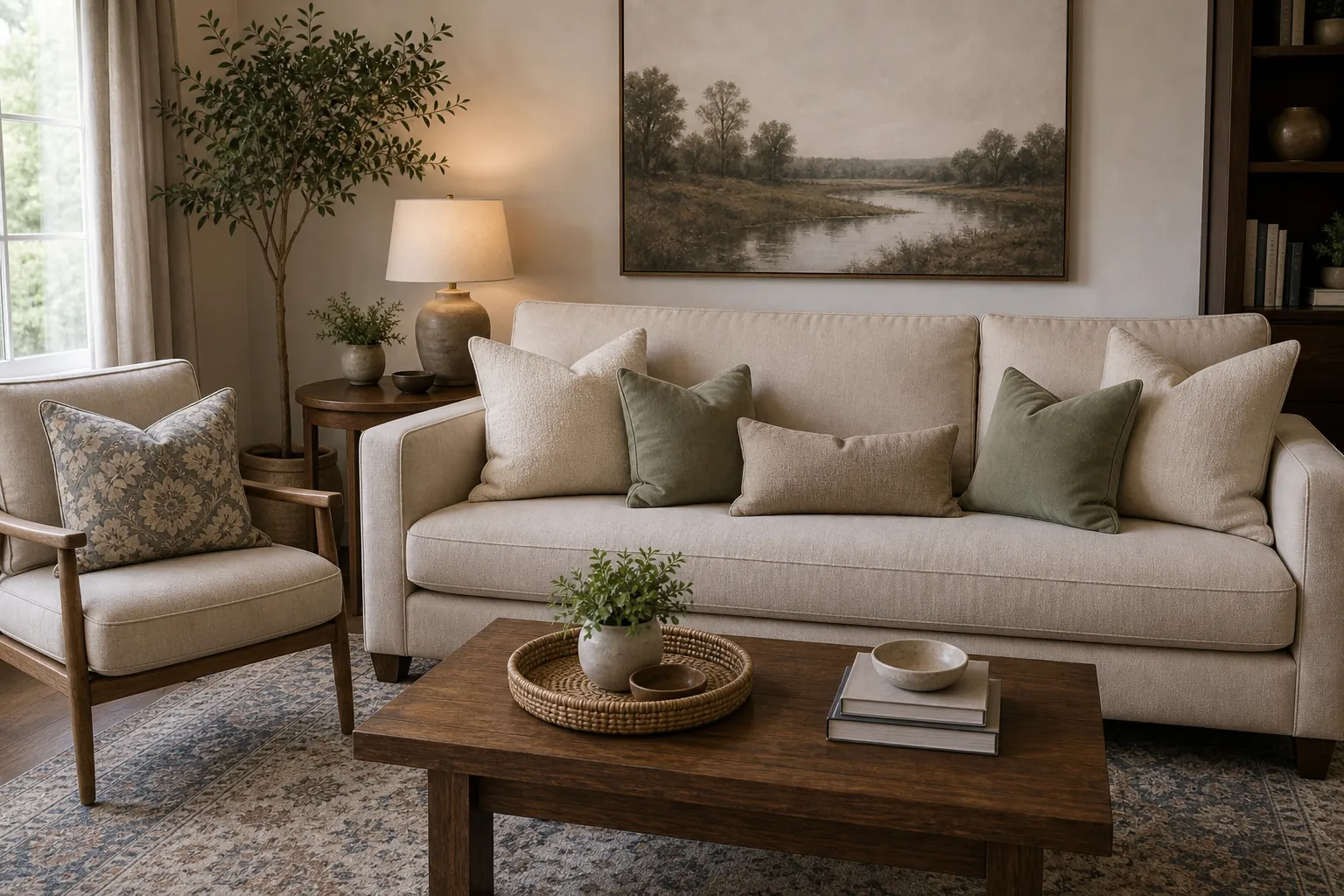
If the sofa feels busy, do not buy another pillow to fix it. Remove one. Start with the pillow that introduces a color not found anywhere else. Then remove the pillow with the pattern scale closest to another pattern. Finally, check whether the remaining pillows have enough texture. Editing usually solves the problem faster than adding.
Simple Pillow Combinations That Do Not Look Busy
- Soft neutral mix: cream boucle, taupe linen, beige stripe, camel lumbar.
- Color-balanced mix: blue hero pattern, cream texture, tan linen, tiny blue stripe.
- Modern contrast mix: ivory solid, black-piped pillow, charcoal lumbar, small check.
- Warm earthy mix: rust block print, oatmeal boucle, camel linen, chocolate velvet.
- Pattern-light mix: large floral, tiny stripe, solid texture, neutral lumbar.
The goal is not to make every pillow match. The goal is to make the sofa look considered. Keep the palette tight, choose one hero, vary pattern scale, add texture, and leave enough open space for the sofa to feel usable. That is how you mix throw pillows without making the sofa busy.