
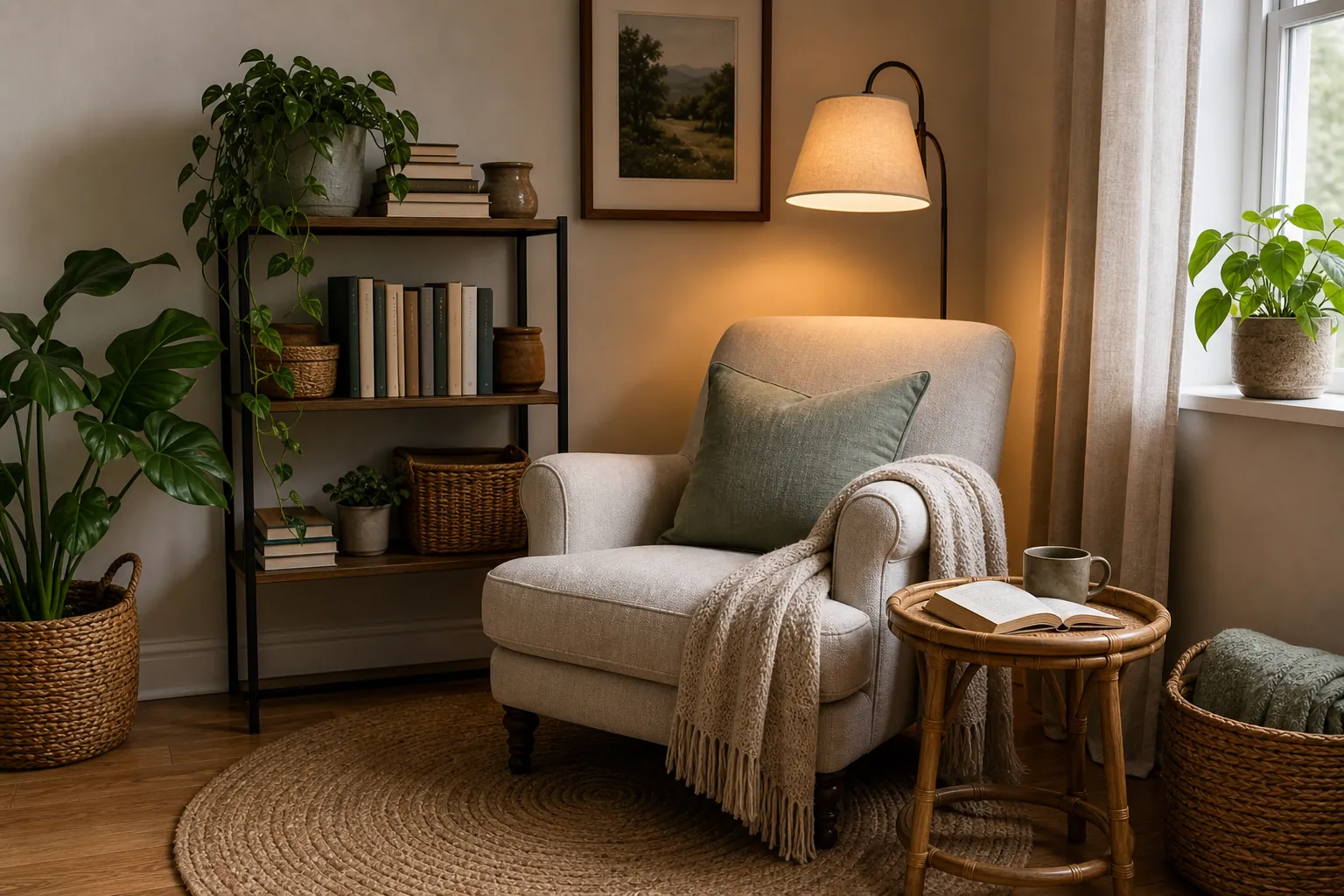
A built-in reading nook has an obvious advantage: it already feels like a destination. The walls, bench, shelves, and trim do half the decorating for you. But you can get the same cozy feeling without construction if you recreate what built-ins actually do.
Built-ins make a book nook feel enclosed, useful, and separate from the rest of the room. That is the real goal. You do not need permanent bookshelves or a custom bench. You need a comfortable seat, a little visual frame, a dedicated light source, nearby book storage, and enough soft texture to make the corner feel worth choosing.
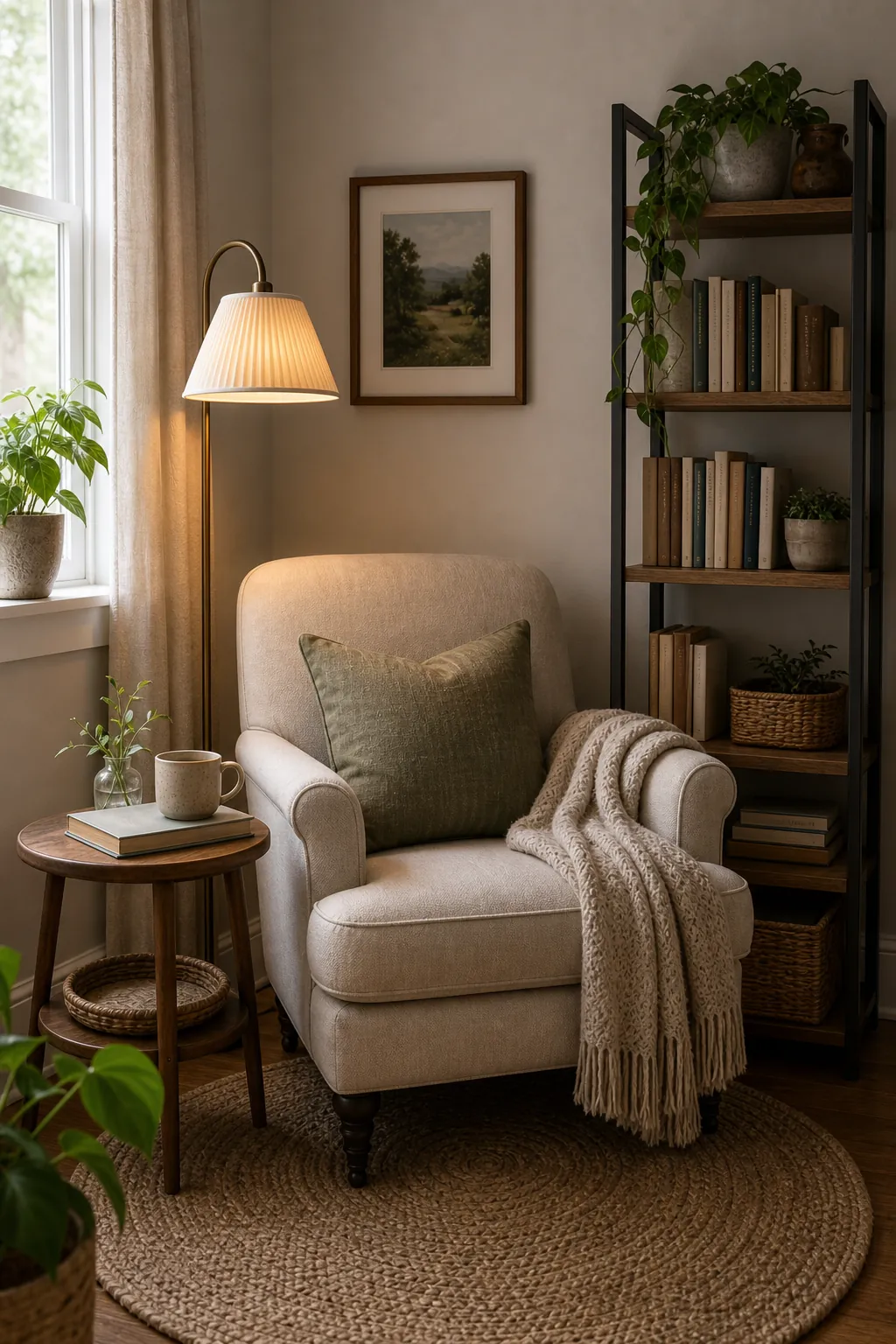
Frame the Chair With Furniture You Can Move
The easiest way to fake the built-in feeling is to place furniture around the chair so it feels held in place. A slim bookcase on one side, a side table on the other, and a lamp behind the chair can create a soft frame without attaching anything to the wall.
If you have a window, two narrow bookcases can frame it like built in bookshelves while staying completely removable. If your space is too small for two bookcases, use one tall bookcase on the open side of the chair. That single vertical piece can make the reading corner feel more protected.
Keep the chair slightly pulled forward instead of shoved hard into the corner. A little shadow behind it makes the nook feel layered. A chair that touches every wall can make the space look cramped, especially in a small apartment.
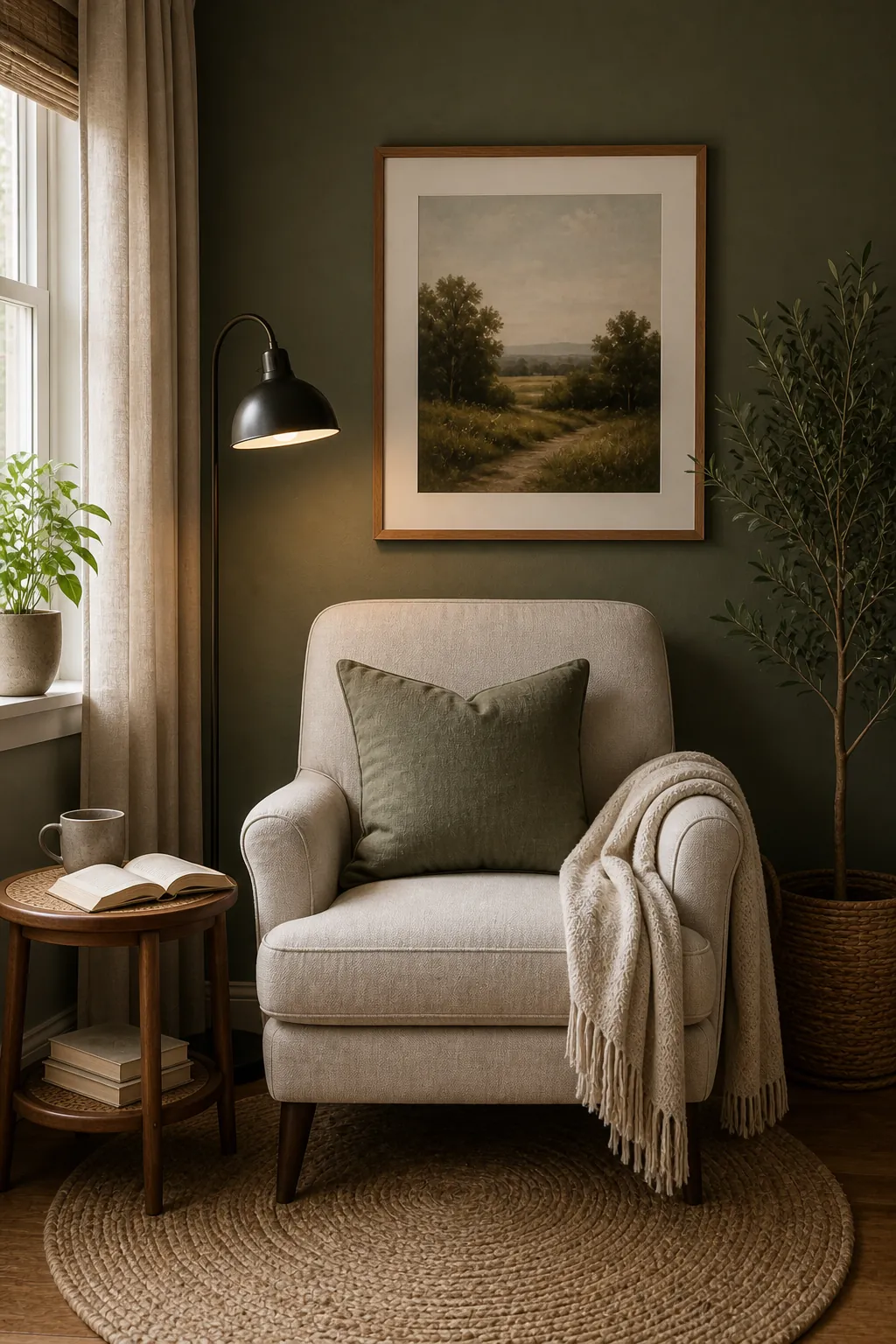
Use the Wall Behind the Chair as the Nook Backdrop
A built-in has a back. A freestanding reading nook needs one too. The wall behind the chair is where the corner starts to feel intentional rather than temporary.
If you can paint, consider a slightly deeper wall color behind the chair: moss, mushroom, muted blue, warm taupe, clay, or soft olive. If you rent or do not want to paint, use framed art, a textile wall hanging, removable wallpaper, or a large leaning print. The point is not to decorate every inch. The point is to give the cozy corner a visual backdrop.
One large piece usually looks calmer than many small ones. If you do use a gallery arrangement, keep the frames close enough to read as one shape over the chair. Scattered pieces can make the reading nook feel unfinished.
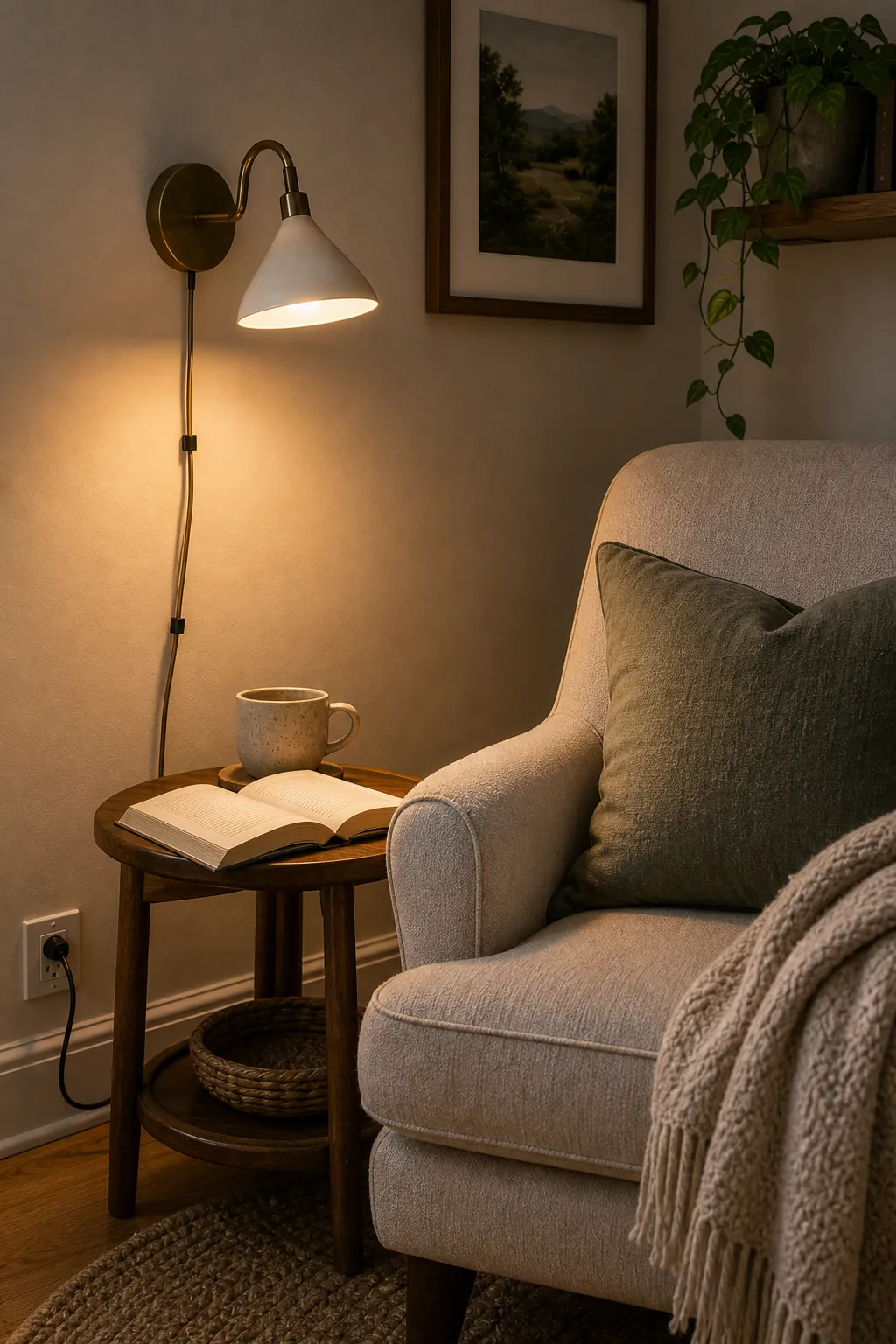
Give the Nook Its Own Warm Light
Overhead light makes a room visible. A dedicated reading light makes a nook feel cozy. Without a built-in, this matters even more because light is one of the strongest ways to mark a spot as separate.
A floor lamp works if there is room behind or beside the chair. A plug-in wall sconce works well when floor space is tight. A swag pendant can also make the corner feel more enclosed, especially if it hangs low enough to create a warm pool of light without blocking sight lines.
Choose warm bulbs and avoid placing the shade directly in your eye line. The best reading nook lighting lands on the page, not your face. If the lamp has a cord, route it neatly along the baseboard or behind furniture so the corner still feels polished.
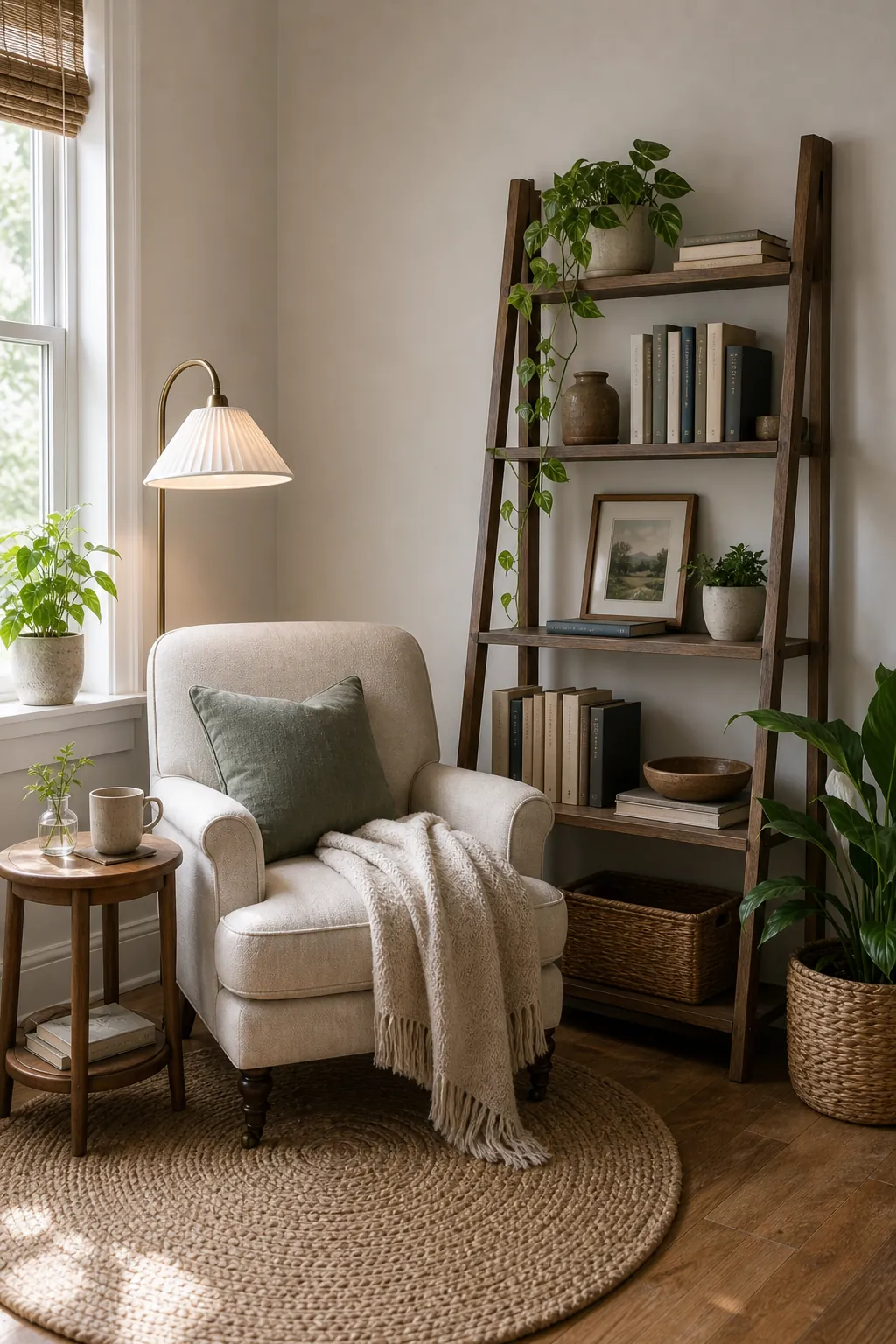
Choose Book Storage That Does Not Pretend to Be Custom
Freestanding book storage looks best when it is honest. A clean bookcase, ladder shelf, low console, or rolling cart can all work. What usually looks off is a temporary piece crammed into a space as if it were a custom built-in.
Leave breathing room around the book storage. Let the shelves hold books, but break up long rows with a small basket, plant, framed photo, or horizontal stack. This keeps bookshelf decor from feeling stiff while still leaving room for actual books.
If you have more books than the nook can handle, store the overflow elsewhere and keep the reading corner stocked with current reads, favorites, and a few display books. A cozy home library feeling comes from access and atmosphere, not from forcing every book into one chair corner.
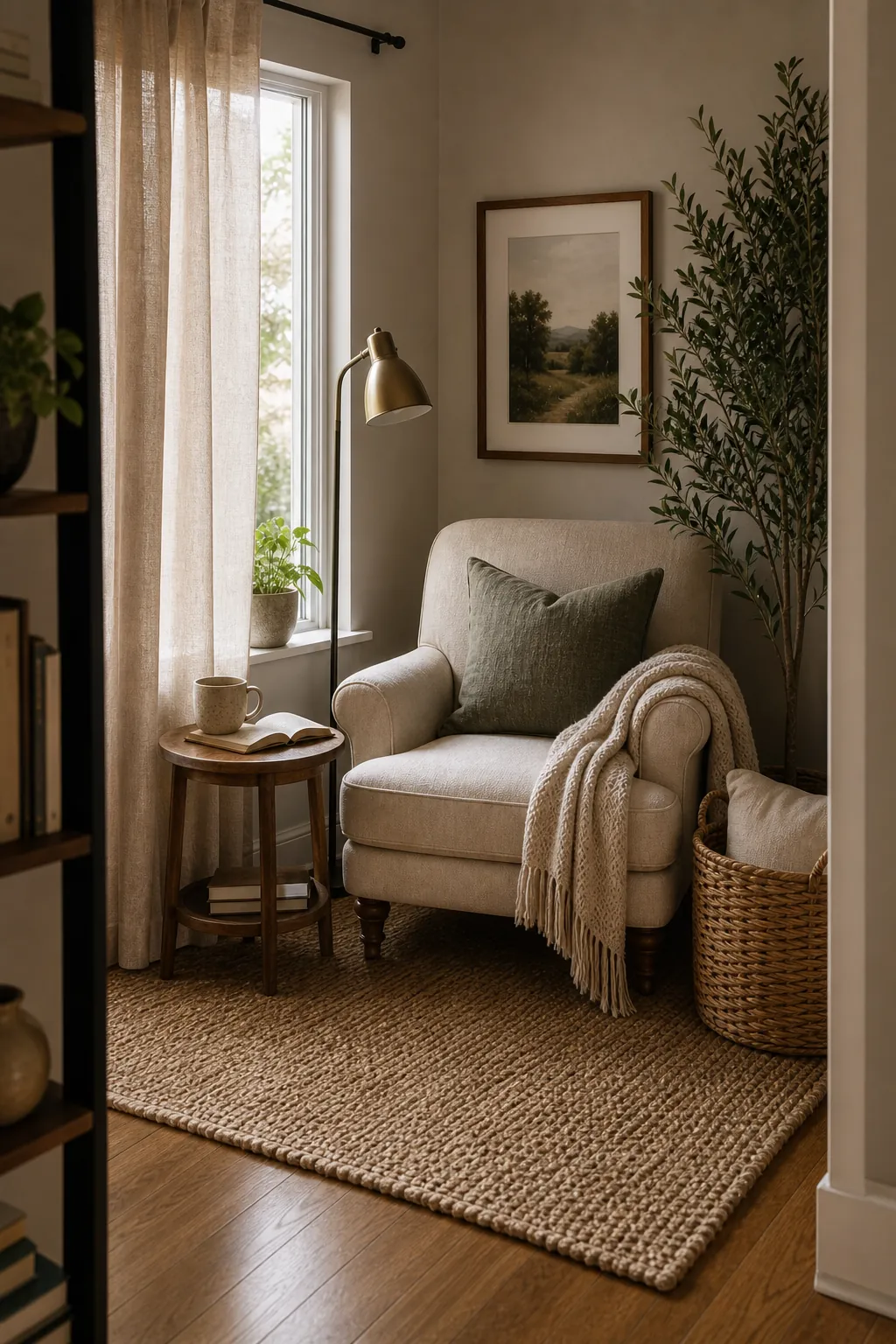
Make the Floor and Edge Feel Soft
Built-ins feel cozy partly because they have edges. A freestanding reading nook can borrow that feeling with a rug, curtain, basket, or plant. These pieces create a soft boundary without building a wall.
Place a rug under the chair so at least the front legs sit on it. Add a curtain panel near a window, even if it is just linen or cotton. Put a tall plant or woven basket on the open side. Together, these pieces make the small nook feel wrapped, but not closed off.
Natural textures are especially useful here: jute, bamboo, rattan, wool, linen, cotton, and warm wood. They add depth without making the corner visually heavy.
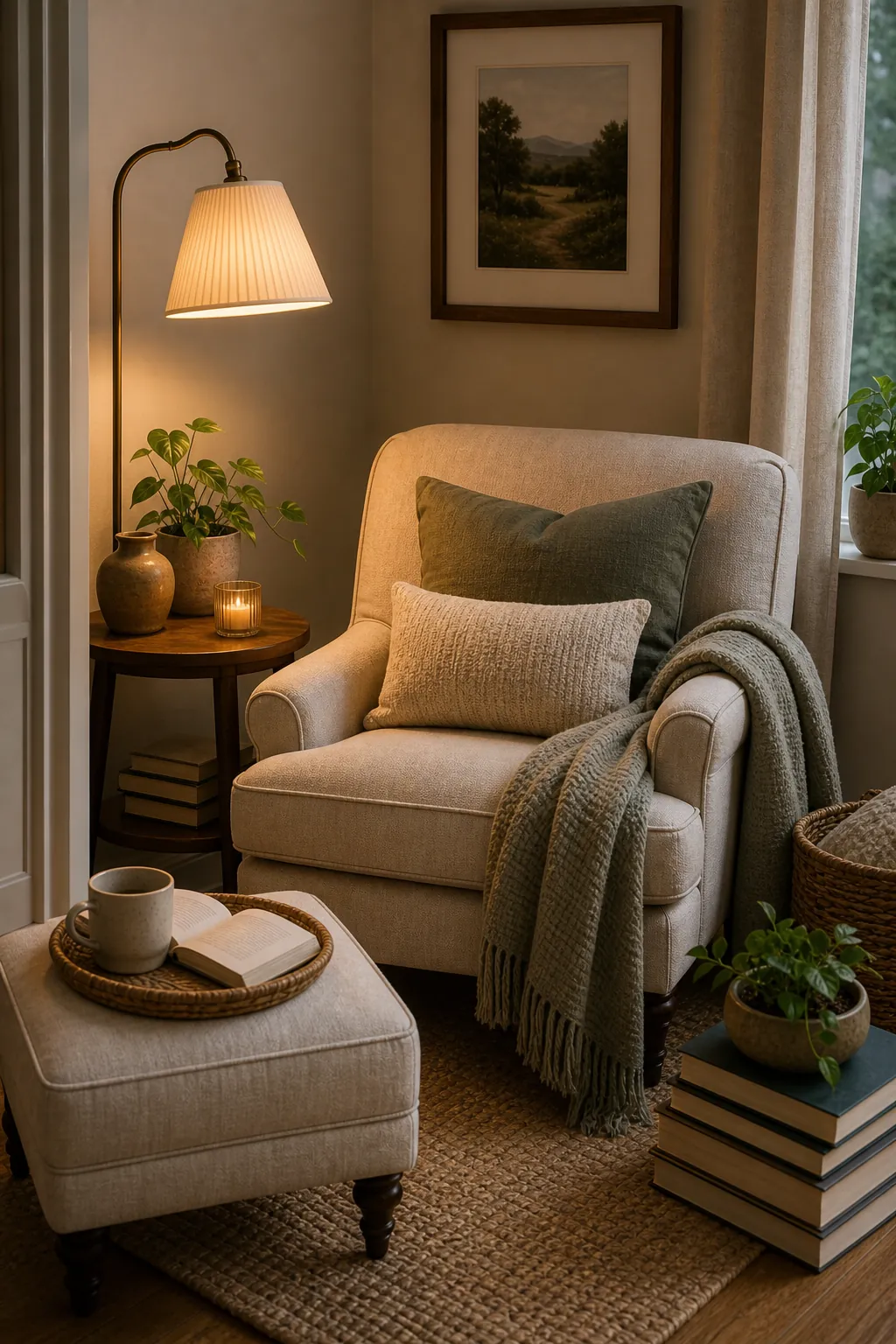
Make the Seat Comfortable Enough to Actually Use
A reading nook that looks pretty but feels stiff will become the chair where laundry lands. Comfort is not optional. Choose a chair with enough seat depth for the way you read, then add support where your body needs it.
If the chair is deep, use a lumbar pillow. If you curl up, add a softer throw and a small ottoman or pouf. If you sit upright, prioritize arm height, lamp placement, and a side table within reach. The nook should support your real reading posture, not an idealized photo pose.
Keep the layers useful. One pillow, one throw, one place for your feet, and one surface for a drink can do more than a pile of accessories. Cozy is not the same as crowded.
A No-Built-In Reading Nook Checklist
- Visual frame: bookcase, side table, lamp, plant, or art around the chair.
- Backdrop: deeper wall color, removable wallpaper, textile, or one large framed piece.
- Dedicated light: floor lamp, plug-in sconce, or swag pendant with a warm bulb.
- Reachable surface: side table, stool, cart, shelf, or low bookcase top.
- Book storage: enough books to make the habit visible, edited enough to avoid clutter.
- Soft boundary: rug, curtain, basket, plant, or natural texture at the edge.
The built-in look is not really about carpentry. It is about intention. When the chair has a frame, a light, a surface, and a reason to stay there, the reading nook feels cozy even if every piece can move tomorrow.