
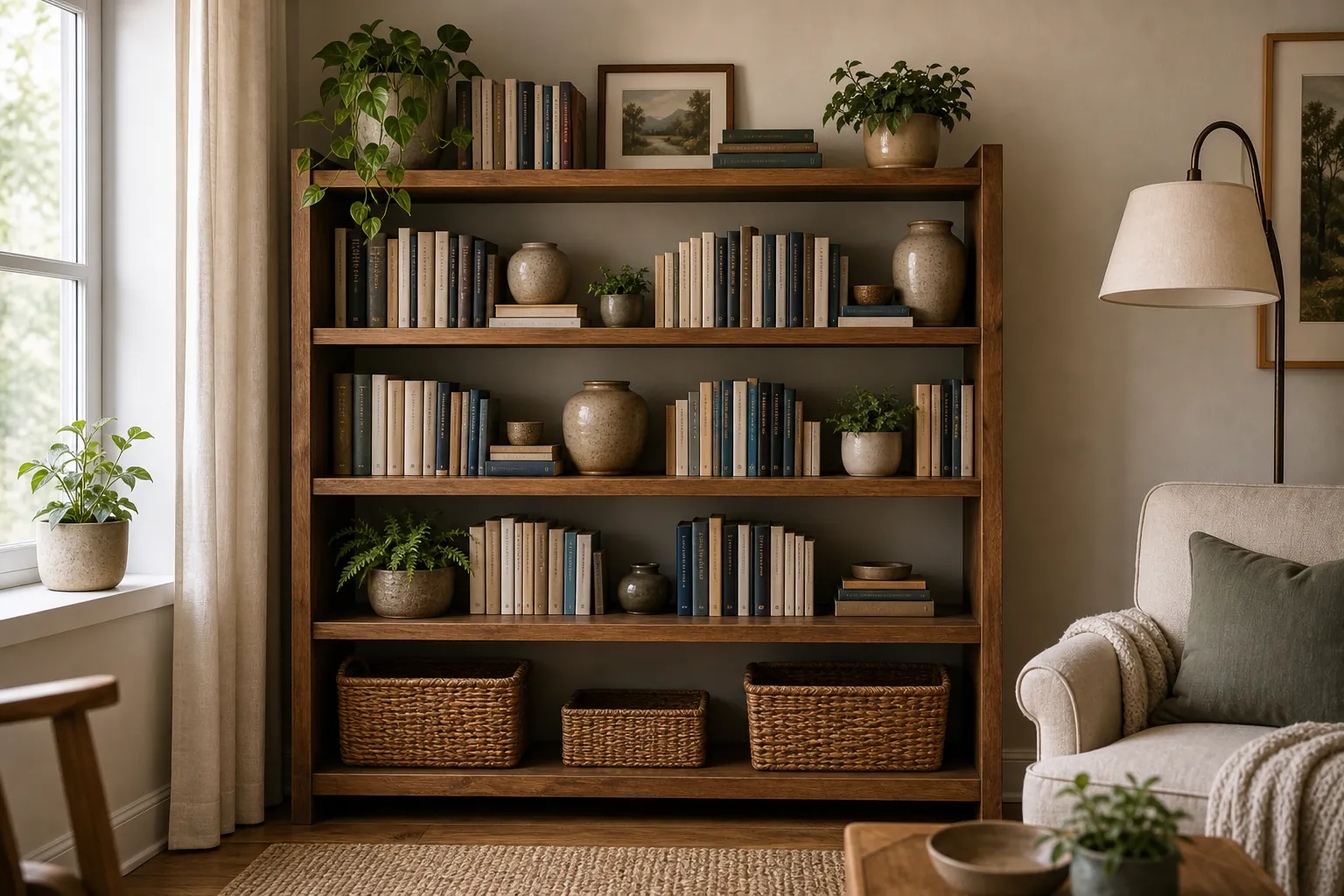
The hardest part of bookshelf styling is not making shelves look pretty. It is making them look good while they still work as book storage. A bookcase that is all decor can feel staged. A bookcase that is all books can feel heavy, especially in a living room, reading nook, or small home library.
The best bookshelf decor usually sits between those two extremes. It gives your books a clear place, adds a few personal objects, and leaves enough open space that the shelves do not read as clutter. The goal is not to hide your books. The goal is to make the whole bookcase feel intentional.
Start With the Books, Not the Decor
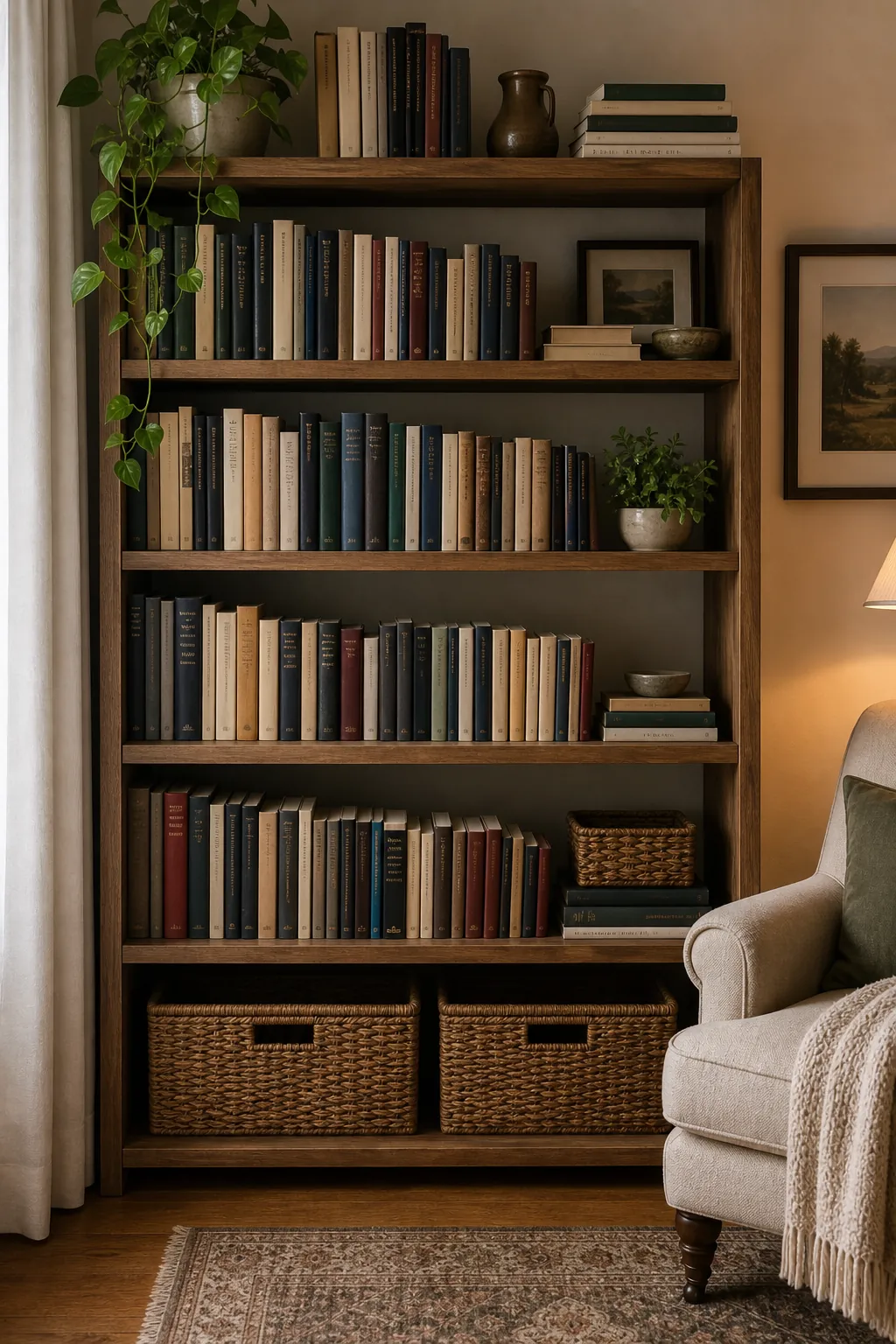
Before adding objects, place the books you actually want on the shelves. This keeps the bookcase honest. It also prevents the common problem where every shelf gets styled with vases, candles, and baskets, then there is nowhere useful for the books.
Make a few solid runs of vertical books first. They give the shelf weight and make the bookcase feel like a home library instead of a display cabinet. Then create smaller horizontal stacks where you need a lower shape or a base for one object.
If your shelves hold a lot of books, do not fight that. Let some shelves be mostly books. The styling can happen around them: one plant at the edge, one framed piece leaning behind a stack, one bowl on top of horizontal books. You do not need every shelf to have the same amount of decor.
Use Fewer, Larger Objects
A shelf often looks cluttered because it has too many small items. Small candles, tiny frames, mini vases, little bowls, and loose souvenirs can all be charming on their own, but together they create visual noise.
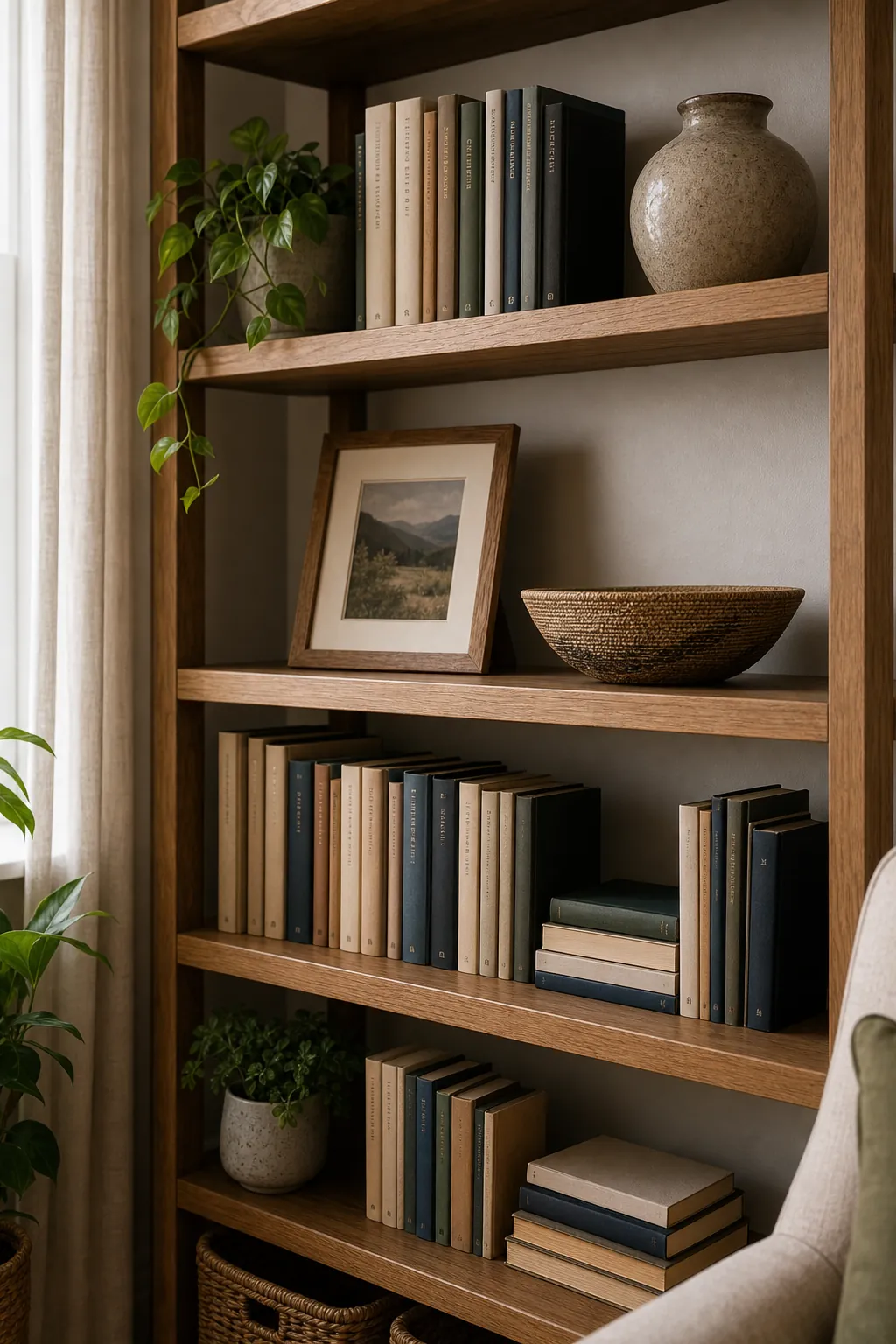
Choose fewer objects with stronger shapes. A medium ceramic vase, a wide bowl, a framed photo, a sculptural bookend, or a lidded basket will usually look calmer than five tiny pieces. Larger items also leave more room for books because they do not need as much fiddly spacing to look deliberate.
Try styling each shelf with one main non-book moment. That might be a plant, a framed print, a basket, or a pottery piece. Let the rest of the shelf support the books.
Mix Vertical Rows With Horizontal Stacks
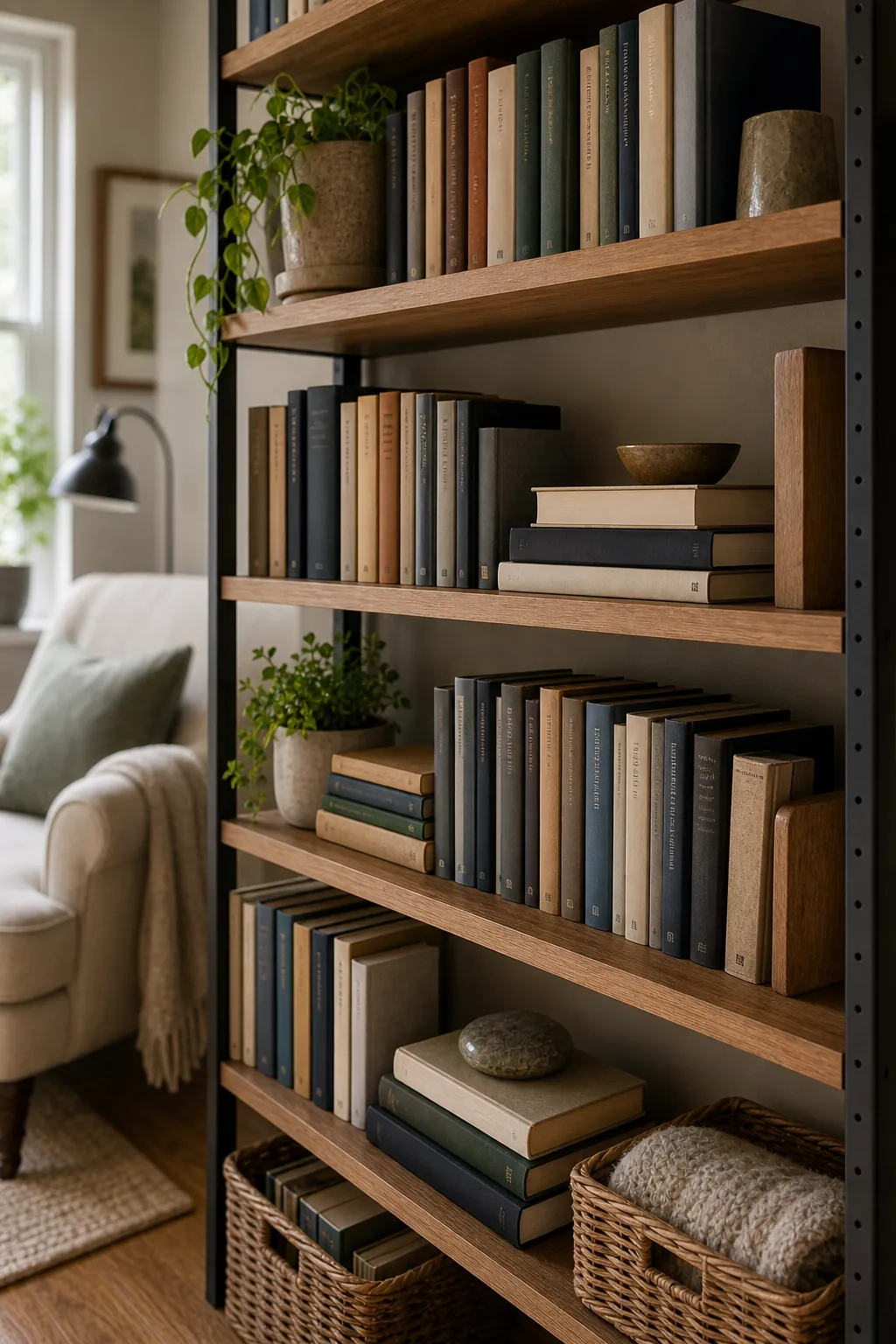
All vertical rows can make a bookcase feel dense. All horizontal stacks can make it hard to access books. A mix of both is usually the sweet spot.
Use vertical rows for books you reach for often. Use horizontal stacks for coffee table books, oversized books, or books that help vary the shelf height. A small object can sit on a horizontal stack, but keep the object light enough that moving it is not annoying when you want the book underneath.
Pay attention to the ends of book rows. A plant, bookend, framed photo, or heavier stack can stop a row from looking like it is sliding away. That small detail makes shelf styling feel finished without taking over the shelf.
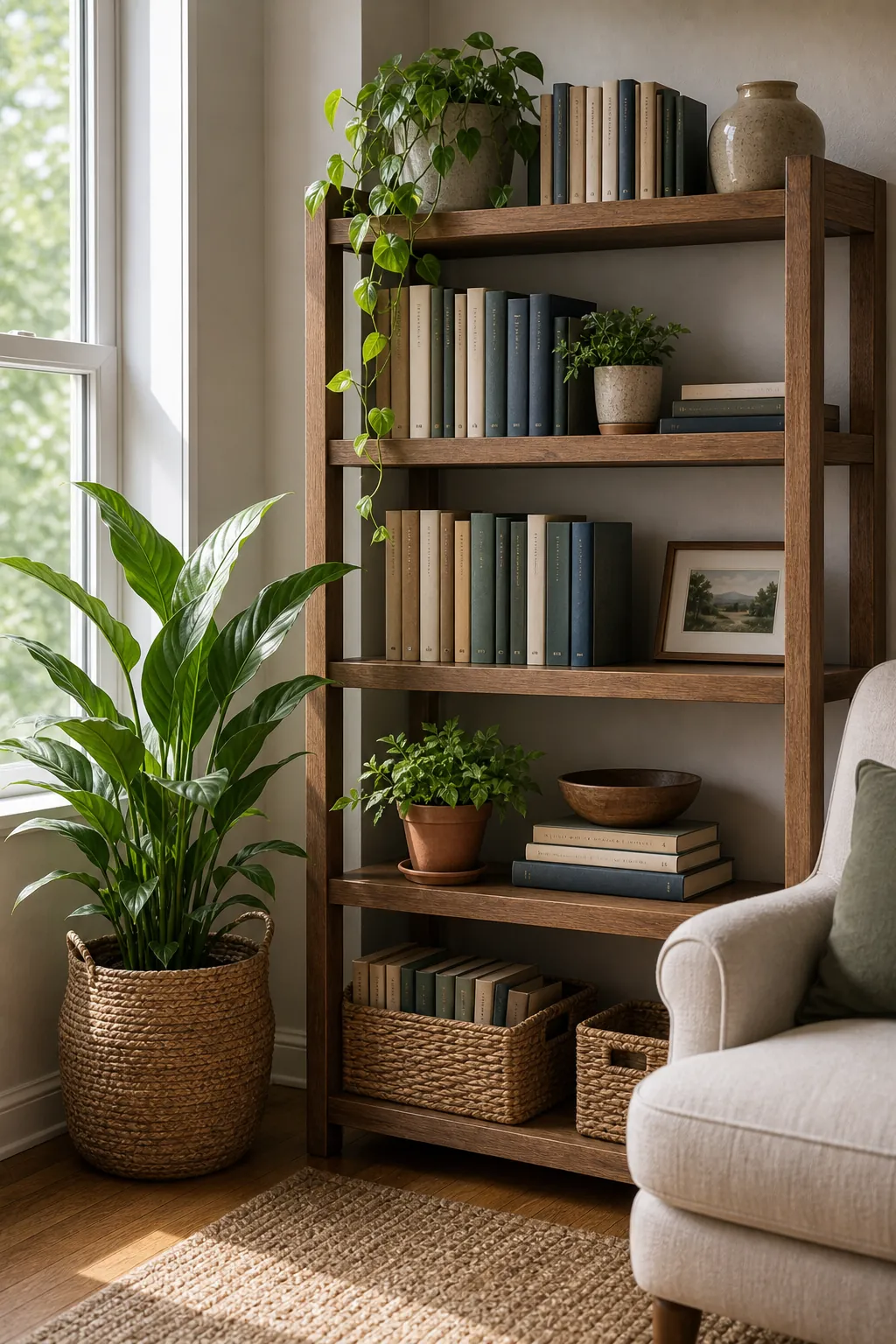
Keep Plants Proportional to the Shelf
Plant decor can soften the straight lines of a bookcase, but scale matters. A plant that is too tall, too bushy, or too far forward can make the shelf look messy and can block the books behind it.
Use a small trailing plant on one upper shelf, a compact pot near a book stack, or a larger plant on the floor beside the bookcase instead of forcing every plant onto the shelves. If the plant needs frequent watering, keep it in a tray and away from books that could be damaged by moisture.
Plants work best when they break up hard lines rather than cover everything. Let leaves soften an edge, not swallow the whole shelf.
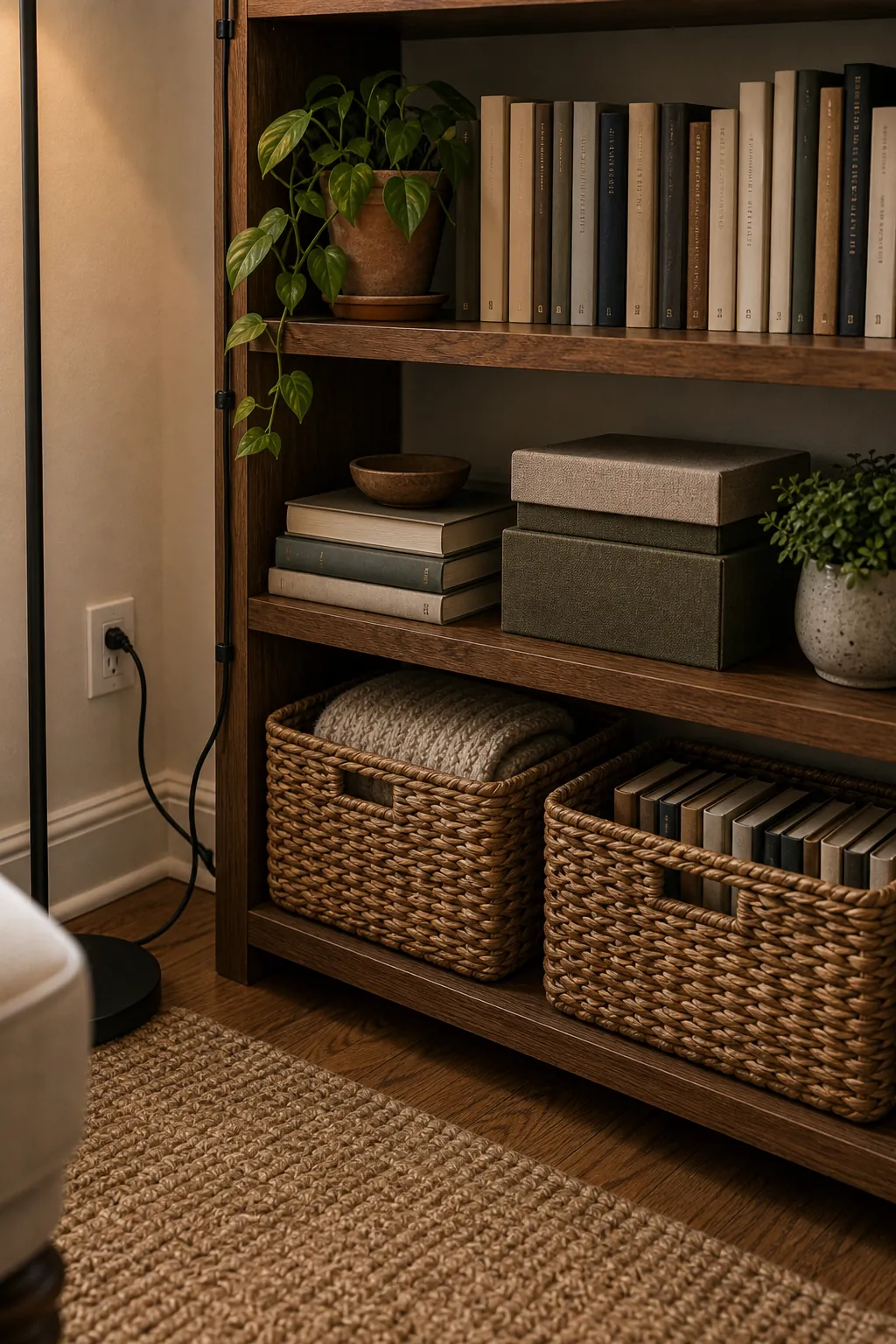
Use the Bottom Shelves for Practical Storage
Most real bookcases have practical clutter: chargers, remotes, notebooks, extra bookmarks, kids’ books, reading glasses, or cables. If those things sit loose on open shelves, the whole bookcase can look busy even when the styling is good.
Use the lower shelves for baskets, boxes, or heavier book stacks. The bottom of a bookcase can visually handle more weight. It is also the easiest place to hide things you need but do not want to see every day.
If your shelf has visible wires, deal with those before buying more decor. Run cords down the back edge, use clips, or place a basket where it can hide a power strip. A clean cable path can make the entire bookcase feel more deliberate.
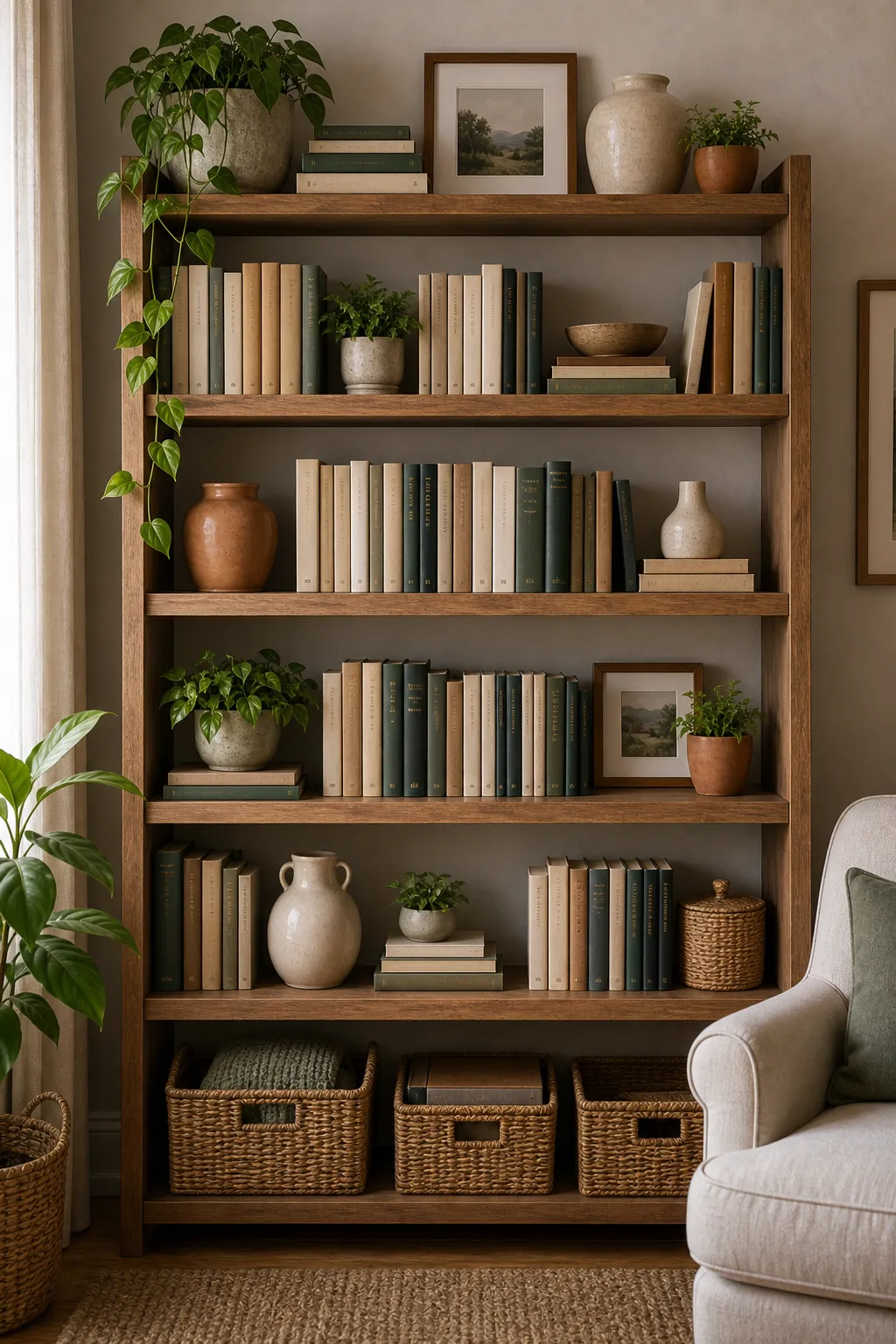
Create a Simple Color Rhythm
You do not need to turn your shelves into a rainbow or hide every colorful spine. A simple color rhythm is enough. Repeat a few tones across the bookcase so the eye can move from shelf to shelf without stopping at every object.
For a cozy home look, try repeating warm wood, cream, muted green, black, terracotta, or soft blue. If your books are very colorful, let the decor stay quieter. If your book spines are mostly neutral, one stronger object or plant can bring life to the shelf.
Do not over-sort if it makes the books harder to use. A bookcase that works for your reading life will always feel better than one arranged only for a photograph.
A Book-First Shelf Styling Formula
- Anchor: start each shelf with a useful run of books.
- Shape: add one larger object instead of several tiny accessories.
- Variation: mix vertical books with one horizontal stack.
- Softness: use plant decor, woven texture, or framed art to break hard lines.
- Utility: hide cords and everyday clutter on lower shelves.
- Rhythm: repeat a few colors or materials across the bookcase.
Good bookcase styling should make your shelves easier to live with, not harder to use. Leave room for the books first. Then add just enough decor to make the whole shelf feel personal, warm, and settled.