
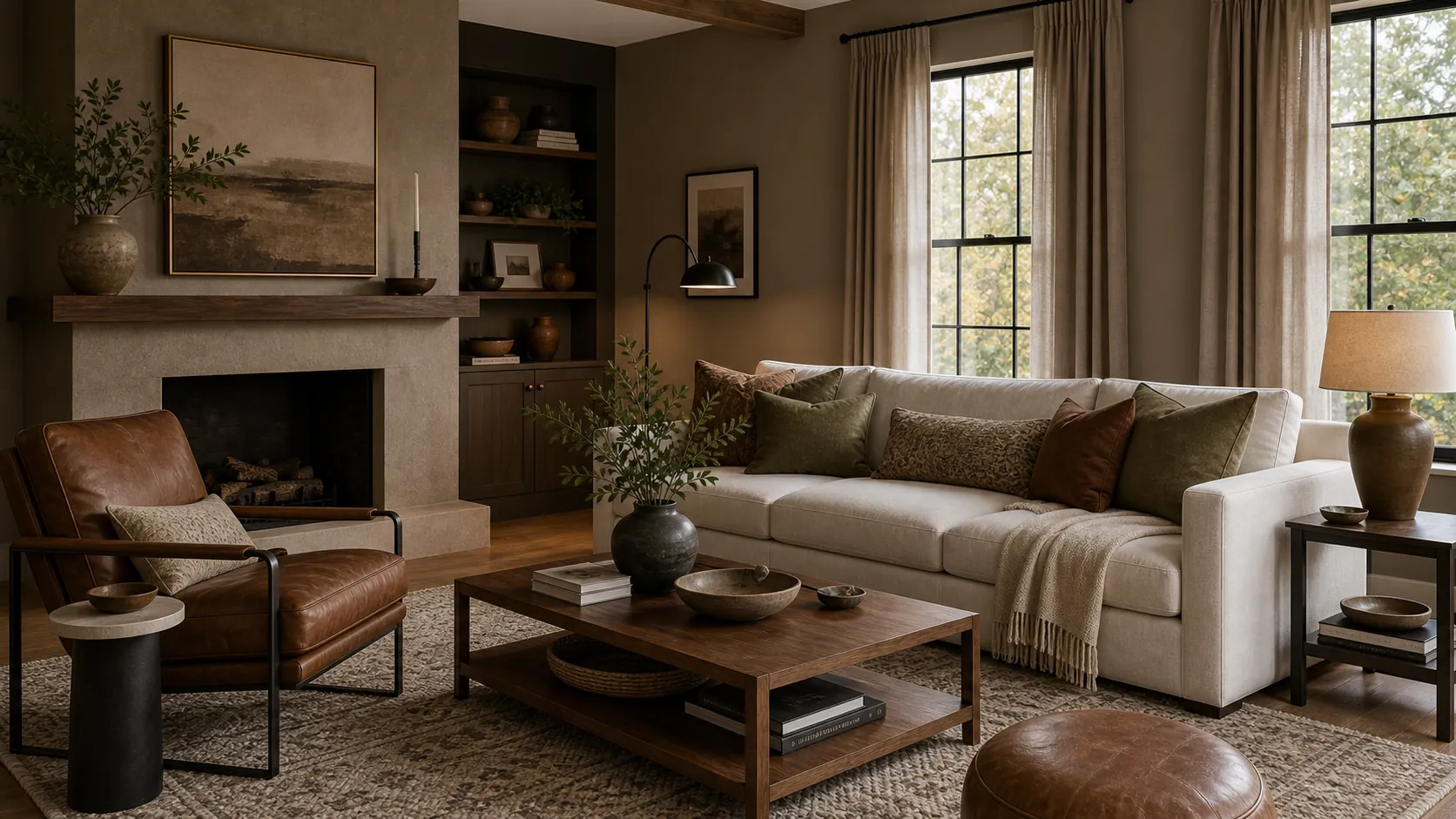
Brown living room color schemes can look rich, warm, and calm, but they can also turn heavy fast. The difference usually comes down to contrast. A brown sofa, brown floor, brown table, and brown wall all competing at the same depth will make the room feel flat. A brown anchor with cream, green, blue, black, stone, linen, or warm white around it feels intentional.
Start by deciding what kind of brown you already have. Is it red-brown leather, golden oak, gray-brown wood, espresso, chocolate, camel, or taupe? Once you know the undertone, it becomes easier to choose living room colors with brown couch fabric, wood flooring, or a brown accent wall living room without fighting the room.
These brown and beige living room ideas use brown as the main character, but each palette gives it air, texture, and a clear supporting color. Use them as a guide before choosing living room paint color ideas, rugs, pillows, curtains, or art.
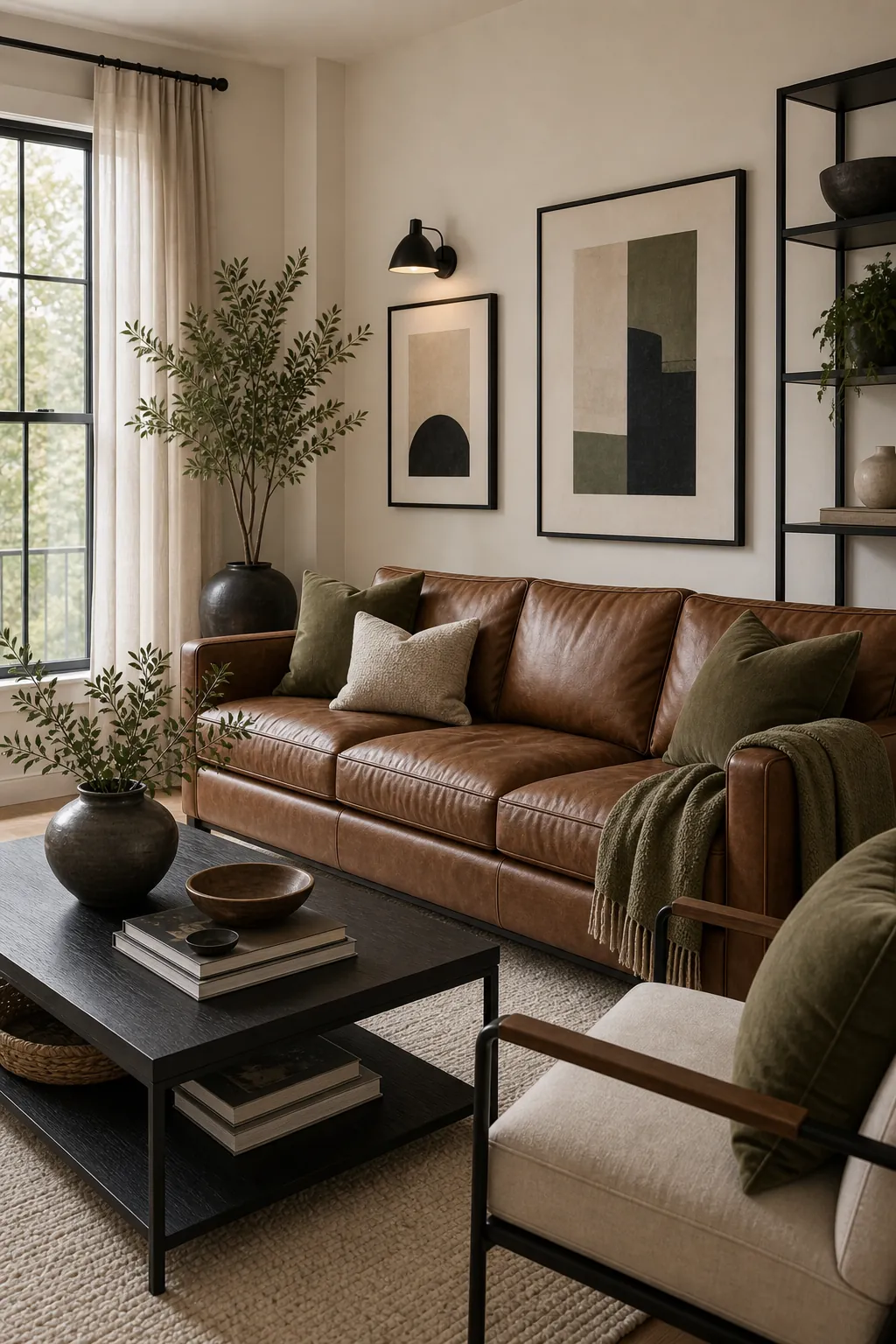
Brown Leather, Cream, Soft Black, and Olive
A brown leather sofa becomes easier to style when the room has a light base and a crisp dark line. Cream walls or a cream rug keep the leather from taking over. Soft black in frames, lamp bases, curtain rods, or a coffee table gives the palette a modern edge. Olive adds color without clashing with the warm leather.
This is one of the most reliable brown couch decor color schemes because every color has a clear job. Brown is the anchor. Cream is the relief. Black gives shape. Olive makes the room feel layered rather than plain.
Repeat olive only two or three times, such as pillows, a plant, and artwork. Too much green can make the room feel themed. A little makes the brown look richer.
Brown, Beige, Linen, and Woven Texture
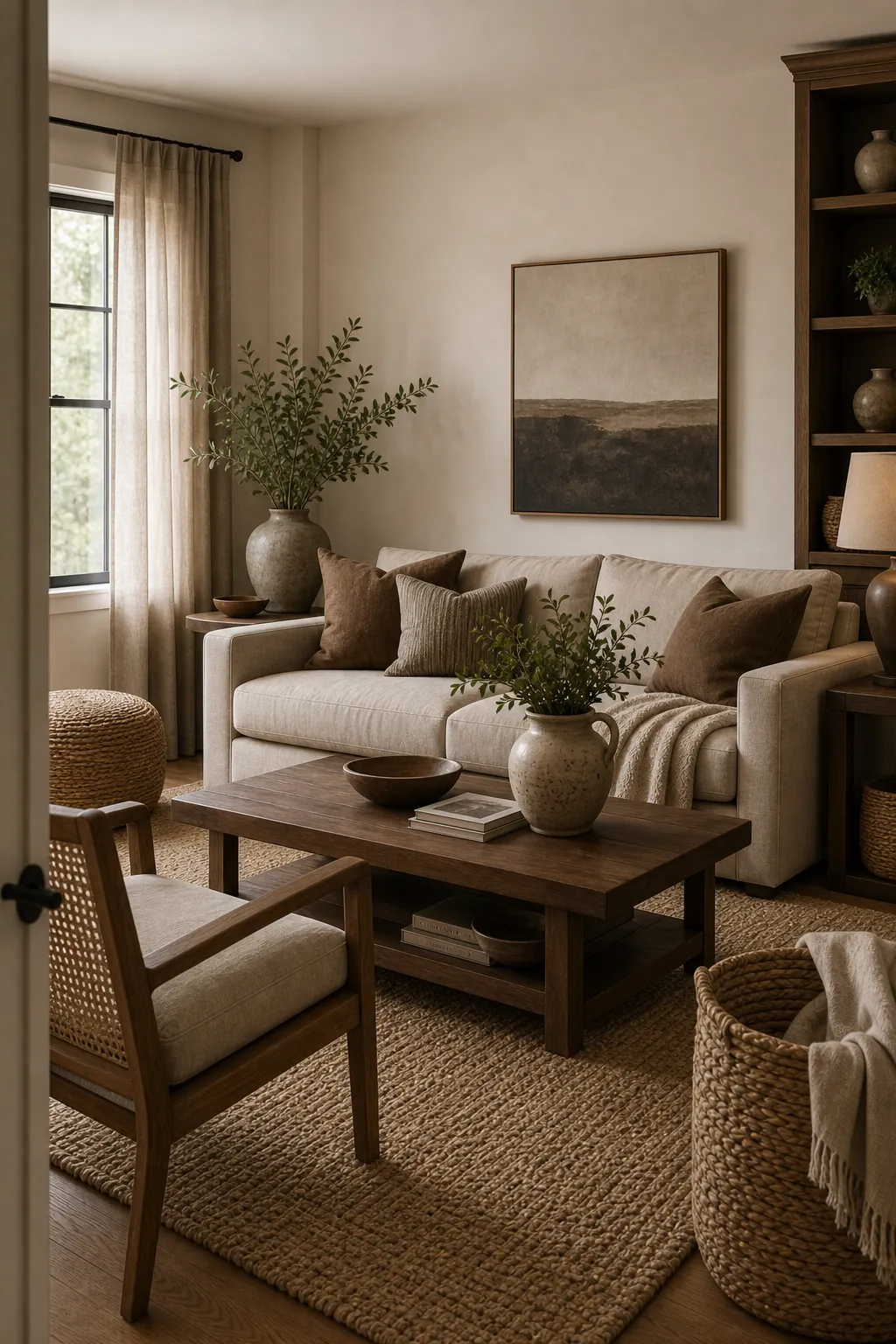
Brown and beige can be beautiful when the room has enough texture. If every surface is smooth and similar, the palette looks unfinished. Add linen curtains, a wool rug, woven shades, cane, rattan, pottery, nubby pillows, and visible wood grain.
This palette works well in a warm brown living room where you want calm more than contrast. Use beige on the biggest soft surfaces, then let brown appear in wood furniture, leather, baskets, and smaller accents. Keep at least one creamy white element so the room does not sink into tan.
If the room feels too quiet, add one muted accent color: dusty blue, sage, clay, or black. The accent should sharpen the palette, not steal it.
Chocolate Brown, Ivory, Walnut, and Brass
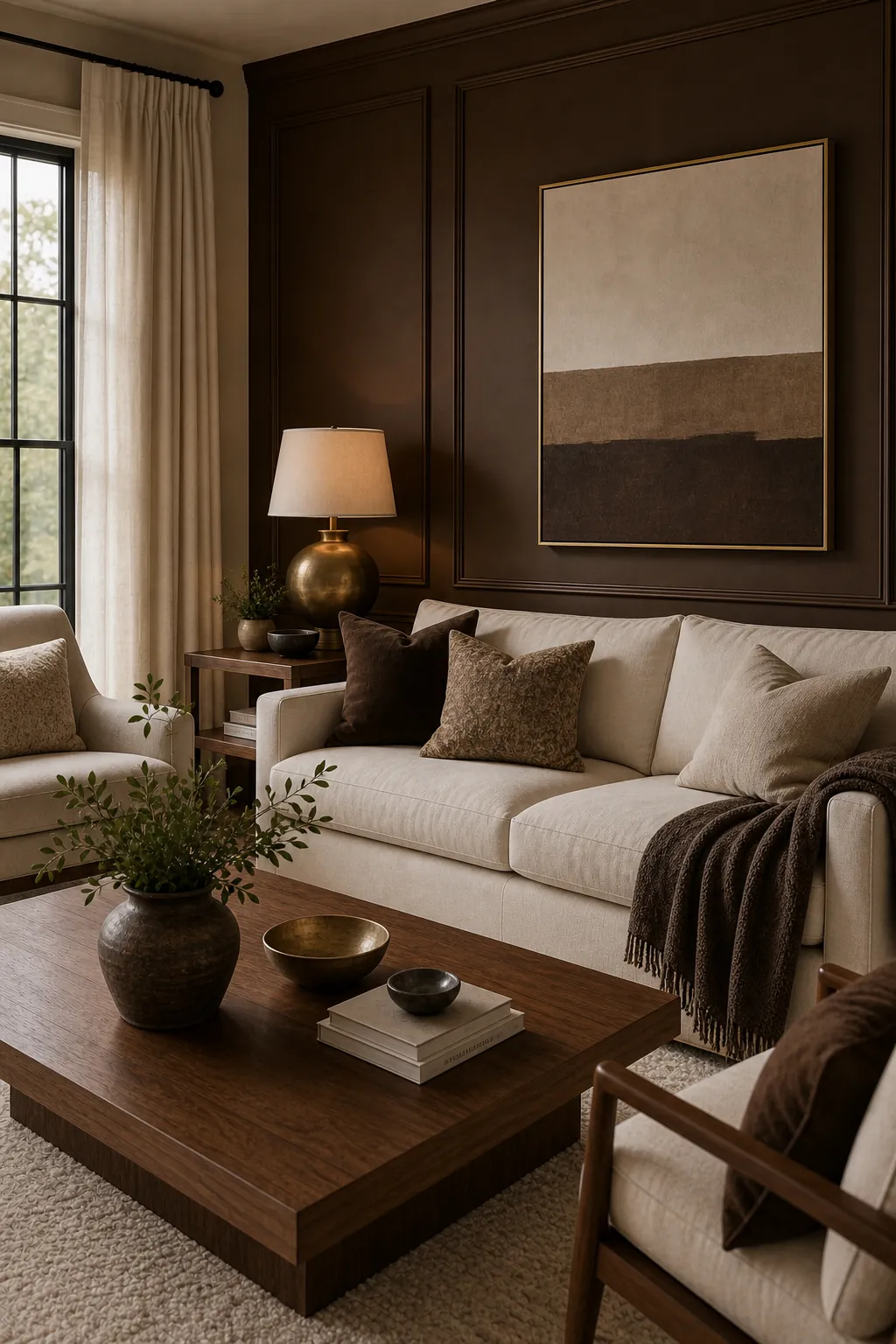
Chocolate brown living room ideas feel strongest when the brown is deep and deliberate. A chocolate accent wall, sofa, or built-in can look high end when it is paired with ivory, walnut, and muted brass. The ivory keeps the dark brown elegant. Walnut adds warmth. Brass adds a small polished note.
The mistake is pairing chocolate brown with too many other dark colors and no lift. If the wall is chocolate, choose a lighter sofa or rug. If the sofa is chocolate, keep the wall warm white, ivory, or soft greige.
This palette is especially good when you want a brown accent wall living room that feels cozy at night but still bright enough during the day.
Gray Brown, Stone, Dusty Blue, and White Oak
Gray and brown living room ideas can look sophisticated if the gray is not too cold and the brown is not too orange. Stone gray, mushroom, taupe, and white oak are safer than icy gray beside warm brown furniture. Dusty blue is a useful accent because it cools brown without making the room feel harsh.
Use this palette if your home has gray flooring, a stone fireplace, or a gray sectional that needs to work with brown tables or leather chairs. Repeat dusty blue in the rug, pillows, art, or curtains so it looks like a planned bridge between warm and cool finishes.
Keep the whites slightly warm. A stark white can make gray-brown rooms feel disconnected.
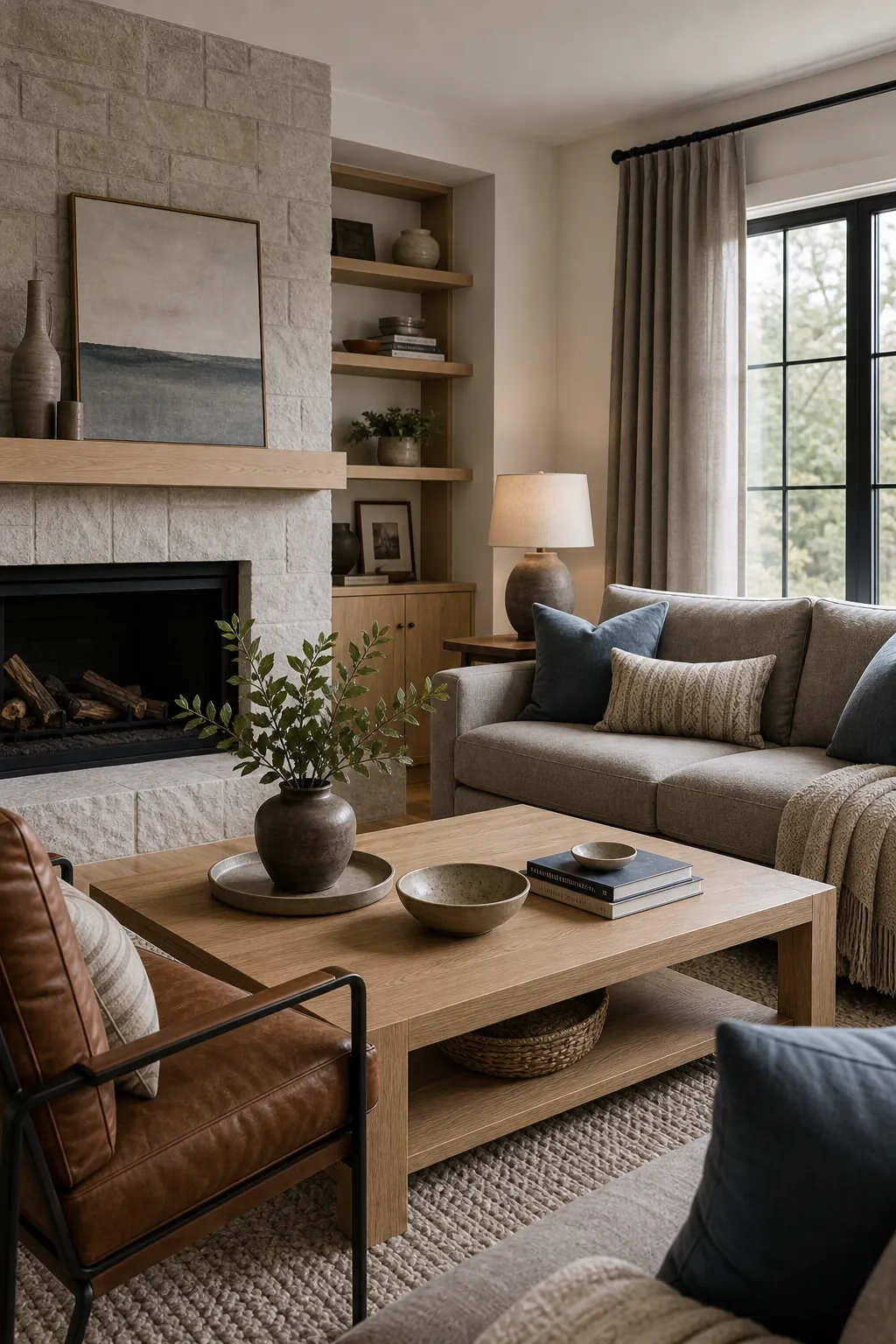
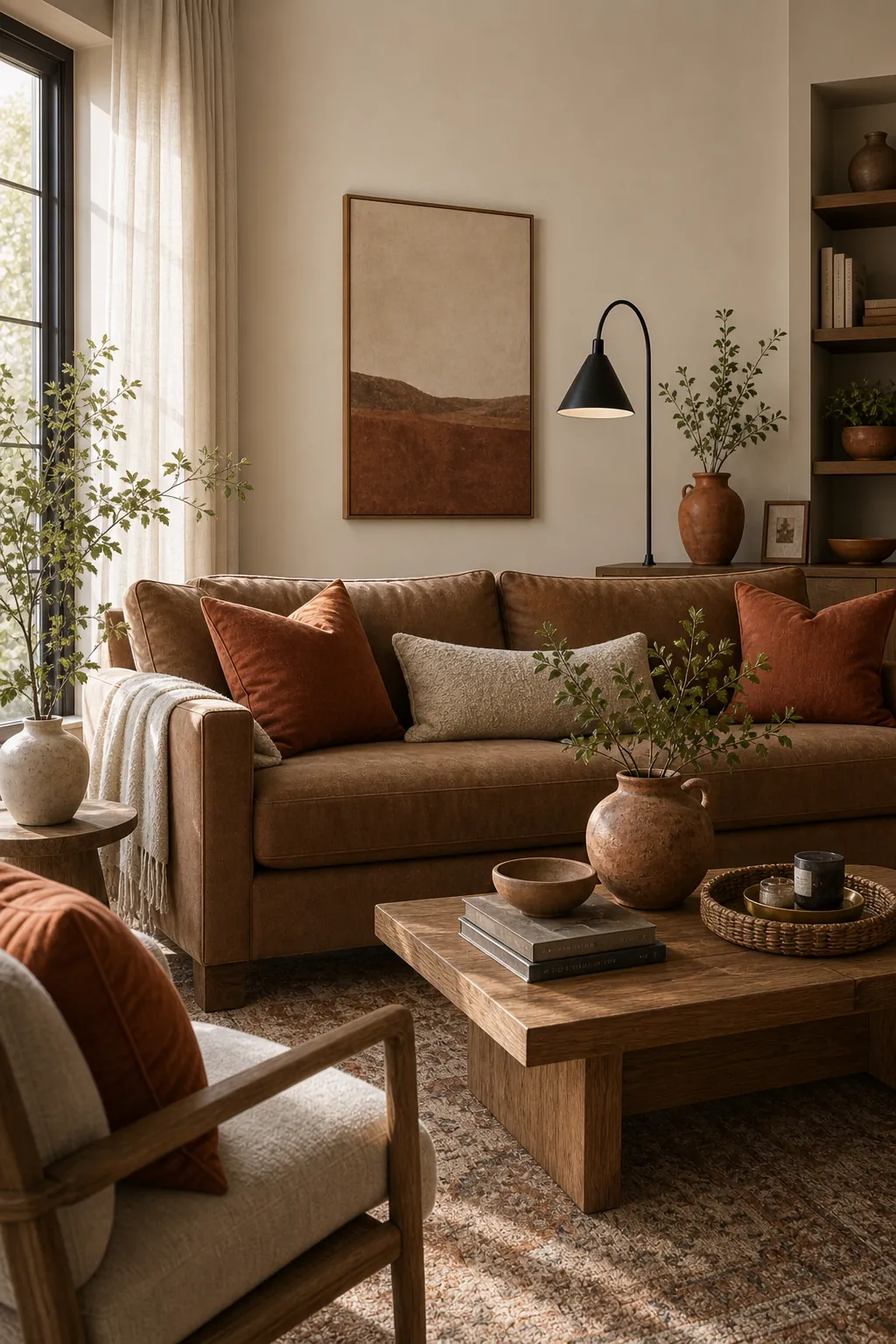
Warm Brown, Terracotta, Cream, and Oak
Warm brown looks natural beside terracotta, clay, cream, and oak. This palette feels earthy without becoming rustic when the shapes stay clean and the fabrics are simple. It is a strong choice for home decor ideas built around wood floors, tan leather, vintage rugs, and handmade ceramics.
Use cream on walls, curtains, or a rug so the warm colors have breathing room. Bring terracotta through pillows, pottery, art, or a patterned rug rather than painting every wall orange-brown. Oak keeps the palette lighter than walnut or espresso would.
Black accents can help here, but keep them thin: a lamp arm, picture frame, or small side table is enough.
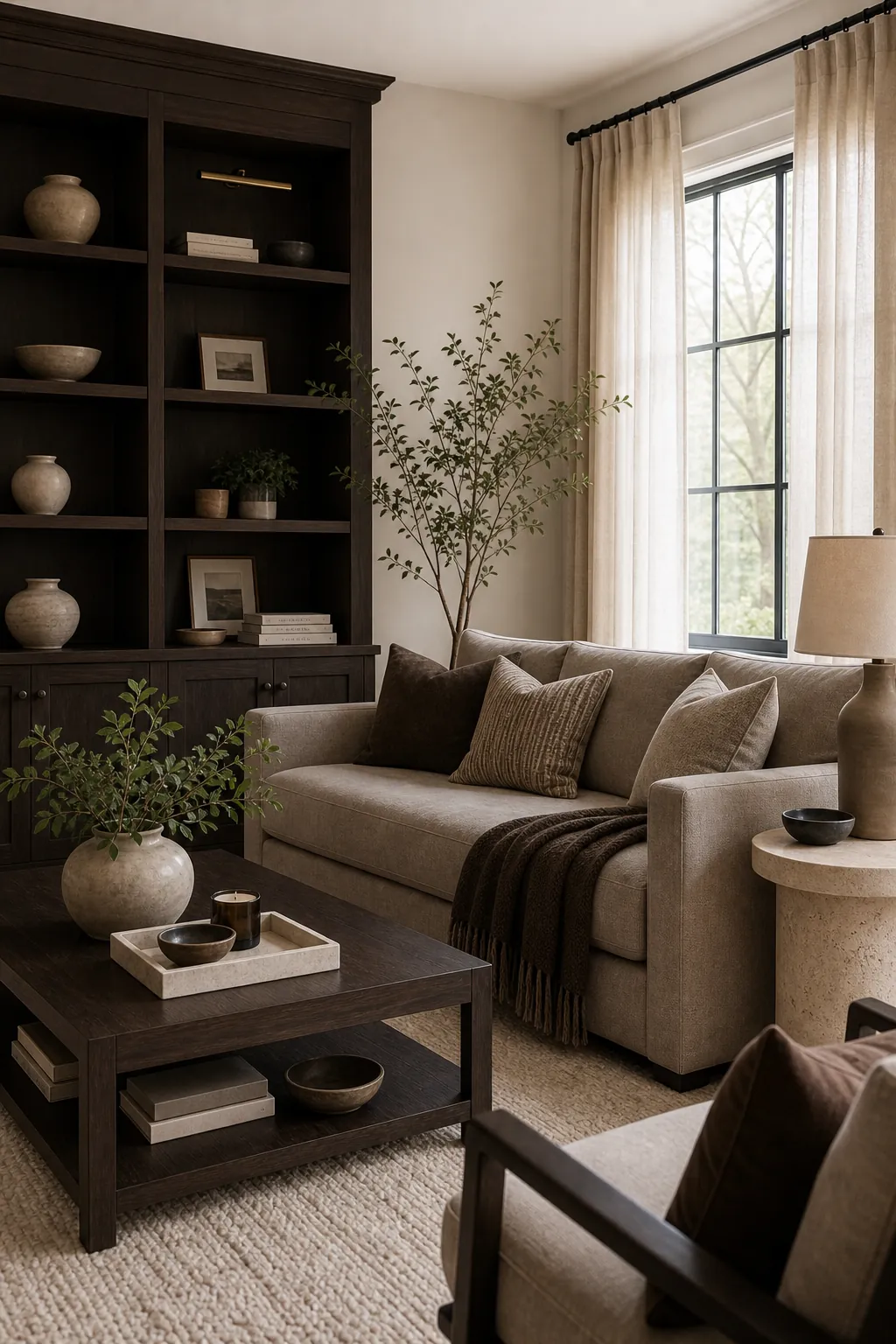
Espresso, Taupe, Linen, and Pale Stone
Espresso can make a room feel grounded and tailored, but it needs softness around it. Pair espresso tables, shelves, or built-ins with taupe upholstery, linen curtains, pale stone, and warm white walls. The palette stays brown-toned but does not feel heavy.
This is a good option for rooms with darker wood furniture that you want to keep. Instead of trying to hide the espresso pieces, repeat the depth in one or two small places, then soften everything else.
Pale stone is the quiet helper. A stone lamp, fireplace surround, tray, or side table brings light texture into a room that might otherwise feel too wood-heavy.
How to Choose the Right Brown Palette
Brown is not one color. Red-brown leather likes cream, olive, black, and warm white. Golden brown wood likes clay, beige, sage, and linen. Gray-brown wood likes stone, dusty blue, mushroom, and white oak. Espresso likes taupe, ivory, pale stone, and soft brass.
Before changing the wall color, test the palette beside the brown piece that matters most. If the sofa is the anchor, hold samples beside the sofa. If the floor is the anchor, lay samples on the floor. If the brown is in built-ins, check the paint at morning and night when shadows change.
The best brown tones living room palettes do not try to erase brown. They give it contrast, light, and a supporting color that makes the brown look chosen on purpose.