
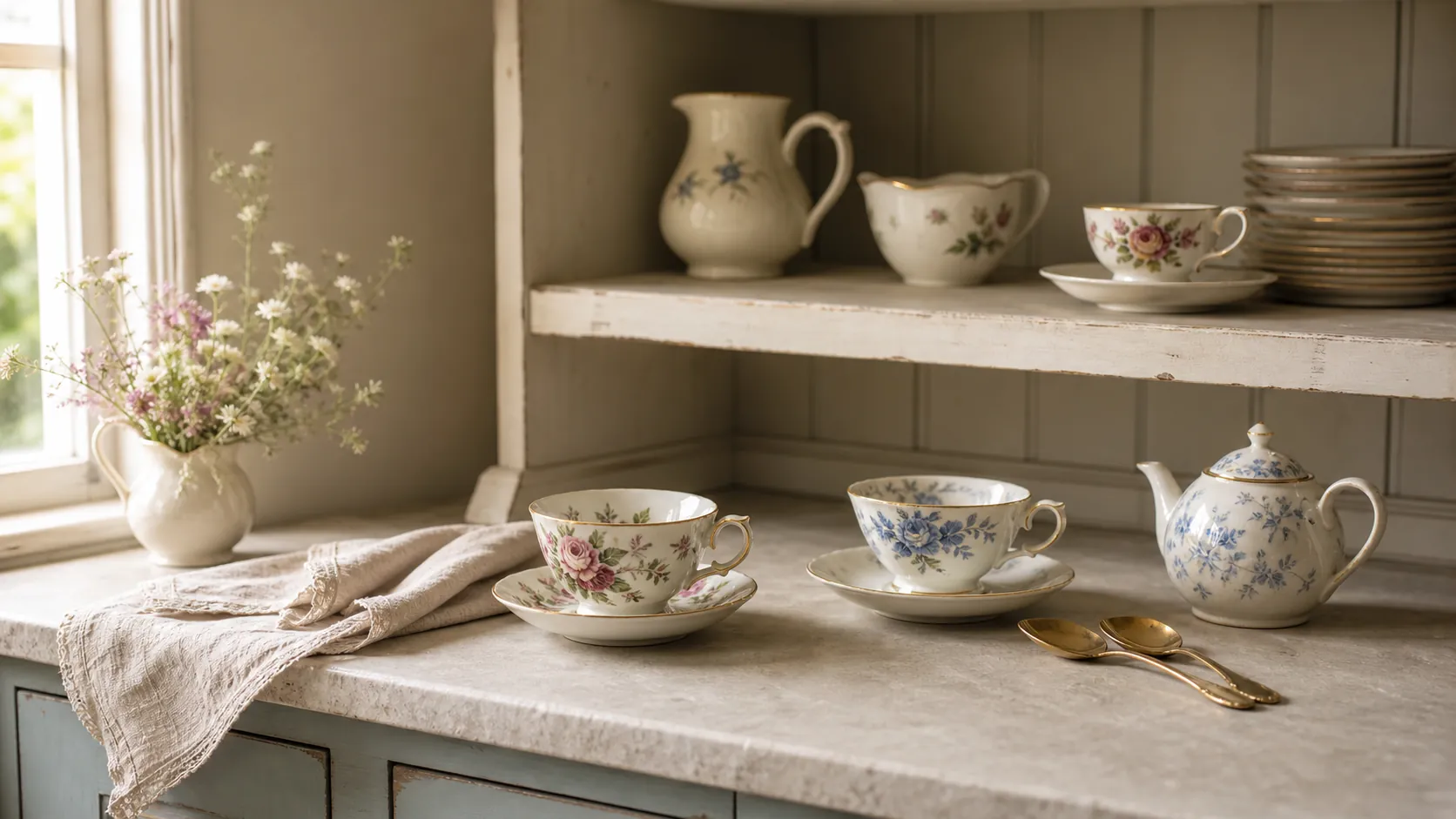
Vintage teacups can look charming in a kitchen, but they can also turn into visual noise faster than almost any other collected decor. The problem is rarely the cups themselves. It is usually the mix around them: busy counters, too many small pieces, no breathing room, and shelves that are trying to be storage and display at the same time.
The best way to style vintage teacups without looking cluttered is to treat them like a small exhibition, not like overflow storage. Choose fewer pieces, group them with purpose, leave space around them, and let the surrounding kitchen stay useful. That is what makes tea cup decor feel collected instead of crowded.
Start by editing the shelf before you style it
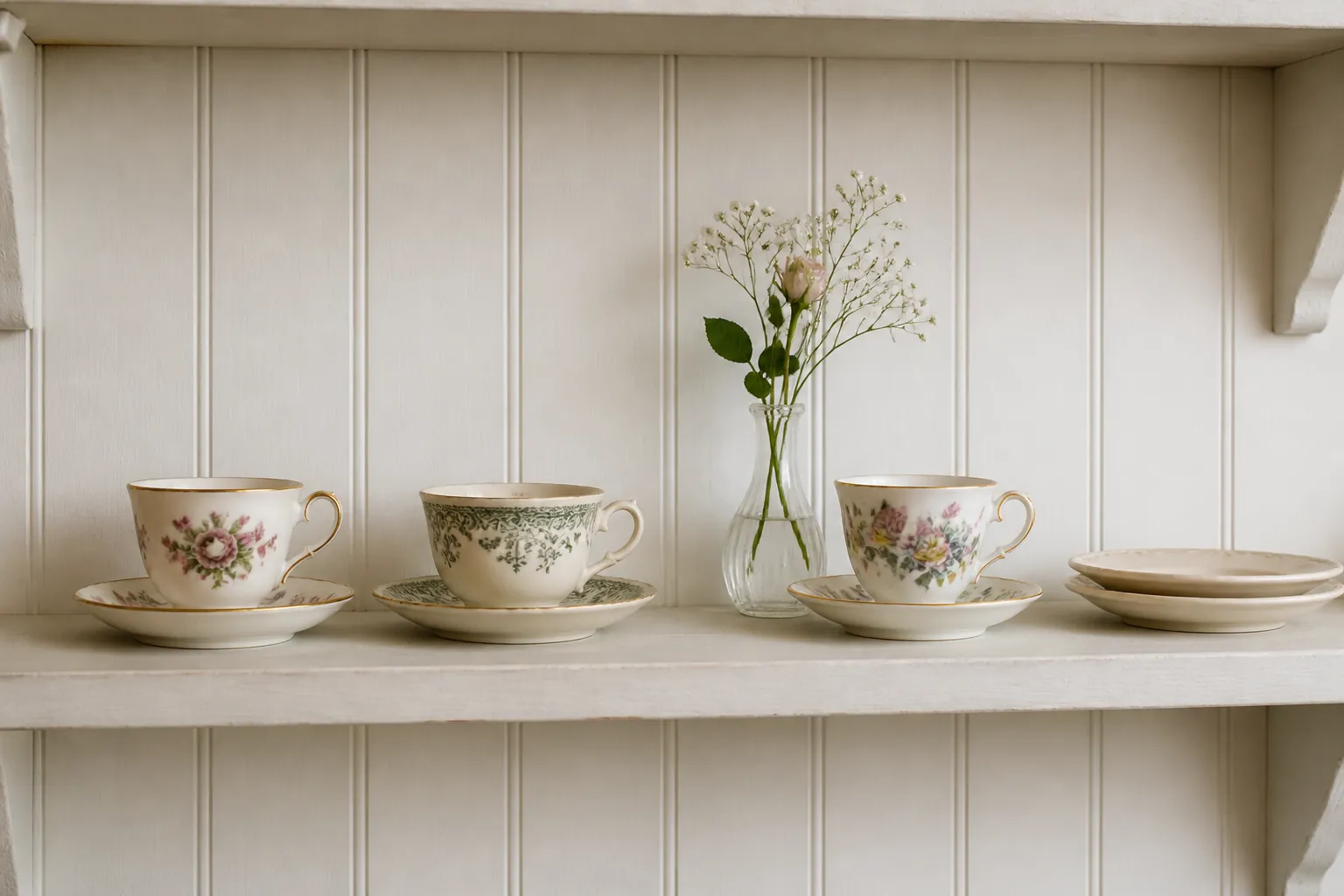
The first decision is not where each teacup goes. It is how many deserve to be out at once. A shelf full of tiny handles, floral patterns, saucers, gold rims, and little objects asks the eye to process too much. Even beautiful vintage teacups lose their charm when every inch is filled.
Pull everything off the shelf and choose a small lead group. For most kitchen shelf decor, three to five teacups is enough for one shelf. If you have matching saucers, pair them deliberately. If the set is mismatched, pick one shared detail such as color, shape, floral style, or era so the display has a reason to exist together.
One useful test is to style the shelf, then remove one more item. If the shelf suddenly looks calmer, that last item was probably the difference between collected decor and clutter.
Keep the counter below the display quiet
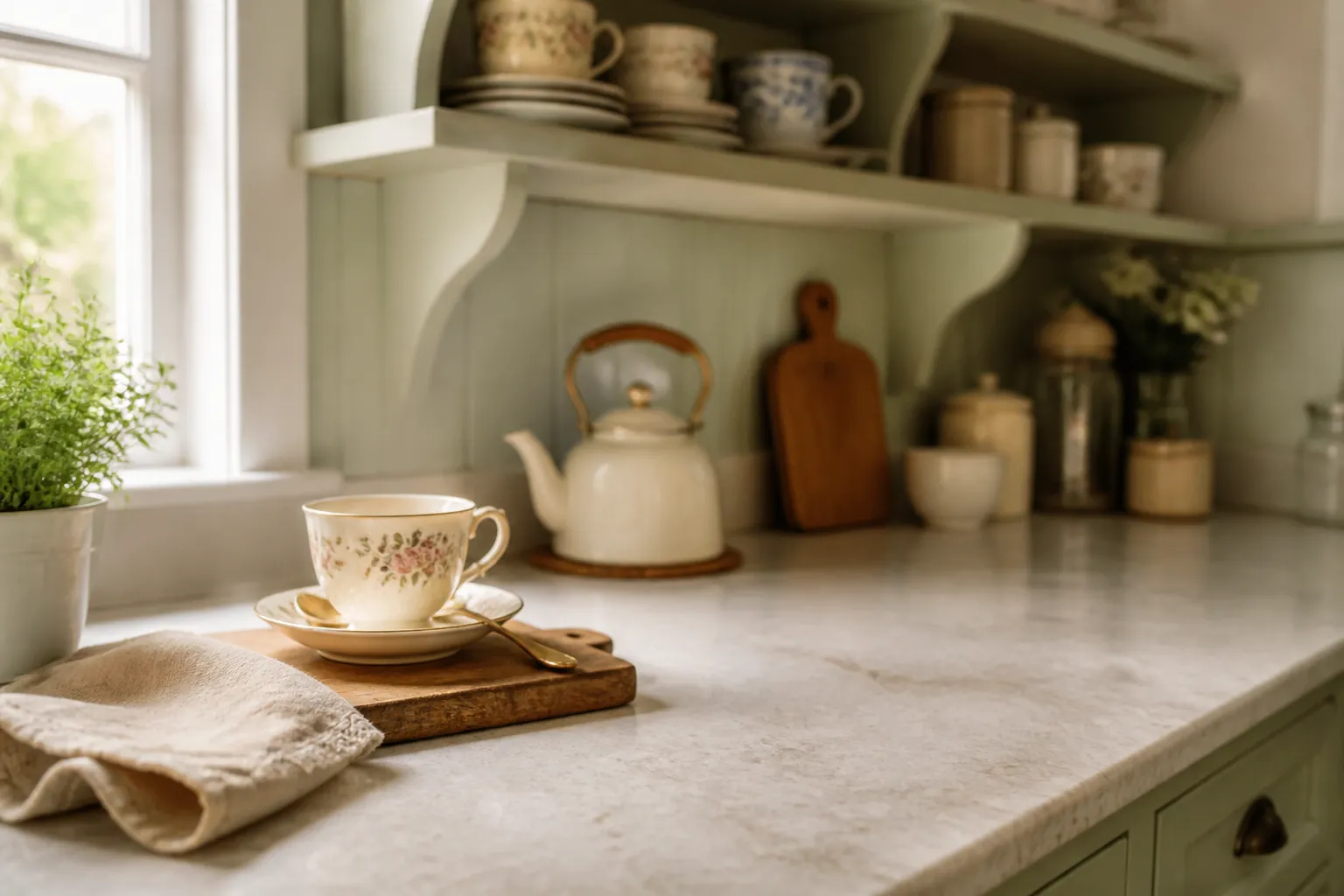
Open shelves and counters read together. If the shelf is full of vintage teacups and the counter below is full of appliances, jars, trays, mail, plants, and cooking tools, the whole wall becomes one busy block. People often blame the shelf when the real issue is the visual collision between shelf styling and counter clutter.
Give the teacups a cleaner background by clearing the surface below them. Keep daily-use items grouped to one side, tuck extras into a cabinet, and leave a working stretch of counter visible. A clear counter makes even a small teacup display feel more intentional because the eye has somewhere to rest.
If you want a teacup moment on the counter, make it singular: one cup and saucer beside the kettle, one tiny creamer with teaspoons, or one cup holding sugar packets near a tea station. The point is to echo the shelf, not repeat the whole collection.
Use a tray when small pieces need boundaries
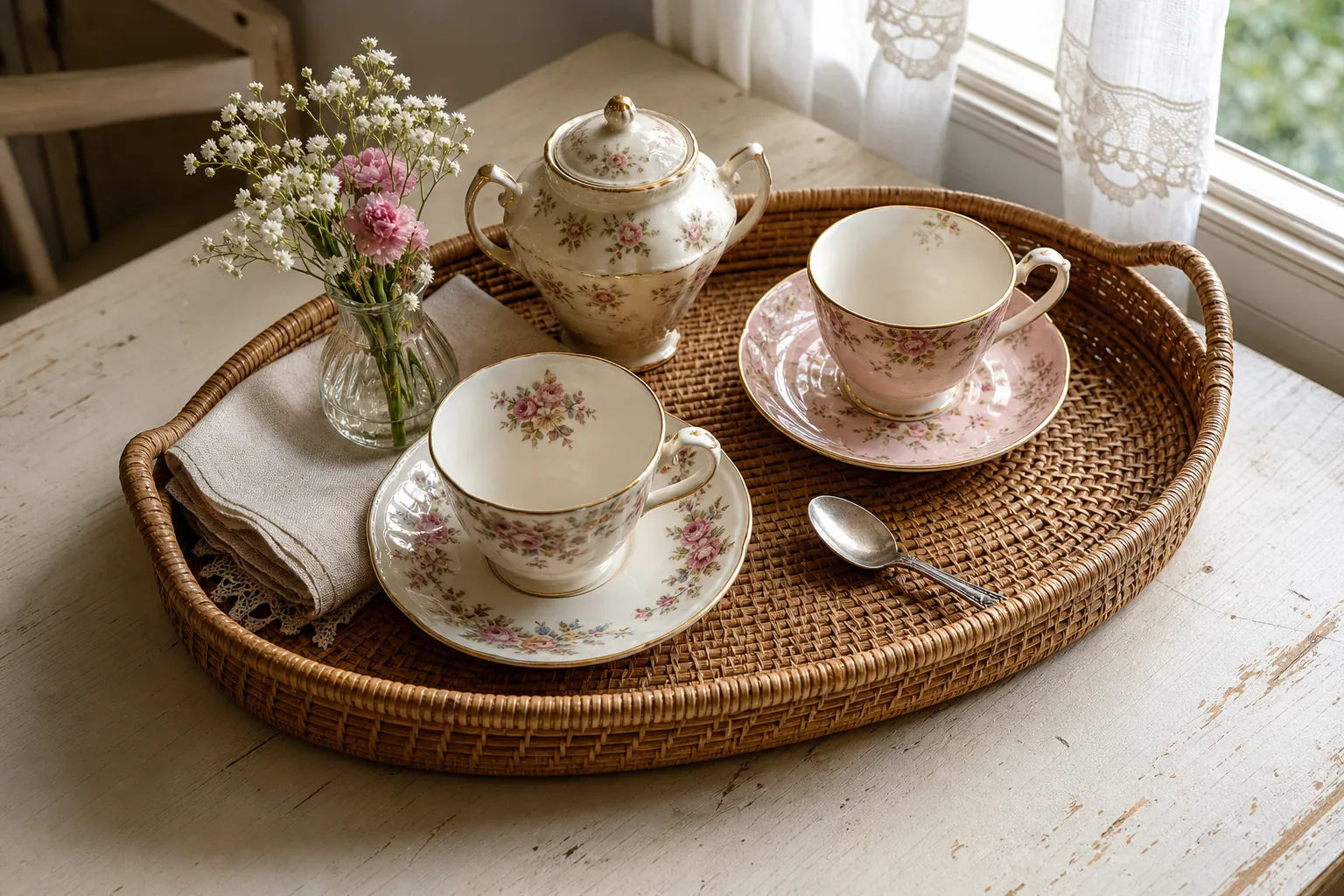
Small decor needs edges. Without a boundary, a teacup, saucer, spoon, sugar bowl, flower stem, and napkin can look like random objects that never got put away. Put the same pieces on a tray and they become a vignette.
This works especially well for cottage decor because it keeps the softness without letting it spread everywhere. Try a narrow wooden tray on a shelf, a small rattan tray on a breakfast table, or a low ceramic platter near a kettle. Keep the tray only partly full. A tray is not a permission slip to add ten more tiny things.
For a clutter free decor look, vary height inside the tray but limit the number of materials. Porcelain, linen, and one natural texture such as wood or wicker is usually enough. When every object has a different material and color, the display starts to feel restless.
Move part of the collection vertical
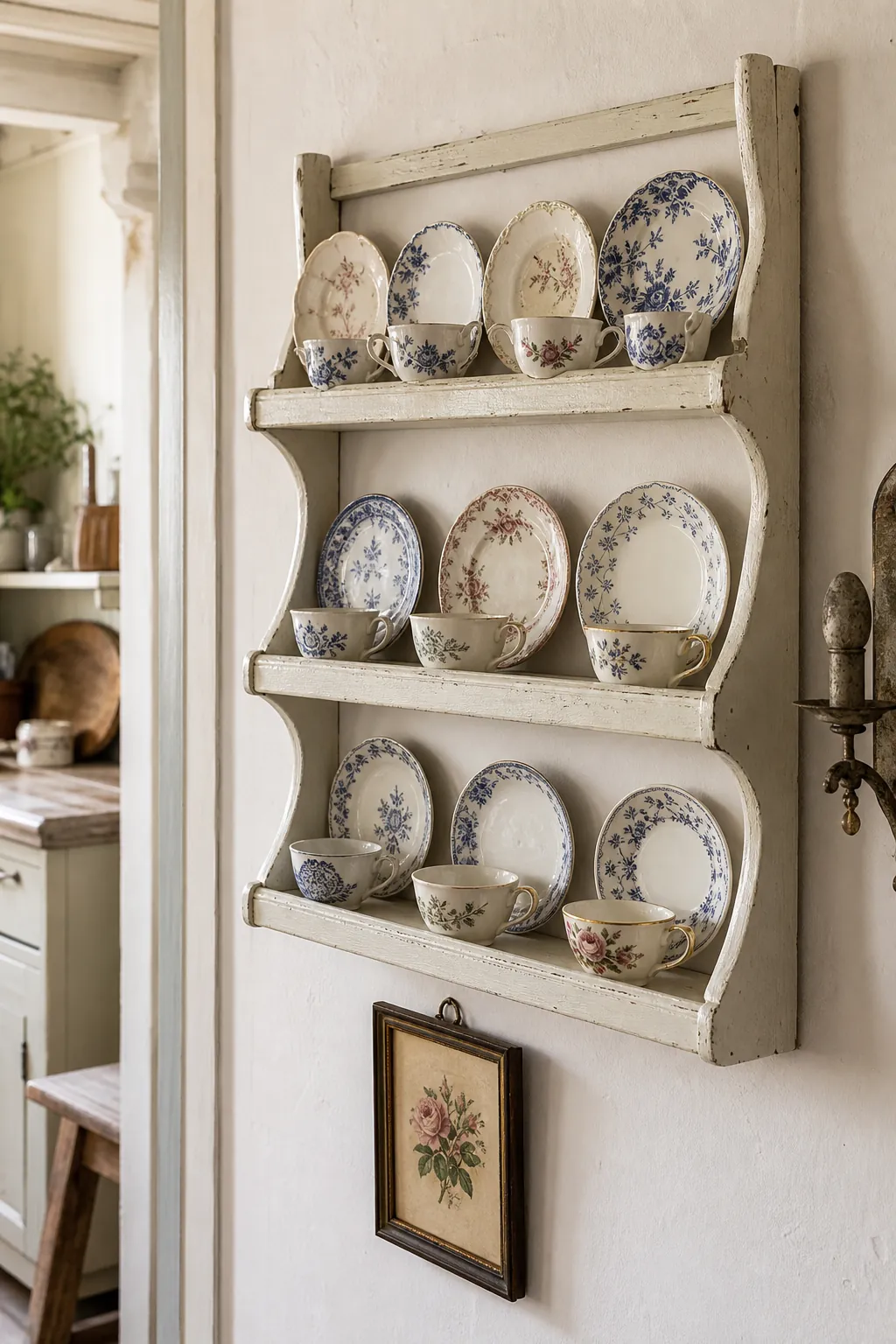
If your cabinets and counters are already doing too much, move the teacup display to a wall. A shallow plate groove shelf, a narrow rail, or a small wall-mounted cabinet can make vintage teacups feel decorative without taking over your work surfaces.
Saucers need special attention. Hooks are useful for mugs and cups, but a teacup with a saucer usually looks more polished when the saucer stands behind the cup or sits underneath it. A plate groove shelf keeps saucers upright, gives each pair a clear place, and avoids the tangled look that happens when cups hang in a cluster.
Wall displays also help you separate display ideas from storage. The shelf can hold the pieces you want to admire, while the cabinet can hold extras, chipped pieces, seasonal cups, or anything you still use.
Give mismatched teacups a color story
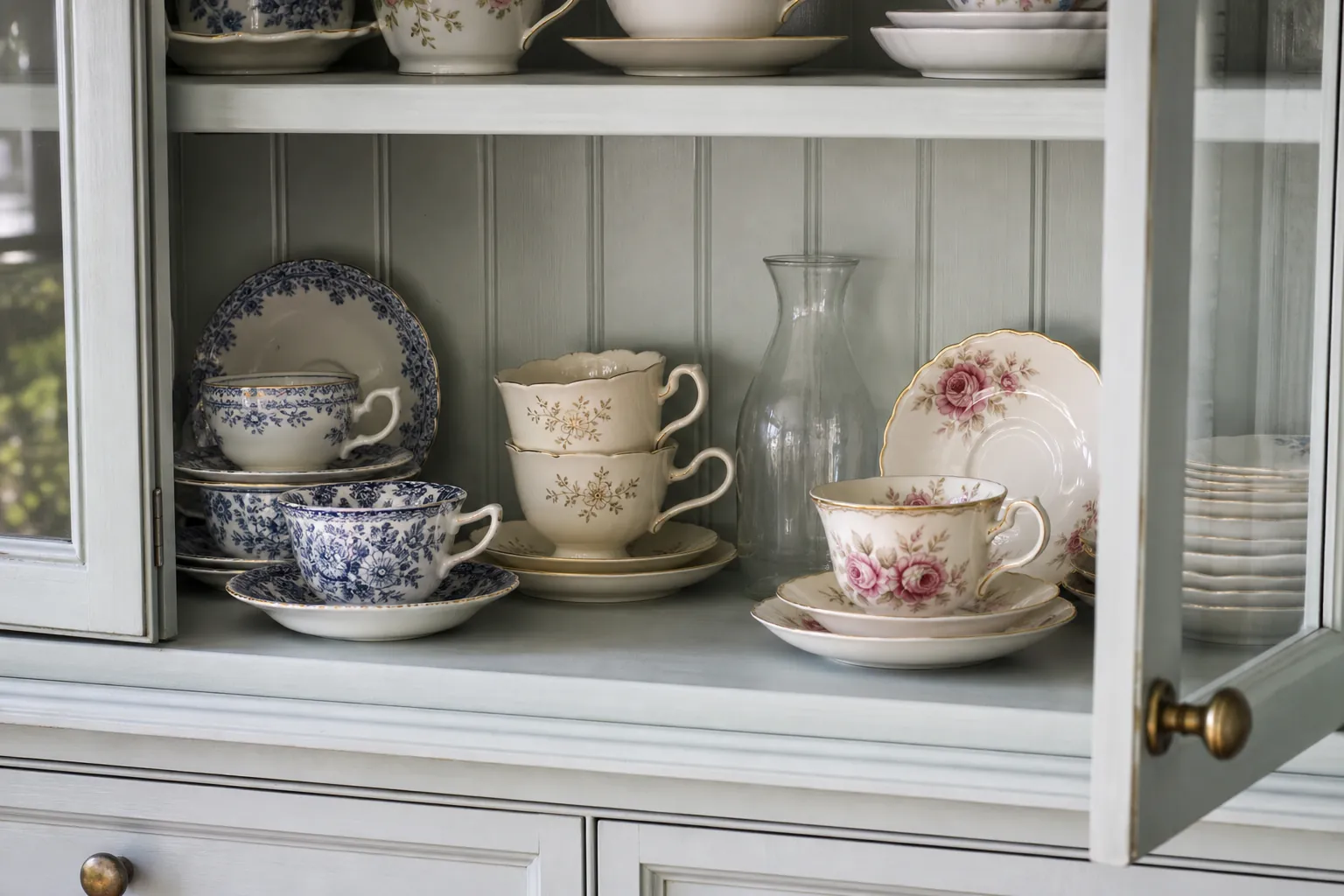
Mismatched vintage teacups are often the prettiest pieces in a home, but they need a little discipline. A shelf with pink roses, blue willow, gold rims, green florals, transferware, and painted birds can look busy even when every cup is beautiful on its own.
Choose one dominant color family and one accent. Blue and white with a little brass. Cream and blush with one green stem. White porcelain with soft pastels. This gives the display a thread, which is what makes collected decor feel calm instead of accidental.
You can still use contrast. In fact, one different piece often makes the whole shelf better. The trick is to let it be the exception. If every teacup is competing to be the focal point, none of them gets noticed.
Rotate favorites instead of displaying everything
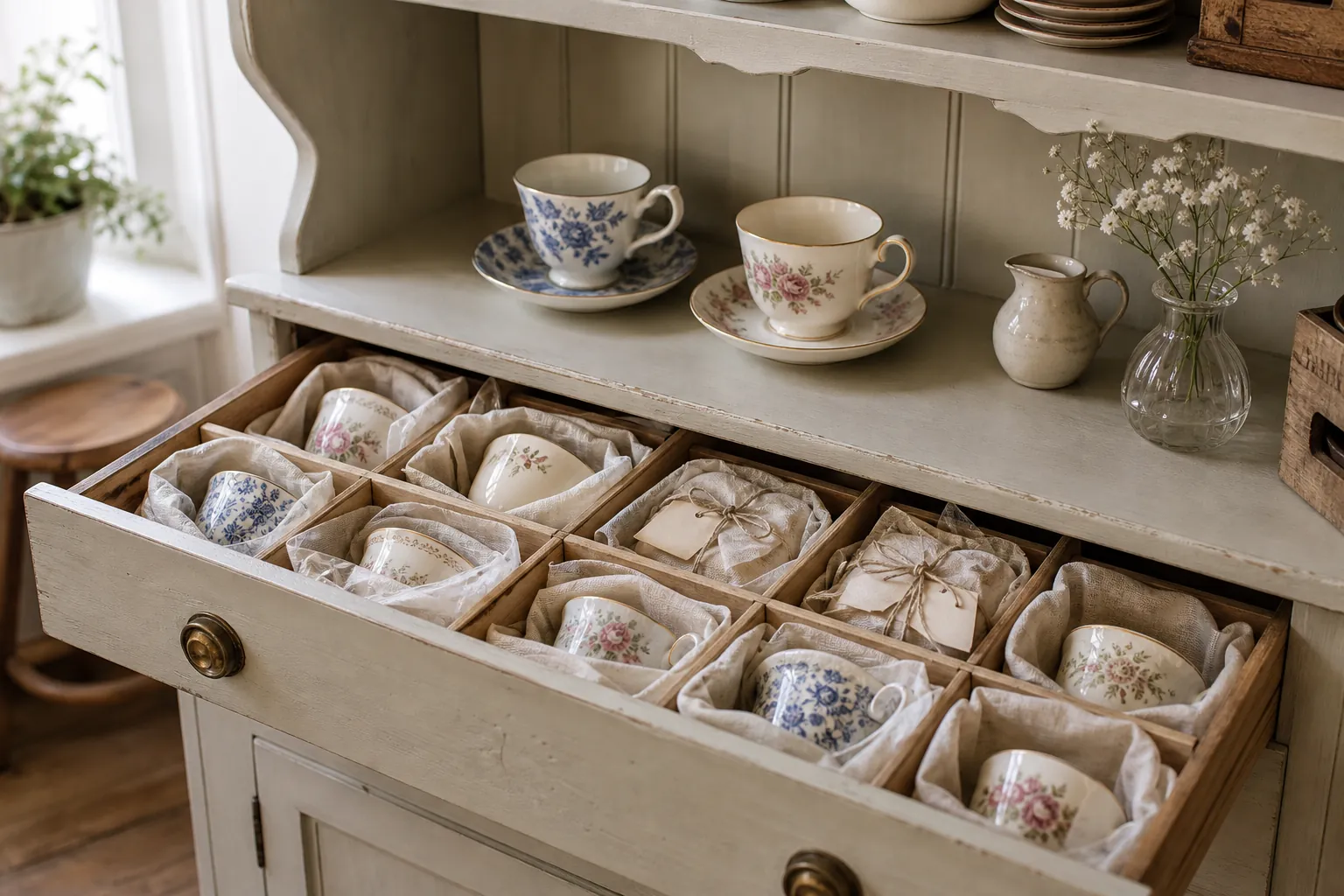
A collection does not have to be visible all at once to be loved. In many homes, the most elegant solution is a rotating display. Keep a few vintage teacups out for the season, store the rest safely, and swap them when your kitchen needs a refresh.
This is also the easiest way to handle sentimental pieces. If every inherited cup has to be displayed forever, the shelf becomes a guilt shelf. Choose the ones that fit your current kitchen styling, then store the others with care. They are still part of your home even when they are not all on view.
Use soft dividers, shallow boxes, or a hutch drawer so stored teacups stay protected. Label boxes in a simple way if you rotate by season, color, or holiday. The display stays fresh, and your shelves avoid the heavy look that comes from trying to show the entire collection.
A simple formula for clutter free teacup styling
When a shelf feels off, use this formula before buying anything new: fewer cups, clearer grouping, one color story, visible space, and a quiet surface nearby. That combination solves most teacup display problems because it gives the collection structure.
Vintage teacups already bring detail, pattern, shine, and nostalgia. They do not need much help. Give them room, let the kitchen around them breathe, and the display will look collected in the best sense: personal, pretty, and intentional.