
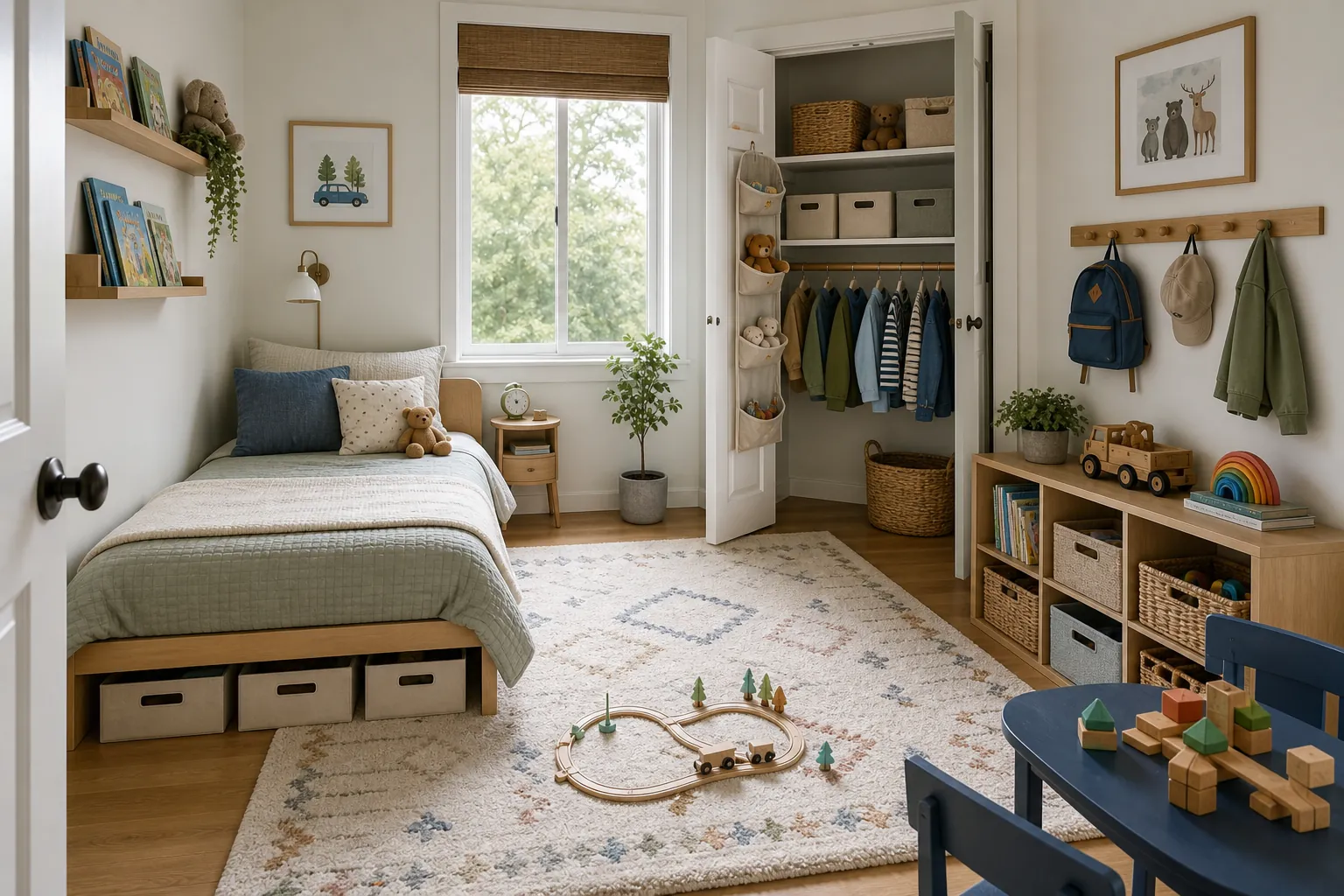
You can organize a small kids room without filling it with big furniture. In fact, a compact bedroom often works better when you remove the extra dresser, oversized toy chest, and heavy shelving unit. The room needs clear zones, reachable storage, and a simple reset routine more than it needs another large piece.
The best small kids room organization starts with the room’s empty spaces: walls, the closet, the back of the door, the area under the bed, and the corners that are too small for standard furniture. Use those spots first, then add only the compact pieces that solve a daily problem.
Use the walls before the floor
Wall storage is the easiest way to keep a small kids room from feeling crowded. Picture ledges can hold books, hooks can hold bags or dress-up clothes, and soft wall pockets can collect small toys or art supplies. This keeps the floor open for play and makes cleanup visible.
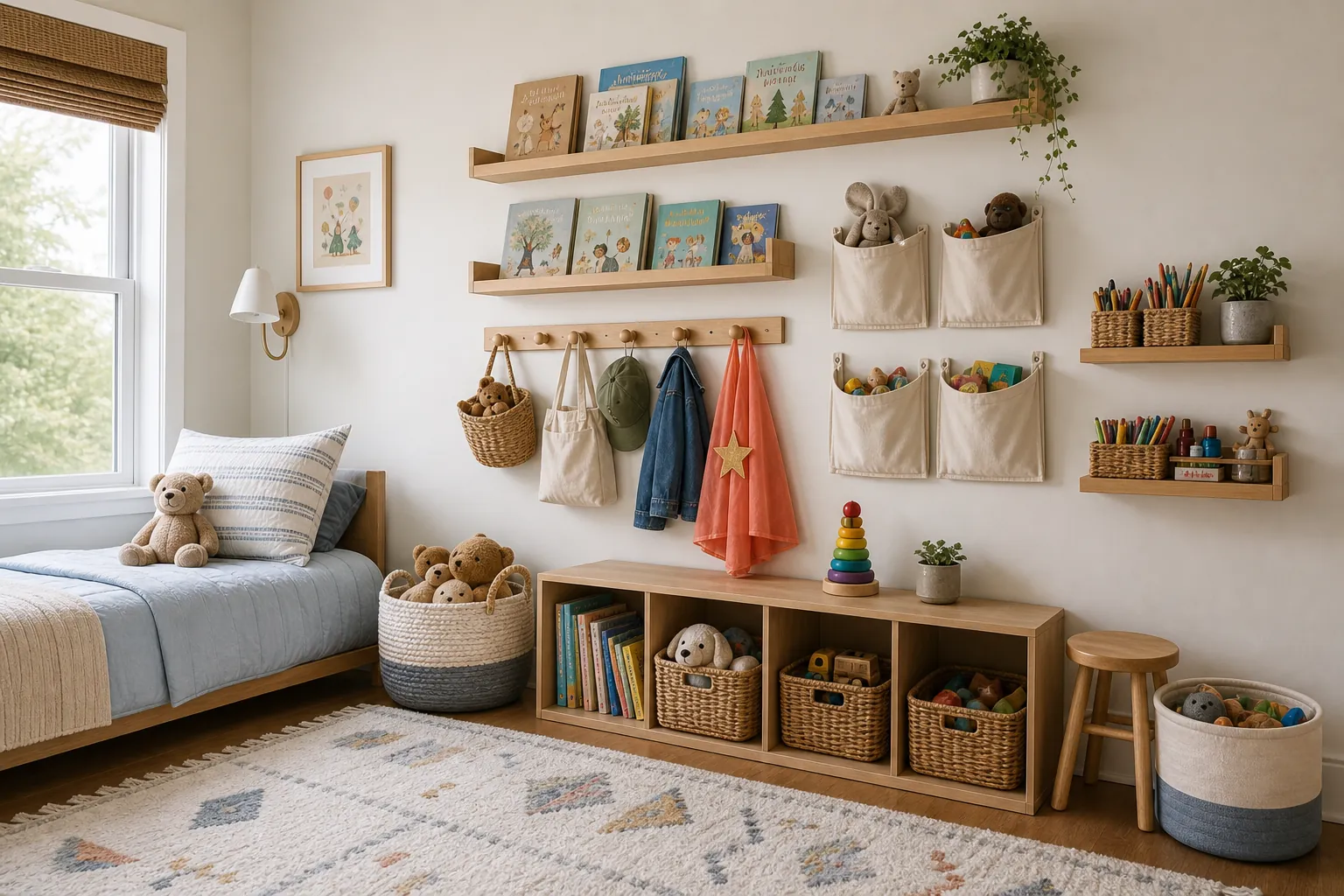
Keep wall storage light. Heavy toys, big bins, and anything a child might pull down should stay low. A good rule is to use the wall for books, soft items, bags, costumes, and small baskets, then keep heavier storage on the floor or inside the closet.
Make the bed footprint work twice
If the room already has a bed, use that footprint for storage before adding a dresser or toy chest. Under-bed drawers can hold pajamas, extra bedding, dress-up clothes, building sets, or seasonal toys. Shallow bins are easier for kids to use than deep containers because they can see what is inside.
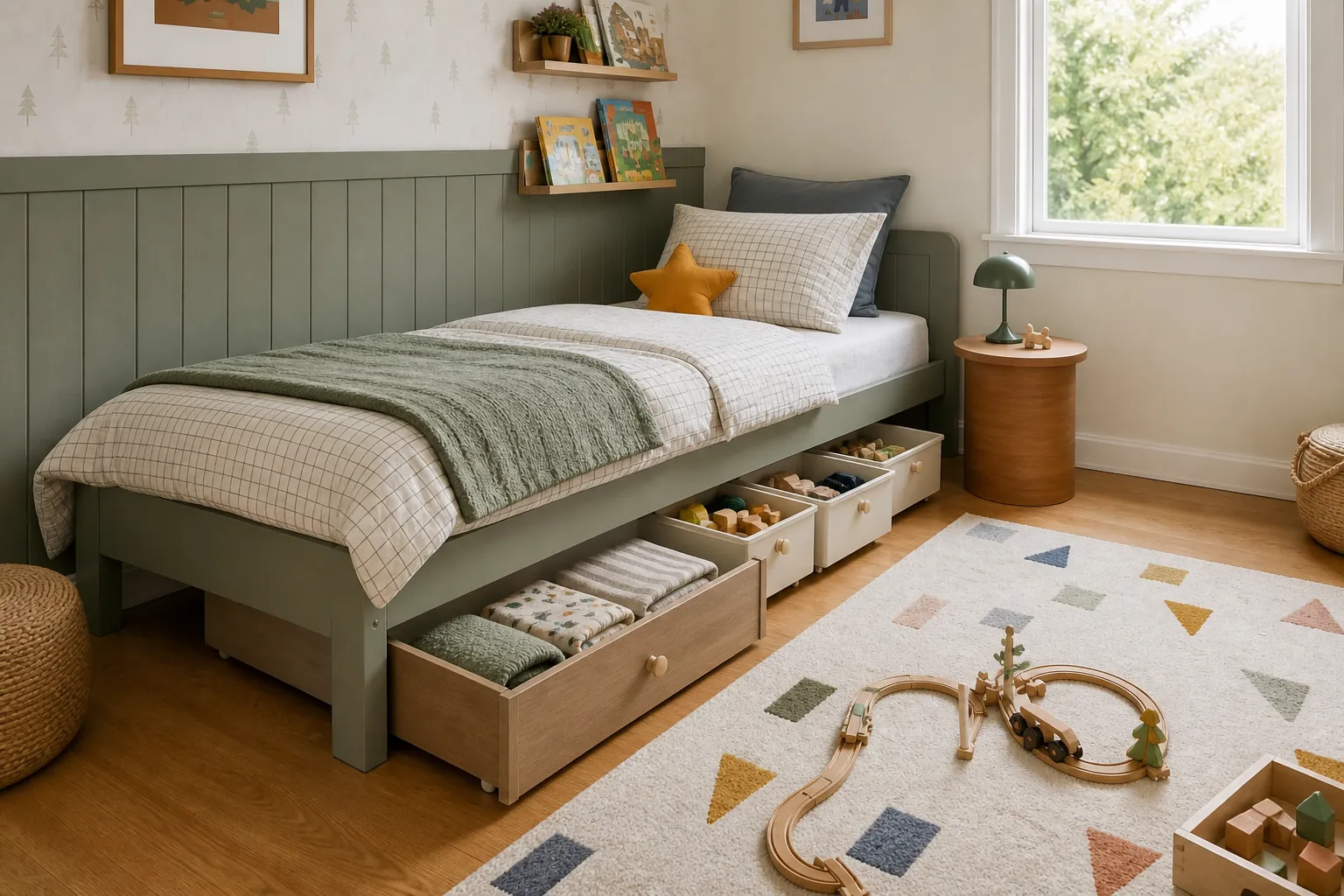
Choose containers that slide easily and do not require the bed to be lifted. If a child cannot open the bin, it will become parent-only storage. That is fine for seasonal bedding, but daily toys and clothing should be simple enough for a child to reach and return.
Turn the closet into the main storage zone
A well-planned closet can replace a large dresser. Use a second low hanging rod for kids’ clothes, add stackable drawers for socks and pajamas, and place baskets on shelves for toy overflow. The goal is to move storage behind doors instead of spreading it across the bedroom floor.
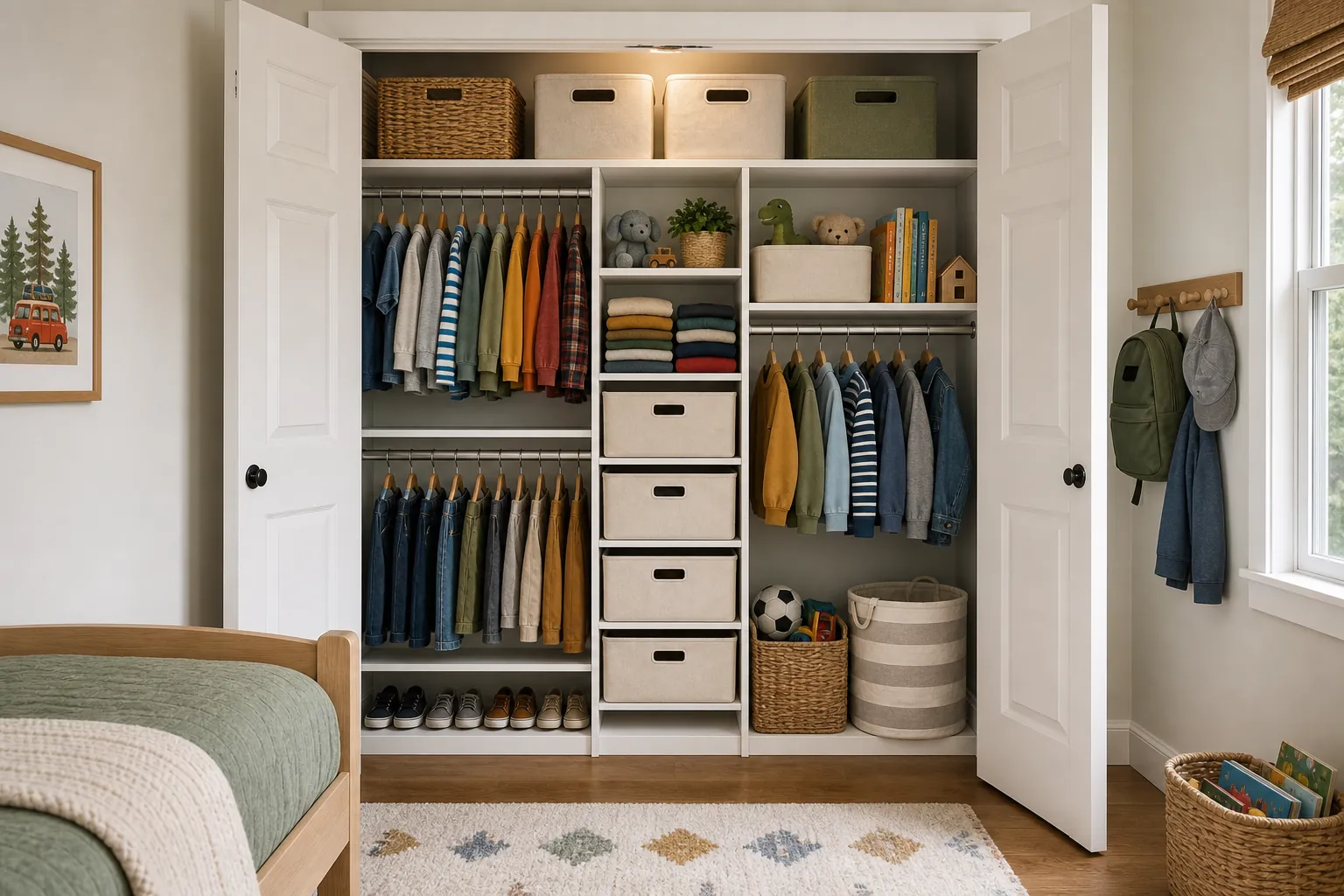
Put daily clothes at child height and backup items higher. This keeps mornings easier without giving kids access to every stored item at once. If the closet is narrow, use slim drawers or fabric bins instead of a wide storage tower.
Use the back of the door for lightweight storage
The back of the door is useful for small kids room storage because it does not steal floor space. Soft pockets can hold socks, hair accessories, small stuffed animals, or craft supplies. Hooks can hold a backpack, robe, dress-up cape, or tomorrow’s outfit.
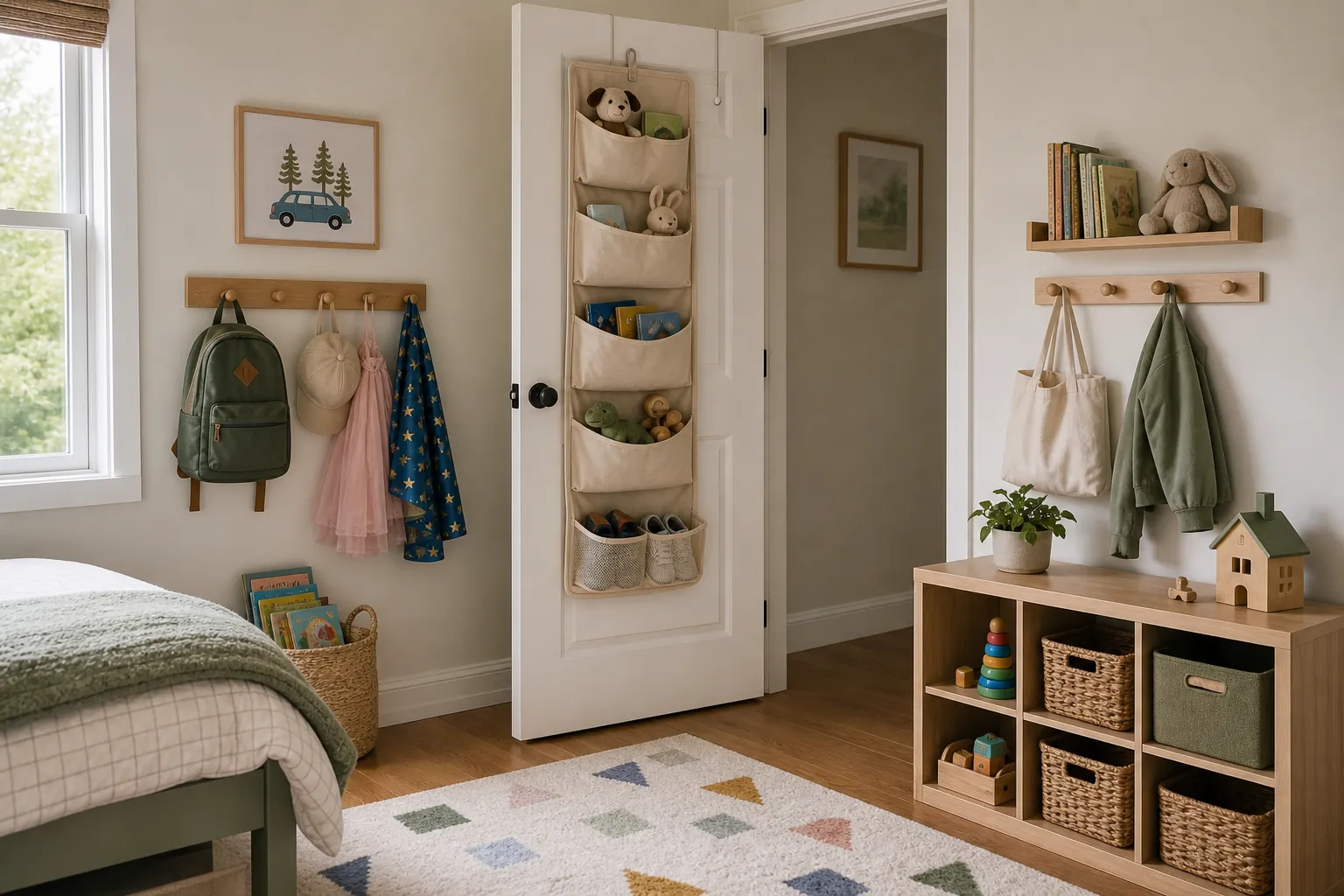
Avoid overloading the door. If the organizer bulges, blocks the door from opening, or becomes hard to search, it stops helping. Keep this area for lightweight categories that are used often and easy to put away.
Replace the toy chest with small bins
One big toy chest sounds efficient, but it often creates more mess. Kids have to dig to find what they want, then the whole bin gets dumped. Small bins make categories clearer: blocks, vehicles, animals, dolls, pretend food, puzzles, or art supplies.
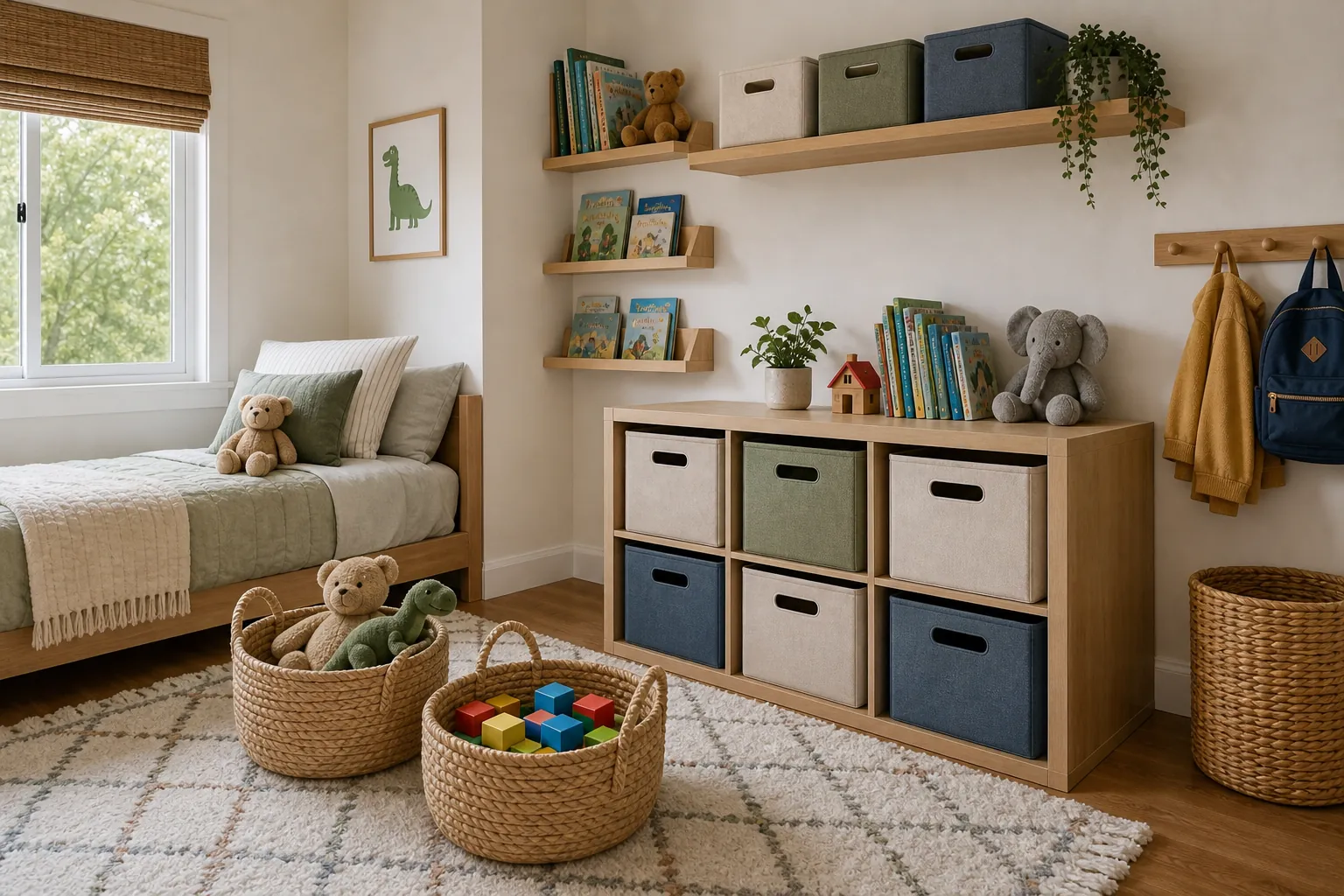
Toy rotation helps even more. Keep a few active bins low and move the rest to the closet, a high shelf, or under the bed. When the room starts feeling stale, swap one or two bins. This keeps the playroom organization manageable without buying more furniture.
Choose flexible pieces only when they solve a routine
Compact furniture still has a place, but it should earn its footprint. A slim rolling cart can hold art supplies and move out of the way. Floor cushions can stack in a corner. A small tray table can support puzzles or drawing, then disappear when playtime ends.
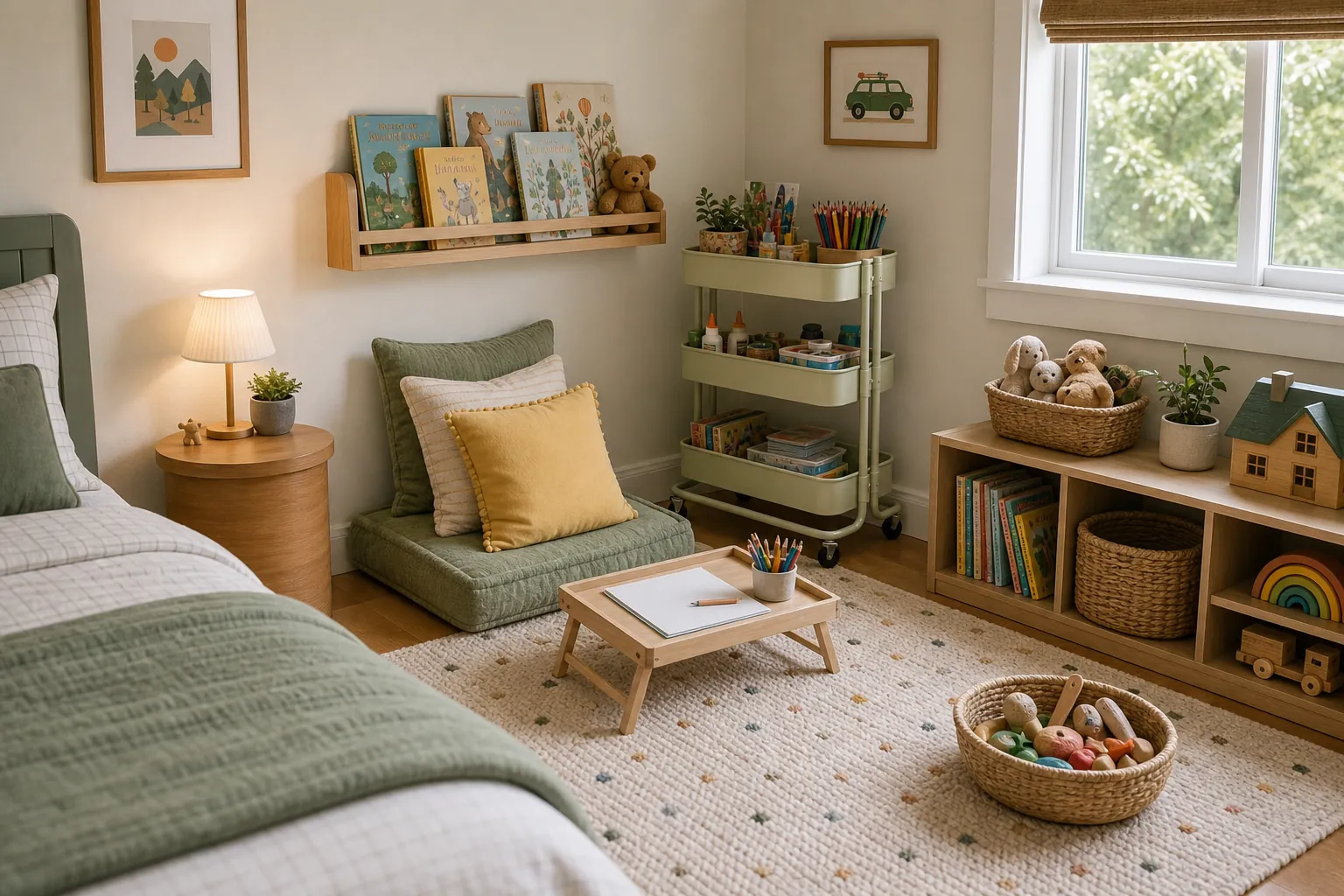
Before adding anything, ask what routine it supports. Does it make cleanup faster? Does it help a child get dressed? Does it keep toys off the floor? If the answer is vague, the room probably needs a better storage habit, not another furniture piece.
A simple reset system for small rooms
- Keep daily toys in small, low bins.
- Move backup toys to the closet, under the bed, or a high shelf.
- Use wall hooks for light items that need to be grabbed quickly.
- Store clothes inside the closet before adding a dresser.
- Protect one open rug area for play and cleanup.
- Remove any furniture that does not support a daily routine.
A small kids room does not need to hold everything at once. It needs to hold the right things in the right places. When storage is visible, reachable, and limited, the room can stay open enough for sleep, play, and everyday life without big furniture taking over.