
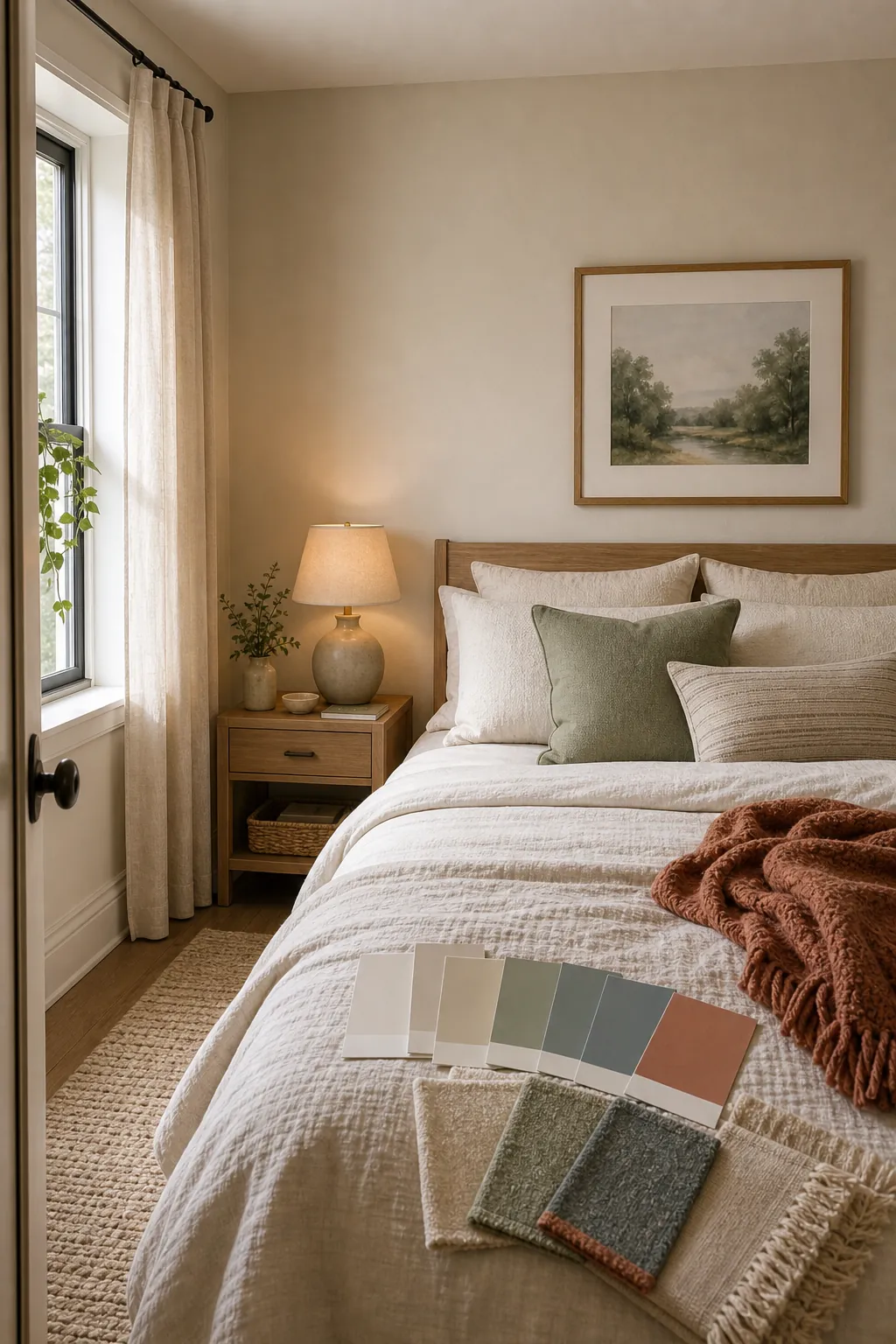
A calm bedroom can go wrong in a very specific way. The color looks peaceful on the paint chip, but once it is on the wall, the room feels flat, chilly, or unfinished. This happens often in small bedrooms because there is less space for the color to soften. The wall, bed, curtain, lamp, and floor are all close together.
The best small bedroom colors do more than look quiet. They make the room feel restful at night, warm in the morning, and comfortable beside the bedding you actually use. A small bedroom does not need a dramatic palette. It needs a bedroom color palette with warmth, texture, and soft contrast.
These ideas focus on the difference between calm and cold. The color may be neutral, green, blue, clay, or mushroom, but it has to work with light, trim, and fabric before it belongs on the wall.
Choose Warm Neutrals Instead of Flat Gray
Gray became the default calm color for a long time, but in a small bedroom it can turn lifeless fast. If the room has weak daylight, cool flooring, or bright white bedding, gray walls may make the whole space feel colder than you expected.

 Check on Amazon
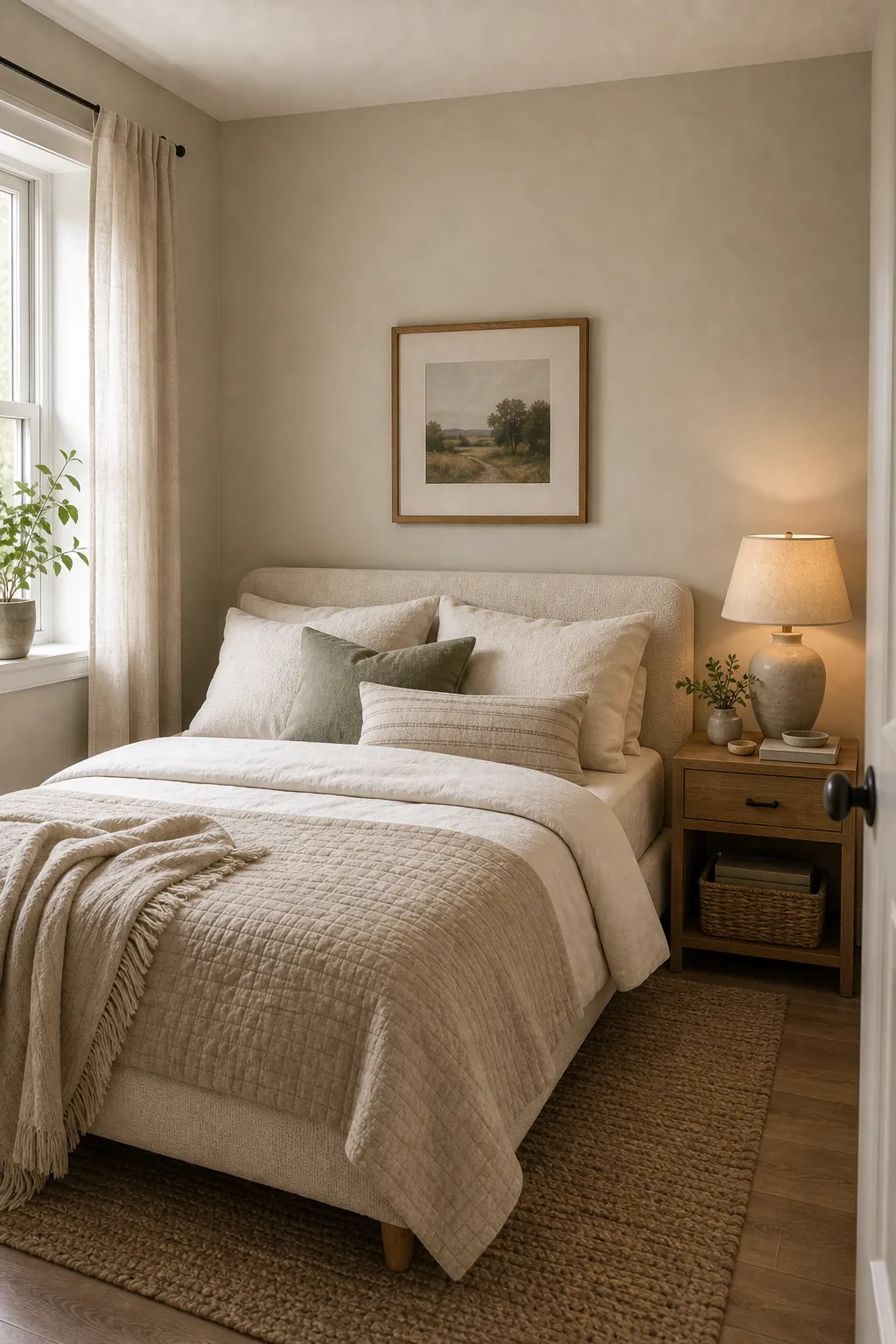
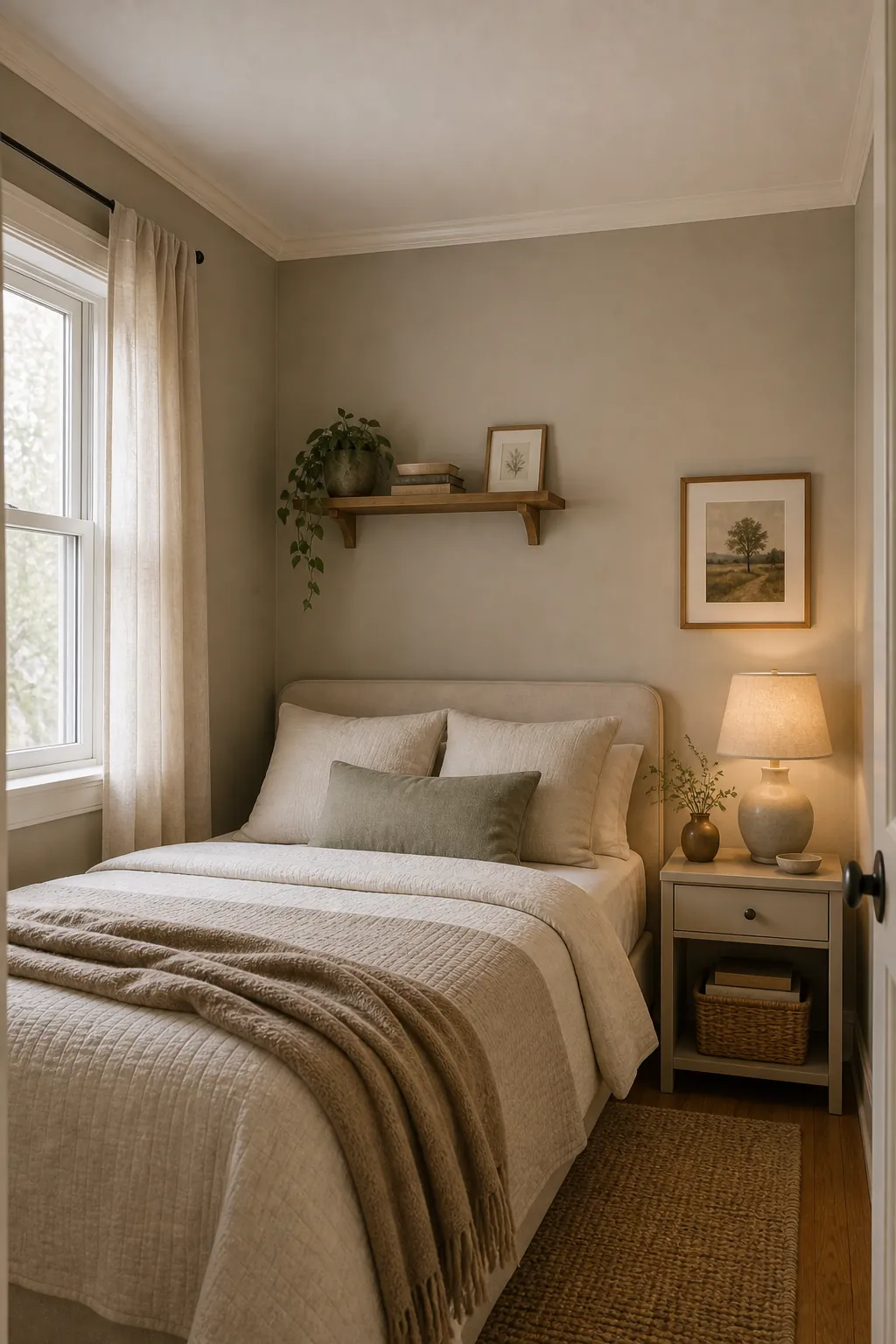
Warm neutrals are usually safer for a cozy bedroom. Look at warm white, soft greige, mushroom, oatmeal, pale taupe, and light beige-gray. These colors stay quiet, but they give the walls enough warmth to flatter cream bedding, wood furniture, woven baskets, and evening lamp light.
The goal is not a brown bedroom. The goal is a neutral that has a little softness under it. If the color looks good beside your sheets and your nightstand, it will probably feel calmer than a gray chosen in isolation.
Use Soft Green for Rest, Not Brightness
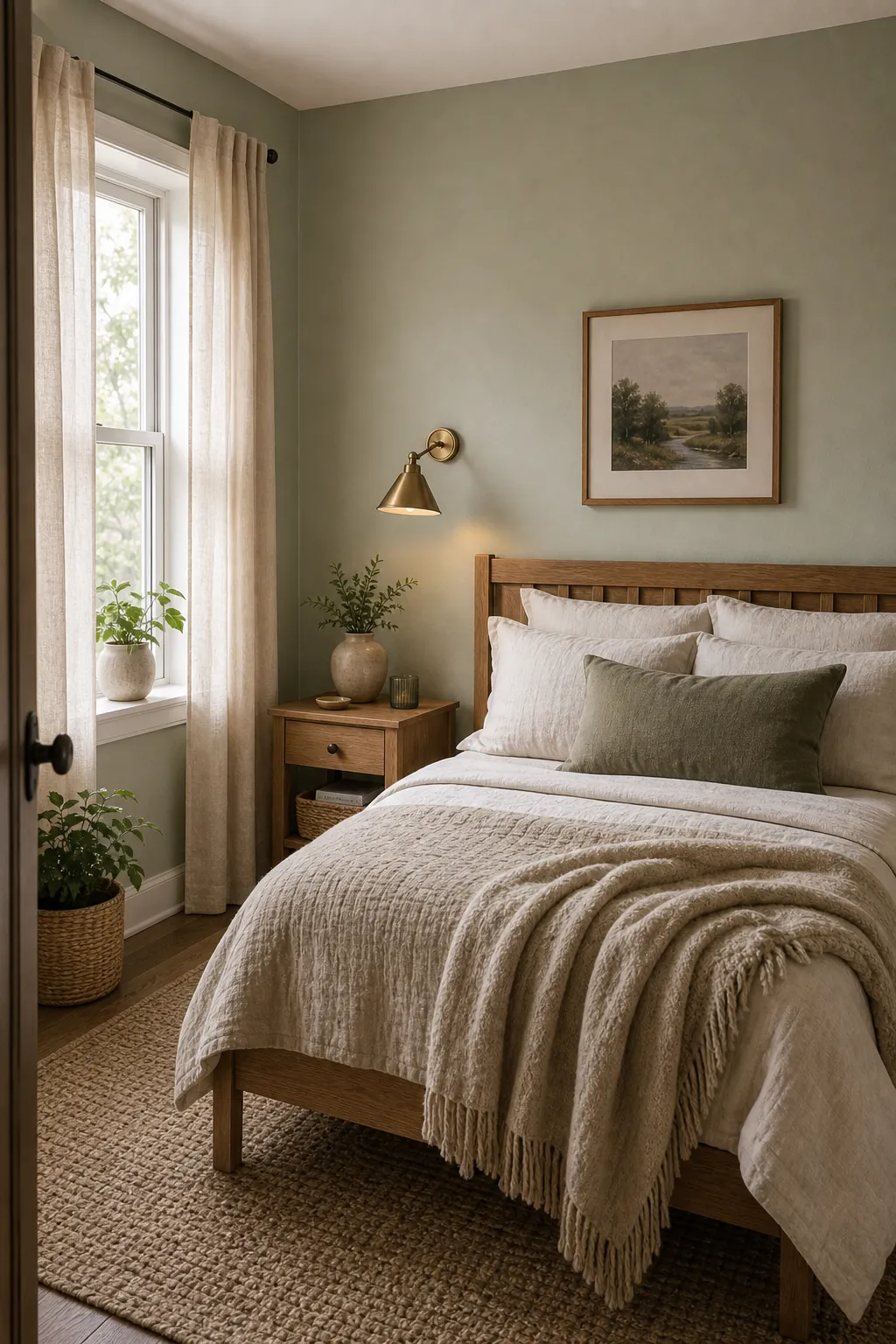
Green can be one of the best soft colors for a small bedroom because it feels connected to nature without demanding attention. The mistake is choosing a green that is too minty, too bright, or too saturated. That kind of green can feel fresh in the morning and strangely cold at night.

Look for sage, gray-green, olive-tinted light green, or eucalyptus tones. These greens have enough muted pigment to feel grounded. Pair them with warm white trim, oak, rattan, cream bedding, linen curtains, and a warm lamp. The room stays calm, but it does not feel sterile.
In a small bedroom, green works best when it behaves like a relaxed neutral. Let it be the wall color, then keep the bedding simple and textured.
Warm Up Blue-Gray With Fabric and Light
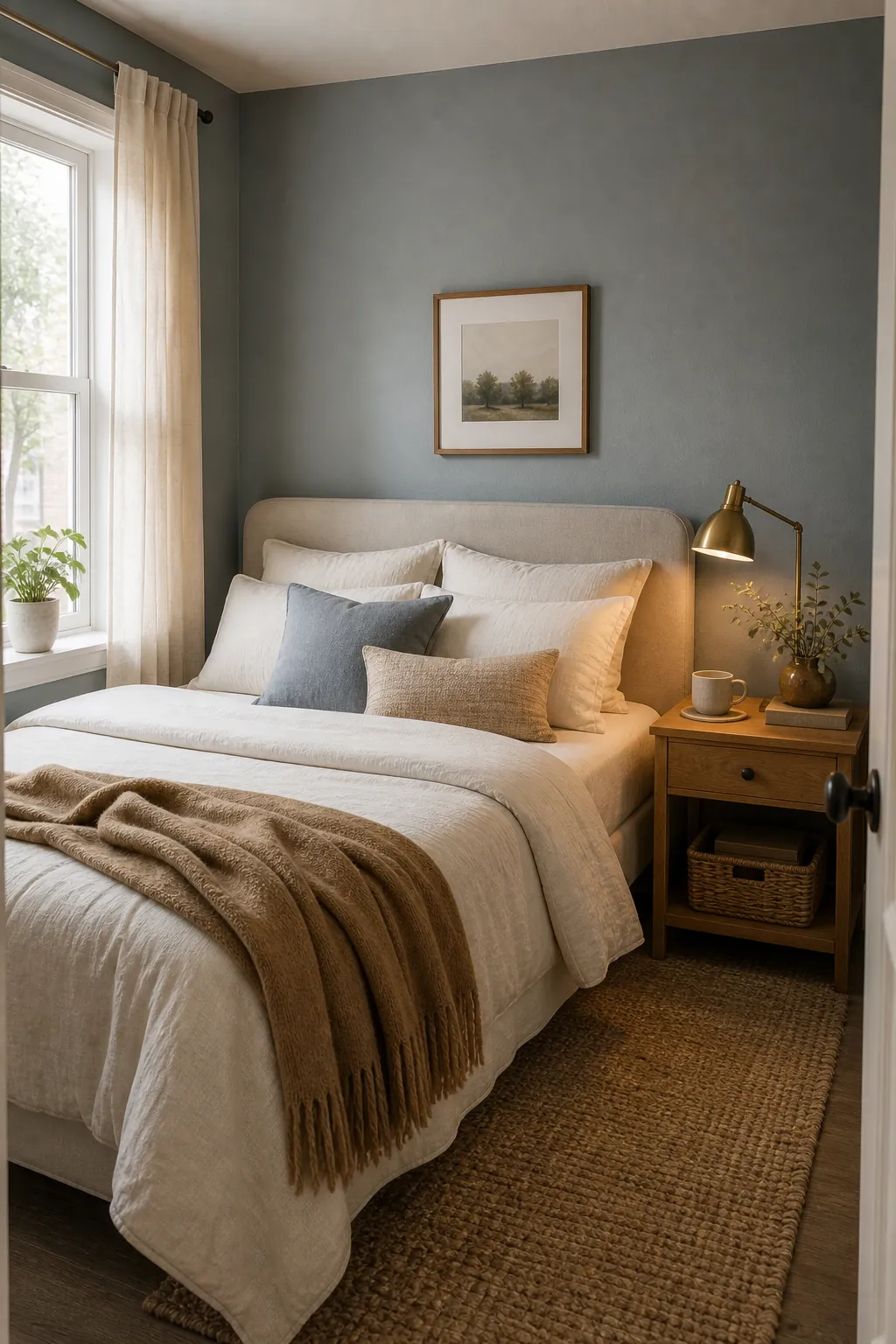
Blue-gray is beautiful in a calm bedroom, but it is also one of the easiest colors to make cold. The solution is not always choosing a warmer blue. Often, the better move is keeping the wall muted and adding warmth around it.

If you love blue or blue-gray, choose a softened version with a little gray or green in it, then balance it with cream bedding, camel or beige throws, oak nightstands, brass lamps, and warm bulbs. The blue-gray gives the room quiet. The textures keep it human.
Do not pair cool walls with cool bedding, cool metal, cool bulbs, and a gray rug unless you want a very crisp look. Most small bedrooms need more softness than that.
Add a Dusty Warm Accent
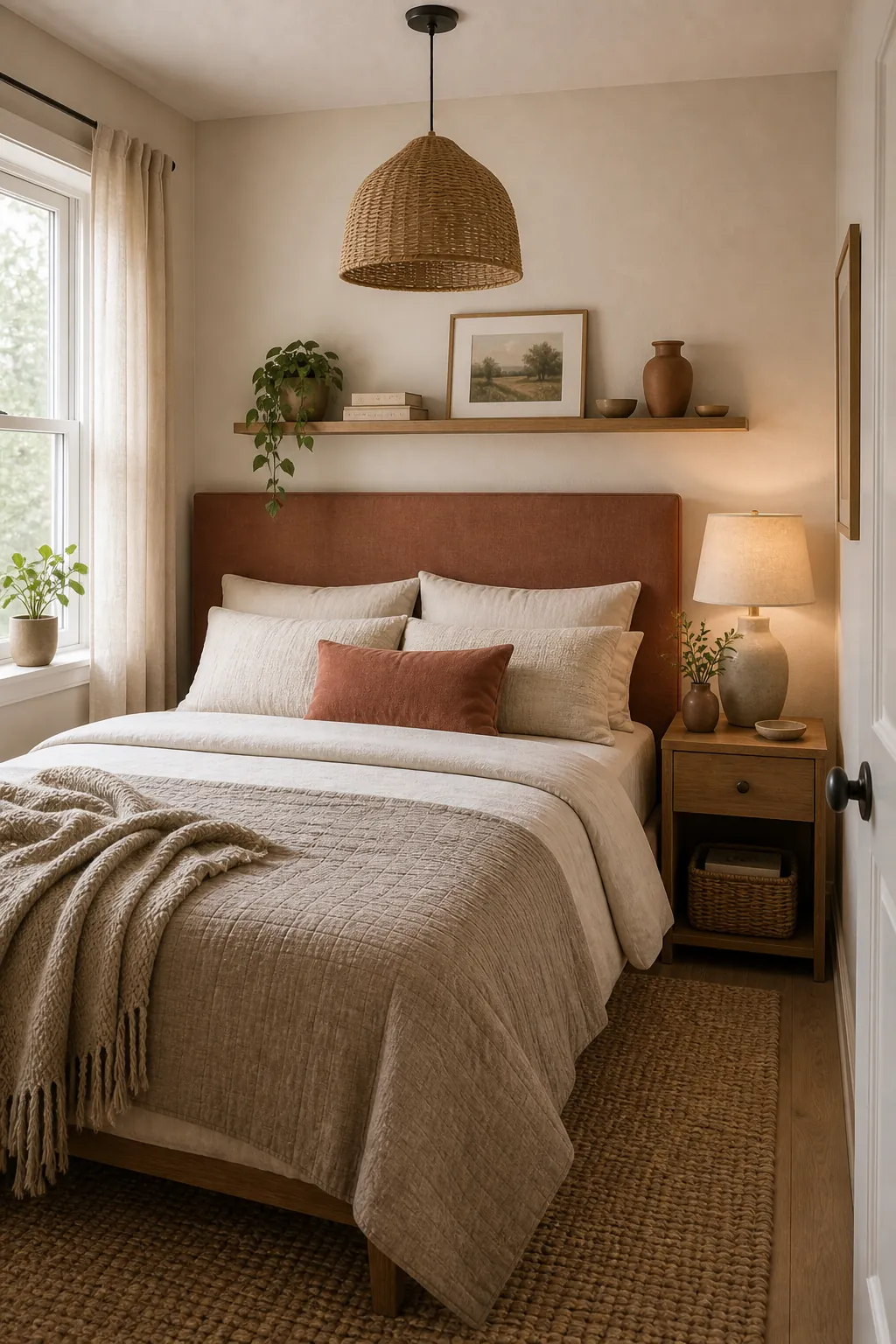
Some bedrooms feel cold because every color is trying to be quiet. Cream walls, white sheets, pale wood, and gray curtains can be peaceful, but they can also lose shape. A dusty warm accent gives the room a pulse without making it loud.

Try dusty clay, muted terracotta, warm blush, soft cinnamon, or faded rose. These colors work well in small bedrooms because they add warmth in a controlled way. Use them on a headboard, throw, pillow, art, or one textile panel rather than covering every surface.
This is especially useful if you want a cozy bedroom but do not want dark walls. A warm accent can make a pale room feel finished.
Soften the Trim and Ceiling Contrast
In a small bedroom, bright white trim can make a wall color look sharper than intended. Sometimes that crisp contrast is useful. Other times it outlines every edge and makes the room feel chopped up.
If you want a gentle bedroom, consider trim that is only a little lighter than the wall color. A mushroom wall with warm white trim, a sage wall with creamy trim, or a greige wall with ivory trim can feel softer than a hard white line. The ceiling matters too. A cold white ceiling above a warm wall can make the room feel unfinished.
You do not have to paint everything the same color. Just make sure the wall, trim, and ceiling belong to the same temperature family. That small choice can make bedroom decor feel calmer before you buy anything new.
Test Colors Beside Bedding and Lamps
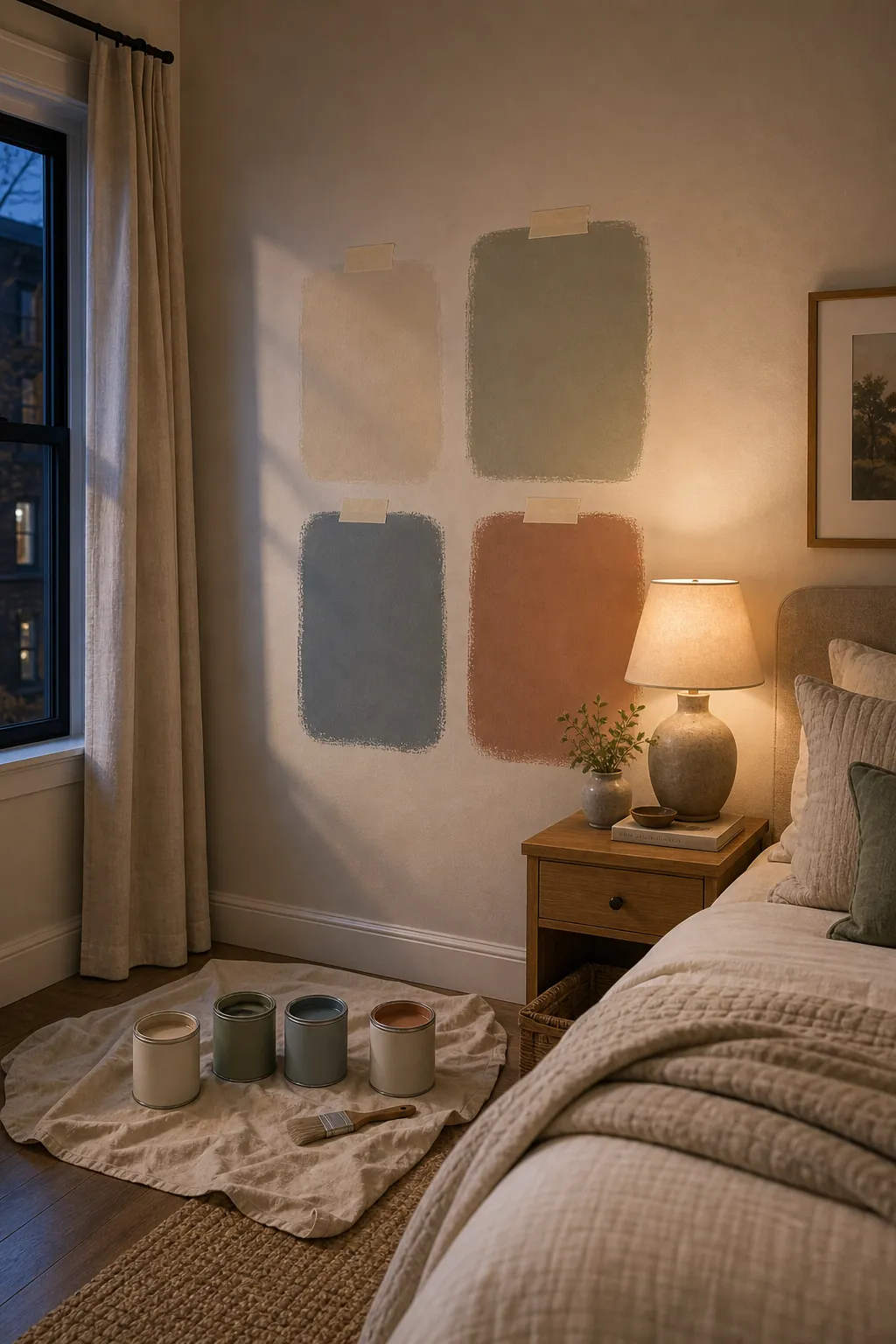
Bedroom paint should be judged at bedtime, not only at noon. A color can look perfect in daylight and then turn icy, muddy, or too yellow when the bedside lamp comes on. Since bedrooms are used most under soft artificial light, this test matters.
Put large samples beside your bedding, curtains, and nightstand. Turn on the lamps you actually use. Look at the samples when the room is dim, when the lamp is warm, and when the curtains are closed. The best wall colors still feel good in those conditions.
If the color feels calm only when the room is bright, it may not be the right bedroom color. If it feels calm when you are getting ready to sleep, it is worth considering.
A Calm Bedroom Palette That Feels Warm
A reliable small-bedroom formula is simple: warm neutral base, one softened color, one warm accent, and layered texture. For example, mushroom walls, cream bedding, pale sage accents, and a dusty clay throw. Or muted blue-gray walls, warm white bedding, oak furniture, and brass lamps.

The color does not have to be dramatic. In a small bedroom, the most important thing is that every layer supports the same feeling. The wall should calm the room. The bedding should warm it. The lamp should make it softer at night.
That is how a small bedroom becomes restful without turning cold.