
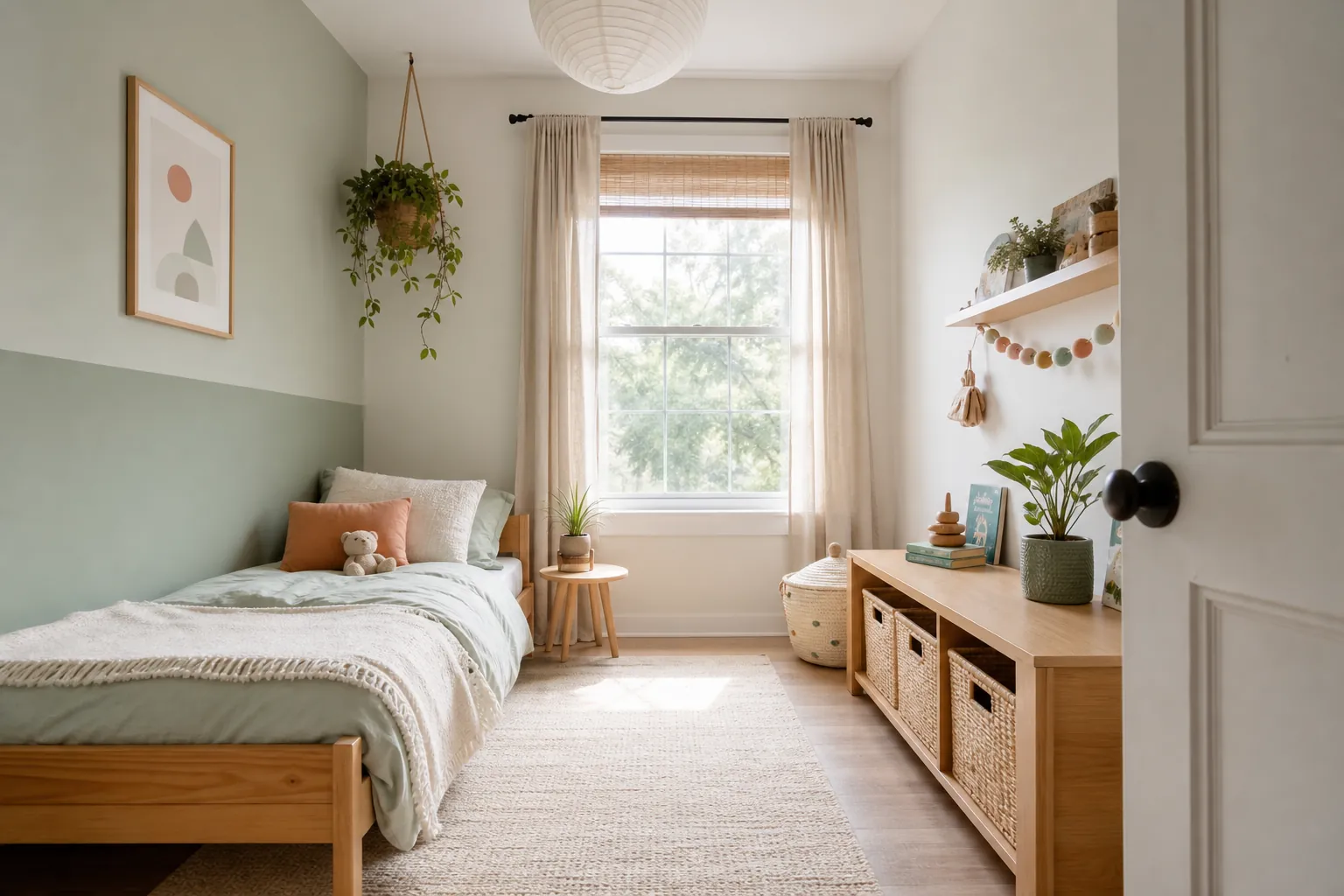
A small kids room usually feels crowded for two reasons: the furniture blocks the floor, and the room shows too many little things at once. The fix is not to make the room bare. A child still needs warmth, color, books, favorite toys, and a place that feels like theirs. The fix is to make every part of the room easier to read.
When a room looks calmer, daily life gets easier too. Kids can see where things belong. Parents are not stepping over toy piles at bedtime. The bed feels like a sleep zone instead of the last open surface in the house. The room may still be small, but it can feel more open, softer, and much less chaotic.
Start By Protecting One Clear Path Through The Room
Before buying storage or choosing paint, stand in the doorway and look for the main path. In many small kids bedroom layouts, the room feels tight because a dresser, toy bin, chair, or bed corner interrupts the first few steps inside. That blocked entry makes the whole space feel smaller before anyone has used it.
Try to create one open route from the door to the bed, closet, and main toy storage. This does not need to be a wide hallway. Even a narrow strip of visible floor gives the eye a place to rest. If a piece of furniture sticks into that route, test another position before replacing it.
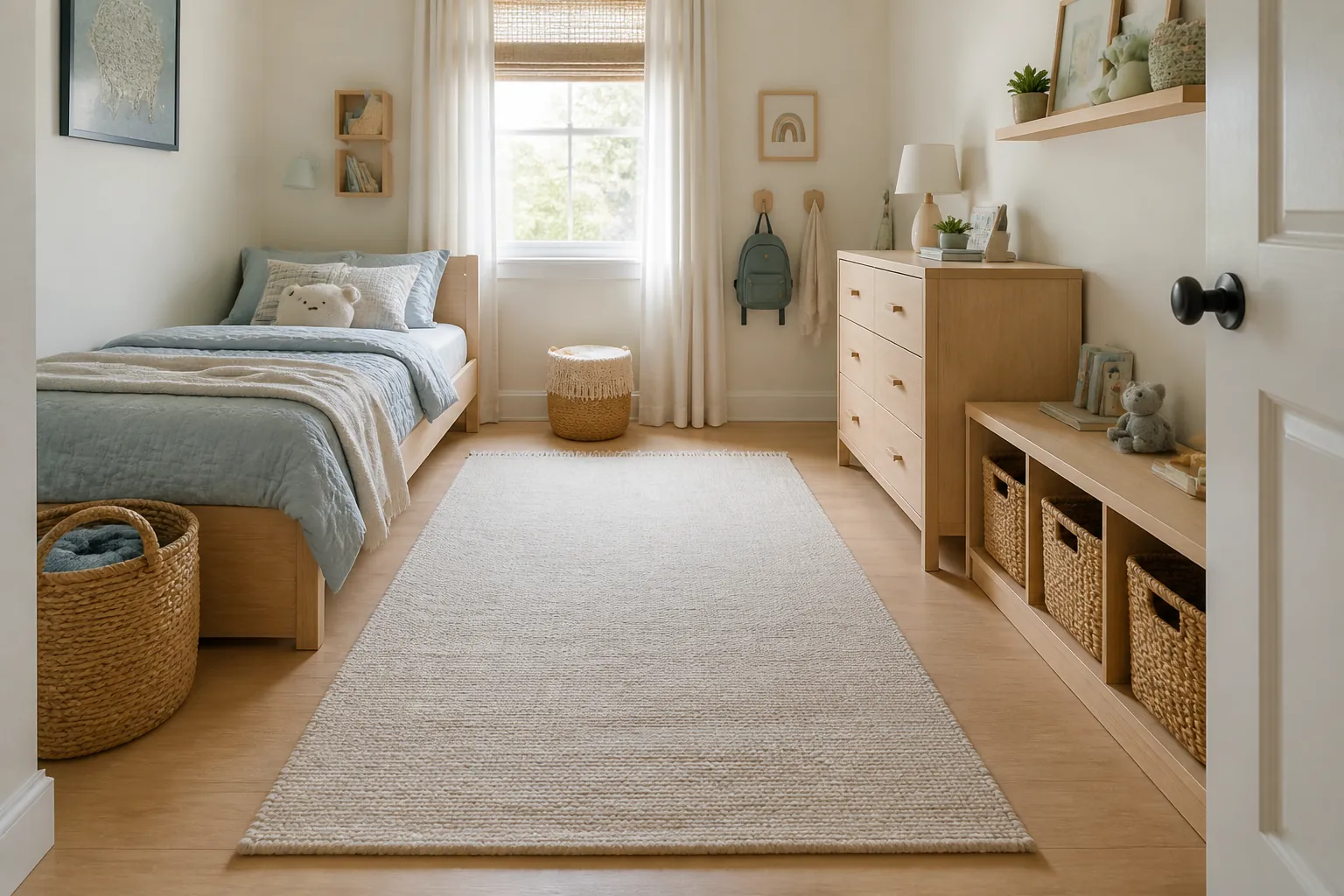
The easiest layout change is often pushing the bed against the longest wall and keeping bulky storage on one side of the room. If the bed is centered but the room is too narrow, the leftover floor on both sides may become two unusable slivers. One larger open patch is usually better than two tiny gaps.
For younger kids, leave enough open floor for the kind of play that actually happens: blocks, trains, pretend kitchens, puzzles, or costume changes. A room that has a small but obvious play zone often feels calmer than a room where play spreads across every surface.
Use Fewer Furniture Pieces, But Make Each One Work Harder
Small bedroom ideas often fail when every problem gets its own furniture item. A bookcase for books, a toy chest for toys, a dresser for clothes, a nightstand for bedtime items, a desk for crafts, and a chair for reading can fill the room before the child has space to move.
Instead, choose pieces that can handle more than one job. A low cube shelf can hold books, bins, and a lamp. A bed with drawers can store extra bedding, dress-up clothes, or rotated toys. A storage bench can become a reading seat and a place for bulky plush animals. The goal is not more storage everywhere. The goal is fewer visual stops around the room.
Look closely at furniture height. In a calm kids room, children should be able to reach the things they use every day. Storage that is too high becomes parent-only storage, which means toys end up on the floor. Use high shelves for occasional items, keepsakes, or seasonal pieces, and keep daily bins at child height.
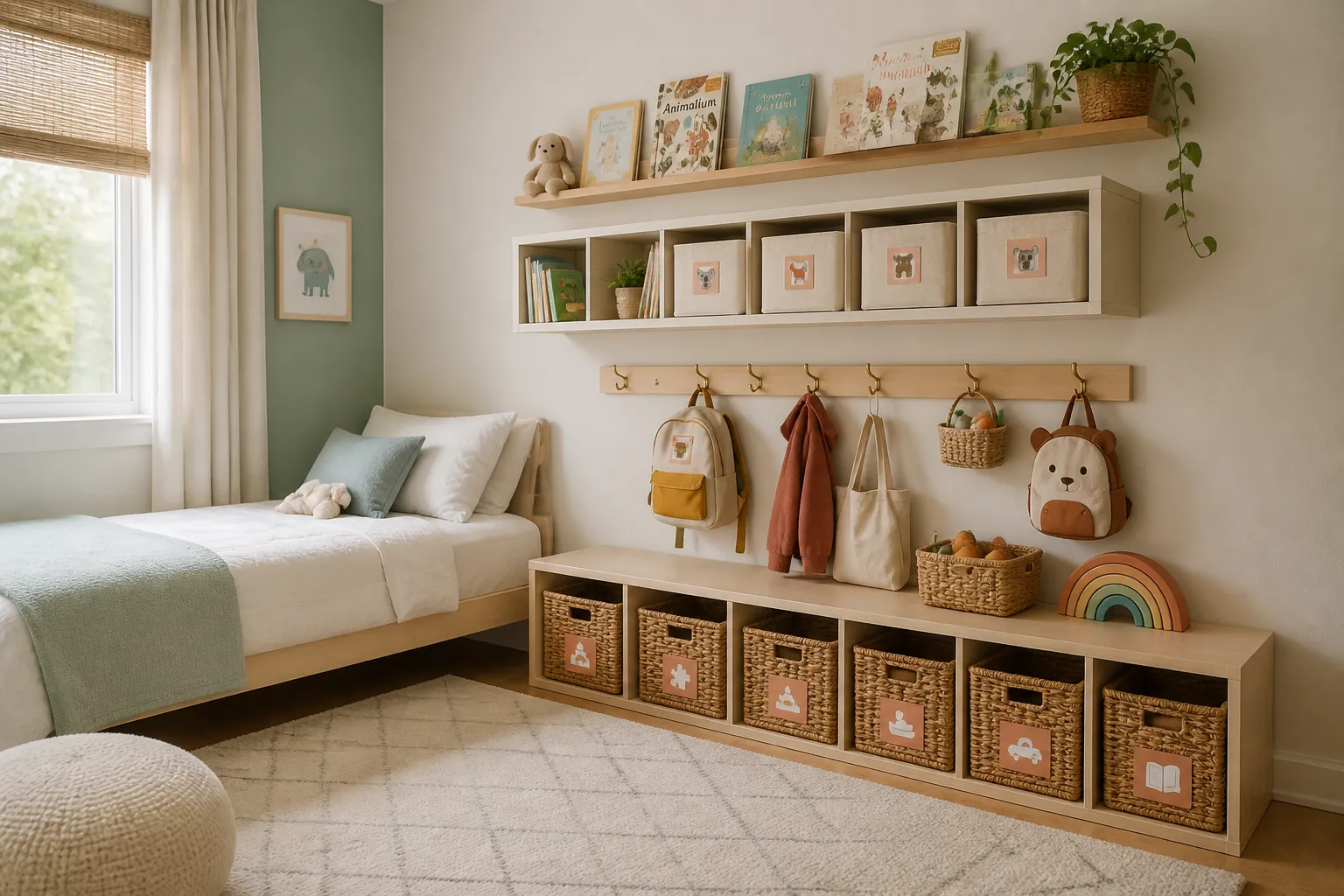
If you already own too many separate pieces, remove one item for a week as a test. A small side table may not be necessary if a wall shelf can hold a bedtime book and water bottle. A chair may not earn its space if the child reads on the rug. A second open toy shelf may be making the room feel busy even when it is technically organized.
Hide The Small Stuff And Display Only The Best Stuff
Kids rooms collect tiny visual clutter: toy pieces, craft supplies, doll clothes, puzzle boxes, books, hair accessories, socks, chargers, stickers, and half-finished creations. Open shelving can look charming in photos, but it becomes noisy fast when every shelf holds mixed colors, mixed sizes, and mixed categories.
A calmer room needs a simple rule: small things go behind a front. That front can be a fabric bin, a lidded basket, a drawer, a cabinet door, or an under-bed box. When the room has fewer tiny objects visible, the walls and floor feel farther apart.
Use open display for the items that add personality without mess: a few favorite books facing forward, one framed drawing, a small collection on a high shelf, or a beloved stuffed animal on the bed. Everything else should have a home that visually quiets it.
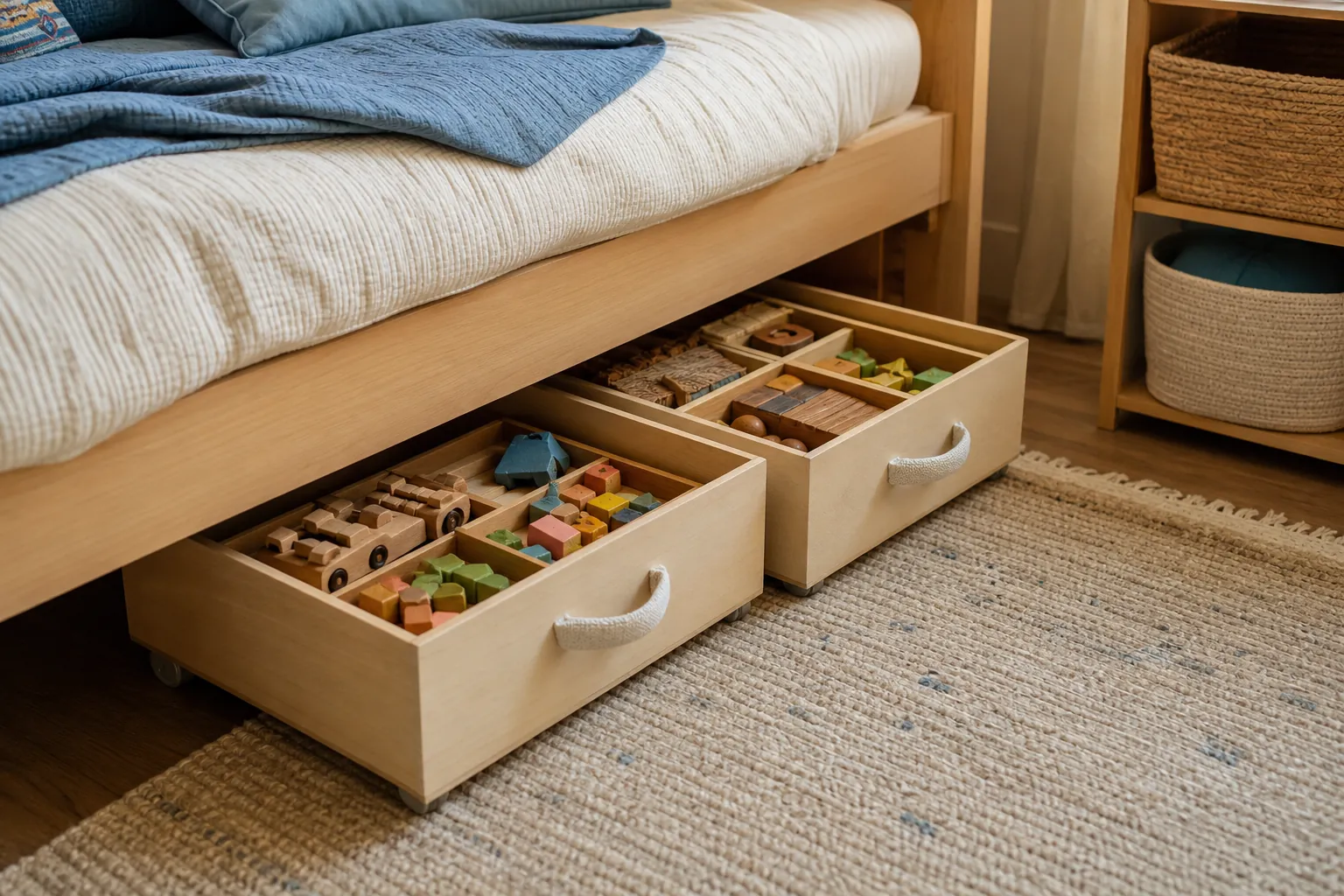
Under-bed storage is especially useful because it does not add another vertical block to the room. Use it for categories that are easy to pull out and put back: building blocks, train tracks, extra bedding, seasonal clothes, or toys that rotate in and out. If the boxes are hard to slide, kids will not use them. Wheels, shallow lids, and clear labels matter more than a perfect matching set.
Choose Soft Colors, Then Control Where The Bright Colors Go
Soft colors help a small kids room feel bigger because they reduce contrast. Cream, warm white, pale sage, dusty blue, muted peach, gentle lavender, and soft gray can all work. The exact color matters less than the consistency. If the wall, rug, curtains, and big bedding pieces are fighting each other, the room feels chopped into smaller pieces.
That does not mean a child’s room has to be plain. Kids already bring bright color into a room through toys, books, art, clothes, and bedding. The calmer approach is to keep the biggest surfaces quiet and let color appear in smaller, intentional accents.
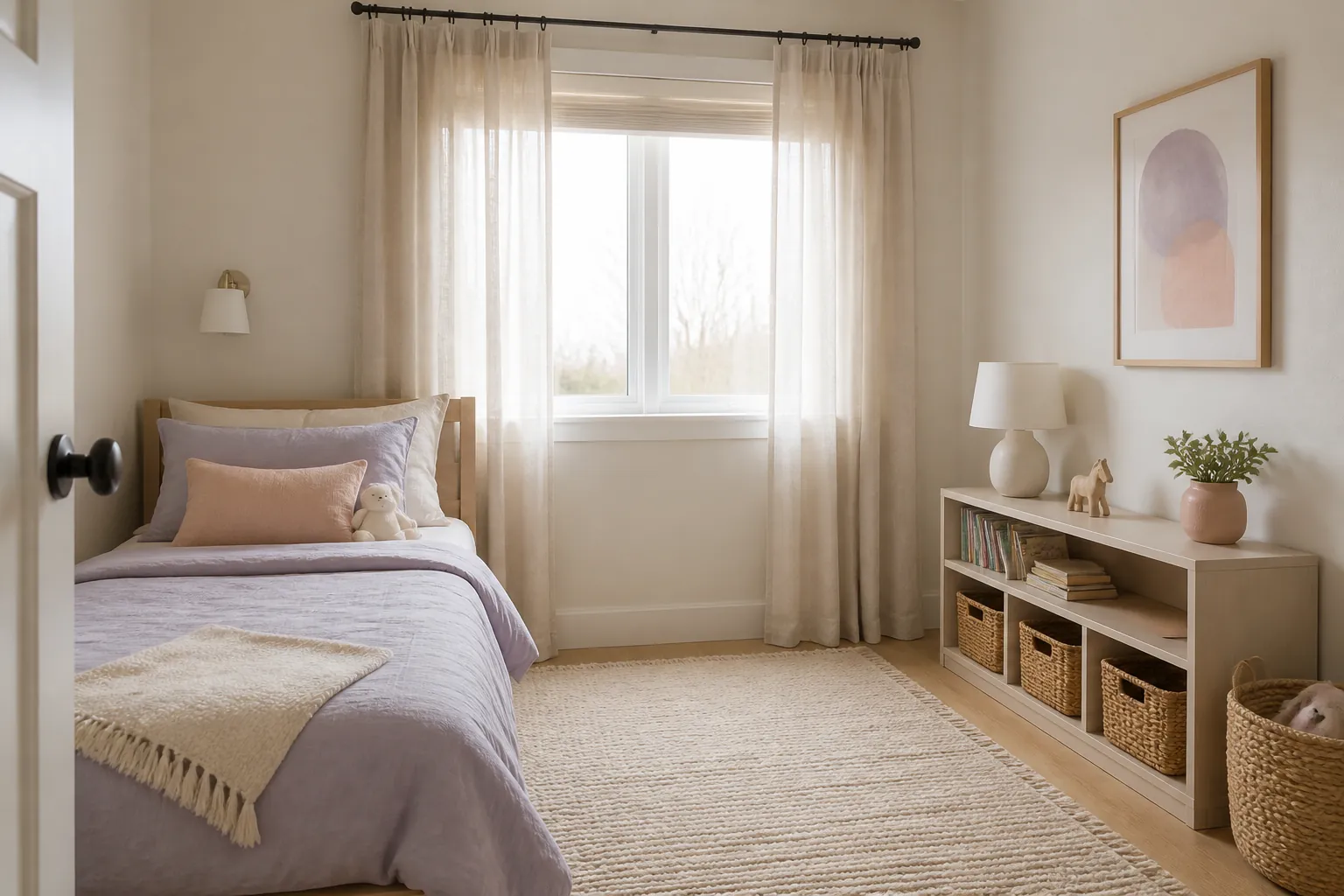
A useful test is to pick three main colors for the visible room: one wall color, one wood or furniture tone, and one accent color. Other colors can still appear, but they should not dominate the big pieces. If the room already has a bright rug, bright bedding, colorful bins, and patterned curtains, start by quieting one of those surfaces.
Soft curtains can also make a room feel calmer. Hang them high and wide if the window allows it, and choose a color close to the wall or bedding. The window will feel larger, and the room will have fewer hard visual edges.
Create A Toy System Kids Can Maintain
A clutter free kids room depends less on perfect organizing products and more on the number of decisions a child has to make. If cleanup requires sorting thirty categories into narrow containers, it will fail. If cleanup means putting blocks in one bin, dolls in one basket, books on one shelf, and costumes on one hook, it has a chance.
For small rooms, broad categories usually work better than micro categories. Try blocks, figures, dress-up, art, plush, books, and quiet bedtime toys. Use picture labels for younger kids and simple word labels for older kids. If a bin is always overflowing, the problem is not the bin. The category is too large for the room.
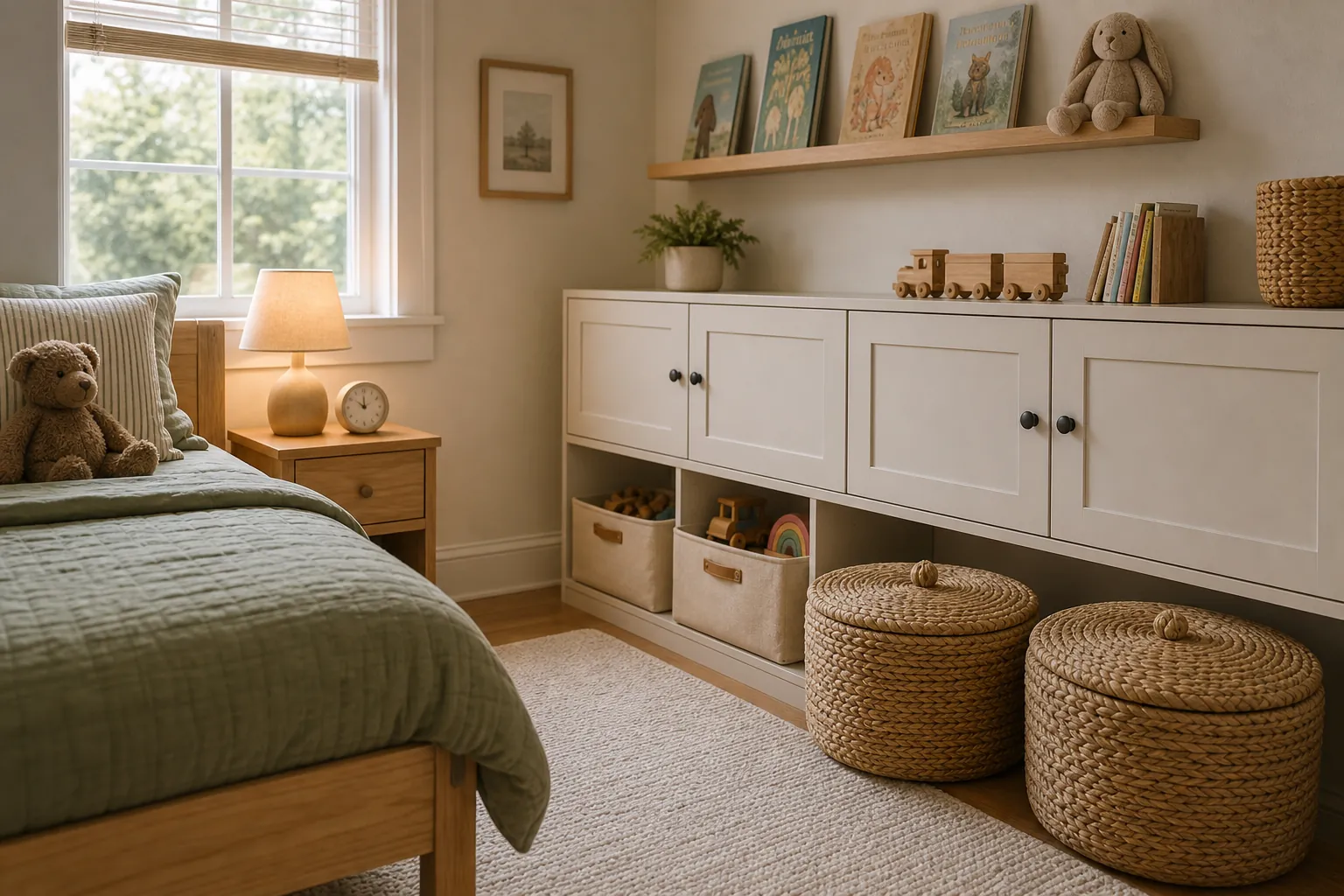
Toy rotation helps when the room cannot hold everything without stress. Keep current favorites in the room and store the rest in a closet, garage shelf, or adult-managed bin. Rotate every few weeks or when play starts to feel stale. Kids often play more deeply when they can actually see what is available.
Bedtime also gets easier when the bedroom is not the main home for every exciting toy. If possible, keep loud, messy, or high-energy toys somewhere else. A small bedroom can still have toys, but the room should not feel like a playroom at the exact moment a child is supposed to wind down.
Make The Sleep Zone Visibly Different From The Play Zone
Even in one small room, zones help the brain understand what happens where. The bed is for sleep and quiet comfort. The floor patch is for play. The shelf is for books and toys. The closet or drawers are for clothes. When every zone is mixed together, the room feels busier and bedtime becomes harder.
You do not need dividers. A rug, wall shelf, reading light, canopy, small floor cushion, or different bedding texture can define a zone without taking up space. Keep the sleep zone softer than the play zone: fewer items on the bed, calmer bedding, a small light, and only a few bedtime books nearby.
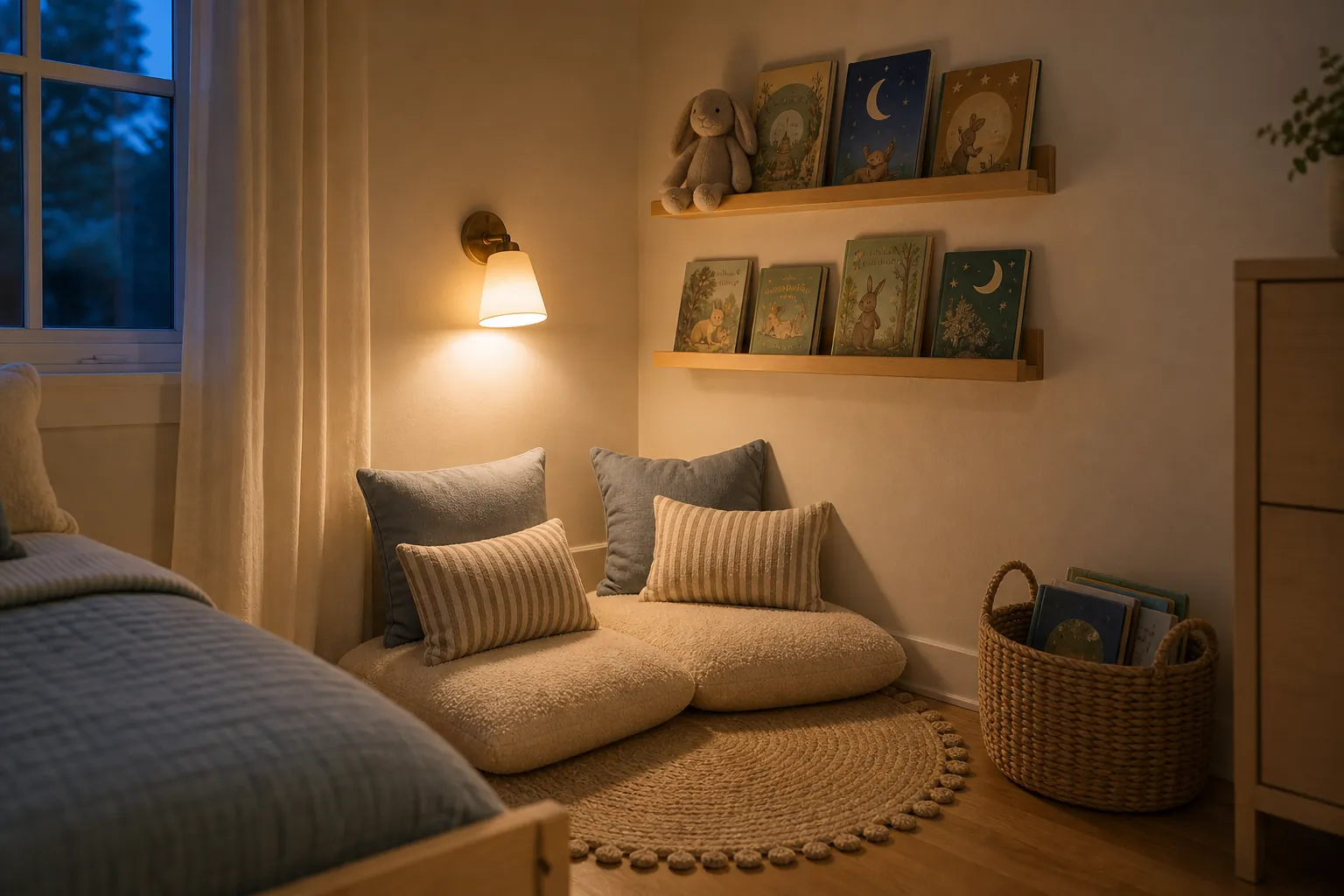
A reading corner can be as simple as two floor cushions beside low bookshelves. If the room is too tight for a chair, skip it. Floor cushions, a soft rug, or a storage bench against the wall will feel more spacious than a bulky armchair that blocks the path.
Use The Walls Without Making Them Feel Crowded
Wall storage is one of the best ways to make a small room feel bigger, but it needs restraint. A full wall of mismatched shelves, hooks, art, school papers, and hanging toys can feel as crowded as the floor. Choose one wall to work hard, then let the other walls breathe.
Hooks are useful for costumes, backpacks, robes, and tomorrow’s outfit. Picture ledges work well for books because covers face out and children can choose quickly. A narrow shelf above a dresser can hold a lamp, framed art, or small keepsakes without adding a nightstand.
For safety, anchor tall furniture, shelves, and dressers to the wall. A room can be beautiful and organized, but kids climb, pull, lean, and test furniture in ways adults do not expect. Safety is part of a calm room.
Make The Room Feel Bigger By Editing What The Eye Sees First
The first view from the doorway sets the mood. If the door opens onto piles, open bins, laundry, or the side of a bulky dresser, the room will feel smaller. If the first view shows the bed made, the floor mostly clear, and one calm wall, the room feels more generous.
Try this quick reset: make the bed, clear the floor, close or cover the busiest storage, and remove three things from the first view. Then step back into the doorway. If the room suddenly feels bigger, you have found the main issue. It was not square footage. It was visual overload.
A small kids room does not need to look like an adult bedroom. It can still be playful, personal, and warm. But the calmest rooms give children fewer obstacles, fewer visible piles, and clearer places to put things away. Once the floor, colors, storage, and sleep zone work together, the room starts to feel bigger because daily life inside it finally has room to move.