
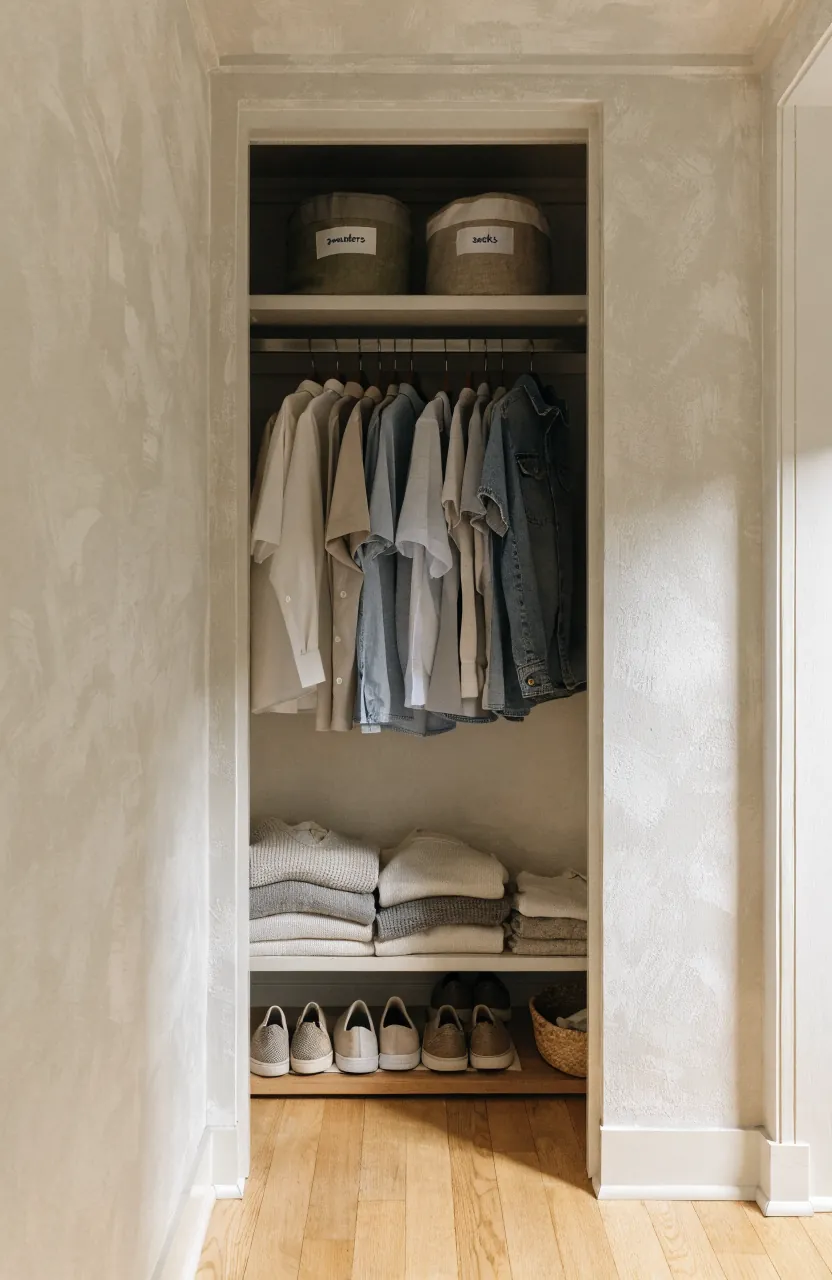
A tiny closet usually starts looking messy for one simple reason: it is asked to hold too many categories at once. Clothes, shoes, bags, laundry overflow, seasonal pieces, storage bins, sentimental items, and “I might wear this” outfits all fight for the same few inches. The fix is not buying every organizer in sight. The fix is making the closet easier to read at a glance.
For a small closet to hold more without looking crowded, every item needs one of three homes: visible daily access, contained backup storage, or a different room entirely. That sounds strict, but it is what keeps a tiny closet from becoming a wall of visual noise.
Start By Removing The Hidden Overflow
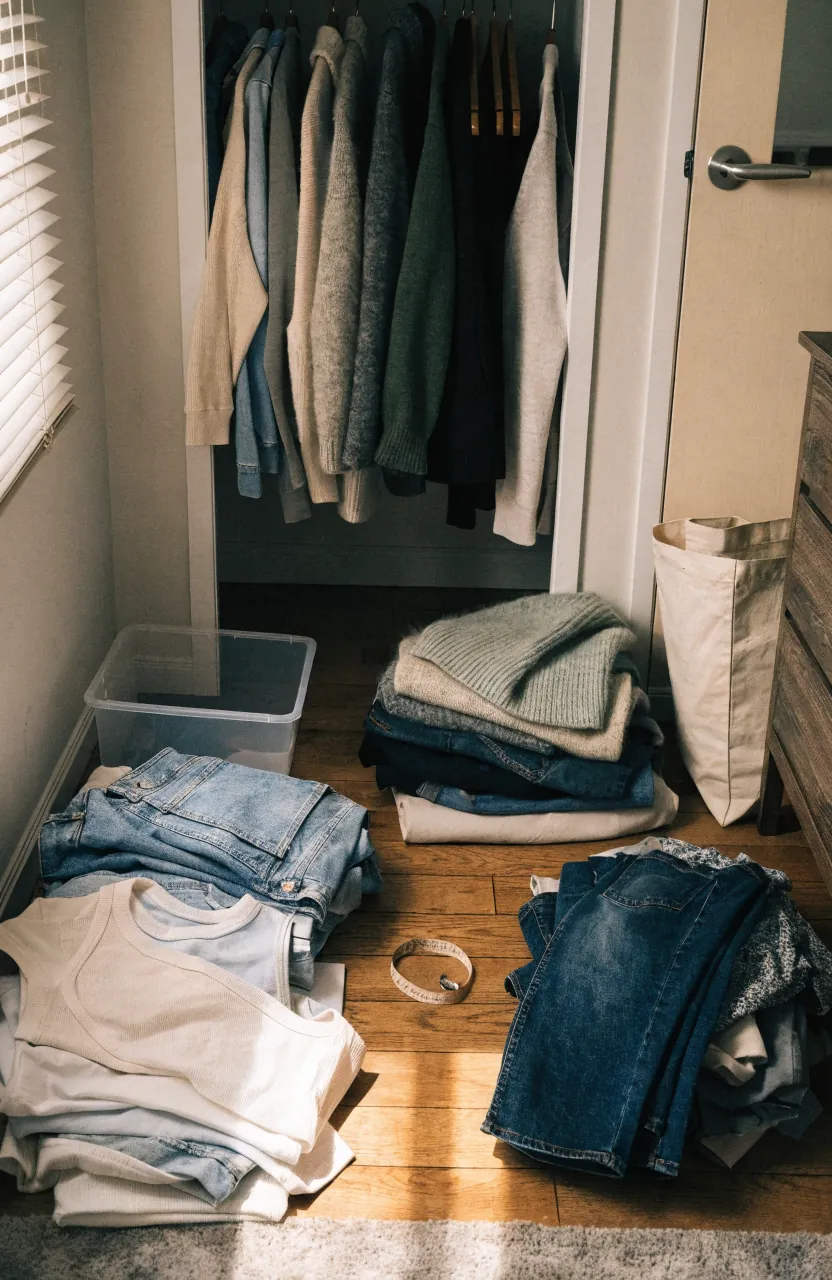
The first messy closet fix is not a bin. It is an edit. Pull out anything that does not belong to your current season, current size, current lifestyle, or current week. A tiny closet can work beautifully when it holds what you actually reach for, but it gets visually chaotic when every possible version of your wardrobe is packed into the same rail.
Make four fast piles: daily wear, occasional wear, seasonal storage, and decisions. Daily wear gets the best real estate. Occasional wear can go higher, lower, or farther back. Seasonal clothes should leave the closet if you have another storage option. The decision pile gets a deadline, not a permanent corner.
This is where many small closet ideas fail: they organize everything you own instead of deciding what the closet should actually support. If your tiny closet is full of coats in July, formal clothes you wear twice a year, and sweaters you forgot you owned, your daily clothes will always look like clutter.
Use One Clean Hanging Line
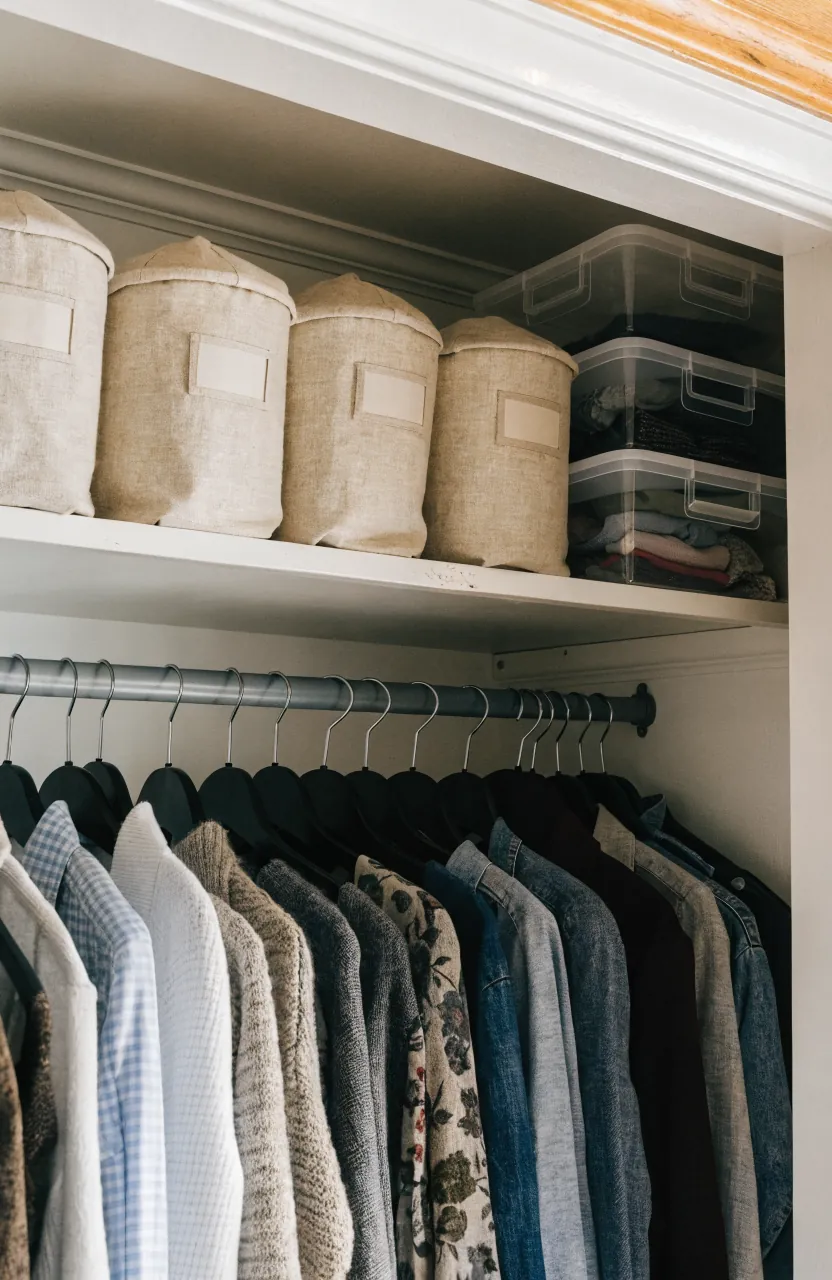
Hangers are one of the biggest visual signals in a closet. Mixed plastic hangers, wire hangers, bulky velvet hangers, and random dry-cleaning hangers make a closet look crowded even when the actual item count is reasonable. Switching to one hanger style creates a calmer line and lets the clothes become the focus.
Keep the hanging section as intentional as possible. Hang items that truly need to hang: blouses, structured jackets, dresses, trousers that crease easily, and outfits you wear often. Fold knits, workout clothes, jeans, sleepwear, and casual tees unless hanging them is the only system you can maintain.
If your closet has wasted vertical space, a second rod can help. In a rental, a tension rod or freestanding double-hang unit may be more realistic than drilling. The point is not to cram two full wardrobes into one opening. It is to create a clearer split between tops and bottoms so the floor does not become accidental clothes storage.
Give The Floor A Real Job
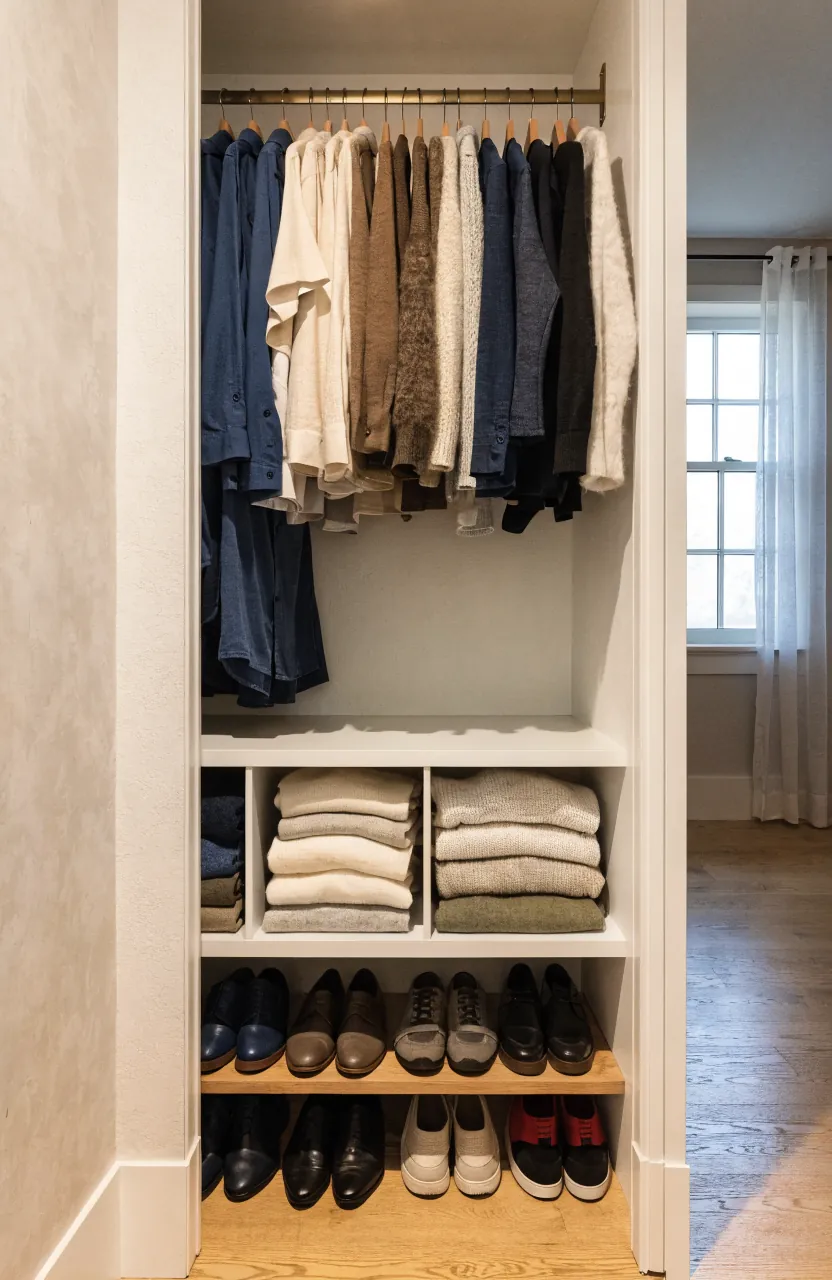
The floor is where a tiny closet turns messy fastest. Shoes drift, bags slump, laundry lands, and storage bins get stacked until you can no longer reach the bottom one. A clutter free closet needs the floor to have a single job, not five competing jobs.
If shoes are the problem, use a low rack, cubby, or two-tier shelf. If folded clothes are the problem, use a small drawer unit or fabric bins that fit the width of the closet. If bulky items are the problem, choose lidded storage bins and label them clearly. What matters most is that every floor container can be pulled out without knocking over another container.
A good rule: nothing loose should live on the closet floor. Loose items make the whole closet look unfinished. Contained items look intentional, even when the closet is small.
Turn The Door Into Quiet Storage
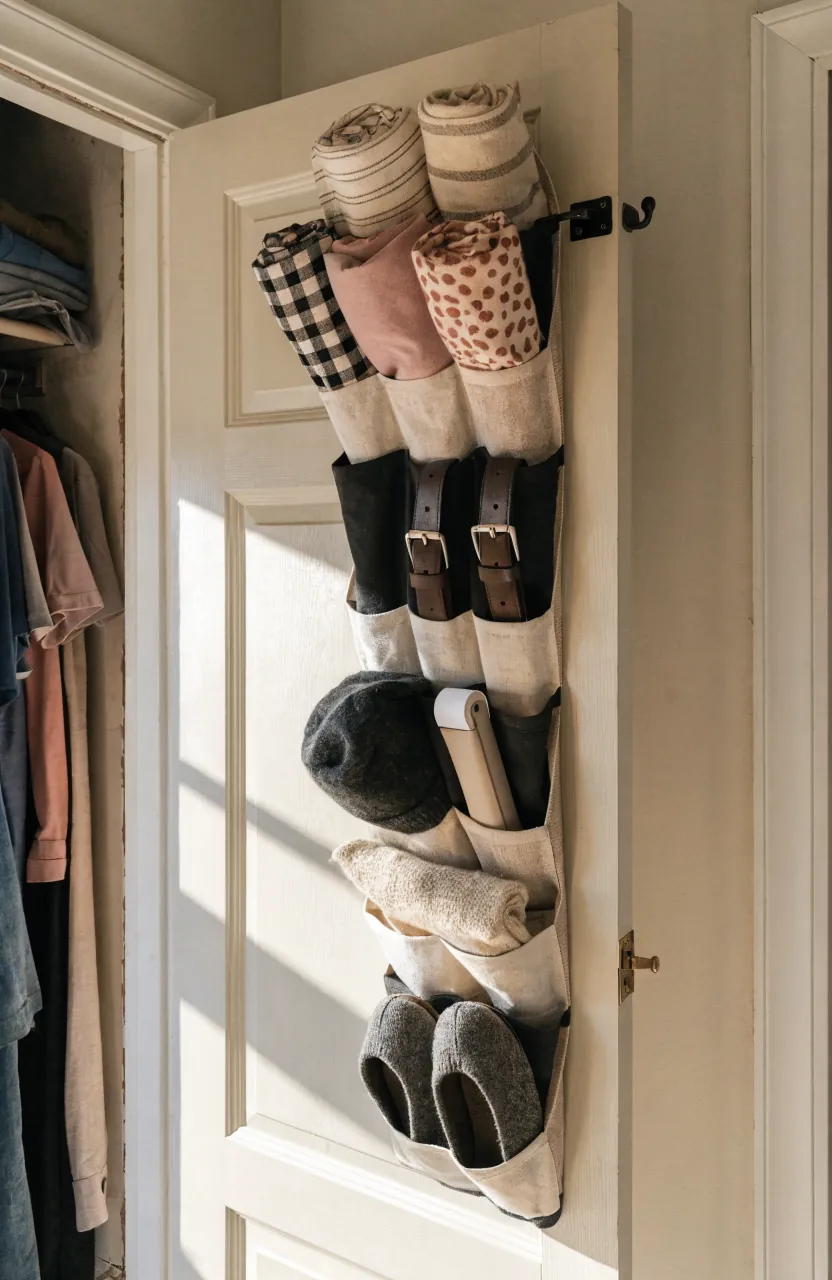
The back of a closet door is useful, but it can also become visual chaos if every pocket is stuffed. Use door storage for small, repeatable categories: scarves, belts, hats, soft accessories, lint rollers, folded tote bags, or the shoes you wear most often. Avoid using it as a dumping spot for anything that does not have a home.
Shallow door organizers tend to look cleaner than deep, bulging pockets. Hooks work well for tomorrow’s outfit, a robe, a small bag, or frequently worn caps. If the door swings into the room, check that the organizer does not bump into hanging clothes or scrape the wall. If you have sliding doors, use nearby wall hooks instead.
Make Storage Bins Disappear Visually
Storage bins can solve a closet organization problem, or they can hide it until the next busy morning. In a small closet, bins should be boring in the best way: similar color, similar size, clear labels, and a category narrow enough that you can remember what is inside.
Use bins for categories that do not need daily browsing: off-season accessories, extra bedding, special occasion pieces, backup basics, travel items, or sentimental clothing. Avoid labels like “miscellaneous,” “random,” or “clothes.” Those labels are just clutter with better packaging.
If open bins make your closet look busy, switch to lidded boxes on the top shelf. If closed boxes make you forget what you own, use clear bins with matching labels. The right choice is the one that supports your habits, not the one that looks best in a store display.
Fold More Than You Think
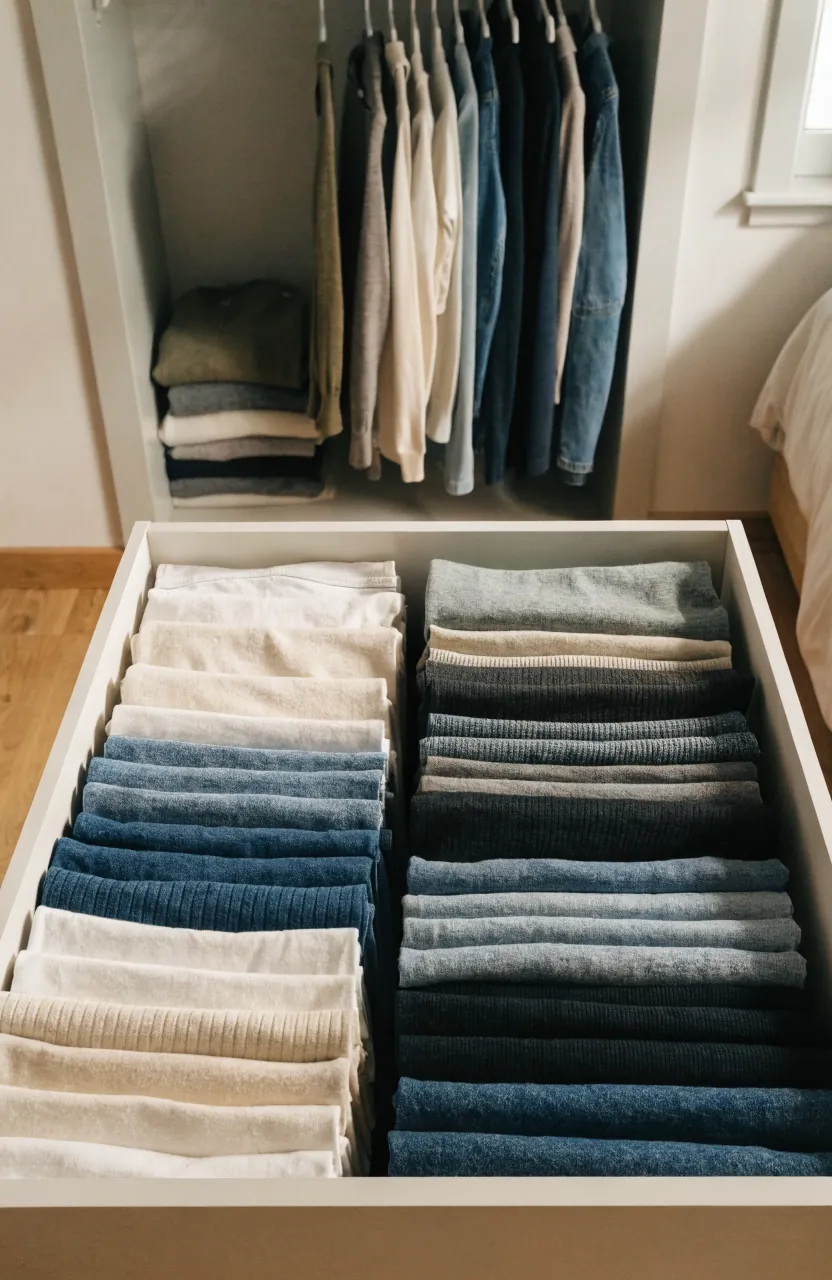
A tiny closet often looks messy because too many soft items are hanging. Tees, sweaters, leggings, denim, lounge clothes, and workout clothes can eat up rail space while adding uneven shapes to the closet line. Folding them creates denser clothes storage and keeps the hanging section calmer.
File-fold drawer items so you can see every piece from above. Stack sweaters only if the stack stays low enough to remove one item without rebuilding the pile. For shelves, use shelf dividers or shallow bins so folded clothes do not lean into each other. For deep shelves, put less-used items in the back and daily items in a front bin you can pull out.
This is especially useful for bedroom storage when the closet has to share space with a dresser. Let the closet hold your most visible, structure-sensitive items, and let drawers handle the soft basics that do not need to be displayed.
Create A Weekly Reset Spot
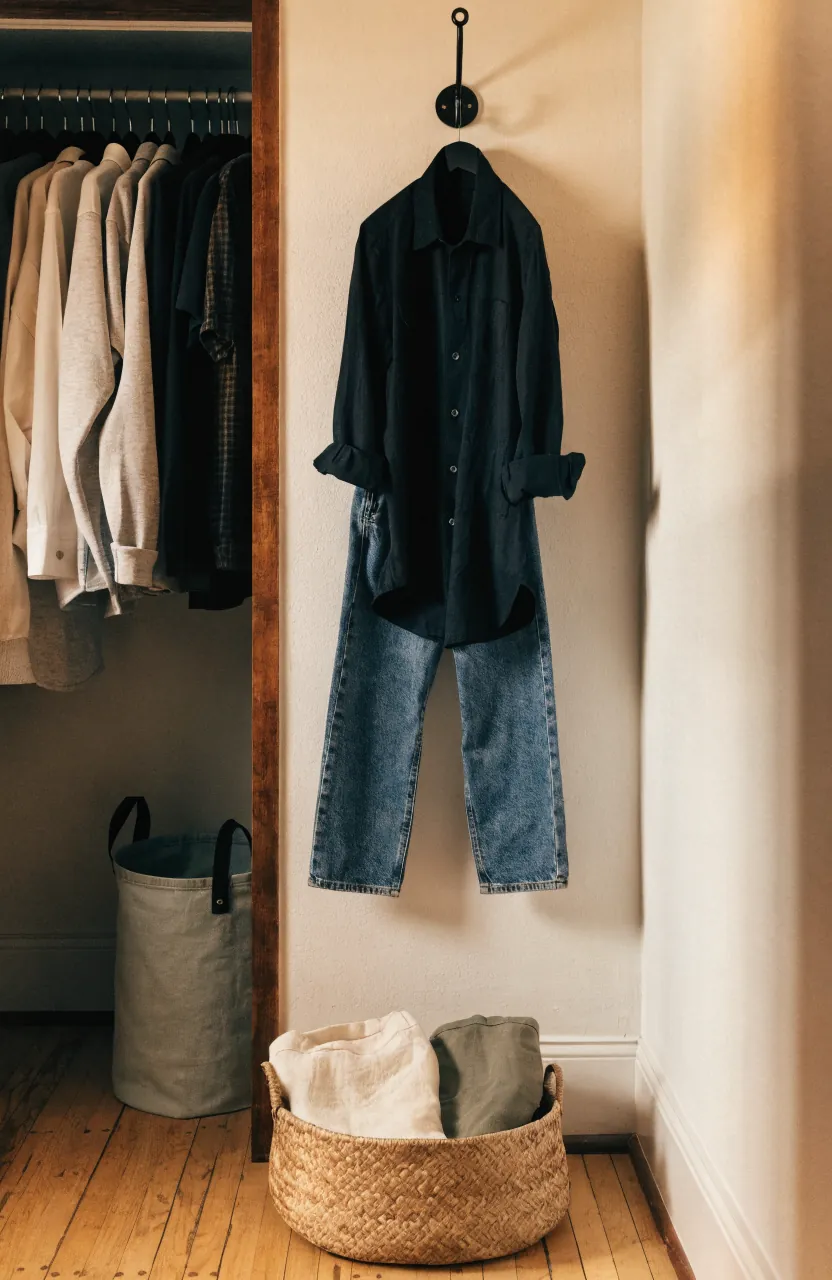
Even the best wardrobe organization system needs a landing zone. Without one, half-worn clothes end up on the floor, clean laundry sits in a basket, and tomorrow’s outfit takes over the doorknob. Add one small reset spot so the closet can absorb real life without falling apart.
That reset spot might be a single hook, a slim hamper, a small basket, or a labeled “try on again” bin. Keep it small on purpose. When the reset spot fills, it is time to put things away, wash them, or make a decision. A tiny closet should not need a dramatic monthly overhaul if it has a small weekly pressure-release system.
Keep The Closet Looking Calm
The most organized tiny closet is not always the one with the most organizers. It is the one where your eye can understand the system quickly. Matching hangers, fewer visible categories, labeled storage bins, one clear floor zone, and a separate place for seasonal clothes will do more than another random shelf.
- Use the easiest-to-reach space for daily clothes.
- Move seasonal clothes out of prime closet space.
- Keep loose items off the floor.
- Choose bins after you know the category, not before.
- Reset weekly before the closet becomes a project.
A tiny closet can hold more than it seems, but only when it stops holding everything equally. Give the best space to the clothes you wear now, contain the backup categories, and remove the items that make the closet look busy. That is how a small closet becomes useful without looking messy.