
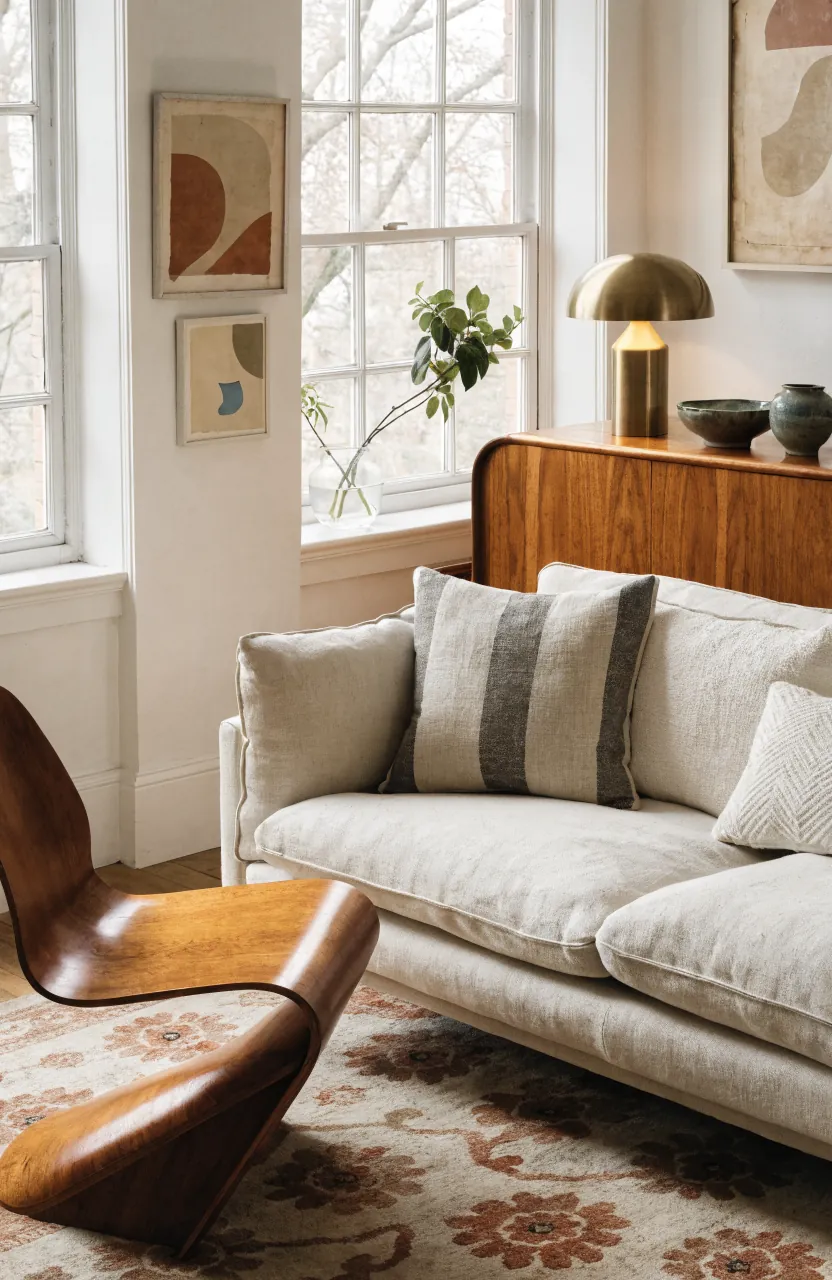
Retro decor goes wrong when it tries to recreate a whole decade. It works when it borrows the best parts: warm color, rounded shapes, nostalgic lighting, thrifted texture, and a little old house charm. The goal is not to make your home look like it has never changed. The goal is to make it feel warmer, more personal, and less like every piece came from the same new catalog.
The safest rule is simple: let retro be the accent, not the entire room. A mushroom lamp, a 70s-inspired palette, a curved vintage chair, or a thrifted cabinet can bring character. Clean walls, useful layouts, fresh textiles, and edited surfaces keep the room from feeling dated.
Choose One Retro Era as the Accent
If you love retro home decor, it is easy to pull from every decade at once: 50s color, 60s curves, 70s rattan, 80s glass, and 90s shapes. That can be fun, but it can also make the room feel scattered. Start with one era or one feeling. Maybe it is earthy 70s decor, warm mid-century wood, or nostalgic cottage pieces. Then let the rest of the room stay calmer.
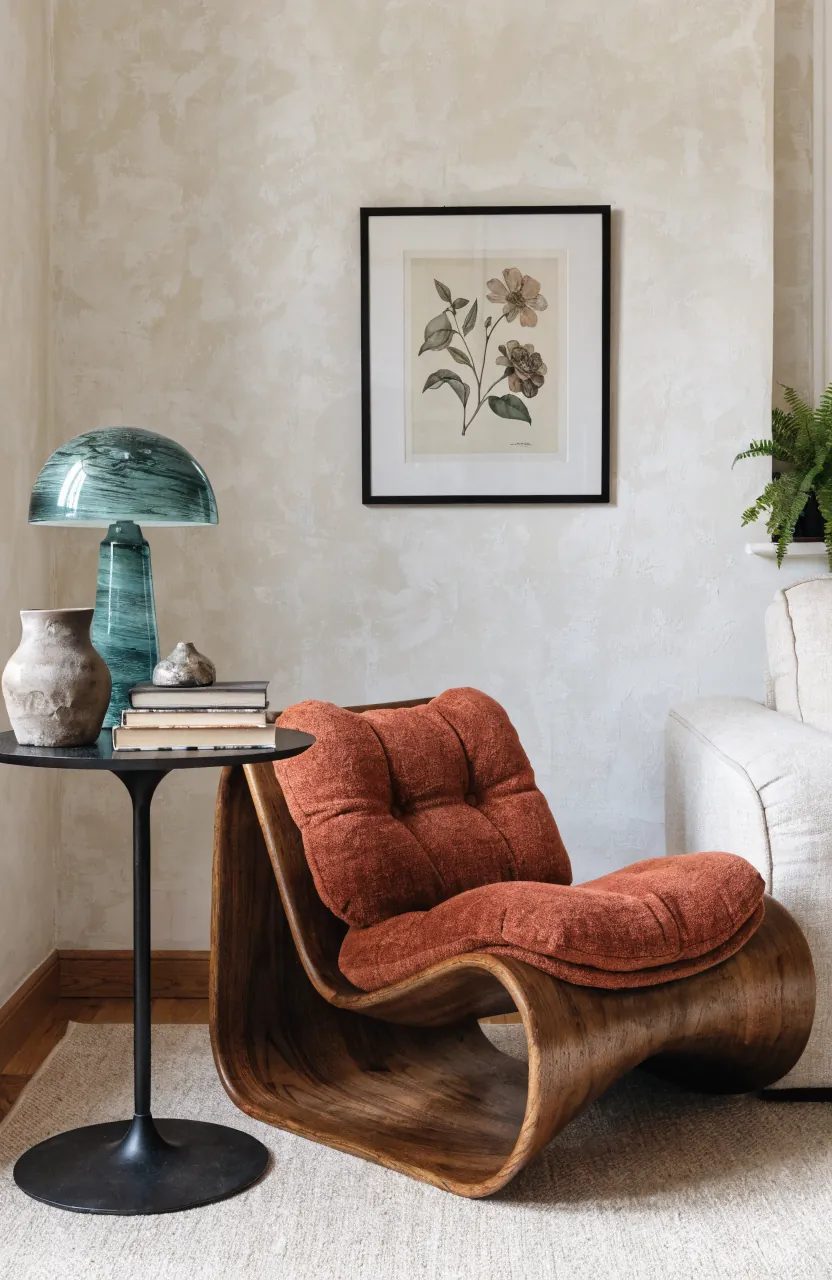
A single retro chair beside a plain sofa often looks more current than a whole room full of matching vintage pieces. The contrast tells the eye that the old piece was chosen on purpose. That is the difference between nostalgic decor and a room that simply feels unchanged.
Use 70s Color in Controlled Repeats
Terracotta, ochre, olive, tobacco, and warm brown can make a room feel cozy fast. They also become heavy fast if they cover every wall, sofa, rug, and curtain. Use retro color in repeats instead. A rust pillow, a faded rug detail, a ceramic lamp, and one framed print can carry the palette without turning the room into a period set.
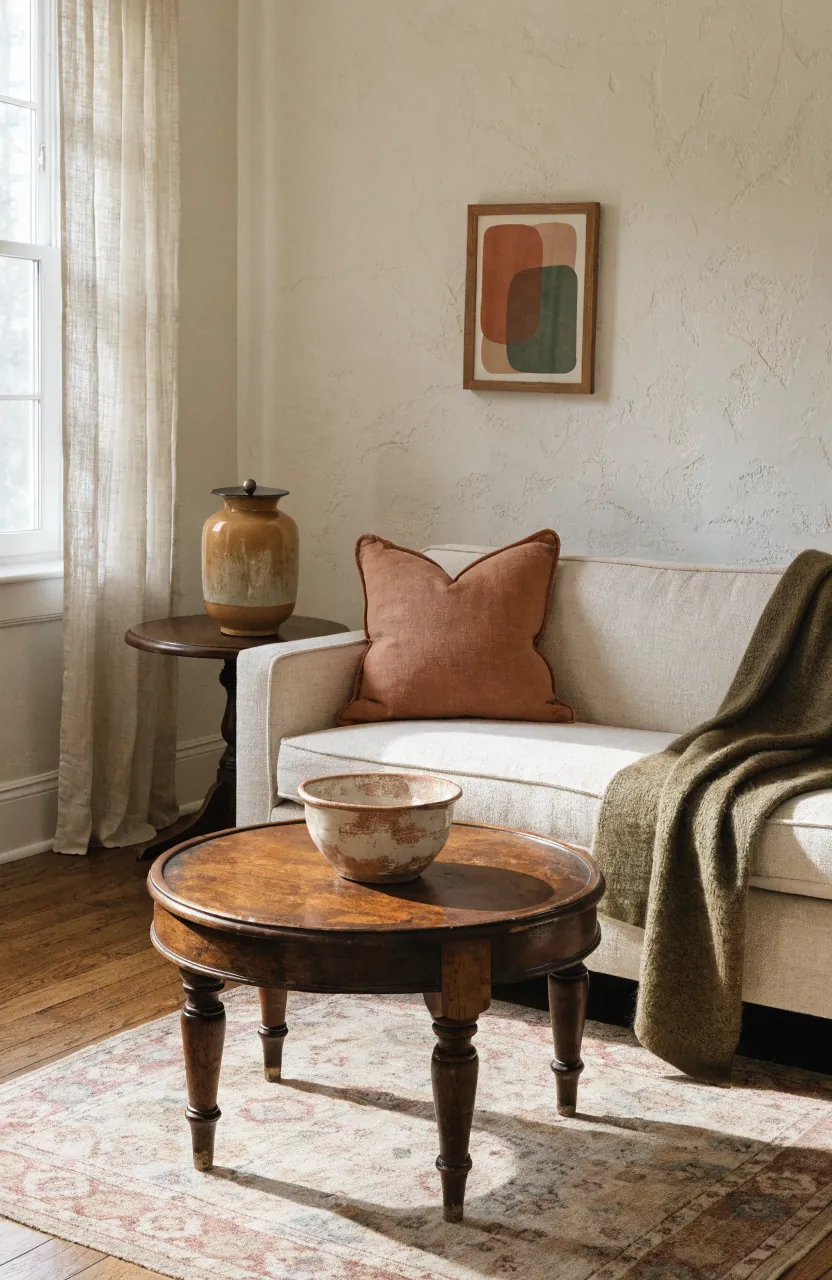
Keep at least one part of the room quiet: cream walls, plain curtains, a neutral sofa, or a simple rug. That calm base lets warm home decor feel rich instead of stale. Retro color needs breathing room.
Let Lighting Carry the Nostalgia
Lighting is one of the easiest ways to add retro character without making a permanent commitment. A globe lamp, mushroom lamp, pleated shade, or vintage ceramic base can change the mood of a room quickly. It also solves a practical problem: many homes feel dated because they rely on harsh overhead light.
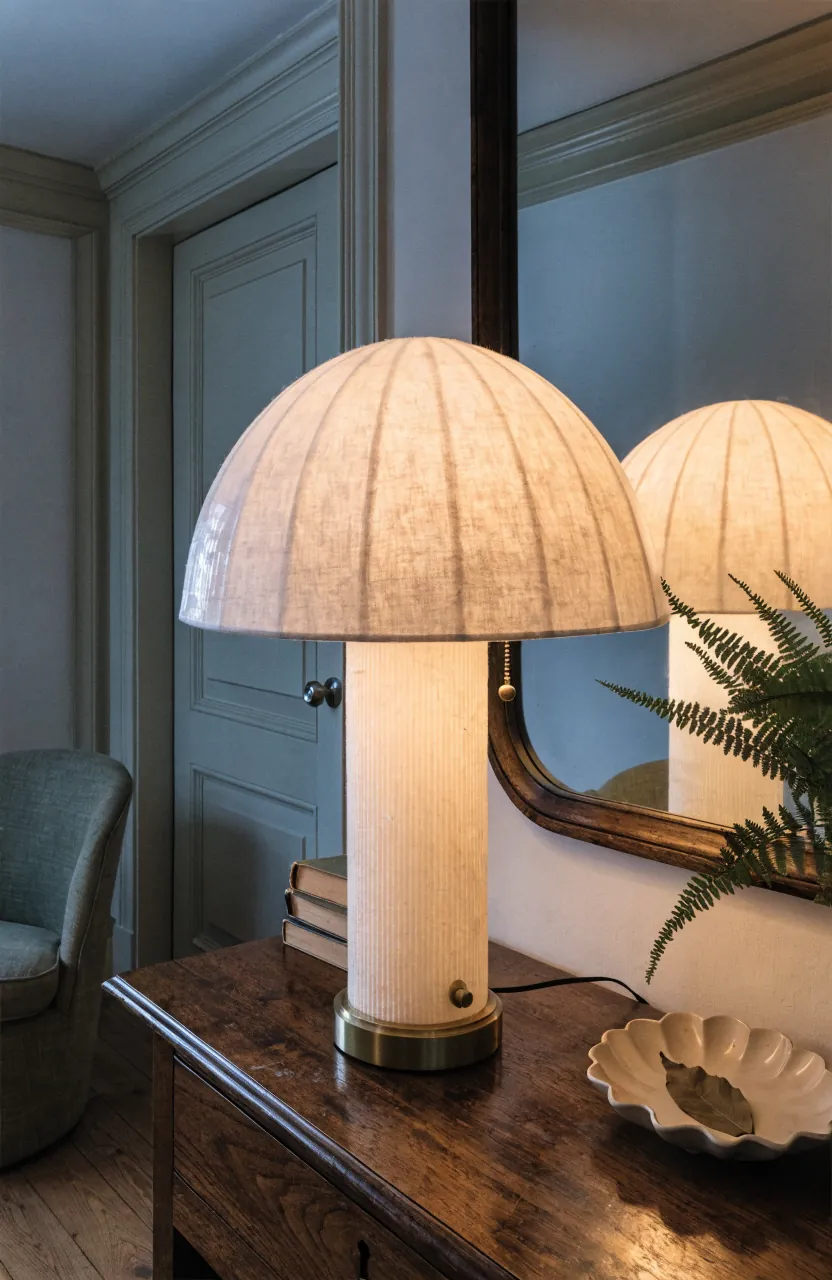
Use lamps to create smaller pools of light on a console, beside a chair, or near a reading corner. A vintage base with a clean shade is especially useful. The base brings the story. The shade keeps the silhouette fresh.
Balance Curves With Clean Modern Lines
Retro pieces often have strong shapes: curved chairs, rounded tables, tulip bases, arches, scallops, chunky lamps. One or two of those shapes can make a room interesting. Too many can make it look like a theme restaurant. Pair curves with straighter modern lines so the room feels designed, not costume-like.
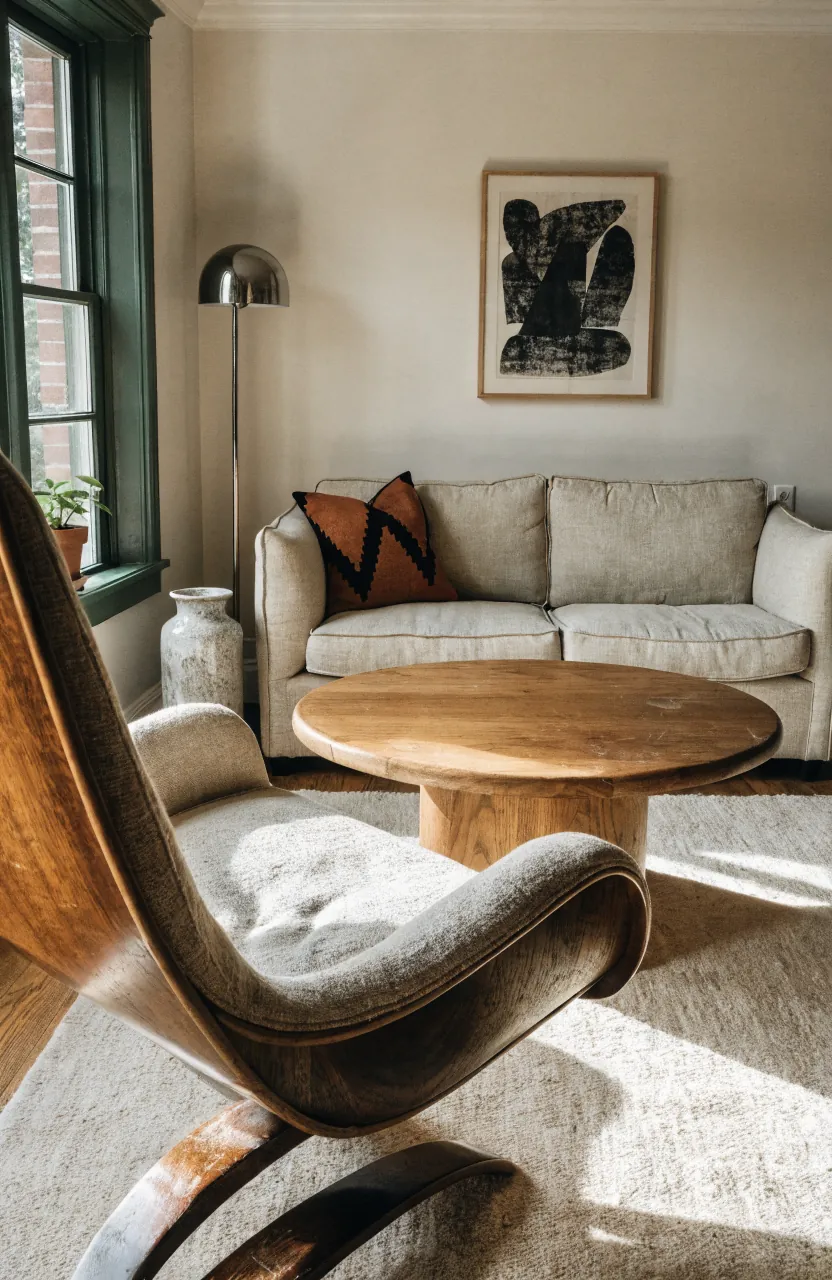
A curvy thrifted chair looks better beside a simple sofa. A round coffee table feels sharper under rectangular art. A playful lamp feels more adult on a clean wood console. Shape contrast is a quiet way to make vintage decor feel current.
Refresh Thrifted Finds Instead of Over-Styling Them
Some thrifted decor looks dated because it needs editing, not because it is bad. New hardware, a cleaner lampshade, fresh upholstery, a simpler wall color, or better placement can change the whole piece. Keep the patina that gives it charm, but remove the details that make it feel neglected.
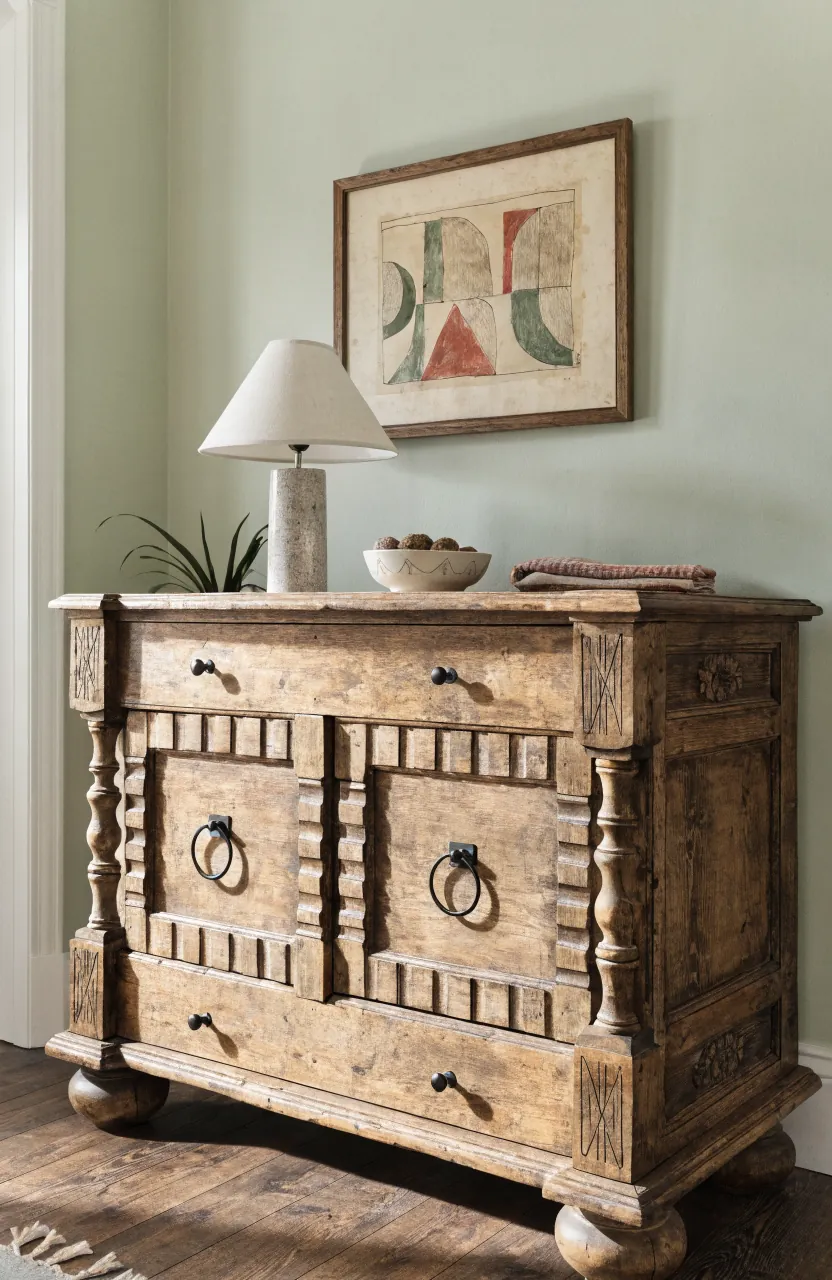
This is especially helpful with old cabinets, side tables, lamps, and chairs. Do not cover every surface to prove the piece has character. Give it a useful role, clean up one detail, and let the age show in the wood, shape, or finish.
Group Nostalgic Accessories Instead of Scattering Them
The fastest way to make retro decor feel dated is to spread tiny nostalgic objects across every shelf, table, and wall. The better move is to create small groups. Put old books, amber glass, ceramics, a framed memory, and a plant together on one sideboard or shelf. Leave open space beside them.
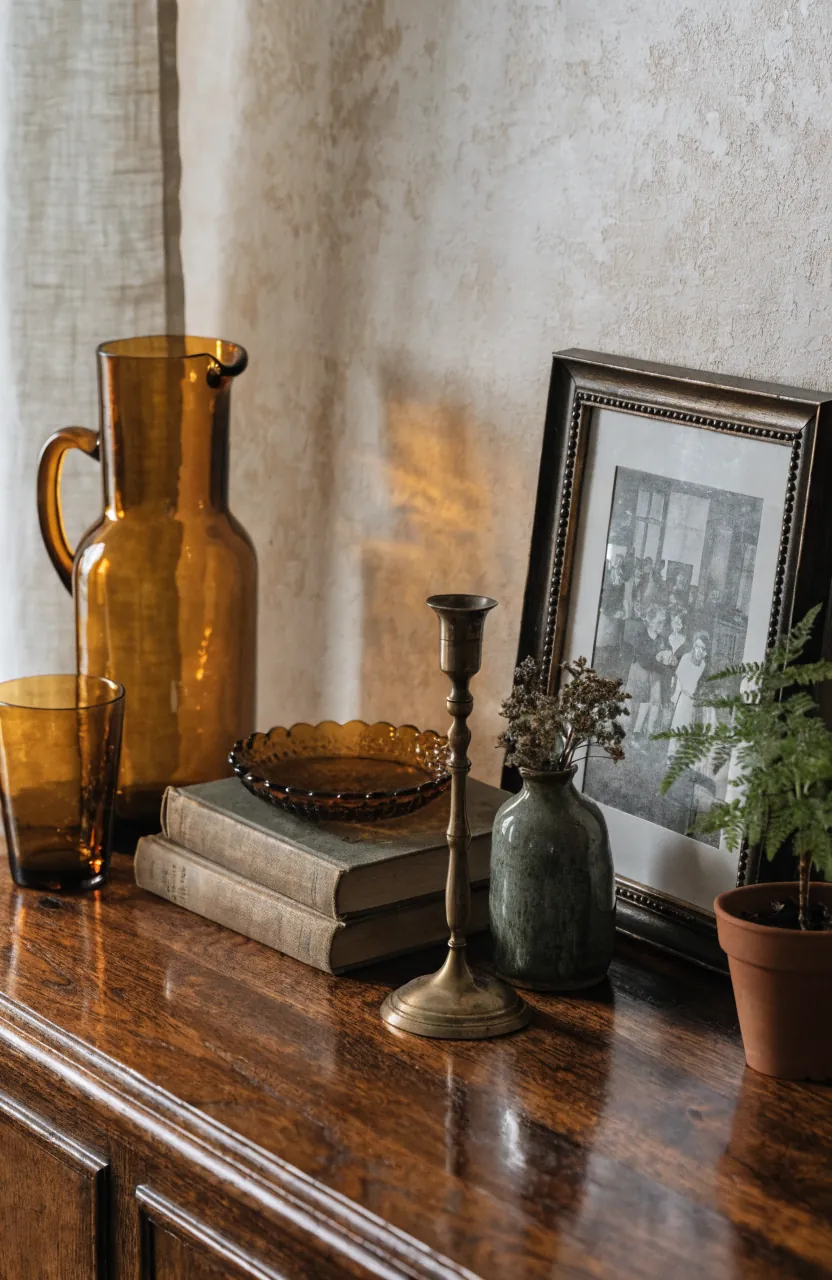
Grouping gives sentimental pieces more importance. It also makes the rest of the room easier to live in. A collected home does not need every memory on display at the same time. When the room has color control, useful lighting, shape balance, and edited surfaces, retro decor stops looking dated and starts looking like taste.