
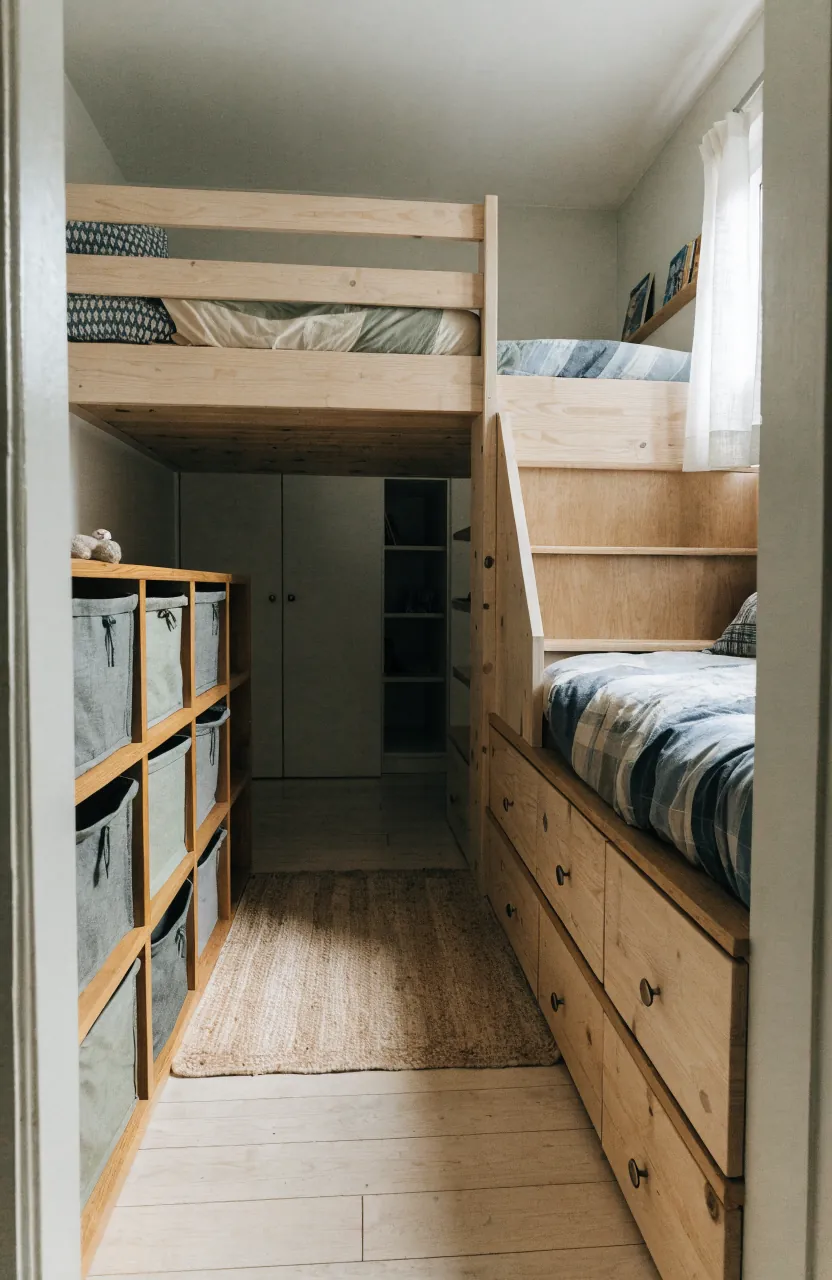
Bunk beds can save a small kids room, but they can also make the room feel heavier if the rest of the layout does not change. The bed takes the visual focus, the ladder needs clearance, and two children usually bring two sets of clothes, books, toys, and bedtime habits. A bunk bed helps only when the storage plan is designed at the same time.
The best small kids room ideas with bunk beds and storage start with a simple question: what can move upward, tuck underneath, or disappear behind a closed front? Once that is clear, the floor opens up and the room starts to work like a bedroom again instead of a storage puzzle.
Plan the Bunk Bed Around the Walking Path
The biggest mistake is choosing the cutest bunk bed first and then trying to fit everything else around it. In a small room layout, the bunk has to respect the door swing, closet access, window position, radiator or vent, and the path a sleepy child will use at night.
Before buying anything, mark the mattress footprint on the floor with tape. Add the ladder footprint, drawer pull-out space, and the area needed to change bedding. If those zones collide with the closet or dresser, the bed may technically fit but still make the room difficult to live in.
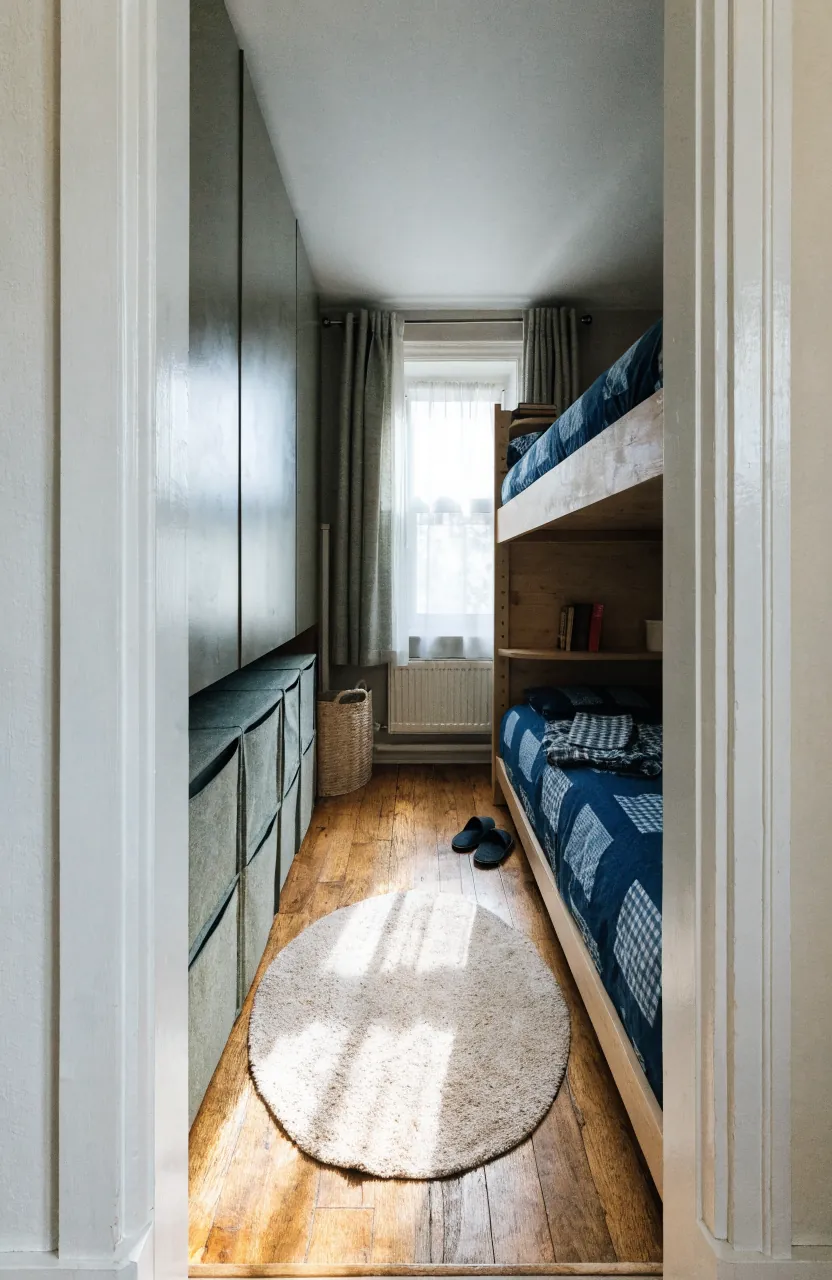
For many shared rooms, the best placement is along the longest solid wall. That keeps the bed from chopping the room in half and leaves one side for dressers, cubbies, or a low play area. If the ladder can sit at the foot instead of the side, the remaining wall may become more useful for storage.
Choose Built-In Storage Before Extra Furniture
A bunk bed with drawers, shelves, or stair storage can remove the need for another piece of furniture. That matters in a small kids room because every extra dresser, basket, or bookshelf steals floor space from play and movement.
Stair drawers are especially useful if the room holds more than one child. They can store pajamas, extra bedding, seasonal clothes, or quiet bedtime books. Open stair cubbies can work too, but closed drawers usually look calmer and keep visual clutter down.
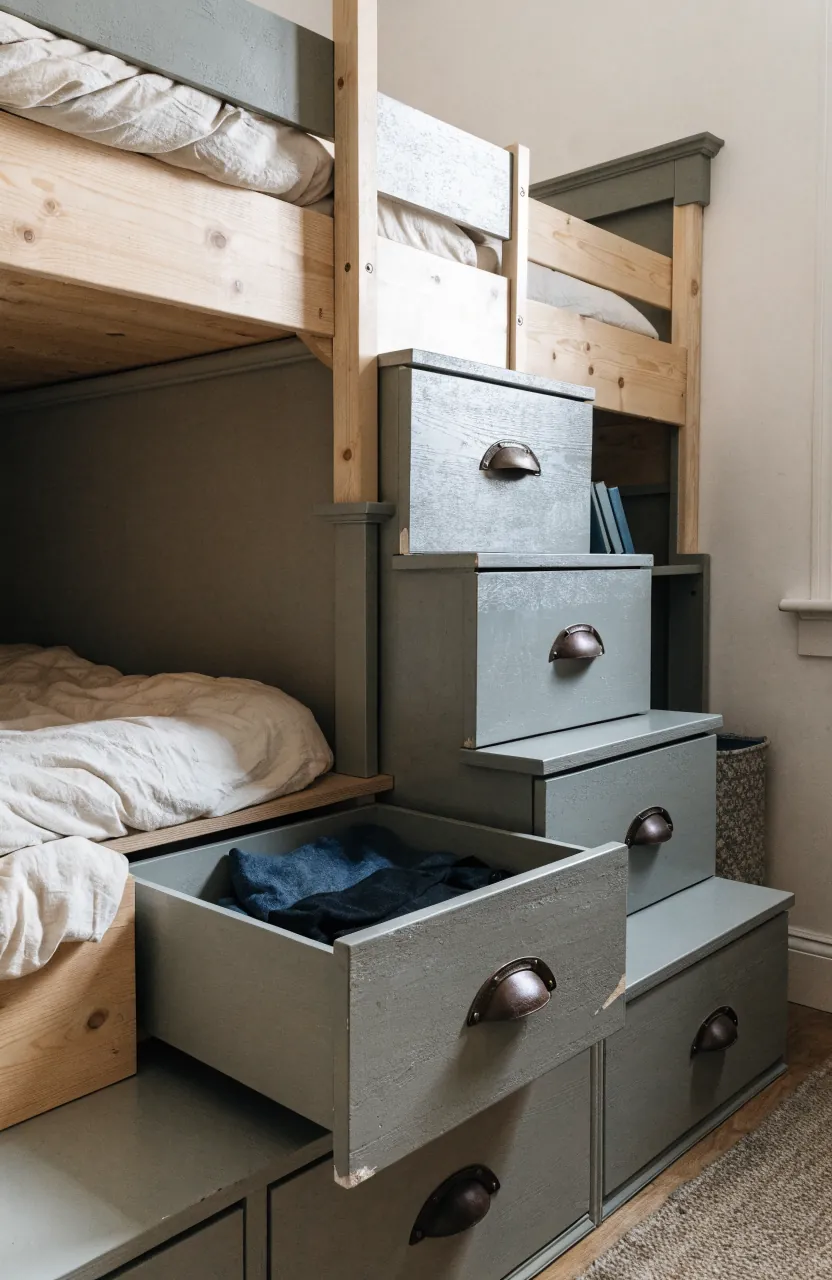
- Drawers under the lower bunk work well for bulky toys, off-season clothes, and spare sheets.
- Stair drawers are easier for young children to access than high shelves.
- Headboard shelves can replace nightstands when floor space is tight.
- Closed fronts make the bed feel less busy than rows of exposed toys.
Give the Bottom Bunk a Storage Job
The bottom bunk often becomes the catchall zone. Stuffed animals, extra blankets, library books, and toys collect there because it is easy to reach. Instead of fighting that habit, give the bottom bunk a clear storage job.
Use shallow bins under the mattress base for toy categories that are used often. Keep one soft basket near the pillow for bedtime books or quiet toys. If the lower bunk is raised enough, a slim rolling drawer can hold blocks, trains, or dress-up clothes without adding another unit to the room.
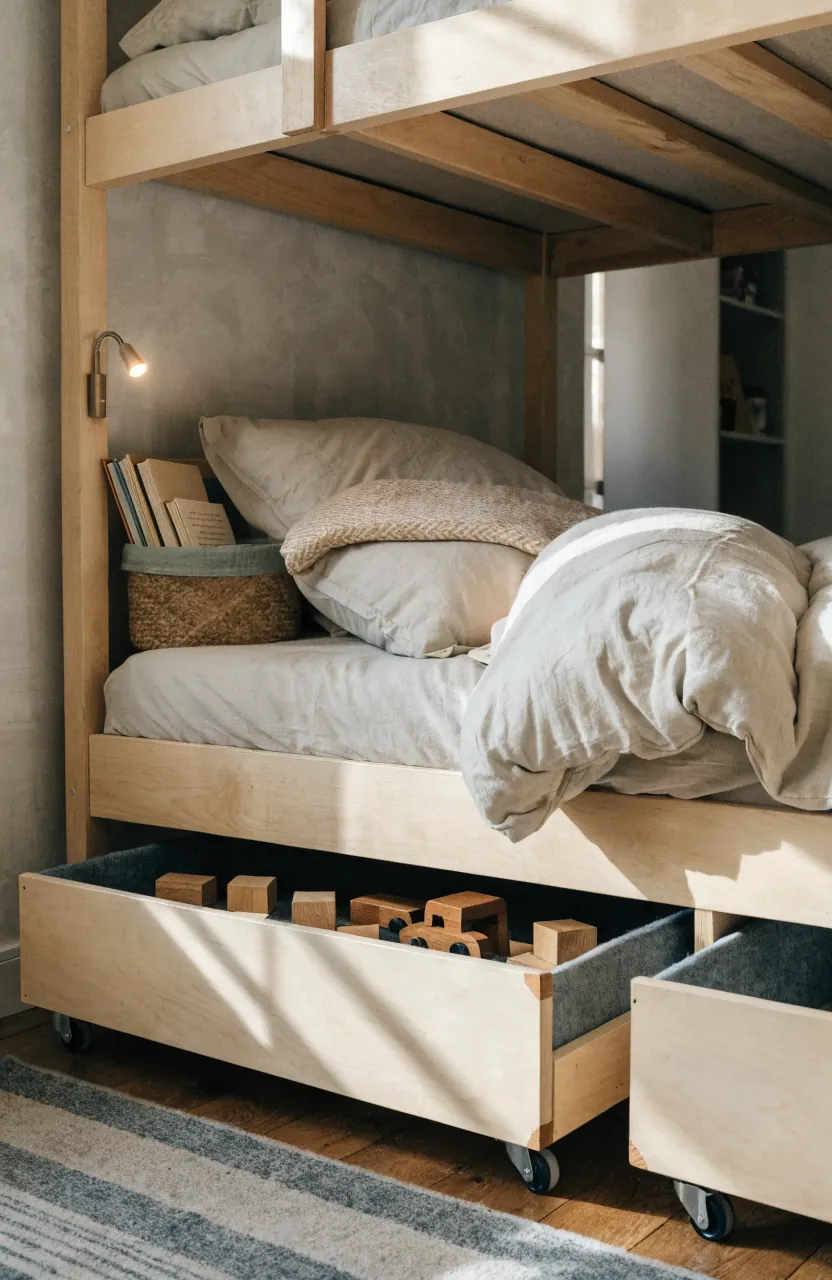
The key is to avoid deep mystery bins. If children cannot see what category a bin holds, they will dump it. Shallow storage keeps the category visible and makes cleanup feel less like sorting a closet.
Give Each Child a Personal Pocket
A shared kids room works better when each child has one personal pocket. It does not have to be a separate side of the room. It can be a small shelf beside each mattress, a fabric wall pocket, a clip-on reading light, or a narrow ledge for a water bottle and favorite book.
This matters because shared storage can create daily friction. One child wants their book close. Another wants a place for a small collection. A personal pocket gives each child ownership without requiring two dressers or two nightstands.
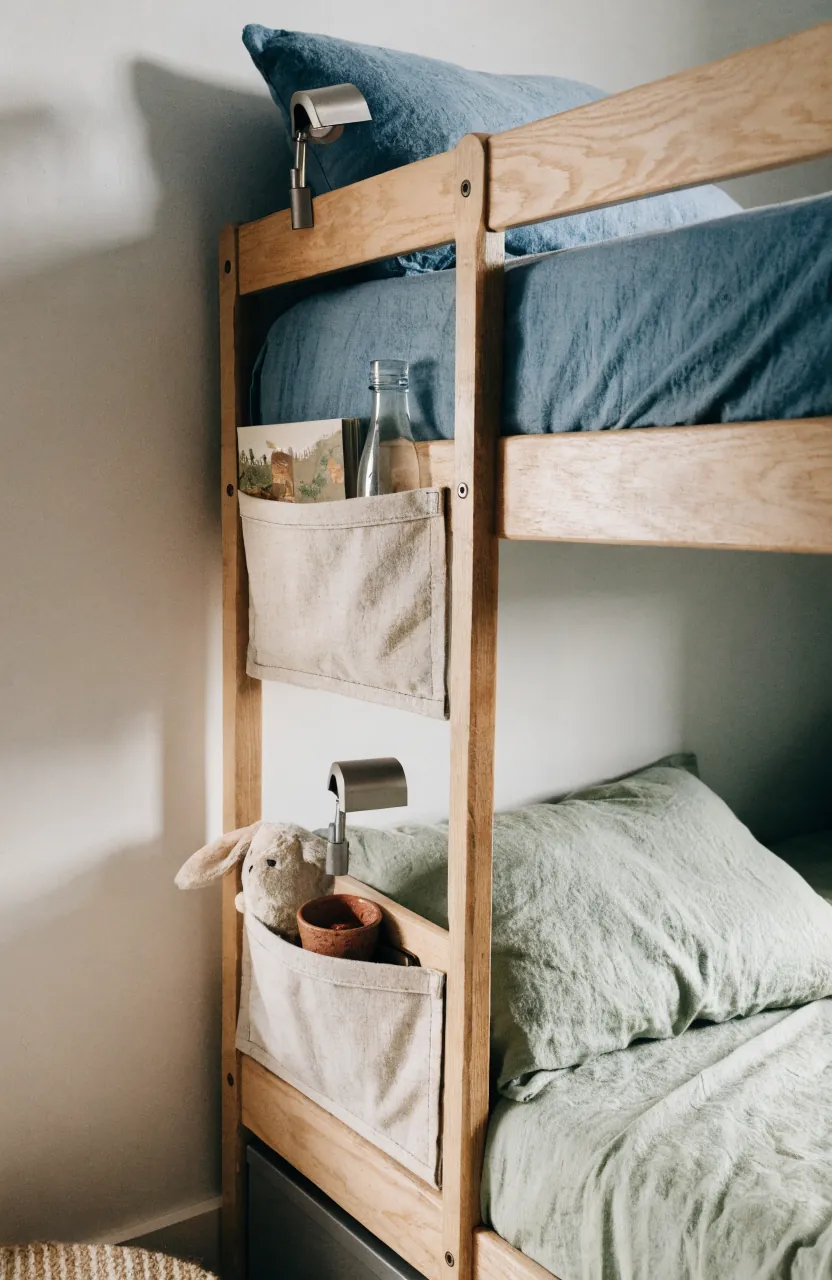
Keep these pockets small on purpose. They are for current favorites, not every possession. If the shelf or pocket overflows, it is time to reset it together.
Make the Closet Do More Than Hold Clothes
When bunk beds free the floor, the closet often becomes the best place to recover even more space. A single hanging rod wastes a lot of vertical room in a child’s closet. Add lower rods, drawers, shelves, or bins so clothes and toys can share the same storage wall.
For bedroom storage, think by routine. School clothes should be easy to reach. Pajamas can live near the bed. Off-season clothing can go higher. Toys that are not in daily rotation can sit in closed bins on the upper shelf. The goal is not to hide everything; it is to put each category where it makes sense.
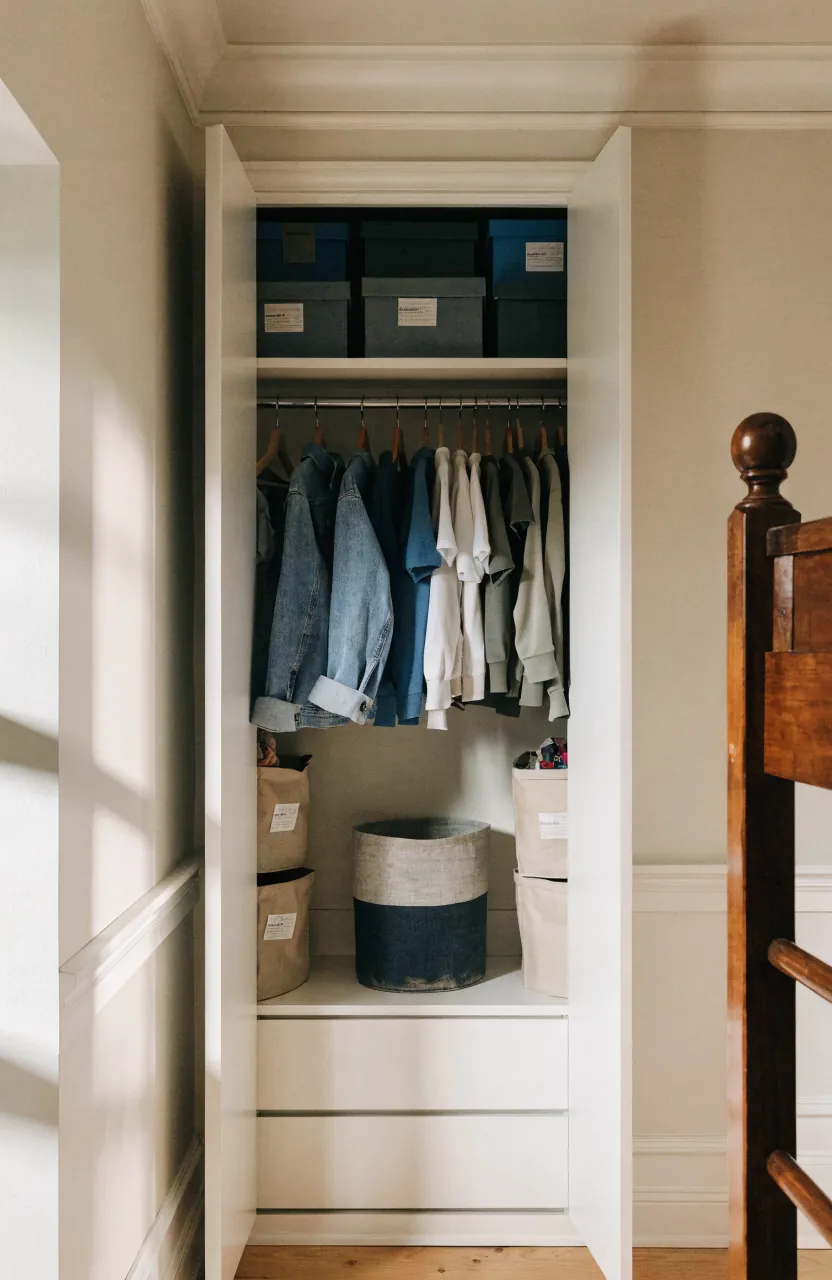
If the room has no real closet, use one tall storage wall instead of several small furniture pieces. A wardrobe, low drawers, and wall shelves in one zone will usually look calmer than storage scattered around every wall.
Keep the Ladder Side Clear
The ladder side is not bonus storage space. It is a movement zone. If a hamper, toy basket, book pile, or floor cushion blocks it, the room becomes frustrating and less safe. This is especially important at night, when children are climbing down half-awake.
Leave the ladder approach clear and put storage just outside that path. A narrow wall shelf, a hook rail, or a low cubby can sit nearby, but the actual climb area should stay open. Bunk beds already bring height and structure into the room; the surrounding space needs to stay simple.
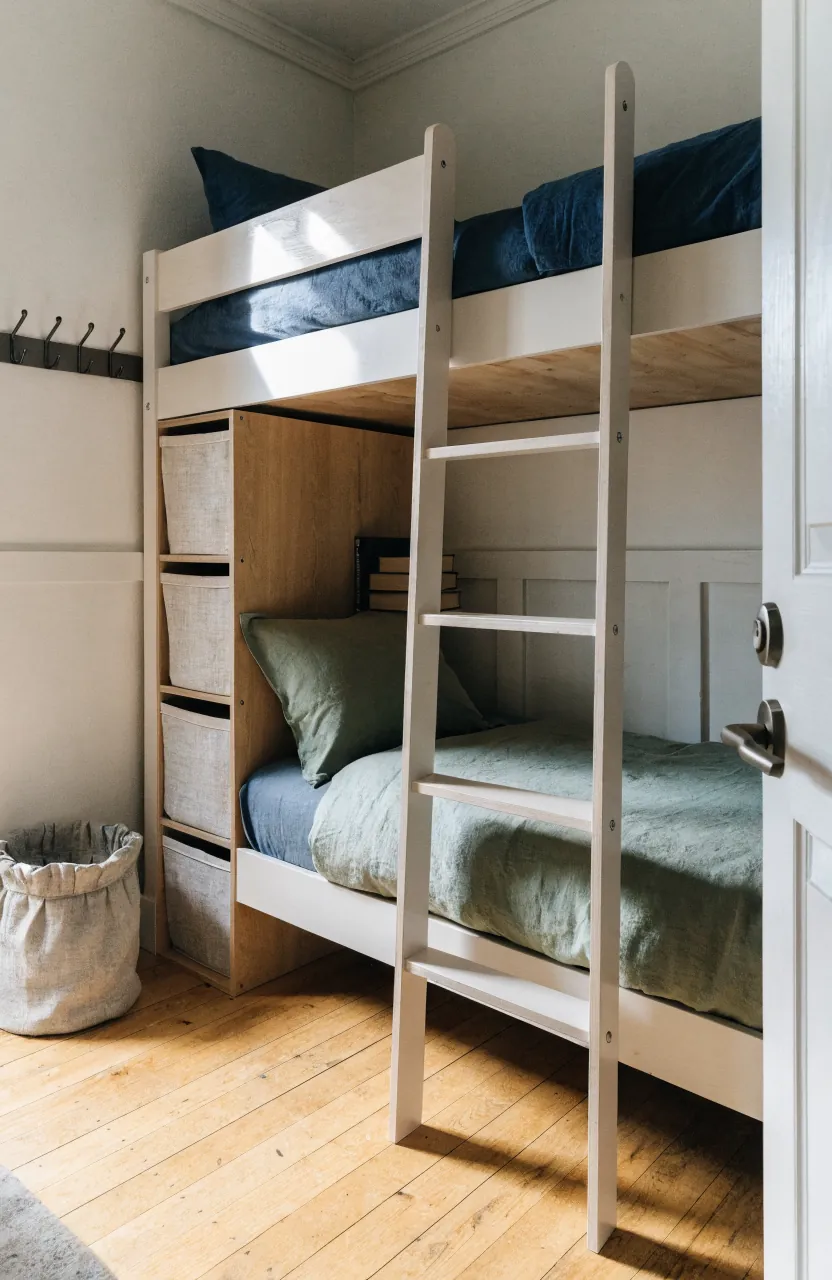
Also check the top bunk itself. Use guardrails, follow the bed manufacturer’s age and weight guidance, and keep heavy shelves or loose decor away from the sleeping area. The best bunk beds are not just space-saving; they are easy to use every day.
A Bunk Bed Room That Actually Works
A good bunk bed room does three things at once. It stacks the sleeping space, gives storage a planned home, and protects the open floor. If one of those pieces is missing, the room may still look cute, but it will not stay organized.
- Map the walking path before choosing the bed.
- Use drawers, stairs, shelves, or under-bed bins before adding extra furniture.
- Give each child a small personal storage pocket.
- Move clothing and overflow toys into one closet or storage wall.
- Keep the ladder approach open every day.
That is the difference between a room with a bunk bed and a room designed around one. The bed saves space, but the storage plan is what makes the space livable.