
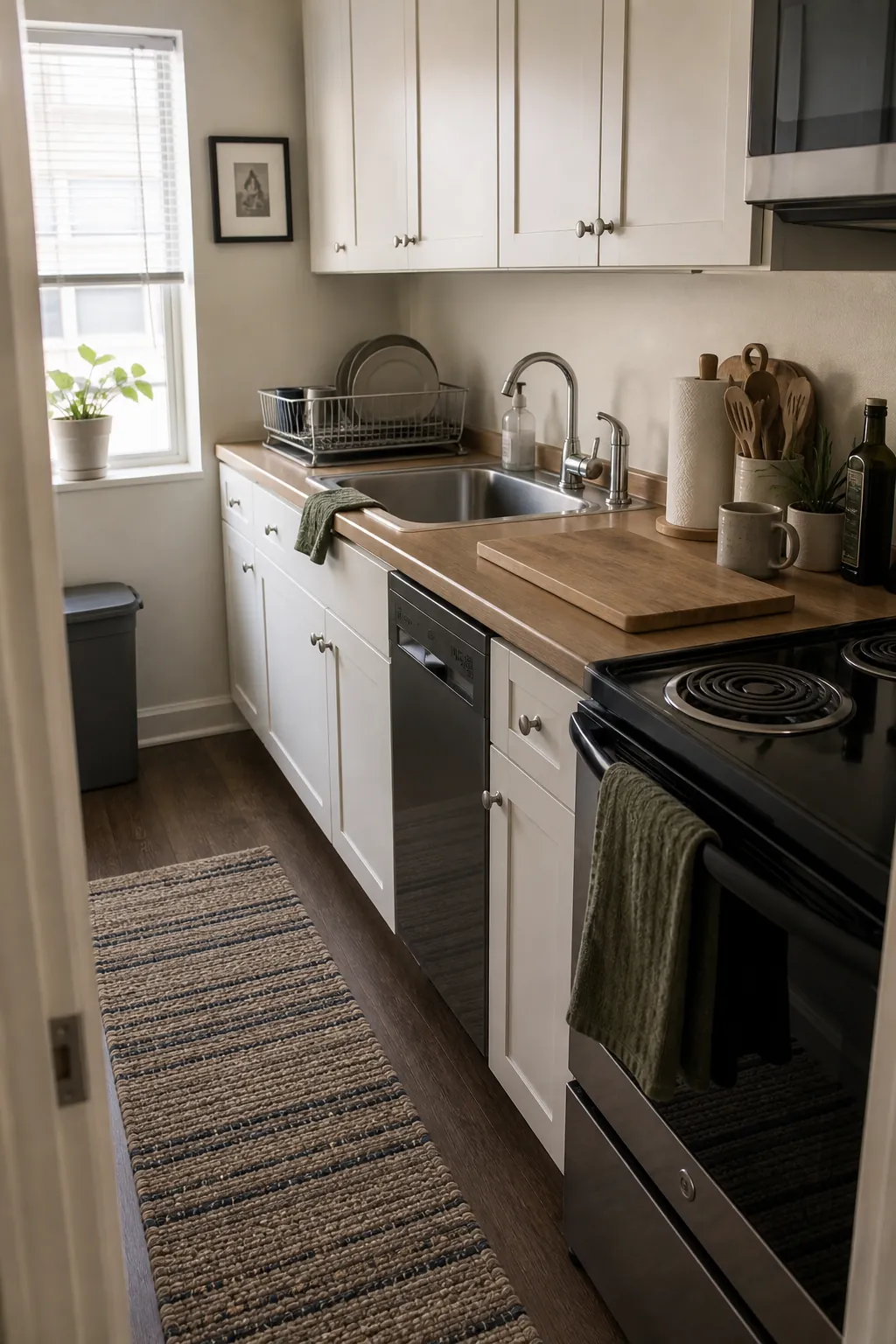
A small kitchen can lose its working surface in minutes. A cutting board, mug, sponge, drying rack, snack bag, and one appliance can turn tight counters into a place where cooking feels harder than it should.
The best small kitchen cleaning routine is not a long weekend scrub. It is a repeatable order that protects one usable prep lane. When that lane stays clear, cooking is easier, wiping is faster, and the whole kitchen looks reset even when the room is tiny.
Start by Reclaiming One Prep Lane
Before you spray anything, choose the counter section that matters most: the spot where you chop, plate, pack lunches, or set groceries. Clear that area first. Move mail, cups, small appliances, dish towels, and pantry items out of the lane. You are not organizing the entire kitchen yet. You are creating enough space to clean and cook.
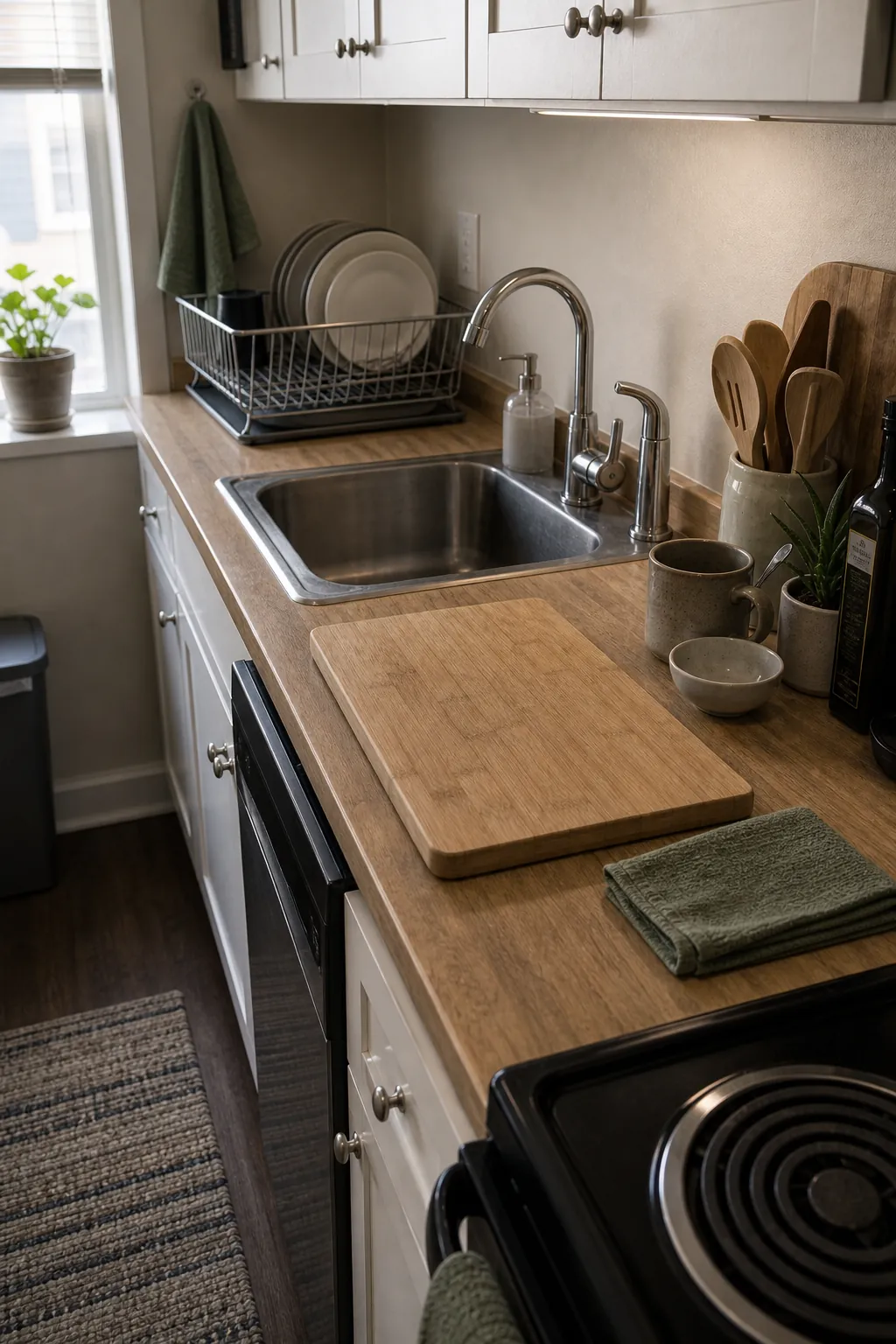
A good prep lane does not have to be large. Even eighteen inches can change the room if it stays open. In a tiny kitchen, clear counter space is more useful than another storage container.
Remove Trash, Dishes, and Food First
Small kitchen cleaning gets slower when you wipe around the same things repeatedly. Start with the obvious blockers. Throw away packaging, move dishes to the sink or dishwasher, put food back where it belongs, and collect anything that does not live in the kitchen.
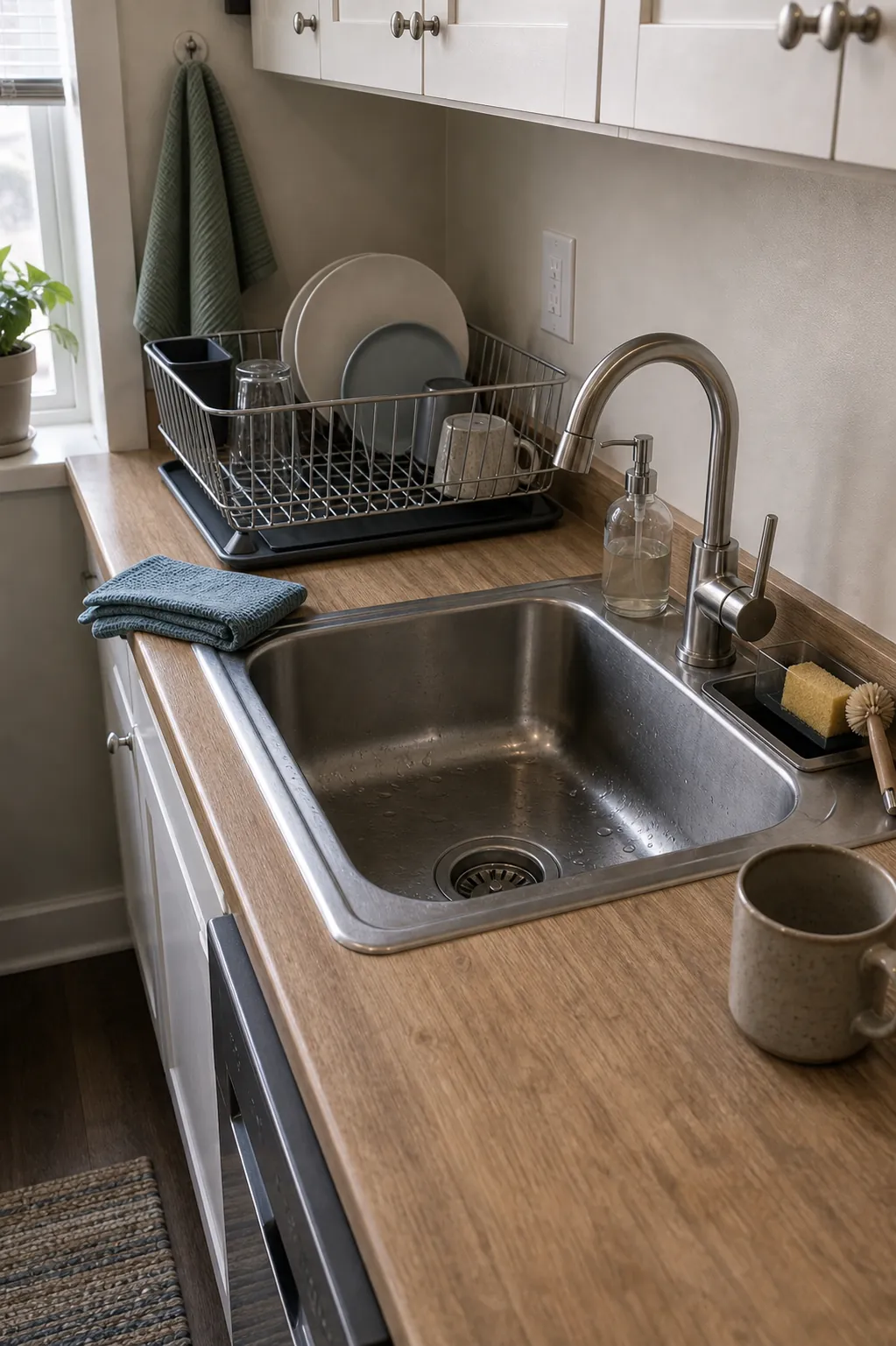
Then handle the sink. Wash or load dishes, rinse the basin, and empty the strainer if it is full. A crowded dish rack makes tight counters feel smaller, so put dry dishes away before wiping the surrounding surface.
Wipe Counters in Short Sections
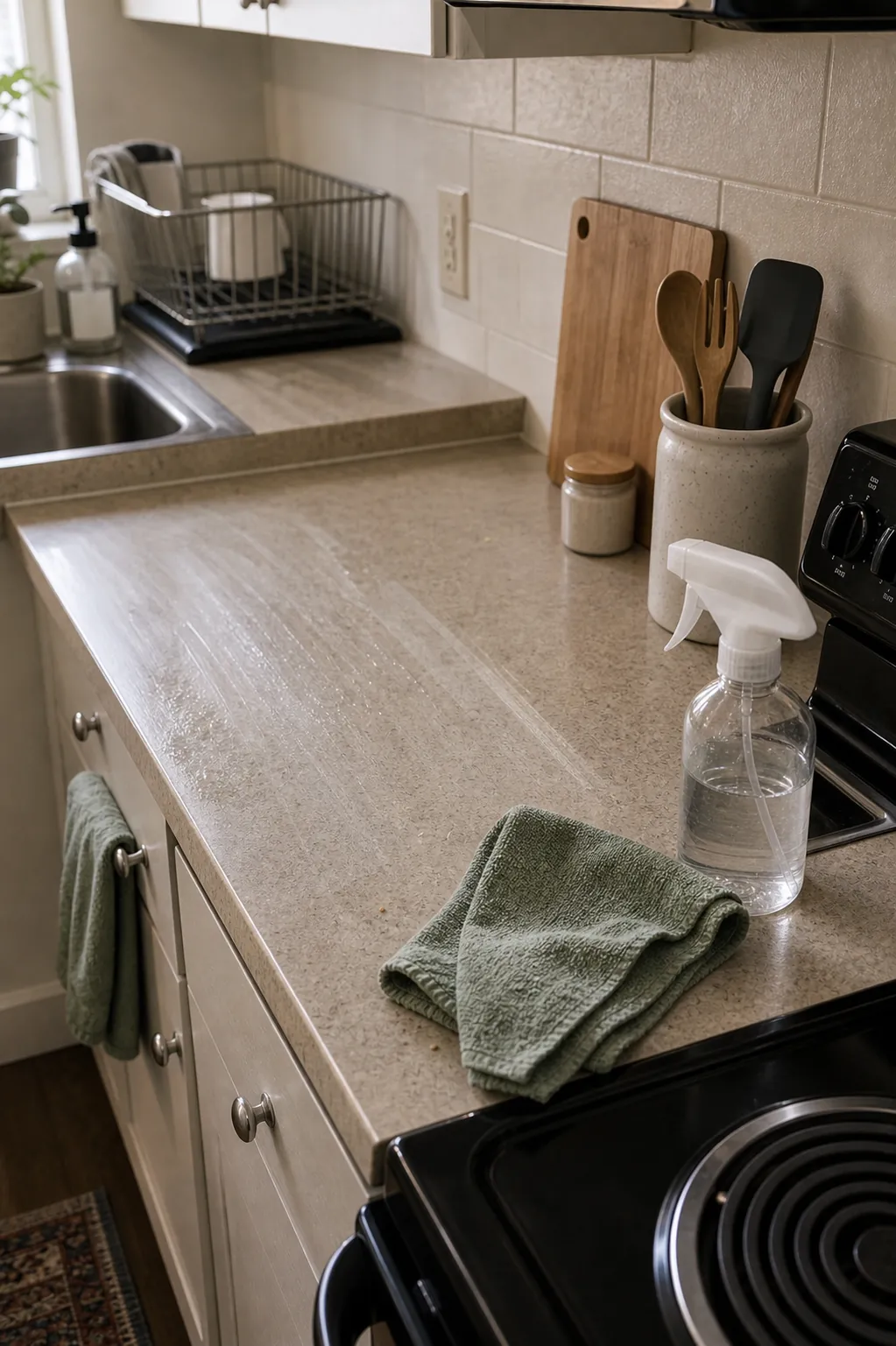
Do not try to clean every counter at once. In a compact kitchen, section cleaning works better: sink side, prep lane, stove side, then landing spot. Spray one section, wipe it fully, dry it, and put back only what belongs there.
This keeps counter organization honest. If one section fills back up immediately, that zone is carrying too many jobs. A clutter free kitchen is easier when each surface has a purpose: prep, cook, dry, or land.
Keep Daily Appliances on Trial
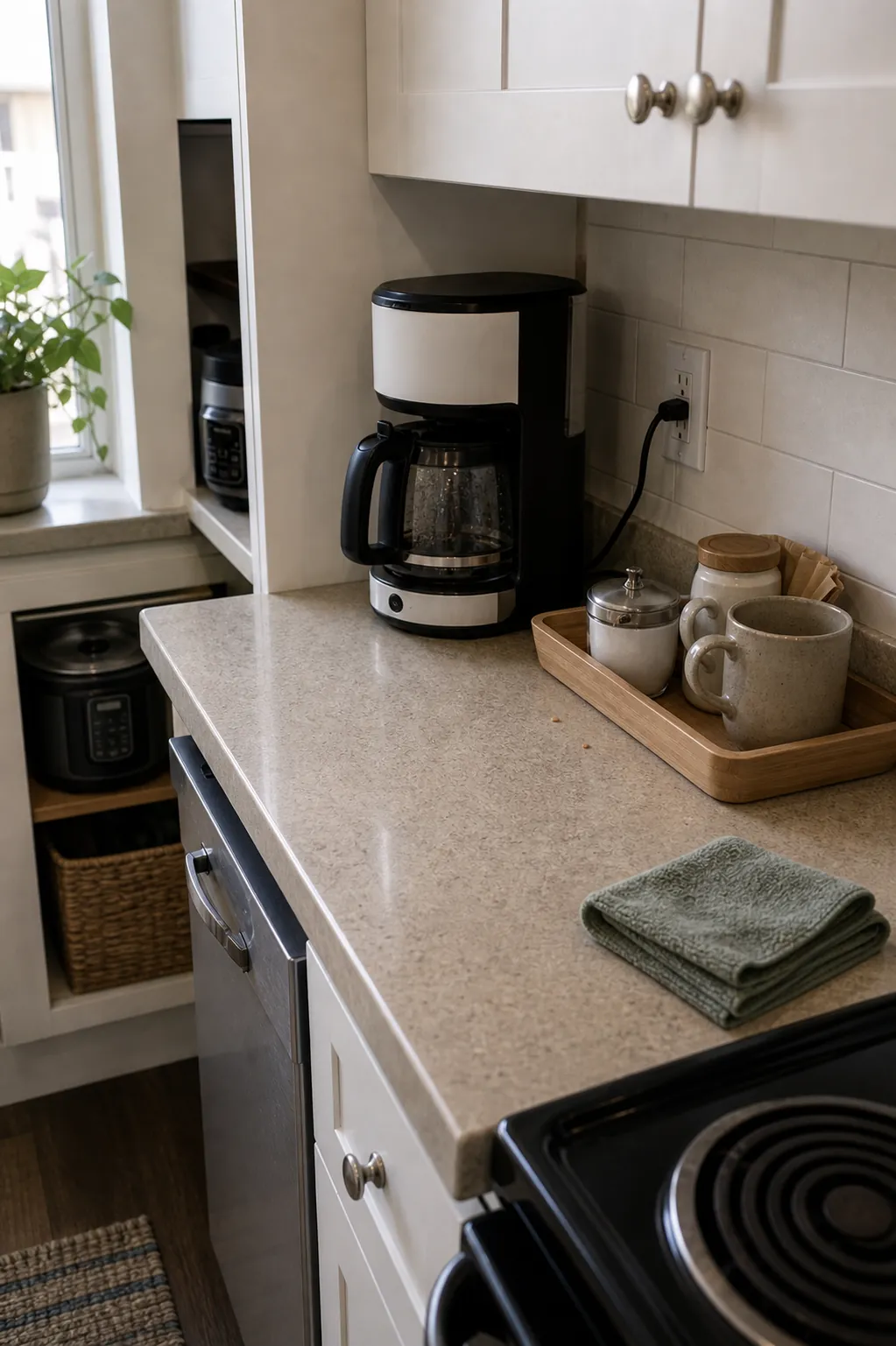
Appliances are often the reason tight counters never feel clean. A coffee maker may earn its spot. A toaster, blender, air fryer, or mixer may not. If you use it daily, keep it. If you use it weekly, consider a cabinet, cart, or shelf. If you use it rarely, it should not own the best counter space.
After wiping, return only the appliances that serve the routine. Leave space around them so crumbs and splashes do not build up. Kitchen decluttering is not about owning less for its own sake. It is about making cleaning easier every day.
Use Vertical Storage for What Must Stay Handy
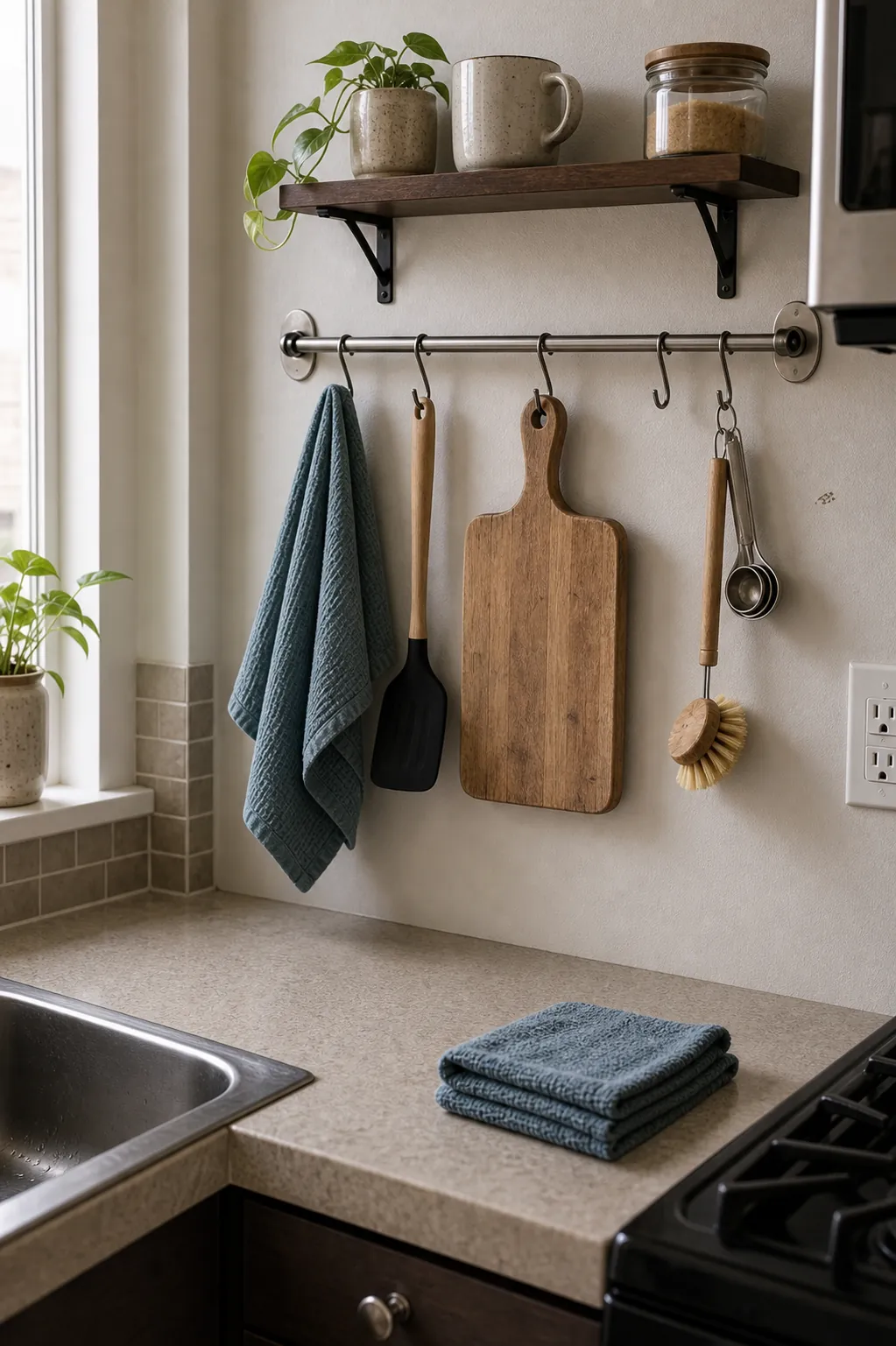
When counters are tight, the wall has to work harder. A small rail, magnetic strip, narrow shelf, or wall basket can lift frequently used tools out of the wipe zone. The trick is to keep vertical storage edited. If the rail holds every utensil you own, it becomes wall clutter.
Keep only the tools you reach for constantly: one spatula, one towel, one small cutting board, one scrub brush, or one measuring spoon set. This supports small kitchen organization without turning the wall into another messy counter.
Finish With Stove, Sink Edge, and Floor Spots
The stove and sink edges are the sticky zones. Wipe the stove surface after it cools, clean the knobs or handle touch points, and run a cloth along the counter seam near the sink. Then sweep or vacuum crumbs and spot-clean the floor in front of the sink, stove, and trash can.
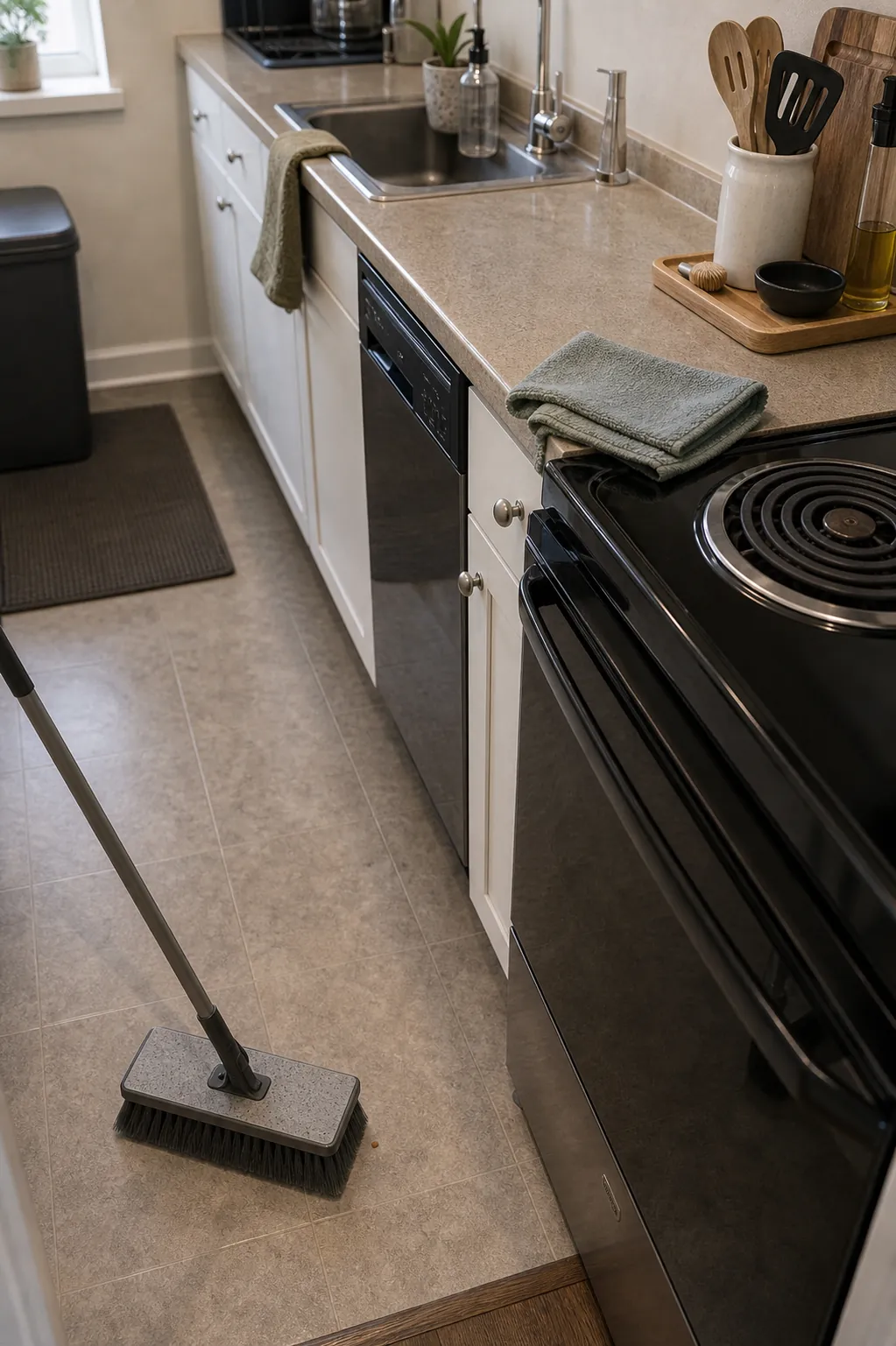
This final pass is what makes the kitchen reset feel complete. A clean counter still looks unfinished if crumbs are underfoot or the stove has sauce marks. Work top to bottom and finish where mess lands.
Use a Simple Daily and Weekly Schedule
Daily: clear the prep lane, handle dishes, wipe the sink side, wipe the stove side, and sweep visible crumbs. Weekly: empty the dish rack fully, wipe small appliances underneath, clean cabinet fronts near handles, wash the trash area, and review what has crept back onto the counter.
A small kitchen does not need a complicated cleaning schedule. It needs a protected work surface and a routine that repeats before clutter hardens into storage. When the prep lane is clear, the kitchen works again.