
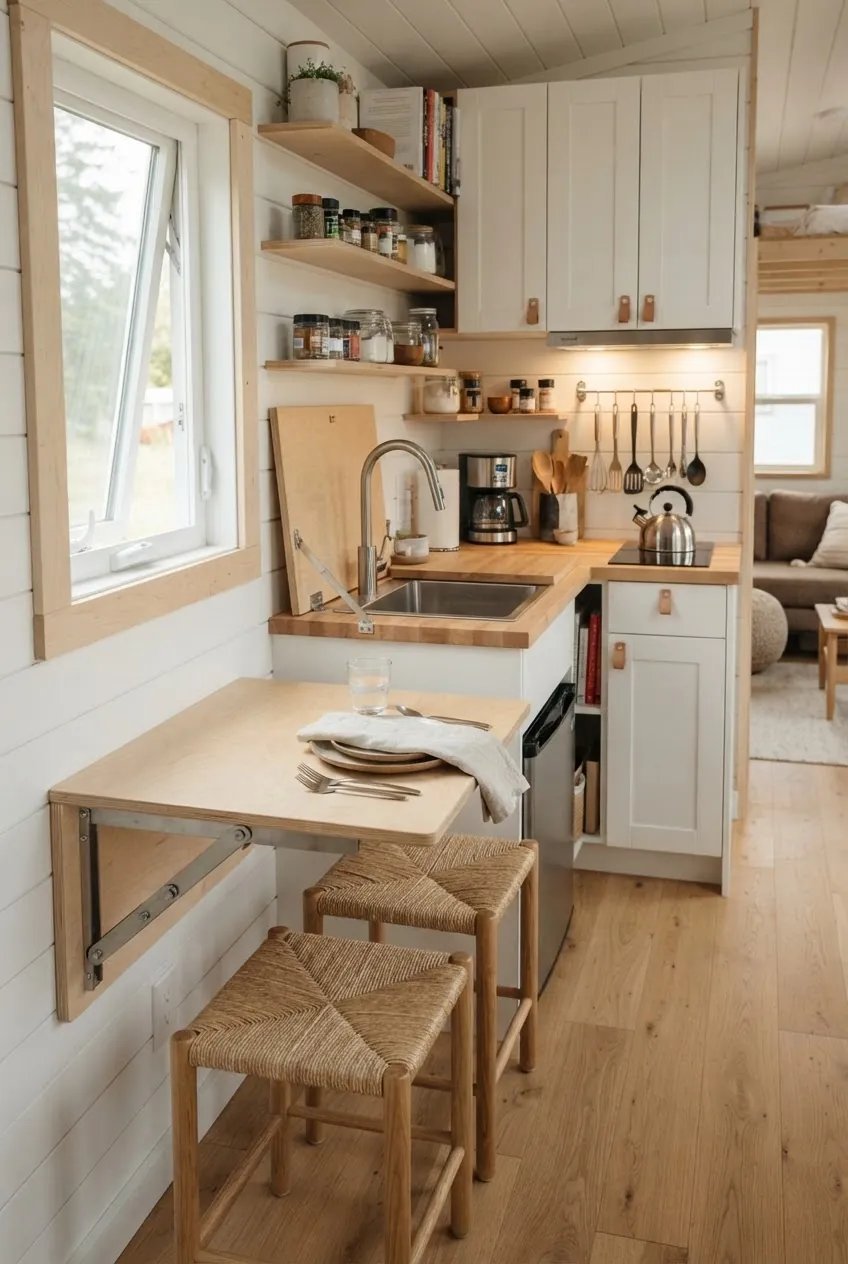
Fold-down surfaces are one of the most useful tiny home kitchen ideas because they solve a real contradiction: you need counter space when you cook, but you need open floor space the rest of the day. A hinged table, flip-up counter, or drop-leaf cart can give you both if it is sized and placed with care.
The right fold-down surface should feel boringly practical. It opens easily, locks securely, clears nearby doors, and folds away without making the kitchen look unfinished. Start with the task you need most: prep, eating, coffee, serving, laptop work, or landing groceries.
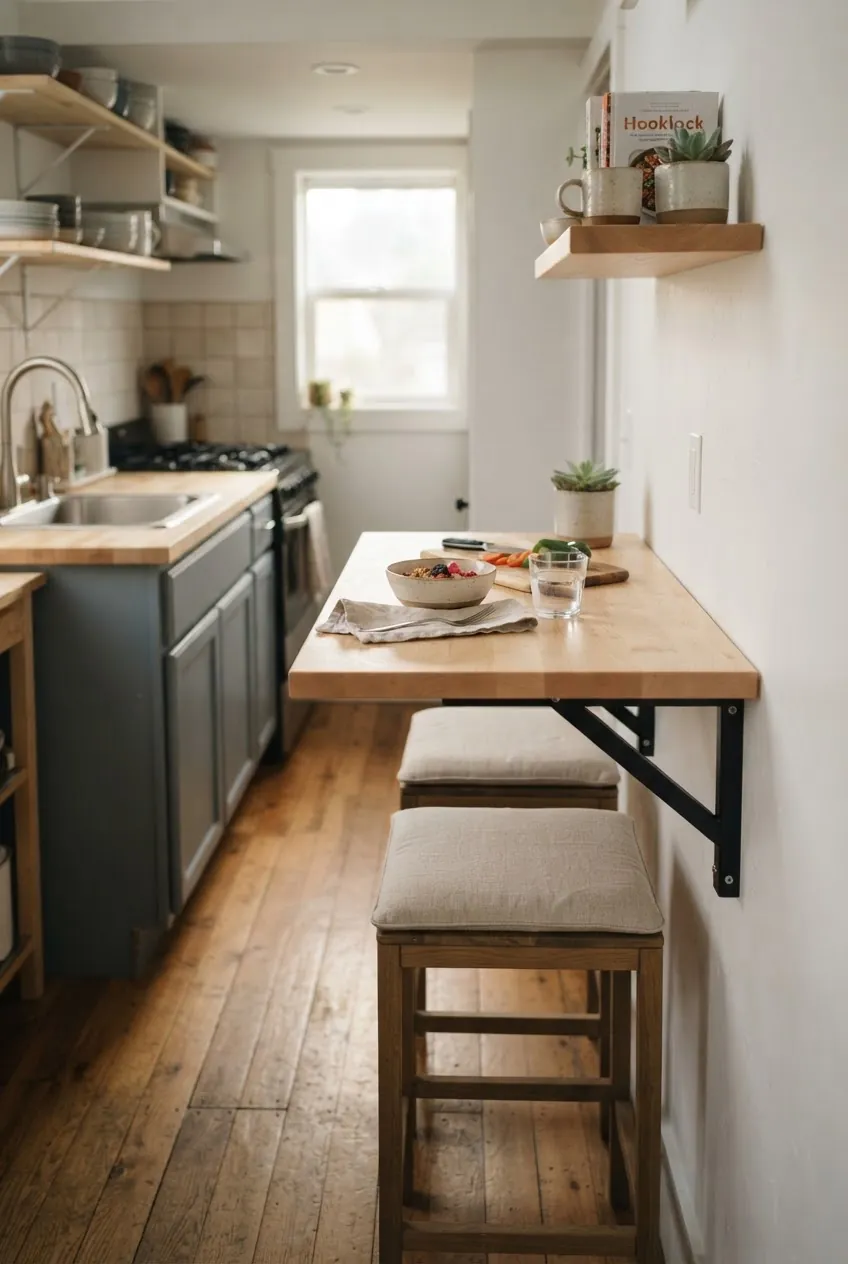
Use a Wall-Mounted Fold Down Table for Meals and Prep
A wall-mounted fold down table is the classic choice for a tiny home kitchen. It can work as a breakfast spot, extra prep counter, desk, or serving ledge. The best location is usually a blank wall near the kitchen, not directly in front of cabinet doors or the refrigerator.
For daily use, keep the depth modest. A surface that is too deep will feel generous for one meal and annoying every time you walk past it. Pair the table with stools that tuck underneath, fold flat, or hang on nearby hooks.
- Anchor the hinge rail into studs or solid blocking.
- Use rated folding brackets or legs that lock open.
- Leave room to open appliances and cabinet doors.
- Choose a wipeable top if it will double as prep space.
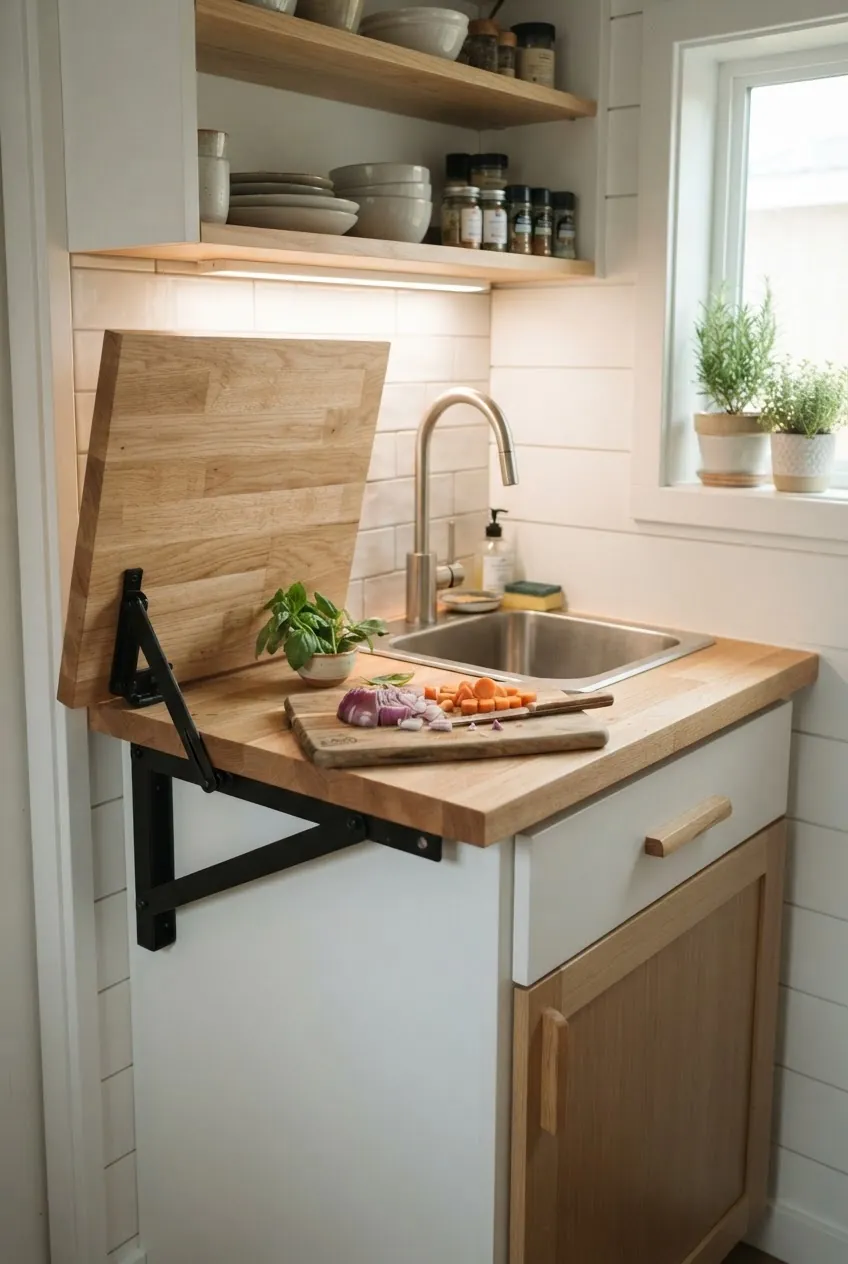
Add a Flip-Up Counter Beside the Sink
If your sink eats most of the counter run, a flip-up counter extension can be the difference between frustrating prep and a usable kitchen. This works best at the open end of a cabinet run, beside a sink, or next to a cooktop where a temporary landing space is helpful.
Match the extension height to the existing counter so pots, cutting boards, and sheet pans can slide across. Choose hardware that locks firmly, then test the surface with realistic kitchen tasks before relying on it for heavy work.
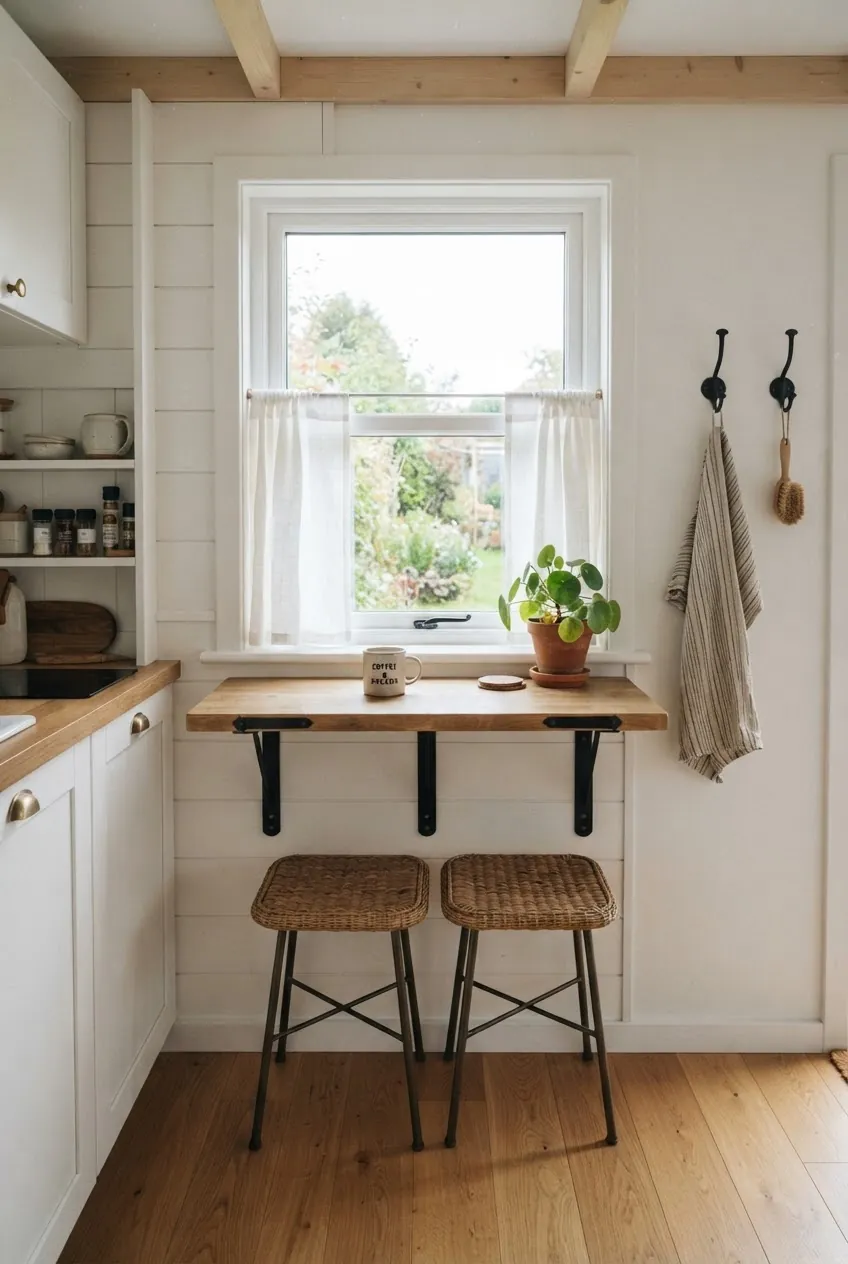
Try a Fold Down Breakfast Bar Under a Window
A narrow breakfast bar can make a tiny home kitchen feel less cramped because it uses a wall that might otherwise stay empty. Under a window, it becomes a light-filled place for coffee, quick meals, writing a grocery list, or cooling a tray of cookies.
Keep the bar narrow enough that it does not become a dumping zone. If it is mainly for coffee or breakfast, a shallow ledge often works better than a full table. Add a small wall shelf nearby for mugs or napkins so the surface can stay clear.
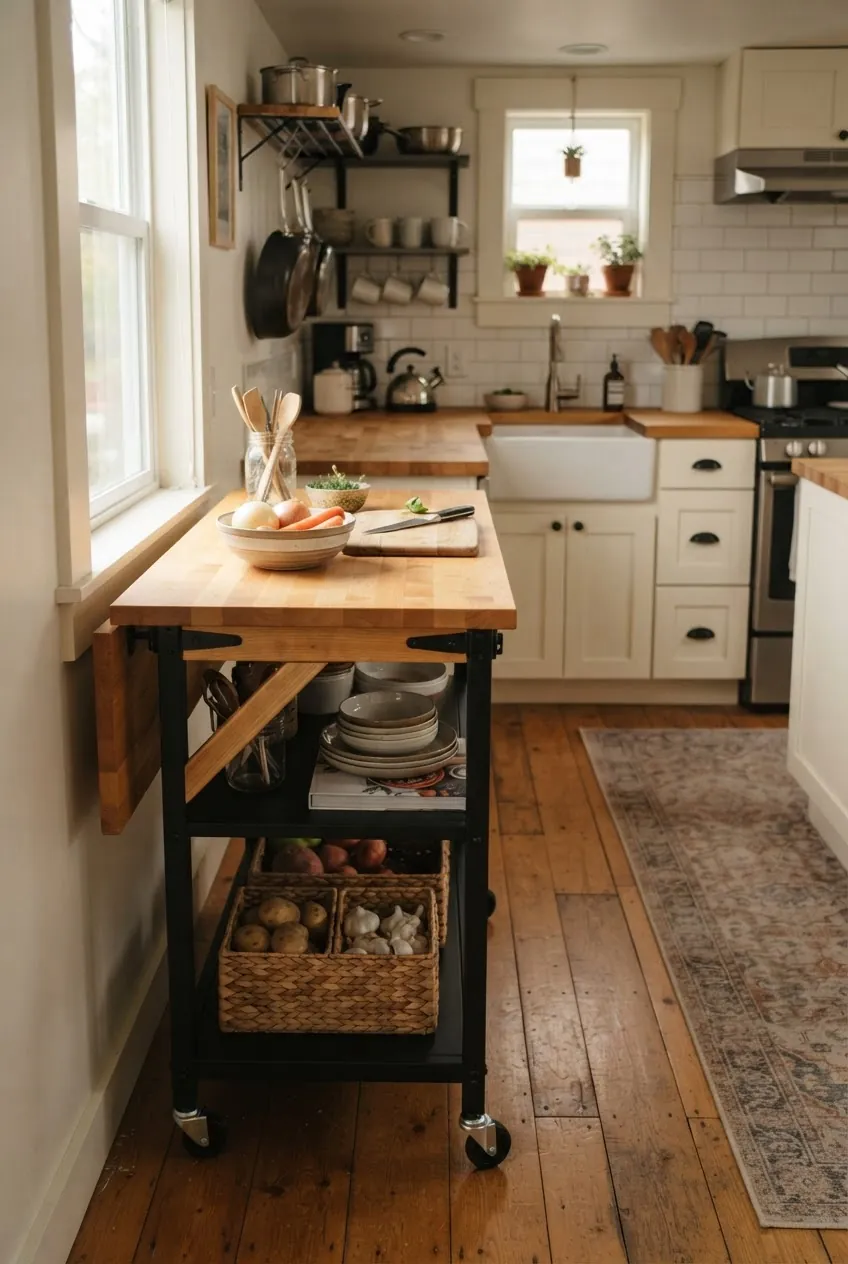
Use a Drop-Leaf Cart When You Cannot Mount to the Wall
Renters and tiny home owners who do not want permanent wall hardware can use a drop-leaf rolling island instead. It gives you a work surface, storage below, and the option to move the whole piece when you need floor space.
The cart should be narrow enough to park against a wall when folded. Locking wheels matter, especially if you chop, knead, or pour on the surface. If the cart wobbles during prep, use it for serving and storage instead of knife work.
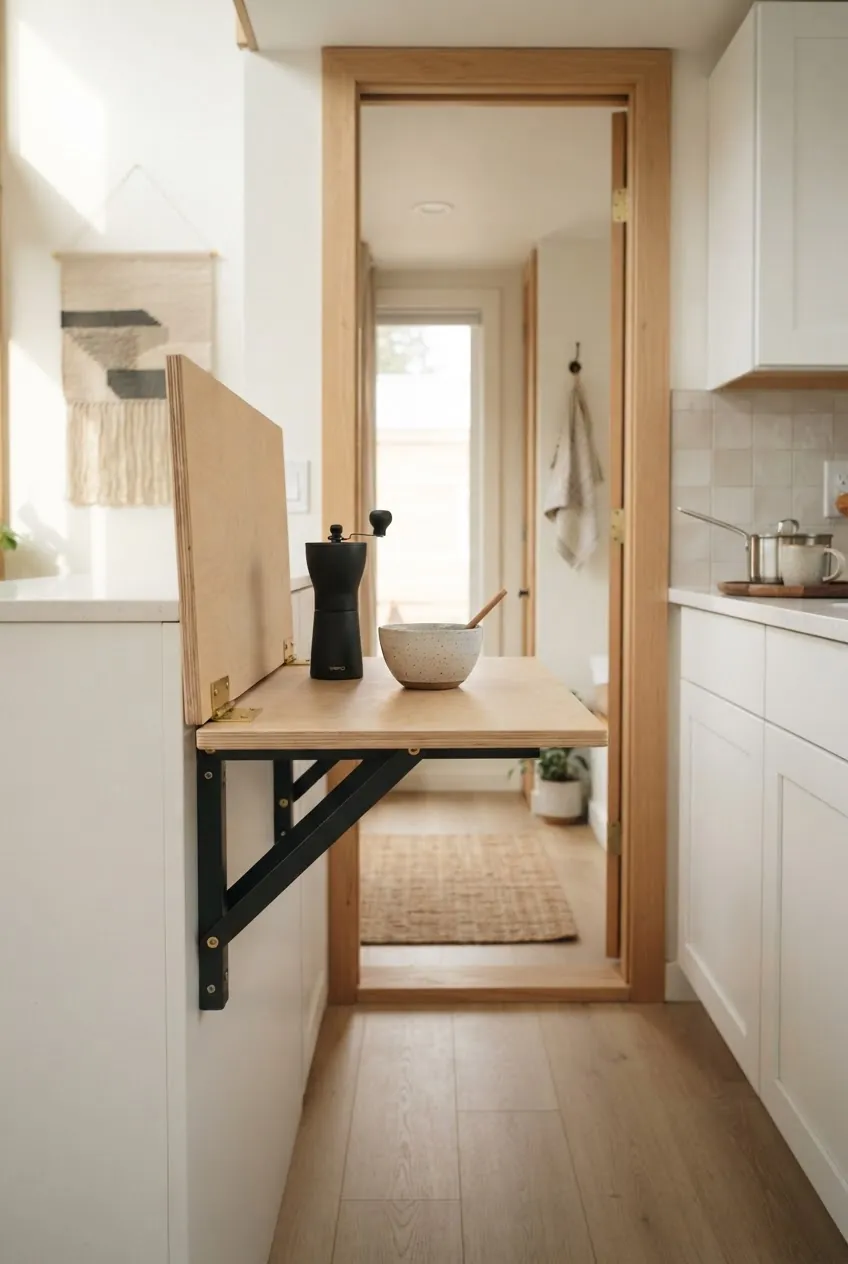
Install a Small Hinged Prep Shelf for One Task
Not every fold-down surface needs to seat two people. Sometimes the best solution is a small hinged shelf that supports one repeated task: coffee grinding, packing lunches, setting down groceries, or holding a mixing bowl while the main counter is full.
Single-task shelves work well at the end of a cabinet run, near a doorway, or beside a refrigerator. Because they are small, they are less likely to become permanent clutter. They also fold away faster than a full table.
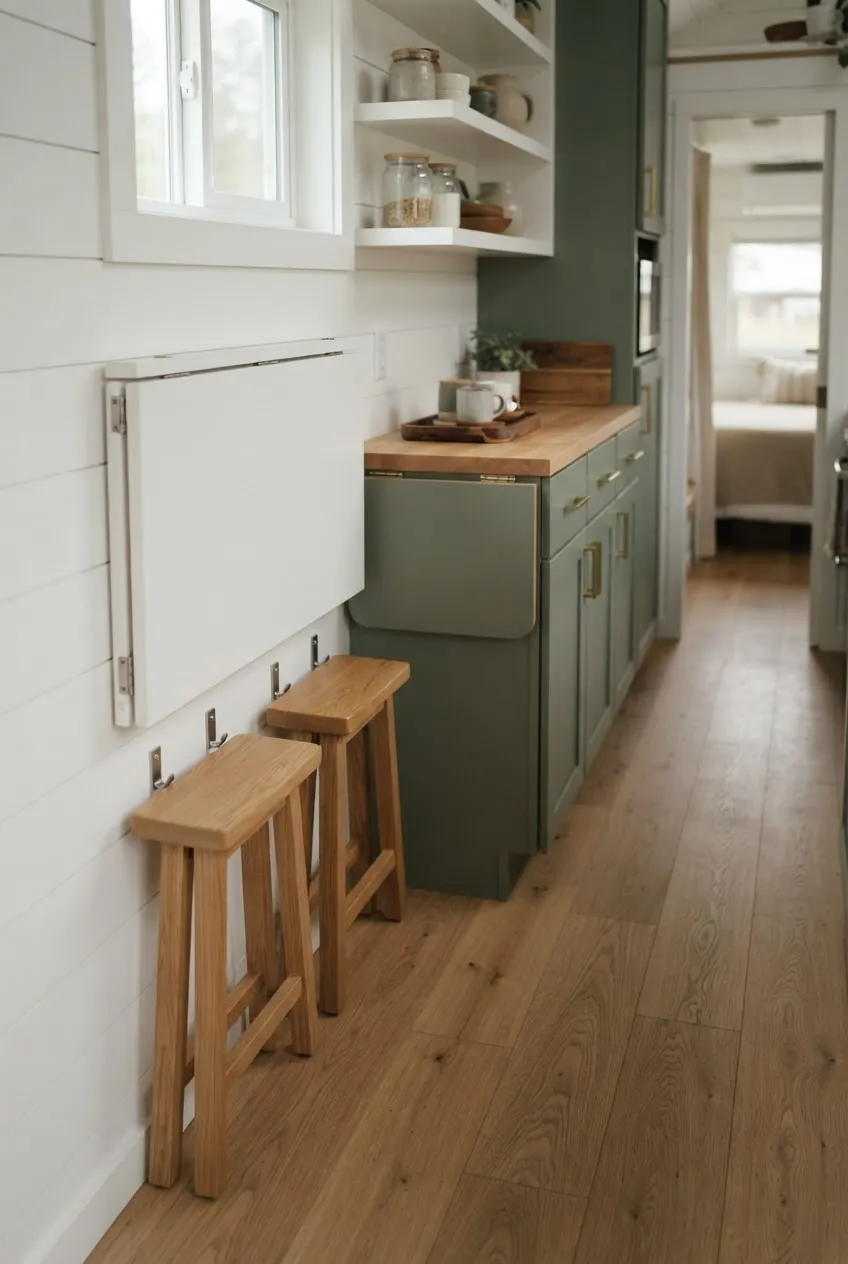
Plan the Closed Position First
The closed position is what you will see most often, so design for that first. A folded table should sit flat, look intentional, and not block switches, outlets, cabinet pulls, heaters, or trim. If stools are part of the setup, decide where they live when the surface is closed.
Use painter’s tape before installing anything. Mark the open surface on the floor and wall, then walk through your normal kitchen movements: open the fridge, unload groceries, wash dishes, turn around with a pan, and let another person pass.
Where Fold Down Surfaces Work Best
- Beside the sink: extra prep and dish landing space.
- Under a window: breakfast bar or light-duty desk.
- At the end of cabinets: flip-up counter extension.
- On a blank wall: fold-down dining table.
- On a cart: renter-friendly temporary island.
Make the Hardware Match the Job
The surface is only as useful as its support. A light breakfast ledge needs different hardware than a prep surface that holds a cutting board and full mixing bowl. Check the load rating, install into structure, and use finishes that can handle moisture and cleaning.
A good fold-down surface gives you room exactly when you need it and disappears when you do not. In a tiny home kitchen, that kind of flexibility is often more valuable than a larger fixed counter that steals space all day.