
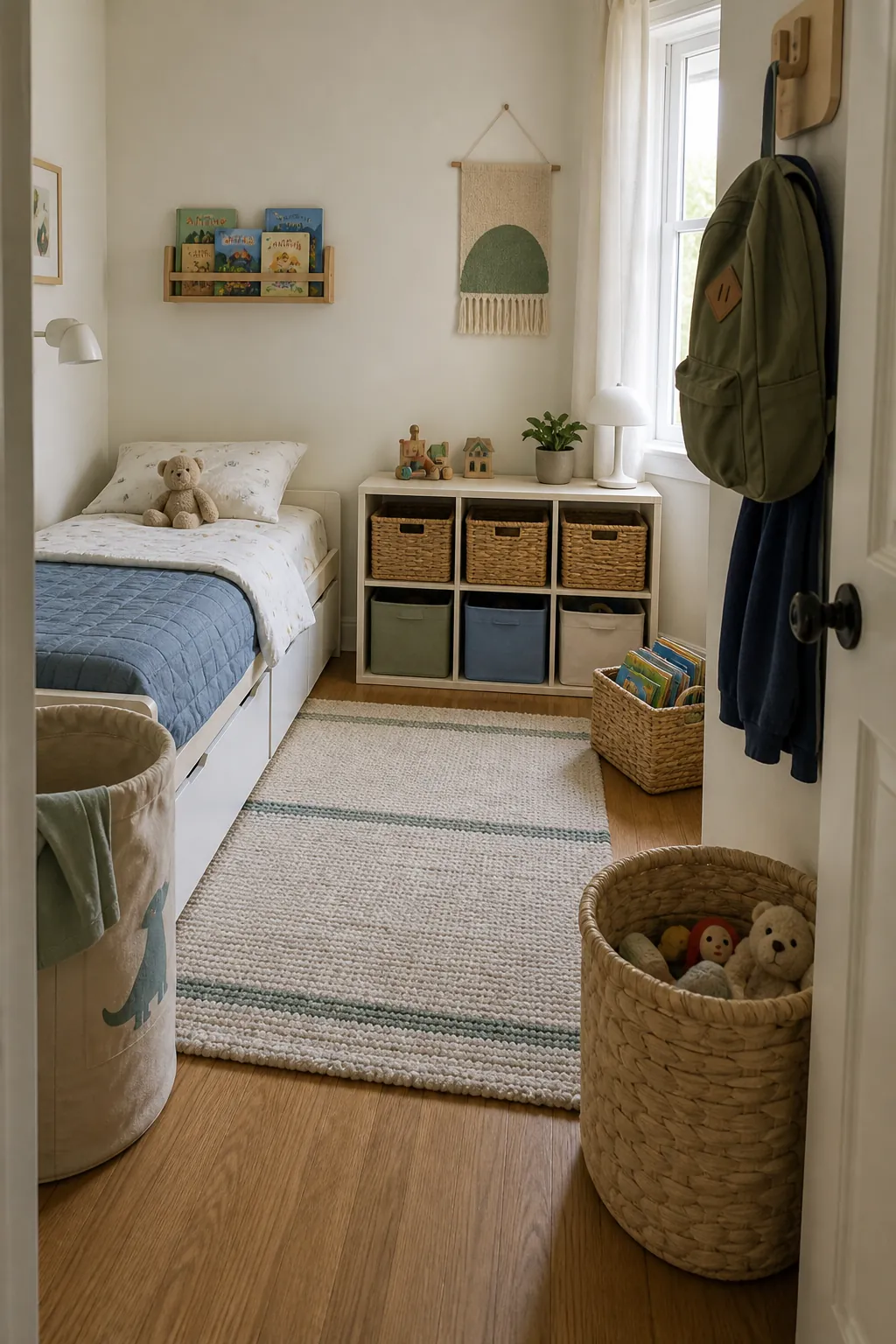
A small kids room stays organized when the room makes the next right action obvious. Most children are not ignoring a perfect system. They are trying to clean up a room that asks them to make too many decisions: where the stuffed animals go, which papers matter, which clothes are dirty, and whether the blocks should stay out because they were still building.
The daily goal is not a magazine-clean bedroom. The goal is a room that can recover in ten minutes, with a child doing part of the work. Reddit parent discussions repeat the same pattern: fewer available toys, reachable bins, visual reminders, and a predictable cleanup time work better than one giant weekend rescue.
Make the Morning Reset Tiny
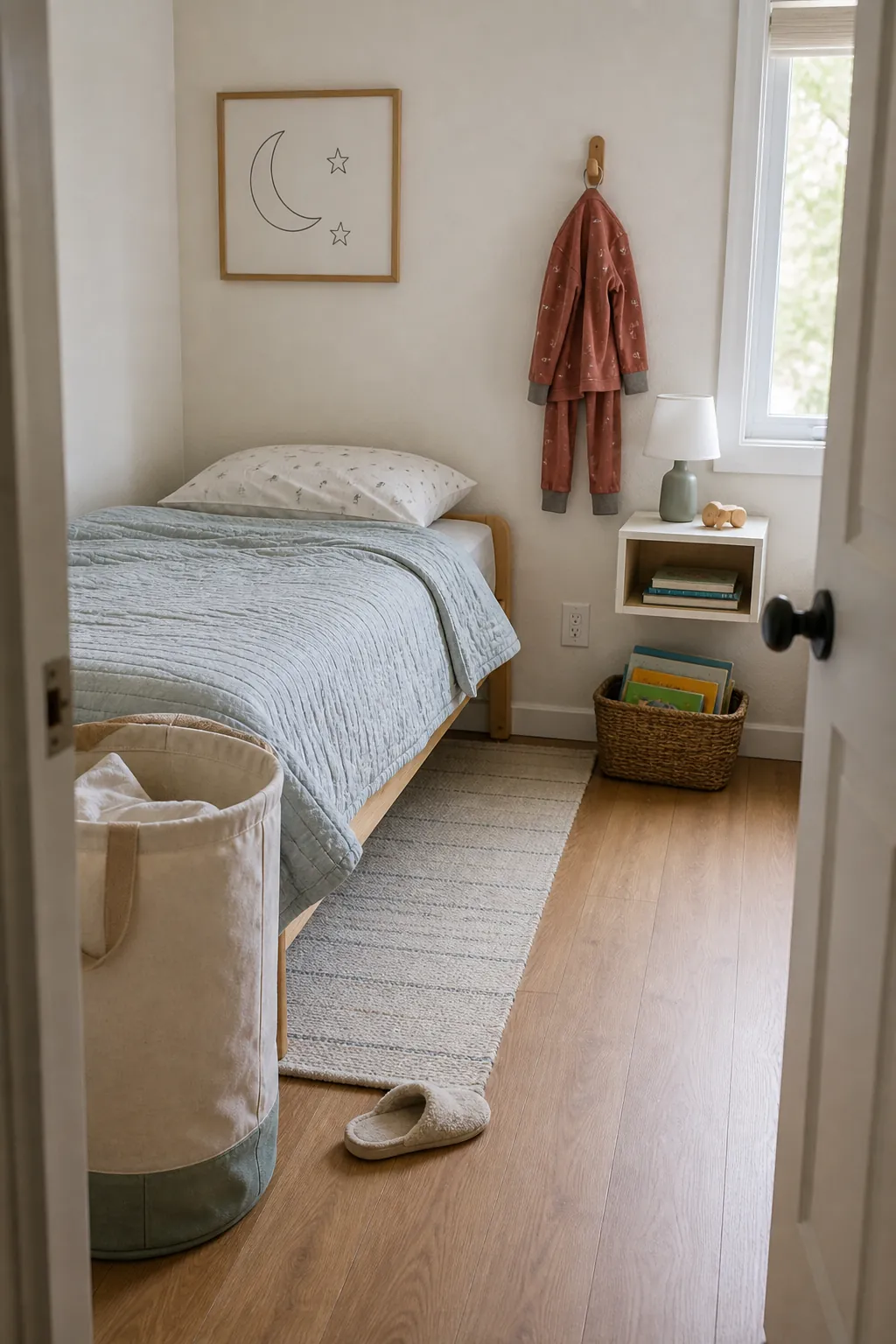
Morning cleanup should be too small to argue with. In a small kids room, use a three-step reset: pajamas in the hamper, bed pulled up, floor checked. That is enough. A child who can finish the morning routine quickly is more likely to repeat it tomorrow.
Keep the hamper where clothes already land. Put one hook or peg near the bed for pajamas that can be worn again. Do not hide the hamper in a closet if the closet door becomes the excuse. The most useful kids room organization system is usually the one placed exactly where the mess begins.
Create an After-School Landing Zone
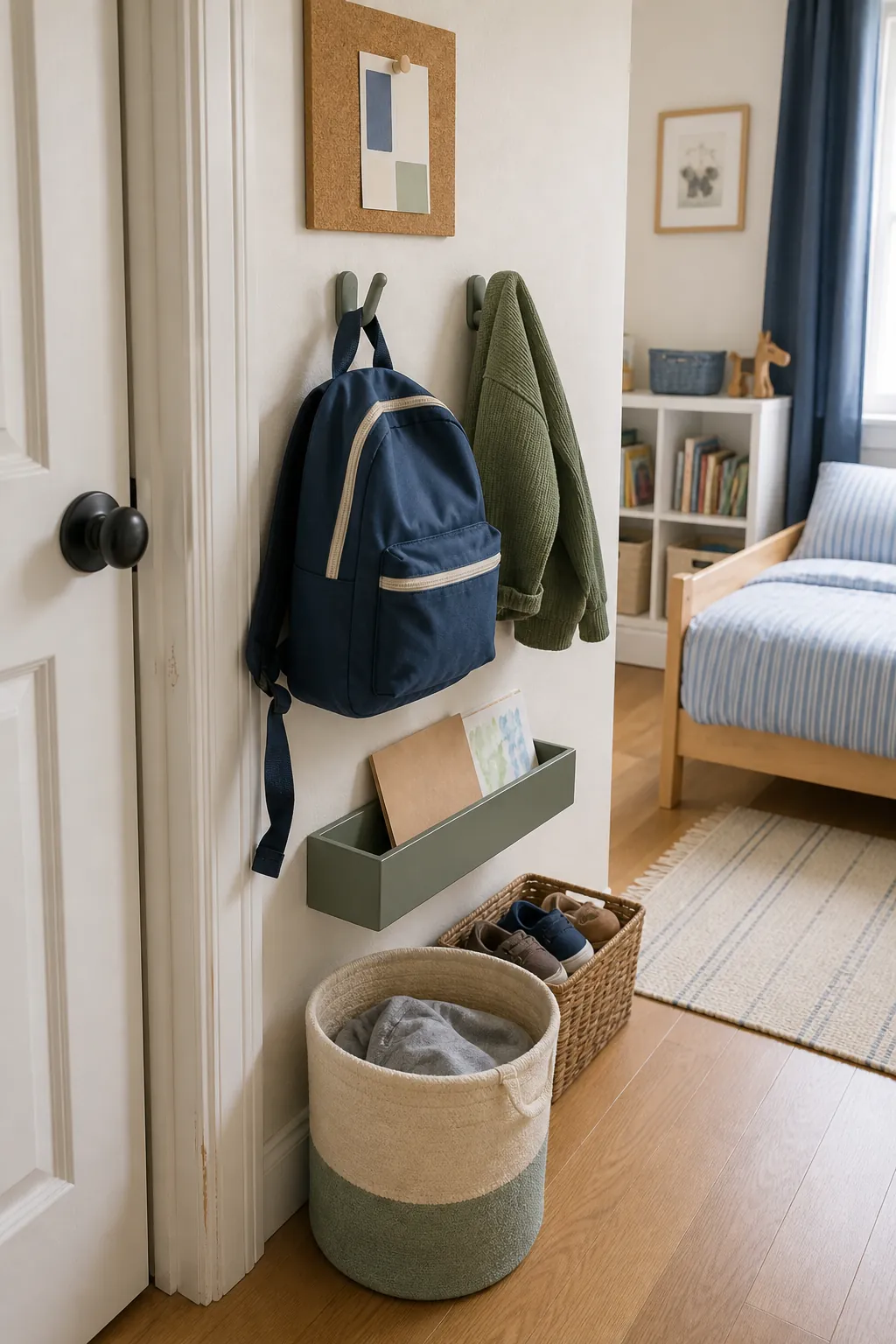
Many kids bedrooms fall apart right after school. Backpacks open, socks disappear, art papers land on the bed, and the floor becomes a sorting tray. Give the room a landing zone near the door: one hook for the backpack, one tray for papers, one small bin for things that need to leave the room.
This does not need to be a full mudroom. A wall hook, slim shelf, and paper pocket can stop the backpack from spreading across the whole bedroom. The rule is simple: school items pause here before they enter the room. Parents can review papers later without the bed becoming the inbox.
Keep Toy Storage Low, Labeled, and Limited
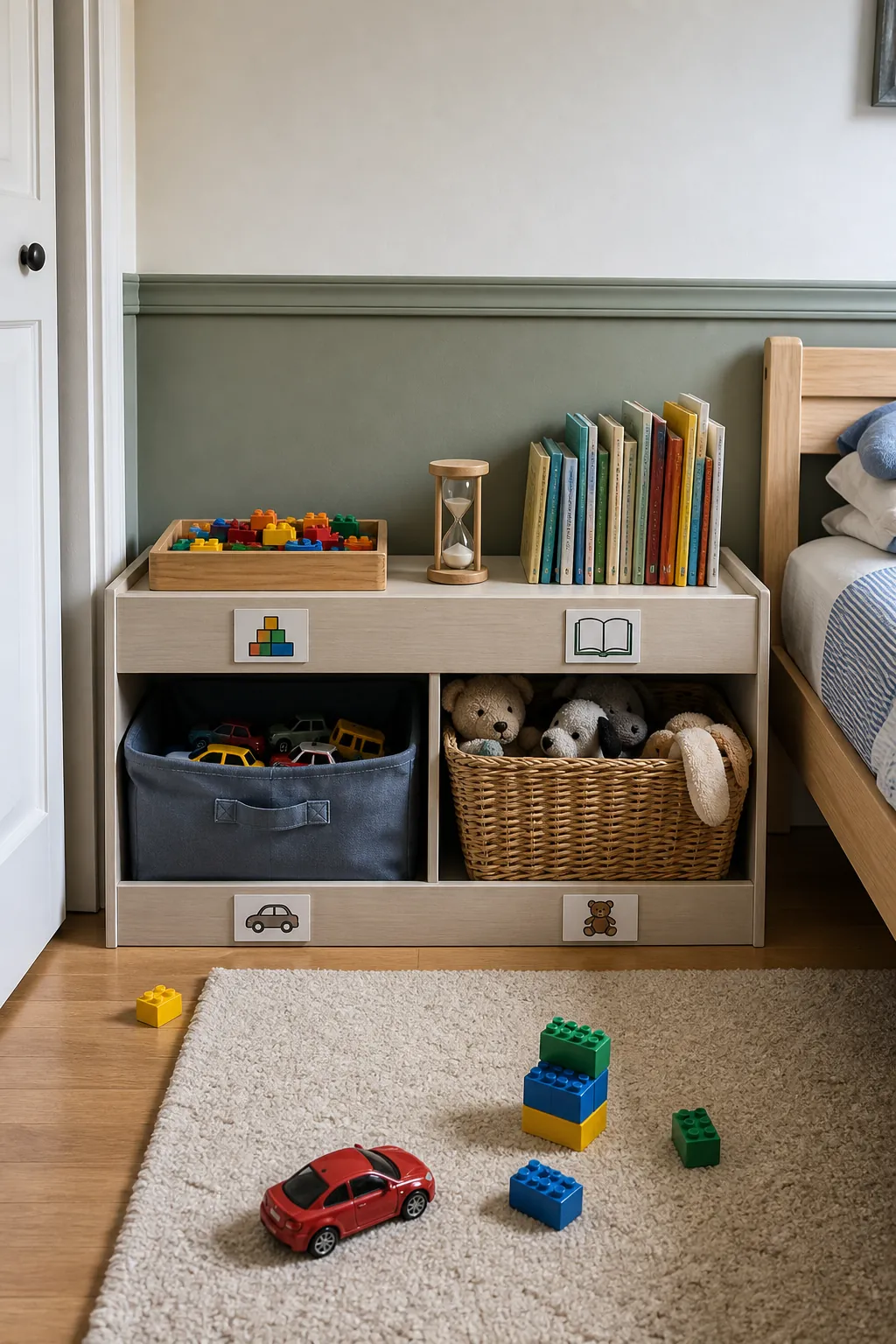
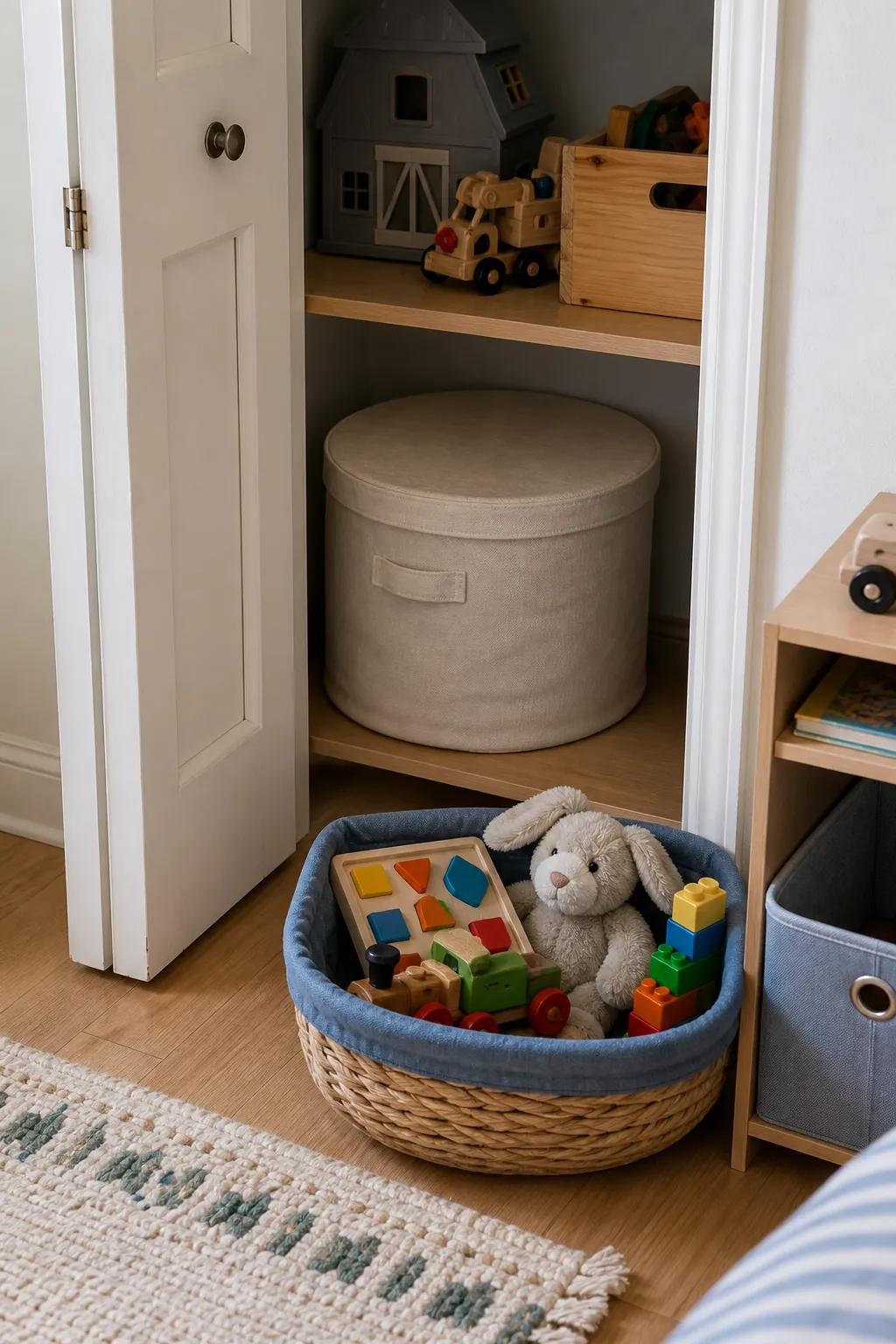
A tidy kids room depends less on perfect categories and more on limits. Use low shelves, storage bins, and broad picture labels so the child can see where things belong. If the animal bin is full, the room is not asking for a bigger bin yet. It is asking for fewer animals out at once.
Picture labels help younger children clean up without reading. Older children can help choose categories. Keep the categories close to the way they play: cars, animals, building, dolls, art, dress-up. When storage matches play, daily organization feels less like punishment and more like resetting the next round.
Separate Clean Clothes, Dirty Clothes, and Rewears
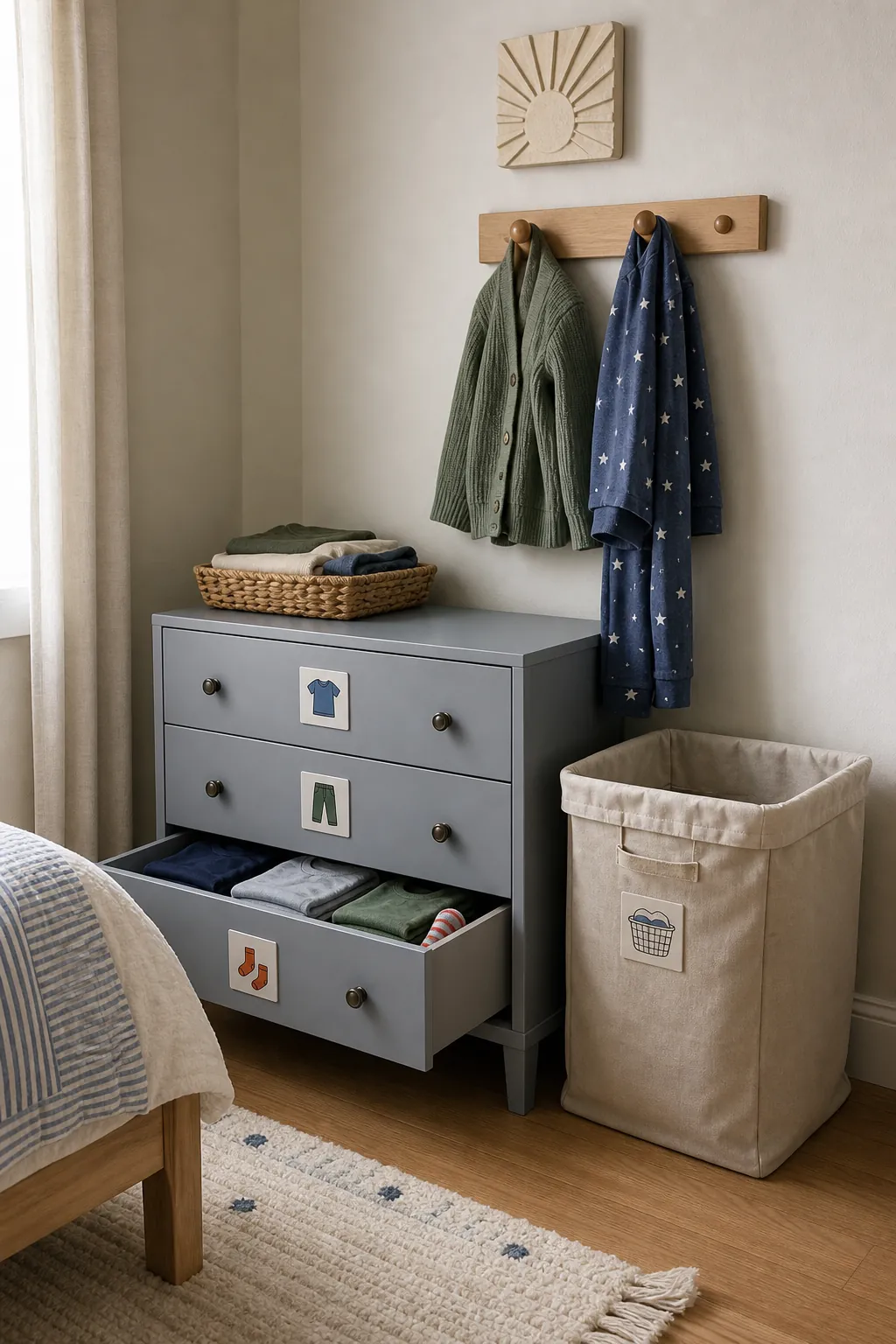
Clothes cause daily clutter because there are really three categories, not two. Clean clothes need drawers. Dirty clothes need the hamper. Rewears need a hook, basket, or chair substitute. Without a rewear spot, half-clean clothes land on the floor and make the whole room look worse.
For a small kids room, use shallow drawer dividers and keep daily clothes at child height. Pajamas, socks, and school clothes should be easiest. Special outfits can live higher or in the closet. If a dresser is tall, anchor it to the wall with proper anti-tip hardware, especially in a child’s bedroom.
Rotate Toys Before the Room Feels Full
Toy rotation is not just a decluttering trick. It reduces the number of choices a child has to manage. Parents in decluttering discussions often notice that children play longer when fewer toys are available, because the favorites are easier to find and the room is less visually crowded.
Keep one rotation bin somewhere the child cannot empty independently: a closet shelf, under-bed storage, or a lidded bin in another room. Rotate when play feels stale, not on a complicated schedule. If a toy is never requested after several rotations, it may be ready to leave the house.
End With a Ten-Minute Bedtime Reset
A consistent cleanup cue matters more than the exact time. The CDC notes that routines can include cleanup, and the American Academy of Pediatrics encourages a quiet bedtime routine. Put those ideas together: make the last ten minutes of bedroom play a quiet reset, not a surprise command after the child is already exhausted.
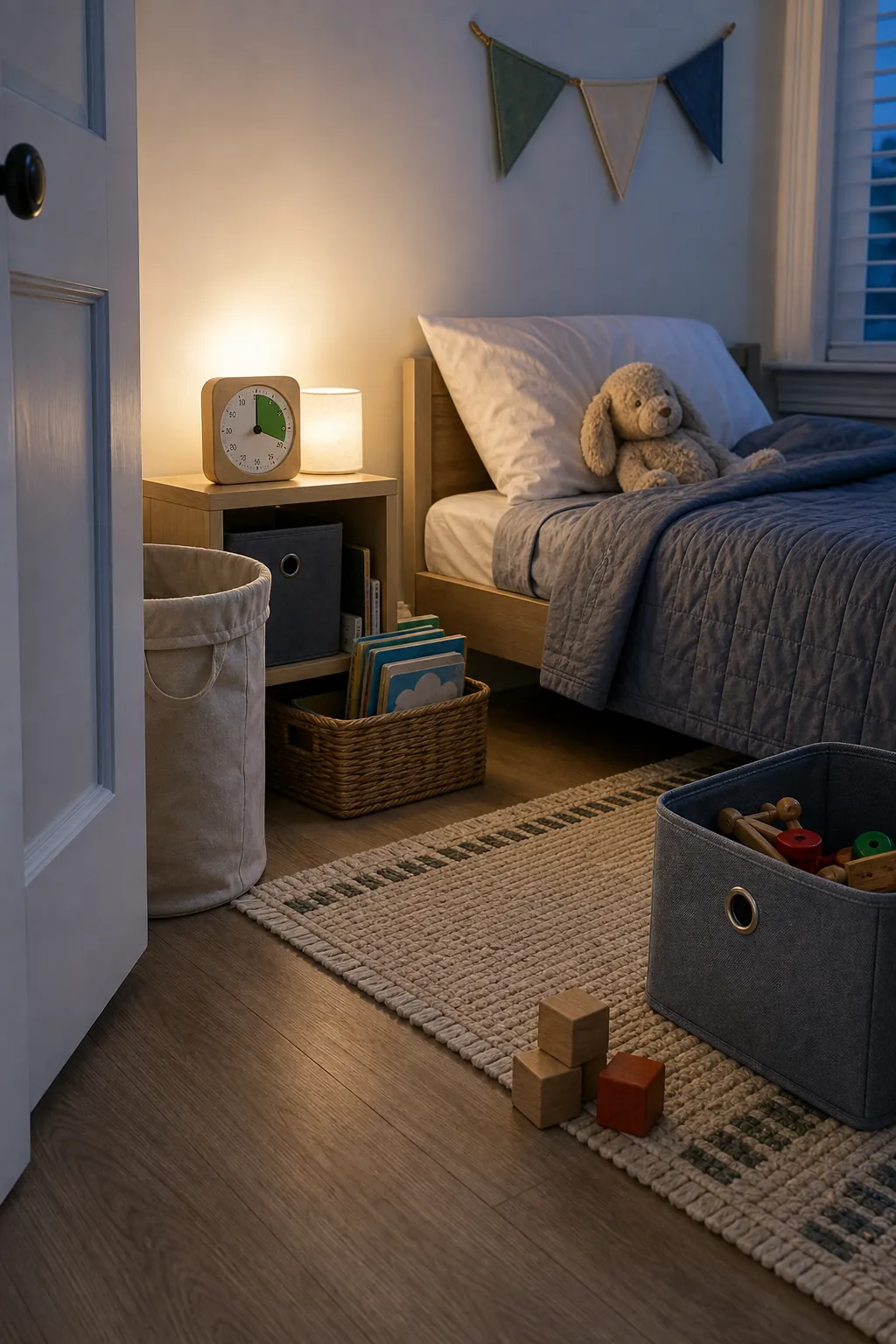
Use a timer, a short cleanup song, or a picture checklist. The sequence can be: floor toys to bins, books to basket, clothes to hamper or hook, school papers to tray, one comfort item on the bed. When the room is small, a short daily reset beats a long weekly clean almost every time.
The room will still get messy. That is not failure. A small kids room is successful when the child knows the first step, the storage is reachable, and the parent is not rebuilding the whole system every night. Keep the routine small, keep the categories visible, and let the room recover every day.