

A good indoor plant wall starts with the boring parts: light, water control, wall protection, and access. The prettiest plant wall ideas indoor DIY projects fail when the wall gets damp, the top plants dry out, or the whole setup is too hard to prune. If you solve those pieces first, the design can still look lush without turning into a repair job.
Before you buy planters, decide whether you want a true living wall, a plant shelf wall, a trellis-style plant accent wall, or a freestanding DIY plant stand. They all create a green feature, but they ask for very different maintenance. A shelf wall is forgiving. A modular living wall is dramatic. A climbing plant wall can be renter-friendly. The right choice is the one your room can support every week.
Build a Moisture-Safe Backing First
Never mount wet planters directly against drywall. Even careful watering can leave condensation, mineral marks, and hidden damp spots. For a DIY living wall indoor setup, add a protected backing: sealed plywood, a waterproof wall panel, a freestanding frame, or a removable rail system with a small air gap behind it. The goal is simple: plants can drip, breathe, and be removed without damaging the wall.

Use Shelves When You Want the Easiest Plant Wall
Plant shelves are the most forgiving version of wall garden ideas indoor. You can water plants at the sink, rotate them toward the light, swap one pot without dismantling the whole wall, and use cachepots with saucers. Staggered shelves also make it easy to combine upright plants, trailing vines, and small sculptural shapes without locking every plant into the same watering schedule.
Keep shelves shallow enough that plants do not lean dangerously forward. Anchor them into studs, or use a freestanding ladder-style frame if drilling is not an option. The best plant wall shelf ideas look relaxed because the practical parts are handled quietly.

Try a Rail or Pegboard Wall for Small Pots
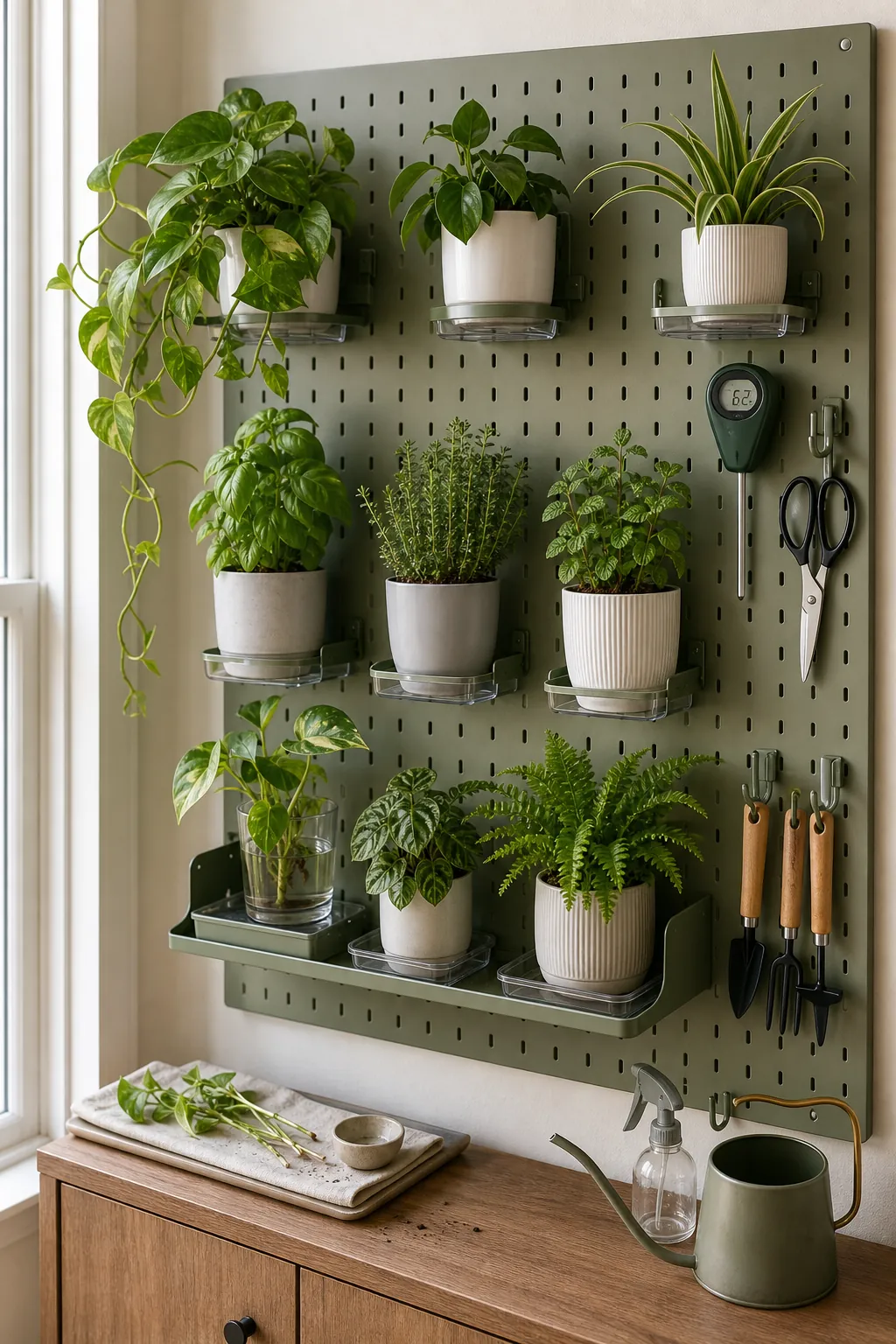
A rail, pegboard, or grid panel can make a flexible DIY wall planter indoor system. Use small pots with drainage trays, clip-on shelves, and removable hooks instead of fixed containers you cannot clean. This works well in kitchens, entryways, and bright corners where you want a compact plant feature wall but still need to adjust the layout as plants grow.
Let Climbing Plants Make the Accent Wall
If you want a green wall without dozens of wet containers, train climbing or trailing plants across a trellis, wire grid, or bamboo frame. Pothos, philodendron, hoya, and small monstera varieties can create a soft plant accent wall from a few healthy pots. This is often easier than a dense living wall because the plants keep real soil volume in normal containers.

Add Grow Lights Before the Plants Struggle
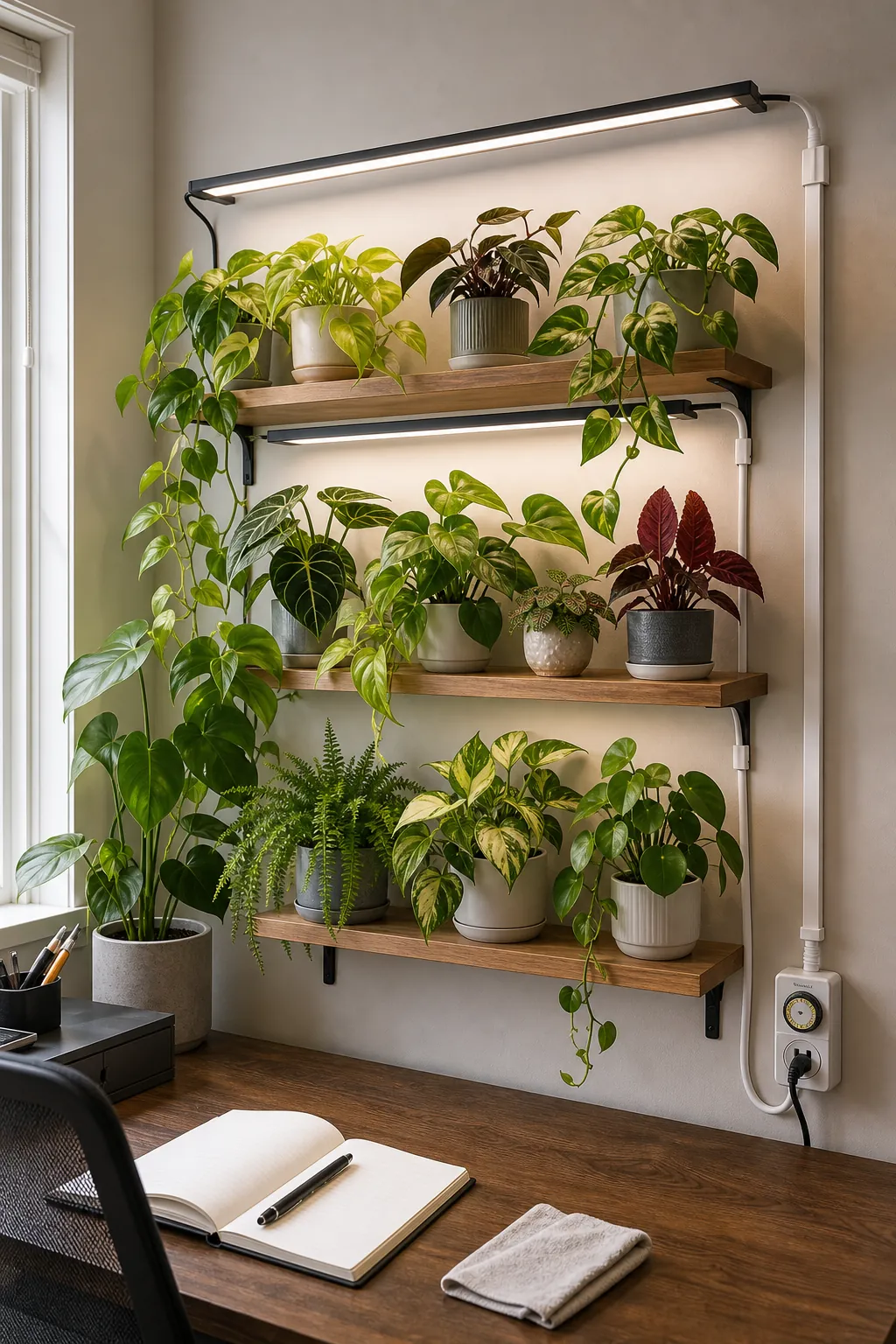
Most indoor plant wall problems are really light problems. A wall that looks bright to your eyes may not give plants enough usable light, especially in winter or far from a window. Slim full-spectrum bars can make a plant feature wall healthier, but they should be planned into the design instead of added as an awkward fix later.
Mount grow lights so the leaves receive even coverage without heat stress. Hide cords in a cable channel, use a timer, and keep the lights accessible for cleaning. The result looks calmer and works better than a wall full of plants reaching in one direction.
Use Modular Panels Only If You Can Service Them
A true modular plant wall design can look incredible indoors, but it is not the lowest-maintenance option. Choose removable trays, a washable backing, a catch basin, and plants with similar watering needs. Keep a few spare nursery pots ready because one tired plant can leave a very obvious gap.

Keep the Maintenance Routine Small
The easiest indoor plant wall is the one you can check quickly. Put thirsty plants where you can reach them, keep saucers visible, and group plants by water needs. Dust leaves, rotate pots, prune vines before they tangle, and replace weak plants early. A small, healthy wall always looks better than a huge wall that is slowly declining.
If you are unsure, start with one shelf, one rail, or one climbing frame. Once you know the room’s light and your watering rhythm, expanding the indoor plant wall becomes a design upgrade instead of a rescue mission.