
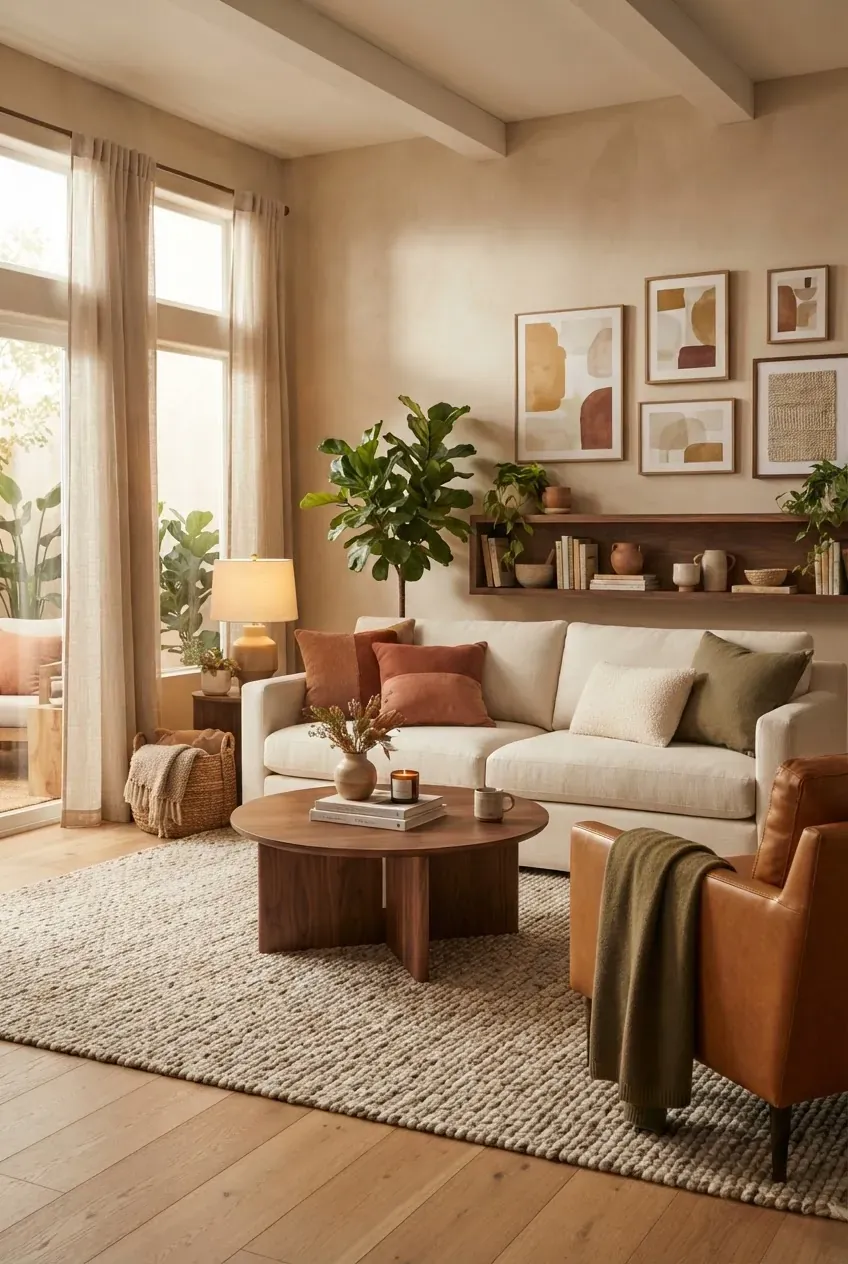
Warm color living room ideas work best when the room feels layered, not simply painted orange or filled with brown furniture. The strongest warm schemes usually start with a calm base, then build depth with clay, caramel, olive, ochre, rust, warm wood, and soft black accents. That mix gives the room comfort without making it feel heavy.
The goal is not to make every surface warm. A beautiful living room needs contrast: creamy walls against walnut, terracotta beside linen, brass next to matte black, and a few cooler greens to stop the palette from feeling flat. Use the ideas below as complete color stories, then adjust the intensity for your light, furniture, and personal style.
Start With a Warm Neutral Base
A neutral warm living room is the safest starting point if you want a room that feels cozy but still airy. Choose a wall color with cream, oat, greige, or beige undertones rather than a cool gray. Then repeat the undertone through the sofa, curtains, rug, and large wood pieces. The repetition keeps the room calm while small accents bring personality.
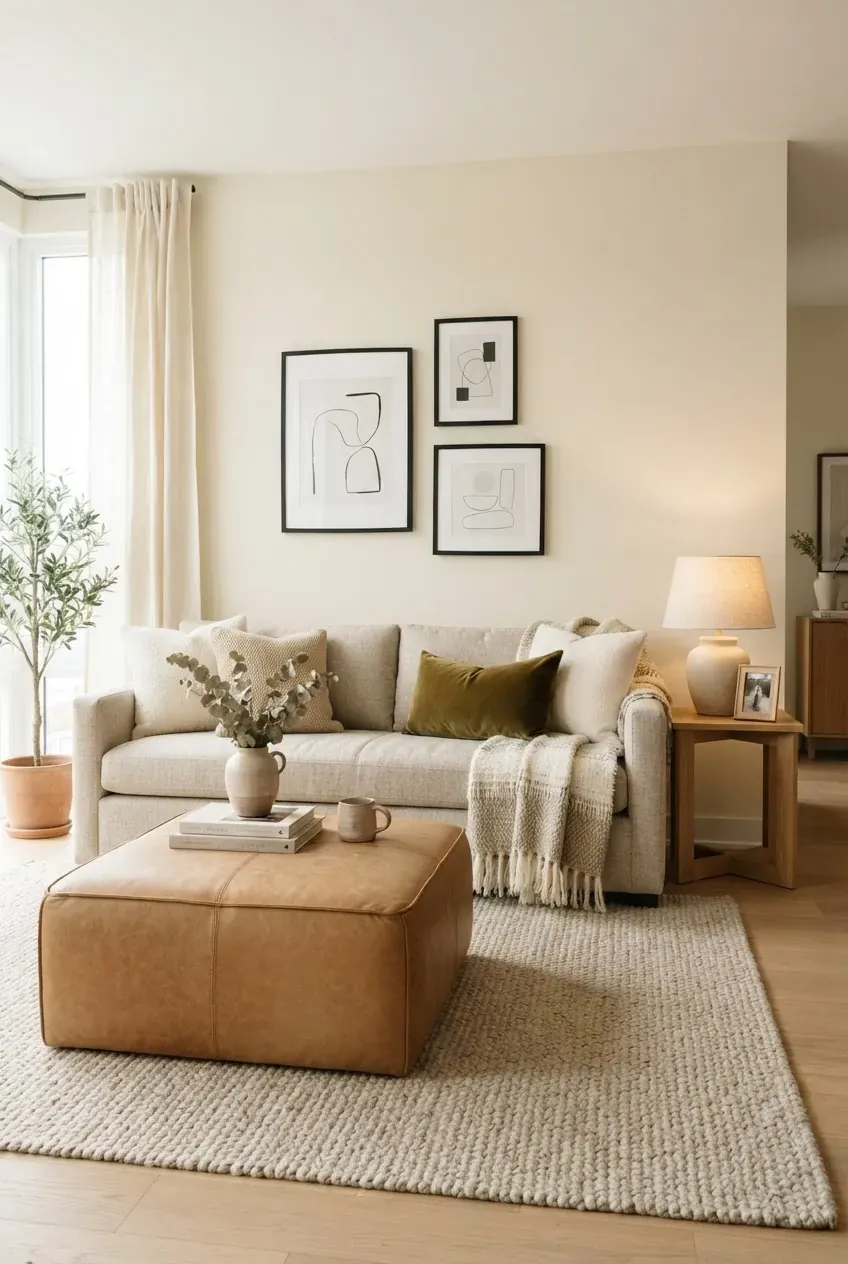
For a balanced palette, try cream walls, an oatmeal sofa, camel leather, olive pillows, and warm white curtains. This combination gives the room a sunlit feeling even before you add stronger colors. If the space still feels too pale, add black picture frames, a darker wood side table, or a patterned rug with tan and brown threads.
Use Terracotta and Olive for an Earthy Room
Terracotta and olive are a reliable pair for a warm earthy living room because they borrow from clay, leaves, and natural wood. Terracotta adds glow, while olive adds depth. Together they feel grounded rather than sugary. This is especially useful if you want warm living room tones that still look grown-up.
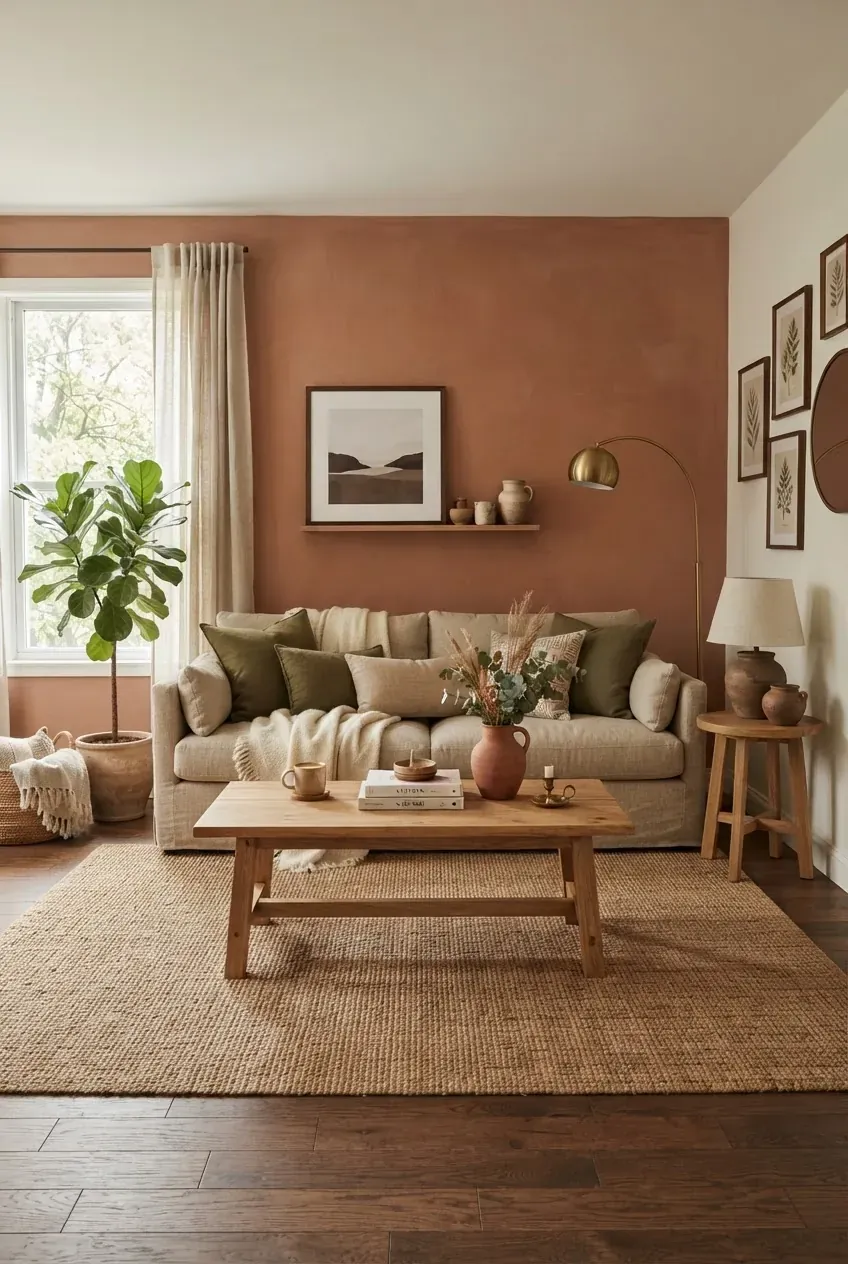
If you are painting, use terracotta on one wall or in a smaller reading corner first. If you are not ready for paint, bring the color in through pillows, pottery, art, or a rug. Keep the sofa and curtains lighter so the room still breathes. Natural oak, walnut, cane, linen, and jute all make this color story feel intentional.
Make Warm Modern Feel Clean, Not Stark
A warm modern living room keeps the lines simple but changes the materials. Instead of glossy white, chrome, and cold gray, look for walnut, wool, linen, aged brass, soft cream, rust, and caramel. The furniture can stay minimal; the warmth comes from texture and undertone.
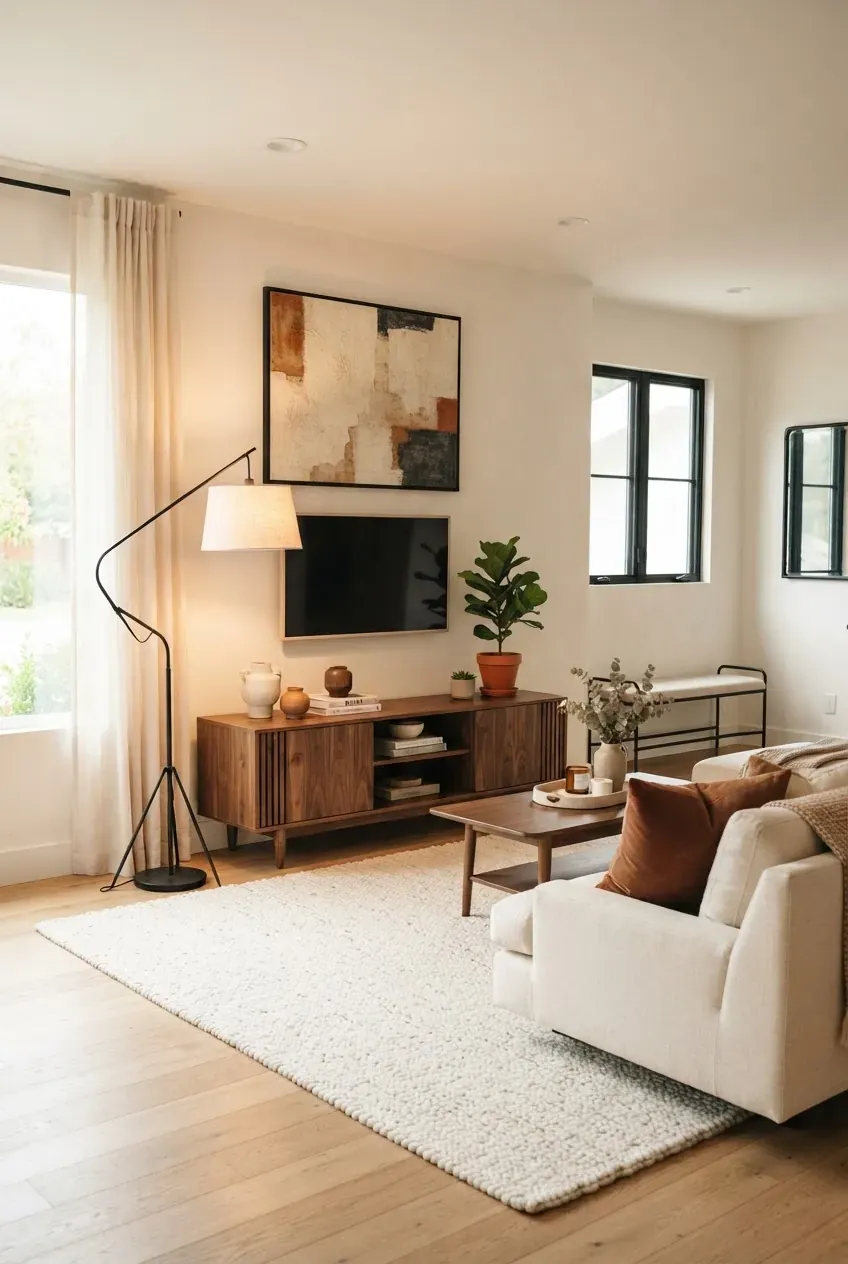
For a crisp modern scheme, pair a cream sectional with a walnut console, rust pillows, a textured ivory rug, and one black metal detail. This gives the room structure without pulling it into a cool industrial mood. If you use abstract art, choose pieces with ochre, umber, soft red, brown, or muted green instead of icy blues.
Layer Cozy Color Through Textiles
Cozy living room warm colors do not have to start with paint. Textiles are easier to change and often make a bigger difference because they sit where you actually relax. A rug, throw, pillow set, curtain panel, or lampshade can shift the whole room toward warmth in an afternoon.
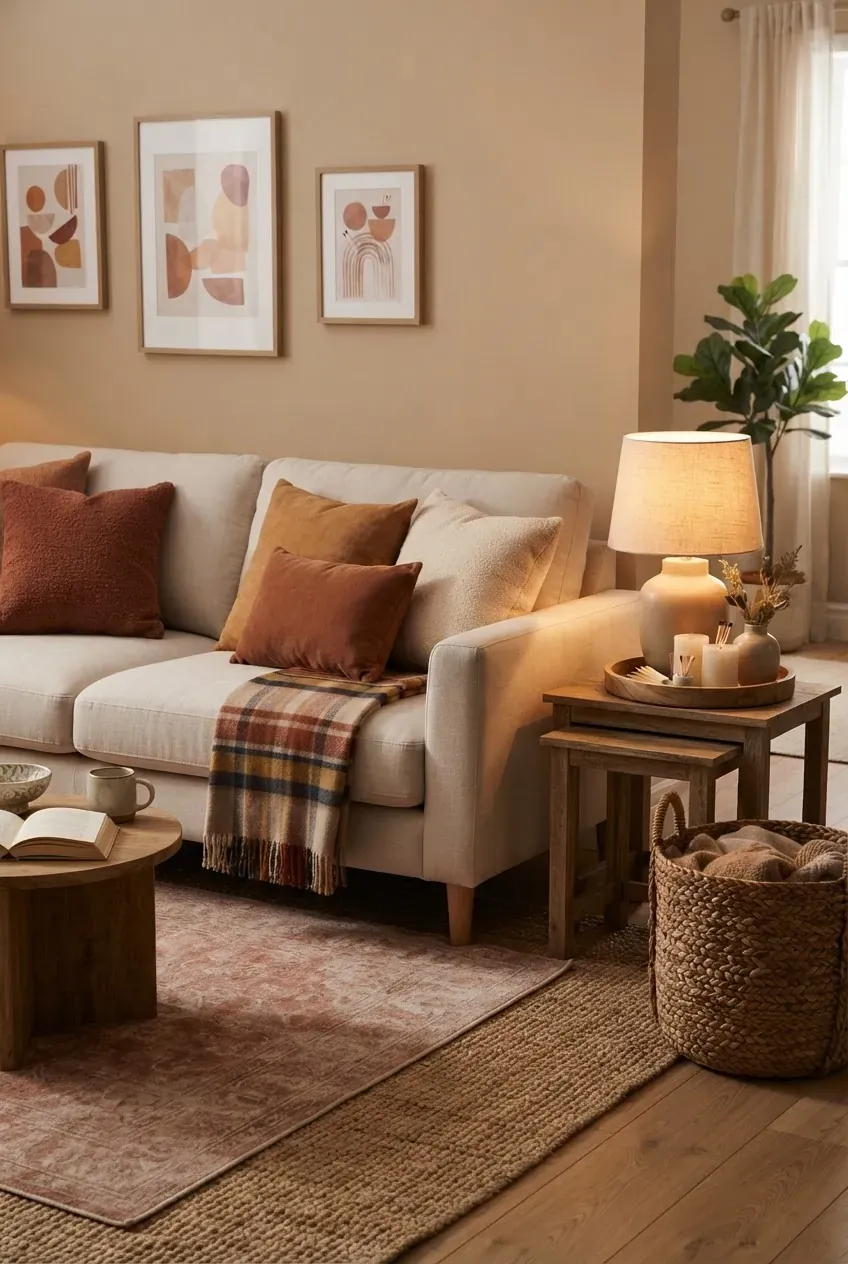
Try a rust rug under a beige sofa, cinnamon pillows against cream upholstery, and a plaid or woven throw with ochre, camel, and brown. Keep the shapes varied: one velvet pillow, one linen pillow, one patterned pillow, and one chunky knit throw will look more collected than a matching set.
Add One Pop of Warm Color to a Neutral Room
A neutral living room with a pop of color is ideal when you like calm rooms but do not want the design to feel unfinished. The trick is to choose one warm accent family and repeat it three times. For example, rust can appear in artwork, pillows, and a rug. Ochre can appear in a lamp, vase, and blanket.
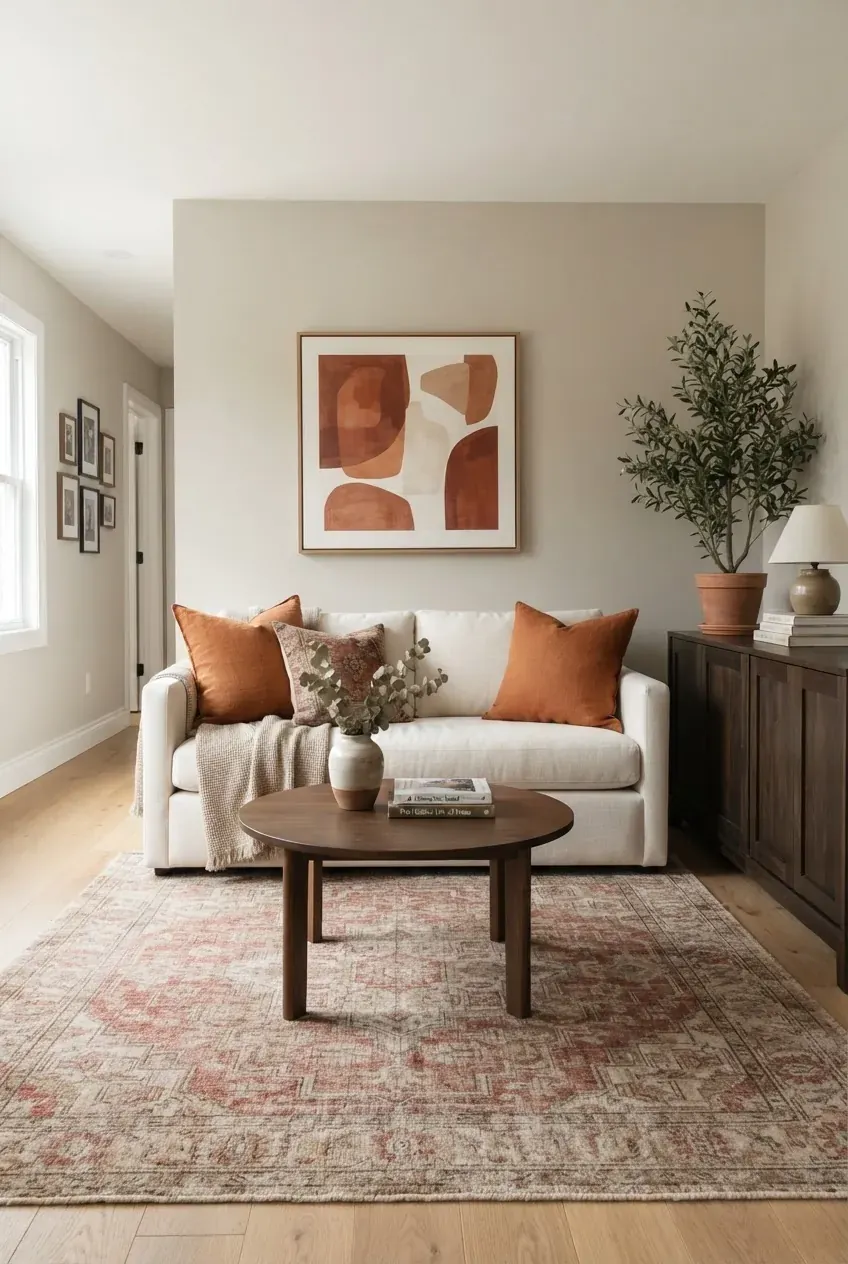
Repeating the accent keeps the color from looking random. If the room already has a colorful rug or large artwork, pull your accent from that piece instead of introducing a new shade. This helps the living room color scheme feel designed, even if you collected the furniture over time.
Let Lighting Finish the Warm Palette
Lighting can make or break warm interior design. A beautiful caramel sofa can look dull under cold bulbs, and a soft beige wall can turn gray in weak light. Use warm bulbs, shaded lamps, and several light sources so the color scheme glows at night.
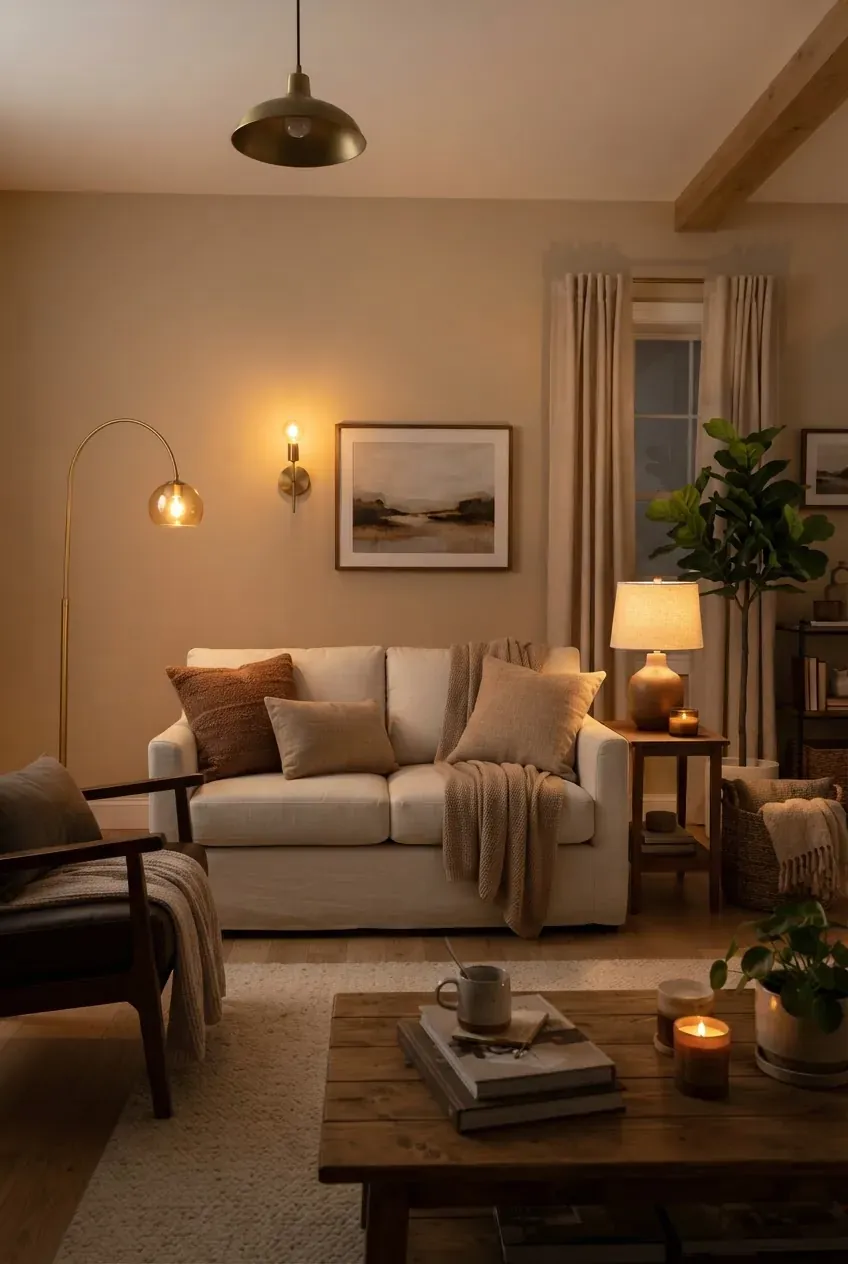
A good living room lighting plan includes at least three layers: an overhead fixture on a dimmer, a floor lamp near seating, and a table lamp or sconce for softer evening light. Warm white bulbs are usually more flattering for earth tones, wood, leather, and cream fabrics than bright cool bulbs.
Easy Warm Living Room Color Combinations
- Cream, camel, walnut, olive, and black for a neutral warm living room.
- Terracotta, oatmeal, oak, jute, and leafy green for a warm earthy living room.
- Greige, rust, ivory, dark wood, and brass for a polished modern room.
- Ochre, cinnamon, beige, rattan, and warm white for a relaxed cozy room.
- Soft brown, cream, moss green, and linen for a grounded color scheme that still feels light.
Before buying paint or large furniture, gather samples in the actual room. Look at them in morning light, afternoon light, and under lamps at night. Warm colors change dramatically with exposure, and the best choice is the one that still looks good when the room is used most.
The easiest warm color living room ideas are the ones you can repeat. Pick a base neutral, one main warm accent, one grounding natural material, and one contrast detail. Once those four decisions are clear, the room will feel cozy, modern, and cohesive instead of overly themed.