
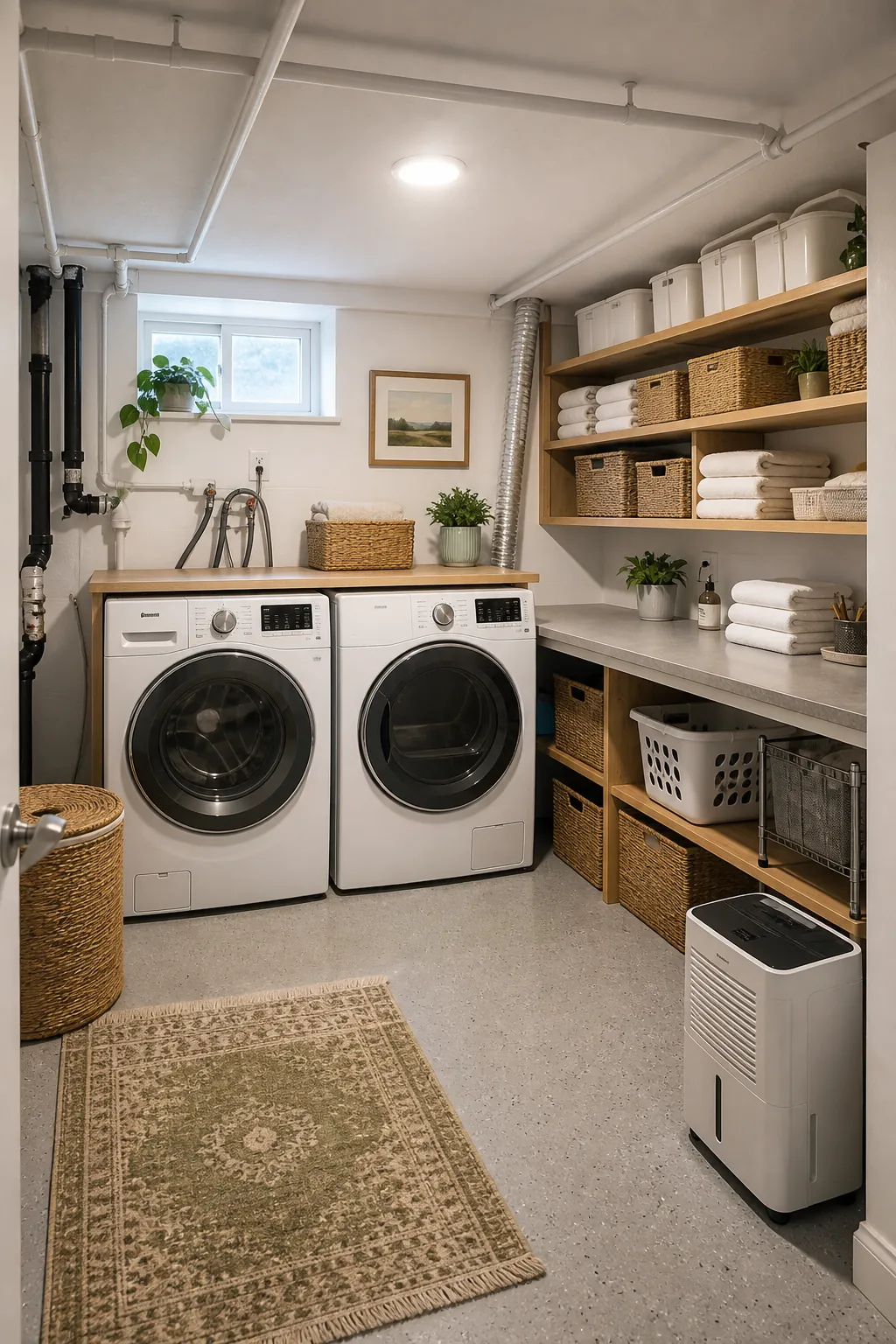
Basement laundry rooms have a different job than pretty upstairs laundry spaces. They have to handle concrete floors, lower ceilings, exposed pipes, moisture, noise, and storage overflow while still feeling clean enough that laundry does not become the chore everyone avoids.
The best basement laundry room ideas start with practical upgrades: brighter light, moisture-safe finishes, real folding space, accessible utilities, and storage that keeps supplies off the floor. Once those are working, the room can still look warm, finished, and intentional.
Bright Utility Wall With Clean Paint
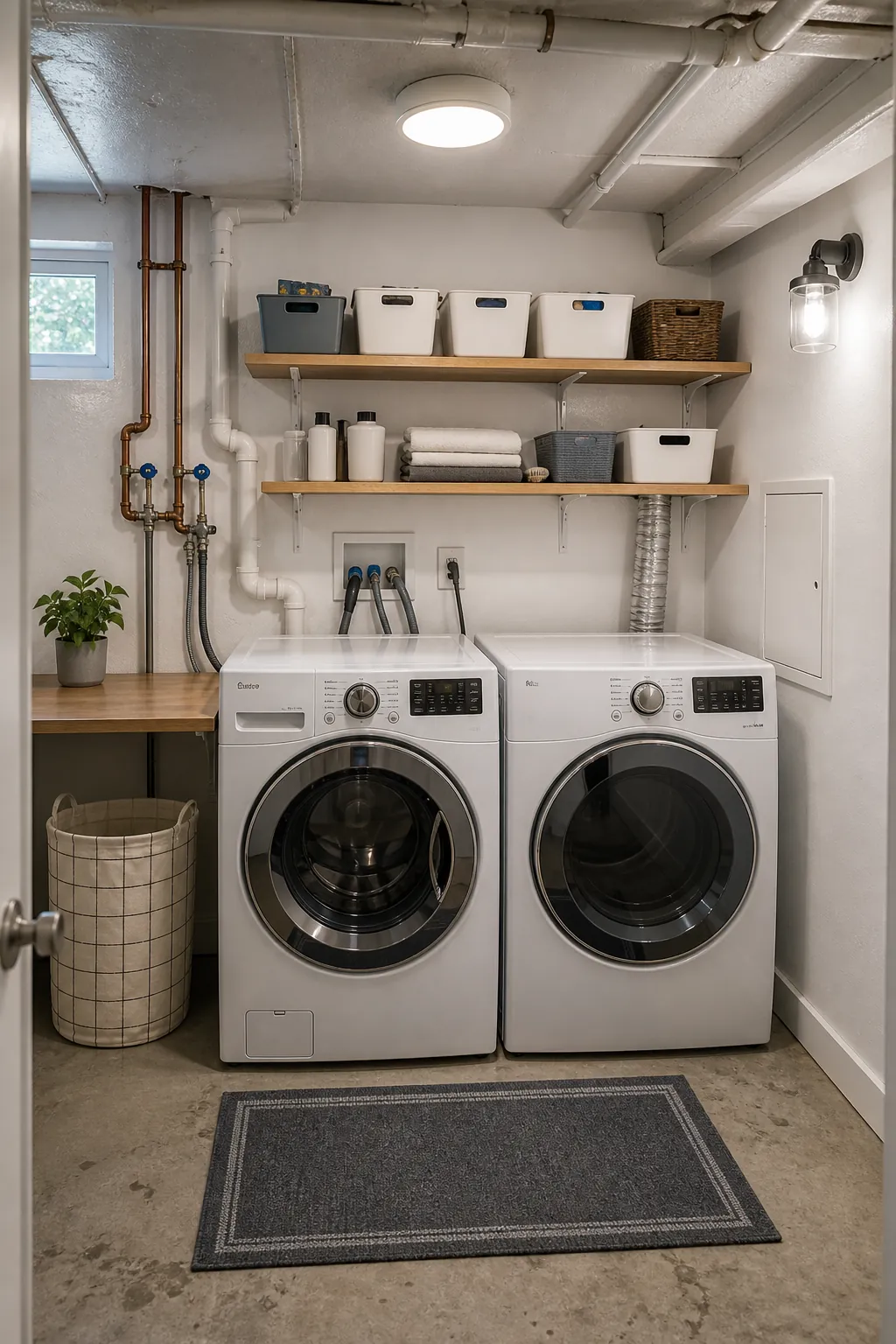
If your basement laundry area feels unfinished, start with surfaces before buying decor. A clean washable wall color, brighter ceiling, and tidy pipe runs can make the washer and dryer zone feel more like a small laundry room design and less like a utility corner.
Use basement-safe paint and keep shutoffs, outlets, drains, and vents visible. Do not hide the parts you may need during a leak. A few open shelves, a work light, and matching bins can make the wall feel designed without closing off access.
Moisture-Smart Floor Zone
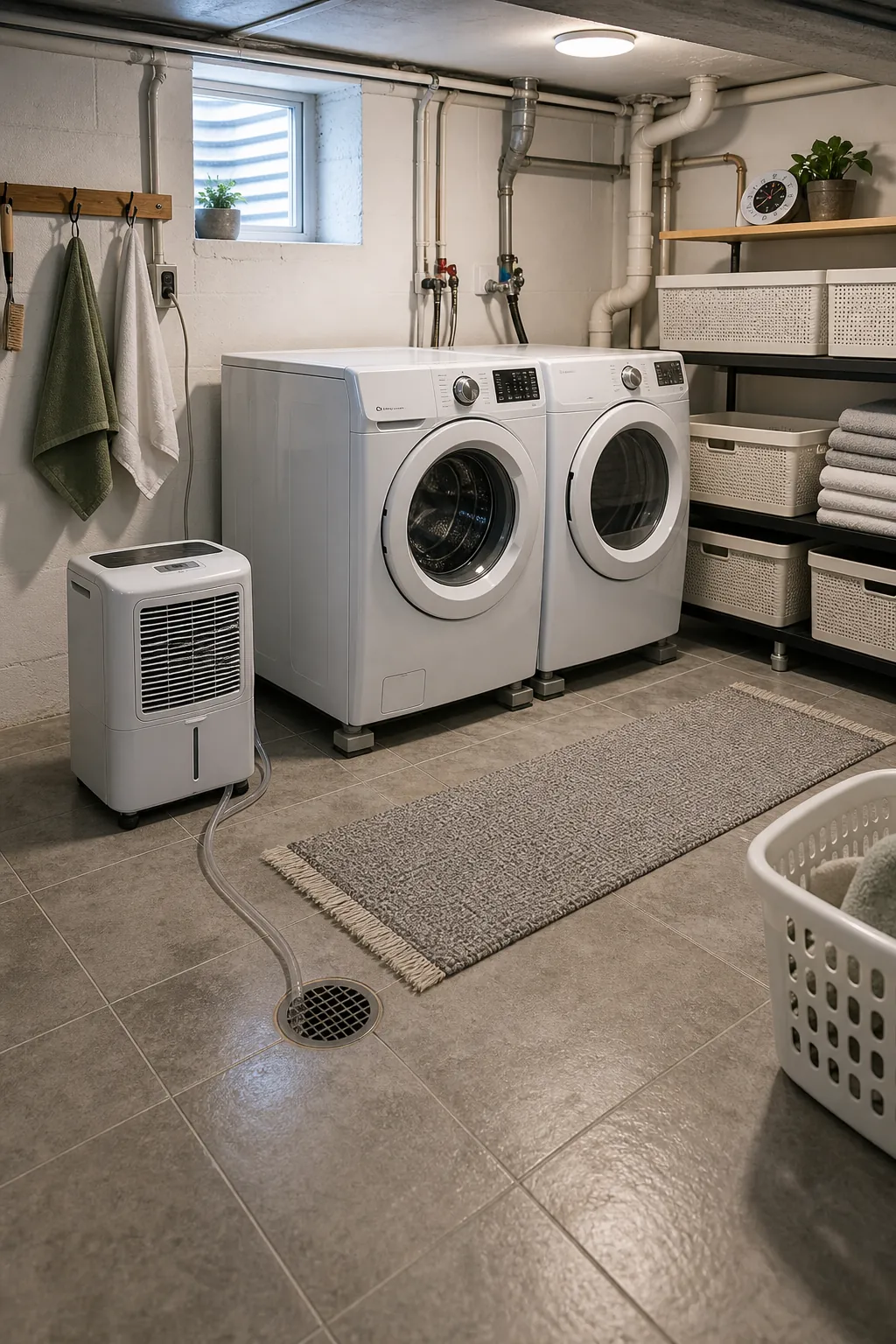
A dream laundry room still fails if the basement floor stays damp. Choose finishes that can handle real basement conditions: sealed concrete, porcelain tile, or luxury vinyl rated for below-grade use. Add a washable runner only after the humidity problem is under control.
Place a dehumidifier where it can drain safely, keep detergent off the floor, and leave air space behind storage. These details matter more than a trendy color because they prevent musty smells from following clean clothes upstairs.
Side-by-Side Folding Counter
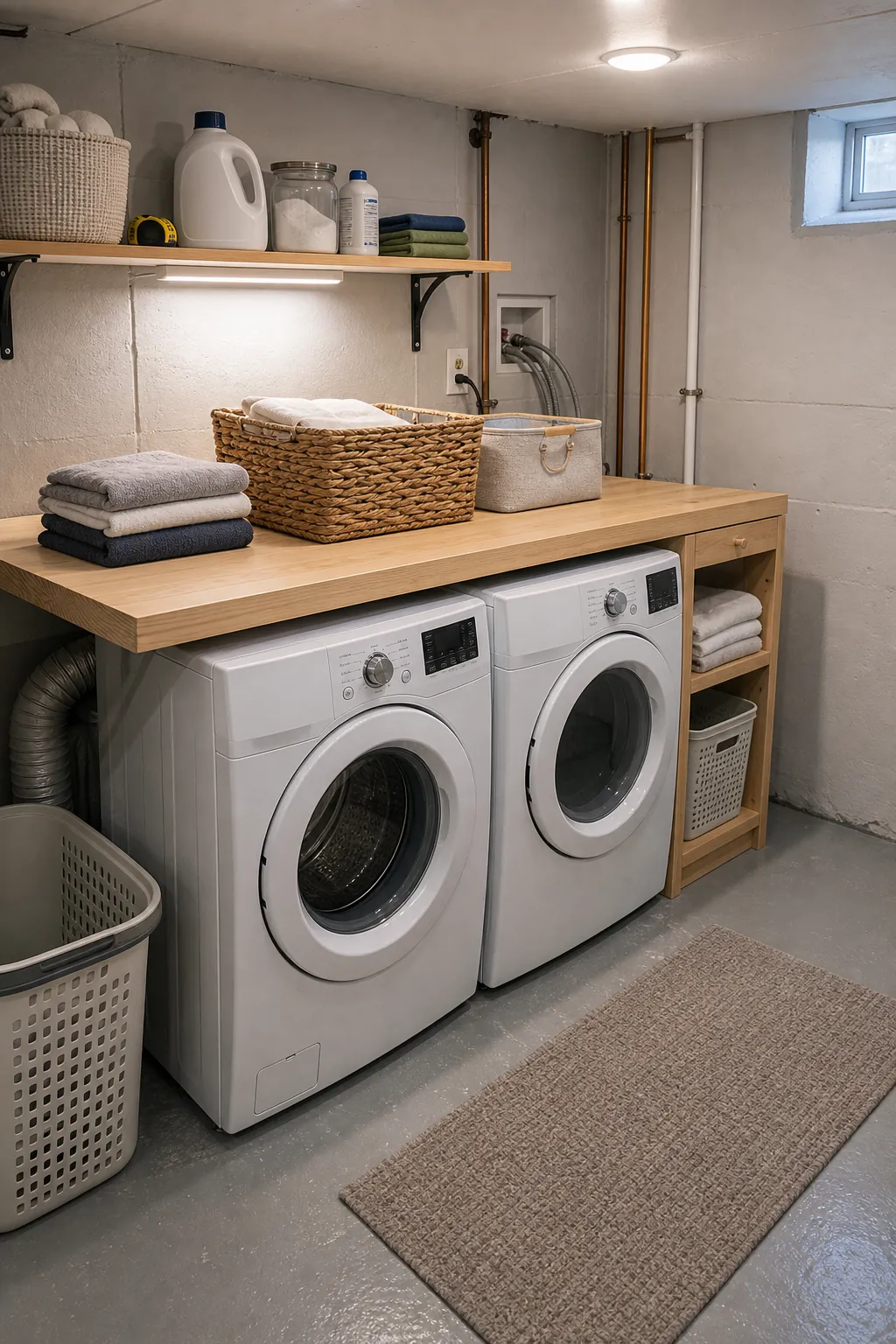
For side-by-side machines, a folding counter is often the single upgrade that changes how the room works. It gives you a place to sort, fold, pretreat, and stack without using the floor or carrying every load to another room.
Keep the counter removable if plumbing or outlets sit behind the machines. A simple butcher-block-look top, sealed plywood, or laminate slab can still look finished. Measure lid clearance, hose clearance, and vibration space before building anything permanent.
Utility Sink Stain Station
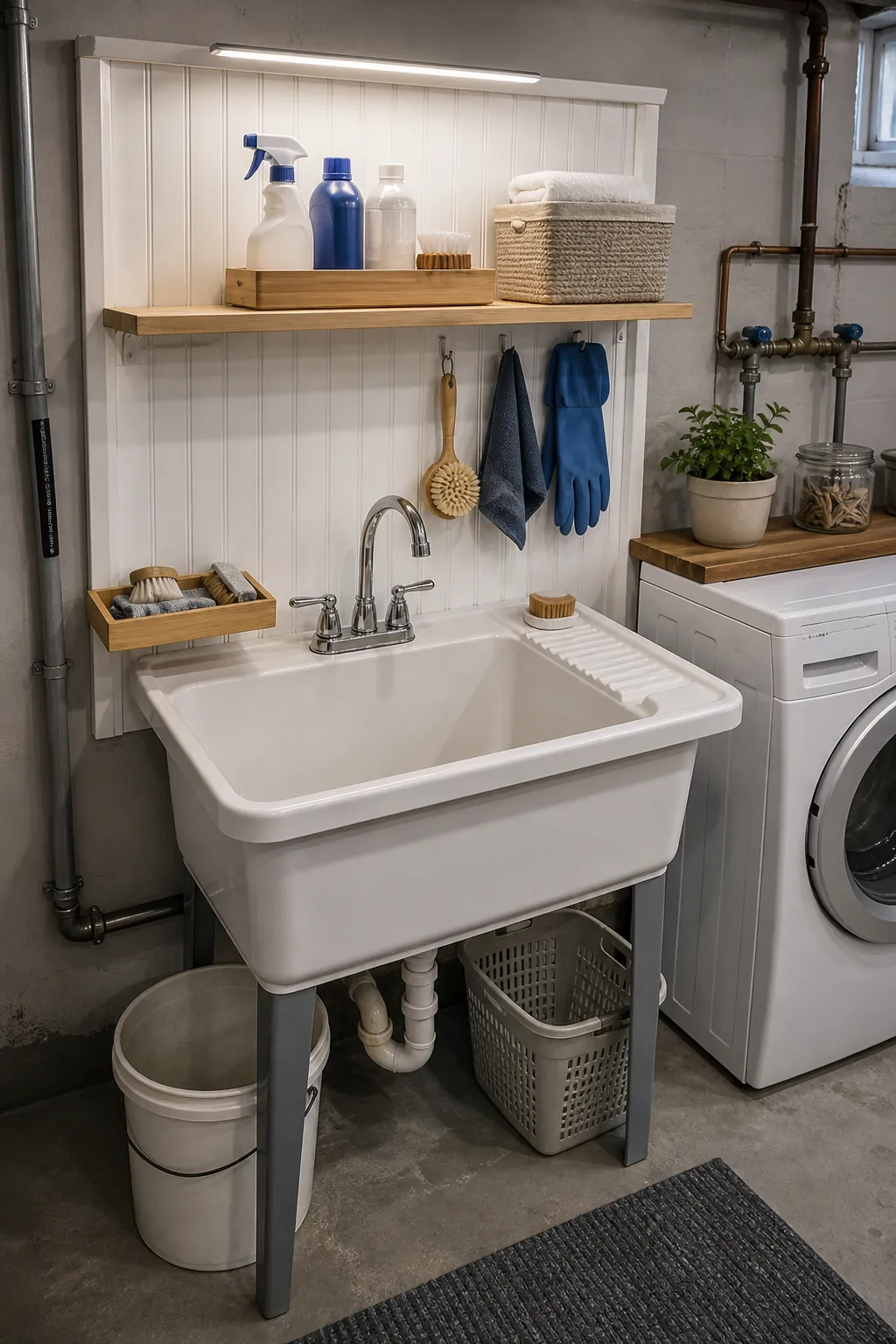
A utility sink is not glamorous, but it makes a basement laundry room much more useful. It gives you a place for stain treatment, muddy shoes, mop buckets, plant watering, and hand-washing items that should not go in a machine.
Make the sink area feel intentional with a wall-mounted shelf, labeled stain supplies, a washable backsplash panel, and a hook for gloves or scrub brushes. The goal is a practical mudroom laundry room idea without needing a full mudroom.
Soft Divider for Exposed Storage
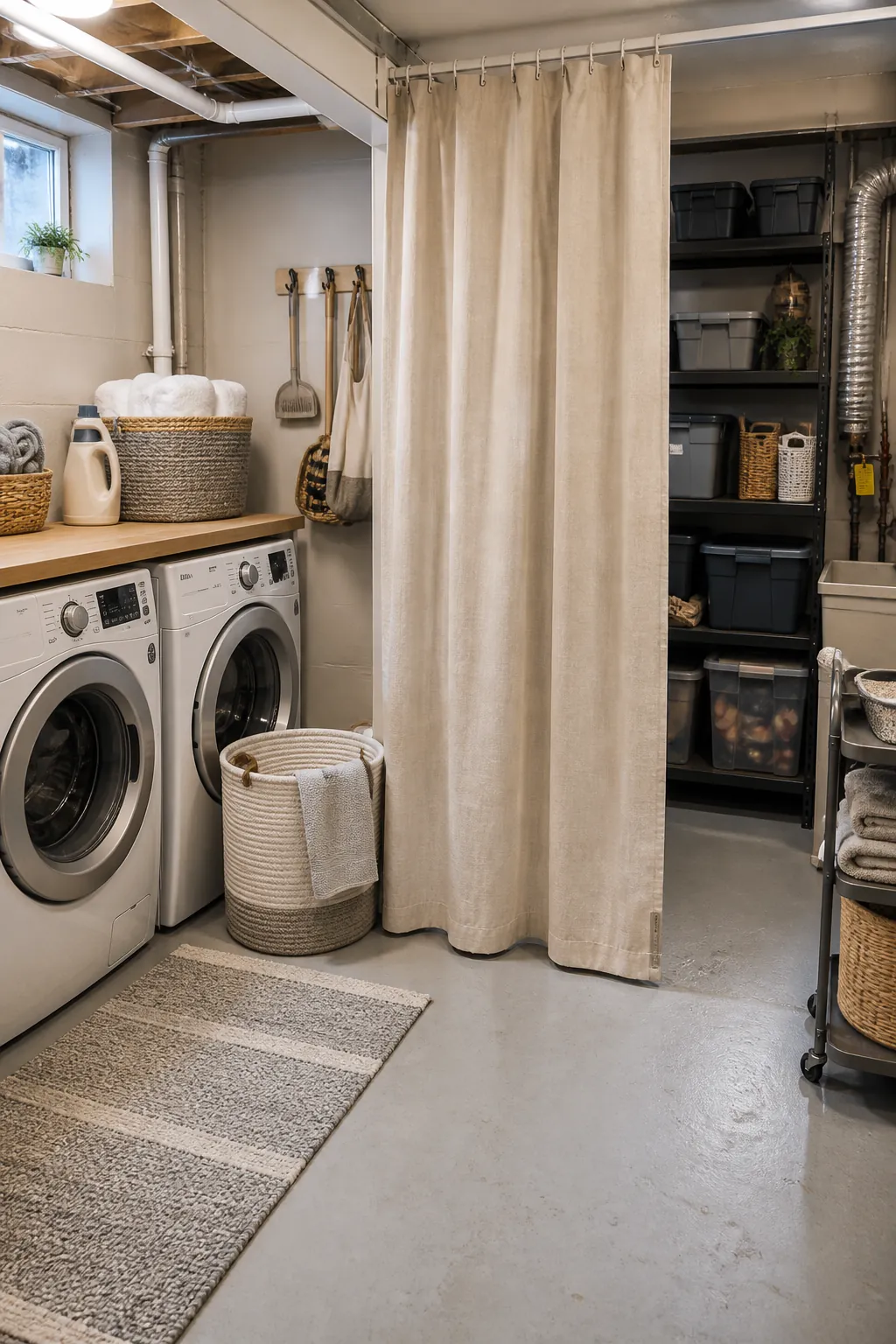
Many basement laundry rooms share space with seasonal bins, tools, pantry overflow, or a garage laundry area style storage wall. Instead of pretending it is not there, use a simple divider: a washable curtain, open slat screen, or tall shelving unit.
This keeps the laundry view calmer while preserving access. Choose fabric that can be washed, leave clearance around appliances, and avoid blocking vents or shutoffs. A divider should reduce visual noise, not create a maintenance problem.
Narrow Drying Rail and Supply Shelf
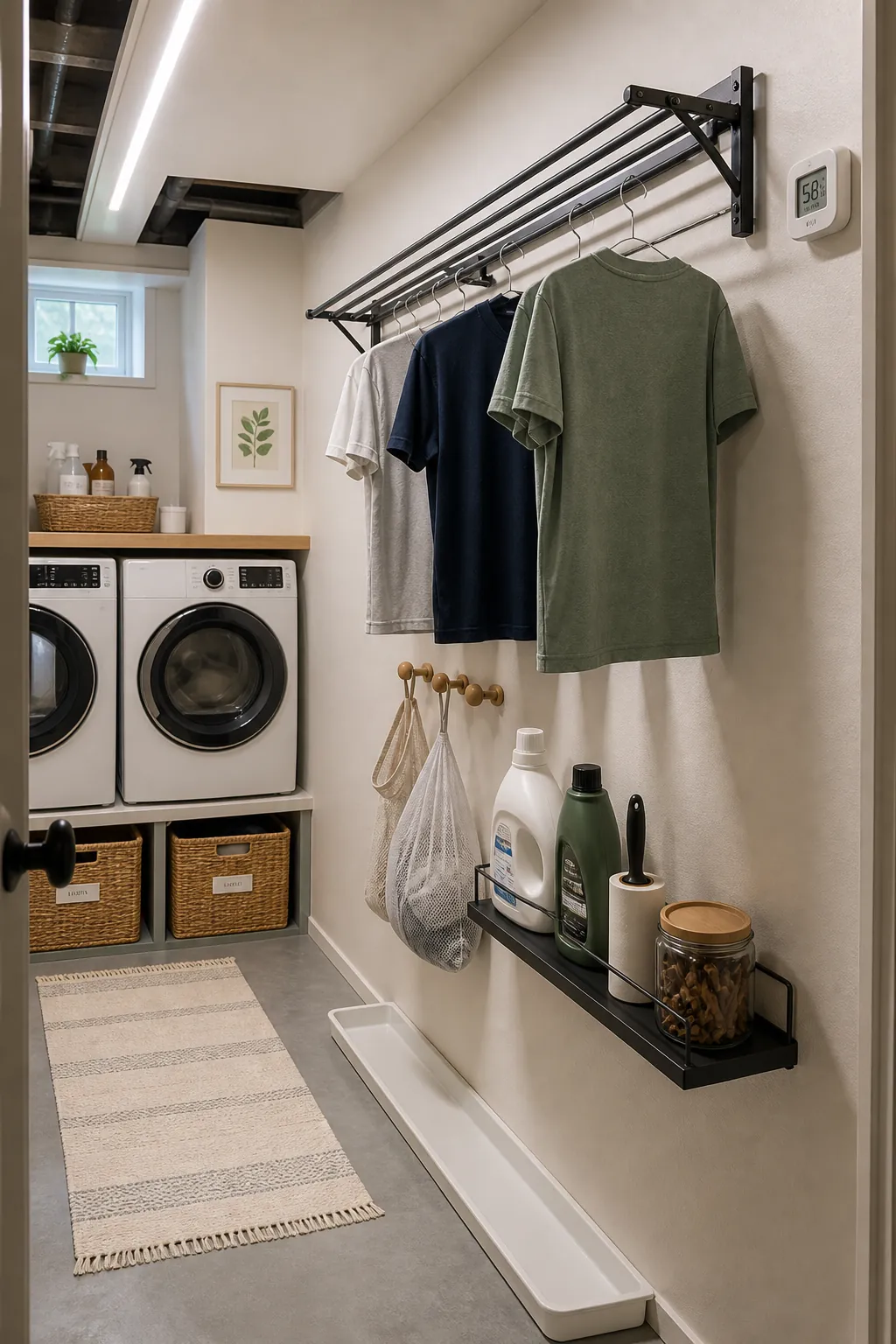
Small narrow laundry room ideas work best when the wall carries the extras. A slim drying rail, peg hooks, and one supply shelf can hold hang-dry clothes, lint rollers, mesh bags, and detergent without taking over the floor.
Mount the rail where wet clothes can drip into a tray or above a waterproof floor zone. Keep everyday supplies between shoulder and waist height. Tiny laundry room ideas fail when the most-used items are too high, too deep, or hidden behind bins.
Before spending on cabinets, make the basement laundry room easier to use for one week: add light, clear the floor, label the supplies, and set up a real folding surface. Those changes reveal what you truly need to build next.