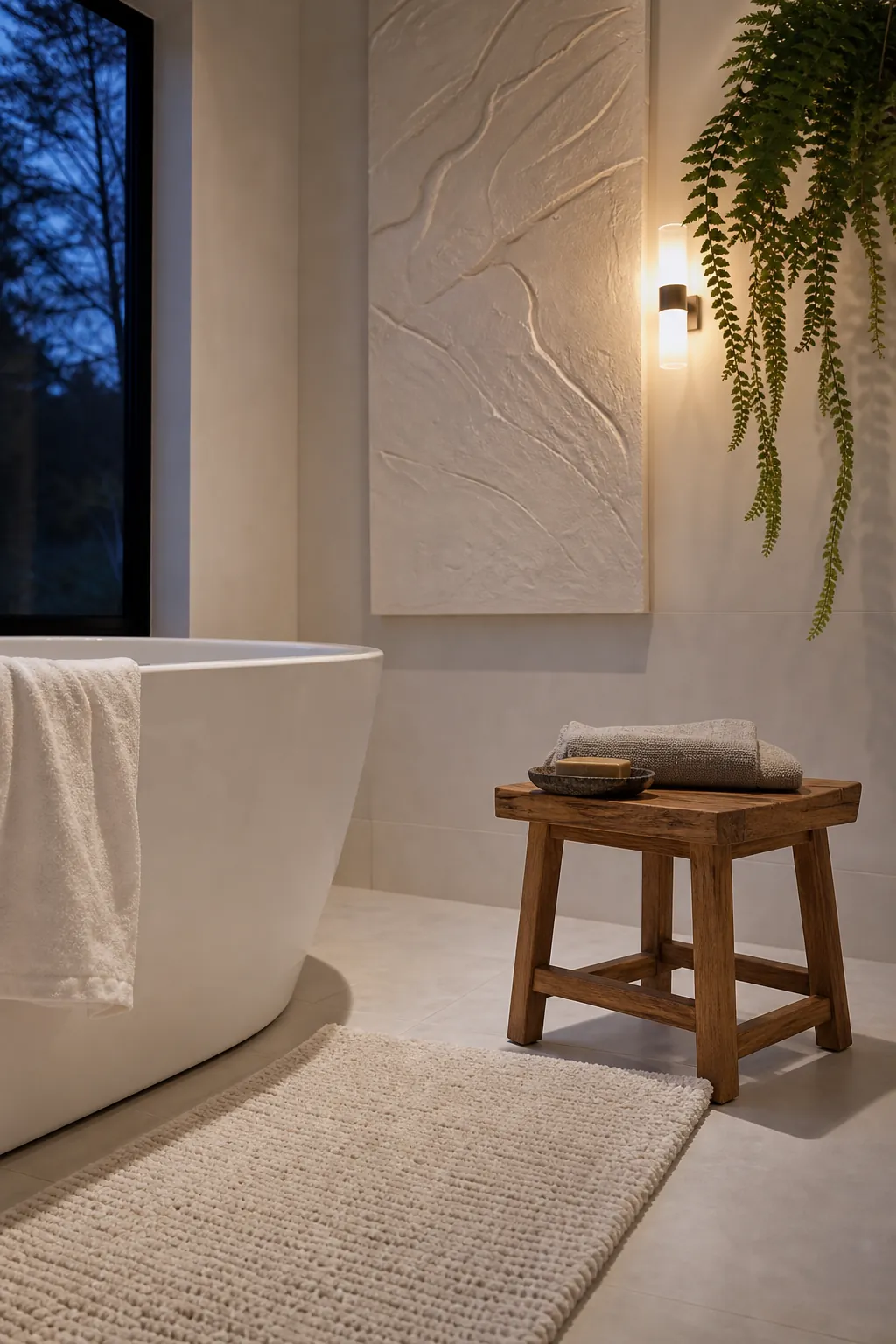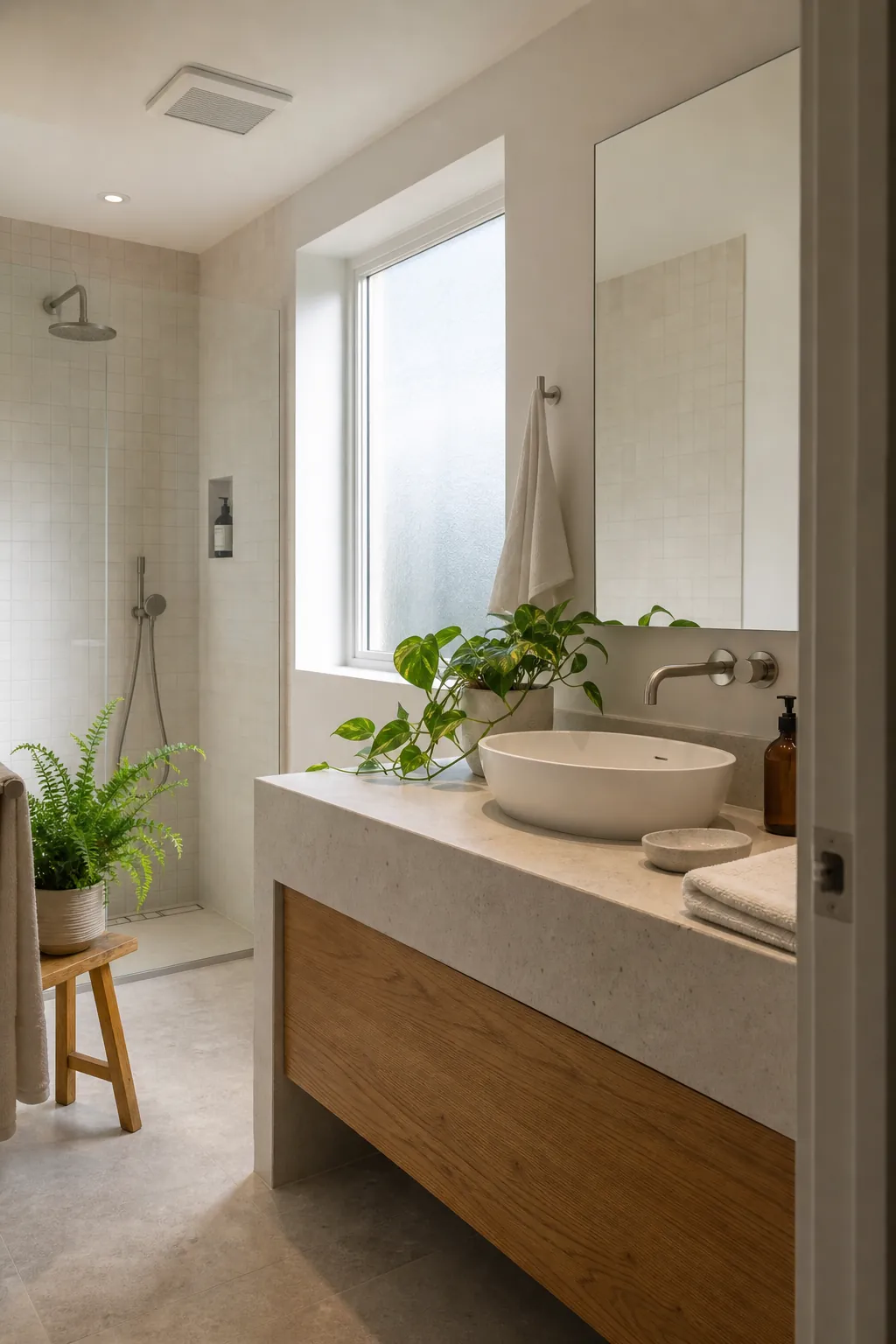
A natural bathroom should feel calm because it is easy to live with, not because it has been filled with objects labeled “spa.” The most convincing rooms use a short material story: stone for visual weight, sealed wood for warmth, and plants only where the light can actually support them. Get that order right and even a small, ordinary bathroom can feel grounded rather than themed.
Start With One Stone Surface, Not a Room Full of Stone
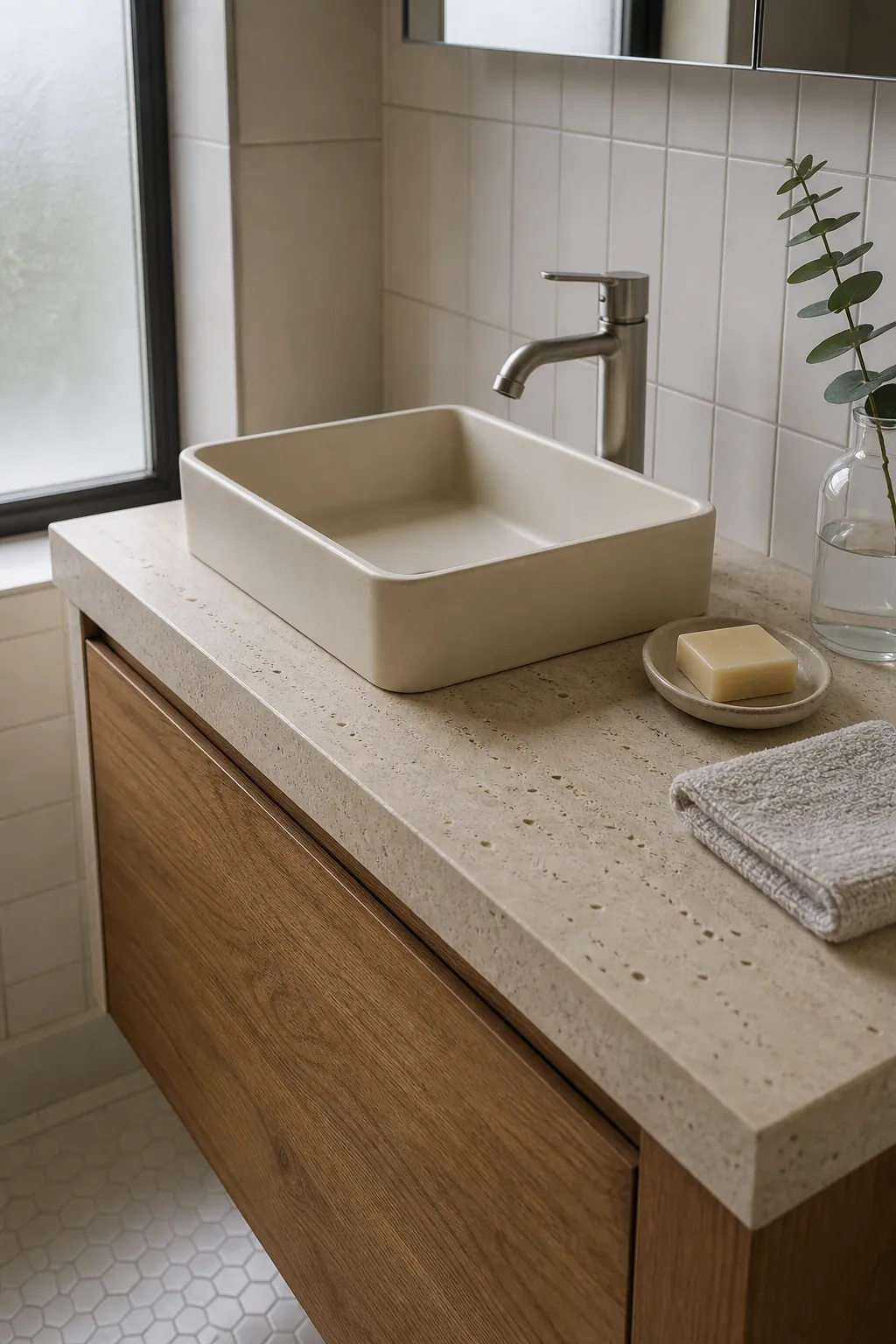
Stone works best when it gives the eye one steady place to land. In a compact bathroom, that might be a honed-stone vanity top, a shallow travertine tray, pebble-textured shower flooring, or a single ledge cut from limestone. Repeating stone on every wall can make a small room feel cold and expensive to maintain.
Choose the finish by daily use. Honed and textured surfaces generally disguise water spots better than high-gloss stone. Natural stone can be porous, so ask what sealer and cleaner the supplier recommends before buying. If maintenance is the priority, porcelain with a convincing stone texture offers the same quiet visual weight with less anxiety.
Use Wood Where Hands and Eyes Notice It
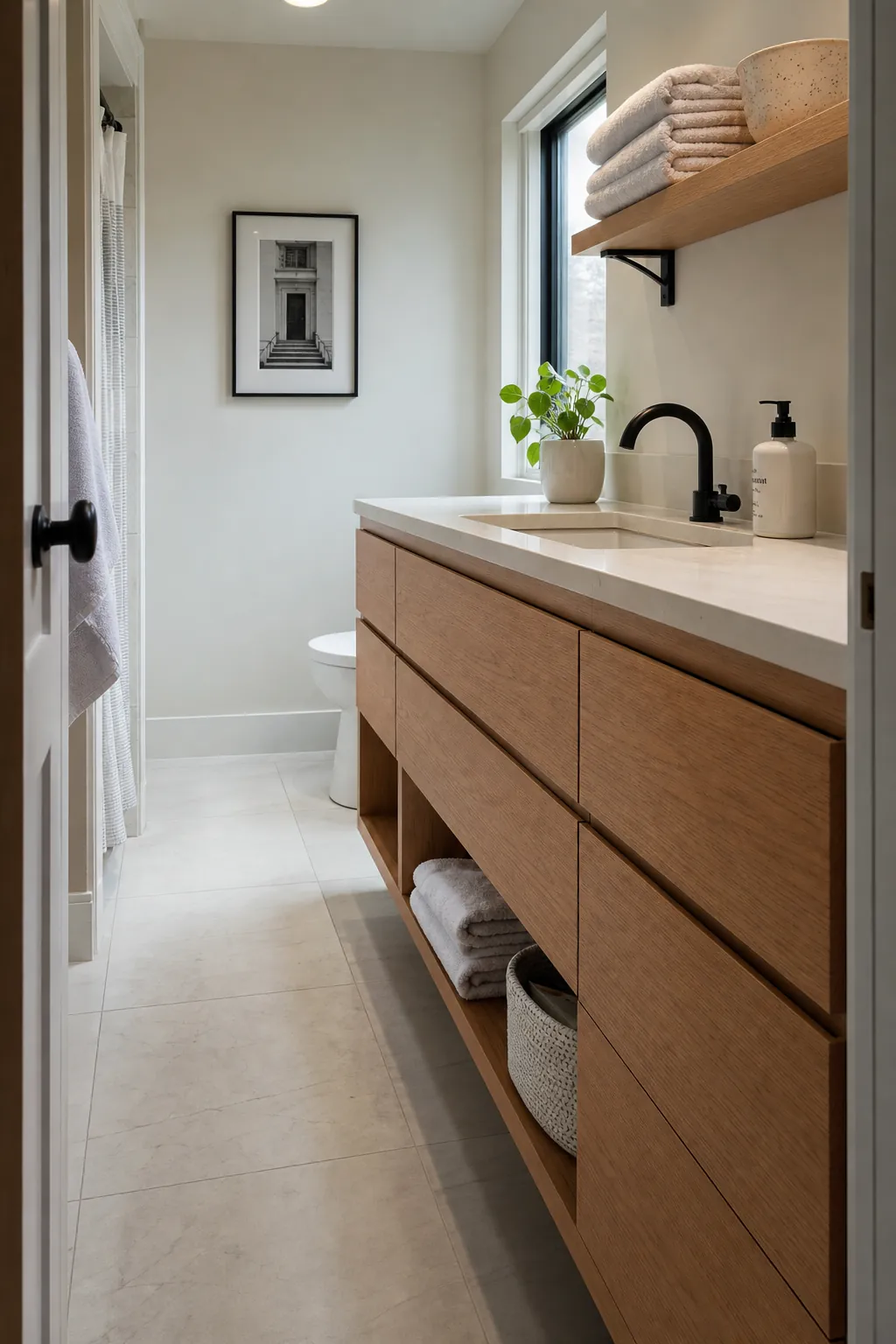
A wood bathroom does not need timber walls. A sealed oak vanity, teak stool, bamboo bath mat, or slim shelf can warm a room dominated by tile. These smaller applications also make it easier to wipe surfaces dry and renew a finish when needed.
Keep raw wood away from standing water and splash-heavy joints. Ventilation matters more than the species name on a product label. Use the exhaust fan during bathing and leave it running afterward; wipe puddles from wood instead of assuming a “water-resistant” finish makes them harmless. A little grain is inviting. Swollen edges and dark seams are not.
Match Bathroom Plants to Light Before Humidity
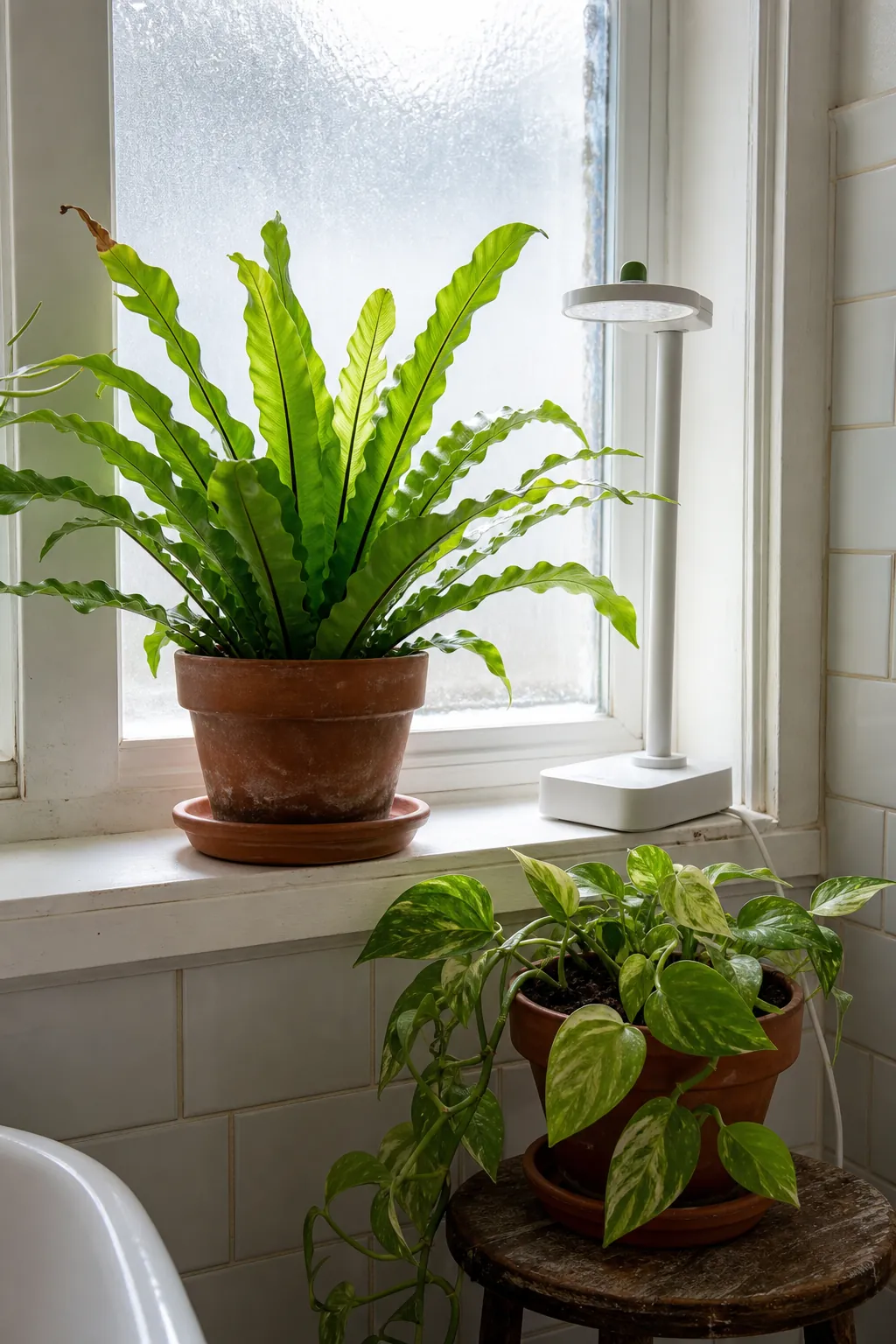
The phrase “bathroom plant” hides the real question: how much usable light reaches the leaves? Shower steam rises and falls; it does not compensate for darkness. A bright bathroom with filtered daylight can suit ferns, pothos, or a compact philodendron, while a dim room may need a proper grow light or a realistic faux stem.
Keep pots outside the direct shower spray, give every container drainage, and check the soil rather than watering on a calendar. Grouping two or three plants near the best window creates more impact than scattering struggling plants across dark corners. For homes with pets or children, confirm plant toxicity before choosing a species.
Build an Earthy Palette From Texture
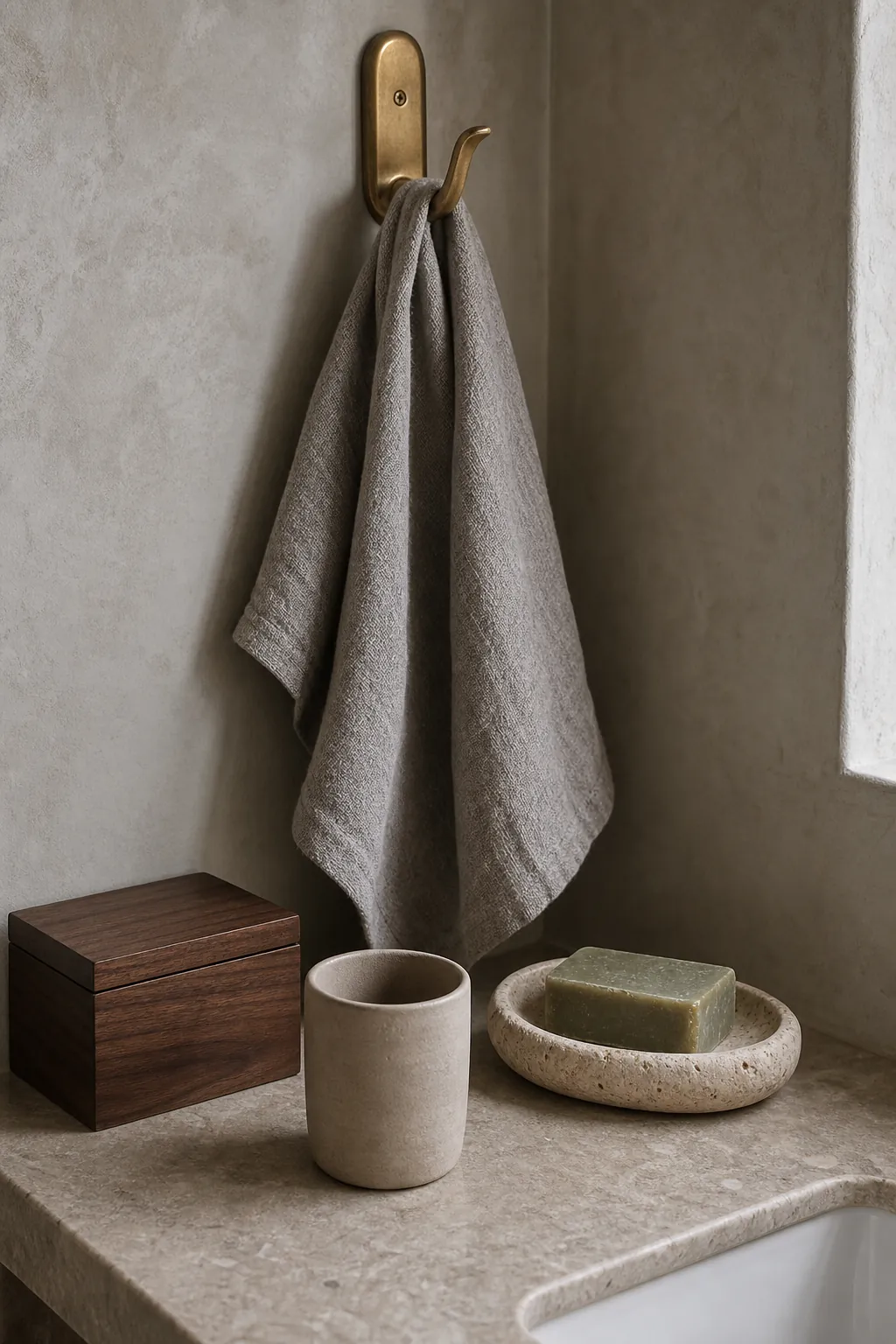
Earthy bathroom color does not have to mean beige on every surface. Start with mineral whites, mushroom gray, warm taupe, or muted clay, then let texture create the variation. A ribbed cotton towel, matte ceramic cup, woven basket, and wood grain will read as layered even when their colors are close.
Use green as a living accent rather than a paint formula. A plant, a moss-colored hand towel, or a small glazed vessel is enough. Black hardware can sharpen the room; aged brass makes it warmer. Pick one metal and repeat it so the natural materials remain the focus.
Make Storage Part of the Calm
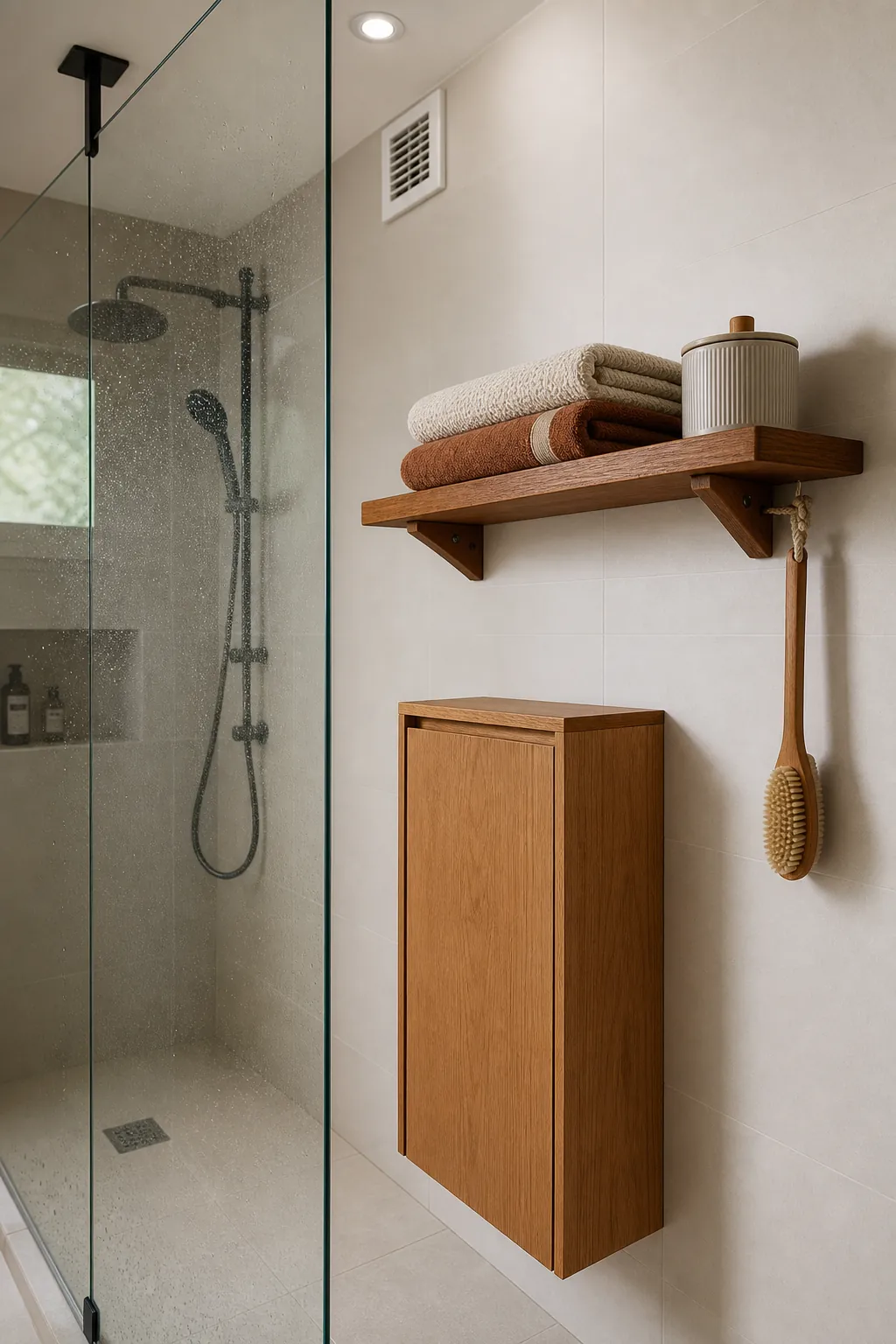
A fresh bathroom feels restful partly because its daily clutter has somewhere to go. Put backups, medicine, cleaning products, and brightly labeled bottles behind closed doors. Keep only the things used every day within reach: soap, a hand towel, perhaps one tray and one plant.
Open bathroom storage works when it is shallow and edited. Rolled towels can trap dampness if packed tightly, while deep woven baskets can hide leaks and dust. Choose washable bins inside cabinets and reserve natural-fiber baskets for dry items. The goal is not an empty room; it is a room that can be reset in two minutes.
Layer Spa Details Without Creating a Theme
The spa feeling comes from sequence: a dry place to step, a towel within easy reach, flattering light, and a clear counter. Add a teak stool only if it serves the shower or tub. Decant products only when you are willing to clean and refill the containers. Use candles away from towels and plants, or choose a warm, dimmable wall light instead.
Finish by removing one decorative object from each surface. Stone, wood, and leaves already provide pattern. When those materials have room around them, the bathroom feels intentional—and the calm survives the first busy morning.