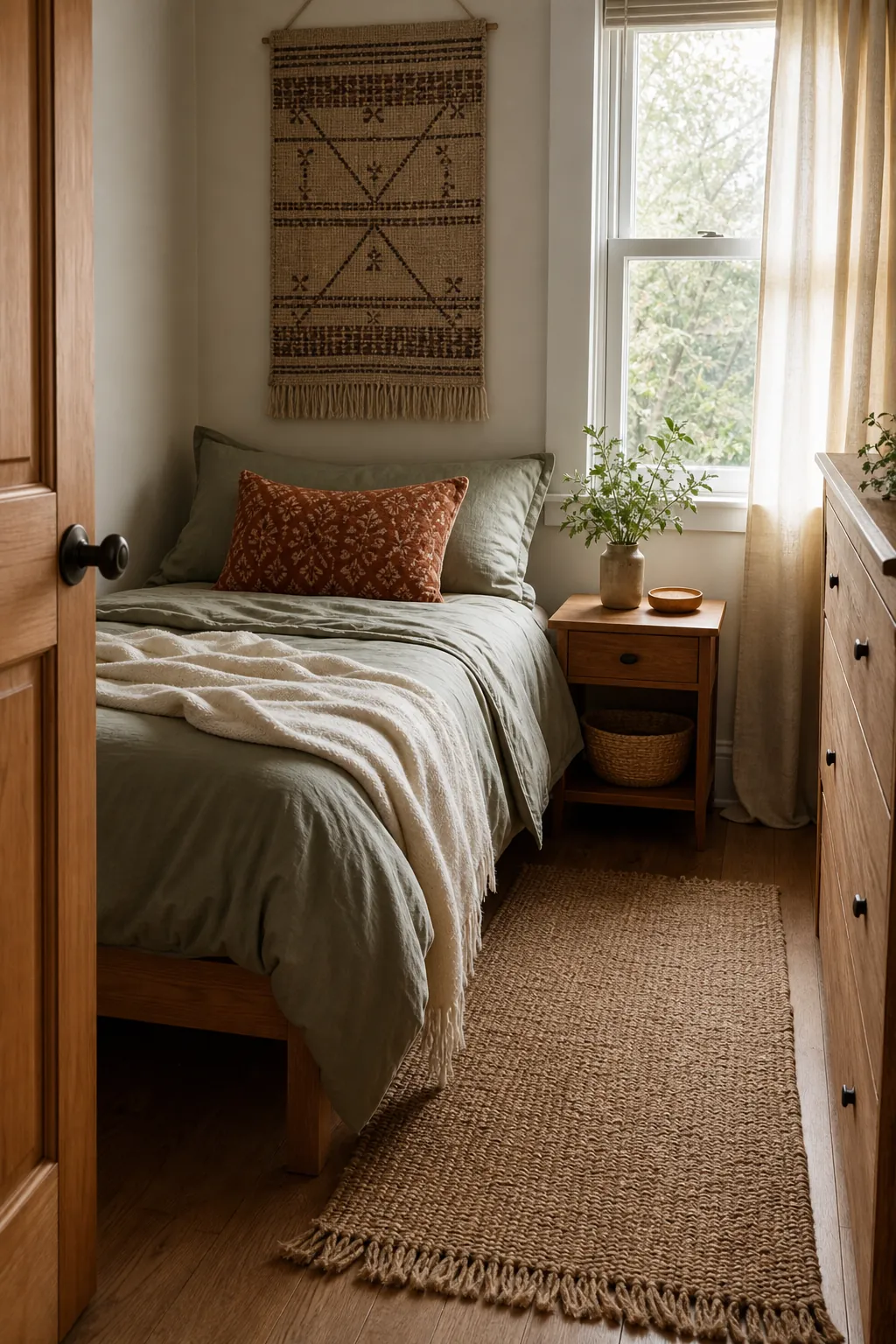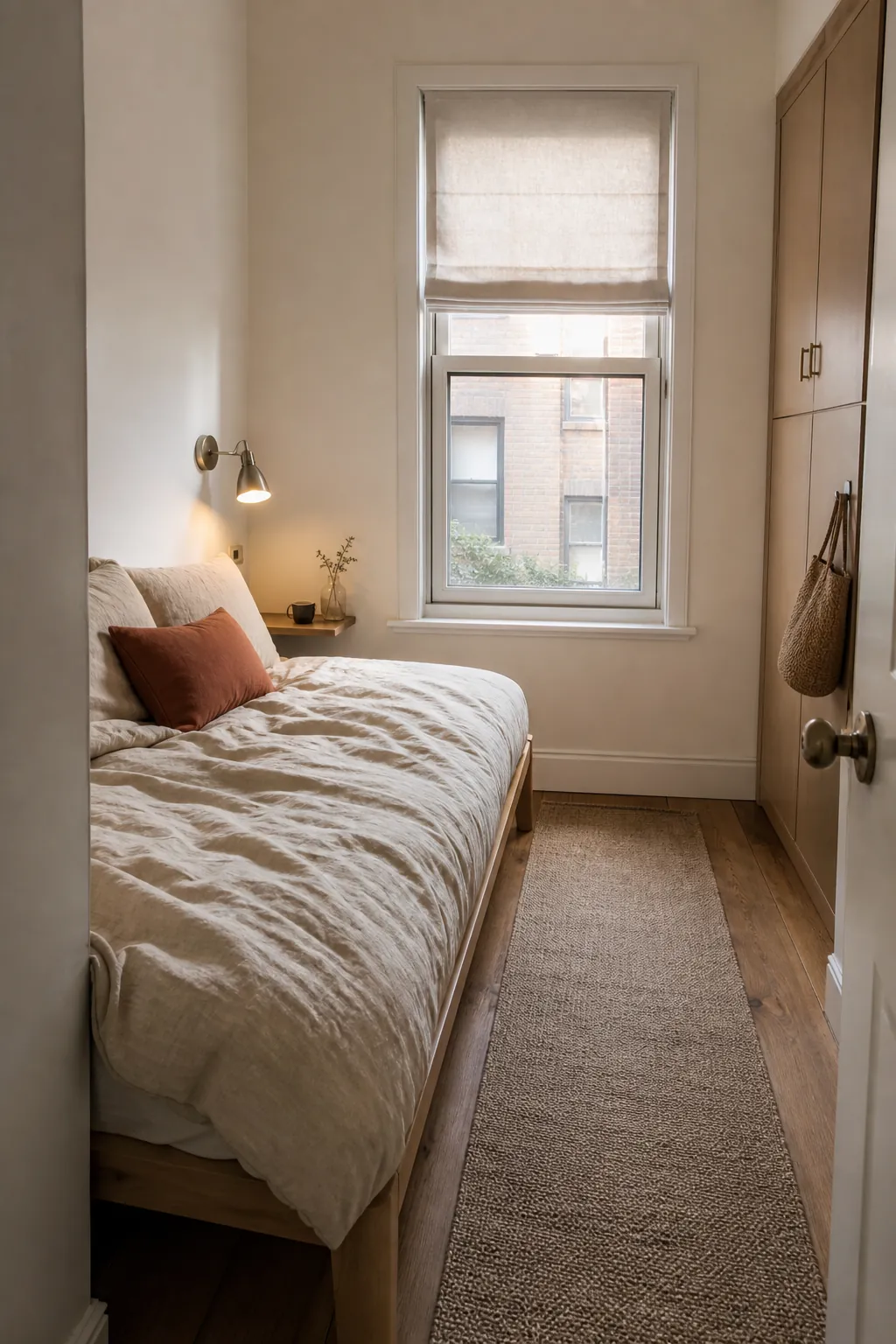
An extremely small bedroom becomes frustrating when every decision starts with decor. Start with movement instead. If you can open the door, reach the window, access your clothes, and get into bed without turning sideways, the room already feels calmer. The prettiest tiny bedroom ideas work because the layout is disciplined first and cozy second.
Measure the walkway before choosing the bed position
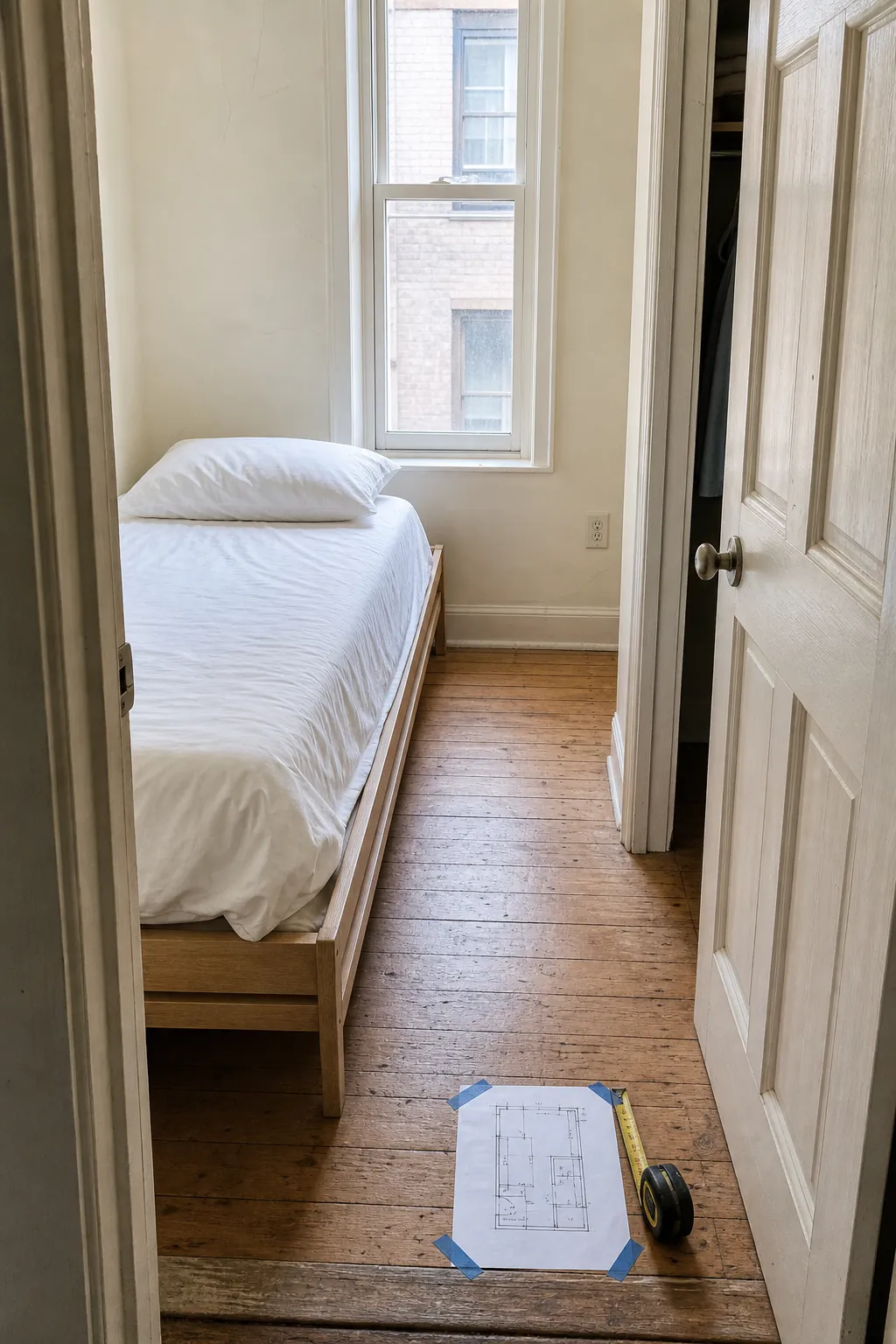
Draw the room to scale, including the door swing, closet opening, radiator, outlets, and the depth of any furniture. Then test the bed in each plausible position. Aim to preserve one clear route from the entrance to the window or closet. In a very tiny bedroom, access on both sides of the mattress is a luxury; pushing one long side against a wall can be the sensible trade when it creates a usable aisle.
Do not automatically keep a queen mattress because it is familiar. A full or narrow double can release enough width for a drawer to open or a compact desk chair to pull out. Mark furniture footprints with painter’s tape before buying. That ten-minute test reveals collisions that a mood board never will.
Replace bedside furniture with a landing strip
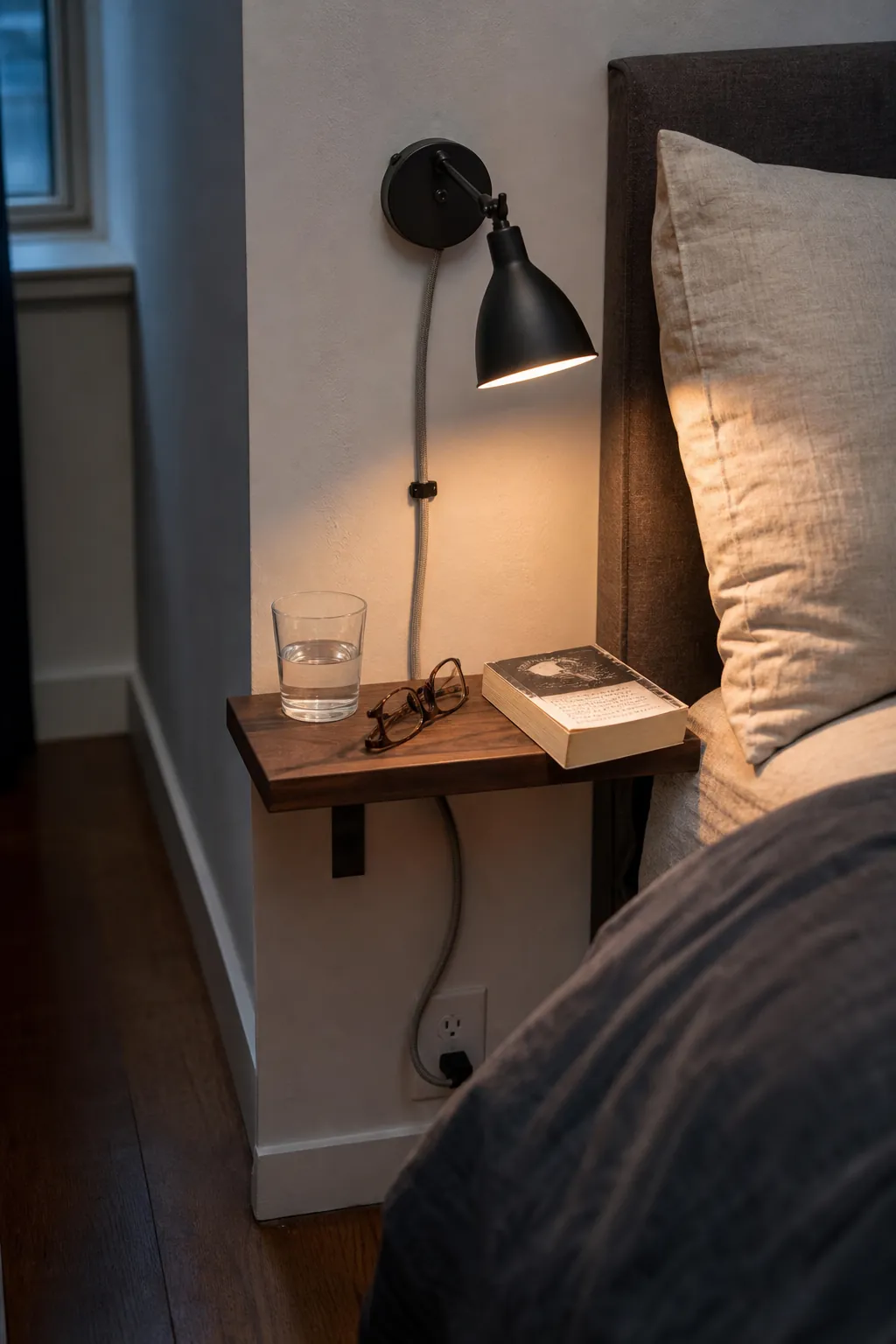
A conventional nightstand is often too deep for the smallest bedroom ideas. You still need somewhere for a phone, water, glasses, and a book, but that surface can be a shallow wall shelf, a slim ledge headboard, or a narrow stool. Mount a plug-in sconce above it so a lamp does not consume the entire top.
Keep the landing strip intentionally small. Its job is to support the bedtime routine, not become a second dresser. In a rental, a light shelf fixed into a stud or approved anchors is safer than an overloaded adhesive shelf; if drilling is prohibited, choose a stable C-table whose base slides beneath the bed.
Use the bed as the main storage zone
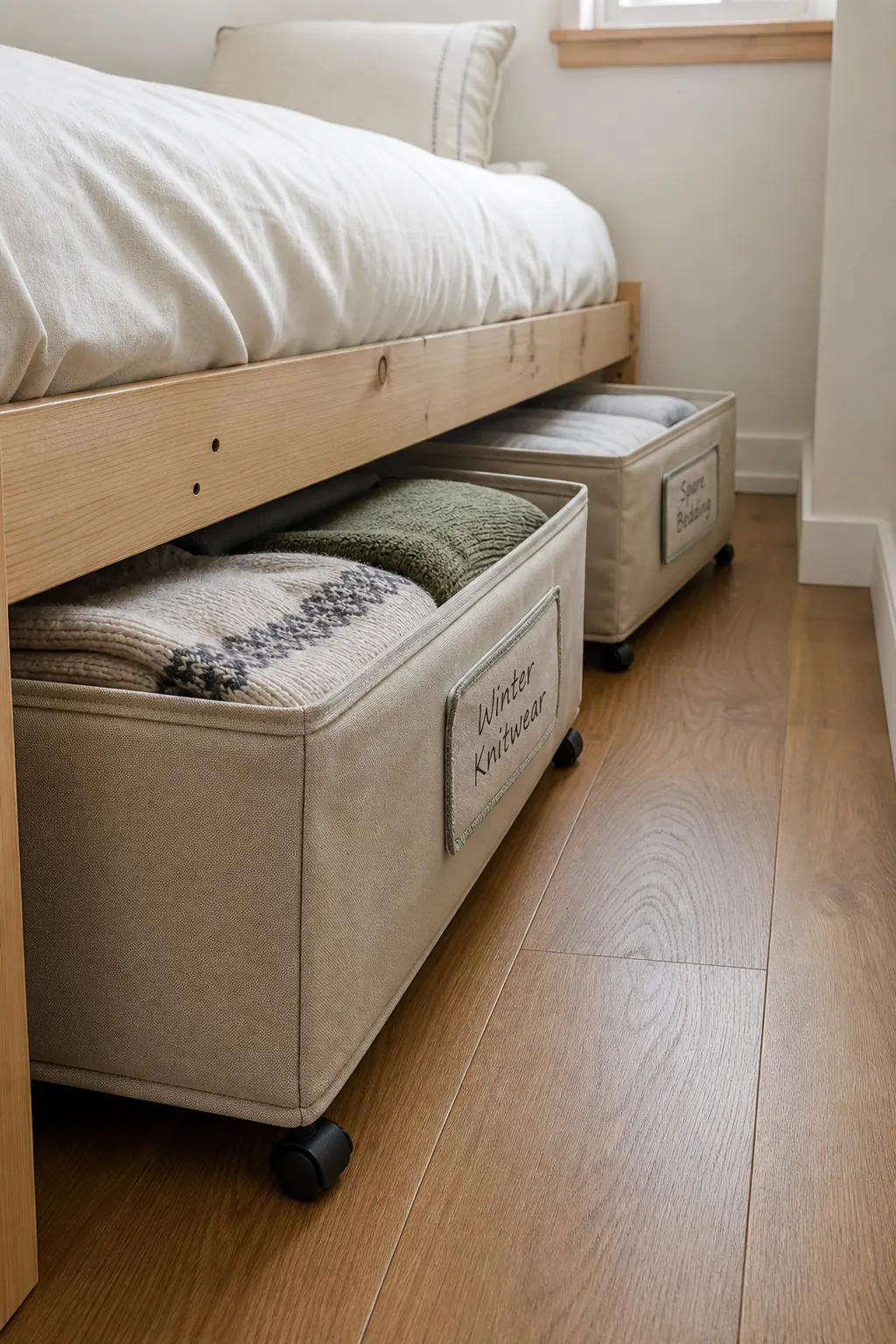
Under-bed space is the largest hidden volume in most really small bedroom ideas. Choose an ottoman-lift frame when side drawers would hit a wall, or use low rolling boxes when the aisle is wide enough to pull them out. Store off-season clothing, spare bedding, and rarely used bags here—not daily items that require constant lifting and rummaging.
Protect airflow around the mattress. Avoid placing a mattress directly on the floor, where condensation and mold can develop. Use a slatted base and leave a little breathing room around stored bins. Label containers on the visible end so the storage remains useful rather than becoming a sealed archive.
Claim vertical space without making the room top-heavy
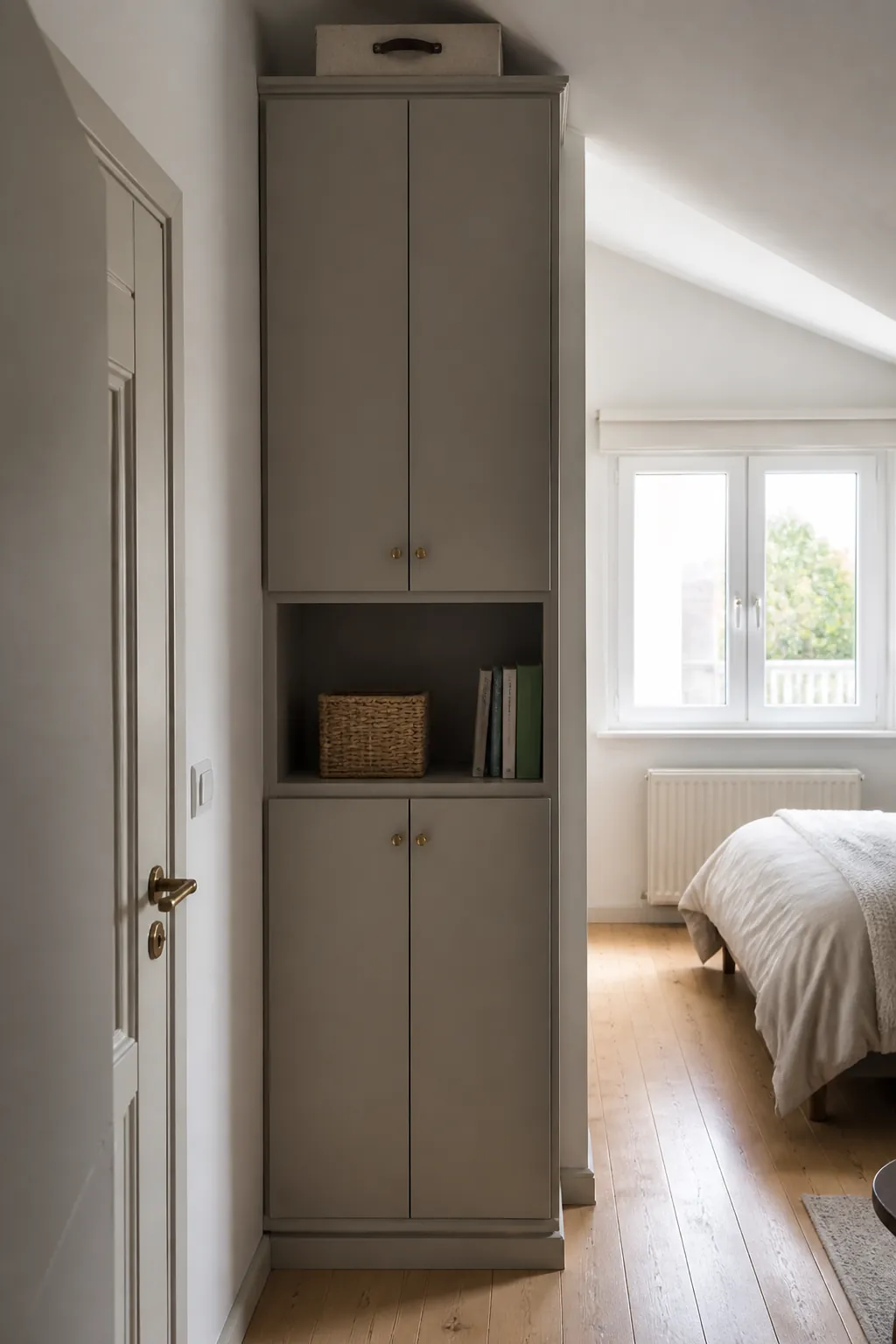
Very small room ideas for bedrooms often say “use the walls,” but filling every wall with shelves can feel oppressive. Concentrate tall storage on one wall, ideally near the door, and keep the window wall visually lighter. A narrow wardrobe that reaches toward the ceiling stores more than a low, wide dresser while consuming less floor width.
Reserve the highest shelf for light, infrequently used things. Daily clothes should stay between knee and shoulder height. Closed fronts reduce visual noise; one open shelf is enough for a few books or a basket. If a closet door blocks circulation, ask whether it can be removed and stored safely, then use a curtain only if it will not interfere with ventilation or tenancy rules.
Make the lighting layered, not brighter
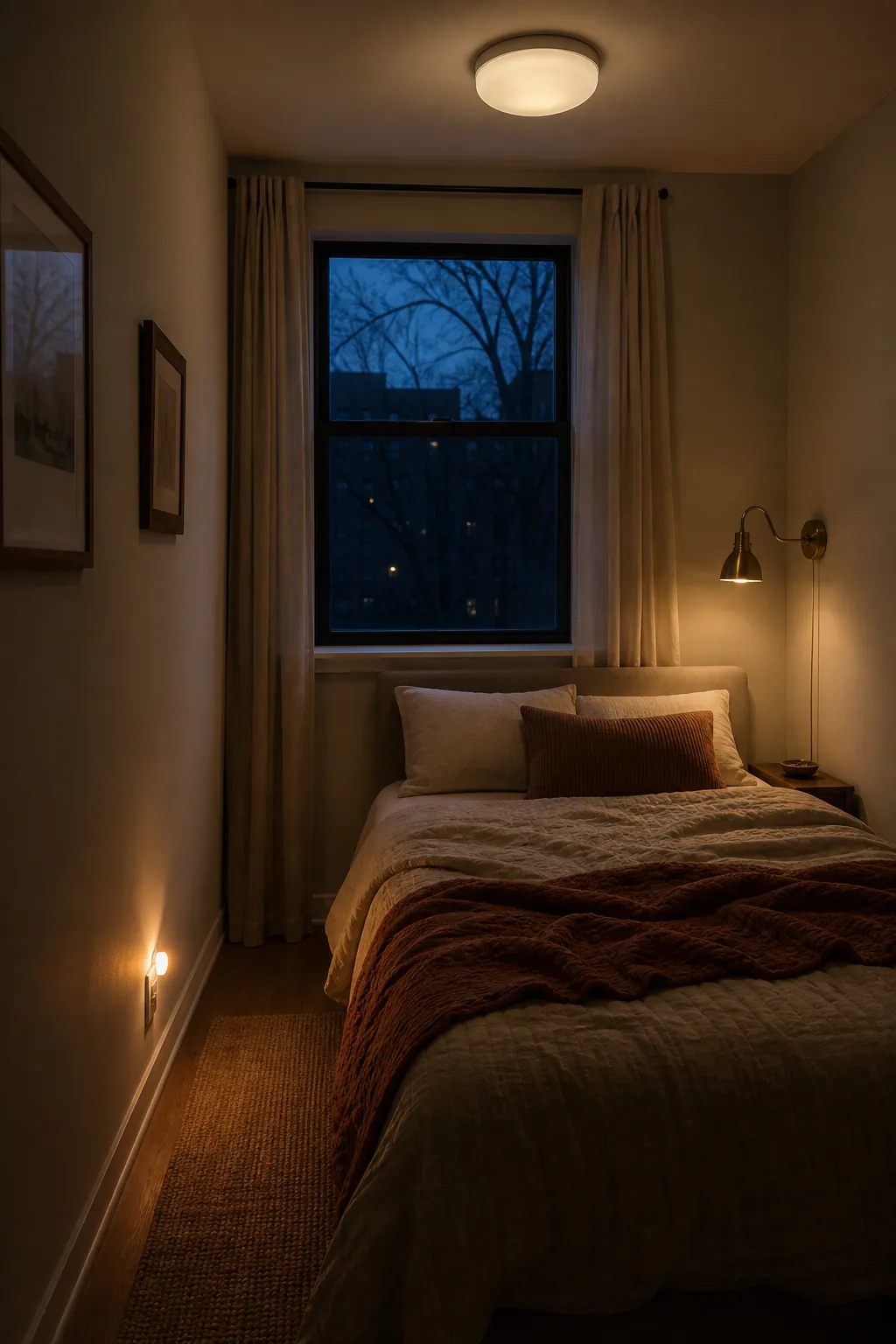
One harsh ceiling fixture exposes every corner but rarely makes a tiny bedroom cozy. Combine a warm overhead light with a focused reading sconce and a soft low-level glow. Keep bulbs in a consistent warm-neutral range so the surfaces do not turn muddy or orange. A dimmer gives the room a useful daytime setting and a quieter bedtime setting without adding another object.
Let daylight travel. Hang curtains close to the ceiling and wider than the window so the glass is fully exposed when they are open. A mirror can bounce light, but it is optional; place one only where it will not reflect the bed in a way you dislike. Clear sightlines and uncovered windows do more than a collection of reflective accessories.
Edit the room around one strong cozy idea
Small does not have to mean white, bare, or temporary. Choose one controlled mood: pale and airy, warm wood and linen, or a darker cocoon. Repeat two or three colors across bedding, curtains, and a small rug. Texture creates warmth with less visual chatter than many decorative objects: washed cotton, a woven throw, timber grain, and one patterned cushion can be enough.
Keep the floor mostly visible and make the bed the focal point. One meaningful print or a specific textile panel has more presence than a scattered gallery wall. The final test is practical: remove anything that catches clothing, blocks a door, or has no regular use. The room should feel like a deliberately compact retreat, not a full-size bedroom squeezed into the wrong footprint.