
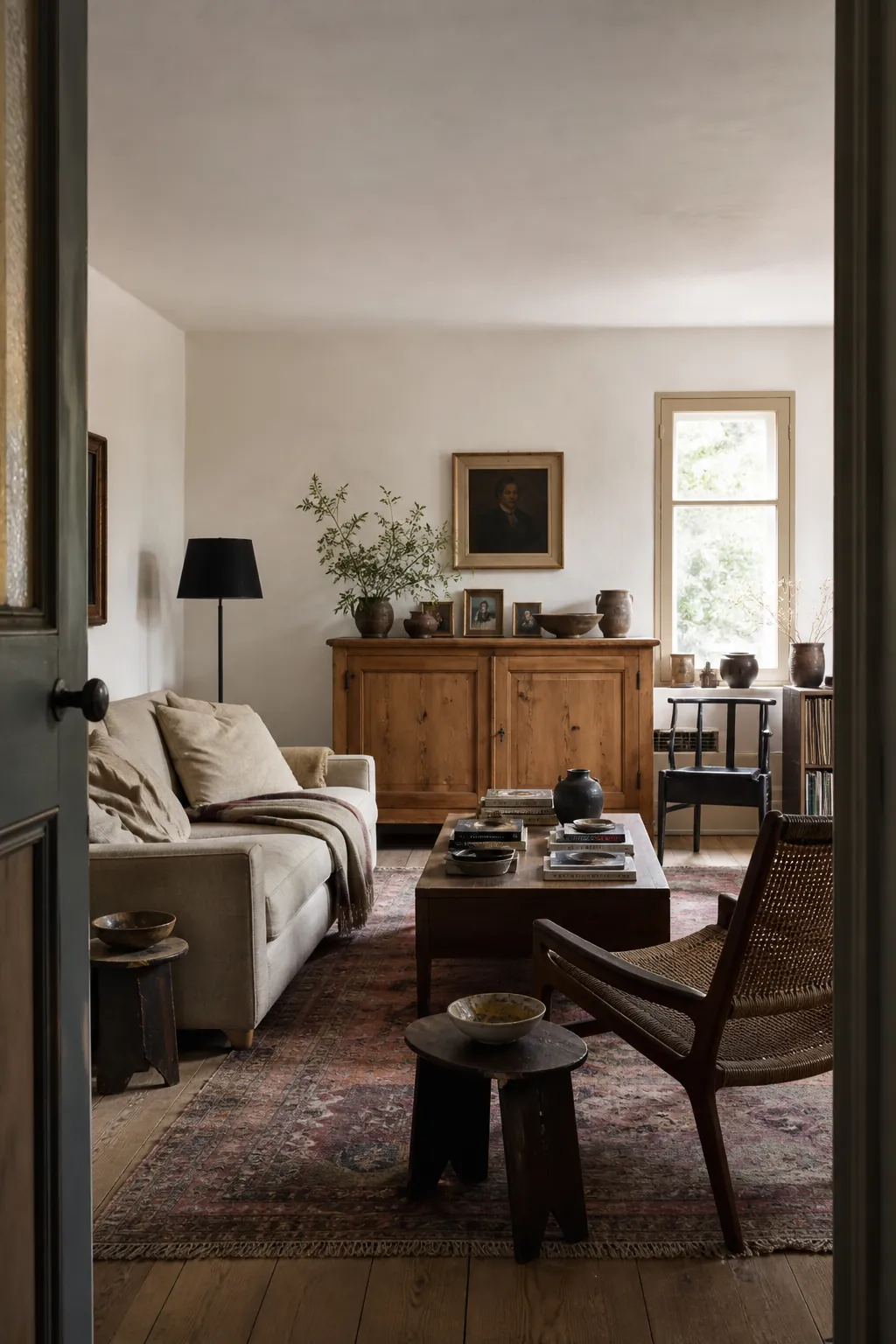
A room does not feel collected because every object is old. It feels collected because the objects have different histories but clear reasons for being together. That distinction matters. Buying a cartful of vintage-looking accessories in one afternoon can produce the same stiffness as a matching furniture set; living with a room, noticing what it needs, and adding selectively creates the depth people are actually trying to achieve.
The goal is not to make your home prove that you have good taste. It is to let the room reveal how you read, eat, travel, make things, host friends, and rest. Use the ideas below as a slow process rather than a shopping checklist.
Start With the Life Already Happening in the Room
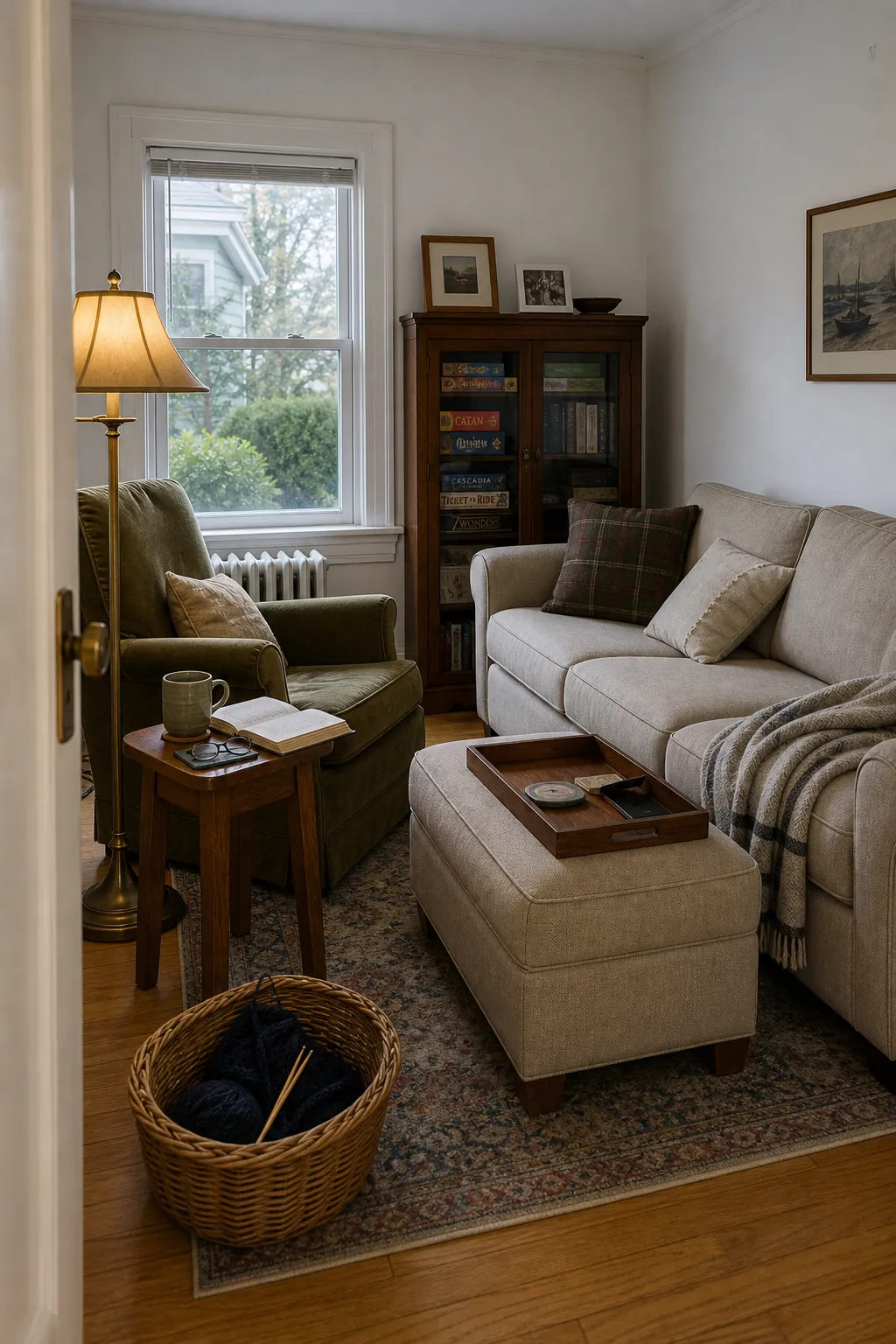
Before shopping, list what the room actually supports. A living room may need conversation, television, children’s play, knitting, and a place to set tea. Give those activities visible, attractive support: a reading lamp, a sturdy tray, a basket for works in progress, or a low shelf for games. Useful objects create more personality than objects purchased only to fill a gap.
Then notice what already carries a story—a family photograph, a gifted bowl, books with worn spines, a chair repaired instead of discarded. These pieces are your anchors. They do not need to match; they need enough space to be noticed.
Build Around One Object With Real Meaning
Choose one item that is personal rather than merely stylish. It might be a textile made by a relative, a landscape sketch from a trip, a stack of cookbooks you use, or a hand-me-down table. Let it guide a few decisions without forcing a theme. Pull one muted color from it, echo one material elsewhere, or place it near an activity it relates to.
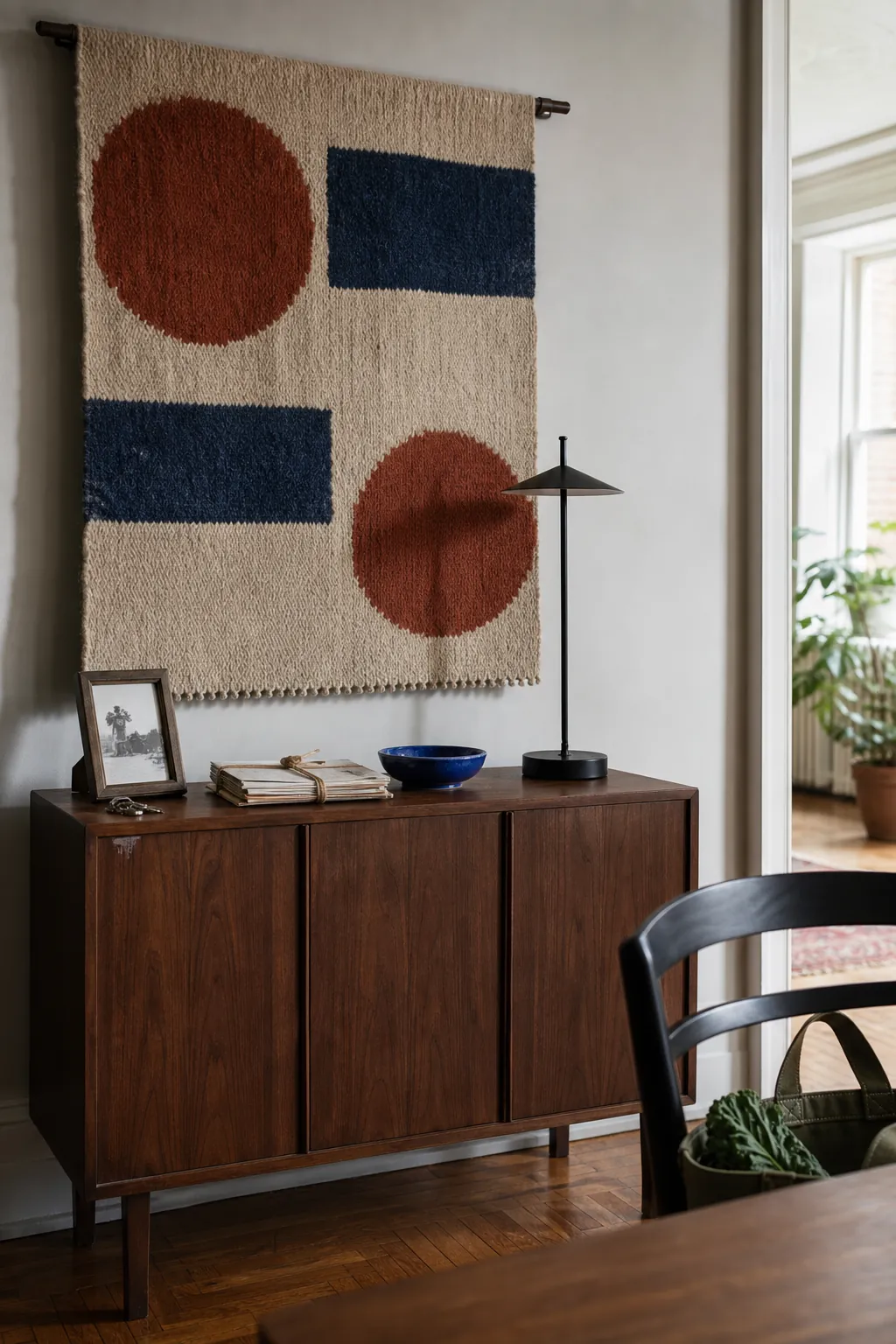
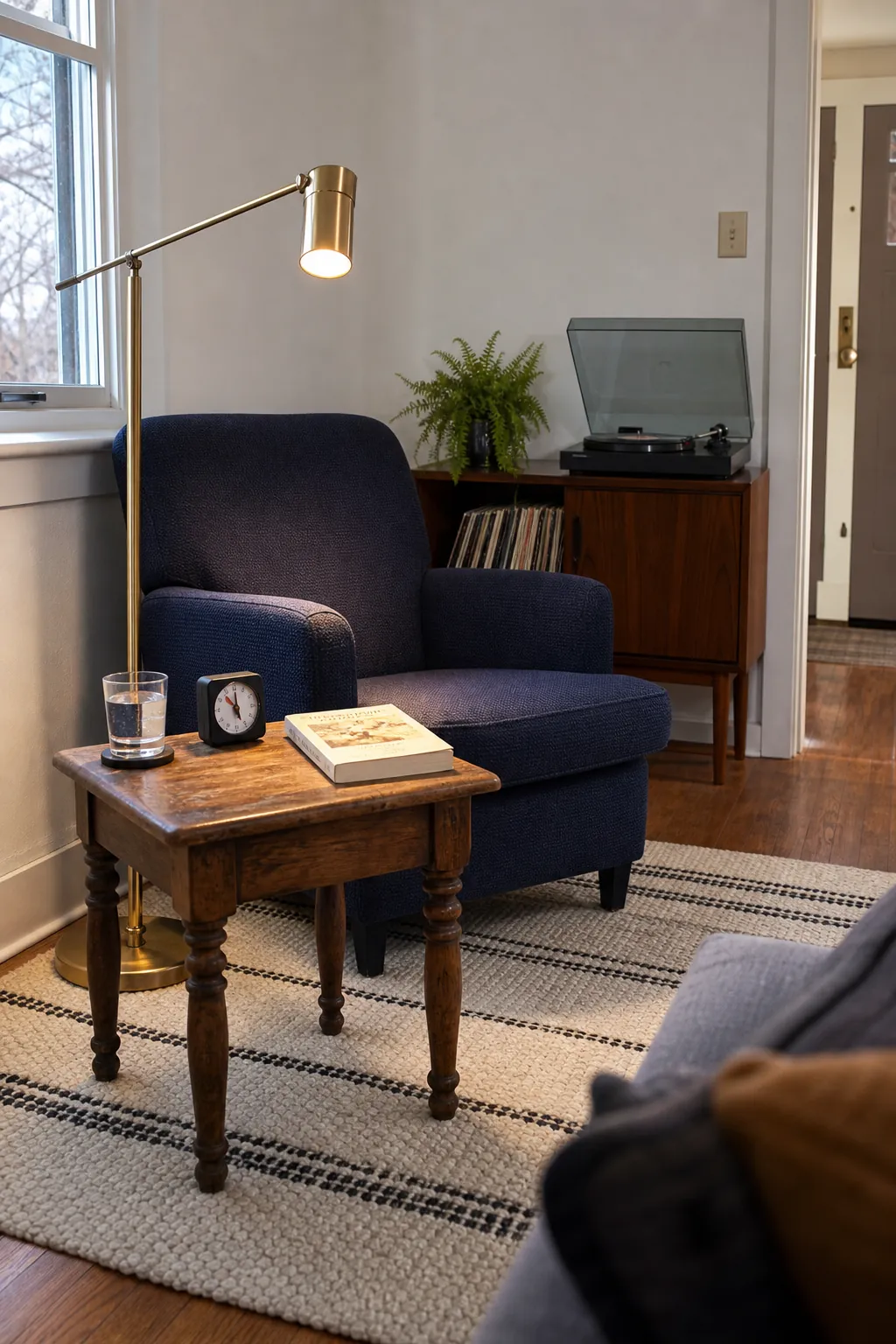
A meaningful object becomes less convincing when surrounded by imitation history. Pair an old photograph with a clean modern lamp, or an inherited cabinet with a contemporary ceramic piece. The contrast tells the truth: your home exists now, even when it holds the past.
Repeat a Few Quiet Threads
Eclectic decor still needs rhythm. Pick two or three elements that can recur without becoming a matching set: warm wood, black metal, deep green, hand-thrown pottery, or striped fabric. Repeat each in three separated places. The eye then understands that the differences are intentional.
Repetition can be loose. Walnut, pine, and oak can share a room if their undertones are related and one finish does not dominate. Frames can mix when black appears in a lamp and table leg. A green book spine can answer a cushion across the room. Cohesion comes from echoes, not exact matches.
Mix Eras Instead of Recreating One
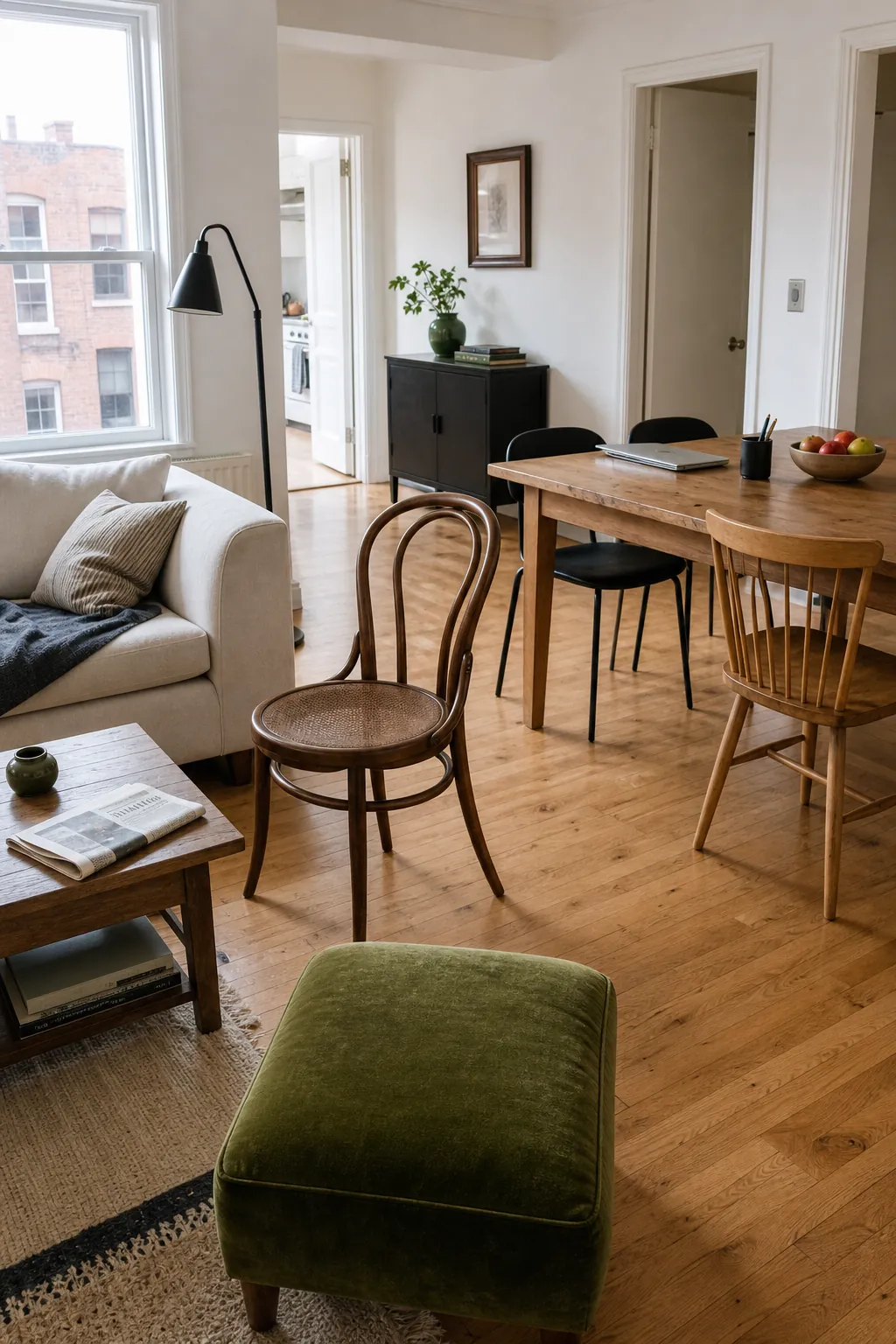
A room filled exclusively with objects from one historical period can feel like a museum—or a film set. Mix at least two time signatures. A Victorian turned-leg table can sit beside a plain 1990s sofa. A mid-century chair can work under a traditional shaded lamp. A new rug can support an old chest if the textures and proportions agree.
Keep the biggest expensive pieces relatively calm, then let smaller furnishings carry stronger age or character. This protects the room from becoming a costume and makes future changes easier.
Leave Space for the Next Chapter
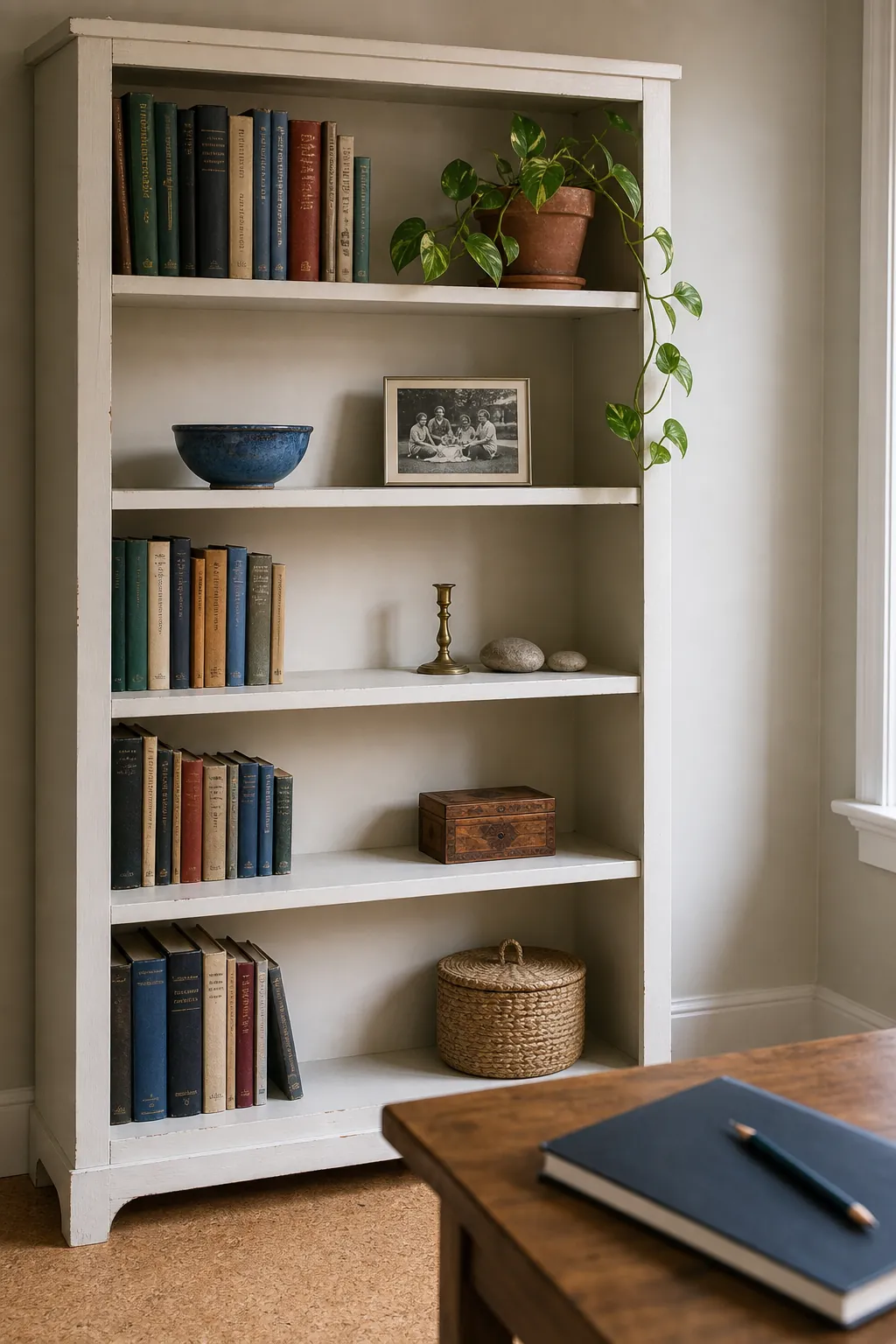
Collected does not mean covered. On a shelf, leave roughly a quarter to a third of the surface open. On a wall, let the outline of a gallery arrangement breathe. Empty space gives individual pieces weight and keeps dusting, opening drawers, and setting down a cup easy.
When a display feels busy, remove the three least meaningful items for a week. If you do not miss them, store, donate, or relocate them. Editing is not a betrayal of collecting; it is how a collection becomes visible.
Shop With a Waiting List, Not a Wish List
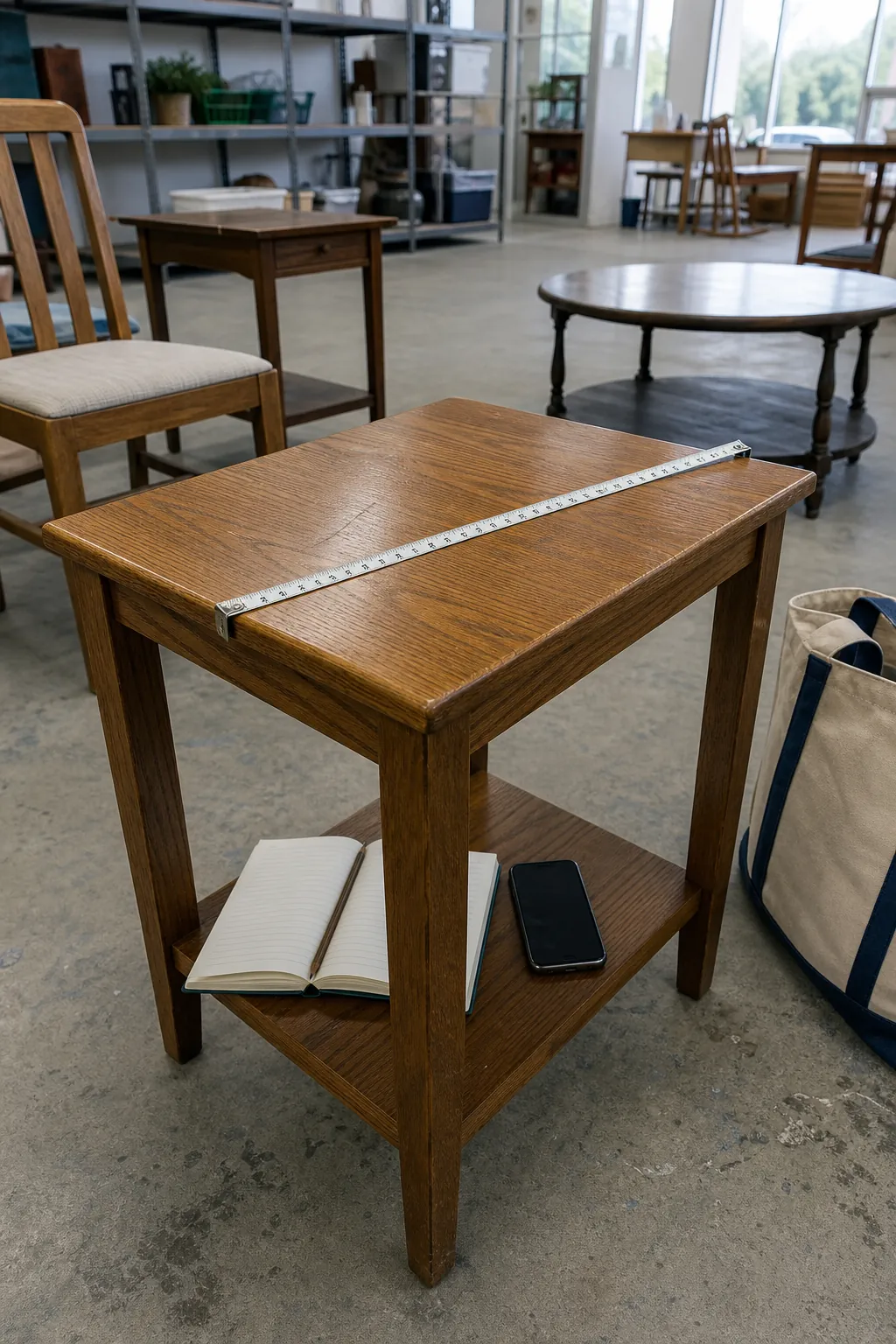
Write down the exact functional gap: “a side table no wider than 18 inches,” not “more vintage decor.” Add preferred materials, dimensions, and a budget. Then wait. Searching estate sales, local listings, and thrift shops over several weeks makes it easier to recognize the right piece and harder to buy a near-miss because it is cheap.
Use a 48-hour pause for nonessential objects. Photograph the item, go home, and picture where it will live. If you cannot name the surface, purpose, or object it replaces, leave it behind. Scarcity can create urgency, but the empty space in your home is also valuable.
Let the Room Stay Unfinished
A personal home is always in motion. Books arrive, hobbies change, photographs gain meaning, and furniture moves between rooms. Resist completing every wall and corner at once. Keep one surface deliberately sparse and one need unresolved until the right answer appears.
Photograph the room every few months from the same doorway. You will see imbalance more clearly, but you will also see growth that daily familiarity hides. A collected home is not a final look. It is a record of decisions worth keeping—with enough room left for the person you are becoming.