
A tiny home kitchen designed for occasional toast can look charming and still fail the moment you chop vegetables, simmer a sauce, and wash a pan at the same time. People who cook often need more than clever storage. They need a kitchen where hot cookware has a safe landing place, the knife and board are always reachable, dirty dishes do not consume the prep area, and ingredients move through the room in a sensible order.
The best compact kitchen is not the one that stores the most. It is the one that reduces the number of moves required to prepare, cook, serve, and reset a meal. These ideas focus on daily cooking function, not a staged tiny house kitchen reveal.
Protect the Counter Between Water and Heat
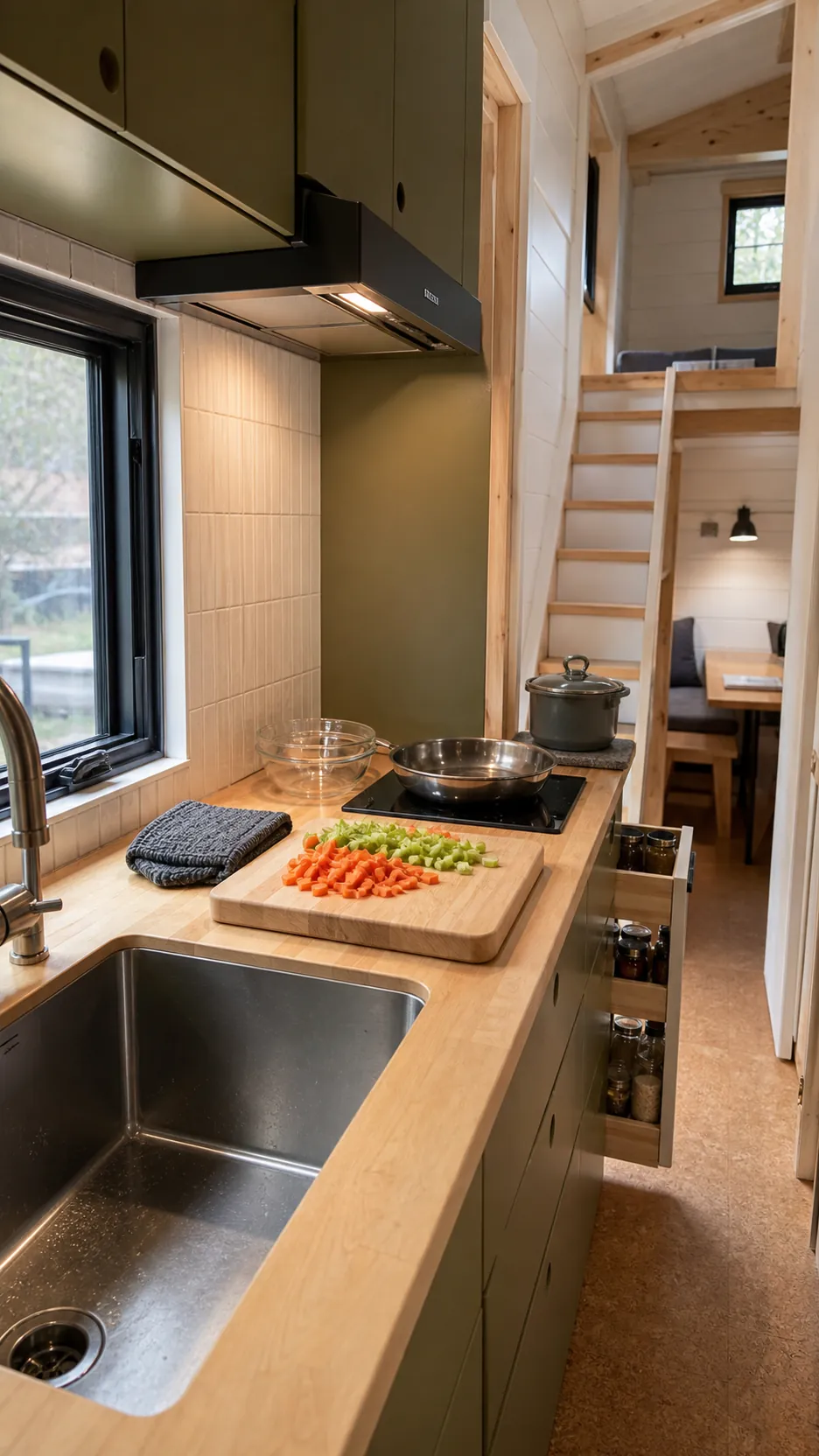
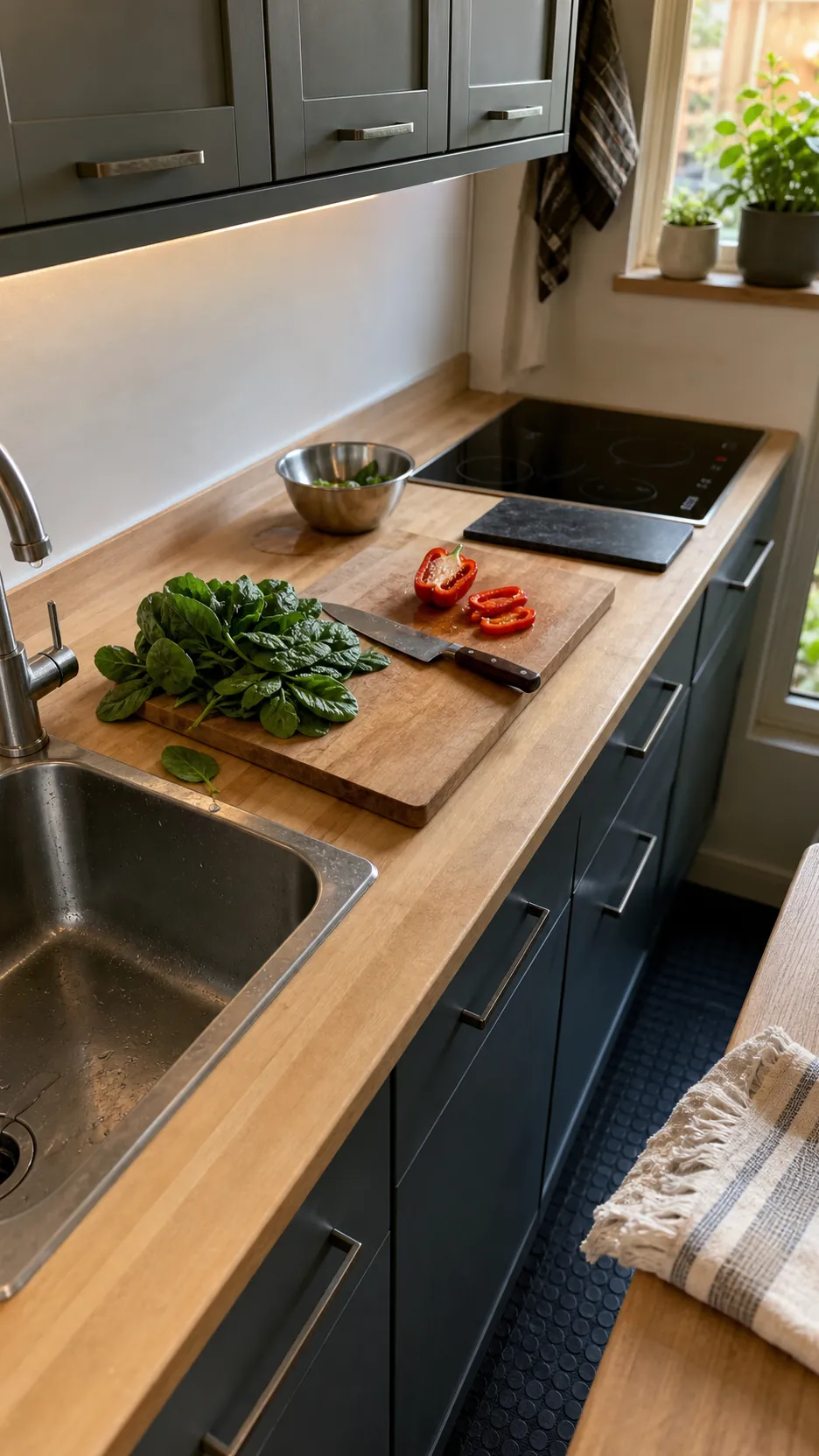
If you can influence the layout, place the main meal prep space between the sink and cooktop. That short route lets you rinse produce, move it to the board, and transfer it to the pan without crossing the aisle. Even 24 to 36 inches of uninterrupted counter can handle most daily cooking when nothing permanent occupies it.
Do not spend this high-value zone on a coffee maker, dish rack, fruit bowl, or decorative tray. Give those items another home. Keep one heat-safe landing area beside the cooktop as well, even if it is only the width of a trivet. A frequent cook needs both a cutting zone and a safe place to set down a hot pan.
Add Temporary Surface, Not Permanent Bulk
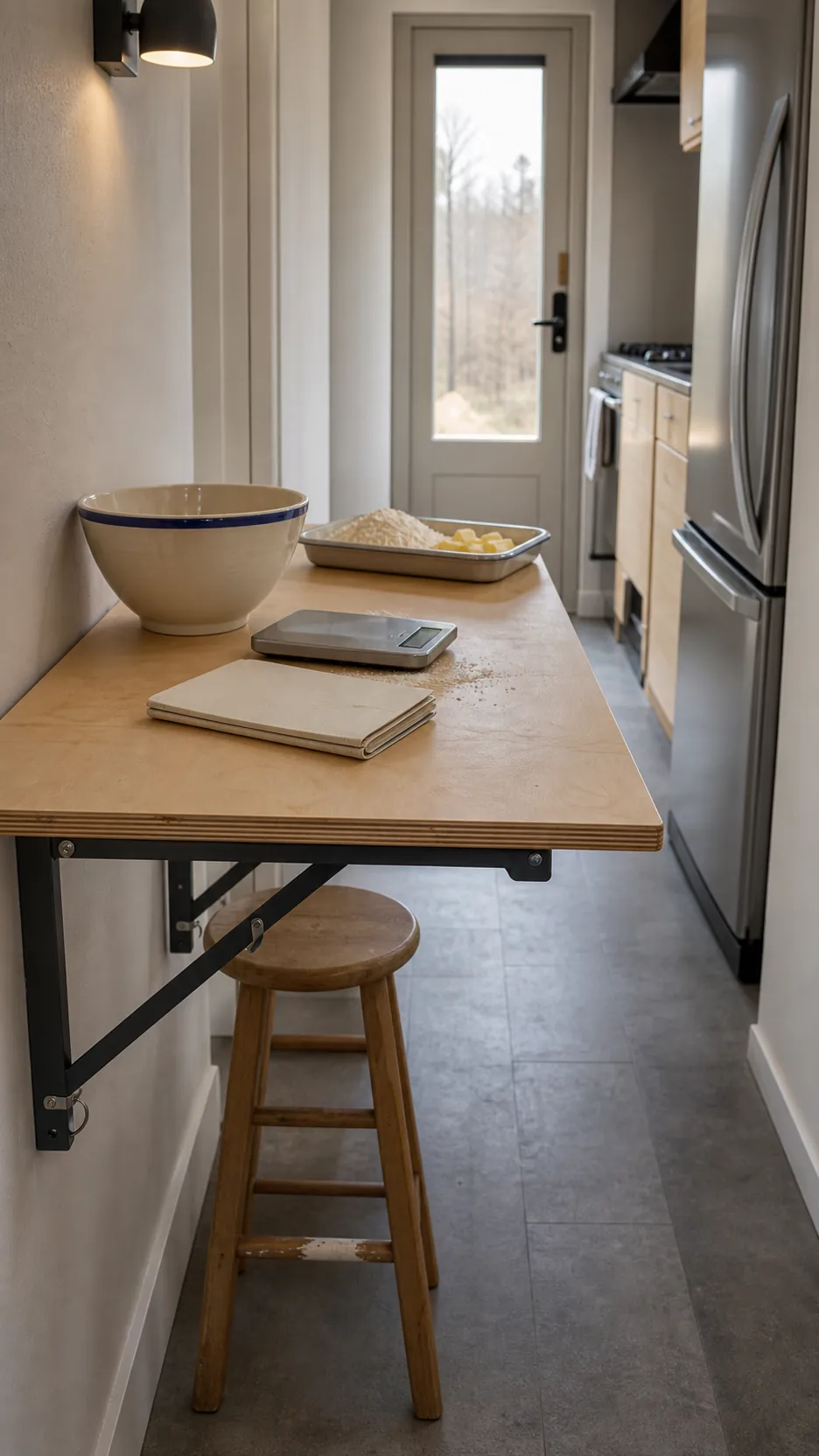
When the built-in counter is truly too small, add surface area that disappears after the task. A fitted sink cover can hold washed produce before cooking, a pull-out board can support light prep, and a sturdy wall-mounted drop leaf can become a baking or plating station.
Match the solution to the work. A sink cover should sit firmly on a ledge and never be used while water is needed. A pull-out board needs enough support to resist tipping. A folding table must not block the exit, refrigerator, oven door, or the cook’s ability to step back from a hot pan.
A rolling cart can work in a wider tiny home, but measure the circulation path with cabinet and appliance doors open. If the cart must be moved three times to make dinner, it is not extra workspace; it is another obstacle.
Store Cookware by Rotation, Not by Category
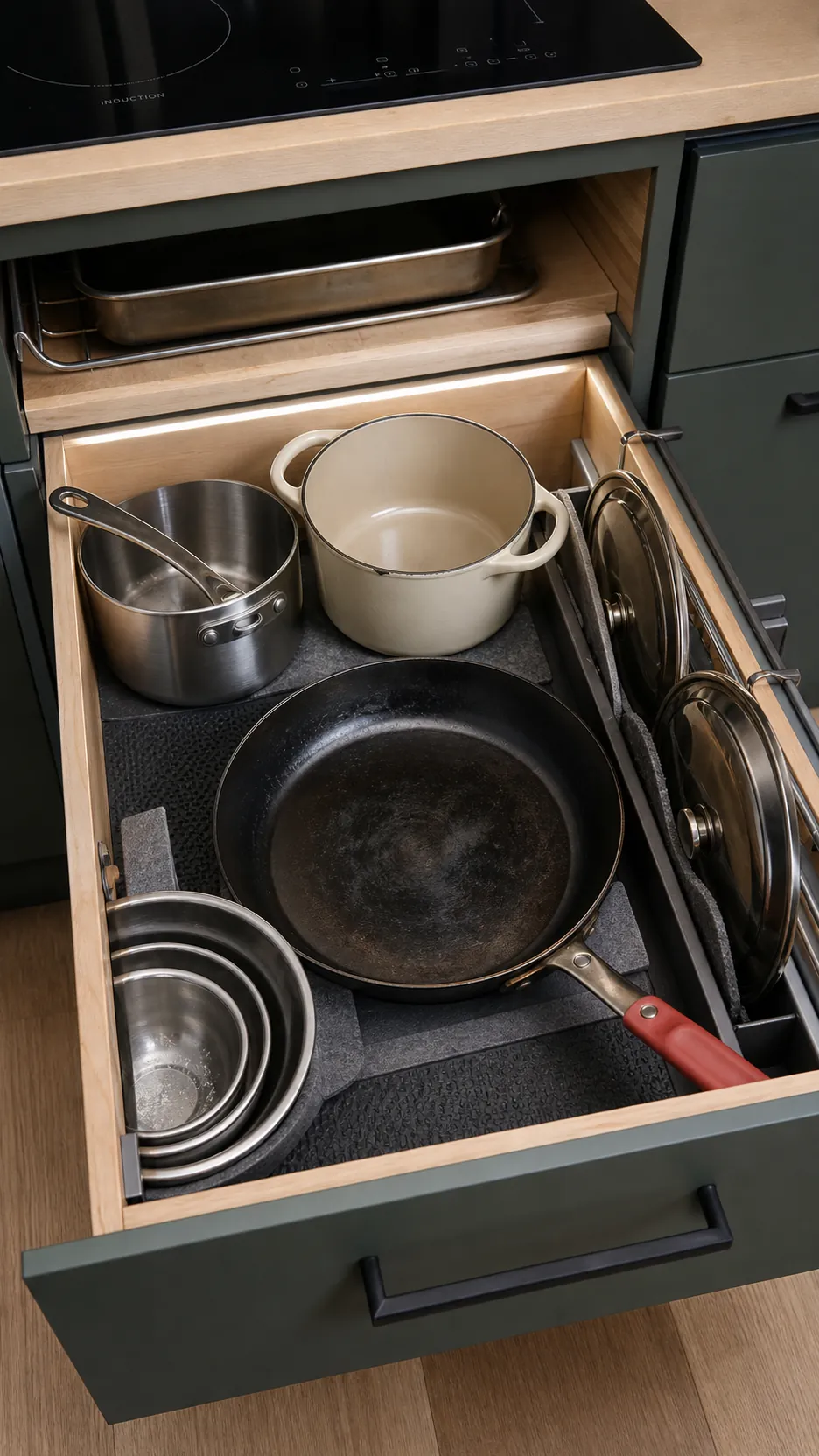
Frequent cooks often own more equipment because they use it, but the most-used pieces should not be trapped beneath specialty cookware. Put the frying pan, saucepan, soup pot, lids, and mixing bowl you reach for every week in the easiest drawer or cabinet. Store the roasting pan, canning pot, or holiday bakeware higher, deeper, or outside the cooking kitchen.
Deep drawers make heavy pans easier to lift than low shelves. A vertical divider keeps lids, cutting boards, and sheet pans accessible without unstacking. If you nest cookware, use only sets that separate quickly and place a thin protector between finishes that scratch.
Review the arrangement when your cooking habits change. If you begin making soup every week, the stockpot should move forward. Prime kitchen storage belongs to the current menu, not an idealized version of how you might cook someday.
Create a Clean-As-You-Go Dish Station
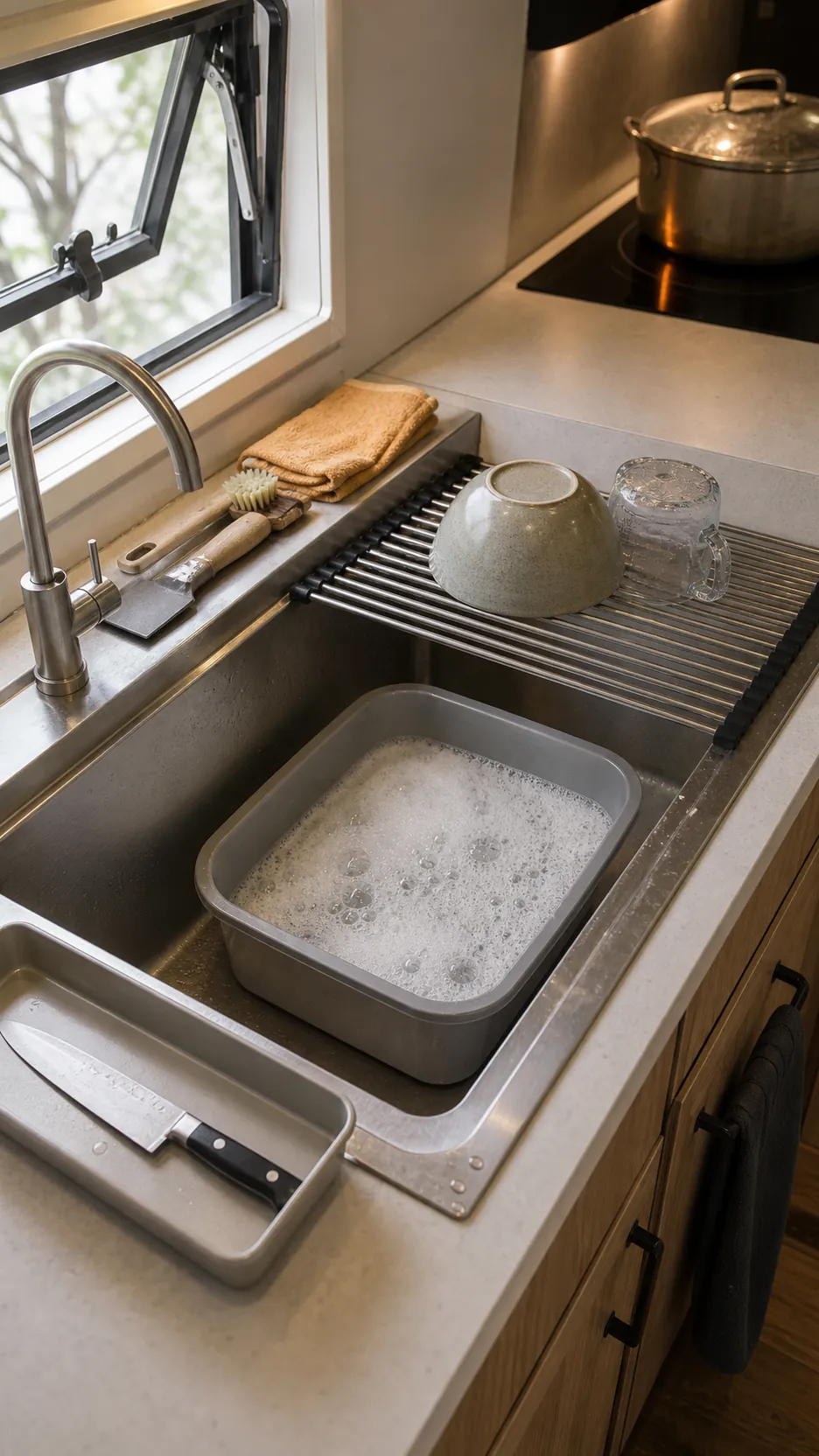
In a small kitchen, one dirty mixing bowl can erase half the meal prep space. Before cooking, empty the sink and prepare the washing setup. If there is no dishwasher, a small basin of hot soapy water lets you wash a knife, board, or measuring cup during a simmer instead of building a pile.
Choose a drying method that respects the counter. An over-sink rack, roll-up mat, or absorbent drying pad that folds away after use is usually more flexible than a large permanent rack. Keep a scraper and dish brush within reach, but move backup cleaners under the sink.
Clean-as-you-go does not mean interrupting every cooking step. Use natural pauses: wash the board after ingredients enter the pot, rinse the mixing bowl while something bakes, and return tools while a pan cools. The goal is to prevent cleanup from taking over the only usable surface.
Build a High-Frequency Flavor Zone
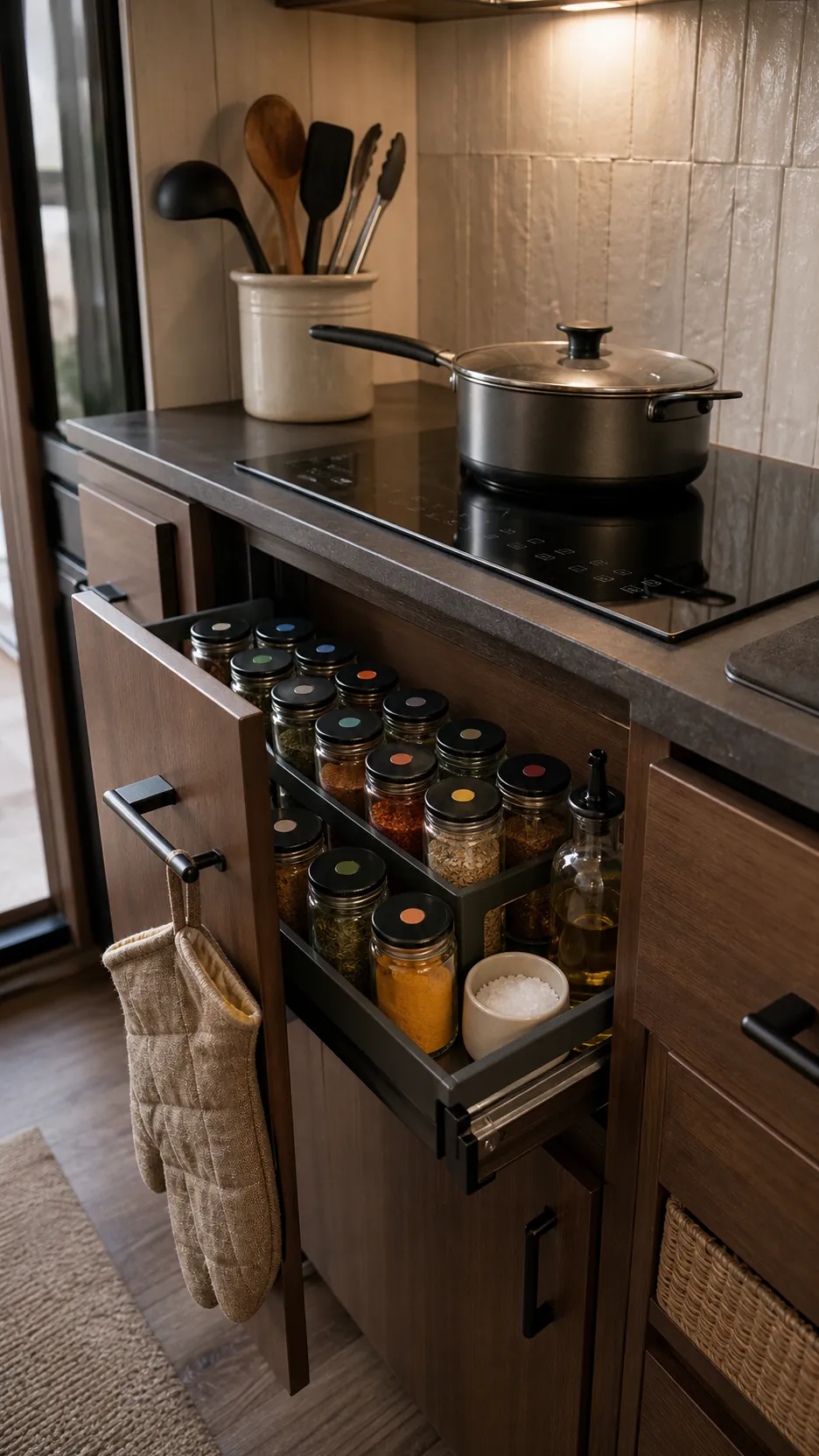
Spices, oils, salt, acids, and cooking utensils are most useful near the cooktop, but covering the backsplash with dozens of containers creates cleaning work and visual overload. Keep the daily group small and store it according to heat, light, and safety.
Place salt, a neutral cooking oil, and two or three current favorites in a shallow drawer or narrow pull-out beside the range—not directly above a hot burner. Group the rest alphabetically or by cuisine in a cool cabinet. A low drawer lets you read jar tops without moving a row of bottles.
Keep the knife, wooden spoon, tongs, and oven mitt within one or two steps of the cooktop. This is a practical kitchen, so reach matters; the edit simply prevents every utensil you own from claiming the same prime location.
Choose Appliances From Your Real Menu
Multifunction appliances save space only when their functions match what you actually cook. A combination oven may replace a toaster and full-size oven for one household. A pressure cooker may replace a slow cooker and rice cooker for another. Buying a popular all-in-one machine that stays in a cabinet saves nothing.
List ten meals you make most often, then identify the equipment they share. Favor durable tools that perform several recurring jobs without awkward setup. A wide sauté pan can fry, braise, and finish pasta; a nesting bowl can mix, serve, and hold prepared ingredients; a stick blender may replace a larger countertop blender for soups and sauces.
Before purchasing, include storage dimensions, ventilation clearance, cord location, cleaning effort, and power demand. Tiny homes can have limited circuits, and a high-wattage appliance may not run safely alongside another major device.
Treat Ventilation as Cooking Equipment
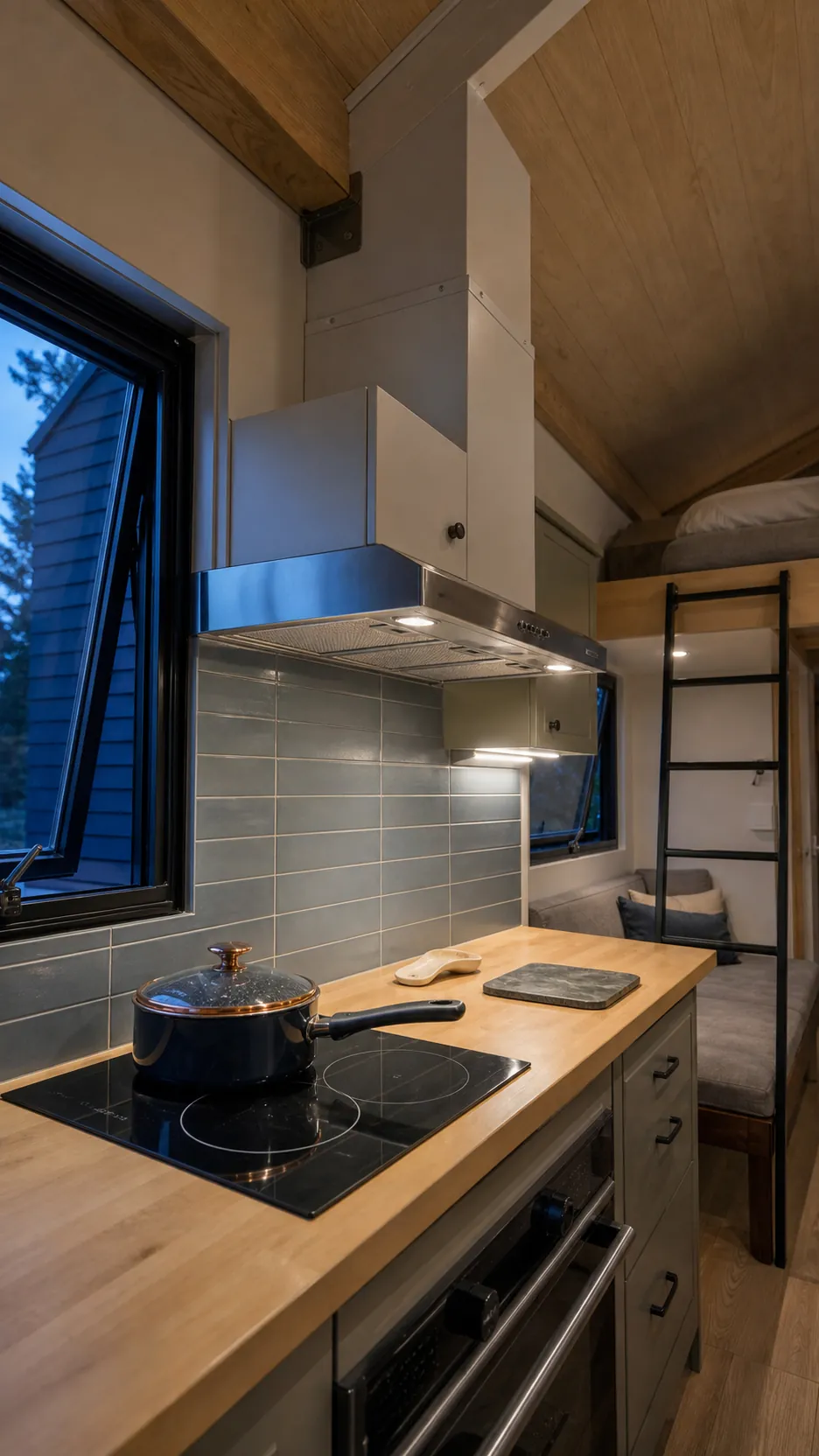
Steam, grease, odors, and heat spread quickly through a tiny home because the kitchen shares air with the living and sleeping zones. A vented range hood is not merely a finishing detail for someone who cooks often. It protects cabinets, textiles, indoor comfort, and the rest of the home.
Choose a hood sized for the cooktop and vent it outdoors where local rules and the structure allow. Clean the filter on a schedule based on how you cook; frequent frying requires more attention than occasional boiling. Open a nearby window for makeup air if the exhaust setup calls for it, and use lids to control steam.
Task lighting belongs in the same functional plan. Light the cutting surface and cooktop directly, without glare on glossy counters or a shadow from your own body. Good air and clear light make a small kitchen safer, less tiring, and far more capable.
A tiny home kitchen for daily cooking does not need every specialized tool or a wall of storage. It needs a protected prep run, safe landing space, cookware that follows your actual rotation, a dish system that resets during natural pauses, and ventilation that can keep up. Build around those repeated movements, and the room will support serious cooking without pretending it is larger than it is.