
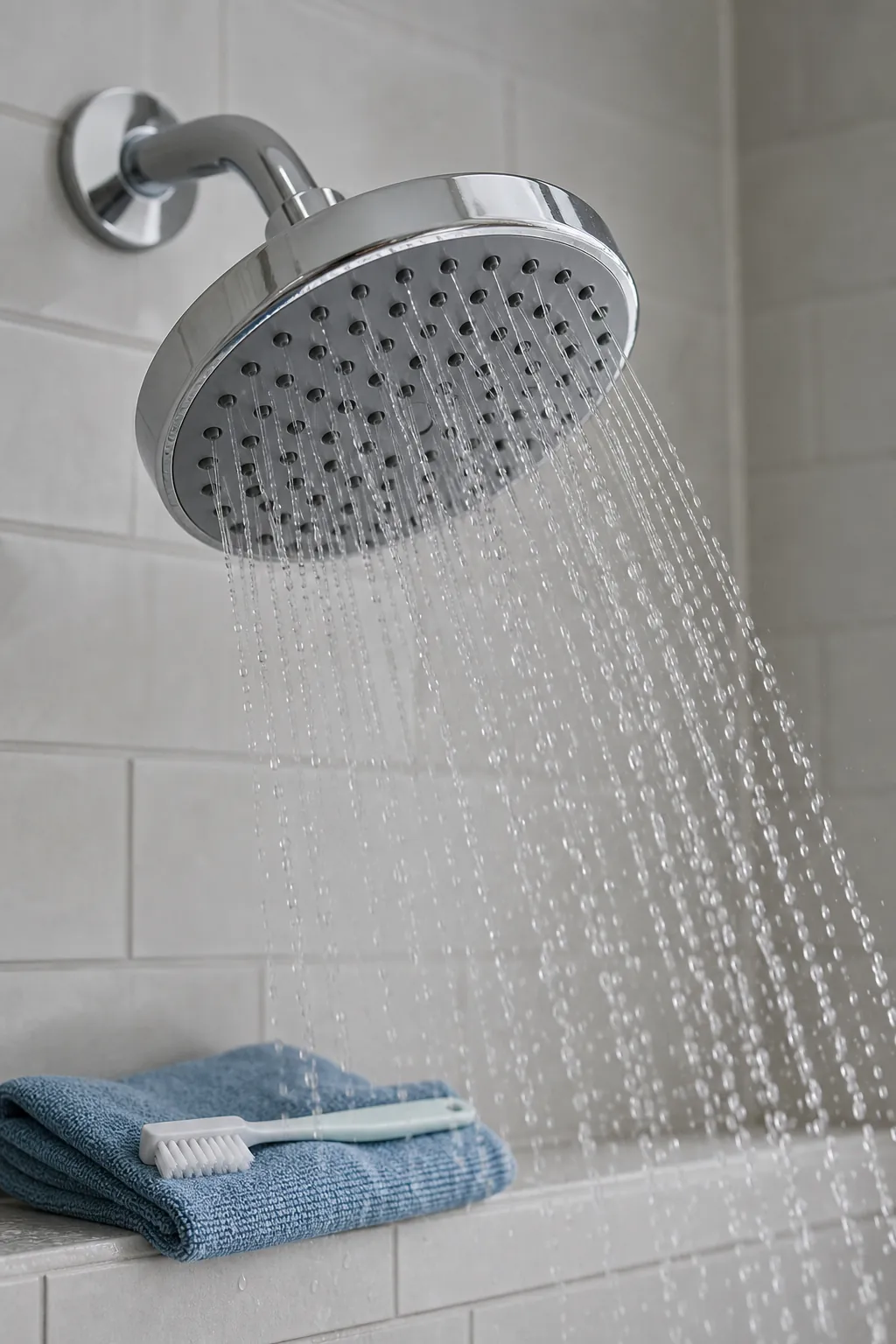
A shower head that sprays sideways, pulses unevenly, or looks crusted with white deposits usually needs descaling—not harder scrubbing. The safest way to clean a shower head is to identify its finish, loosen mineral buildup with the manufacturer-approved method, clear flexible nozzles gently, and flush every spray setting.
Before trying a shower head cleaner DIY recipe, find the brand’s care instructions. Vinegar may be acceptable for ordinary chrome yet damage certain nickel, brass, matte, plated, or specialty finishes. Never mix vinegar with bleach, ammonia, bathroom cleaner, or another chemical. Ventilate the room, wear eye protection when working overhead, and rinse away one product before using anything else.
Check the finish and the spray problem first
Run the shower briefly and watch the pattern. A few crooked jets suggest blocked nozzle tips. Weak flow across the whole face may point to scale inside the head, debris at the inlet screen, a kinked hose, a valve issue, or low household pressure. Brown-orange deposits can come from iron in the water; green-blue marks may indicate corrosion. Cleaning can remove deposits, but it cannot restore metal whose finish has already failed.
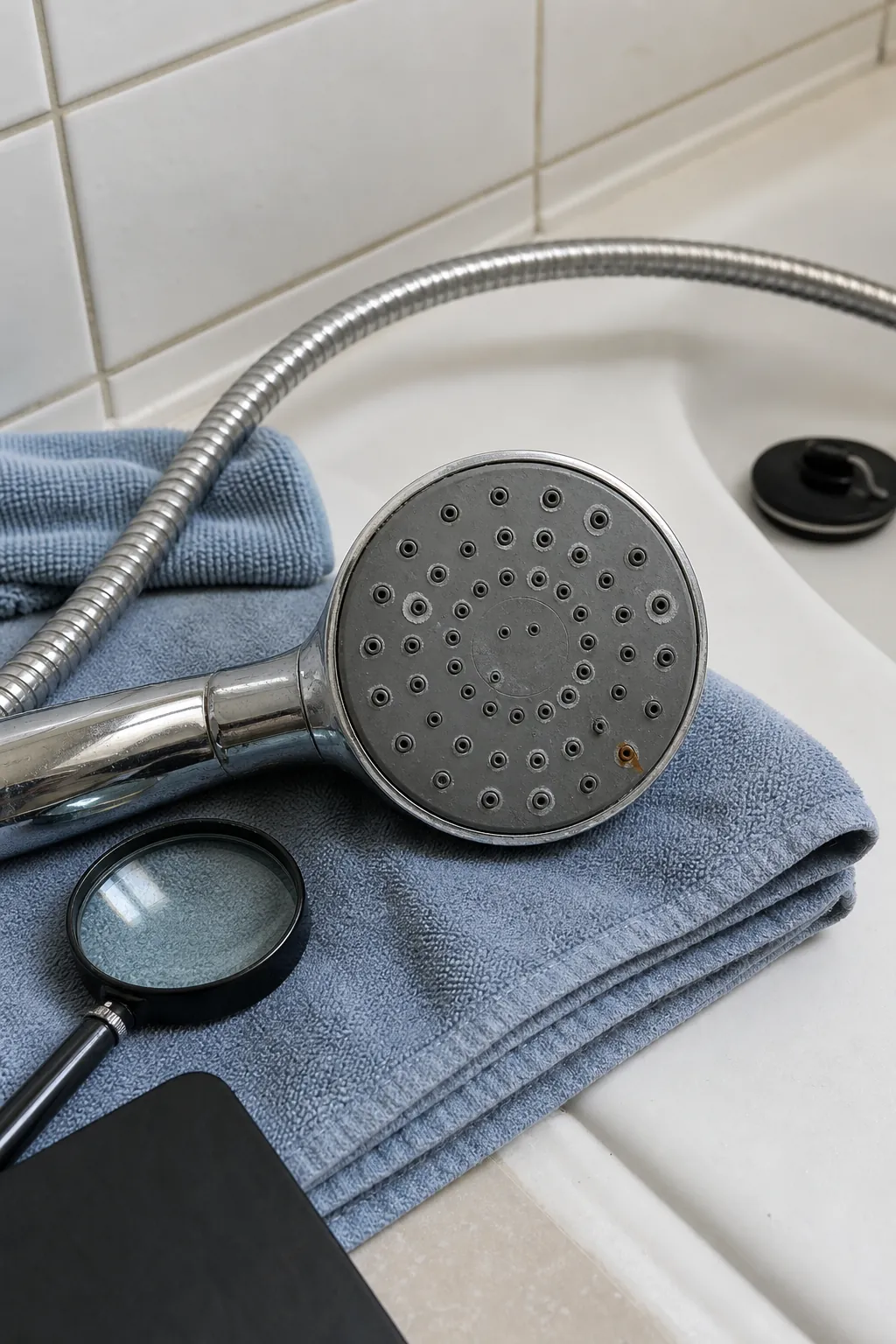
Photograph adjustable settings before disassembly and close or cover the drain so small washers cannot disappear. Protect the finish with a soft cloth if a wrench is necessary. If the fixture is under warranty, unfamiliar, integrated into the ceiling, or visibly corroded, stop at exterior cleaning and consult its manual.
Start with warm water, mild soap, and flexible nozzles
Wipe the face and body with warm water and a small amount of mild soap. On rubber or silicone spray tips, massage each nozzle with a fingertip or soft toothbrush. This often breaks the brittle mineral ring without soaking the entire finish. Avoid pins, drill bits, and metal wire unless the manufacturer specifically approves them; they can enlarge or deform calibrated openings.
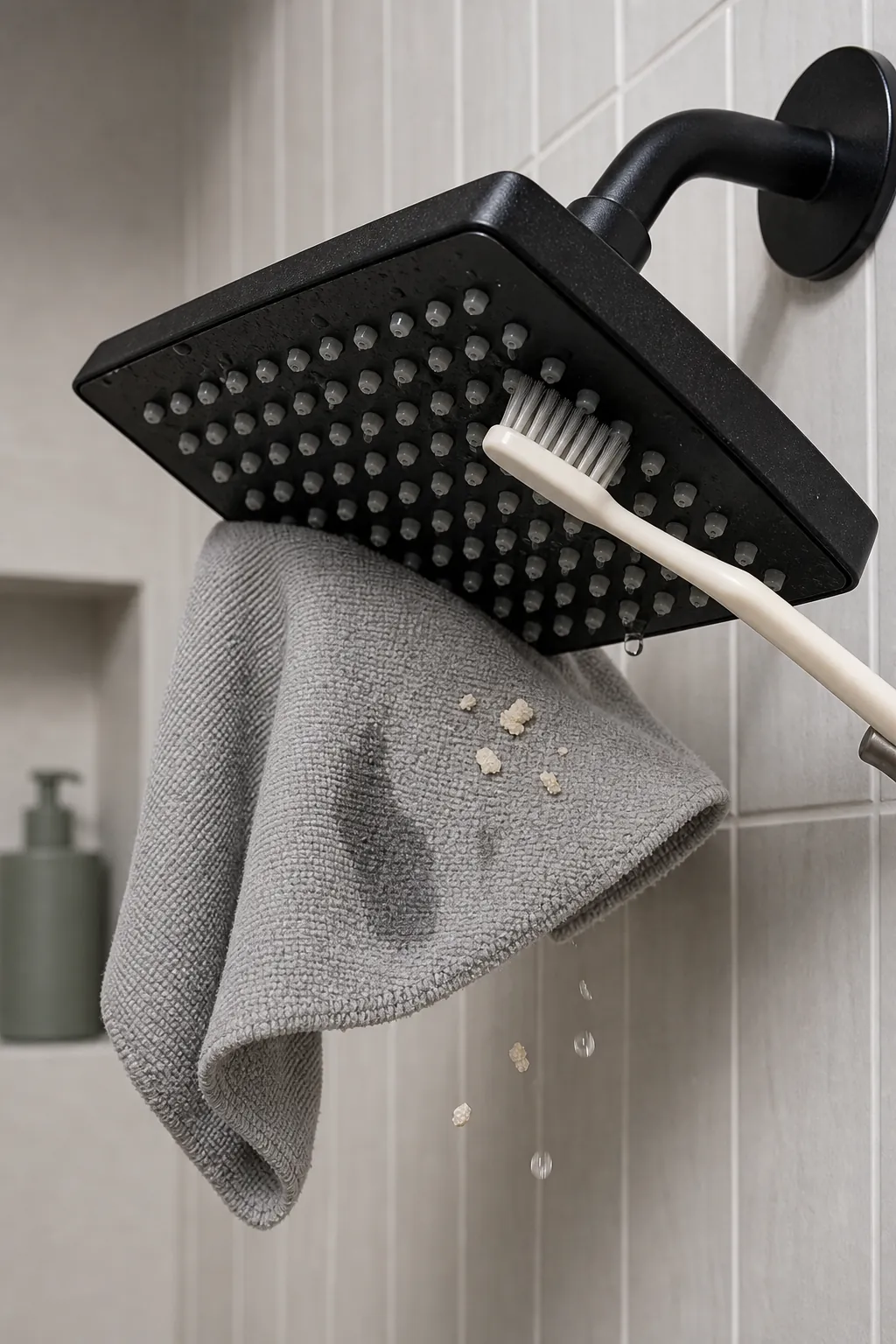
Rinse and test. If the spray is restored, dry the body with microfiber and stop. The gentlest effective method preserves the finish and internal seals. Descaling is the next step only when mineral crust remains.
Remove a detachable shower head for controlled descaling
Turn off the shower, hold the arm steady, and unscrew the head according to its manual. Place a towel below it. Inspect the inlet washer and screen without discarding or changing the flow restrictor. Put only manufacturer-approved parts into a small container with the recommended descaling solution and time; do not assume overnight is better. Acids keep reacting with vulnerable plating and seals.
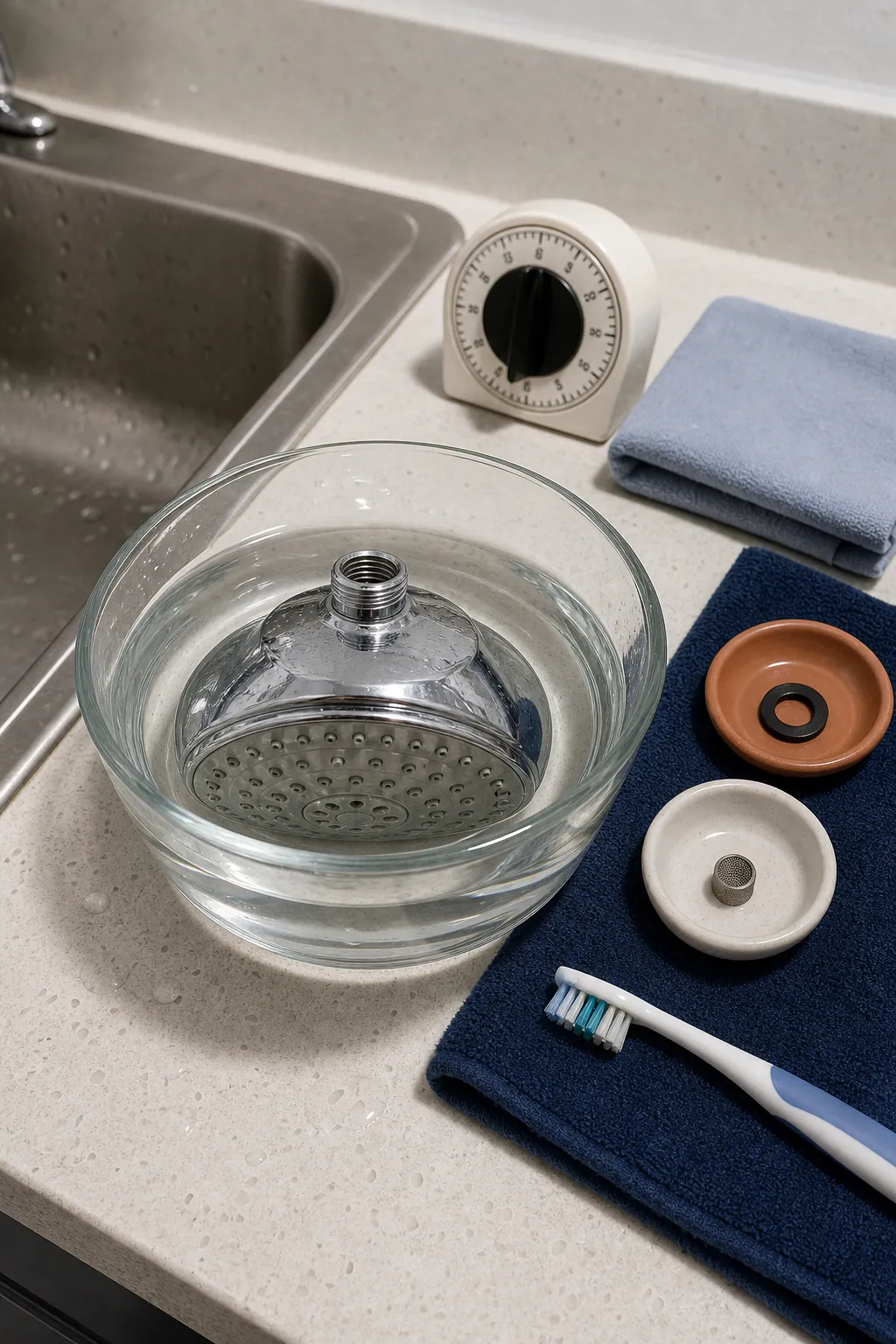
After soaking, brush loosened scale with a soft toothbrush, rinse inside and out with clean water, and reinstall the washer in its original orientation. Hand-tighten first. Use a cloth-protected wrench only if instructions call for it, then check the connection for leaks.
Use a bag carefully on a fixed shower head
If the head should not be removed, place a strong leakproof bag around the spray face with only enough approved solution to cover the nozzles. Support the bag from the shower arm, not from a fragile swivel or decorative plate, and secure it without scratching. Keep the solution away from finishes the manufacturer says should not contact acid.
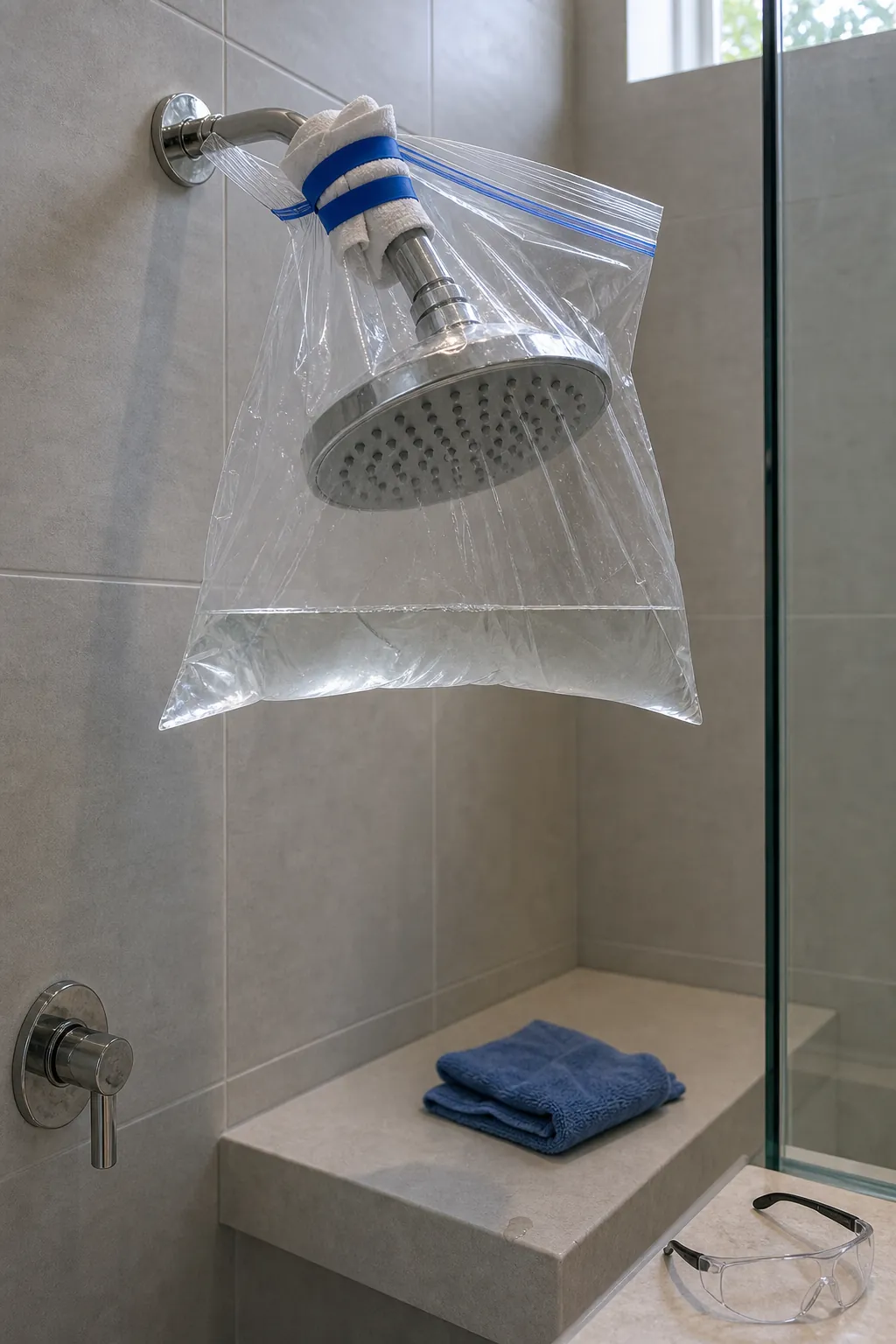
Use the shortest recommended dwell time, remove the bag before turning on the water, and pour spent solution away safely. Wipe and rinse the exterior, then run the shower while standing clear. Eye protection matters because trapped solution can emerge from an unexpected jet.
Flush every setting and inspect the inlet
Run cool-to-warm water for several minutes and cycle through rain, massage, pause, and handheld settings. This pushes loosened particles out rather than leaving them behind the face plate. If a detachable head still has weak overall flow, shut off the water and inspect its accessible inlet screen for sediment according to the manual.
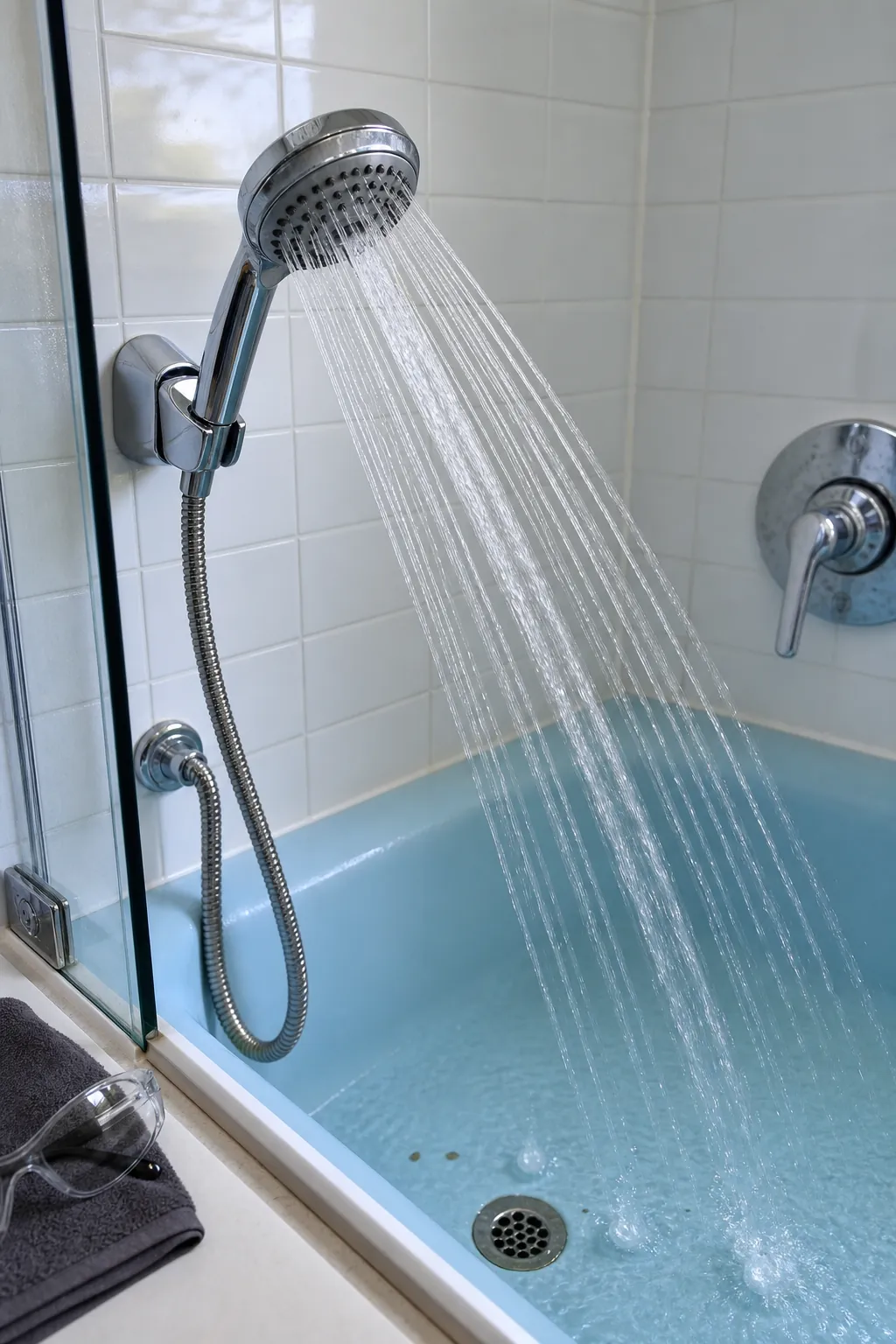
Do not remove a required flow restrictor to chase pressure. Compare flow at other fixtures. If the problem affects the home, or debris rapidly returns, plumbing supply, well sediment, water heater scale, or pressure regulation may need professional attention.
Prevent the next layer of hard-water buildup
Once a week, wipe the face after shower cleaning and rub flexible tips before deposits become crust. Dry decorative metal with a soft cloth. In hard-water homes, schedule light maintenance based on how quickly jets begin to wander rather than waiting for a dramatic blockage.
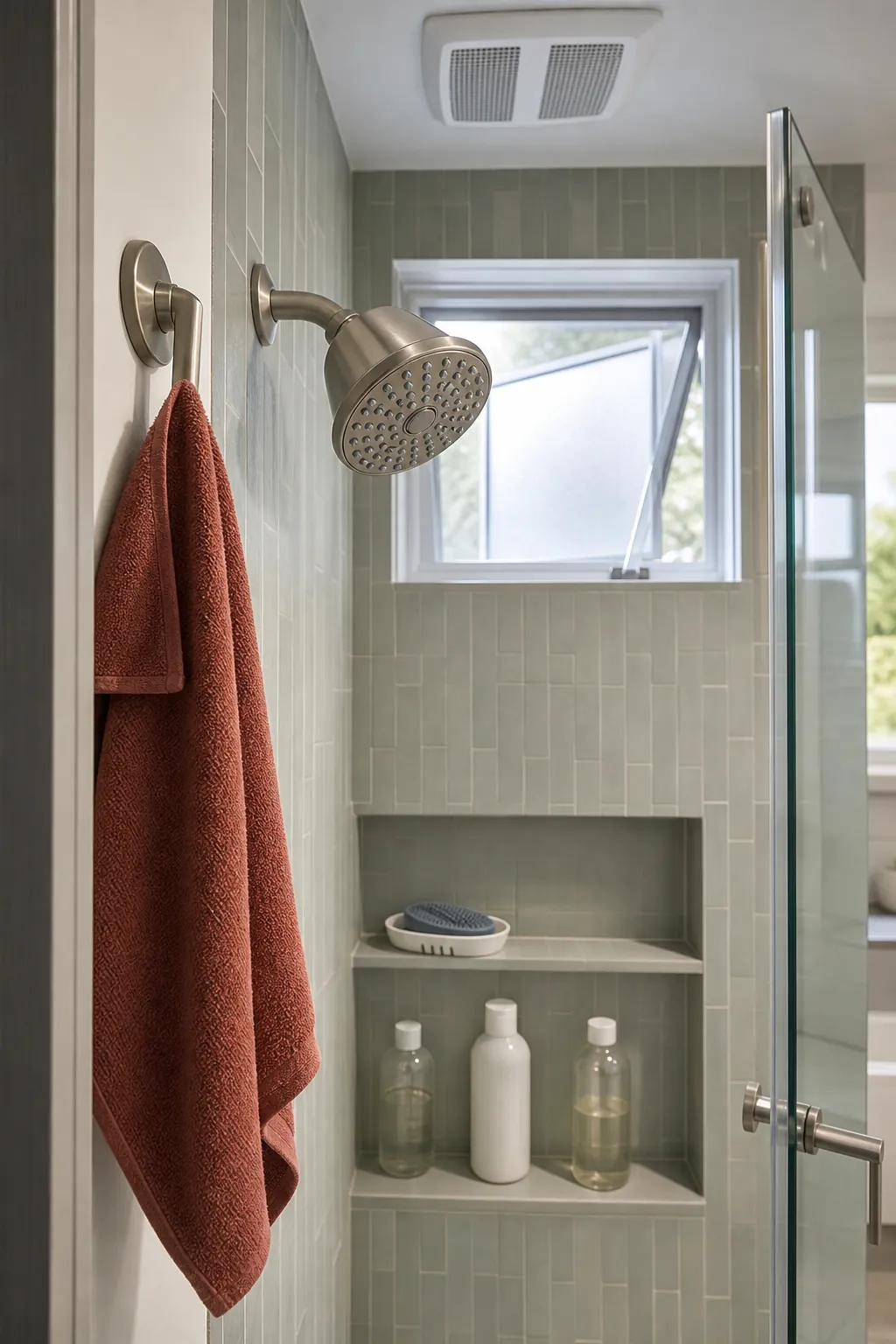
Persistent mineral buildup is a water-quality clue, not a personal cleaning failure. A plumber or water professional can test hardness and explain treatment options. The reliable routine remains simple: protect the finish, soften only the scale, brush gently, rinse thoroughly, and watch the spray pattern for the first sign that maintenance is due.