
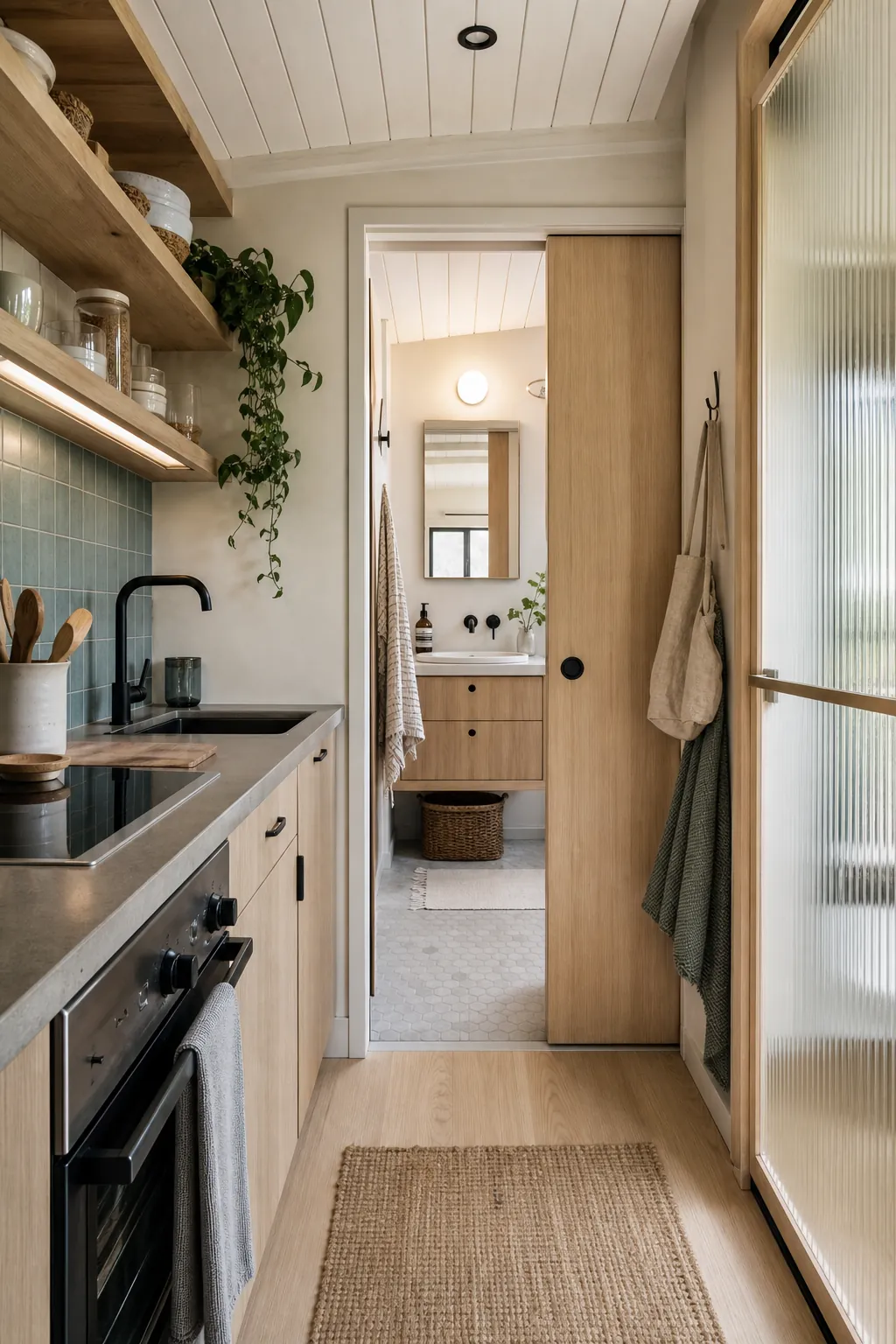
A tiny kitchen or bathroom does not feel designed because every surface matches a trend. It feels designed when the room’s decisions agree with one another: the storage supports the routine, the materials can survive water and heat, the lighting lands where work happens, and the things left visible look intentional. In a small footprint, there is nowhere for a weak choice to disappear. That constraint can become an advantage.
Start with the routine, not the look
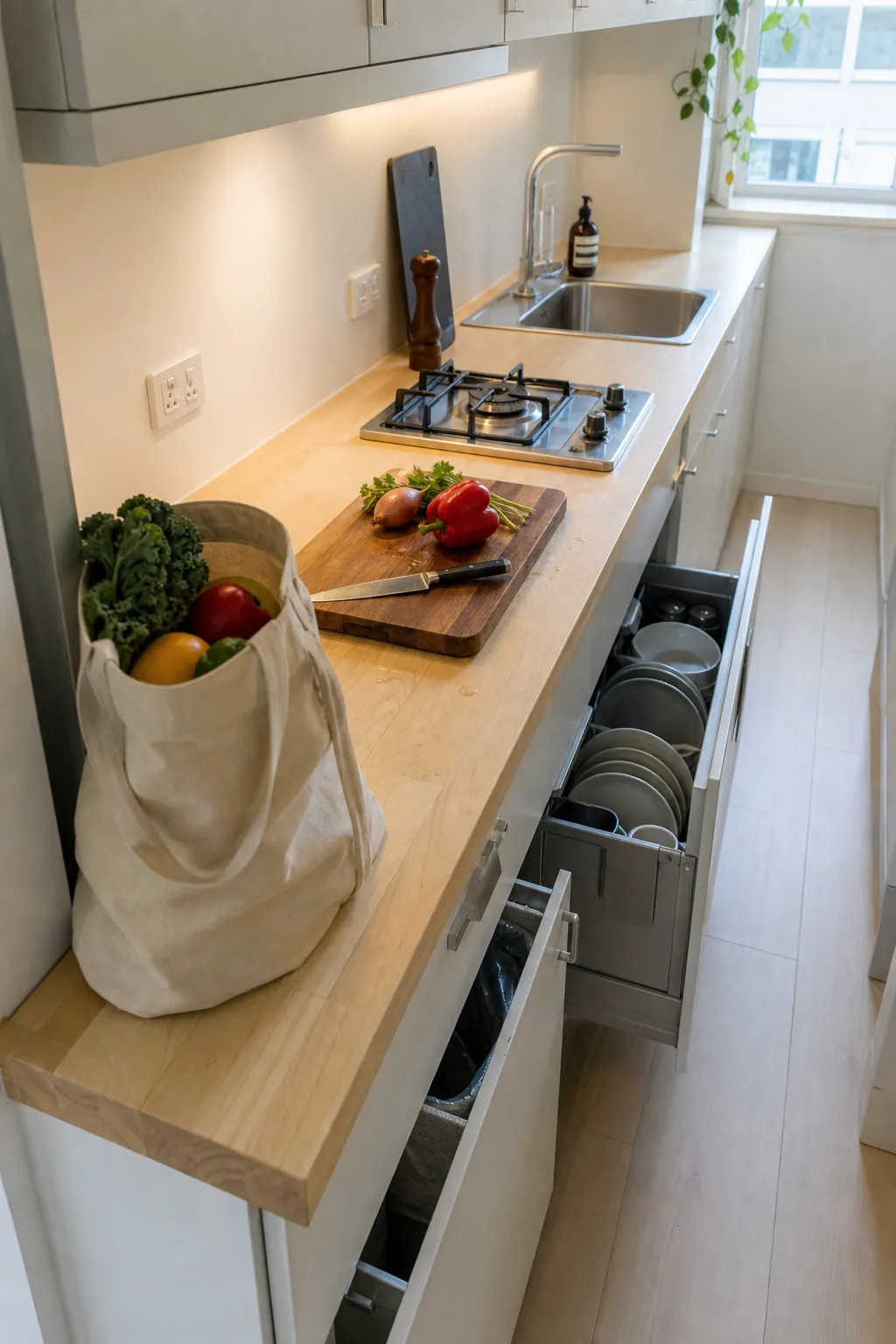
Before choosing tile or cabinet color, map what happens from the moment groceries enter to the moment the last dish dries. A compact kitchen needs a landing point, a prep surface, a safe cooking zone, and a cleanup route. A tiny home bathroom needs a dry place for clothing, a reachable towel, clear sink storage, ventilation, and access to plumbing.
Reddit discussions about tiny-home regrets repeatedly return to the same lesson: attractive plans fail when daily tasks were treated as an afterthought. Owners mention missing outlets, inadequate prep area, inaccessible valves, hard-to-clean finishes, and storage for everything except laundry or trash. Good tiny home design makes the ordinary action easy before it makes the photograph impressive.
Choose one visual line to connect the rooms
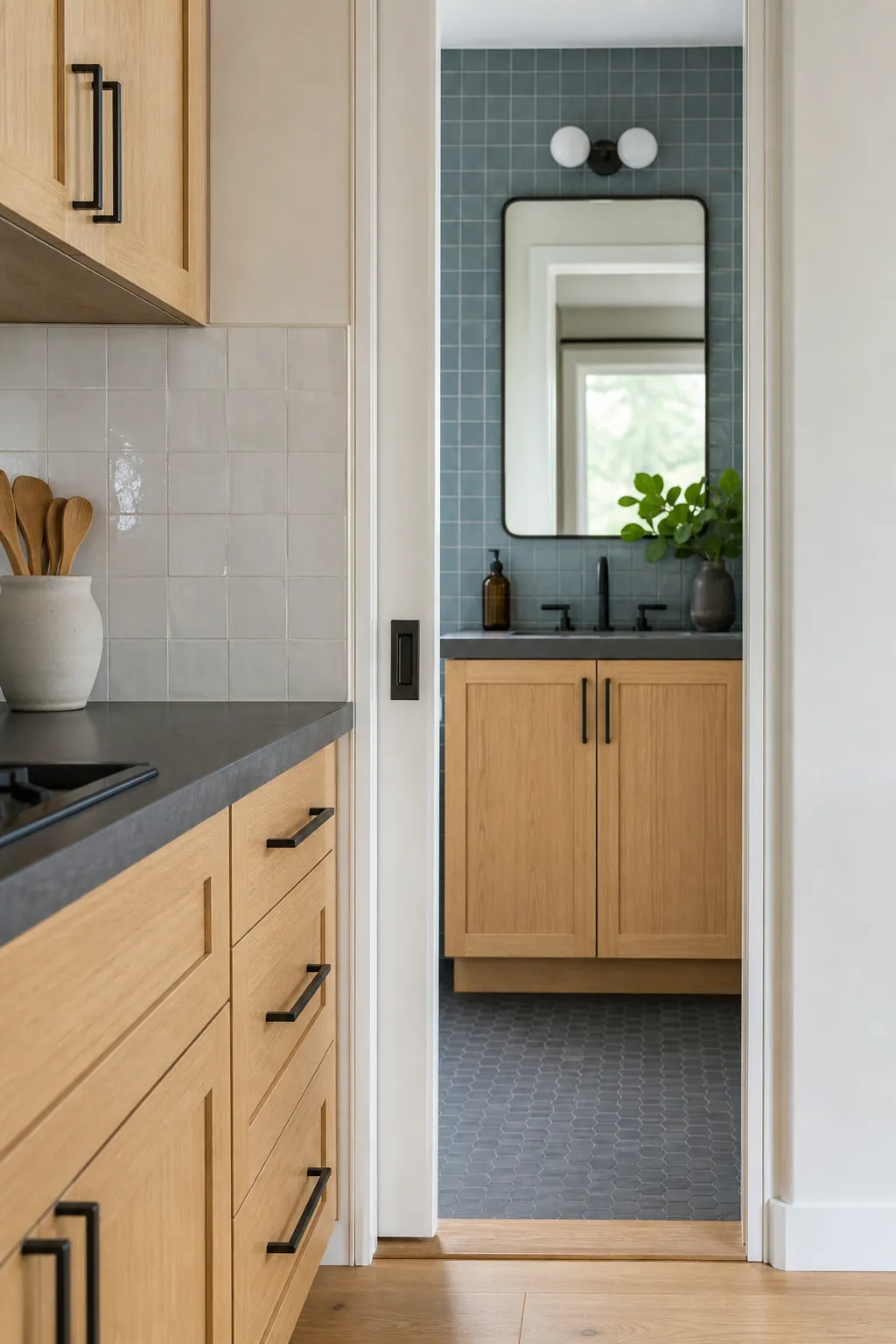
The kitchen and bathroom do not need identical tile. They need a shared visual logic. Repeat one meaningful element: the same pale oak, the same charcoal hardware, a similar cabinet-door profile, or the same warm white on dry walls. That continuity helps the small house interior read as one composition rather than a collection of mini rooms.
Pick the line before shopping. If oak is the thread, let the kitchen fronts and bathroom vanity carry it while wet-zone materials change appropriately. If a dark metal is the thread, repeat it in a few functional places instead of buying every accessory in black. A repeated material works when it appears often enough to register and rarely enough to retain contrast.
Limit the palette without draining the personality
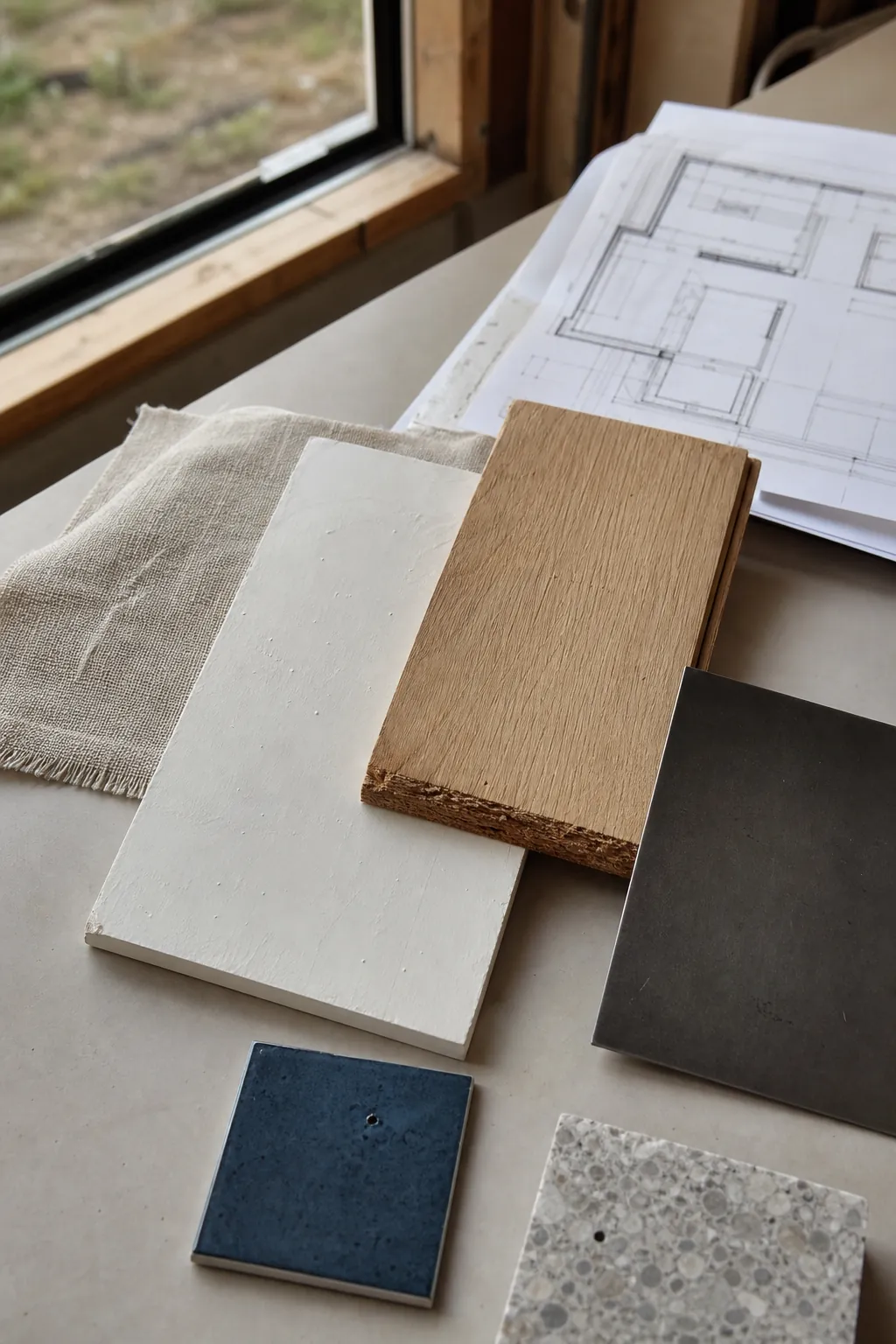
A useful palette might contain one light field color, one wood tone, one metal finish, and one accent family. This reduces visual chopping across cabinet fronts, backsplash, walls, and fixtures. It also makes later decisions easier: a new hook or towel either belongs to the system or it does not.
Limited does not mean beige. A deep blue vanity can give a compact bathroom identity while the kitchen repeats that hue in a smaller textile or cabinet interior. Texture supplies richness without adding more colors: visible wood grain, honed stone, woven linen, ribbed glass, and hand-finished plaster all register differently in light. Use pattern where you can see an intentional boundary, not wherever a blank patch appears.
Layer light around work and atmosphere
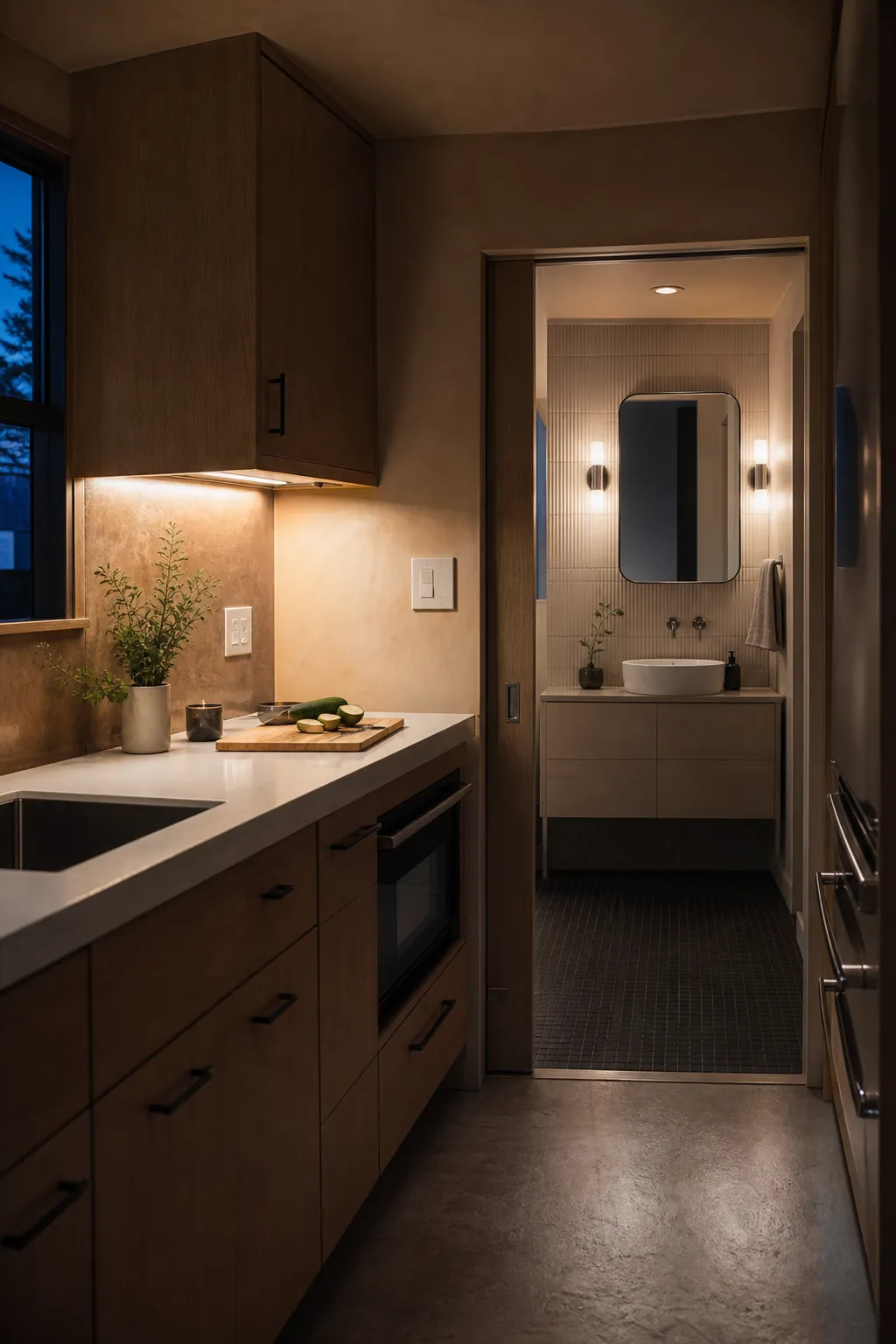
One bright ceiling fixture flattens materials and creates shadows exactly where hands work. Give the compact kitchen direct light over prep and cooking surfaces, then add a softer ambient source for evenings. In the bathroom, light the face from the side or around the mirror while keeping the shower and floor safely visible.
Use consistent color temperature across adjacent rooms and add dimmers where possible. Place switches at the entry as well as the point of use when a route would otherwise require backtracking. Tiny-home owners often remember these small control decisions more vividly than decorative fixtures because they repeat every day.
Repeat hardware with discipline
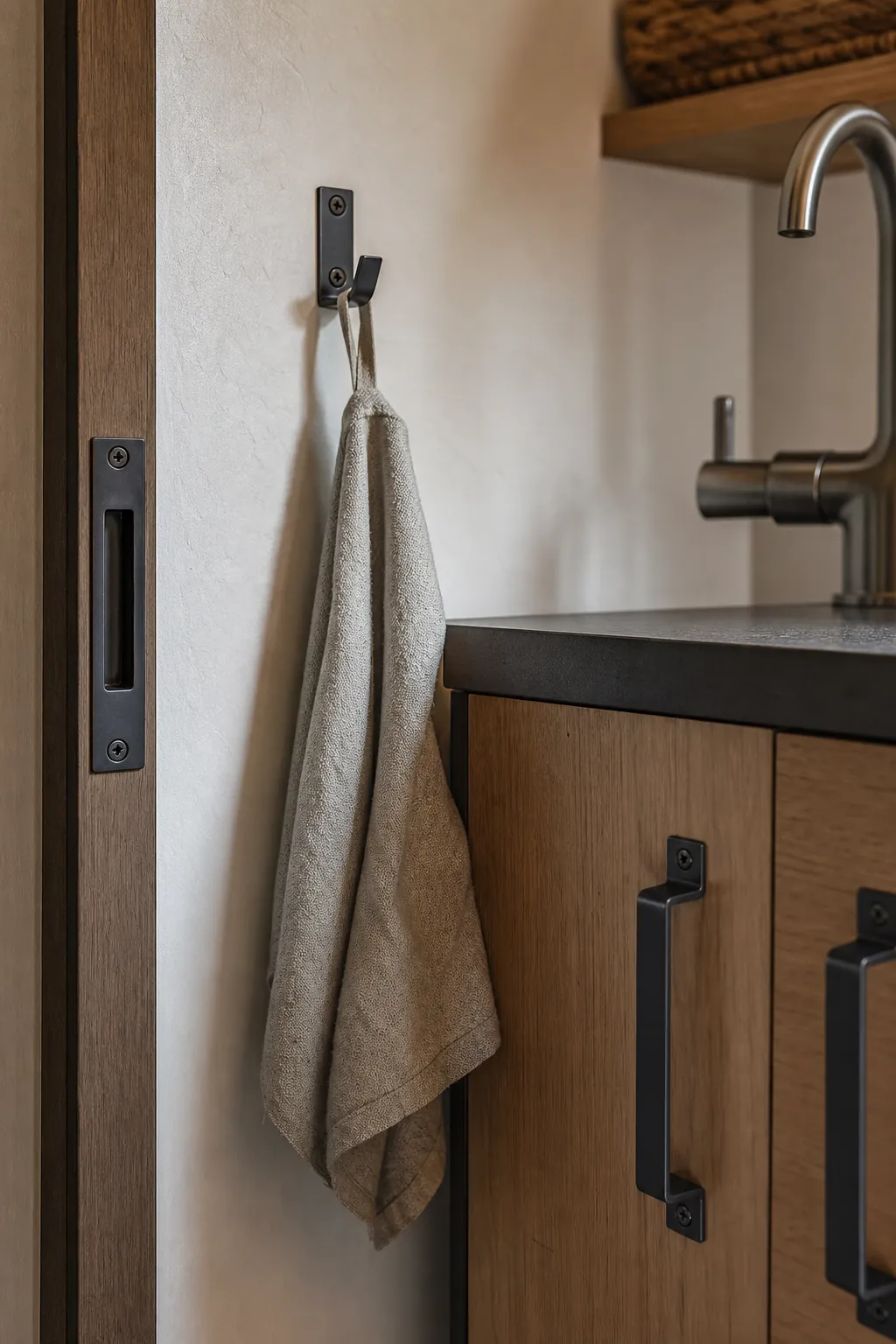
Handles, hooks, taps, rails, and hinges are small, but they appear at every hand-level intersection. Repeating one metal finish or one shape gives the eye a rhythm. You can mix finishes, but make the split functional—perhaps stainless at wet and cooking fixtures, with dark bronze on cabinetry and doors.
Scale matters more than brand. Oversized pulls can crowd narrow drawer fronts, while tiny knobs are frustrating with wet hands. Test the grip, door swing, towel clearance, and whether exposed screws align. These details create the quiet precision people interpret as custom design.
Design the visible objects and hide the rest
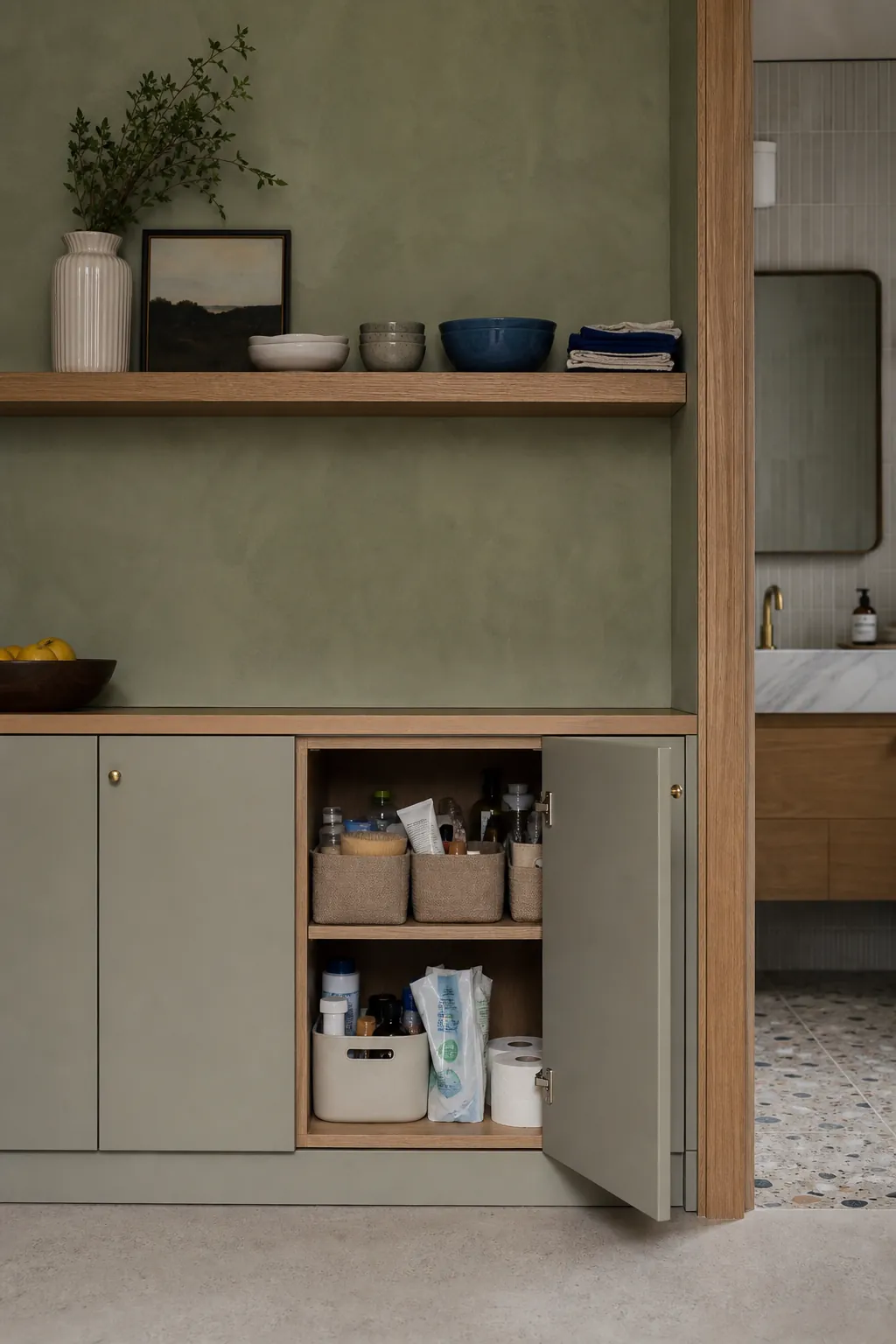
Open storage is most convincing when it holds objects that are both useful and visually coherent: everyday dishes, folded cloths, two beautiful pans, or refillable soap. Packaging, medicine, cleaning products, cables, and irregular backstock usually make the room calmer when they live behind a door.
This is not a demand to decant the whole household. Closed cabinets let ordinary supermarket packaging stay ordinary. Give each visible shelf a capacity and leave some wall exposed around it. The empty margin signals that the shelf was placed deliberately rather than added because clutter had nowhere else to go.
Let maintenance be part of the design
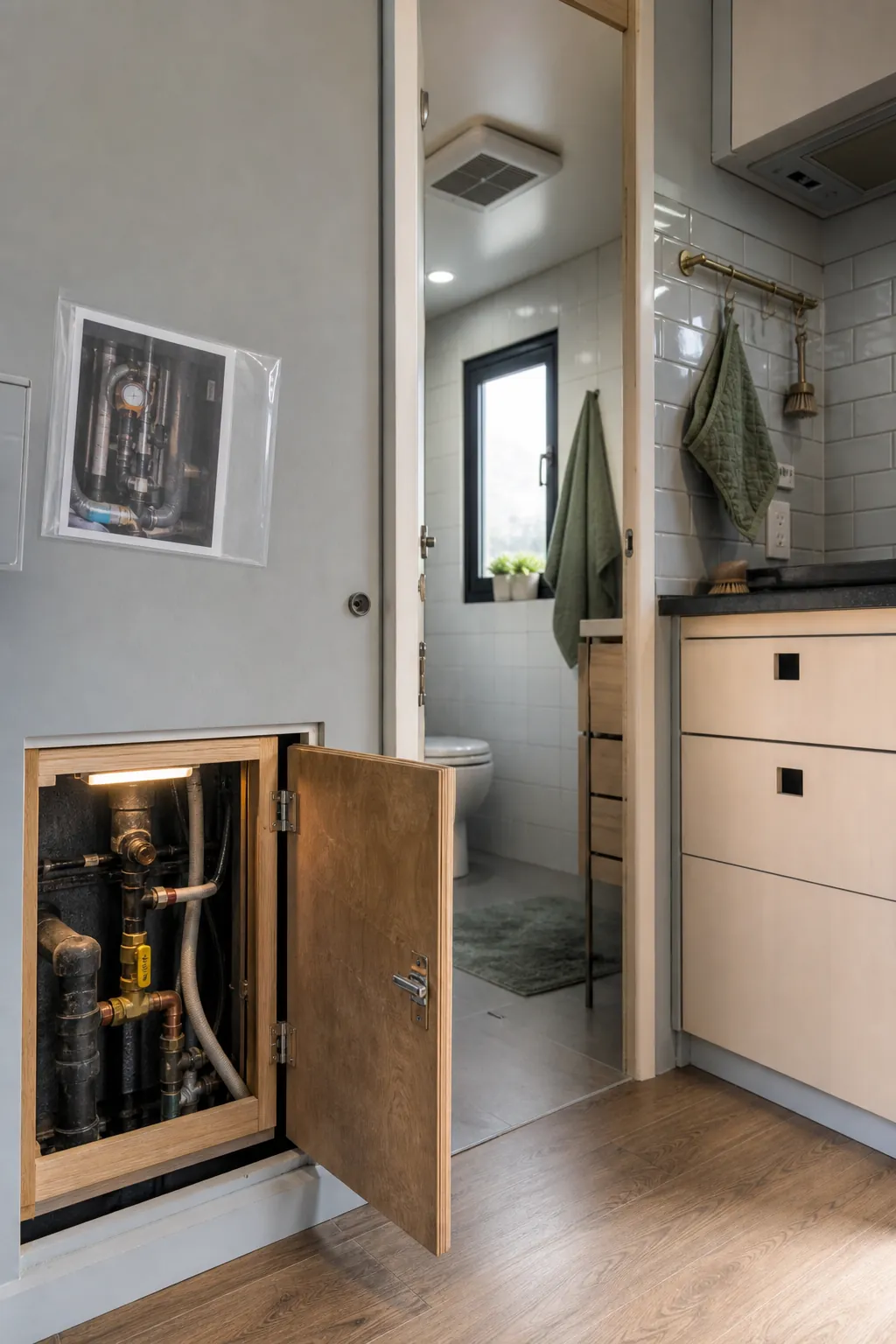
A finish that looks beautiful only when untouched is a poor fit for a compact kitchen or bathroom. Choose washable paint in hand-contact areas, grout that can be maintained, counters that tolerate your actual cooking, and hardware that can be tightened. Photograph pipes and wiring before walls close, then preserve access panels and shutoffs.
Moisture control is visual design too. A clean exhaust path protects paint, wood, towels, and the air; a proper range hood prevents cooking residue from dulling the entire tiny house. Do not conceal ventilation with a shelf or trade insulation for a decorative niche. The most convincing tiny home kitchen styling and bathroom styling come from rooms that keep working. When the same palette, light, hardware, storage logic, and maintenance standard carry through both spaces, the home feels considered without needing expensive finishes or constant perfection.