
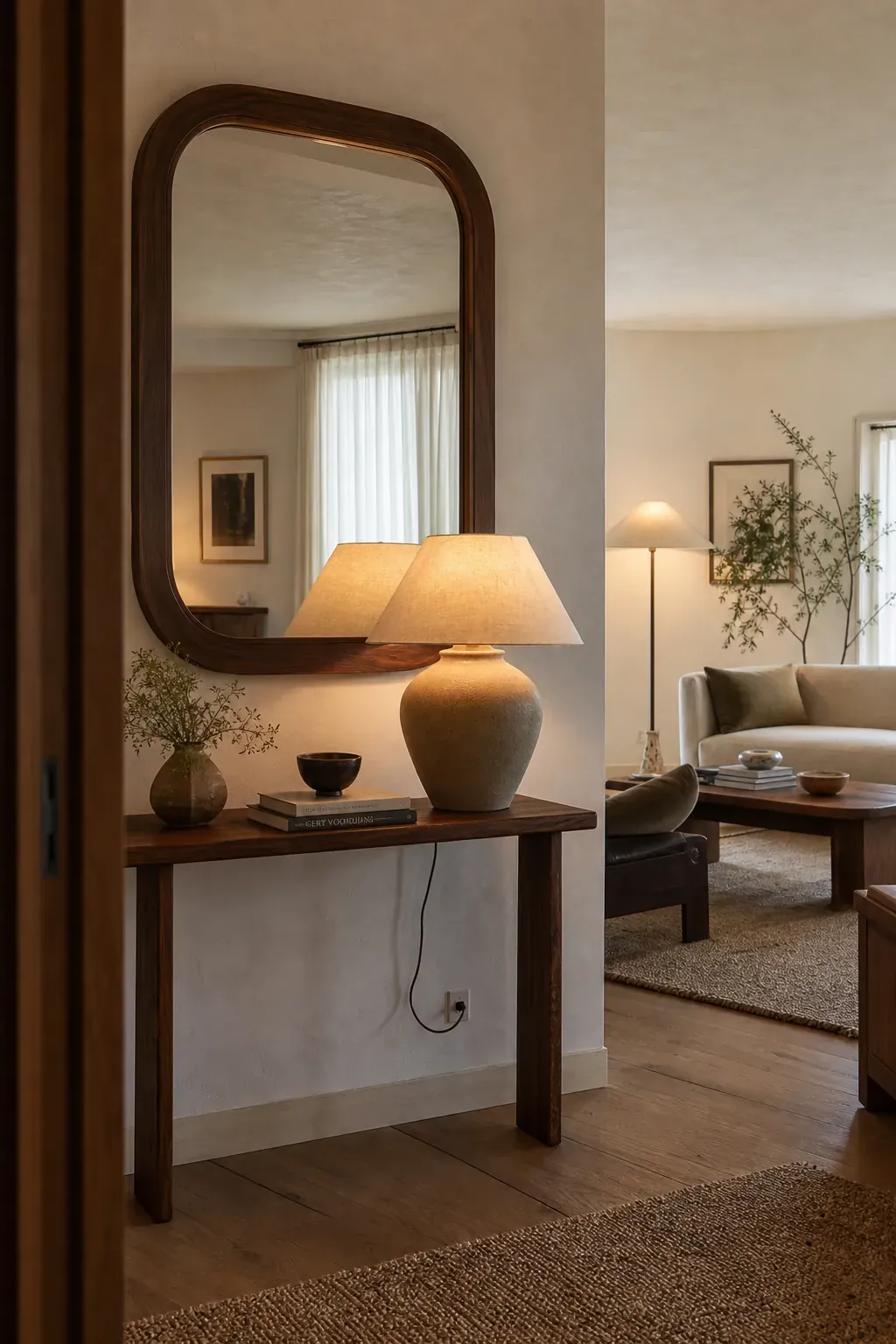
A mirror does not simply sit beside a lamp; it edits the lamp. It can double the glow, reveal an awkward cord, or aim a bright shade straight at the sofa. That is why buying two attractive objects is not enough. The reflection is part of the lighting plan.
Real-room questions tend to be practical: should the mirror face the window, must the lamp be centered, and how do you stop glare at night? A good arrangement answers those questions from the places where people actually sit, walk, read, and enter the room.
Let the Mirror Borrow Window Light
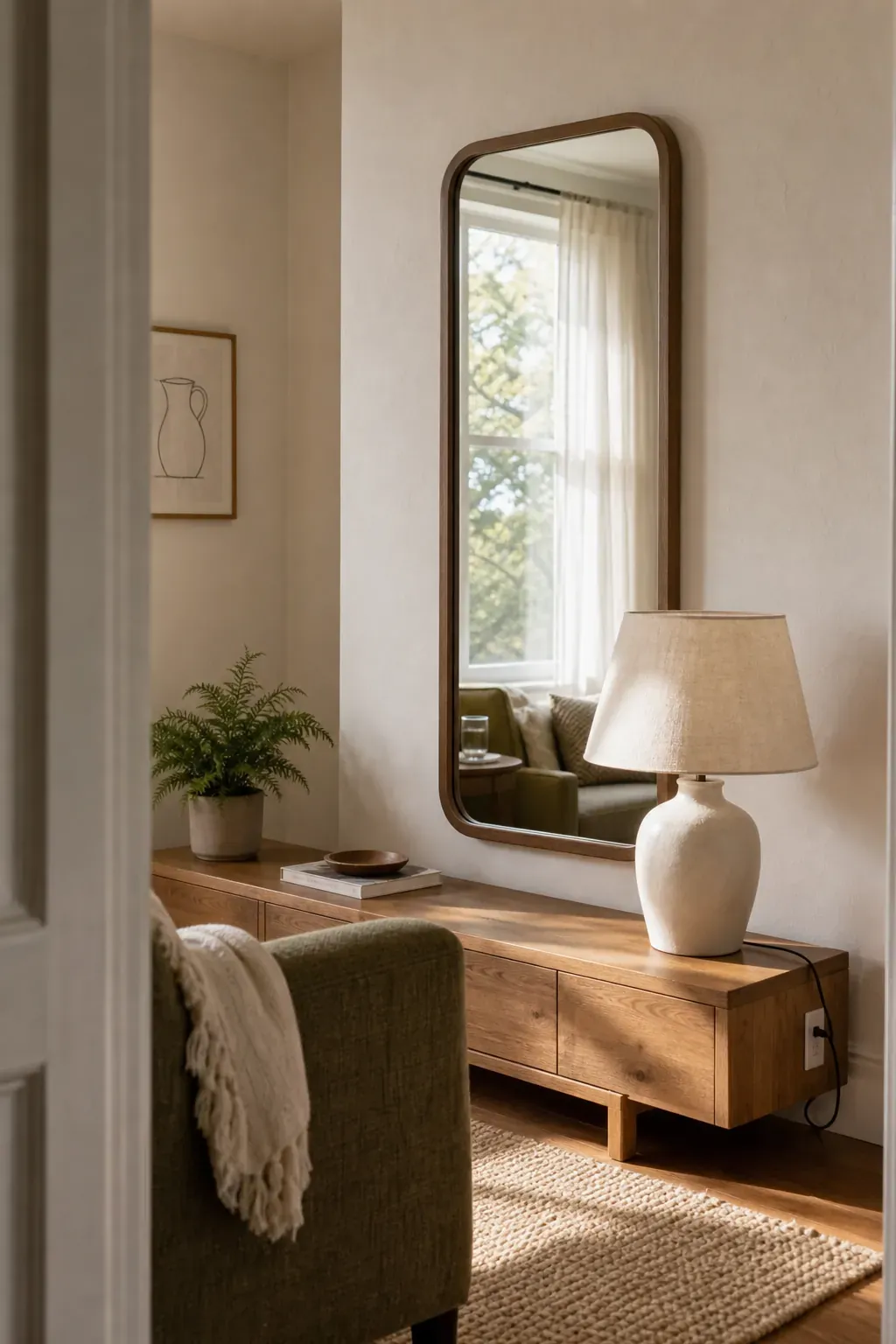
A mirror perpendicular to a window often spreads a side view of daylight without throwing a hard rectangle of glare back at the room. Start by moving the mirror before adding another lamp. If the glass reflects sky, foliage, or a softly curtained opening, the room gains brightness and depth at the same time.
Keep the lamp available for evening use, but let daytime reflection do free work. This is especially useful in rentals where new wiring is not an option.
Angle the Lamp Out of the Glare Zone
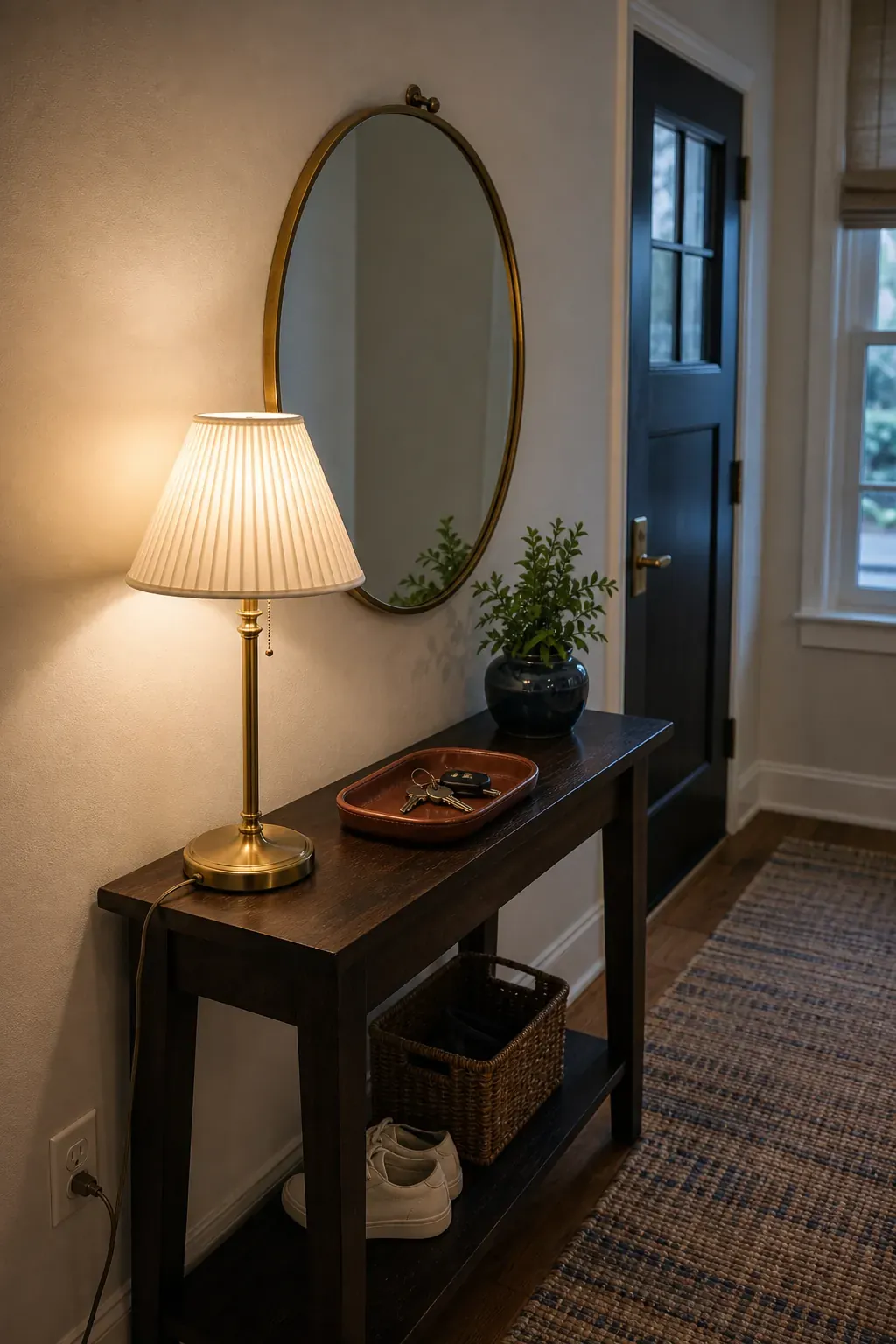
Turn on the lamp after dark, then sit in every main seat. If the shade or bulb appears as a bright target in the mirror, move the lamp sideways, rotate the shade, or adjust the mirror angle. A few inches can replace harsh glare with a soft reflected pool.
An off-center composition often works better than forced symmetry because it gives the lamp breathing room and controls the reflected sightline.
Balance One Lamp With a Taller Opposite Object
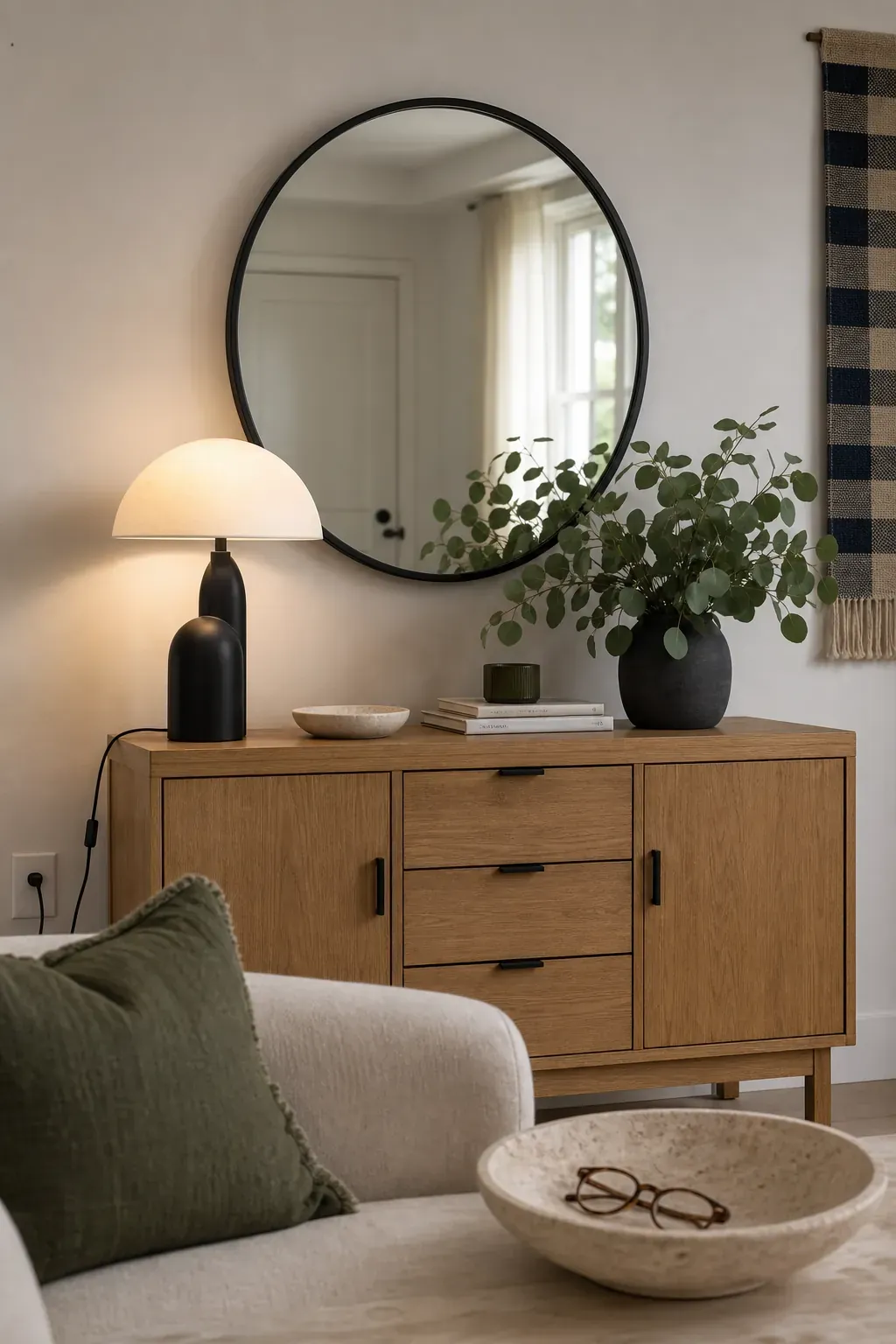
One table lamp does not require a matching twin. Balance its visual weight with a branch, vase, or stacked object on the other side of the mirror. Varying height keeps the console alive while the centered mirror supplies stability.
Choose the counterweight by silhouette, not price. A simple leafy stem can balance a substantial ceramic base without making the display feel overfilled.
Repeat a Finish Without Matching Every Shape
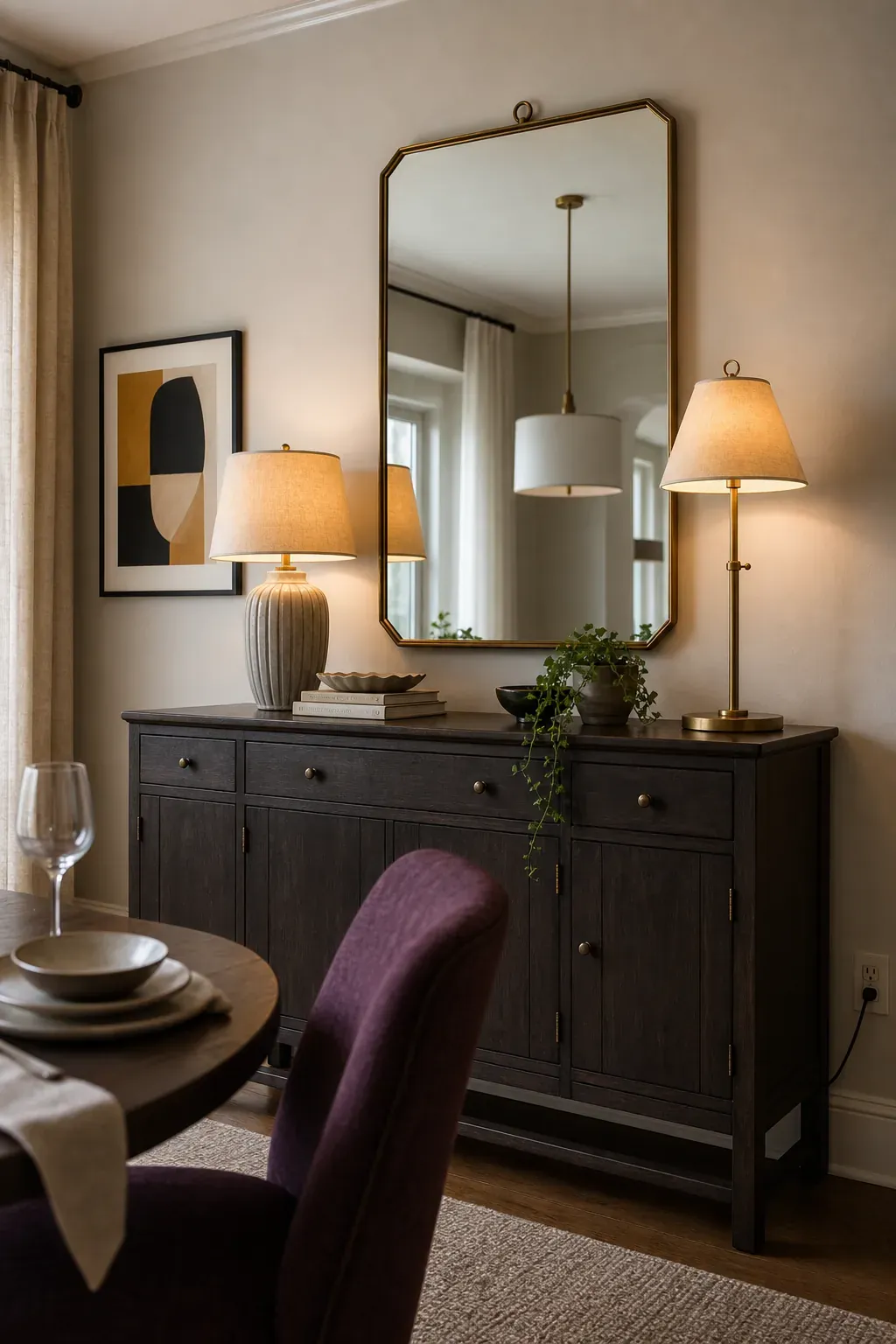
Mixing succeeds when one detail repeats. A brass mirror can relate to a tiny brass lamp neck while the bases, shades, and heights differ. That shared note is enough to make collected lamp decor feel intentional.
Avoid matching every metal in the room. Repeating one finish two or three times creates a thread; repeating it everywhere makes the arrangement look purchased as a set.
Use Shade Shape to Echo the Mirror
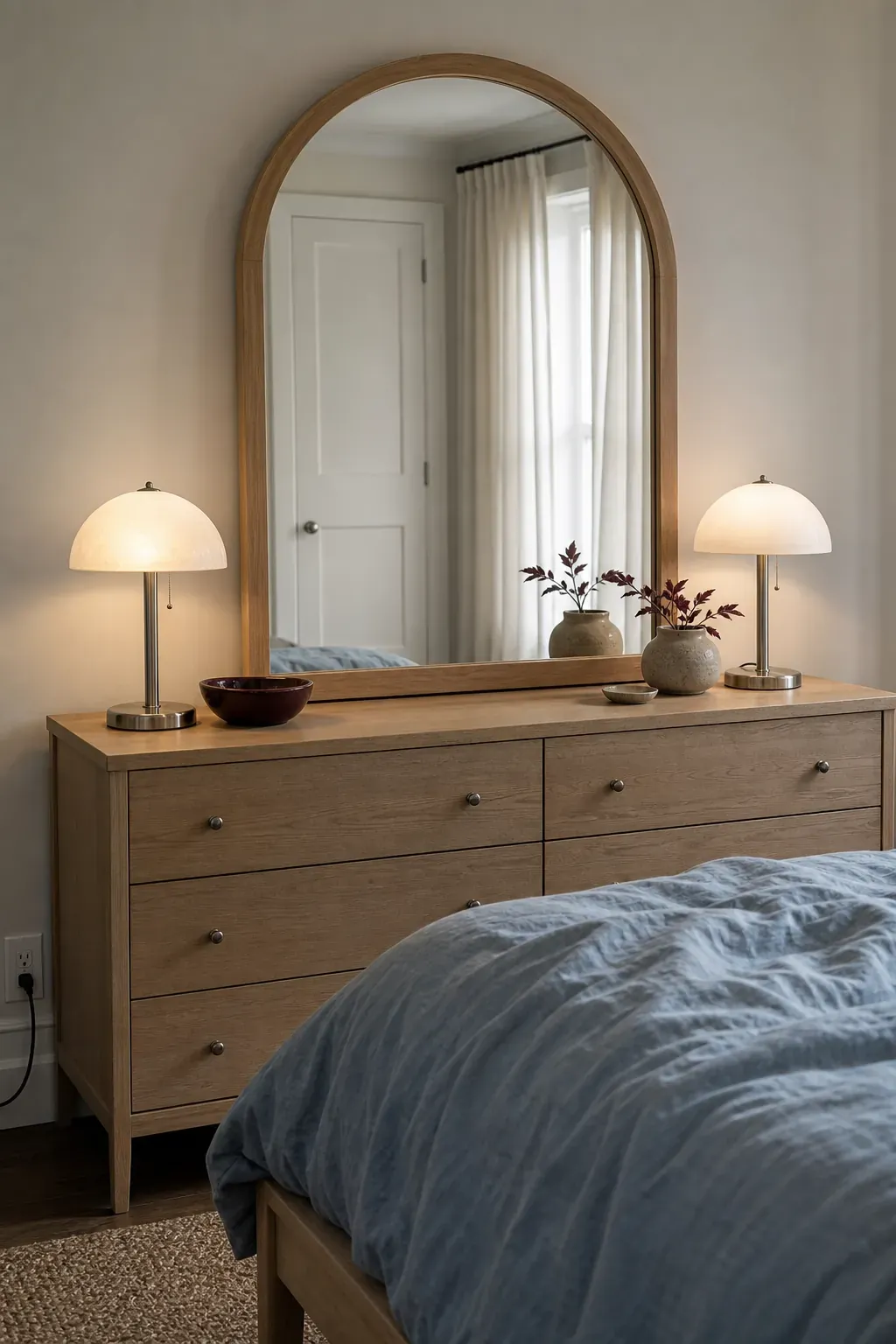
Shape is another quiet connector. A curved shade softens an arched wall mirror, while a crisp rectangular shade can support a square frame. The forms should rhyme rather than duplicate each other.
Check proportion from across the room. A petite lamp may disappear beside a massive mirror, while a wide shade can block useful glass or crowd the wall.
Layer a Floor Lamp Beyond the Mirror’s Edge
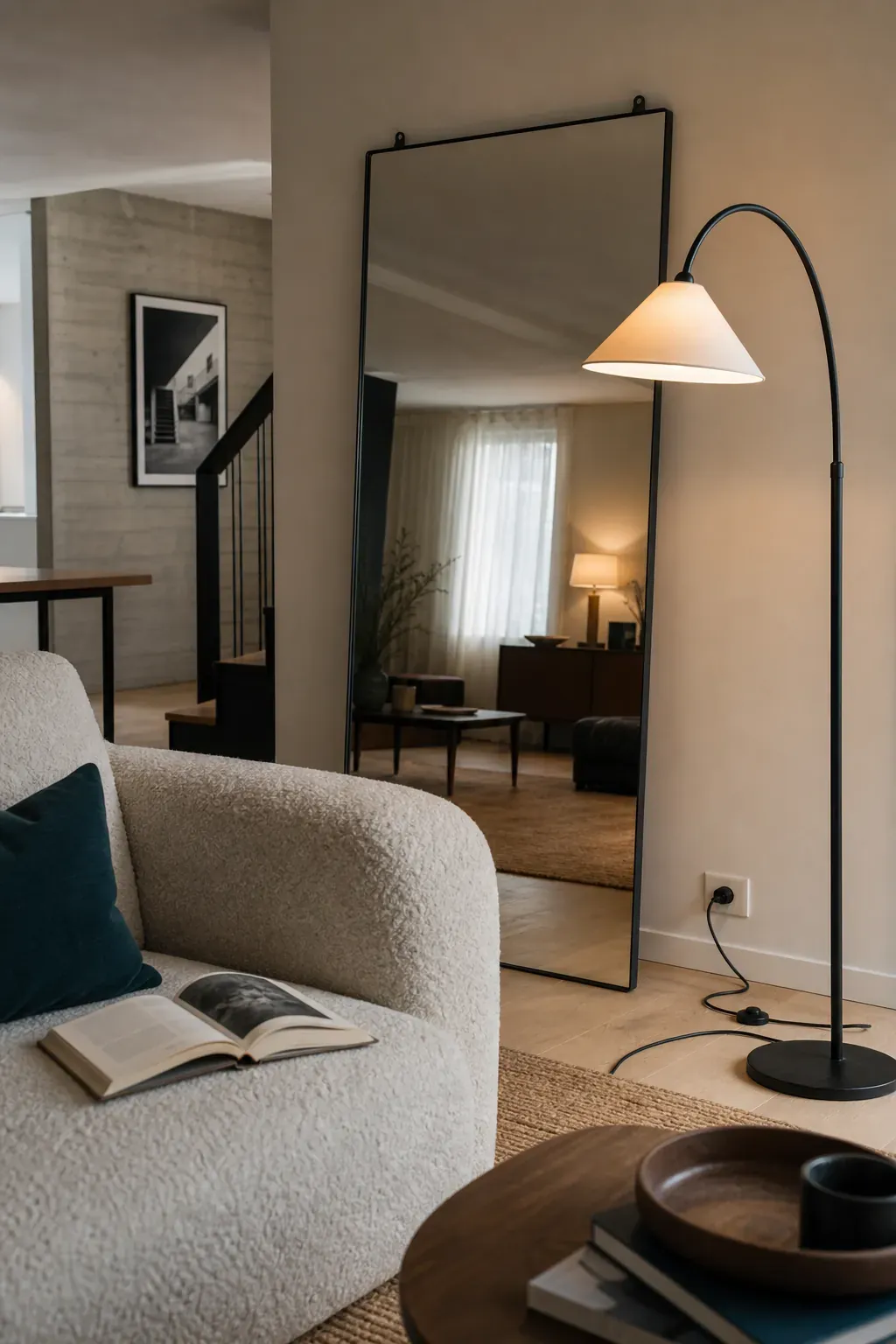
A floor lamp deeper in the room gives the mirror something luminous to catch without stacking every light on the same console. This creates foreground, reflection, and background layers—a strong way to make a flat room feel larger after sunset.
Keep the direct beam useful for a chair or sofa. Reflected glow is a bonus, not a substitute for putting task light where reading happens.
Keep Color Temperature Consistent
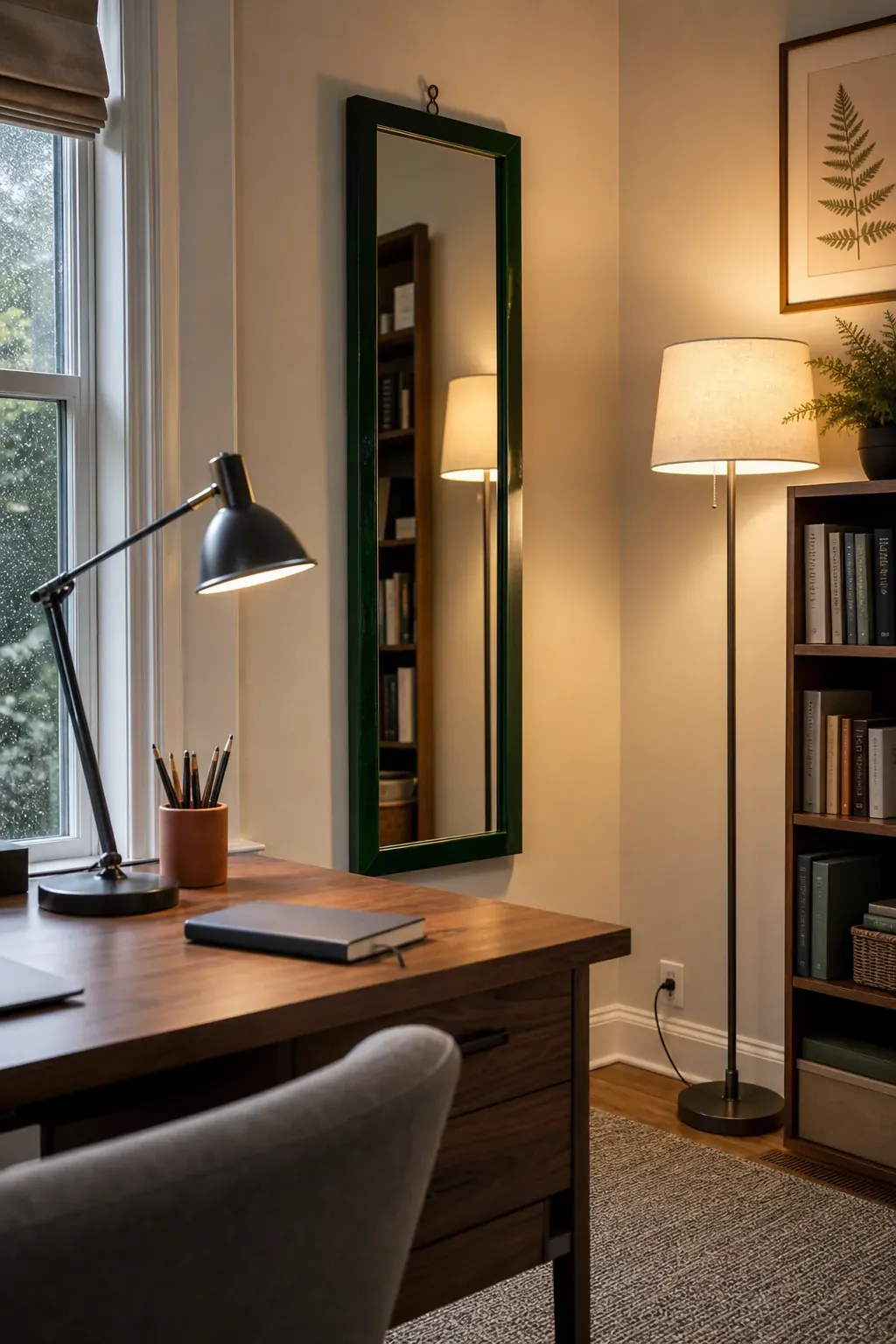
Different lamp styles can coexist, but visibly different color temperatures make the room feel accidental. Use bulbs in a similar warm-neutral family and favor good color rendering so wood, paint, and skin do not shift between corners.
Dimming is more flexible than choosing an extremely warm bulb. Lower output for coziness while preserving a clean, believable color across every reflected surface.
Test the Reflection From Every Seat
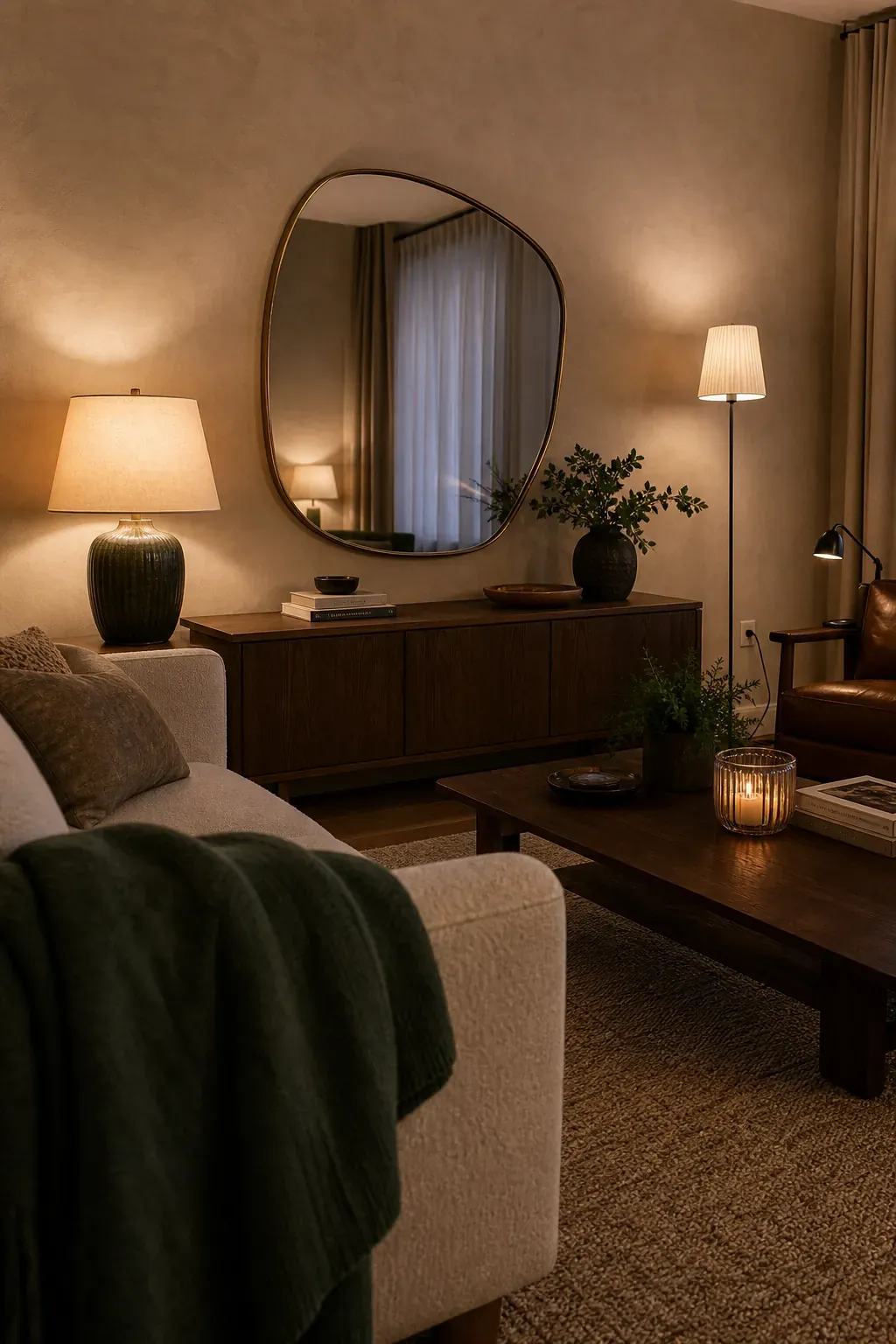
The final test happens at night. Switch off the ceiling light, turn on the lamps you actually use, and view the mirror from the sofa, dining chair, doorway, and walking path. Photograph each view with your phone; a glaring reflection becomes obvious in a small image.
Keep the arrangement that feels comfortable in motion, not only the version that looks balanced head-on. A mirror and lamp mix is finished when it improves the whole room from every regular viewpoint.