
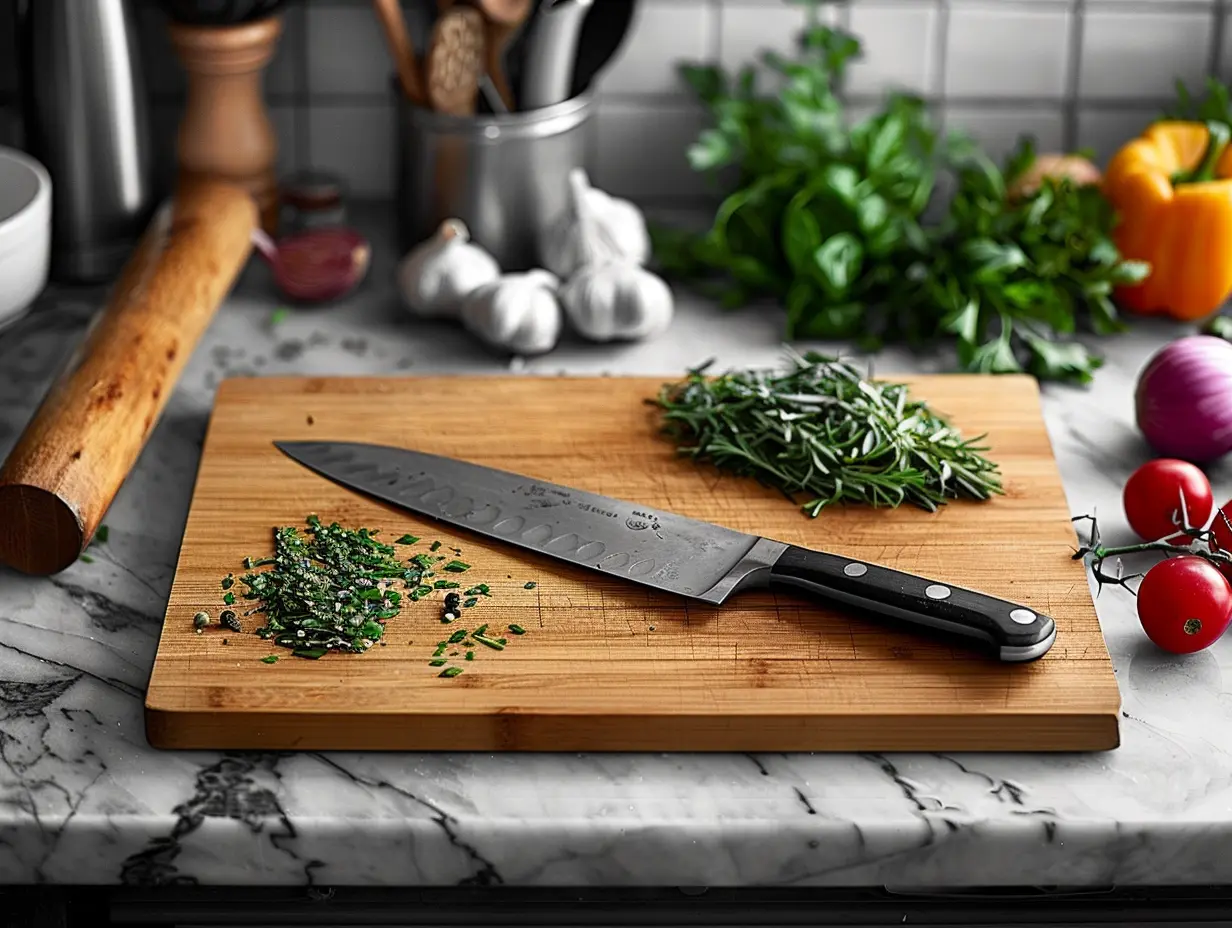
It’s a sad day when your favorite cutting breaks, and you must shop for a new one. However, you’ll quickly find that you’re spoiled for choice, as the market is inundated with chopping blocks made from various materials, and bamboo cutting boards are right up there as some of the most appealing.
But are they any good? What are their pros and cons? What characteristics make them like they are? And under which circumstances are they the optimal board? I’ll address these questions and more in the article below.
Key Takeaways
- Bamboo cutting boards are incredibly hard and durable thanks to the plant’s composition (including silica, cellulose, hemicellulose, and lignin).
- Several positives surround these chopping blocks, including their microbial resistance, ease of use, and water resistance.
- The significant downsides of these cutting boards are that they are constructed with adhesives containing harmful chemicals, making them unsuitable for dishwashers. They are also potentially hard-wearing for knives.
- Thanks to these pros and cons, users have mixed feelings about bamboo cutting boards, with the majority leaning towards their use.
Bamboo Cutting Boards: The Good, Bad, And Pointy Facts
Bamboo products are becoming increasingly popular, thanks to the grass plants widespread distribution, rapid growth, and sustainable nature.
The characteristics of the “wood” make these products equally desirable as most of them are strong and durable, are easy to clean, and have antibacterial and antifungal properties.
However, many argue that chopping blocks made from these grasses are too hard, resulting in damage to your knife’s blade.
Below, we’ll examine both sides of the argument to better determine if this is your next cutting board.
The Pros And Cons Of Bamboo Chopping Blocks
The best way to judge an item is to look at the things that work for it and those that don’t.
The Pros Of Bamboo Cutting Boards
The reason for their popularity is that this material has incredible characteristics, including:
Strong, Durable Material For Cutting Boards
Bamboo is significantly harder than many other wood types, thanks to the fibers, silica, and other components found within. The makeup of the plant material puts it at similar strengths to mild steel, making it less likely to scratch or break during use.
According to the Janka scale (universal scale for an object’s hardness), bamboo cutting boards score 1410 lbf, making them harder than several other wood chopping blocks, including maple and walnut.
Smaller Pores Make The Board Easier To Clean
These boards are slightly more water-resistant than other wood, making them easier to clean (they don’t absorb all the juices produced from cutting ingredients).
Thanks to smaller pores, these boards are less likely to absorb copious amounts of water, reducing the likelihood of breakages and rot.
Antibacterial And Antifungal Properties
The wood-derived products maintain many of the parent plant’s characteristics (depending on the manufacturing process), and the ability to resist certain microorganisms makes these ideal for working with food.
Lightweight
Few things are more annoying than unnecessarily heavy cutting boards, particularly when you want to throw the cut contents into a pan. Thanks to the wood’s lightweight properties, these boards are excellent for moving around without breaking your arms or accidentally dropping the contents.
Aesthetically Pleasing
While a subjective opinion, bamboo is a pleasant-looking material, and many appreciate its light aesthetics.
Sustainable And Affordable
More than 1400 bamboo plants belong to the subfamily Bambusiodae of the grass family (Poaceae). They are widespread globally in tropical, subtropical, and temperate regions, with the greatest species and biomass concentrations in Asia (east, southeast, and surrounding areas).
They also have the fastest growth rates, with some species growing 1 foot/day. Thanks to their widespread nature and quick growth, these plants are a sustainable resource (when harvested correctly), capable of meeting the market’s needs for timber and timber-derived utensils.
This availability further reduces the cost, making them affordable.
The Cons Of Bamboo Cutting Boards
As with all products, chopping blocks made from these grasses have some drawbacks.
Concerns About Cutting Board Adhesives
Adhesives used in some cutting boards, particularly those made by gluing wood or bamboo strips, have raised health concerns. The toxicity of these adhesives varies depending on their chemical composition, with some potentially releasing harmful substances over time. This has led to worries about the safety of food prepared on these boards, especially as they age and undergo regular kitchen use.
However, advancements in adhesive technology and stricter regulatory standards have significantly reduced these risks. Many cutting boards now use safer adhesives that comply with food safety regulations, including those set by the U.S. Food and Drug Administration (FDA). Choosing cutting boards certified as safe for food contact and maintaining them properly can help minimize any potential health risks.
Bamboo Cutting Boards Can’t Go In The Dishwasher
Unfortunately, the dishwasher’s hot water and soapy environment hasten the breaking down of adhesives, destroying your cutting board.
To prevent this, you’ll need to hand wash these chopping blocks, a tedious process.
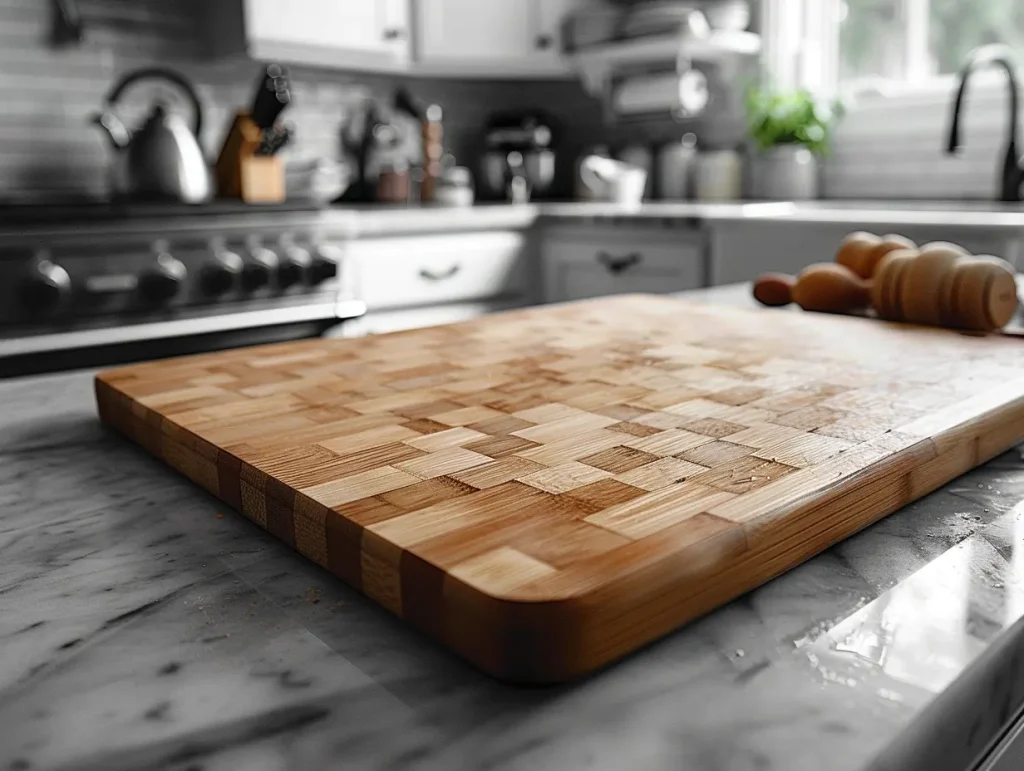
Bamboo Cutting Boards Might Damage Your Knives
The most significant argument against these boards is that they might damage your knife. The silica and hard fibers of the wood push back with the same amount of force with which you use to chop ingredients.
These plant parts are comparable to mild steel, so inferior-quality knives quickly become blunt. However, there is considerable debate surrounding the truth of these claims, and many people love their bamboo boards.
Situations Where Bamboo Cutting Boards Are Good/Not Good
Thanks to their sturdy construction, these boards are excellent for your kitchen but may not be suitable for every application.
When should you use a bamboo cutting board? If you must choose between glass or bamboo, choose the wooden option, as it is “softer” on your knives. However, better quality knives made of harder steel are suitable for these cutting boards.
Softer knives may blunt and chip more readily when used on these cutting blocks.
Are Bamboo Cutting Boards Worth It?
It’s hard not to say yes when comparing these boards to other available options. They are hard. They are durable, and they are affordable.
Although there are certain drawbacks, these boards are sustainable (when responsibly grown and harvested), and are superior in many ways, making them ideal for most households.
Conclusion
Bamboo is a popular material thanks to its versatility, strength, durability, and aesthetic appeal. Bamboo cutting boards are ideal for most households and provide several benefits. However, some disagree, stating that these boards may damage knives due to their hardness. If you have good quality knives and don’t mind handwashing, a bamboo cutting board is right for you!