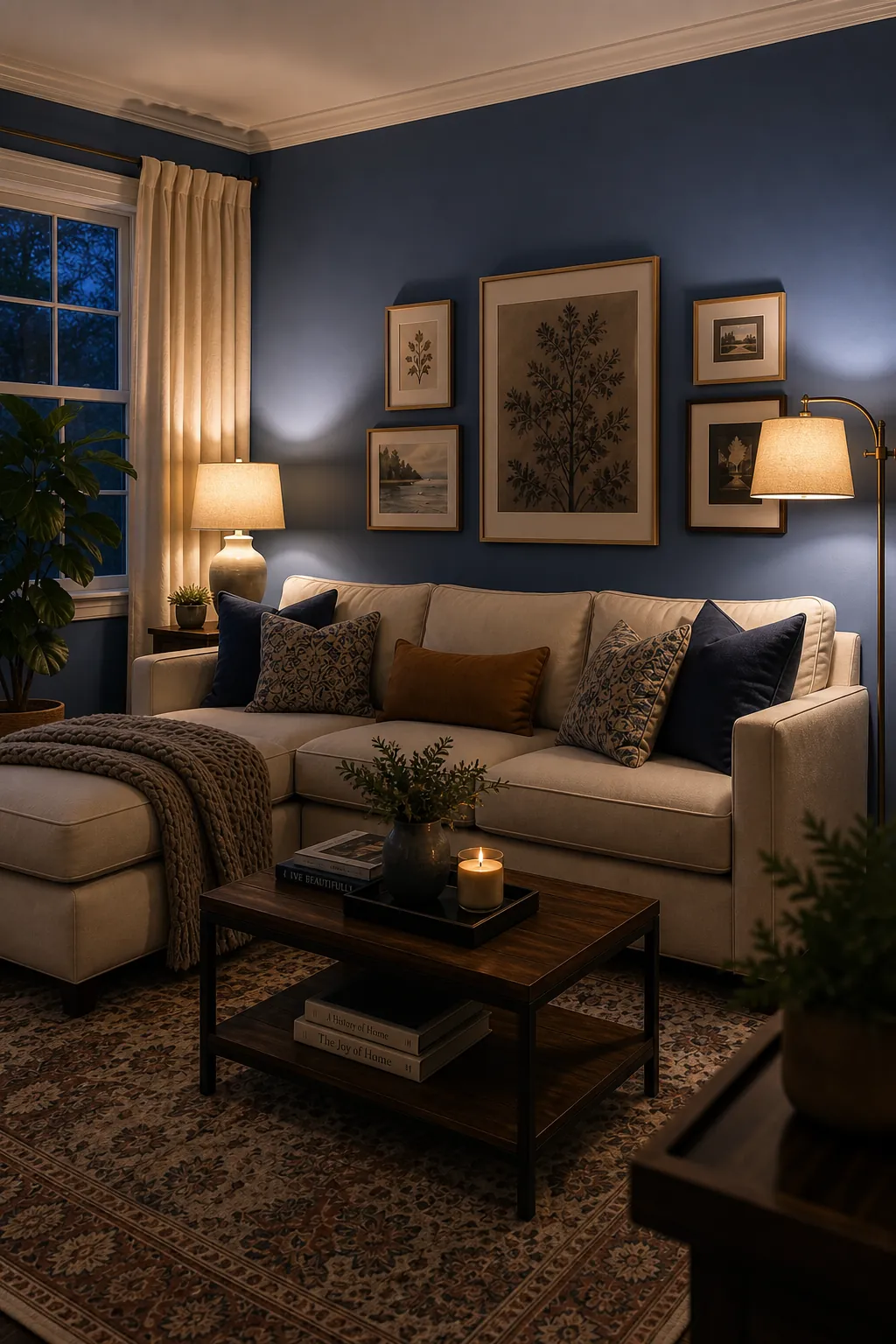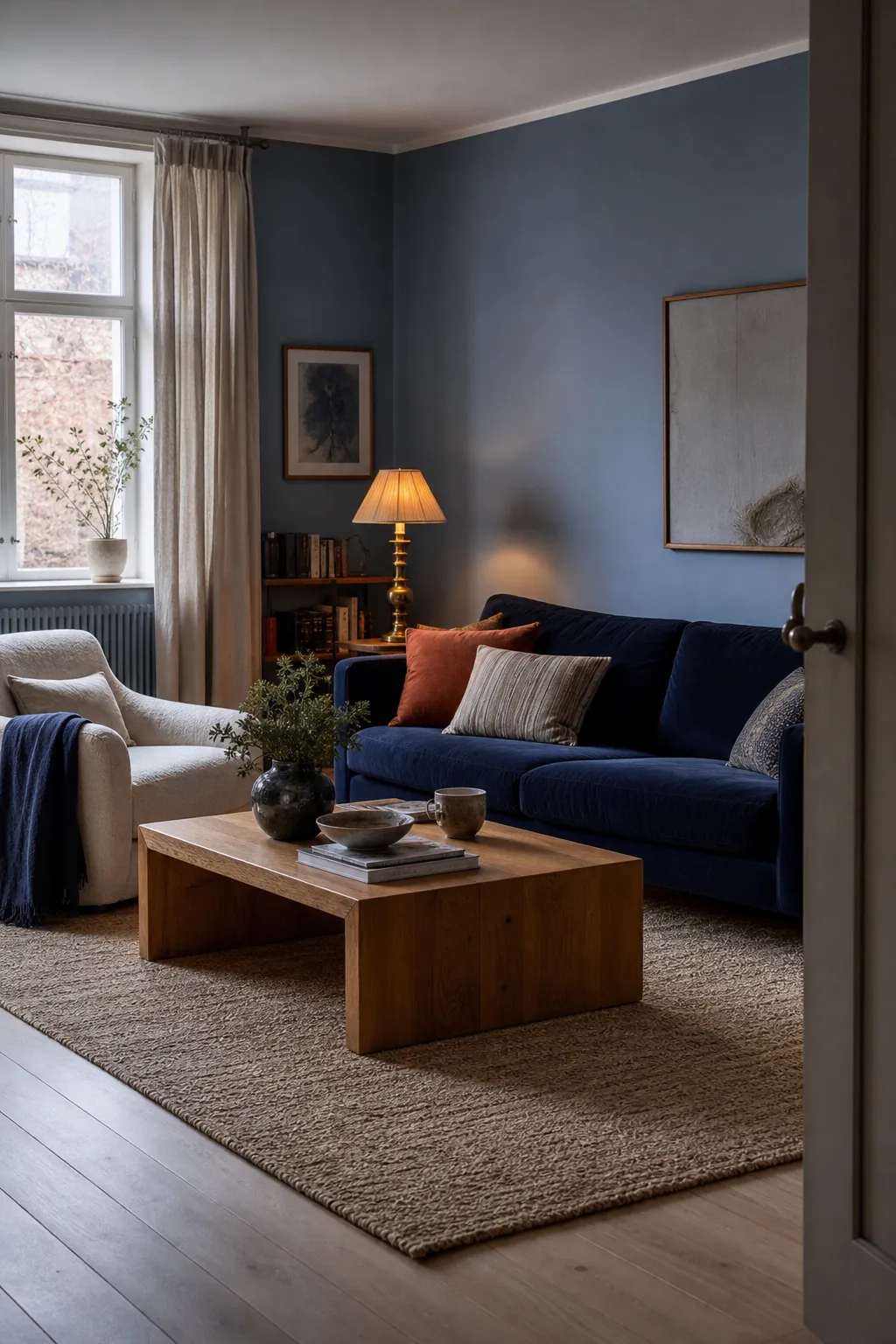
A blue living room can feel calm and expansive, but it can also turn cold, flat, or oddly bathroom-like when every surface uses the same bright blue. The fix is not to abandon the color. The best blue themed living room ideas vary the depth of blue, give it warm materials to play against, and use texture so the room changes from morning to evening. These rooms treat blue as a flexible family rather than a single paint chip.
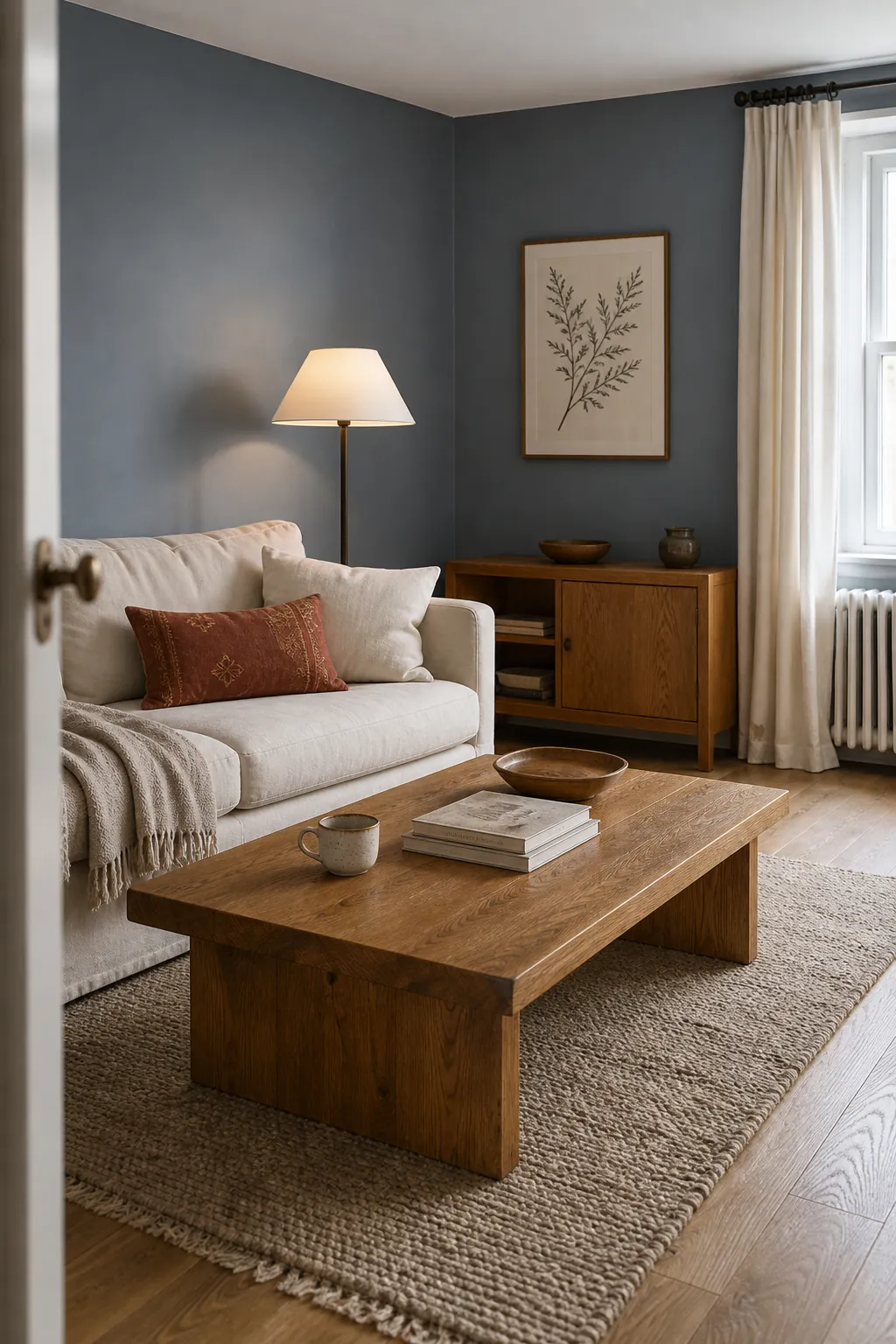
Layer Dusty Blue With Warm Oak
Dusty blue walls create a quiet envelope without the sugary quality of pale sky blue. Their gray undertone looks especially grounded beside honest oak grain. Use oak on the coffee table, frames, or cabinet rather than scattering five unrelated wood stains through the room.
The wood is not merely an accent; it is the temperature bridge. Cream upholstery, rust stitching, and an oatmeal rug can complete that bridge while letting blue remain the main impression.
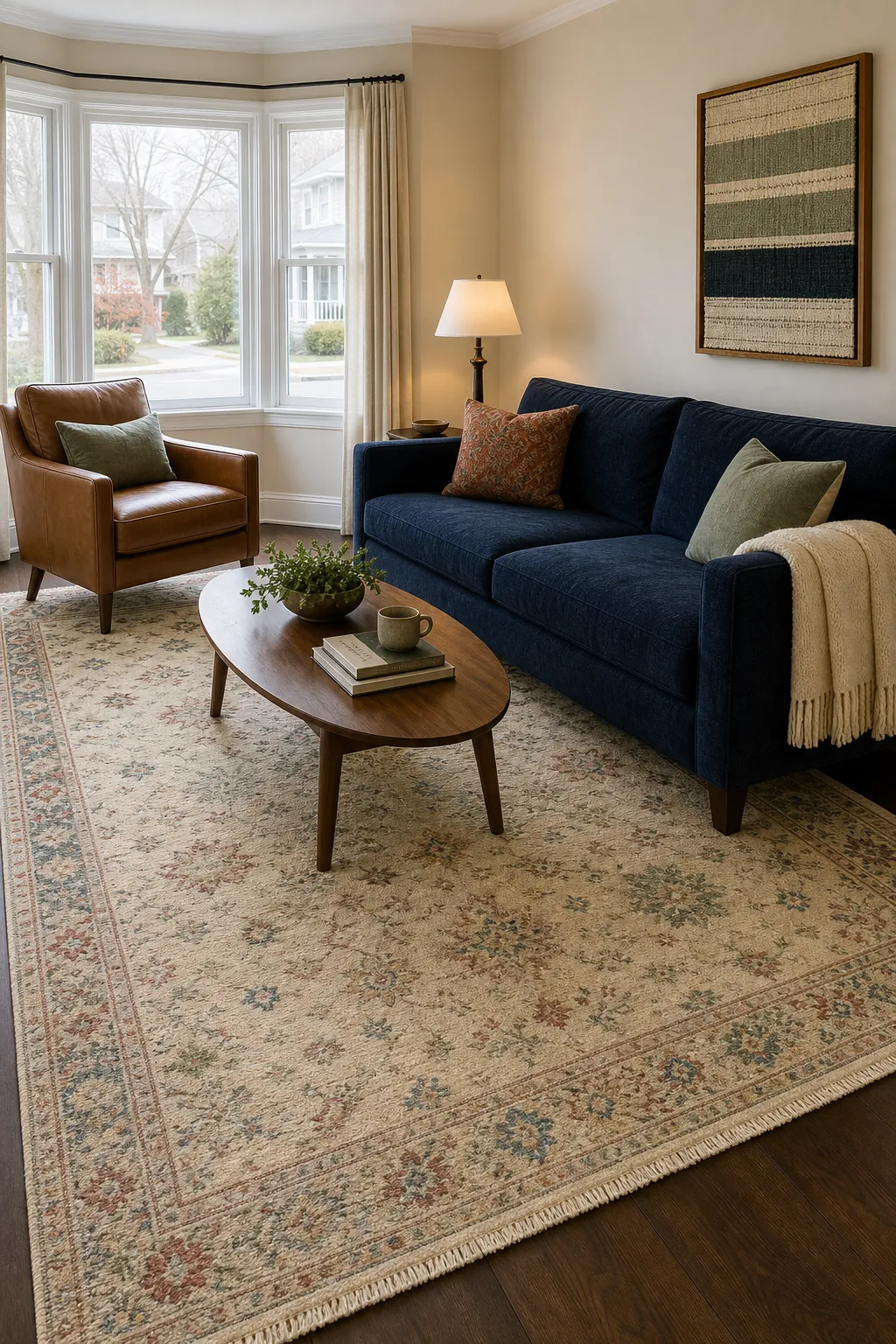
Build a Navy Sofa Around a Lighter Rug
A navy sofa has visual weight, so the floor beneath it should provide relief. Choose a large rug with a cream or sand field and a restrained blue pattern. It should extend beneath the sofa’s front legs and connect the chairs and coffee table into one conversation area.
Pull one minor rug color into pillows or a throw—muted rust, straw, or faded green works well. The room will look composed without surrounding the sofa in more dark blue.
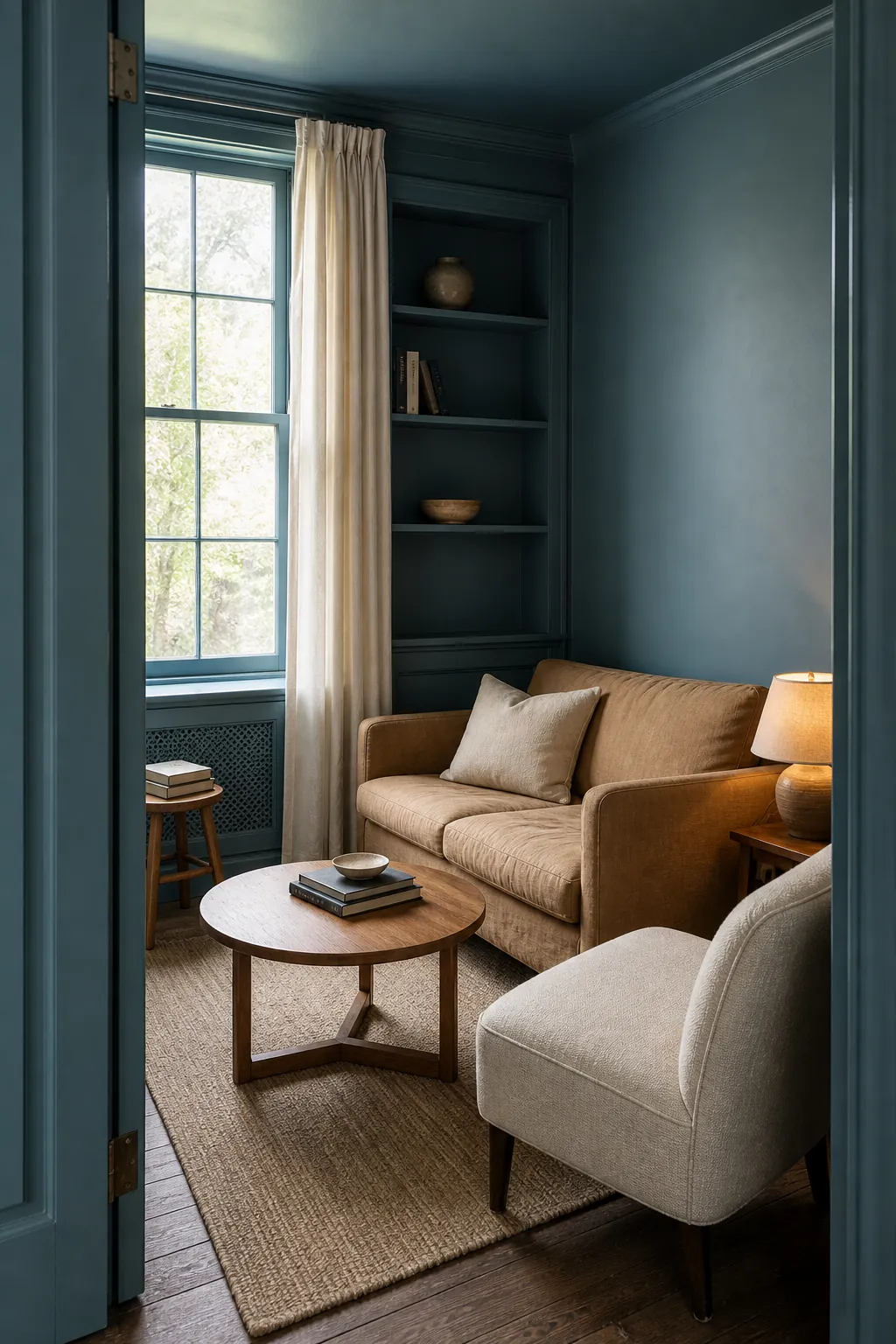
Color-Drench a Small Room in Muted Teal Blue
Color drenching works when the blue is complex enough to shift with the light. A muted teal-blue across walls, trim, and shelving smooths visual interruptions and can make a small room feel more coherent. Test it beside the actual floor, upholstery, and bulbs before committing.
Keep the ceiling slightly lighter if daylight is scarce, then introduce cream curtains and medium wood. A desaturated blue feels enveloping; a highly saturated one can become clinical.
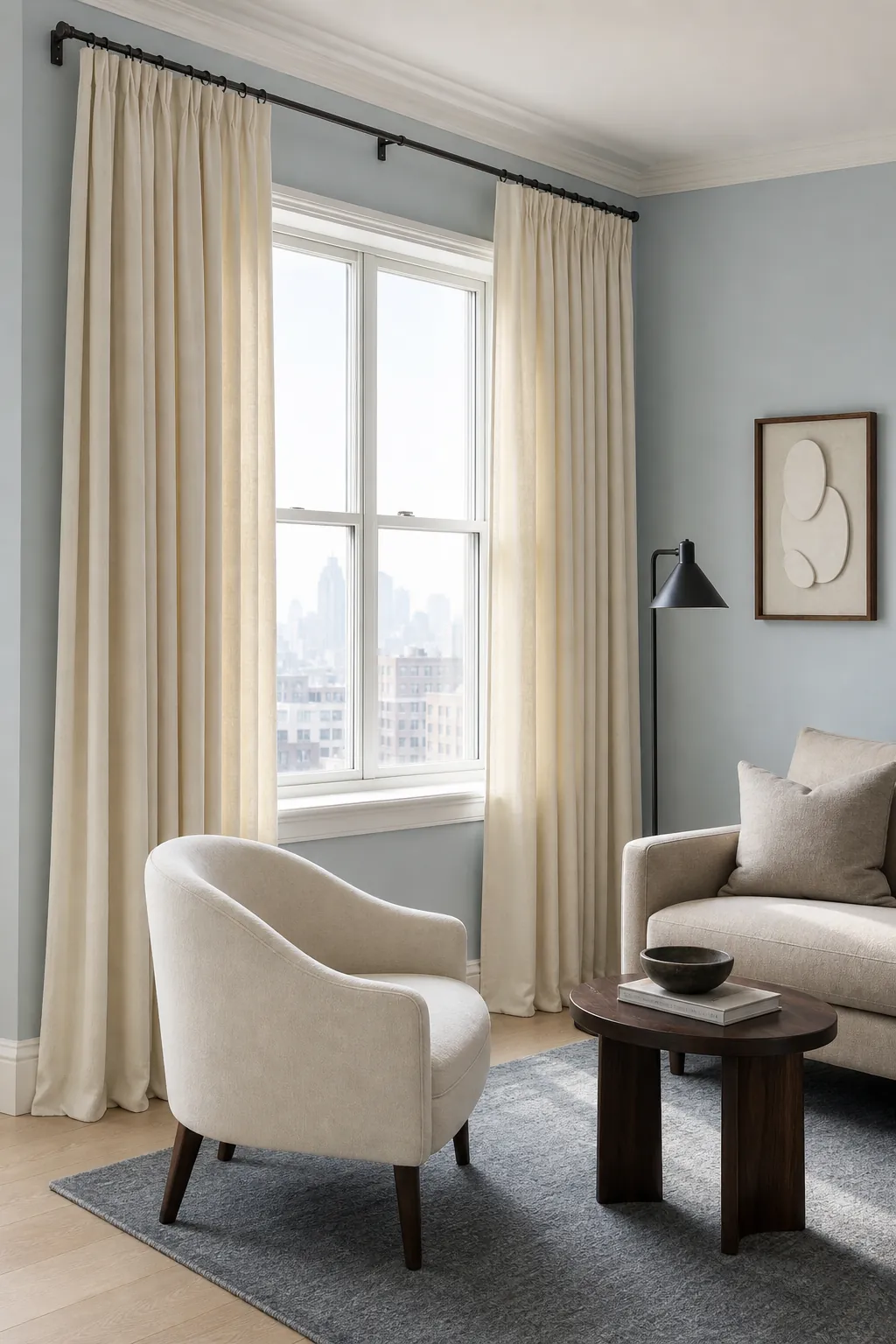
Frame Pale Blue Walls With Cream Curtains
Pale blue can feel airy rather than juvenile when it is framed with full-length cream curtains. Hang the panels high and wide so daylight reaches the room and the fabric forms substantial warm verticals around the window.
Choose a blue with a softened gray or green undertone, then repeat cream in a lampshade and one upholstered chair. A small amount of dark wood or black metal prevents the palette from floating away.
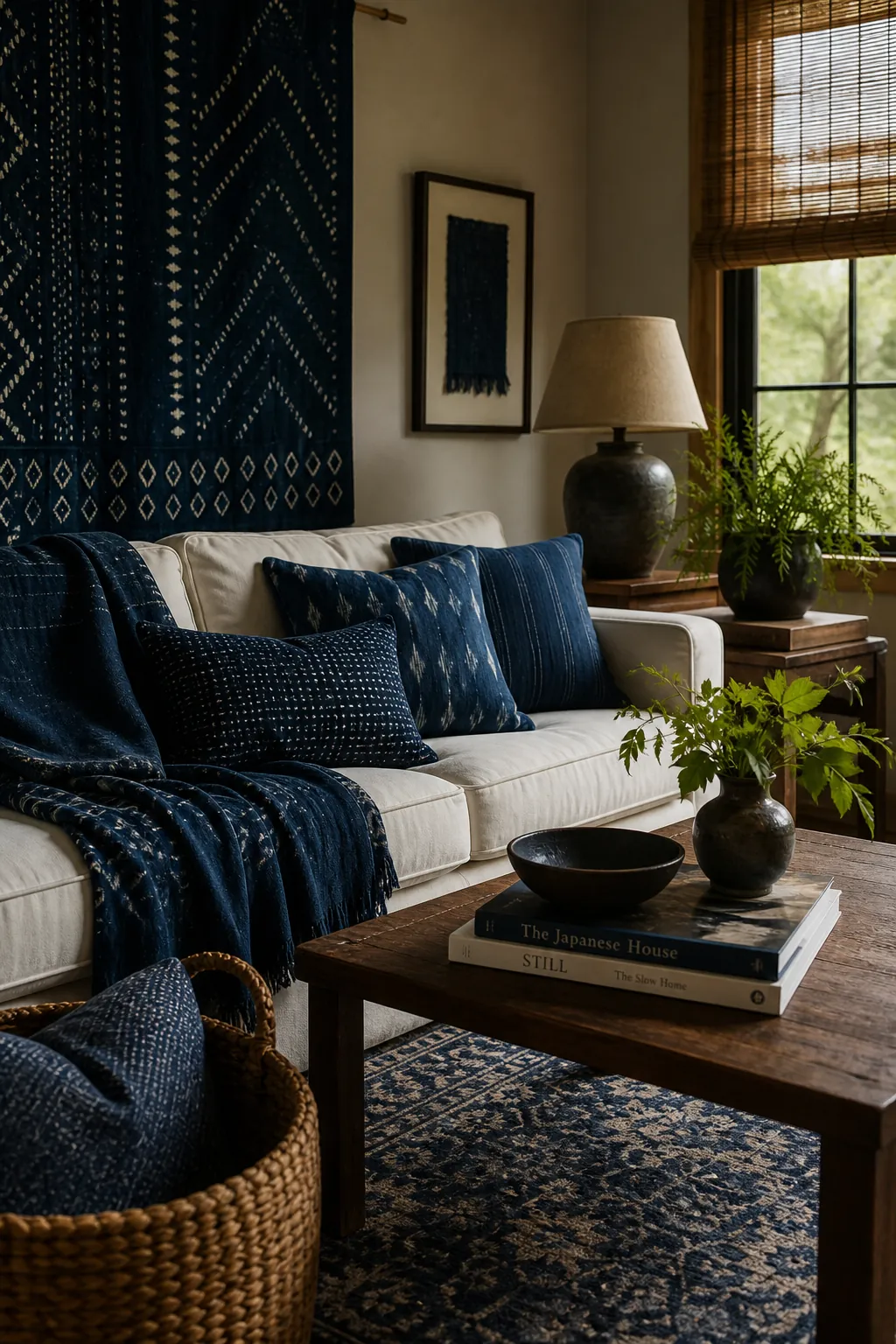
Mix Indigo Textiles Instead of Matching Them
Indigo gains depth when each textile has a different scale and method: a block-print pillow, narrow woven stripe, solid velvet, and faded patterned throw. Keep their blues related but not identical. The variation makes the scheme feel collected and disguises everyday wear.
Give the eye quiet places between patterns. A plain sofa, natural rug, and undecorated table let the textiles remain expressive without making the blue living room aesthetic visually noisy.
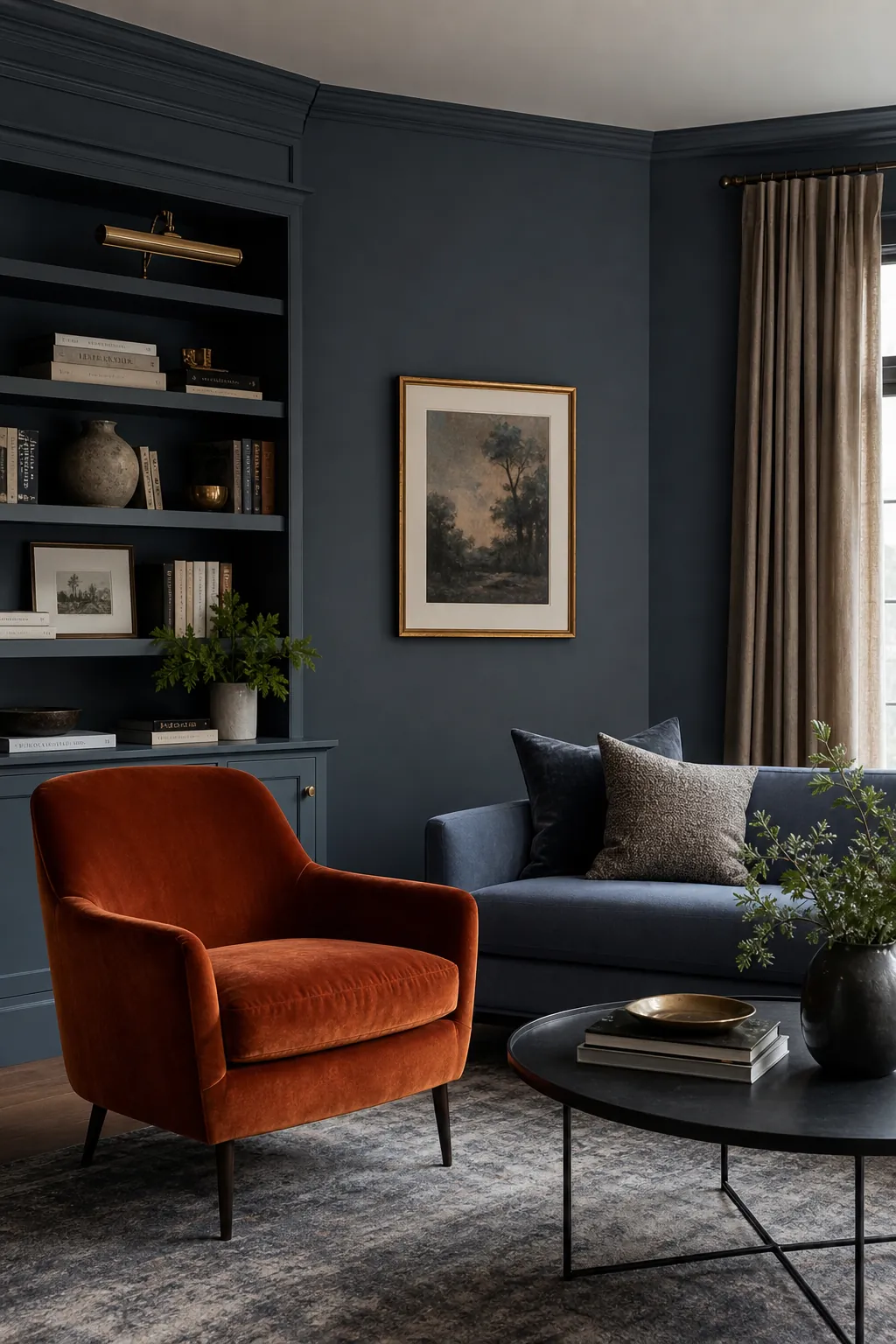
Warm Steel Blue With Rust and Brass
Steel blue is elegant but benefits from a limited warm counterpoint. Rust velvet on one chair or a pair of pillows adds enough complementary color; aged brass on a lamp or tray supplies a smaller reflective note.
Avoid distributing rust and brass evenly around the room. Cluster them near the seating area so the contrast feels intentional. Warm 2700K lamps will deepen both colors after sunset without turning the blue muddy.
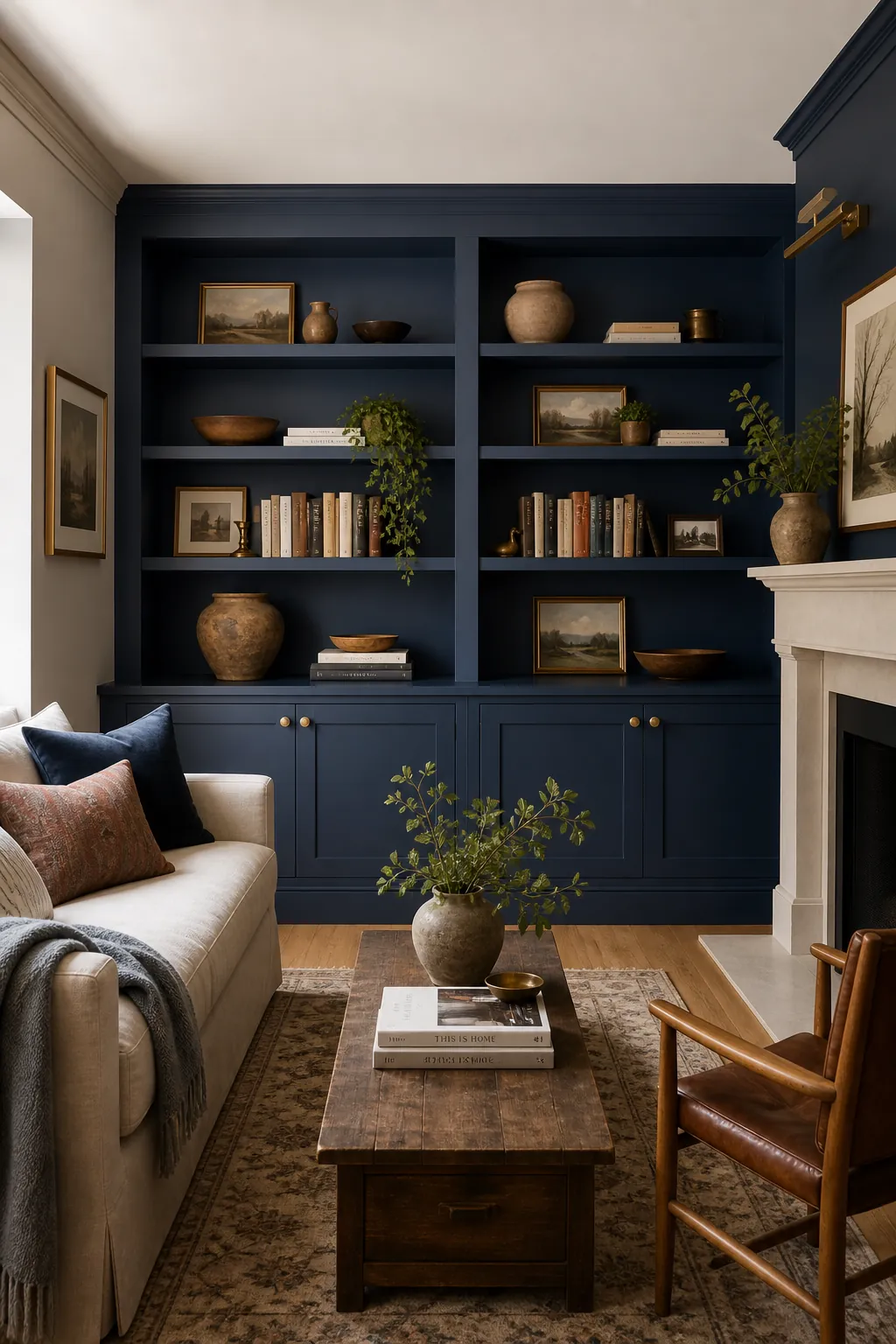
Use Blue Built-Ins as One Strong Plane
Painting built-in shelves deep blue gives the room a single architectural anchor while leaving the remaining walls lighter. The darker recesses help books and pottery read clearly, but open space is essential—every shelf does not need to be full.
Paint the shelf backs and frames together for a seamless block. Repeat the blue only once or twice elsewhere, perhaps in a cushion seam and a small ceramic bowl, rather than trying to balance every corner.
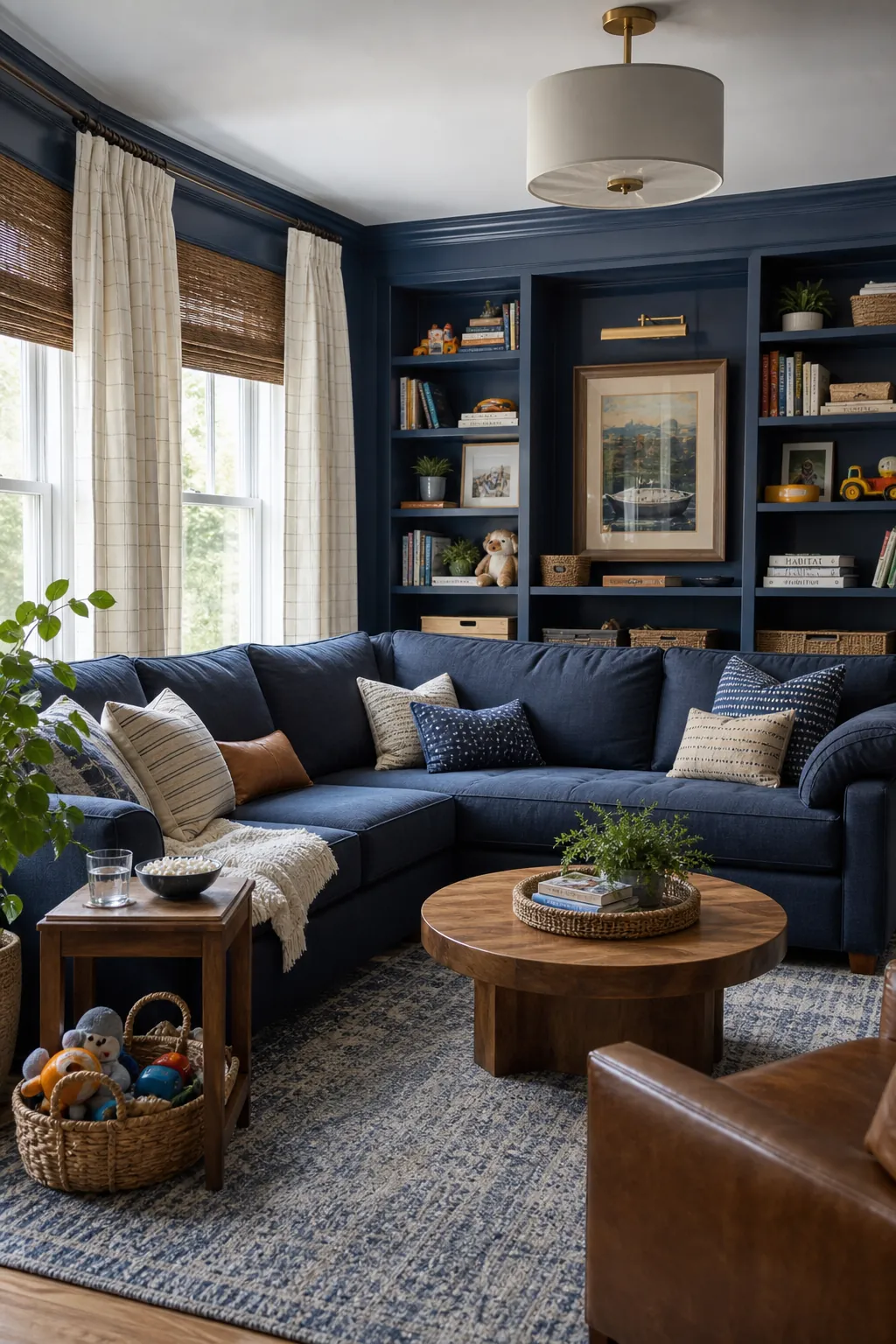
Bring Denim Blue Into a Family Room
Denim blue is forgiving in a busy family room because variation looks natural rather than damaged. A slipcovered sofa, washable covers, and mid-tone rug can handle daily use while still building a coherent blue family room.
Pair denim with cognac leather, woven baskets, and sturdy pale wood. Comfort improves the palette: a room feels warmer when its materials invite real use. Leave space for toys, throws, and traffic instead of styling every surface.
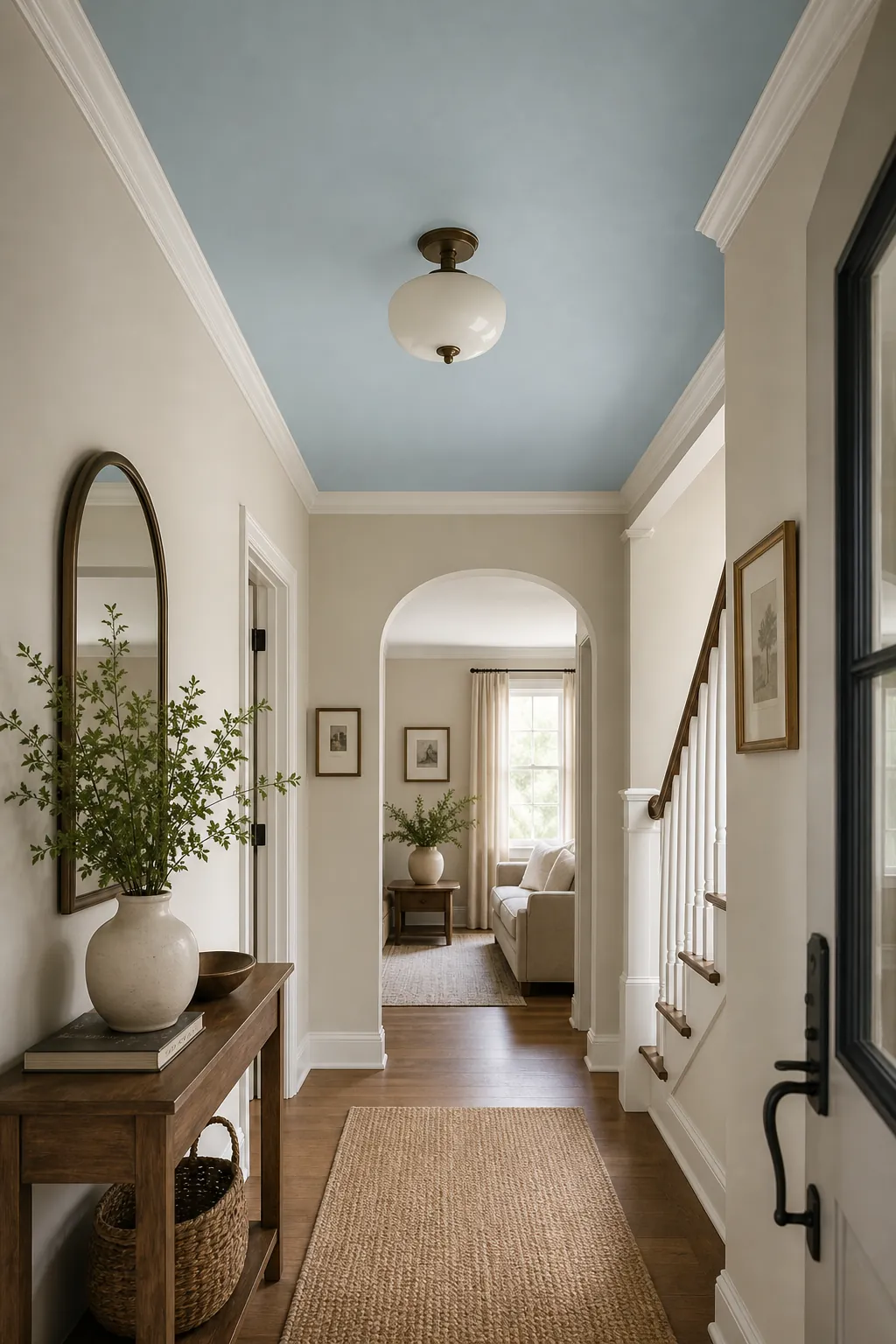
Paint the Ceiling a Quiet Sky Blue
A soft blue ceiling can lift a room whose walls need to remain cream or neutral. Choose a dusty, low-saturation tone rather than a bright nursery blue, and carry it onto the ceiling medallion or shallow molding for continuity.
This works particularly well with a warm wood floor and simple paper or linen lampshades. The blue is most noticeable when seated, which gives the room character without competing with furniture and art at eye level.
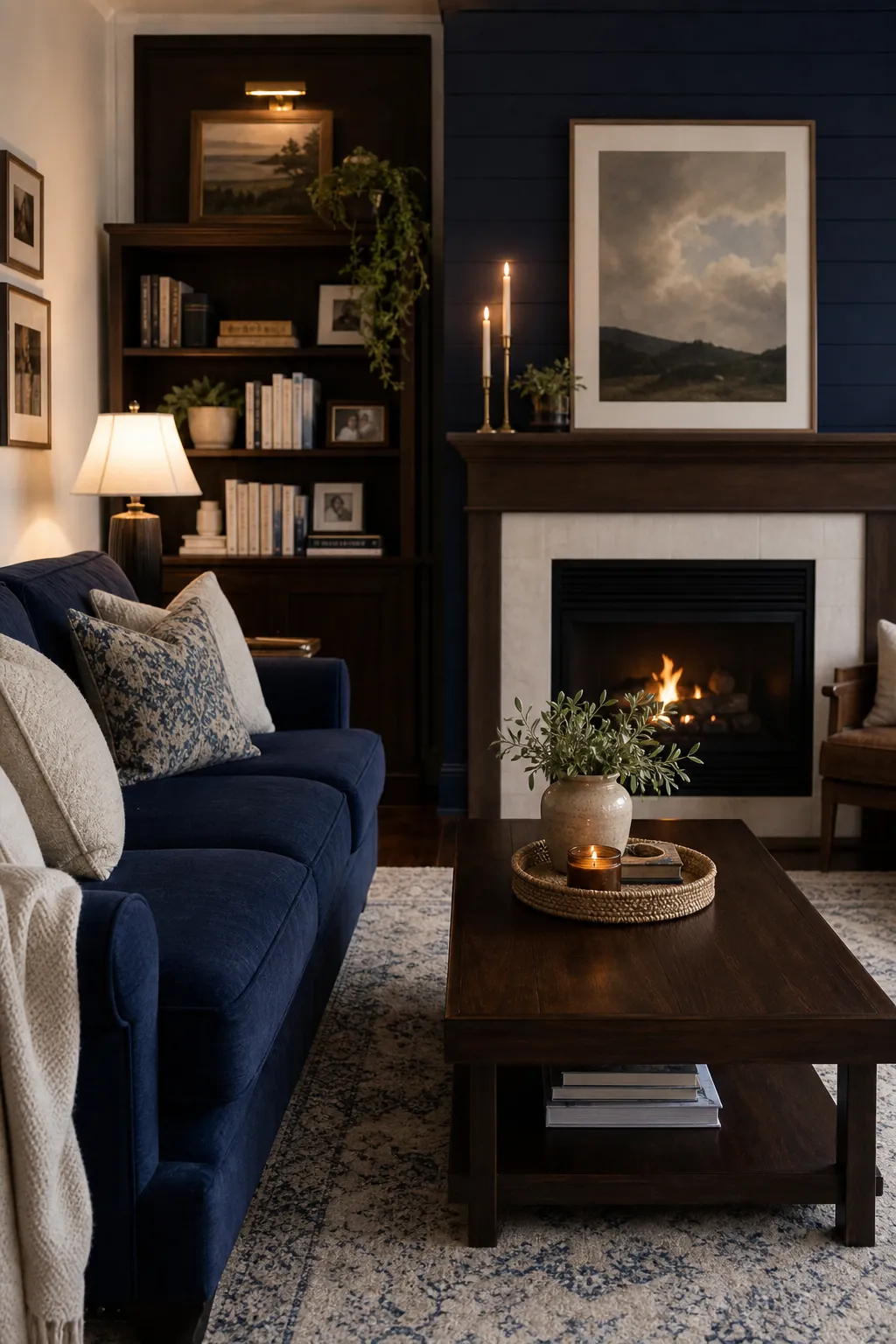
Anchor Blue and White With Dark Wood
Blue and white becomes more grounded when dark wood outlines the room. A vintage chest, framed mirror, or walnut coffee table introduces age and depth between crisp textiles and painted surfaces.
Keep the white warm rather than brilliant. Mix solid blue with one traditional pattern and a few plain natural fabrics. The restraint prevents a non-coastal home from drifting into an accidental nautical theme.
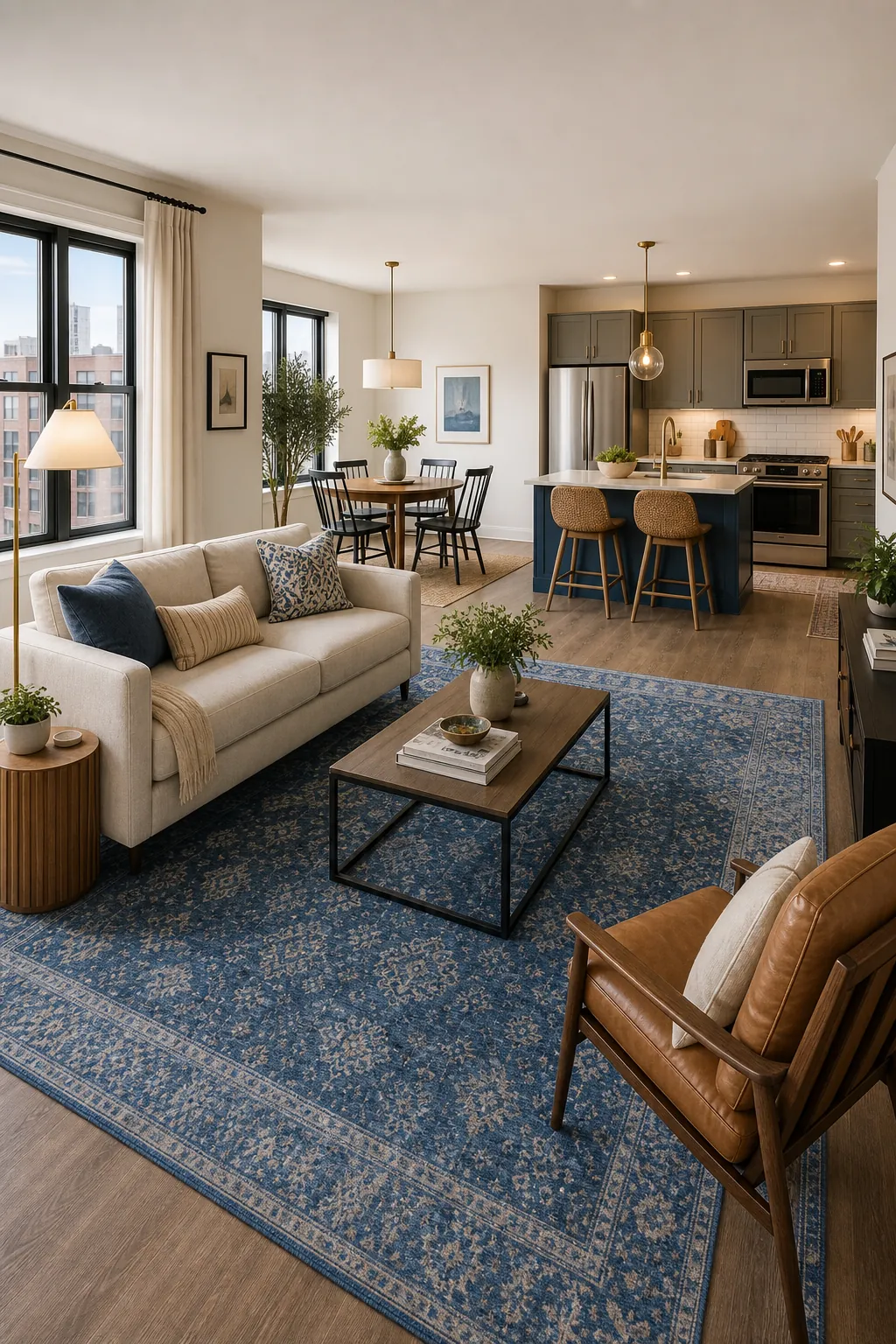
Let a Blue Rug Define an Open-Plan Zone
In an open plan, a blue rug can define the living area without painting every connected wall. Select a pattern with several blue values plus a shared neutral from the dining or kitchen zone.
Size it to hold the major seating pieces, not just the coffee table. The blue field should visually connect furniture while the rug edge leaves a consistent border of flooring. One nearby blue object can echo it across the transition.
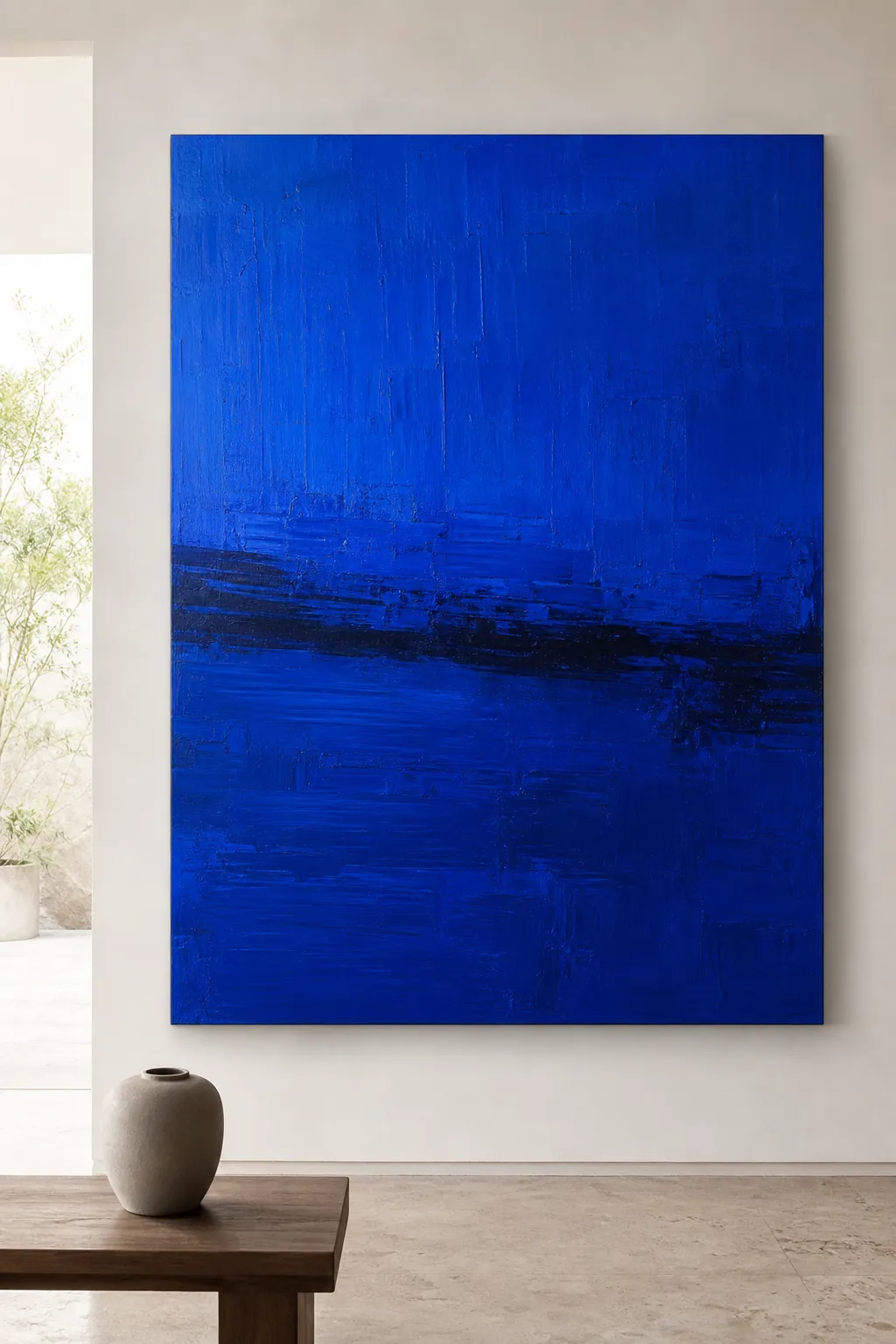
Balance Cobalt Art With Neutral Upholstery
Cobalt can be powerful without covering a wall. Let one large, specific artwork carry the saturated blue, then surround it with oatmeal seating, warm plaster, and a small echo in a book spine or glass vase.
Give the art physical breathing room and avoid adding several equally loud accents. A single intense blue moment often feels more sophisticated than a room of medium-strength blue.
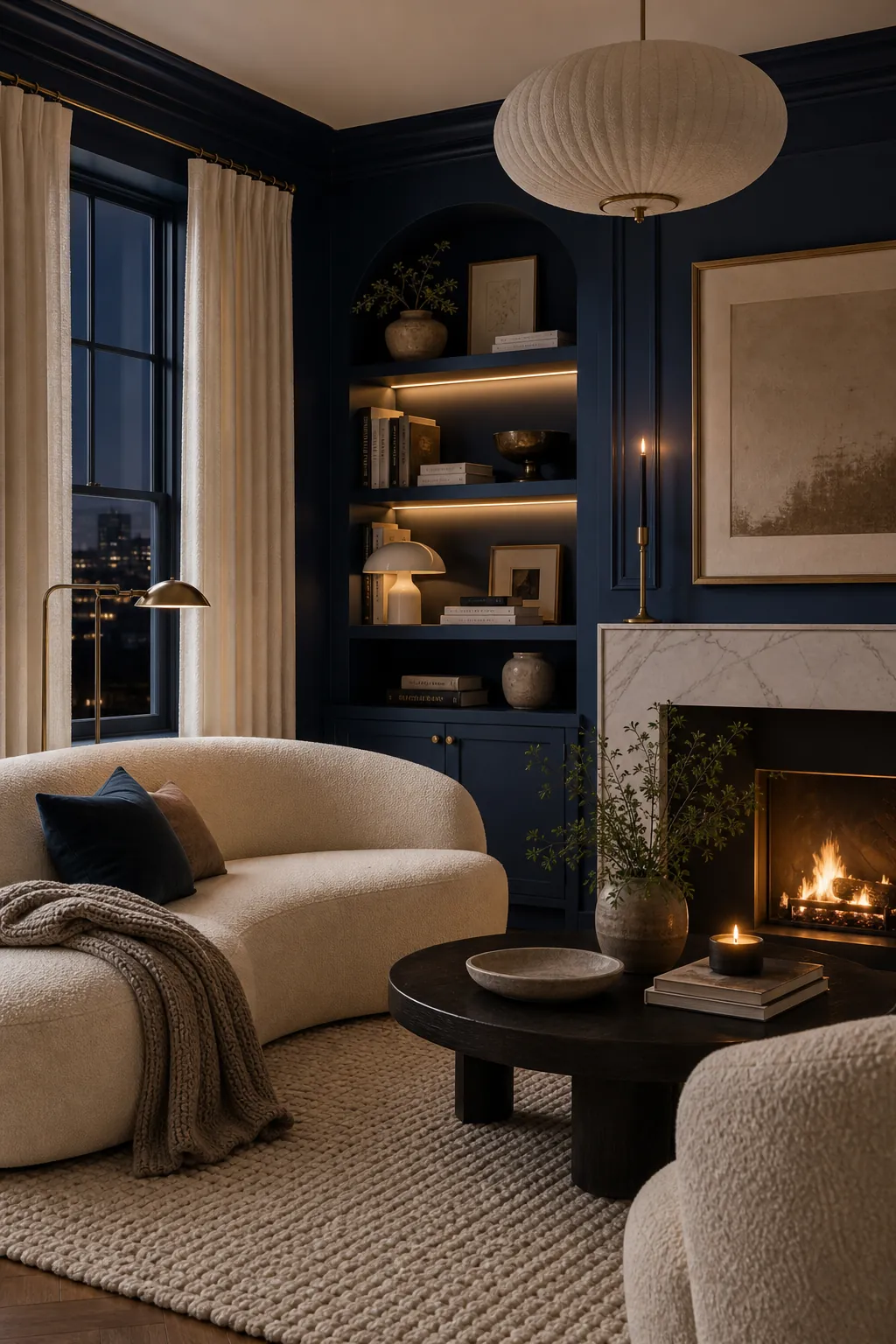
Soften Midnight Blue With Bouclé and Linen
Midnight blue can make a bright room feel intimate, but it needs surfaces that catch light. Cream bouclé, natural linen, and a thick wool rug interrupt the dark planes and keep the seating legible in the evening.
Use the deepest blue on one wall or a substantial sofa, then allow lighter materials to occupy most of the foreground. Brass or warm oak can add a narrow highlight without pushing the room toward glamour.
Pair Blue-Green Walls With Terracotta
A blue that leans green changes beautifully through the day and works well with terracotta’s dry warmth. Use terracotta on one substantial object—a low chair, large planter, or curtain stripe—rather than sprinkling tiny orange accents everywhere.
Natural sisal, cream cotton, and medium wood connect the two colors. Test the wall shade in morning, afternoon, and lamplight because its green undertone will strengthen and recede with changing conditions.

Layer Blue for Evening, Not Just Daylight
A successful blue room cannot be judged only at noon. In the evening, switch off the cool ceiling light and use several shaded lamps at different heights. Warm bulbs reveal wood, soften gray undertones, and keep navy from collapsing into black.
Let the darkest blue sit near a warm lamp, place a lighter blue where it can catch the remaining window light, and keep cream or sand within the seating area. The palette works when it still has depth after sunset. If every blue turns flat or icy at night, change the lighting before repainting the room.