
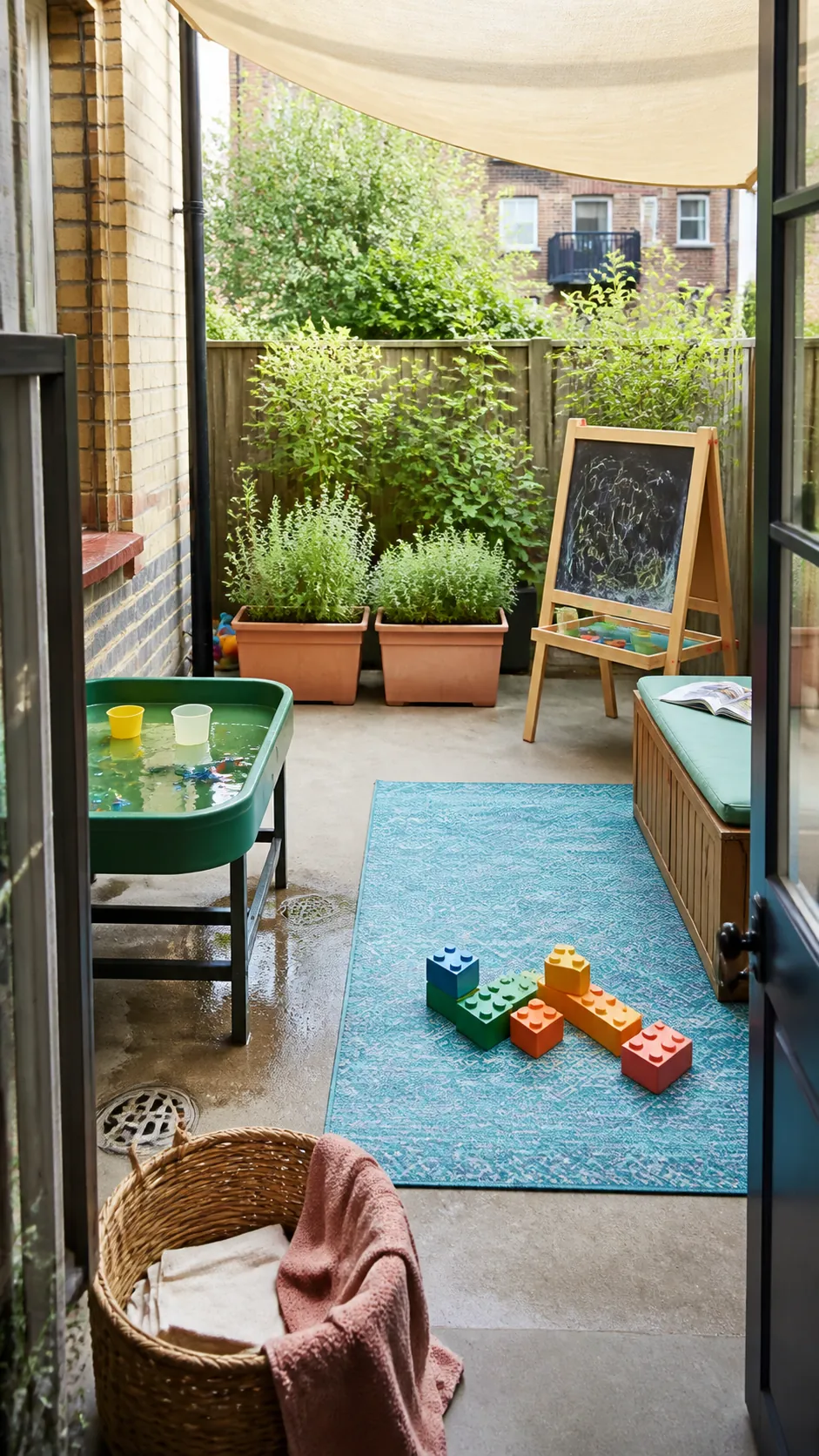
A small patio does not need a miniature swing set to become the place your kids ask to visit first. In fact, fixed equipment can consume the very thing a compact space needs most: room to change. The most useful small patio ideas for kids create several kinds of play with pieces that stack, fold, roll, or earn their footprint in more than one way.
Parents discussing tiny yards online keep returning to the same concerns: a big structure may crowd out running room, toddlers can lose interest quickly, and loose toys become a daily cleanup job. The answer is a patio that behaves like a flexible playroom. Before adding anything, keep the door and main walking route clear, supervise young children closely, and match every activity to your child’s age. For climbing or elevated equipment, follow the manufacturer’s clearance and surfacing guidance; the U.S. Consumer Product Safety Commission’s home playground guidance is a sensible starting point.
A Roll-Away Water Table
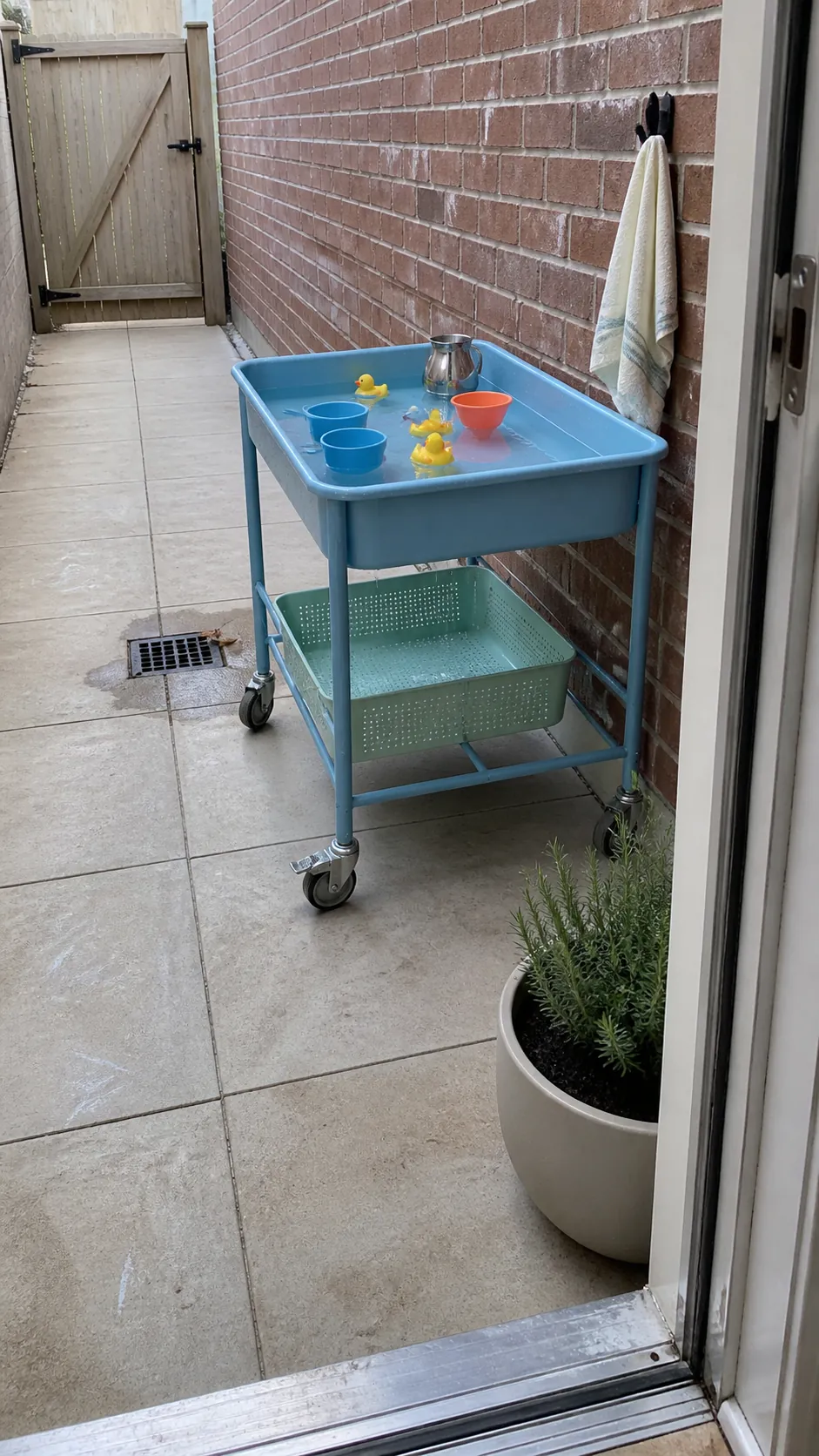
A shallow water table delivers scooping, pouring, floating, and pretend cooking in one compact station. Choose a model with a drain plug and wheels, or place a lightweight bin on a locking utility cart. That makes it easy to move the activity into shade, then roll it beside a drain for cleanup.
Keep the accessories deliberately limited: two cups, a funnel, a small pitcher, and a few floating toys are enough. Store them in a perforated basket that can drip-dry underneath. Empty the basin after play rather than leaving standing water, and treat even a shallow setup as an activity requiring close adult supervision.
A Fold-Down Chalk Studio
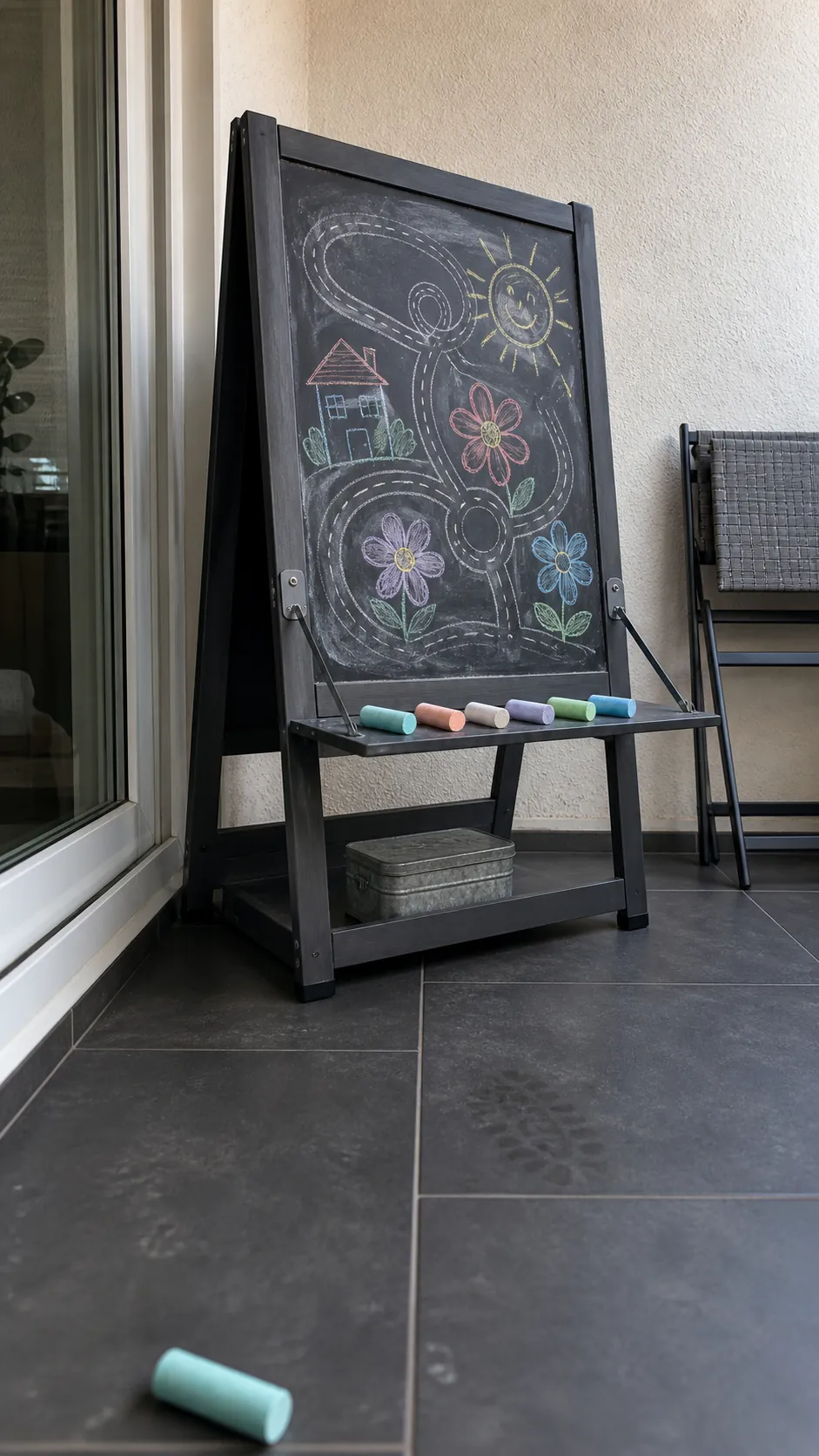
Turn a blank fence panel or freestanding easel into a vertical art zone. A weather-resistant chalkboard uses almost no floor space, while a fold-down ledge gives children somewhere to line up chalk and brushes. Renters can use a weighted A-frame board instead of drilling into a wall or railing.
Draw a road one day, a restaurant menu the next, and a giant collaborative creature after that. A small lidded tin keeps chalk dry. Position the studio where runoff will not stain a neighbor’s surface, and keep the folding hardware covered so little fingers cannot reach a pinch point.
A Mini Mud Kitchen
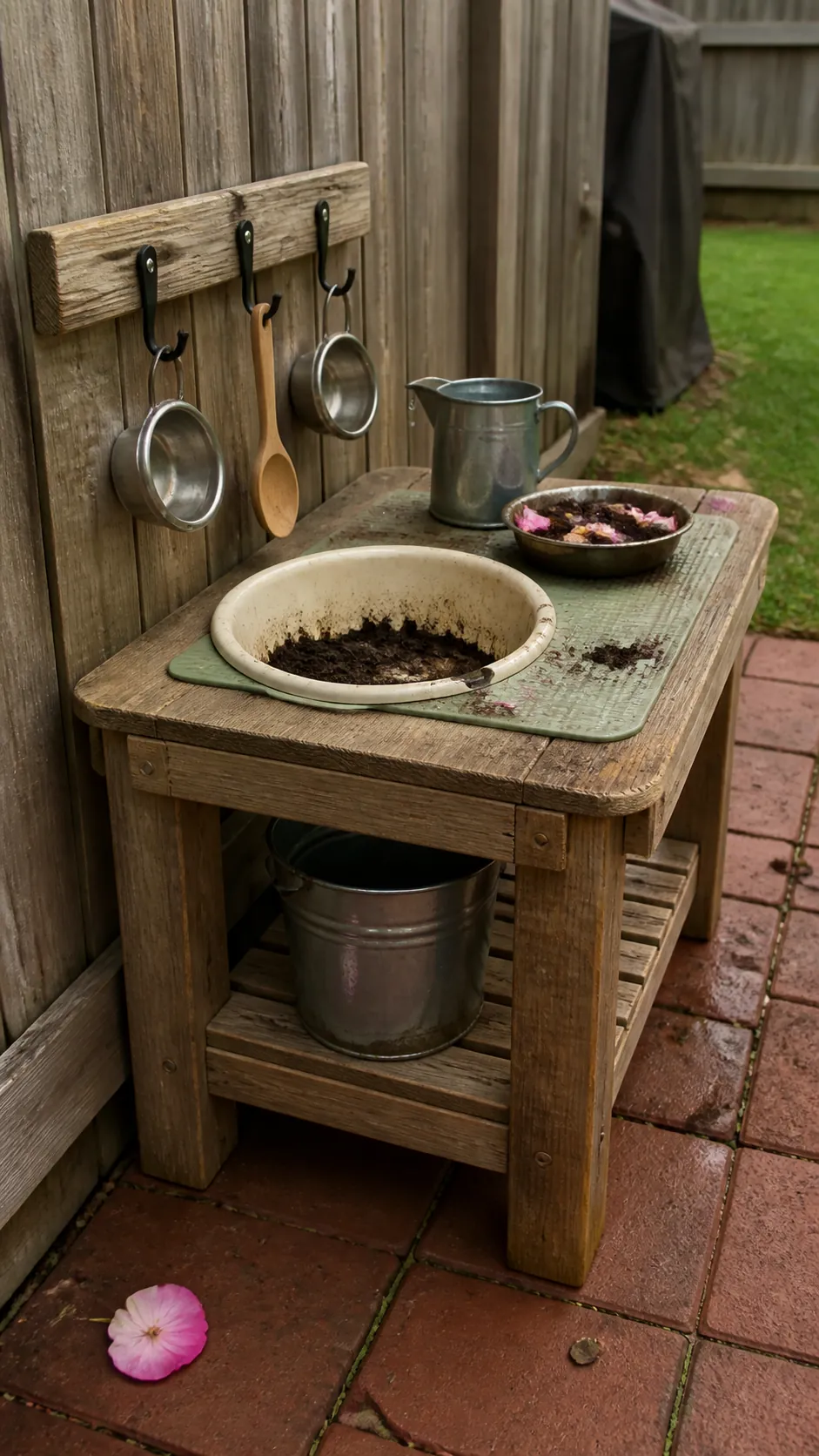
A narrow potting bench can become a convincing mud kitchen without taking over the patio. Add one removable dishpan, a short row of hooks, and a crate of stainless-steel bowls and wooden spoons. Use potting soil, leaves, flower petals, and water rather than mystery materials gathered near treated plants or pet areas.
The best version is intentionally modest. Children need room to mix and invent, not a full outdoor cabinet system. A washable mat underneath defines the messy zone, while a nearby bucket makes the reset part of play. When every tool has one visible hook, cleanup becomes understandable even to preschoolers.
A Cushion Building Corner
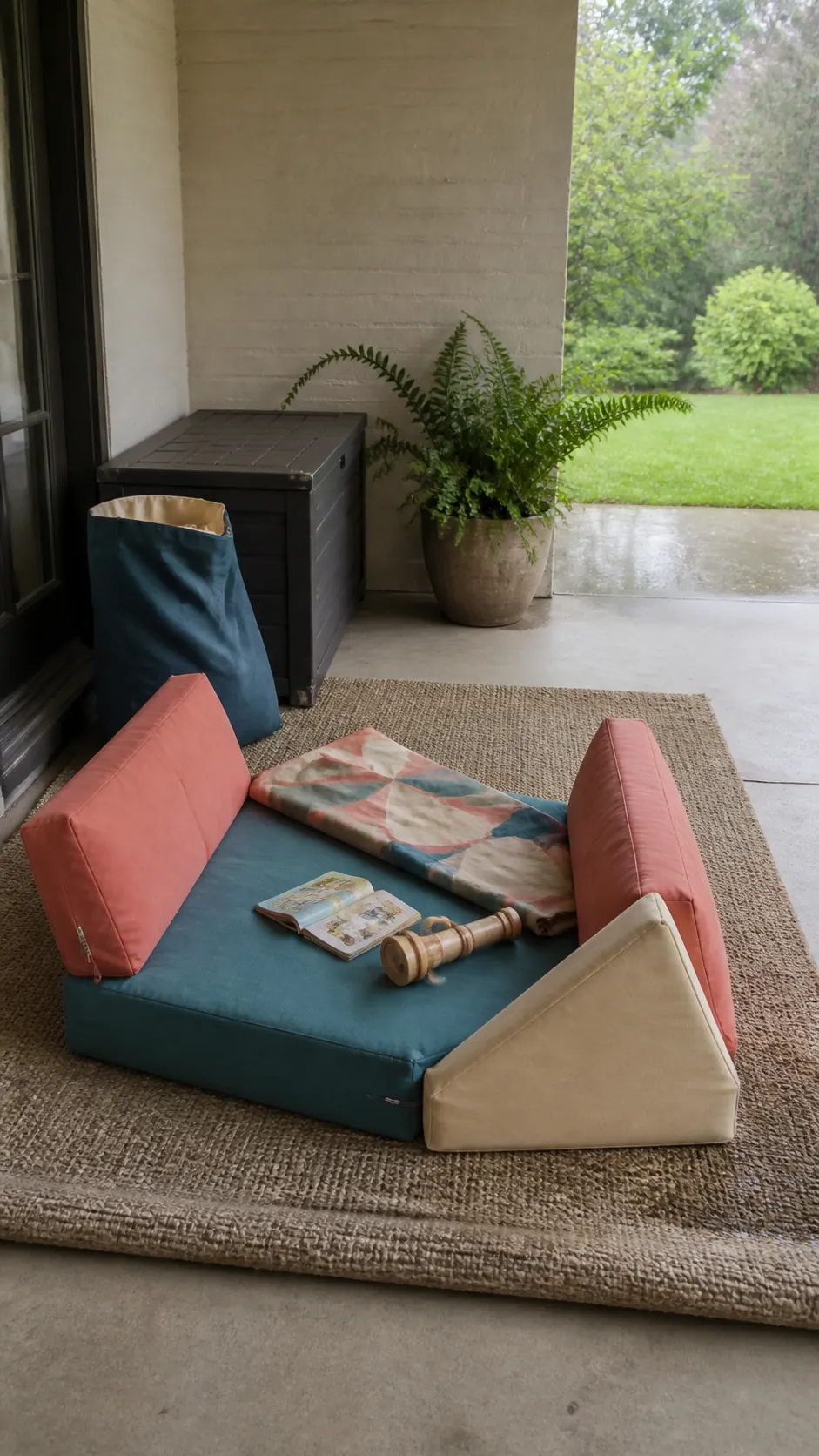
Four firm outdoor cushions can become a reading nest, obstacle path, pretend boat, or low fort. Pick washable covers and dense inserts that hold their shape. A slim deck box or waterproof zip bag keeps them protected when the patio is not in use.
Leave the play low to the ground and away from railings, windows, grills, or sharp furniture corners. The point is open-ended rearrangement, not climbing height. Neutral base colors with one bright accent also let the patio return to an adult seating area without looking like permanent playroom overflow.
A Vertical Music Wall
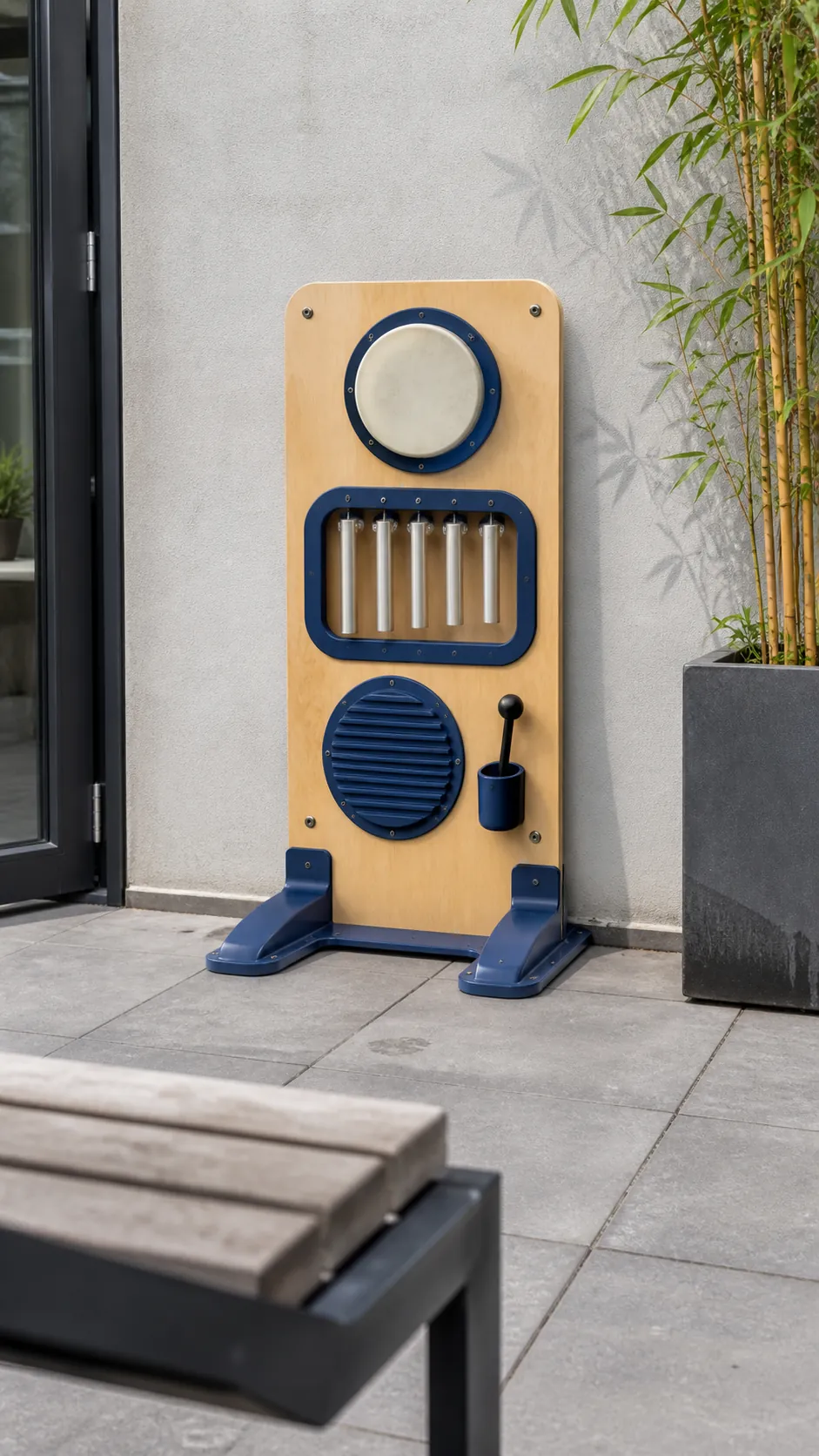
A freestanding activity panel can hold a few purpose-made outdoor instruments at child height: a small drum, textured rhythm board, and securely enclosed chimes. It turns an unused vertical plane into sensory play and works especially well when the floor must remain open for scooters or seating.
Avoid improvised hanging metal parts, loose cords, or anything that can detach. Choose products made for the child’s age and inspect fasteners regularly. Set a “music time” so neighbors are not surprised, then store mallets in a high adult-controlled container when the station closes.
A Planter-Based Sensory Garden
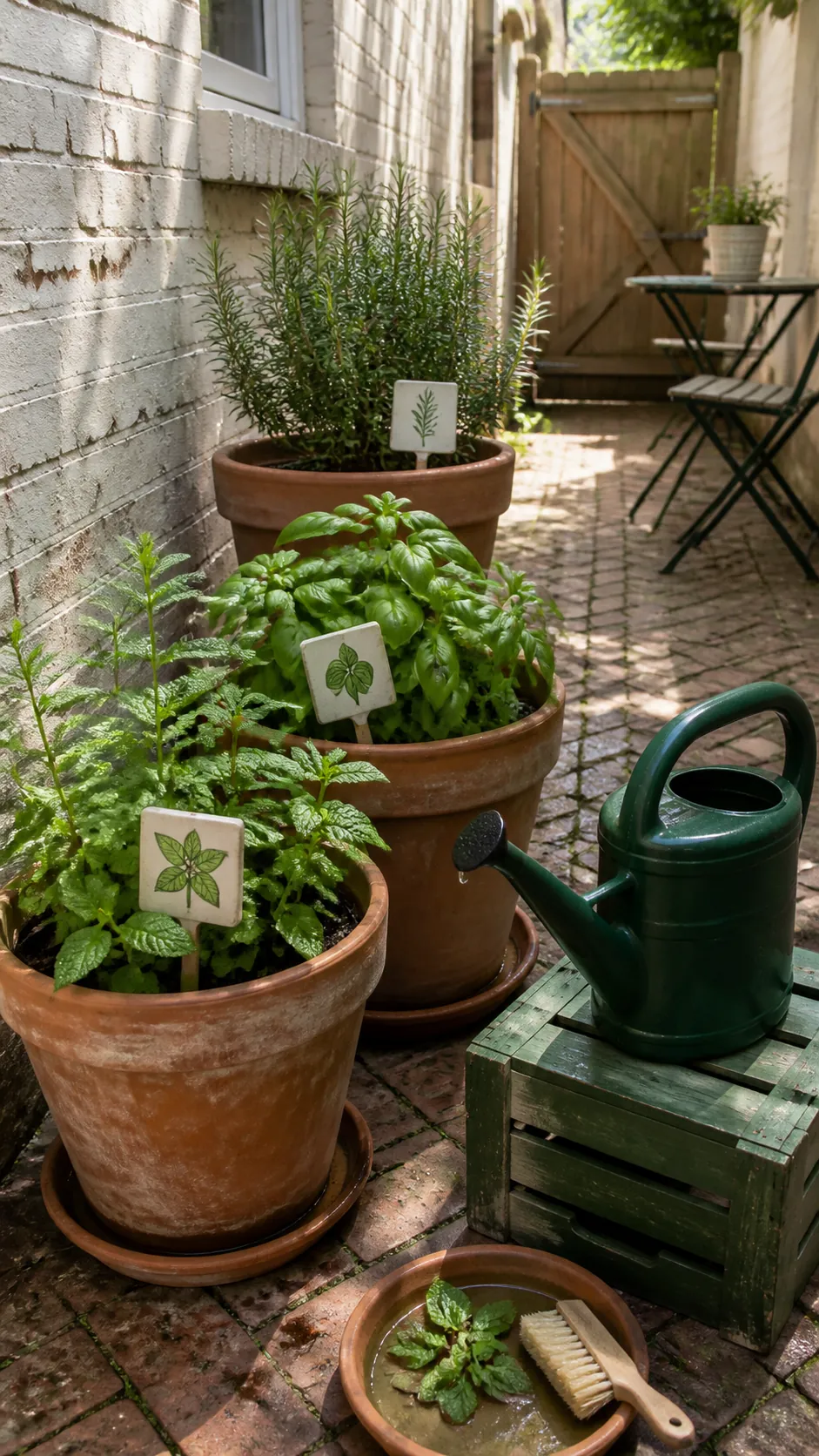
Three sturdy pots can offer scent, texture, responsibility, and a reason to step outside each morning. Plant familiar non-toxic herbs such as mint in its own container, rosemary, or basil, checking suitability for your household and pets. Let children water with a small measured cup so the job stays manageable.
Use wide, stable planters rather than top-heavy pots, keep fertilizer and tools locked away, and teach children not to taste plants without an adult. Picture labels help early readers remember each plant. This is a play feature that becomes richer over time instead of being outgrown in a week.
A Tape-and-Chalk Movement Trail
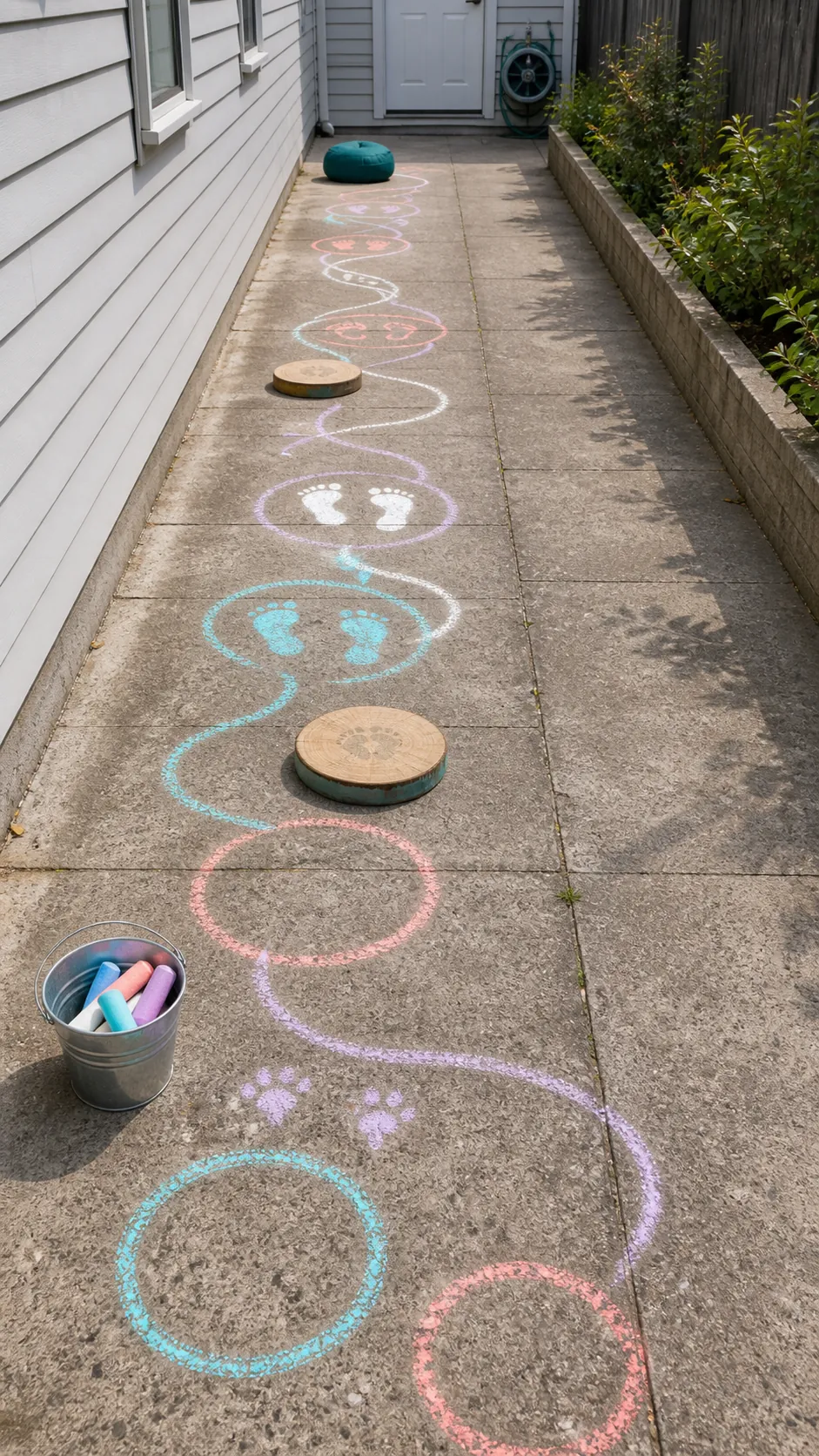
Use washable sidewalk chalk on suitable paving—or outdoor-safe removable marking tape approved for your surface—to create a short route of dots, curves, and animal tracks. Children can tiptoe, hop, push a toy vehicle, or follow colors. The same ten feet of floor becomes a different challenge each weekend.
Keep the route flat, dry, and clear of furniture legs. Test removability in an inconspicuous spot, especially in a rental. A trail is most successful when it supports movement without turning the patio into an obstacle course adults must navigate all day.
A Compact Construction Zone
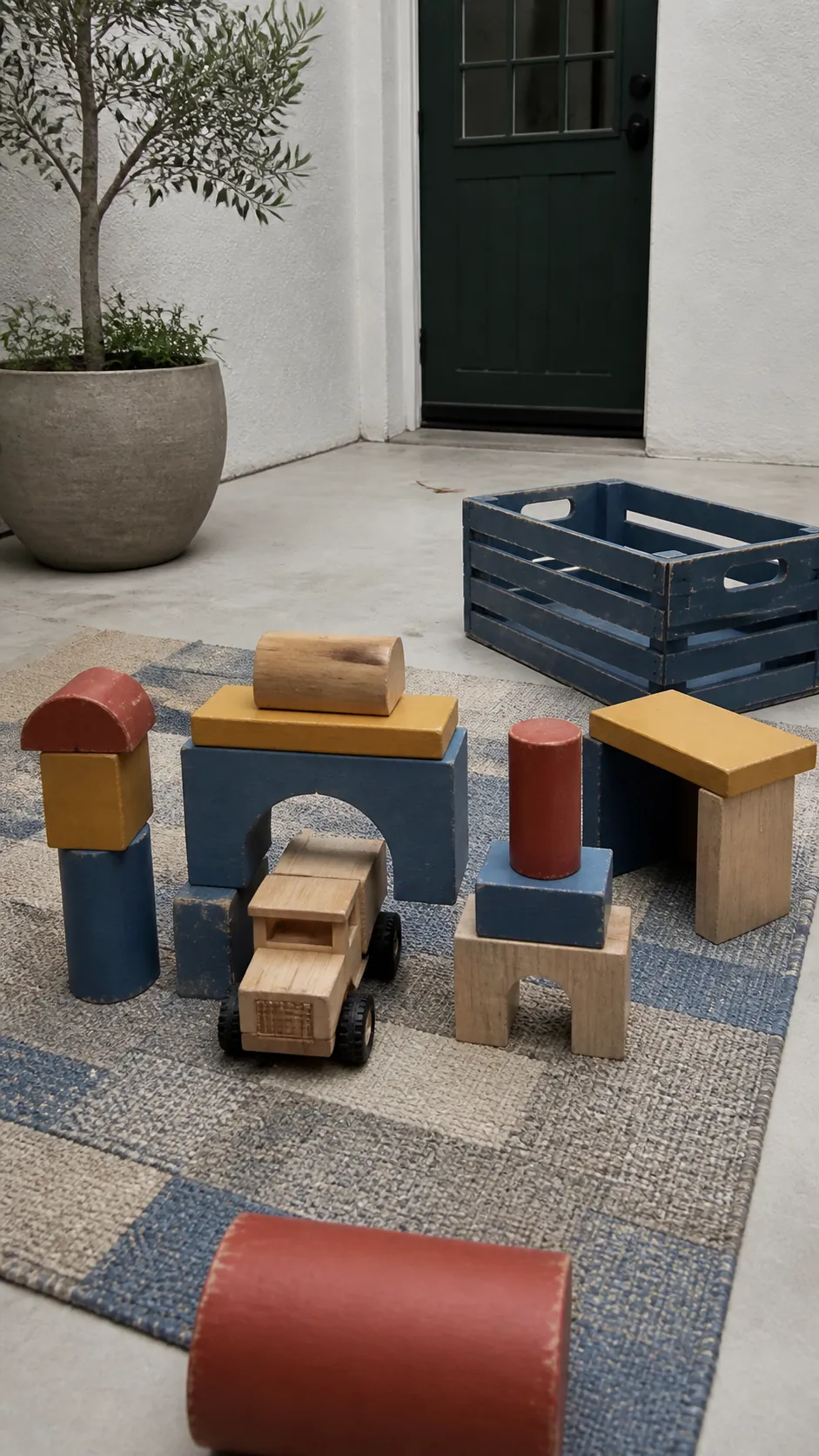
A basket of large weather-resistant blocks supports towers, ramps, garages, and pretend cities. Choose pieces too large to be choking hazards for the youngest child who can access the space, and avoid rough scrap wood with splinters, nails, or treated surfaces.
Give the building zone one outdoor rug or foam mat approved for exterior use. That visual boundary helps contain the pieces and protects open walking space. Limit the set to what fits in one ventilated crate; more blocks do not automatically create better play in a tiny footprint.
A Tabletop Small-World Garden
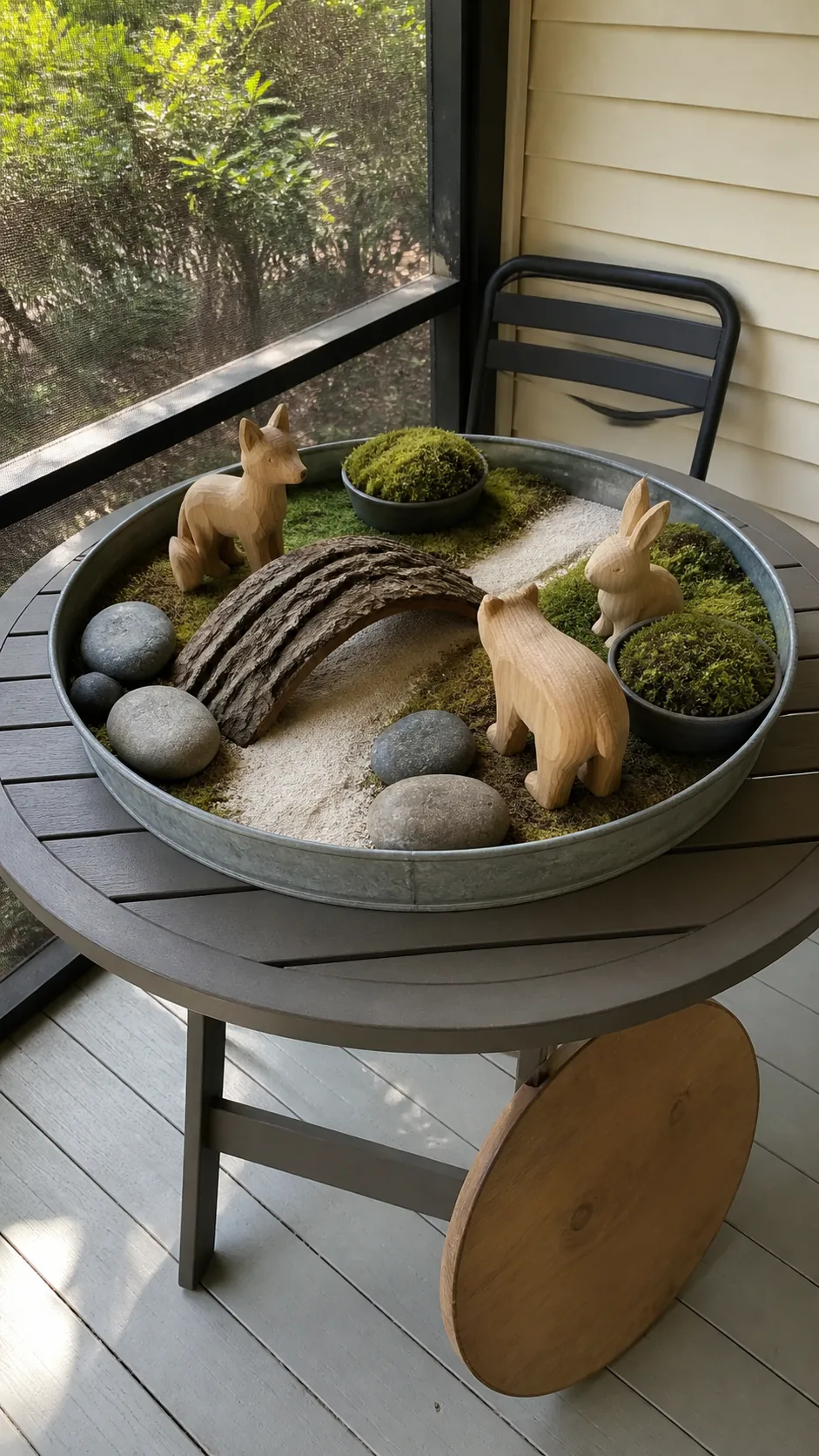
Fill a shallow planter tray with smooth stones, moss, chunky wooden figures, and two small pots to create a miniature landscape. It offers storytelling without a large playhouse and can sit on an existing outdoor table. Swap one element occasionally rather than rebuilding the whole scene.
This idea is best for children beyond the mouthing stage unless every component is specifically age-appropriate. Skip tiny decorative pieces, glass gems, and collected items that could be sharp. A fitted lid keeps rain and animals out while making the entire imaginary world disappear when adults need the table.
A Bubble-Making Station
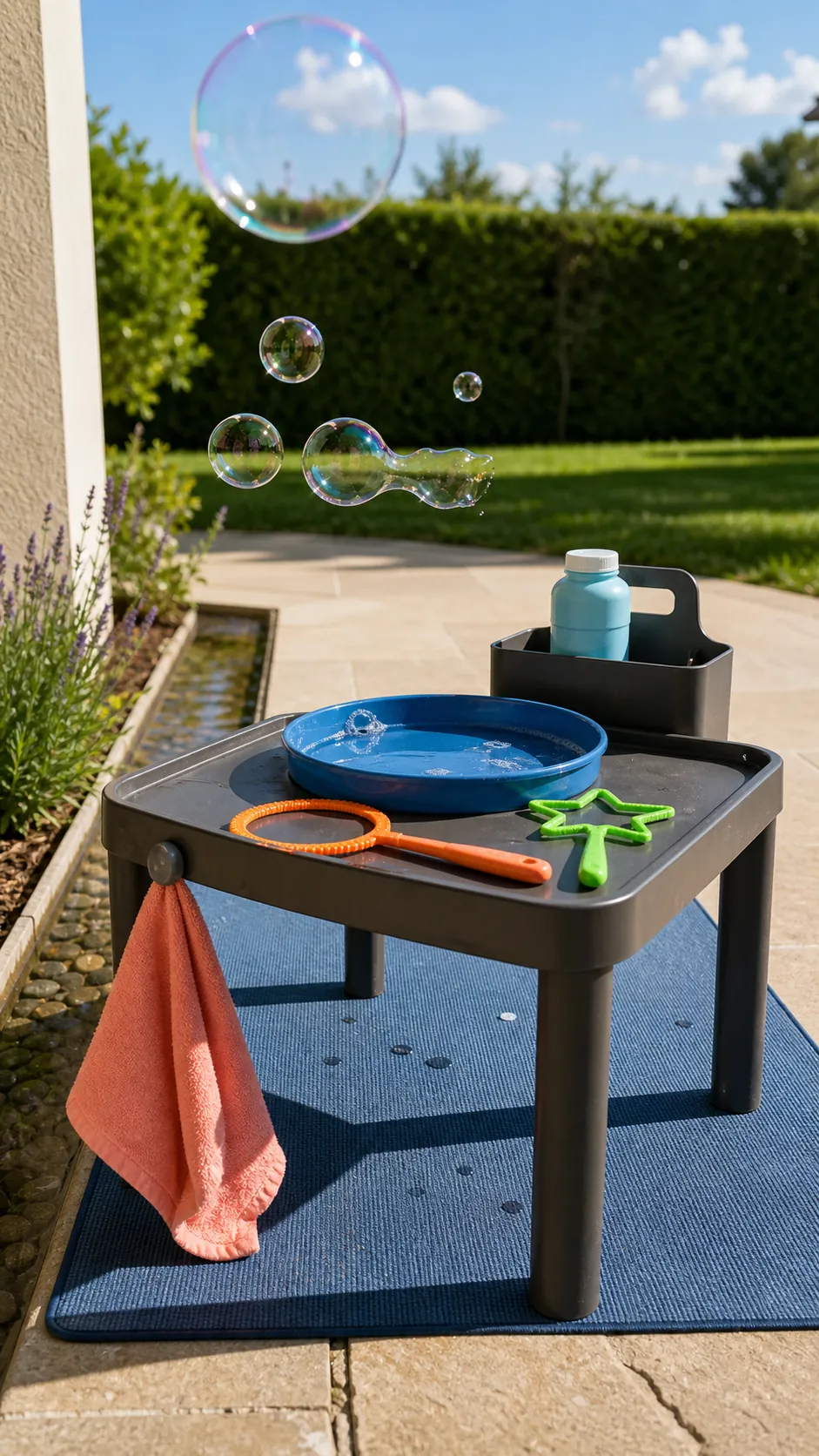
Bubbles create movement and delight without permanent equipment. Use a stable, shallow tray on a low washable table and offer two or three large wands. Children can compare shapes, chase bubbles into the open zone, or count how long each one survives.
Place the station where soap will not make the main walkway slippery, wipe spills promptly, and keep solution out of young children’s reach between turns. A towel on a hook and a designated wand cup prevent the usual sticky scramble. When play ends, the entire setup fits in one small bin.
A Shaded Book Nook
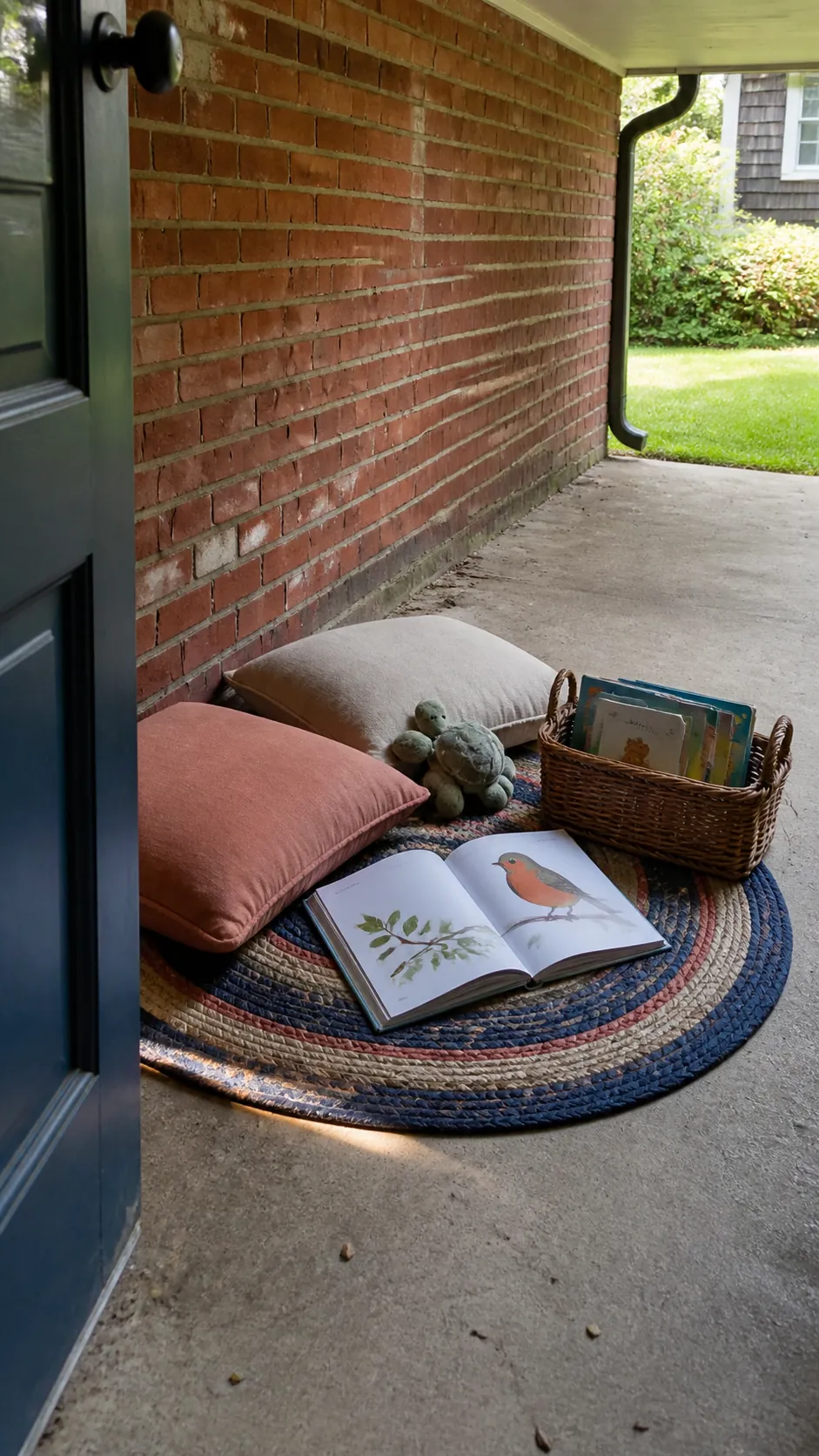
A corner with a washable mat, two floor cushions, and a small basket of board books gives energetic play a natural pause. Use existing building shade or a correctly installed outdoor shade product that does not introduce accessible cords, unstable poles, or blocked exits.
Rotate only a handful of books and include subjects that connect to what children see outside—birds, weather, insects, or gardening. This nook also gives siblings a quiet retreat while another child uses a busier activity. Bring books and textiles indoors after use so dampness does not turn a simple idea into maintenance.
A Two-Bucket Nature Lab
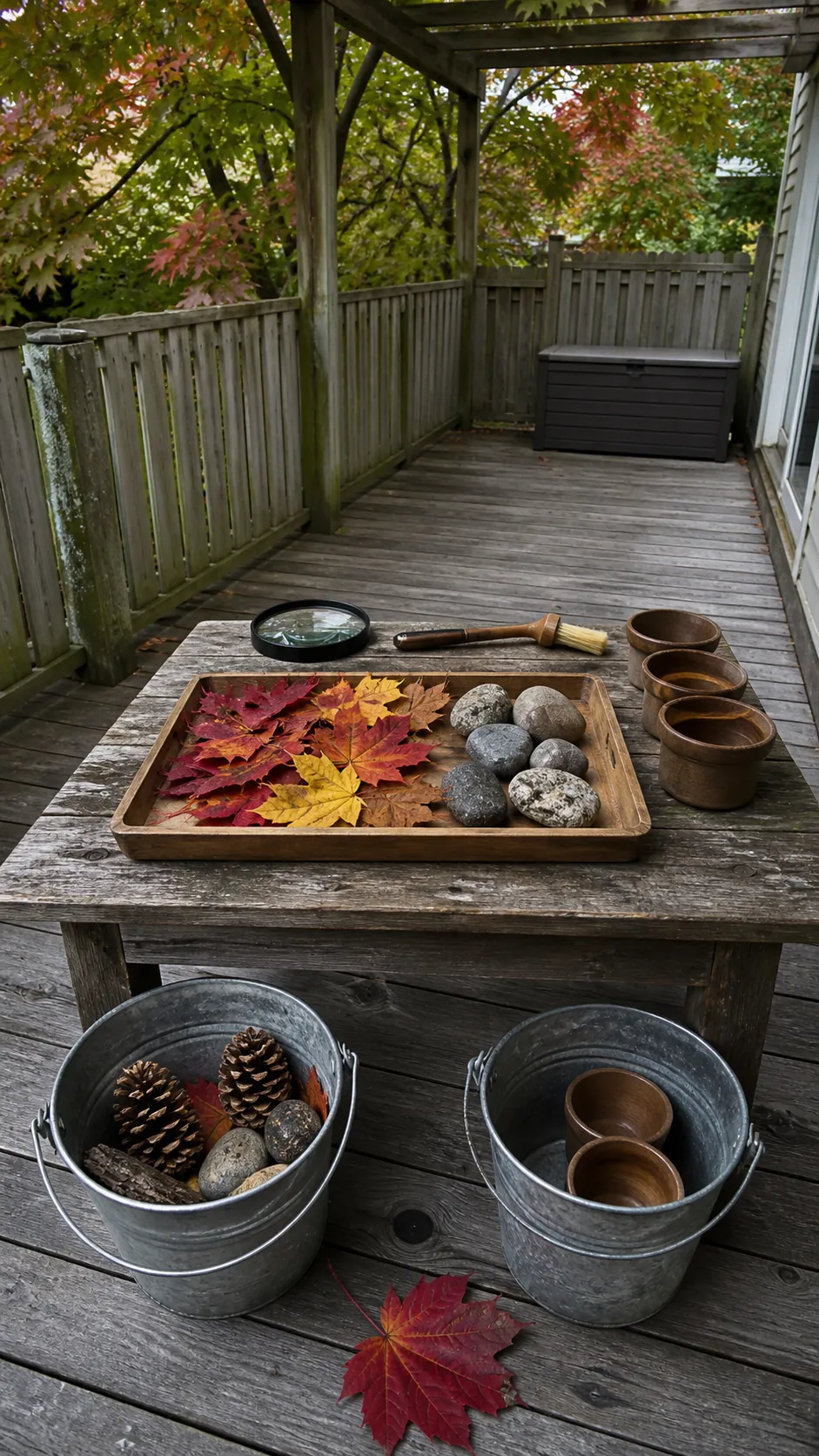
One bucket holds safe items gathered with an adult—fallen leaves, seedpods, smooth stones—and the other holds simple tools such as a magnifier, brush, and sorting cups. Children can group by texture, compare colors, or make temporary patterns on a tray.
Set clear collection rules: no mushrooms, berries, animal waste, unknown plants, or tiny items for children who still mouth objects. Return natural material outdoors after the investigation. The setup stays interesting because the contents change with the season, while the storage footprint never grows beyond two handled containers.
A Pretend Café Cart
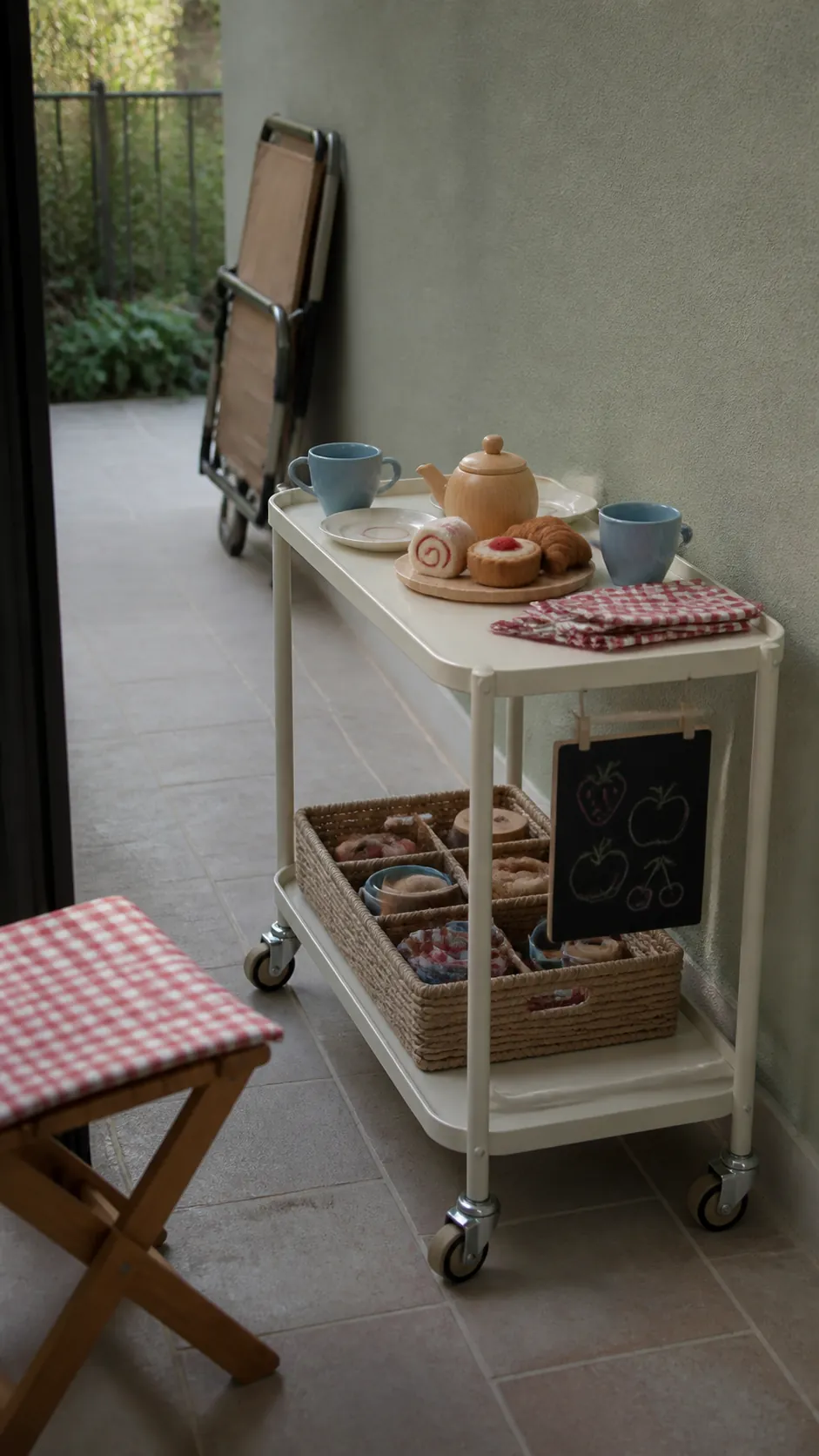
A locking rolling cart can serve as a café counter during play and toy storage afterward. Stock it with a few durable cups, plates, fabric napkins, and large pretend foods suited to your child’s age. One folding stool becomes the customer seat without creating a permanent dining set.
Menus drawn at the chalk studio connect two zones without adding more equipment. When play ends, everything returns to the lower shelf and the cart rolls against the wall. Lock the wheels during use, keep heavy items low, and never let children climb or ride on the cart.
A Washable Road Rug
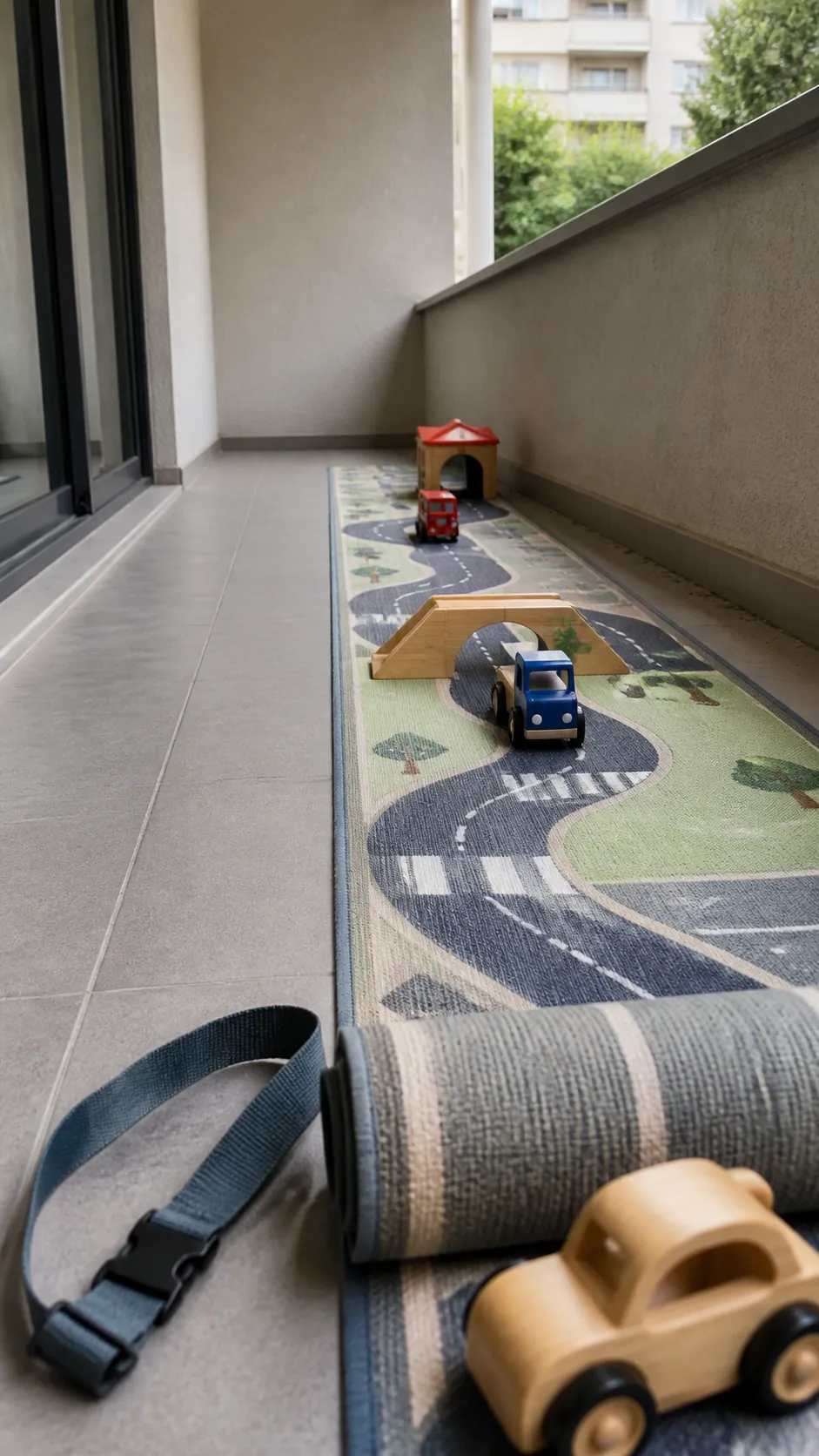
A roll-up outdoor mat printed with roads gives toy cars an instant destination and makes a hard patio feel more inviting. Pick a thin, quick-drying style with a nonslip backing appropriate for the surface. Add only a few chunky vehicles and wooden blocks for bridges.
Orient the road lengthwise so play follows the patio rather than spilling across the doorway. Shake and dry the rug before rolling it, and check that edges stay flat. The real small-space win is speed: a complete play world appears in seconds and stores behind a bench when the family needs the floor back.
A Rotating Play Shelf
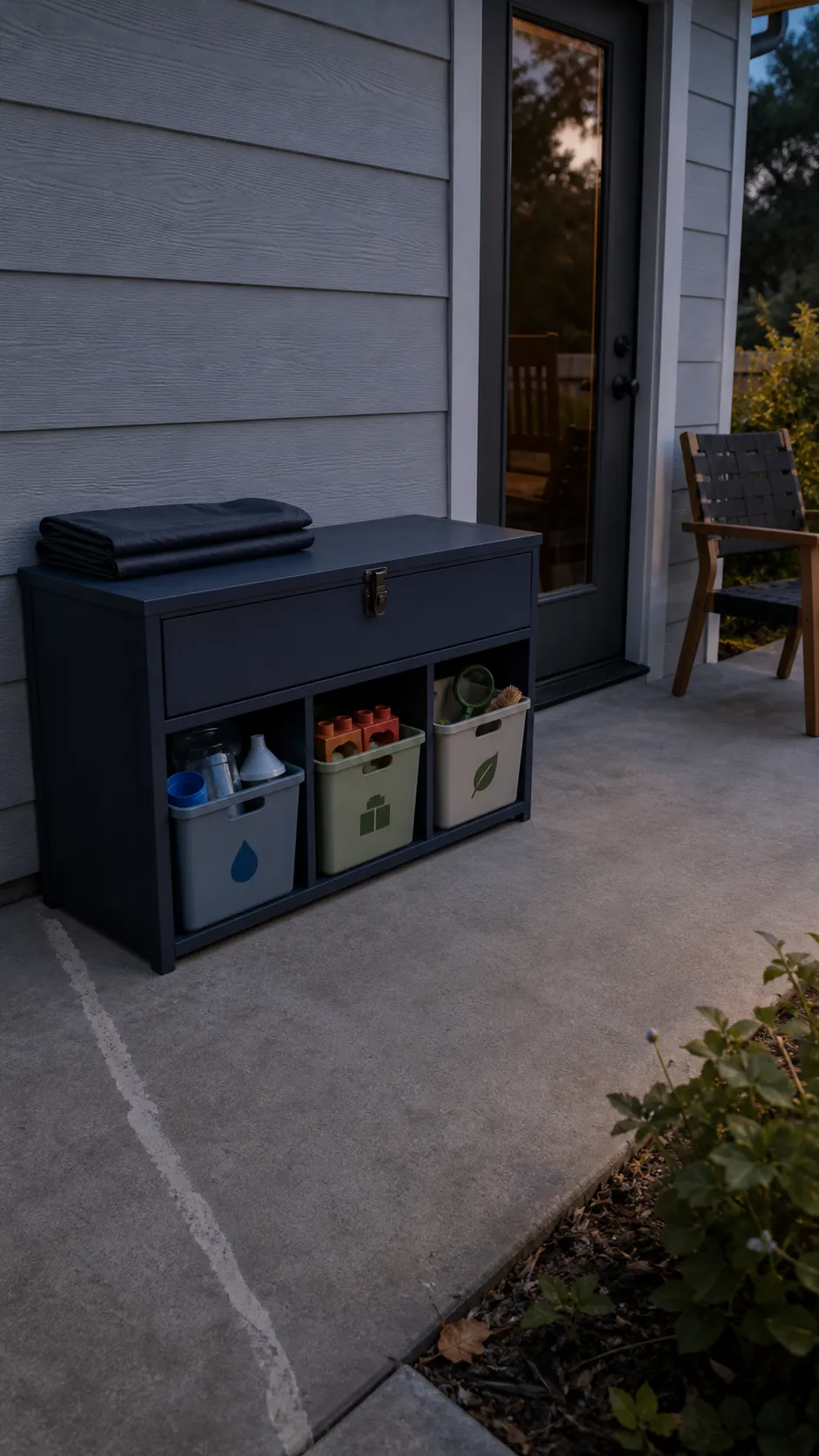
The smartest small patio is not the one holding the most toys. It is the one children can understand and adults can reset. A low, stable outdoor cabinet or lidded bench can hold three labeled activity bins at a time: perhaps water tools, building pieces, and nature supplies. Everything else stays indoors.
Rotate a bin when interest fades instead of buying another large feature. Keep chemicals, garden tools, cords, and choking hazards in separate locked adult storage, and inspect outdoor toys for heat, water damage, loose parts, and insects before play. Leave a generous clear route from the door to the yard or exit. That open strip may look empty in a photograph, but in daily family life it is what allows all 15 ideas to work safely and without constant frustration.