
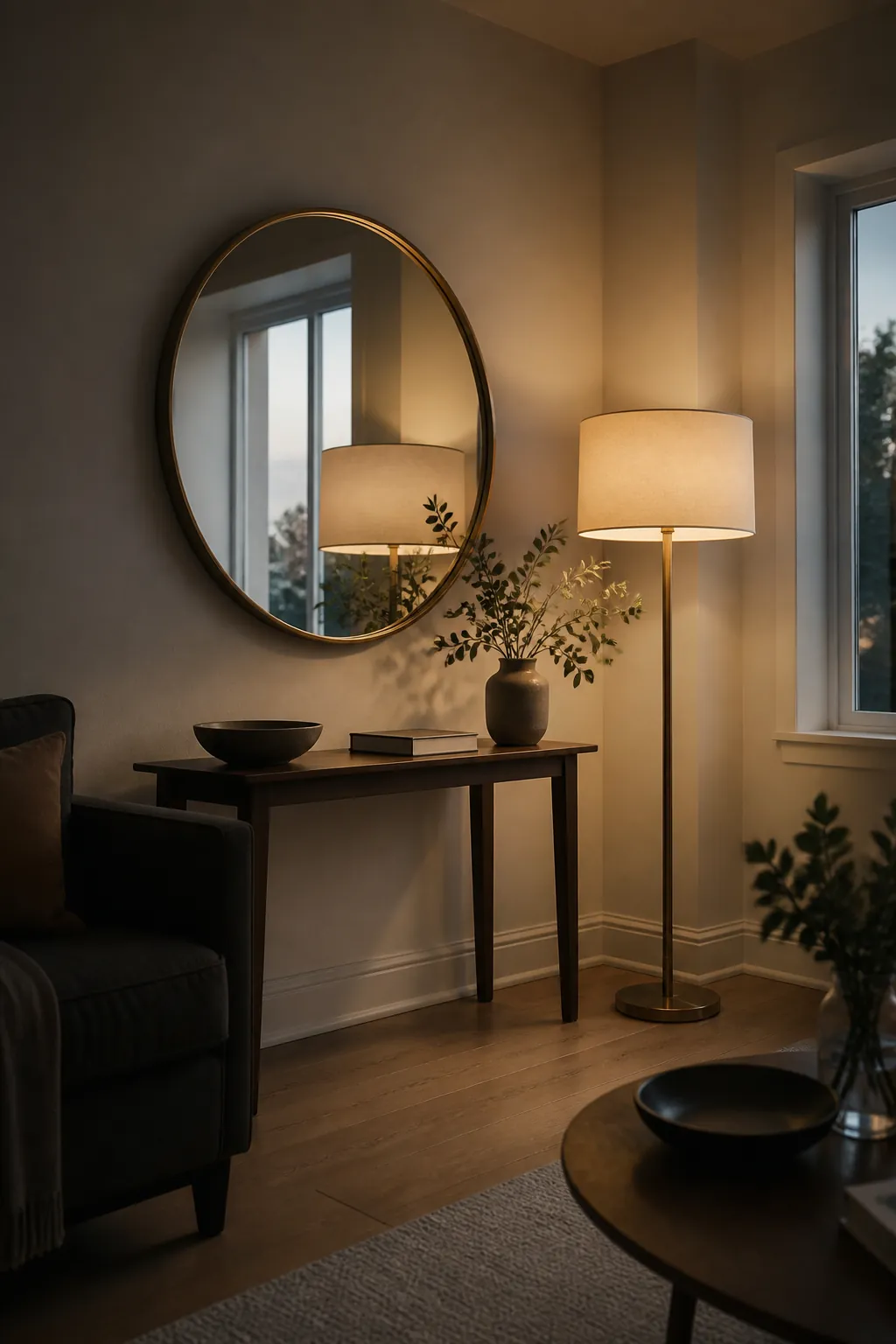
A mirror does not create light. Put one in the wrong place and it simply gives you a second view of the dark wall. The best dark corner decor pairs a mirror with a lamp deliberately: the lamp creates a useful pool of light, while the mirror redirects that glow and adds depth.
Test the reflection before hanging anything
Lean the mirror where you plan to hang it, then view it from the room’s main seat and doorway. It should reflect a window, lampshade, light wall, plant, or intentional vignette—not a television, cluttered shelf, blank darkness, or your own face while relaxing. Move it a few inches and repeat. The reflected view matters more than the mirror’s shape.
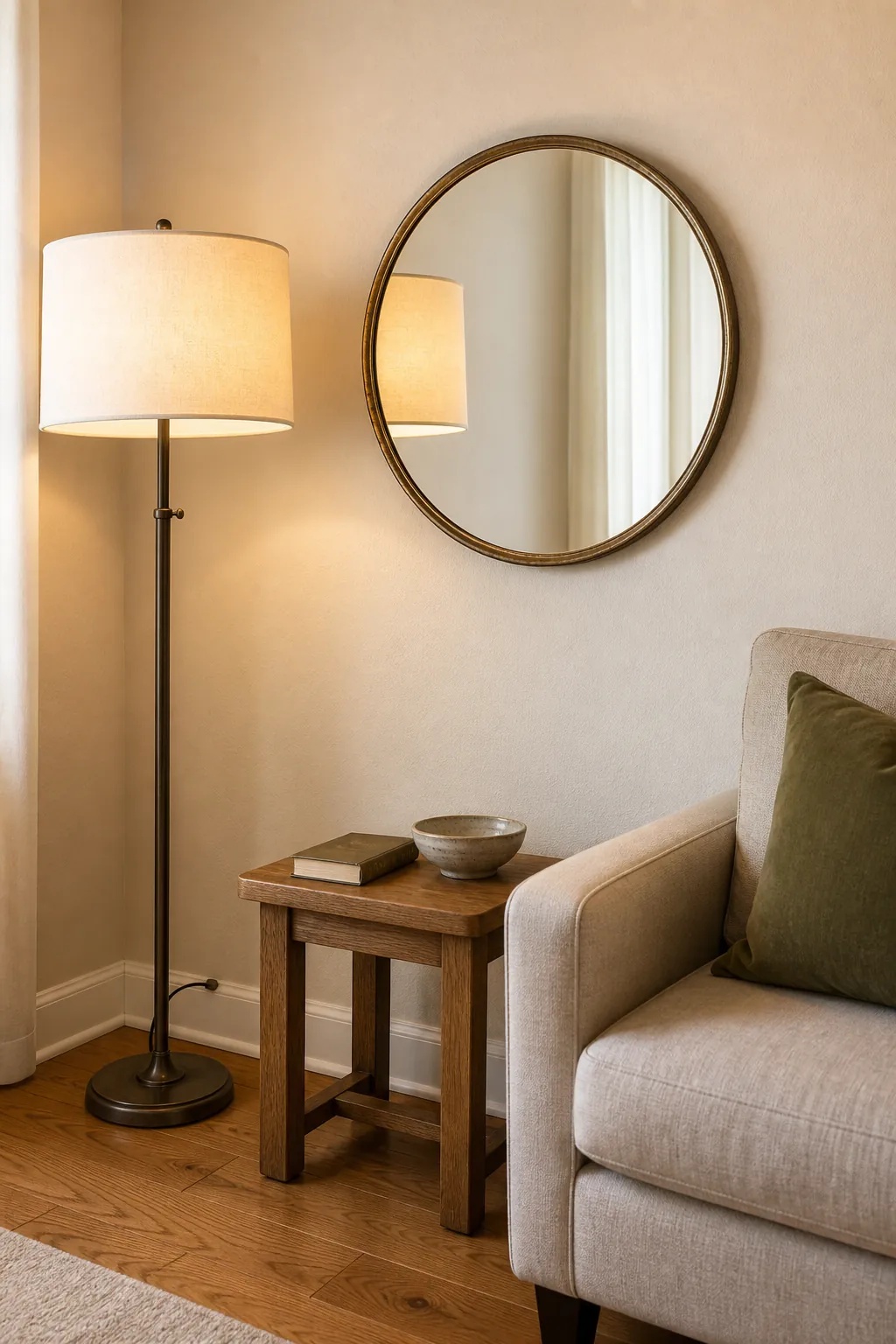
Choose a lamp for the job, not the empty space
Use a floor lamp when the corner needs broad ambient light, a table lamp when a console creates a landing spot, and a directional uplight when the ceiling needs to bounce light back into the room. A shaded lamp feels softer; an open torchiere spreads more light but can glare if the bulb is visible. For reading, add a separate directional source rather than asking one decorative lamp to do everything.
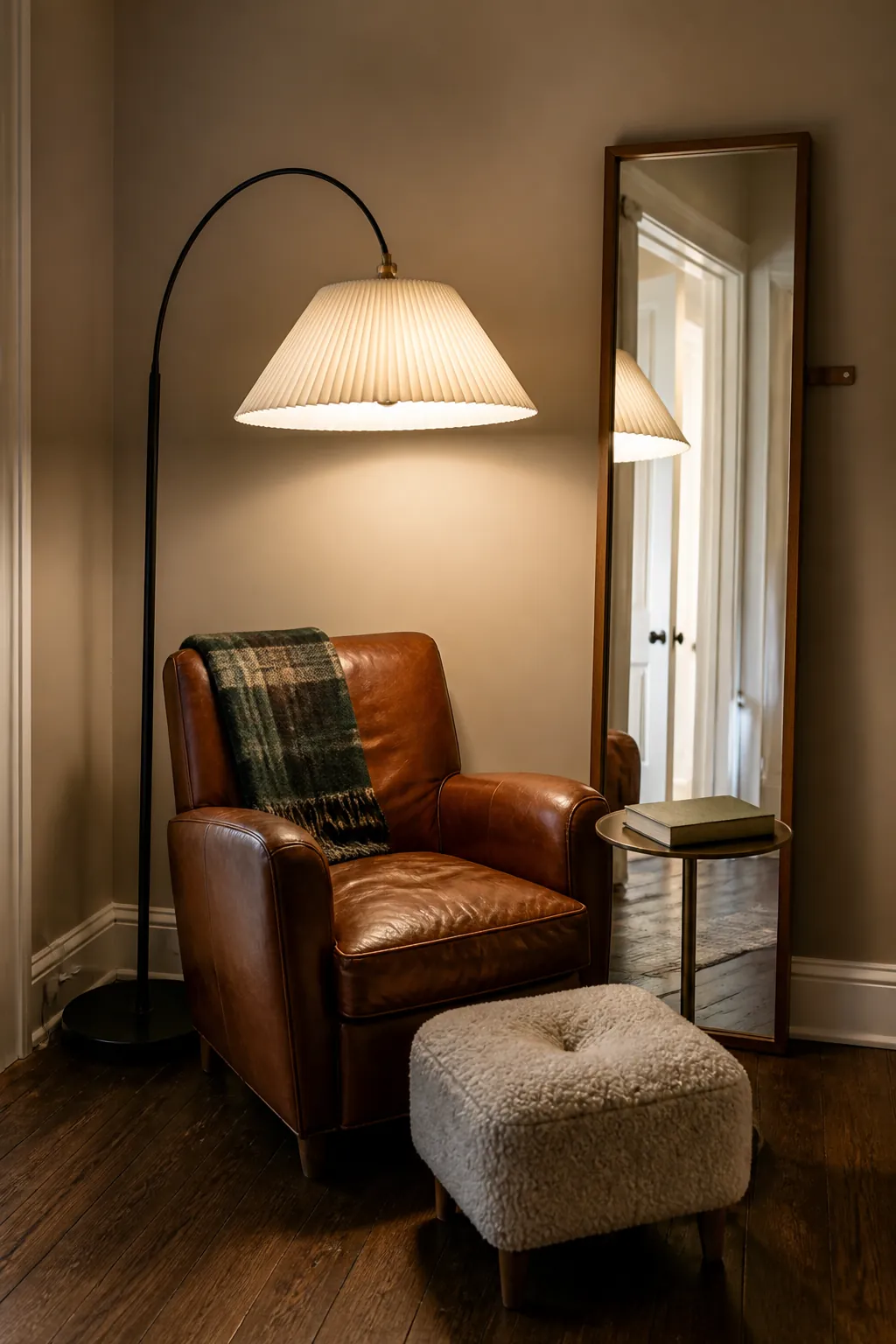
Layer warm ambient and practical task light
Start around 2700K for cozy lighting in a living room or entryway. Choose a high color-rendering bulb so wood, textiles, and skin tones stay natural. Lumens matter more than wattage: a tiny decorative bulb rarely changes a gloomy zone. Put ambient light slightly above eye level or aim it at a pale ceiling, then add task light only where someone reads, works, or searches for keys.
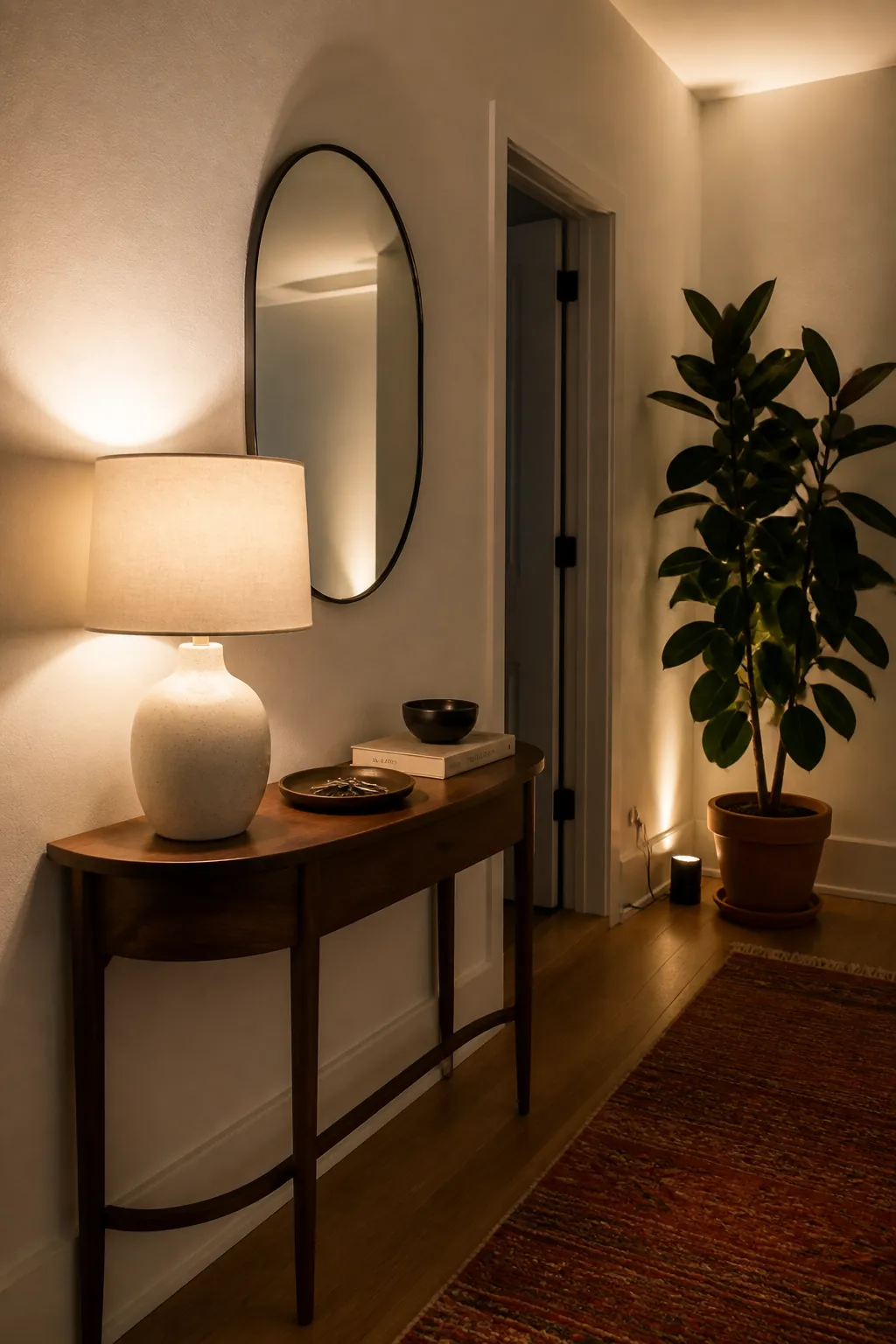
Build a complete vignette without crowding it
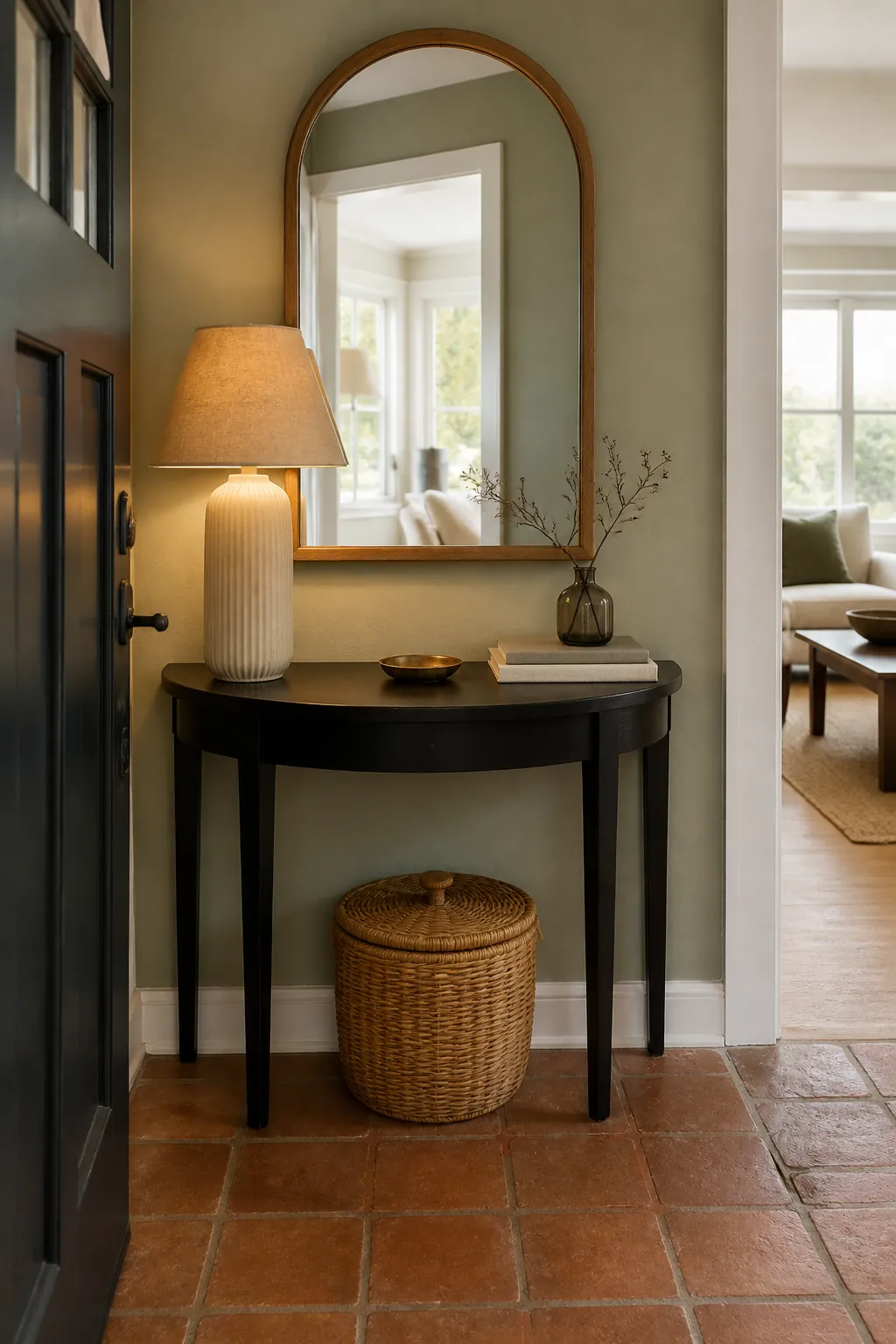
A wall mirror and lamp often need one grounding surface: a slim half-moon console, small round table, narrow stool, or low cabinet. Keep the arrangement to a few useful pieces—a tray, one book stack, and perhaps a plant suited to low light. Vary heights, leave negative space, and avoid filling every inch. The corner should connect to the room, not become a separate showroom display.
Make a small or rented corner work harder
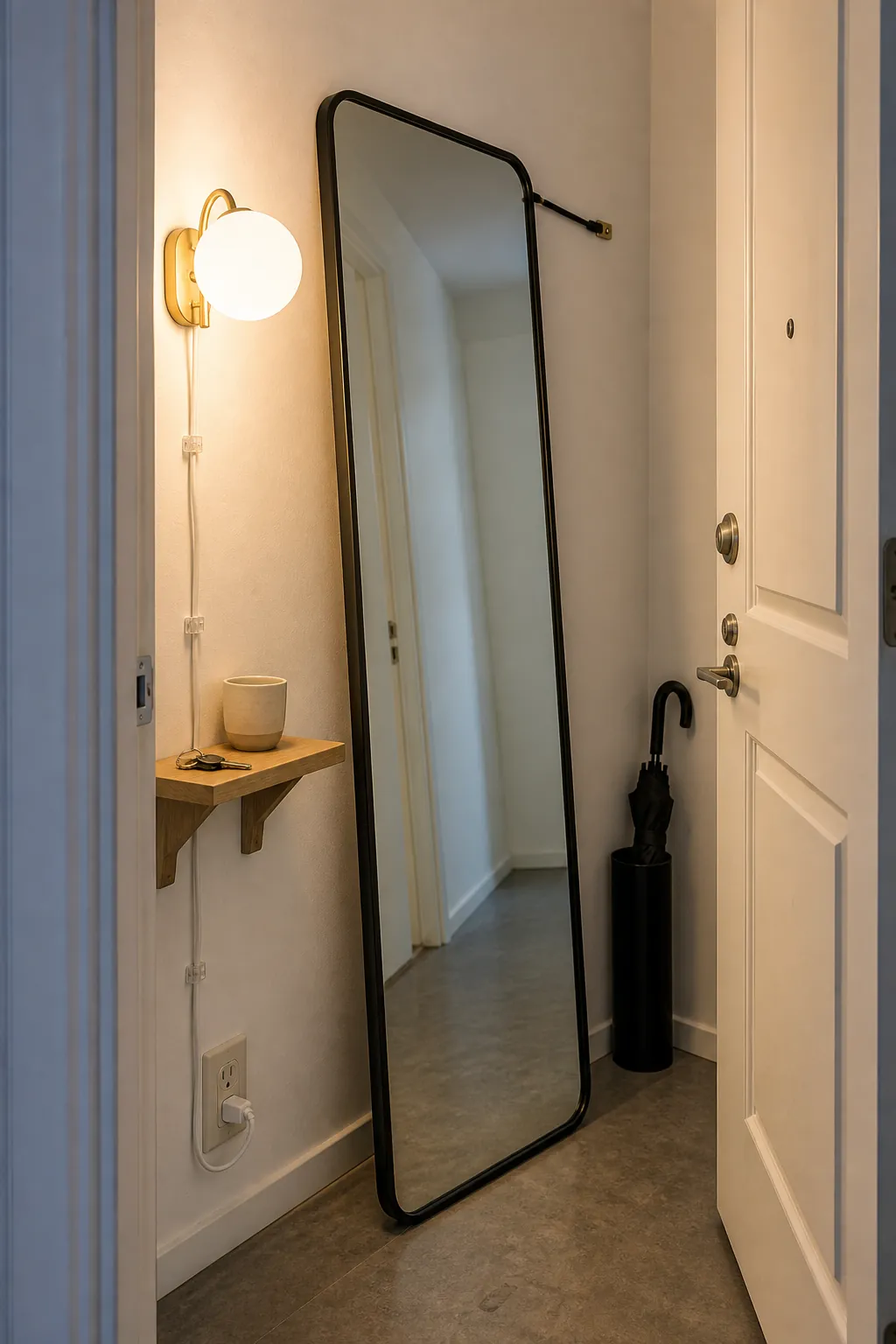
In small space decor, use a plug-in sconce, compact table lamp, or floor uplight behind a plant instead of squeezing in furniture. Renters can hang a lighter mirror with suitable removable hardware only when the manufacturer’s weight limits allow it; otherwise lean a secured full-length mirror. Route cords along baseboards with removable clips and keep them away from door swings and walking paths.
Tune the corner after sunset
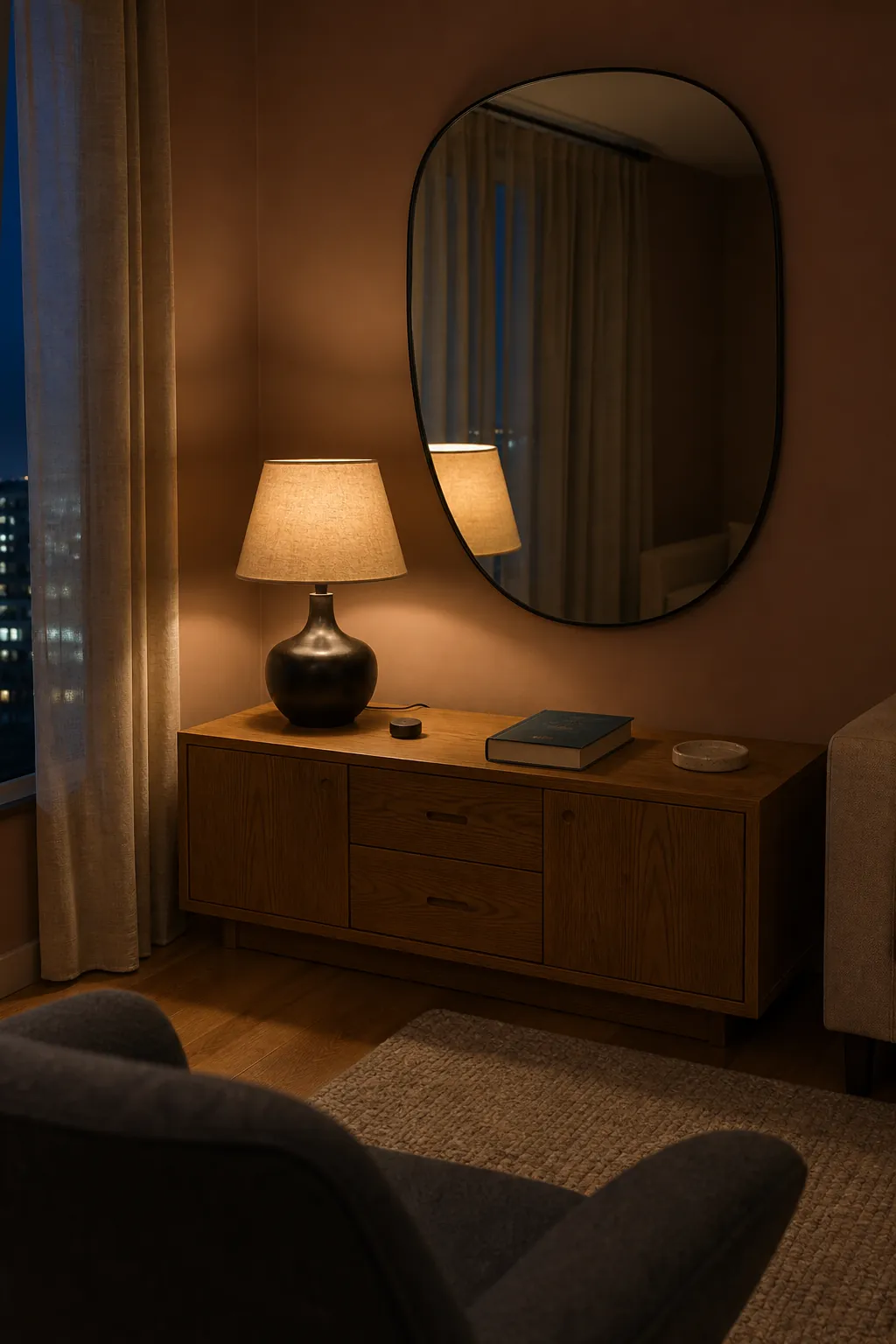
Judge the finished setup at the time you will use it most. Sit in the adjacent chair and check for a bare bulb, distracting mirror glare, and sharp reflections. A dimmer or smart plug makes the lamp easier to use, while a shade or small position change can soften hotspots. If the mirror still reflects darkness, turn it toward the lamp or a lighter surface rather than adding more decor.
Let the light do the decorating
A successful corner does not need a gallery wall, several plants, and a basket added by default. It needs one useful source, one purposeful reflection, and enough space for both to read clearly. Start with the lamp, aim the mirror, then stop before the corner becomes busy.
That restraint is what makes lamp decor and mirror styling feel integrated. The corner becomes brighter because the light path works—and more inviting because every object earns its place.