
Practicing regular bedding hygiene is essential to a healthy, happy life. Thankfully, most of us have washing machines, which expedite the daily or weekly grind of washing our bedding. However, not all bedding is created equally, and some fabrics require special types of washing.
Bamboo pillows differ somewhat from standard cotton ones and have several “dos and don’ts.” Still, if you’re a new owner, you’re not always clued up about these preferential details, and you might panic at not knowing what to do. So, I’m writing this article to guide you on washing your bamboo pillow.
Key Takeaways
- Washing your bamboo pillows at frequent intervals is essential, as failure can lead to bacteria and fungi build-ups, resulting in foul odors and potentially diseases.
- Not all pillows have the same specifications when washing, and knowing what and why is paramount to avoiding unnecessary destruction of your pillow. The manufacturer’s instructions are the first port of call, and following them improves a pillow’s longevity.
- Two commonly used fillings for these pillows are memory foam and shredded foam (or shredded polyester). The filling determines the best washing method.
- Memory foam pillows should be hand-washed, while shredded foam/polyester is suitable for machine washing on a delicate cycle with cold to lukewarm water. Removing the cover before washing is essential, and it is recommended to wash the cover separately.
Bamboo Pillow Care 101
Although you can technically do anything you want, certain practices will enhance an item’s lifespan, durability, and general appeal. Bamboo pillows are such items. Washing your pillows is essential to preventing bad odors and potentially hazardous bacteria build-ups, which lead to disease.
Aside from microorganisms, washing prevents dust mites from establishing themselves in the material, removes stains, and leaves your pillow smelling clean and fresh. A clean pillow also reduces the likelihood of suffering an allergic reaction.
Pillows usually last for around 2 to 3 years, so washing them every 6 months is a suitable interval to ensure their longevity while not compromising on good hygiene.
However, washing is not always as simple as throwing it in with your next load of clothing. The type of filling, the manufacturing process, and the washing machine are all essential variables.
To better understand how you should care for these pillows, it will serve you well to understand how they are made.
A Bamboo Pillow’s Construction Influences Its Washing Requirements
Most pillows derived from these grass plants consist of a viscose/rayon outer cover with a filling/stuffing made from memory foam or shredded foam/polyester. Occasionally, these pillows have a bamboo fiber inner, but it is not common.
The outer viscose/rayon cover results from a long manufacturing process that starts with harvesting suitable plants, crushing them into fragments, and subjecting them to various caustic chemicals (including sodium hydroxide and carbon disulfide).
The fibers are “melted” and mixed with other chemicals to break down the plant cells, then “reconstructed” by adding other chemicals. Finally, the liquid mass is extruded through spinnerets to form long filaments (strands), which are spun into yarn.
The yarn is then woven into various items, including pillows. The type of weave also influences how soft the material is, how susceptible to damage and creasing it is, and how breathable and moisture-wicking it is.
Although this process removes many beneficial properties, the material retains its moisture-attracting characteristics.
The outer cover is then placed over a memory foam inner core. Alternatively, the stuffing is made from shredded foam or polyester. These fillings give the pillow its structure and are significant in determining how it must be washed.
Fortunately, most pillows come standard with washing instructions on the label, which are always the first-prize advice to follow. However, should that information be lacking, we’ll examine washing memory foam pillows vs. shredded foam pillows.
How To Wash A Bamboo Pillow With A Memory Foam Filling
For most memory foam core pillows, the instructions dictate removing the outer cover (in this case, bamboo).
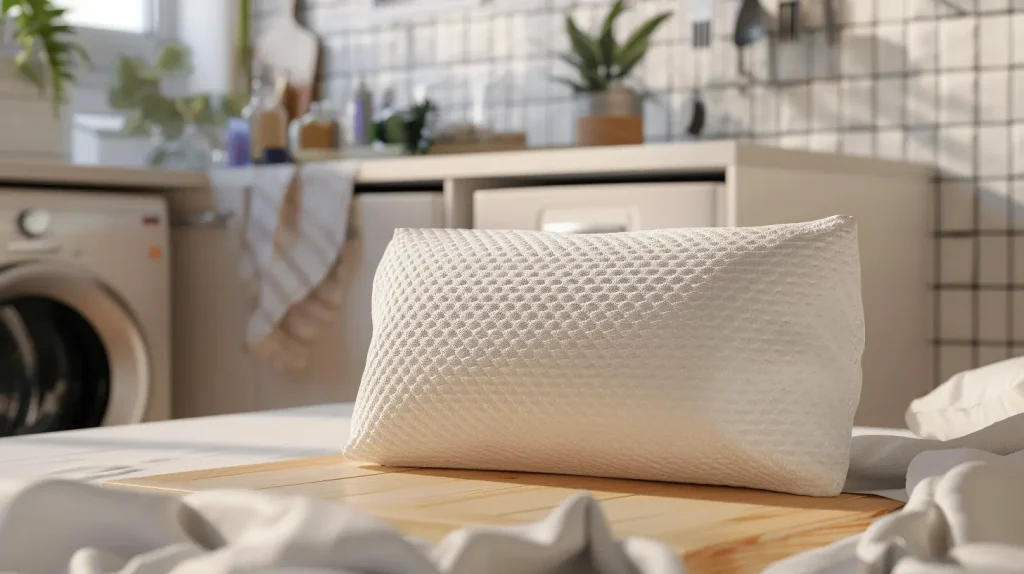
The pillow cover is machine washable, on a delicate cycle, while the memory foam inner must be hand washed (i.e., not machine-friendly).
When washing the cover, you’ll need to be cautious of what you add to the machine with it. These covers might tear or begin to pull apart if washed with abrasive materials (including towels, zippers, rough cloths, etc.).
A lukewarm to warm, delicate wash is best for covers made from these plants, as hot water breaks down the bamboo fibers in the fabric, causing it to take on an unraveled appearance.
Of equal consequence is the laundry detergent you use. Mild detergents are suitable, and gentle is okay for light soiling, but avoid stronger soaps as they may also debraid the fibers.
Now that the easy part’s over, you can start on the memory foam core/inner. The beauty of memory foam is that it takes the shape best suited to your sleeping habits.
However, putting these fabrics in the wash may cause the foam to lose structure and shape, forcing you to re-acclimatize the product to your patterns.
Hand washing is the recommended method for the memory foam inner. Using a container of lukewarm water and a gentle to mild detergent, soak the pillow inner and gently use a cloth to wipe in circular motions across the stuffing.
Squeezing and massaging the pillow’s inner while submerged in soapy water helps penetrate the material as deeply as possible. Once in, allow the inner to soak for under 15 minutes (any longer, and the pillow inner absorbs too much water, which is tricky to remove).
Squeeze out the soapy water, then rinse with clean water until all the soap is out.
How To Wash A Bamboo Pillow With A Shredded Foam Filling
Washing a shredded foam pillow is slightly easier.
First, remove the outer bamboo cover and add to the delicate wash of the machine. Cold to warm water, on a delicate cycle with a mild detergent, will maintain the pillow cover’s integrity.
The great news is the pillow’s inner core can also be machine washed, in similar conditions (using a mild detergent in cold water) to the cover. Arguably, you could put the two components together; however, the inner core might stretch the cover during the wash.
It is imperative that these items are washed on a delicate cycle. If not, there is a risk of tearing fibers and damaging the foam filling.
Don’t Overlook Drying The Pillows Correctly
Once washed, getting the pillows out of the machine (or tub) and drying is quintessential to the material’s longevity.
Failure to act timeously may result in mold, mildew, and bacteria setting in, particularly inside the filling.
Using a machine dryer for your bamboo pillows (outer or inner) is not recommended. The heat and motion are often too intense for the fibers, which break/tear. It may also lead to shrinking and shifting (of the foam).
The superior method is air drying, which is the most gentle on your fabric. Ensure that the pillow (inner) is well supported on a clothes rack and placed in an area with sufficient ventilation (air should reach all areas of the pillow, so a flat/unslatted surface is not ideal).

Frequently turning the pillow helps to circulate the air and displace any water trapped inside. A cool breeze expediates the drying, which can come from natural wind movements or a fan, provided it’s not heated air (like a hair dryer). Direct sunlight helps the process, but flipping the pillow is essential.
It is critical that the pillow is completely dry before removing and using it.
What Are The Consequences Of Incorrect Washing?
It’s essential to practice regular pillow hygiene (washing) but take care, as incorrect washing may have several undesirable impacts, including:
- Shrinking of the material
- Tearing, fraying, and separation of the fibers (particularly the cover)
- Shifting of the memory foam
- Loss of structure and support of the filling
- Mildew, mold, and other fungi and bacteria establishing
Fortunately, the worst possible outcome for incorrect washing is that the pillow breaks and must be thrown away (or, at best, patched).
Pillows have a limited lifespan of 2 to 3 years because of moisture build-up, wear and tear, and material failure (the inner loses its springiness or firmness).
However, this eventuality is prolonged through the correct washing and drying procedures, reinvigorating the fibers while preventing excess strain.
Conclusion
Bamboo pillows are wonderful for a good night’s sleep; however, frequent washing is essential for longevity. Machine washing is convenient but is best reserved for shredded foam-filled bamboo pillows, while memory foam should be hand-washed to prevent damage. Failure to correctly wash and dry your pillow may reduce its lifespan.