
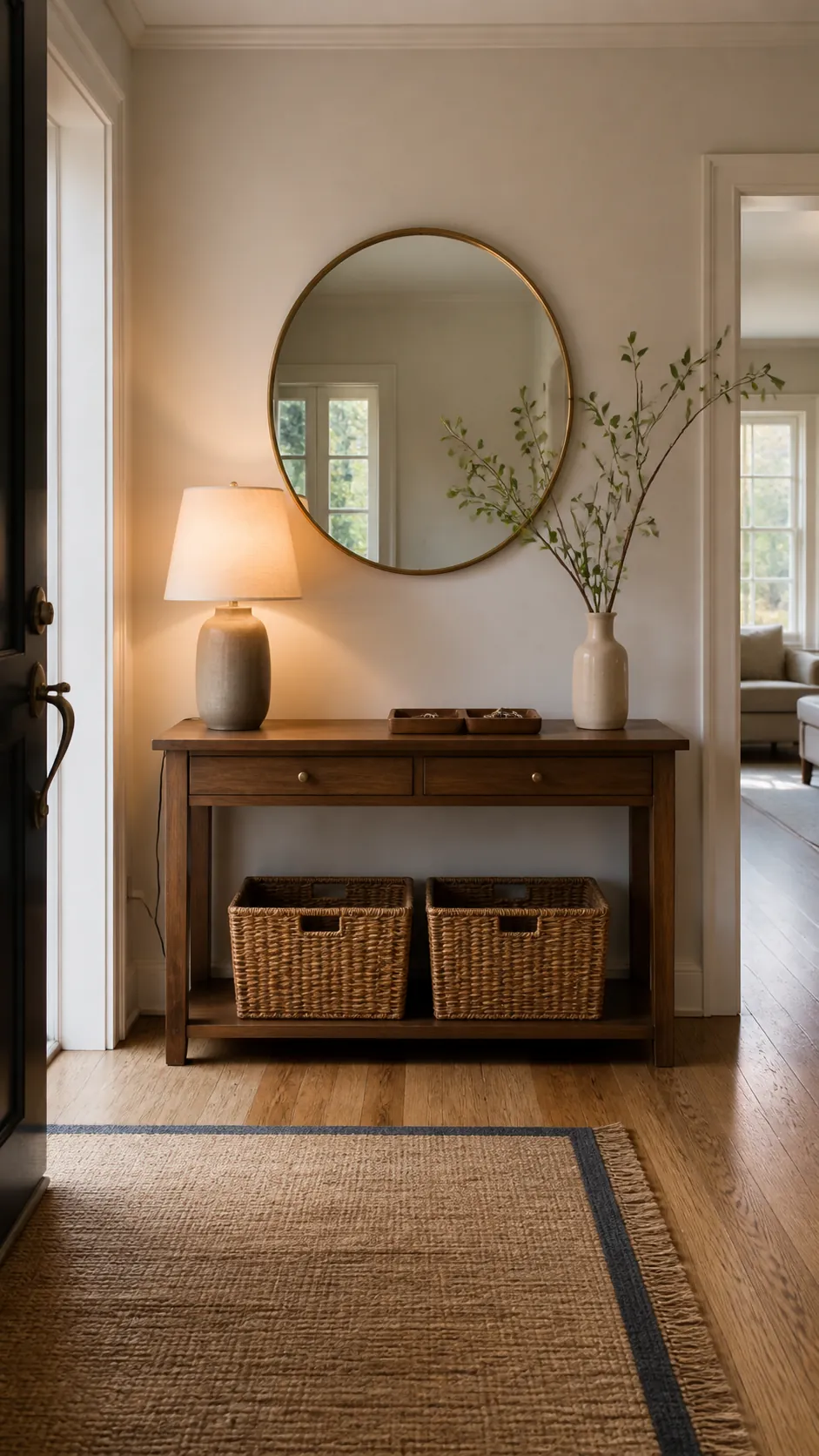
An entryway table has two jobs: welcome you home and catch the few things that truly belong by the door. The best arrangement is not the one with the most accessories; it is the one that looks intentional after an ordinary weekday.
This guide explains how to style an entryway table around movement, storage, light, and proportion. Start with practical decisions, then add a visual anchor and a small number of tactile pieces that make the foyer feel like part of your home.
Measure the Landing Zone Before You Style
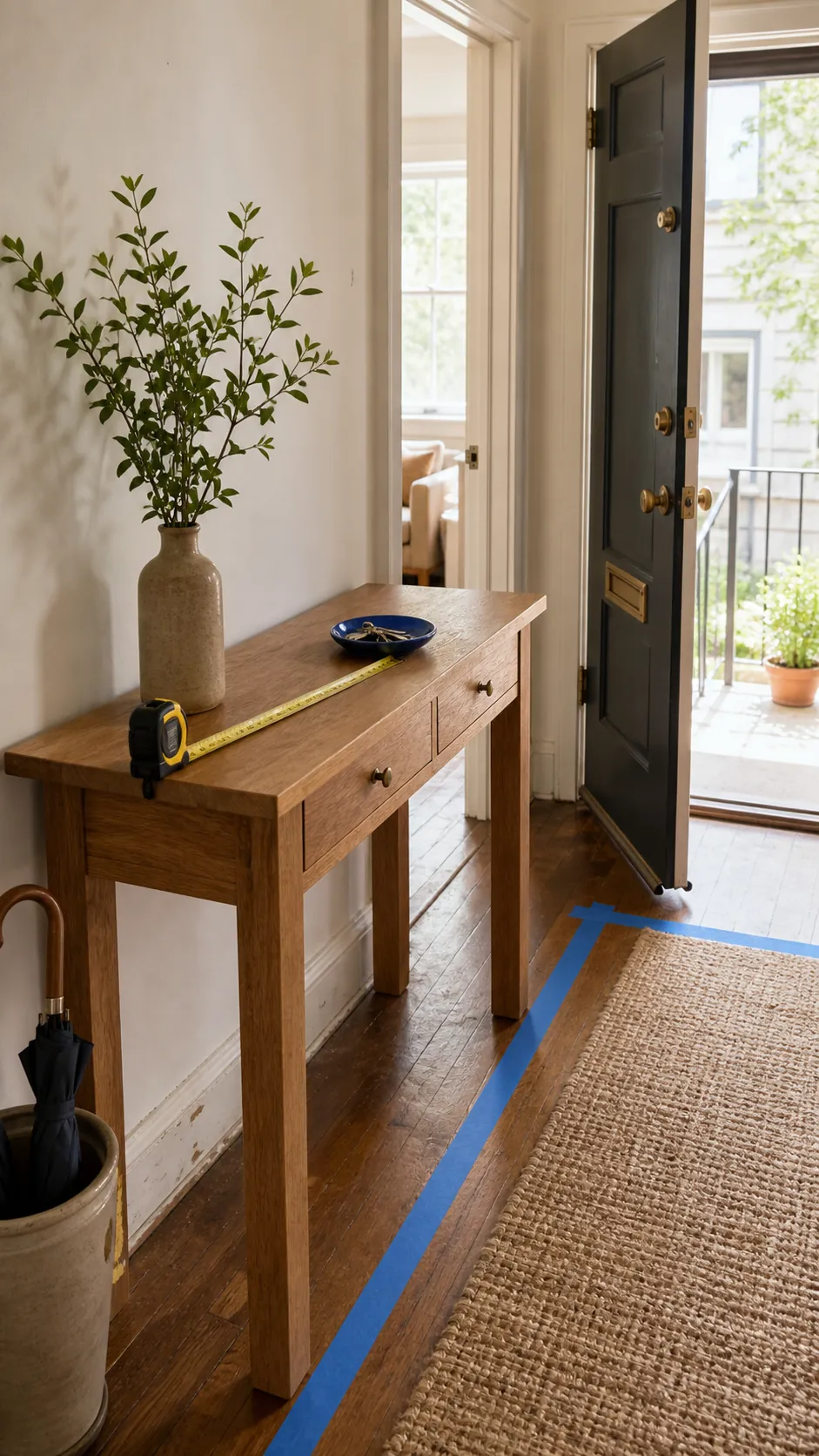
Open the front door completely and measure what remains before choosing or styling a table. A console should not pinch the main walking route, cover a useful outlet, or force people to turn sideways with bags in hand.
Mark the table depth on the floor with painter’s tape and live with that outline for a day. Once the footprint works, reserve part of the top as an empty landing pad; open surface is a functional feature, not an unfinished decorating problem.
Choose One Strong Visual Anchor
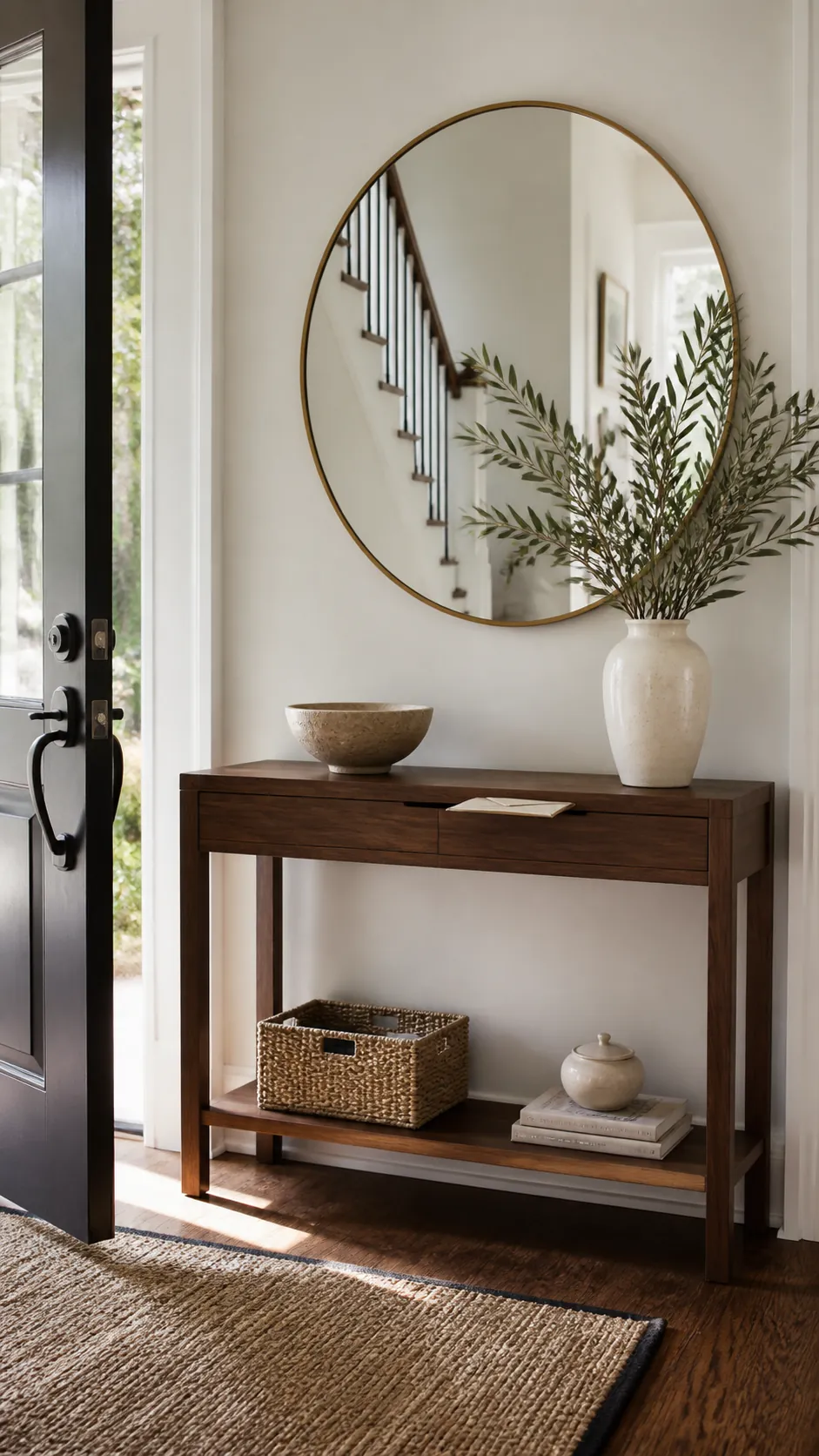
A mirror or a specific piece of art gives the arrangement a center of gravity. Choose an anchor that feels substantial in relation to the table rather than scattering several undersized frames across the wall.
A mirror is especially useful near the door because it reflects light and offers a final check on the way out. Hang it low enough to relate to the tabletop grouping while leaving room for a lamp or vase without overlap.
Build an Easy Three-Height Composition
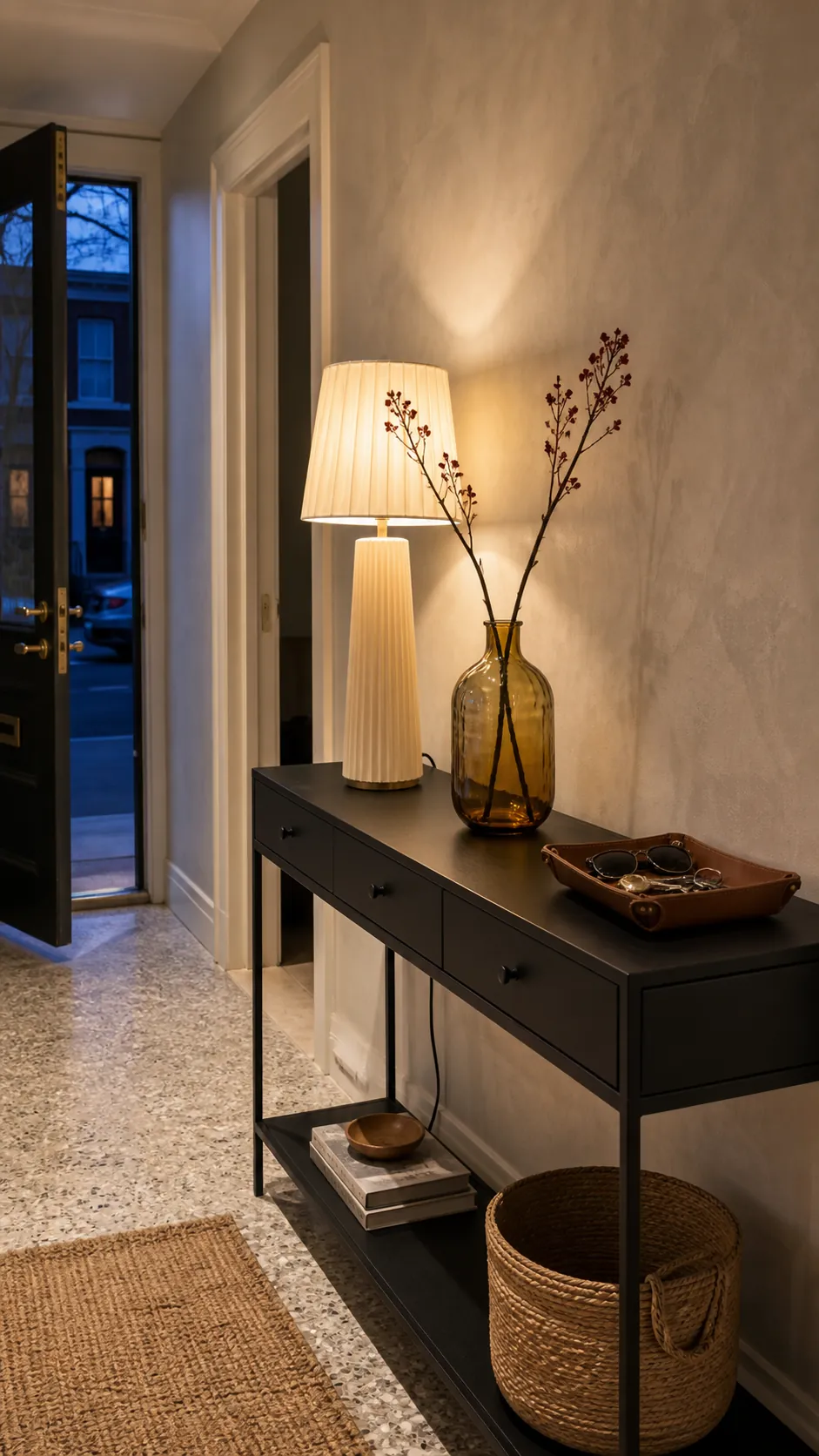
Think in three general heights: something tall, something medium, and something low. A lamp can supply the tall note, a vase can occupy the middle, and a tray can settle the foreground.
The objects do not need to form a perfect triangle. A slightly uneven rhythm feels natural, and varying solid, transparent, and open shapes keeps a small surface from reading as a row of unrelated products.
Give Keys and Mail a Defined Home
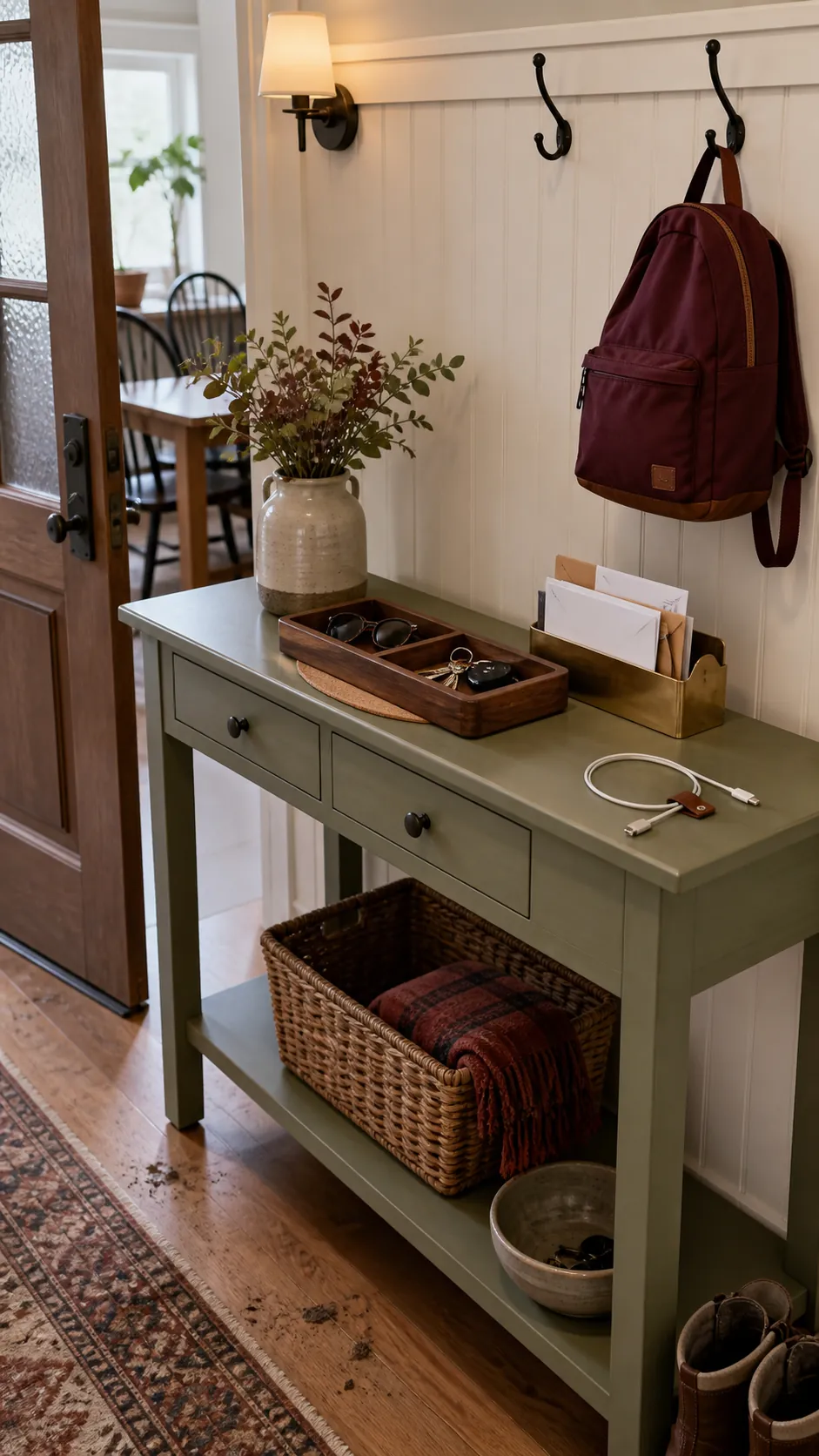
If keys, sunglasses, and mail land here every day, give each category a boundary. A divided tray and a narrow mail slot make the desired habit obvious while preventing the full tabletop from becoming a drop zone.
Choose containers based on the quantity you actually want to keep. A tiny sorter encourages you to process paper; a deep open basket invites a pile. Drawer dividers can hide chargers and spare items without sacrificing the clear surface above.
Layer Texture Without Adding Clutter
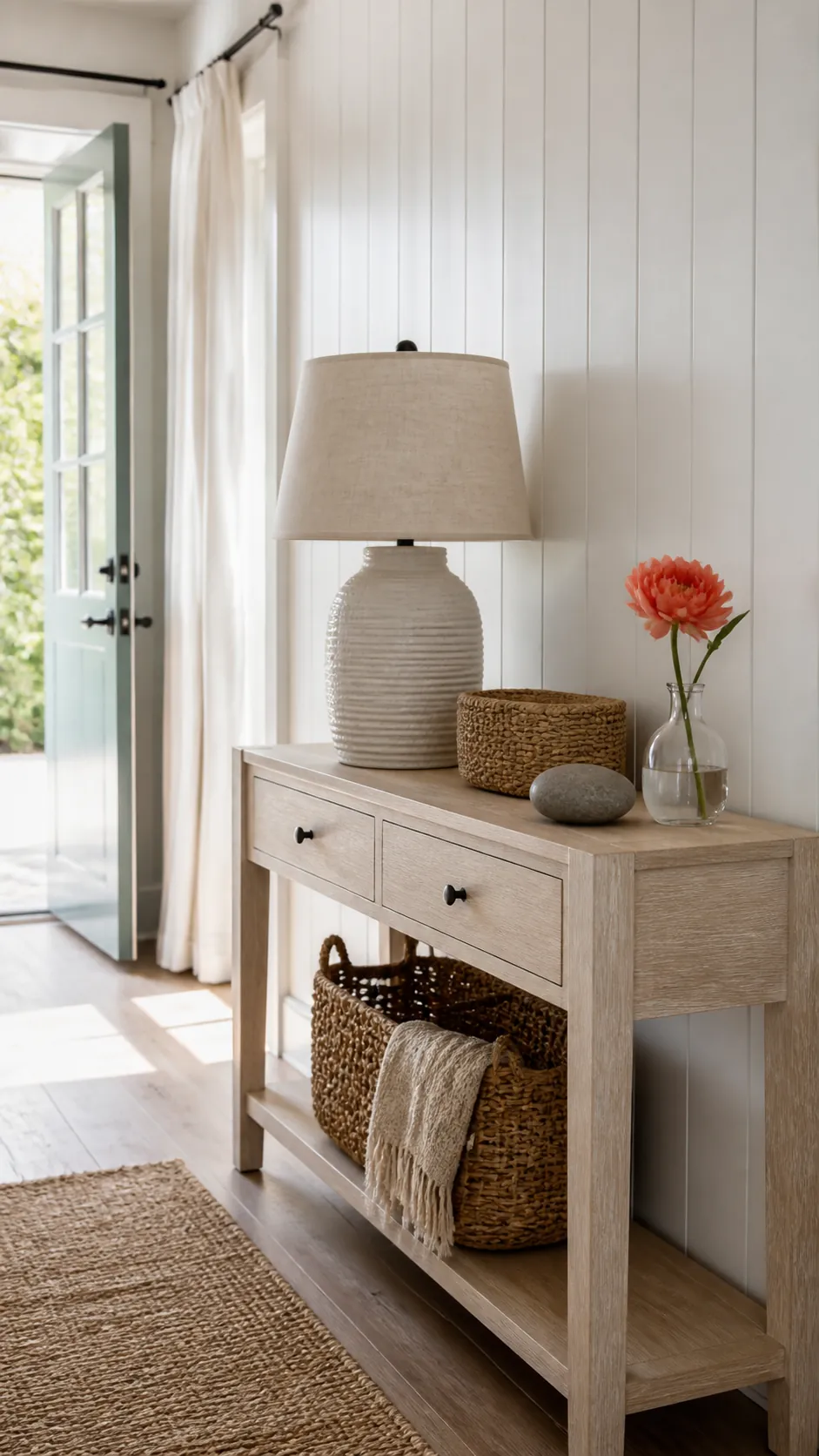
A restrained palette does not have to feel flat when textures change. Pair wood with stone, glazed ceramic with woven fiber, or clear glass with a matte painted finish to create contrast even when the colors are quiet.
Keep the number of pieces low enough that each texture can register. One stem from the yard, a lidded woven box, and a handmade lamp often create more character than a collection of signs, beads, books, and figurines.
Add Lighting That Welcomes You Home
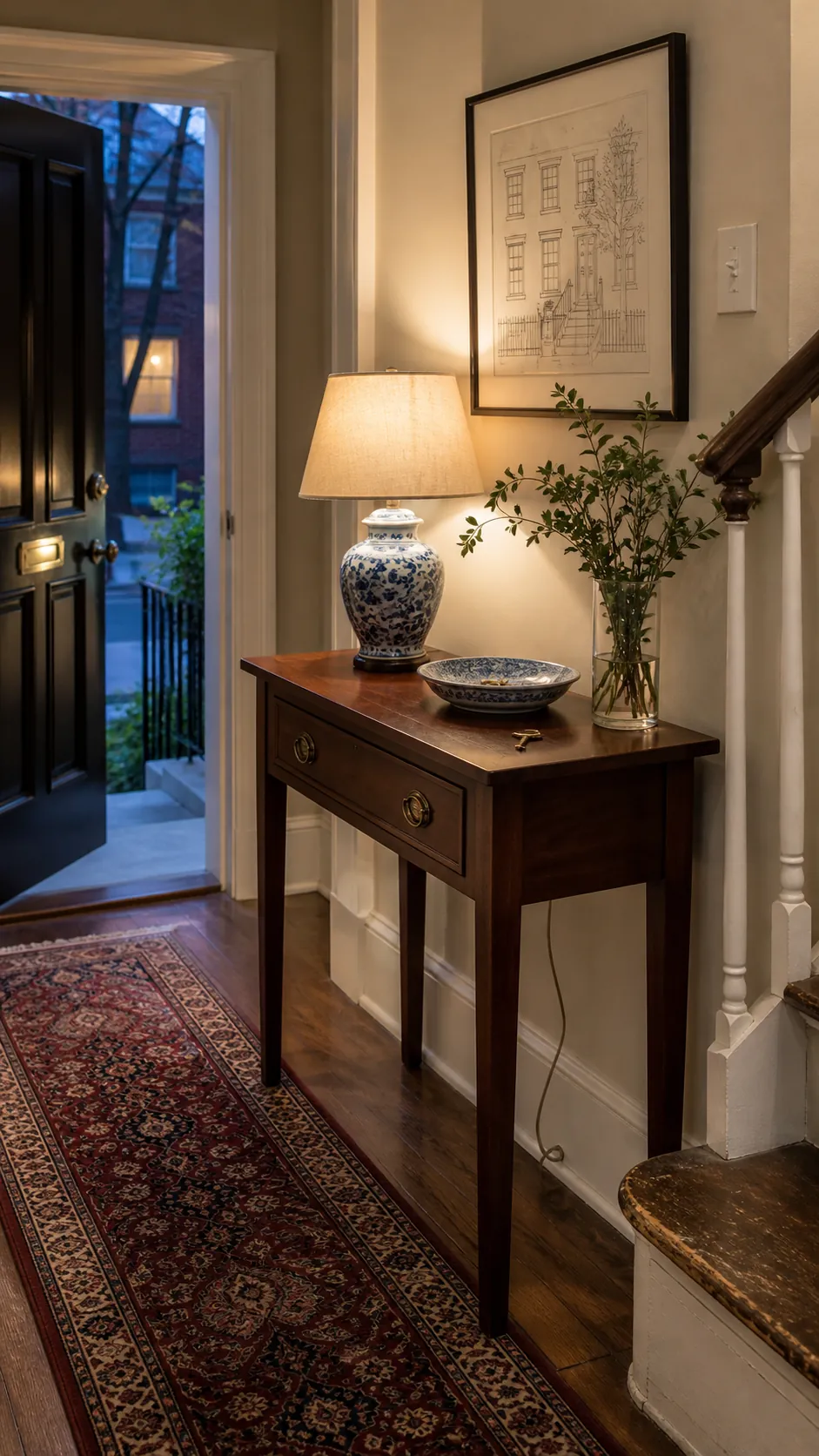
A table lamp changes an entry from a pass-through into a welcoming room. Use a warm bulb and a shade that softens glare; the pool of light should illuminate the tray and floor without overpowering the house.
Plan the cord before buying the lamp. Route it behind a leg or secure it discreetly below the tabletop, never across the walking path. If no outlet is available, a well-proportioned rechargeable lamp can supply the same evening function.
Use the Space Underneath on Purpose
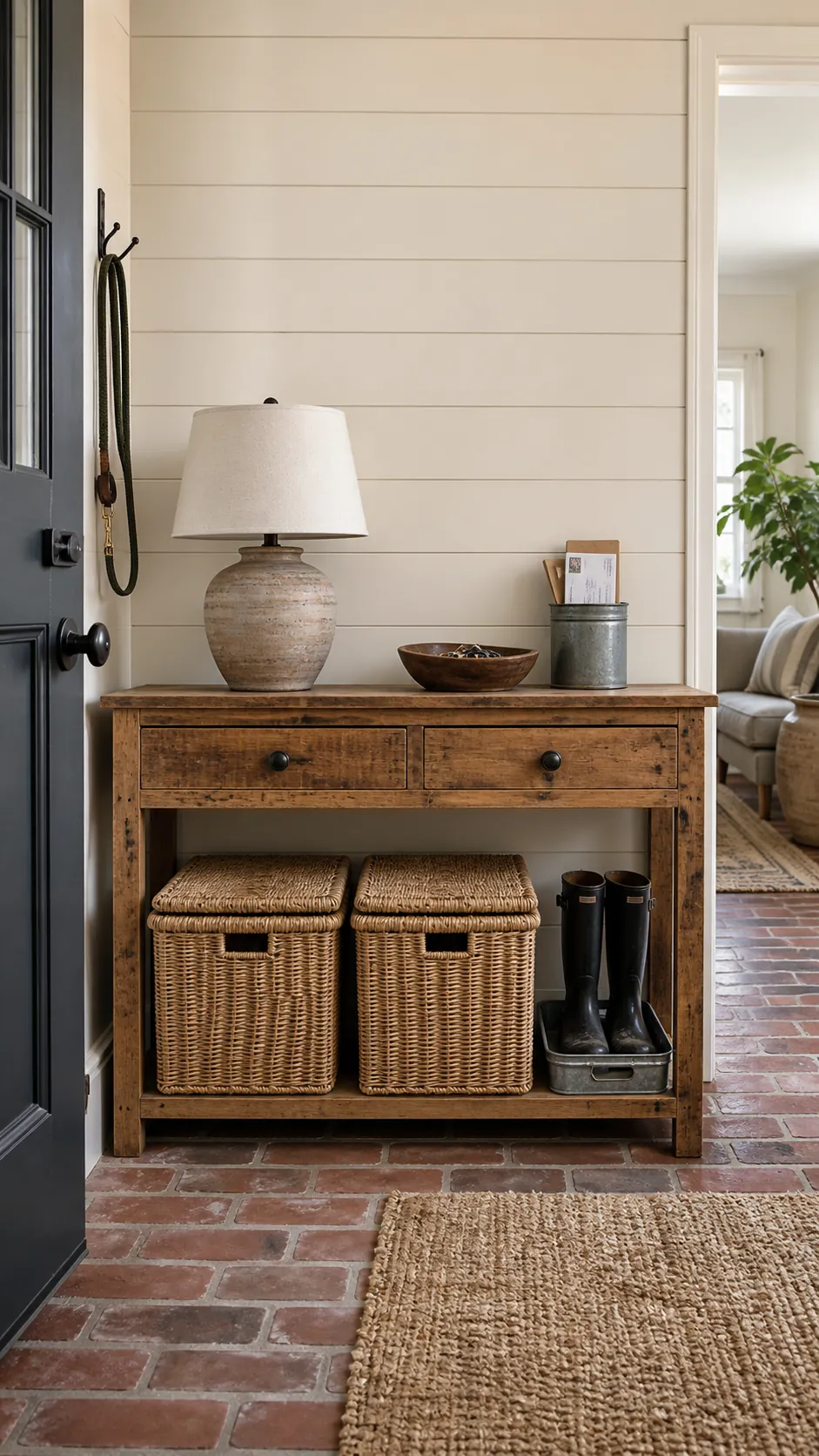
The open area beneath a console is useful, but it needs one clear purpose. Matching lidded baskets can hold seasonal accessories, a low stool can provide occasional seating, and a boot tray can contain wet footwear.
Avoid filling every inch under the table. Leave enough floor visible to preserve a light silhouette and make cleaning easy. Choose baskets that sit fully beneath the apron rather than projecting into the route.
Edit the Surface for the Season
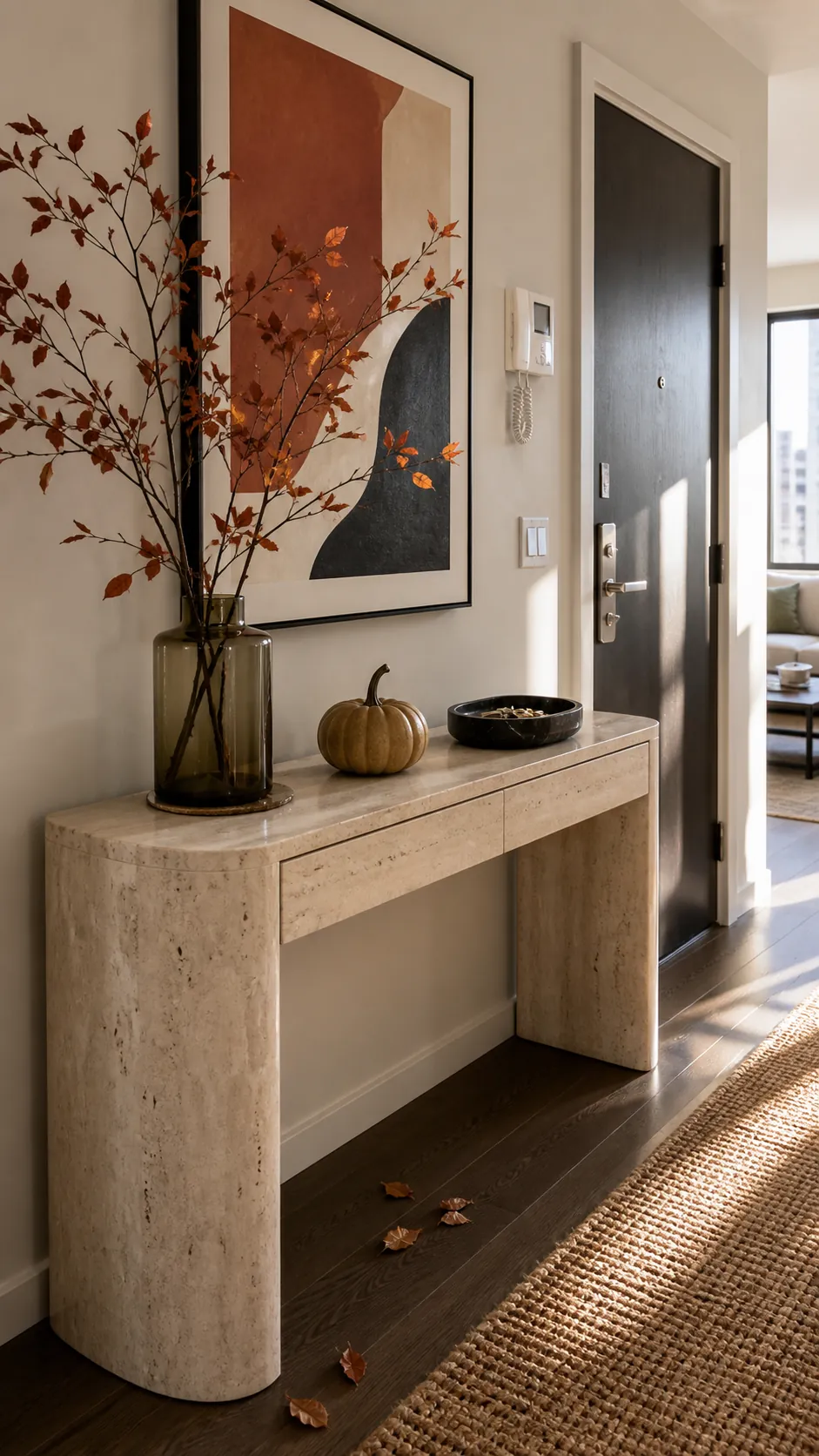
Seasonal decorating works best as a swap, not an accumulation. Change one branch, textile, or color accent while leaving the permanent lamp and daily-use tray in place.
A one-in-one-out rule keeps the arrangement recognizable and easy to maintain. Natural materials provide enough signal: budding stems in spring, garden flowers in summer, a rust branch in autumn, or evergreen clippings in winter.
Keep the Table Working With a Two-Minute Reset
At the end of the day, return keys to the tray, move mail to its next destination, and remove anything that belongs elsewhere. Wipe the open landing area when needed and check that the lamp, branches, and containers still leave comfortable room for daily arrivals.
If the table repeatedly gathers clutter, the answer is usually a missing function rather than more decor. Add one drawer divider, nearby hook, or recycling route that solves the actual problem, then edit the surface again. That small maintenance loop keeps entry table decor welcoming long after the photographable moment.