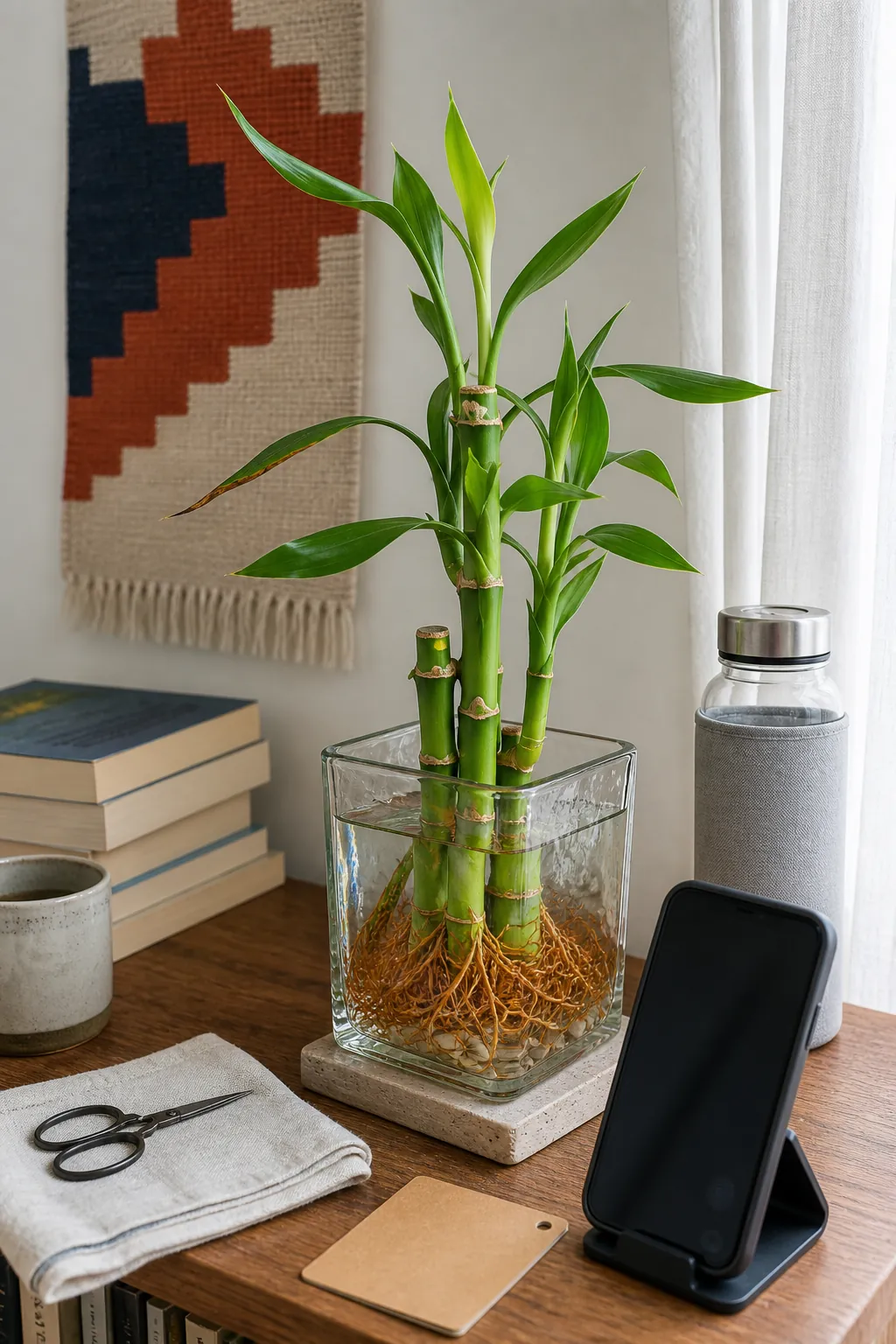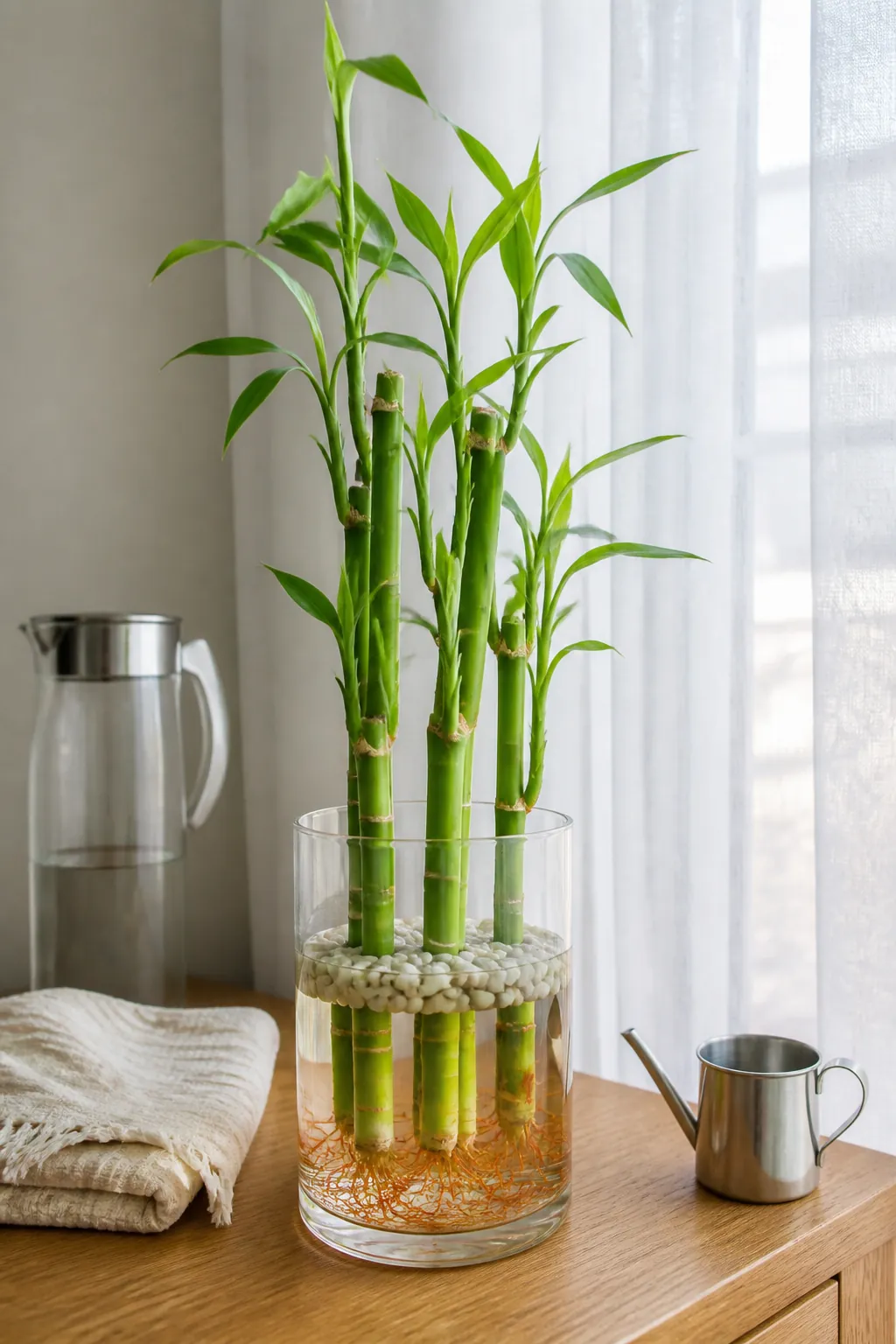
Lucky bamboo survives many imperfect rooms, which is why owners often assume it needs almost nothing. The plant usually declines after several small stresses accumulate: stale water, buried cane tissue, harsh tap water, direct sun, weak light, cold drafts, or generous fertilizer. Good care is less about constant attention and more about creating a stable root zone and leaving it alone long enough to respond.
Know What Lucky Bamboo Actually Needs
Lucky bamboo is Dracaena sanderiana, a tropical houseplant rather than true bamboo. Its segmented green stems can root in water or grow in an airy potting mix, and both methods can work when the roots receive oxygen and the foliage gets useful light. Choose one method based on how you prefer to monitor moisture, not because one container looks more decorative.
A healthy plant has firm green canes, clean roots, and leaves that hold their shape. New leaves often open lighter and deepen with age, so pale fresh growth is not automatically a deficiency. Check the plant weekly for soft stems, spreading yellow color, webbing, sticky residue, scale bumps, or a sour smell before those problems reach the whole arrangement.
Give It Bright Indirect Light and Steady Warmth
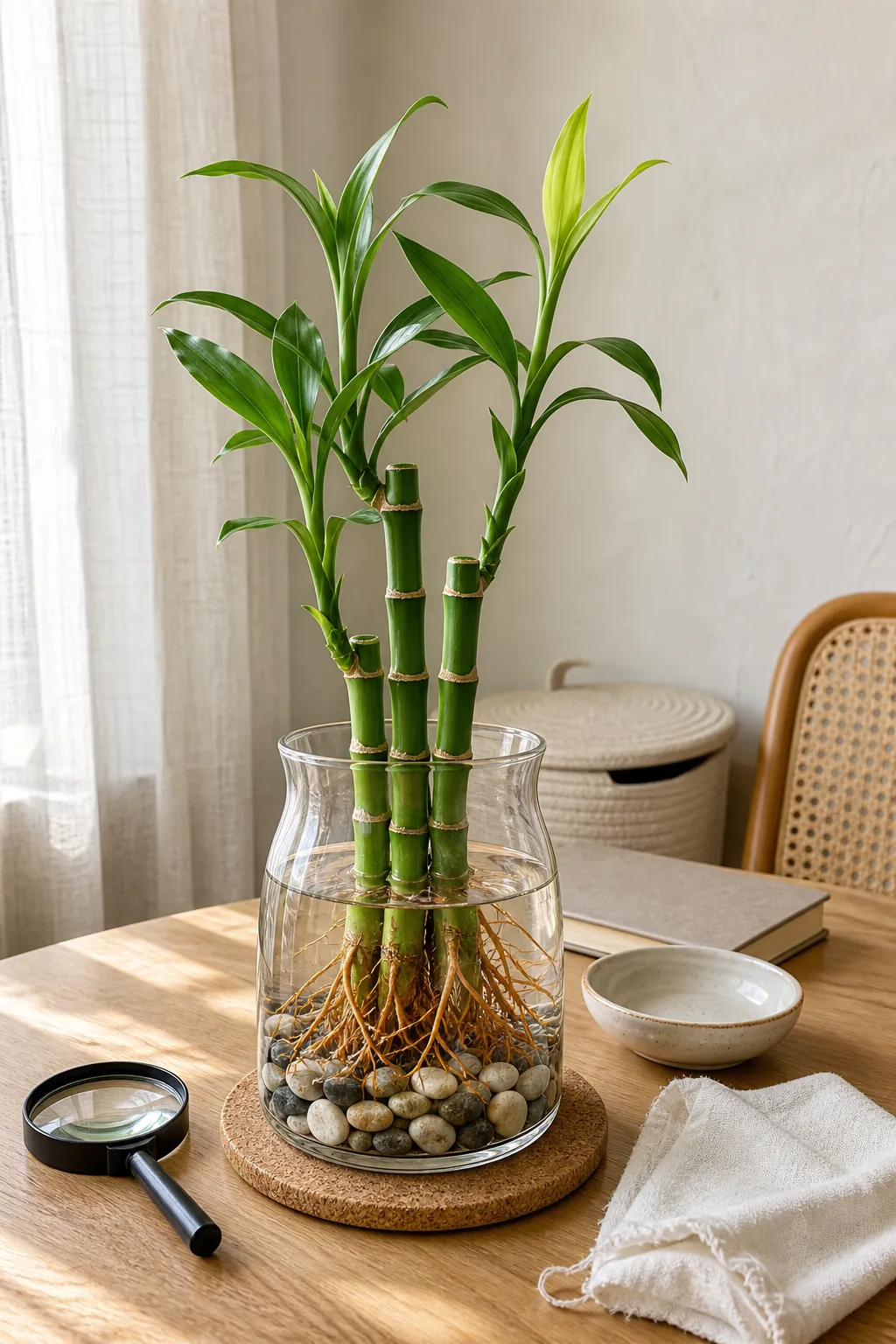
Place indoor lucky bamboo near a bright window where direct midday or afternoon sun does not strike the leaves. A sheer curtain can soften a hot exposure, while a position several feet into a dim room may be too weak even when the room feels bright to you. Slow stretching, sparse leaves, and leaning growth suggest that the plant needs a brighter indirect position.
Keep it away from cold window glass, air conditioning vents, heaters, and sudden outdoor exposure. Tropical Dracaena prefers normal warm indoor conditions, and abrupt temperature changes can damage foliage even when watering is correct. Rotate the container occasionally for even growth, but avoid moving it between radically different locations every few days.
Care for Lucky Bamboo Growing in Water
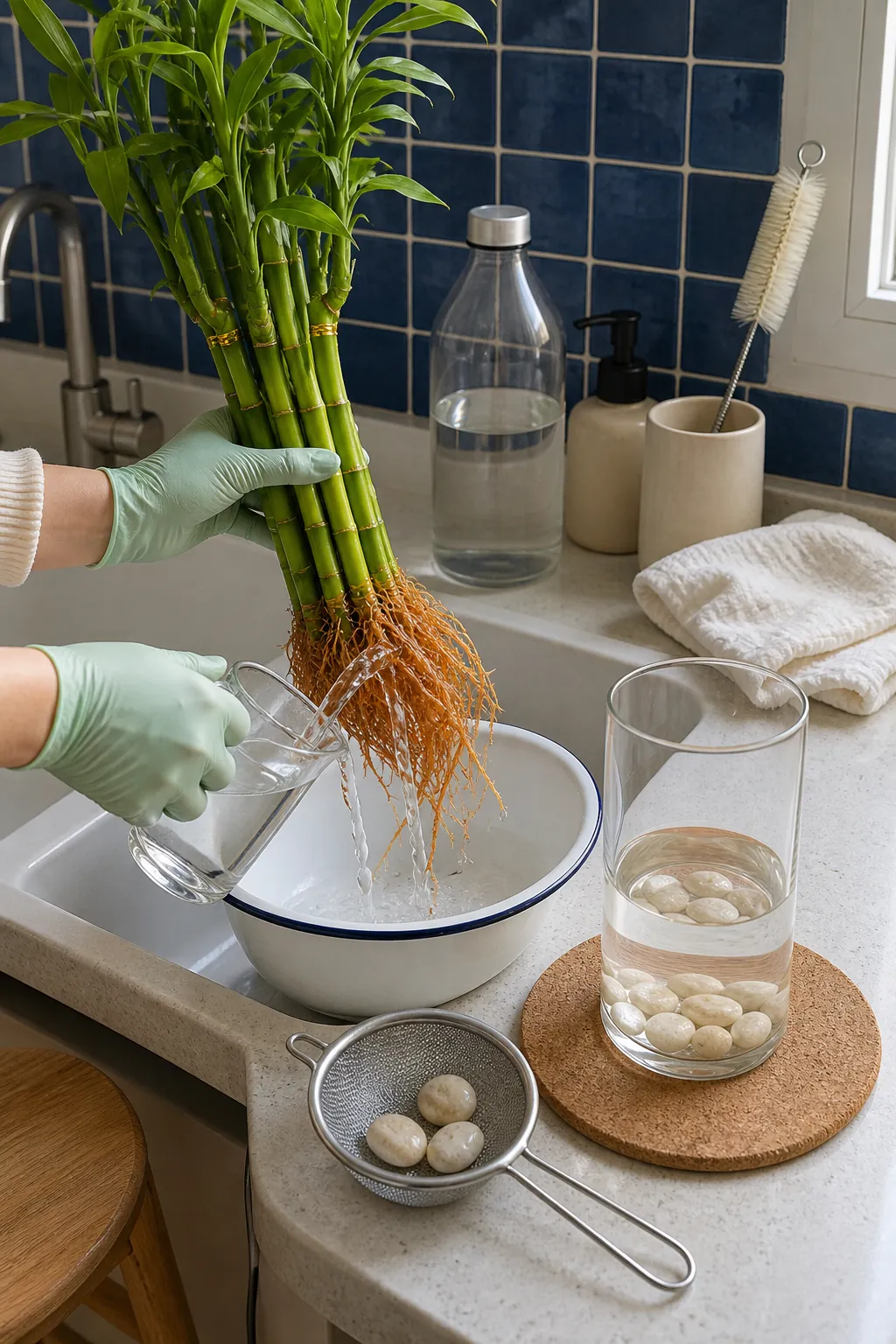
Use a stable vessel and enough stones to hold the canes upright without crushing the roots. Add clean room temperature water only deep enough to cover the root system, since submerging long cane sections encourages decay. Filtered, rain, reverse osmosis, or distilled water can reduce brown tips where tap water contains salts or fluoride that bother Dracaena.
Refresh the water regularly rather than topping it up forever. During each change, rinse loose debris from the roots, wash the vessel and stones, and remove algae with a dedicated soft brush. Keep leaves above the water and watch for a stale odor, cloudy water, or roots that turn dark and soft. Clear glass makes inspection easy but also admits light that encourages algae, so cleanliness matters.
Care for Lucky Bamboo Growing in Soil
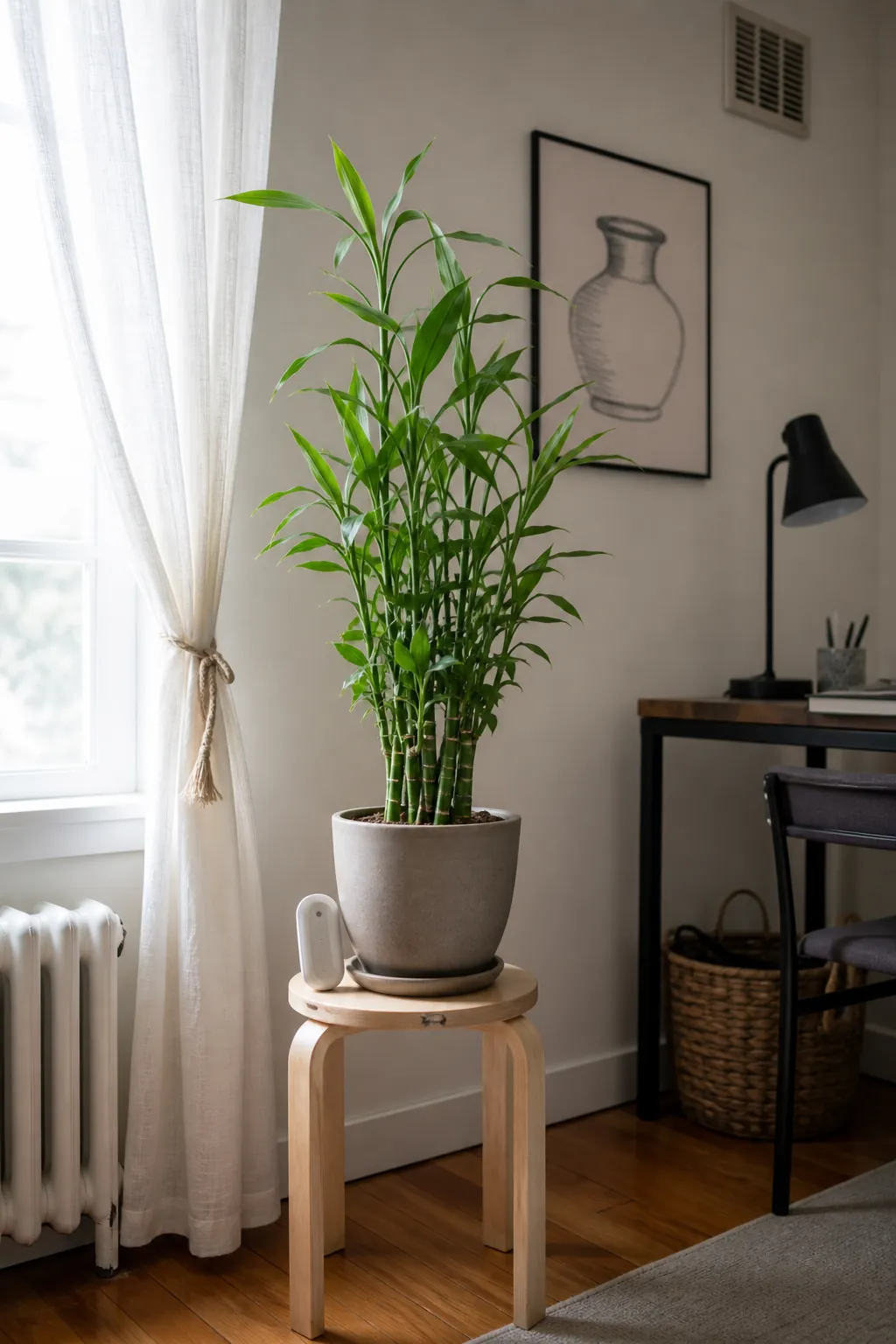
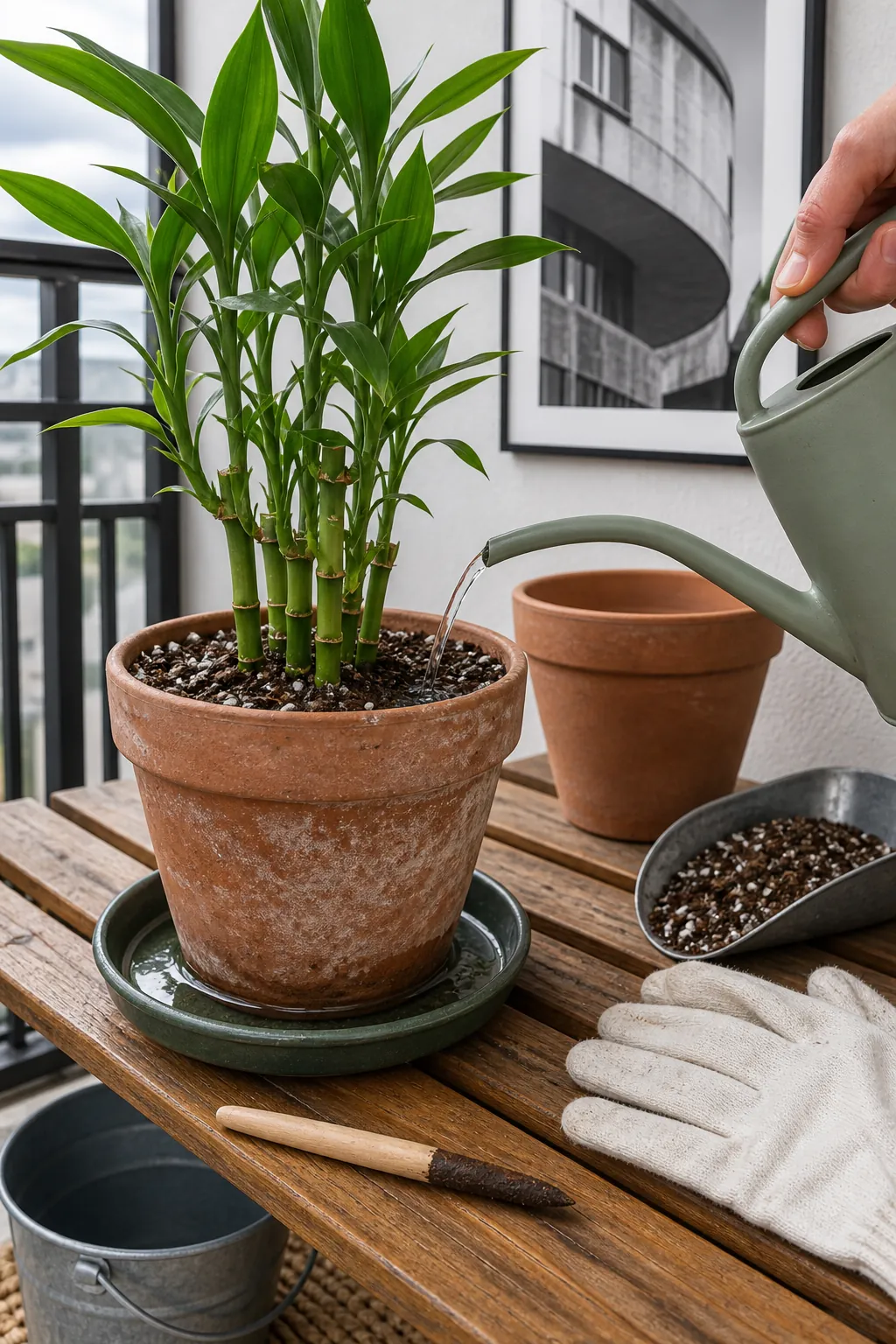
Choose a pot with a drainage hole and an airy houseplant mix that holds some moisture without remaining saturated. Water thoroughly when the upper layer begins to dry, let excess drain, and empty the saucer. Do not follow a fixed weekly volume when light, temperature, pot size, and season change how quickly the mix dries.
A pot only modestly larger than the roots is easier to manage than a deep decorative container filled with wet mix. If growth slows and the root ball has become tightly packed, move up one pot size and keep the cane at the same depth. Never bury leafy shoots or a long section of green cane while repotting.
Feed Lightly and Keep Leaves Clean
Lucky bamboo is not a heavy feeder. During active growth, use a very dilute liquid fertilizer suitable for foliage plants, and apply it far less often to water grown plants than instinct may suggest. Skip feeding when roots are damaged, water is cloudy, stems are yellow, or the plant has recently been moved or repotted.
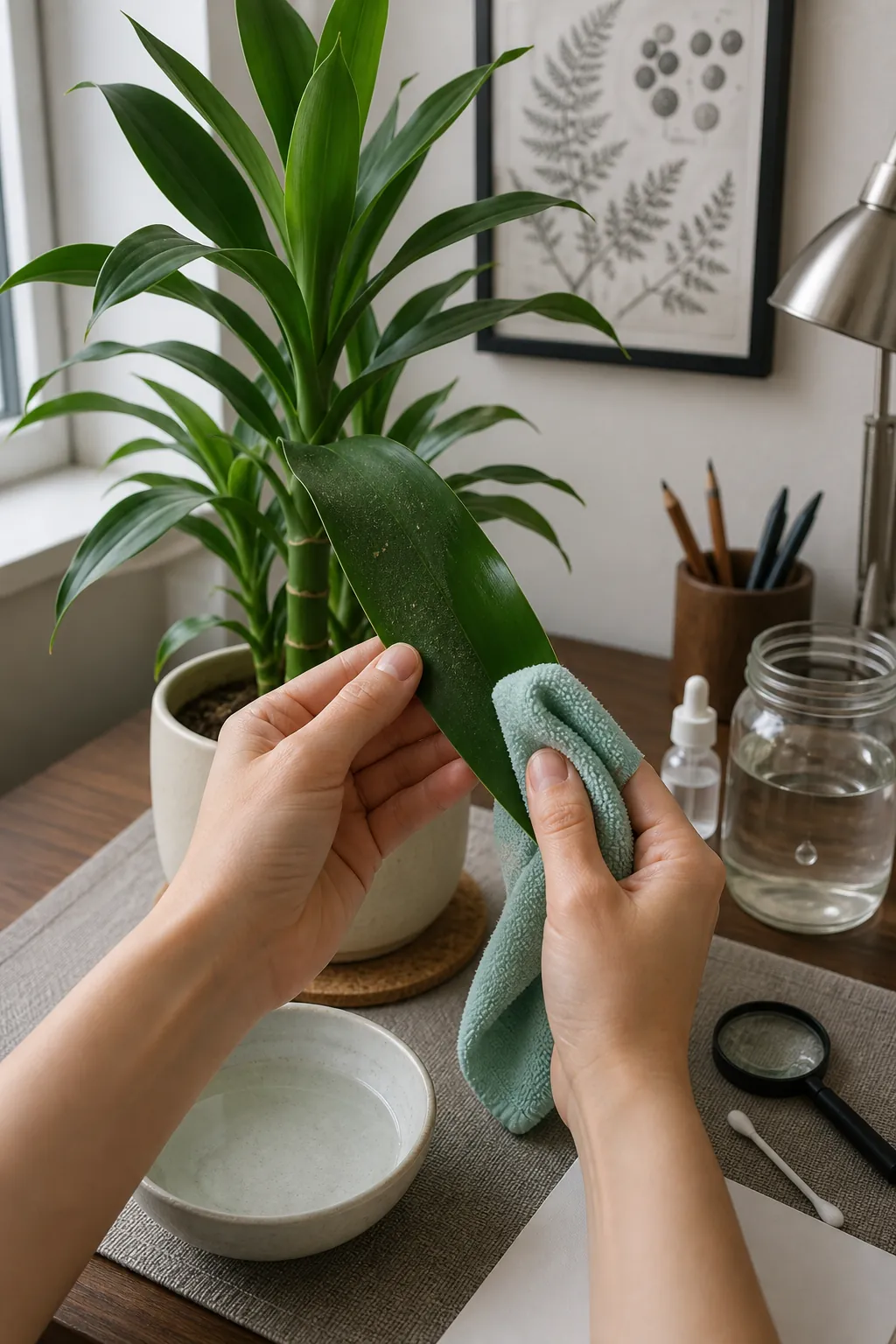
Wipe both sides of leaves with a soft damp cloth so dust does not block light or hide pests. Support each leaf with your other hand and avoid leaf shine products, oils, and aggressive rubbing. Clean foliage also makes early spider mite webbing, scale insects, and mealybug residue easier to notice.
Prune With a Purpose and Track New Growth
Trim only dry brown tips for appearance, leaving a narrow brown margin so the cut does not enter healthy green tissue. Remove a fully dead leaf at its attachment with clean scissors. To shorten a tall side shoot, cut above a node on the shoot rather than chopping the main cane without a propagation plan.
After any change, judge the result through fresh growth. Old scorch, yellow tissue, and brown tips do not become green again, but new leaves should open firm and clean when care improves. A simple weekly photo taken in the same light is more useful than making several new changes because one damaged leaf still looks damaged.