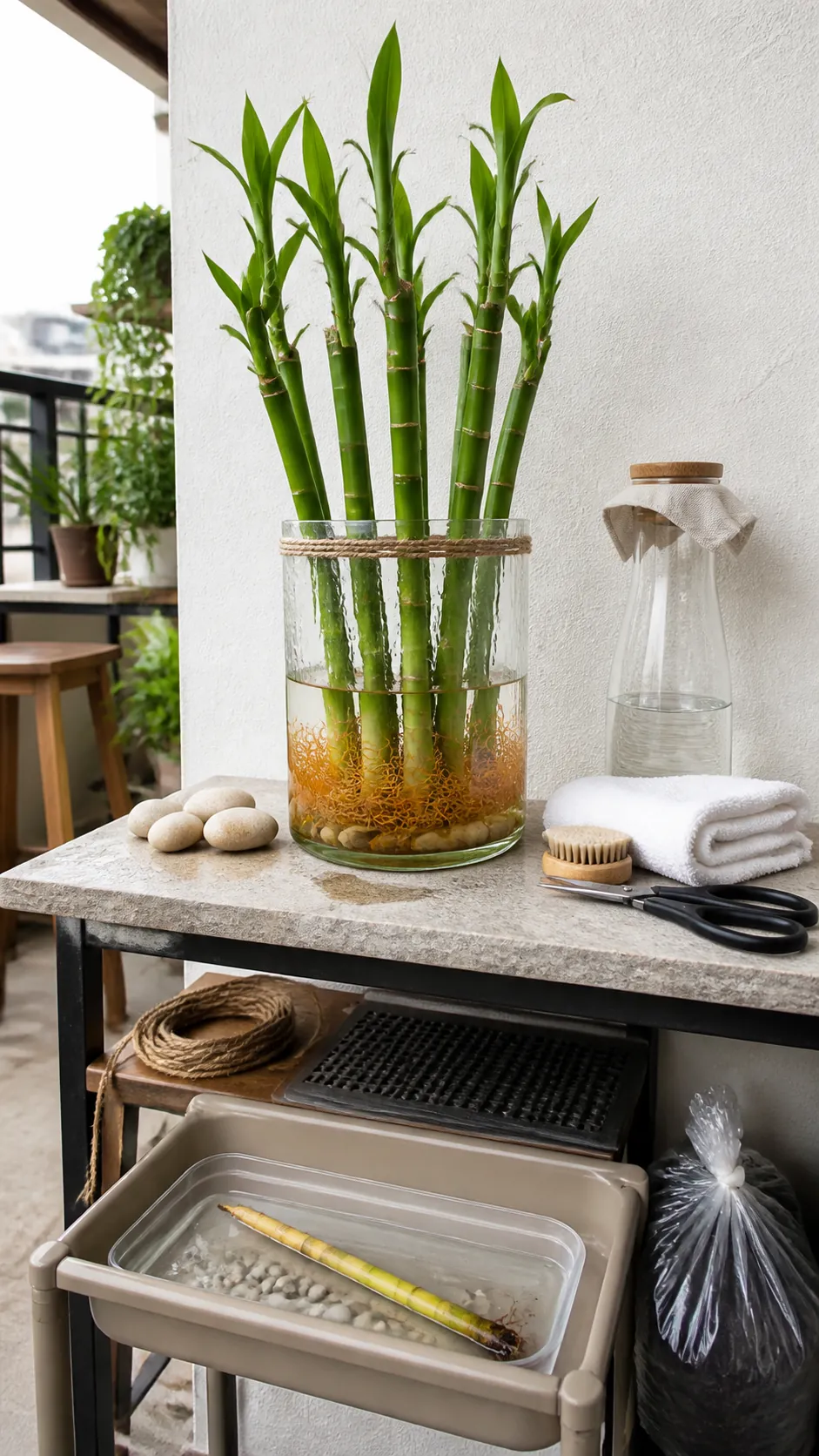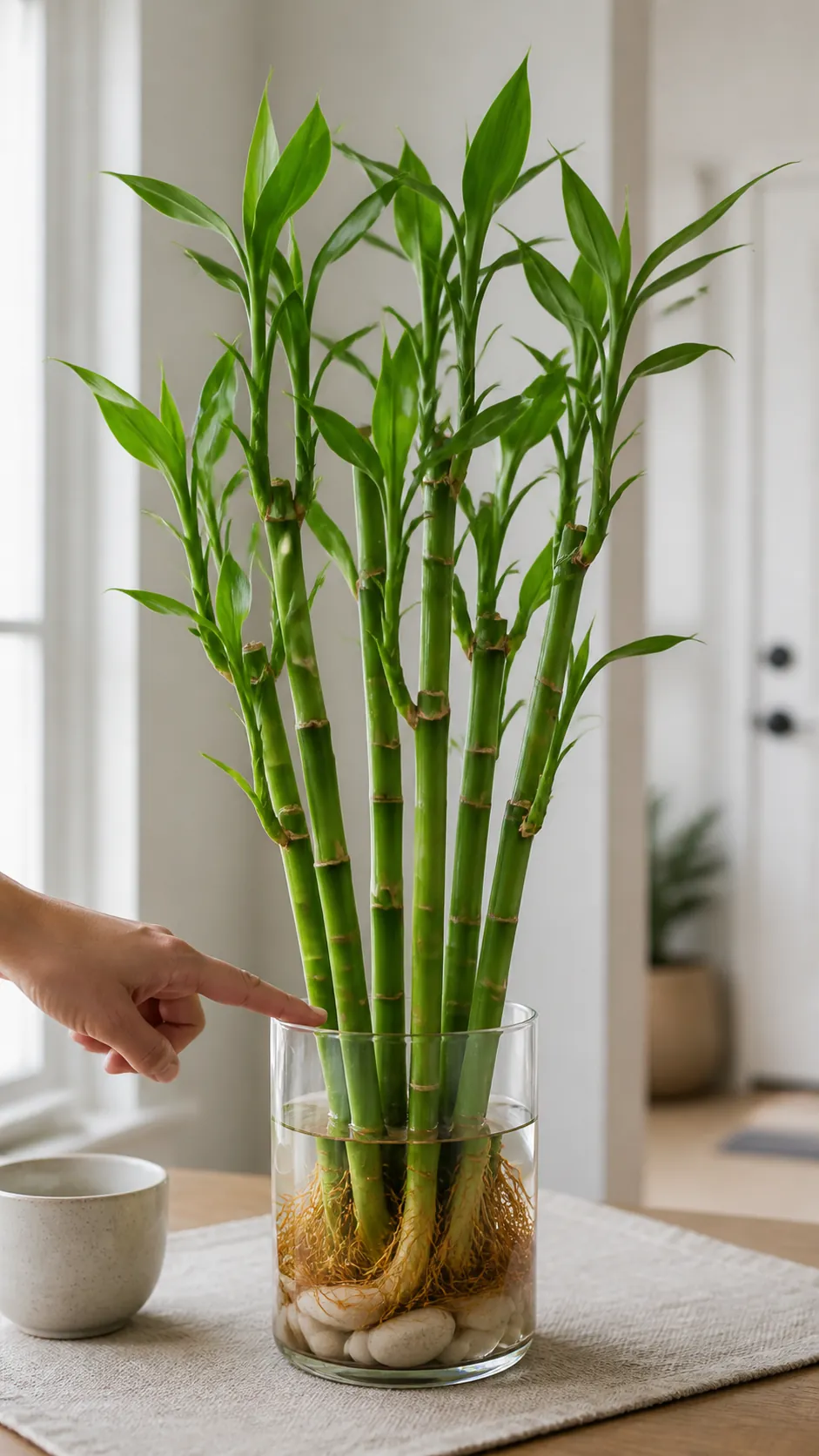
Lucky bamboo arrangements are easy to miscount because one cane can carry several leafy shoots, and decorative ties can hide where stems begin. Count the main cane pieces rising from the root zone, not the leaves, nodes, side shoots, curves, or cut tops. Once that distinction is clear, even a dense arrangement takes only a minute to check.
Find Each Main Cane at the Base
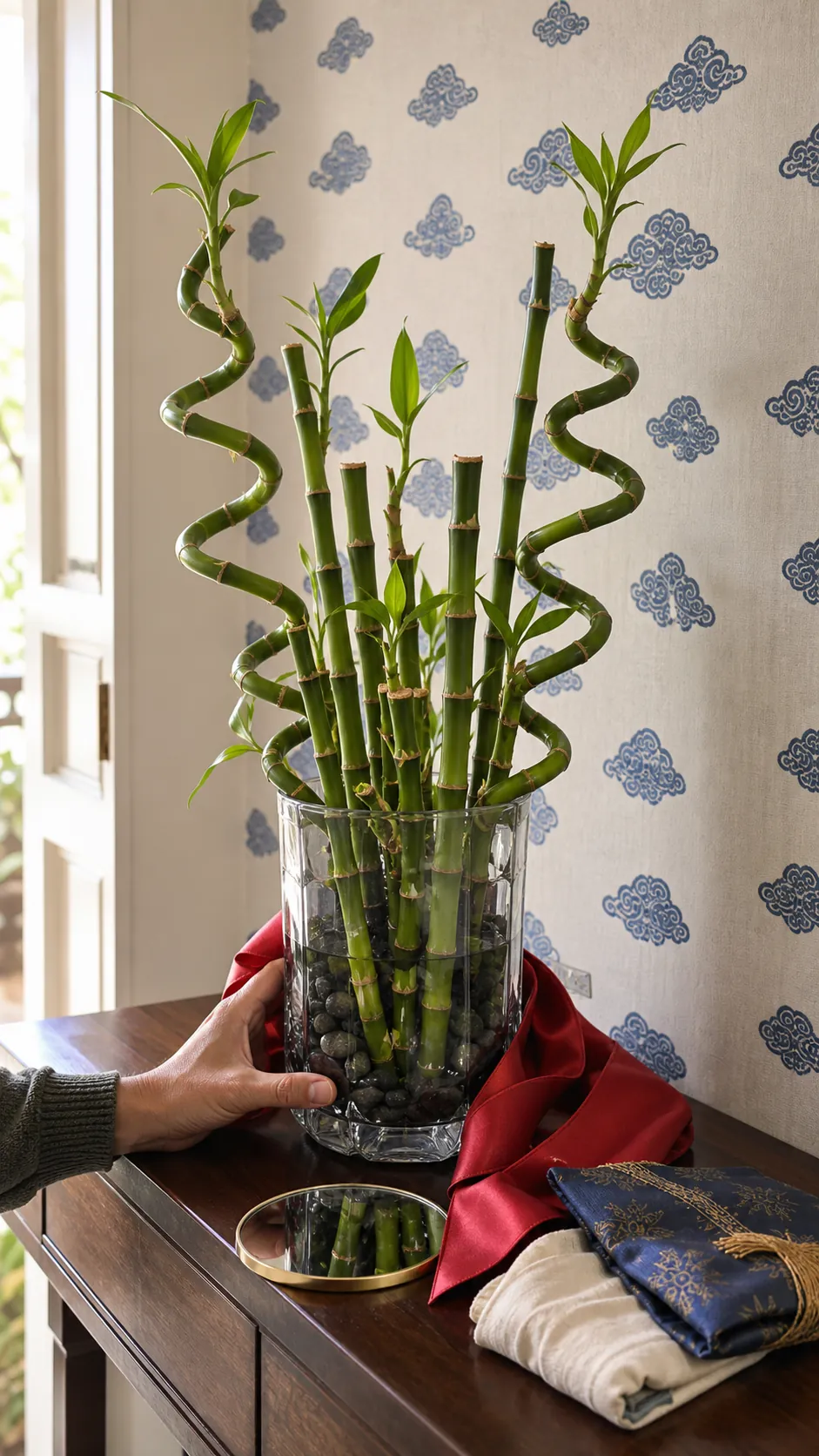
Look through the water or move a few loose pebbles so you can see the base of the arrangement. Follow each thick segmented cane upward with your finger or eye, then count it once. A cane may be straight, spiral, short, tall, wax capped, or heavily leafed and it still counts as one stalk.
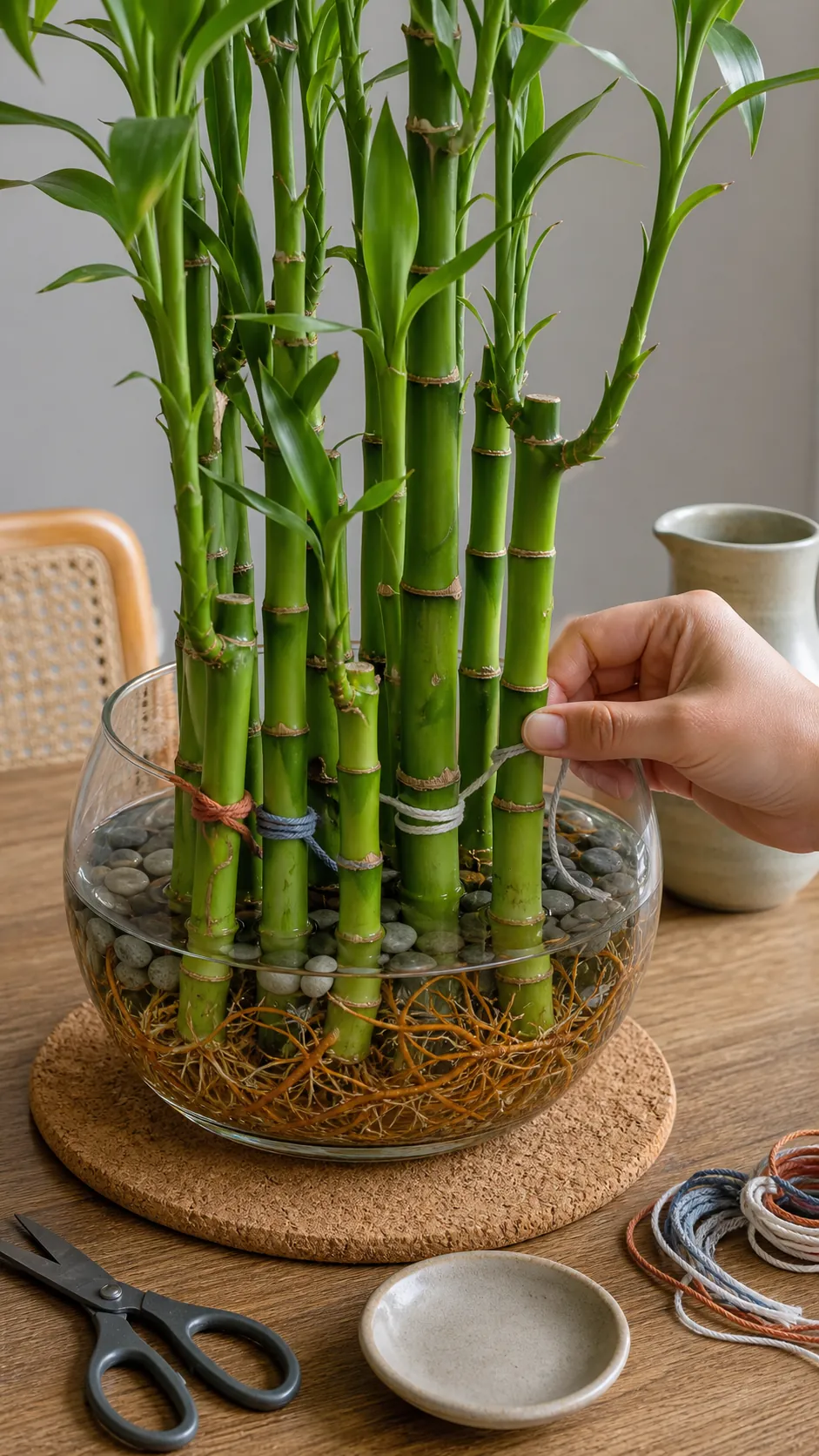
For a tied bundle, rotate the vase and repeat the count from another angle. This catches canes hidden in the center and prevents counting the same outer cane twice. If the roots are too dense to separate visually, use removable loops of soft thread around counted canes rather than pulling the arrangement apart.
Do Not Count Leaves or Side Shoots
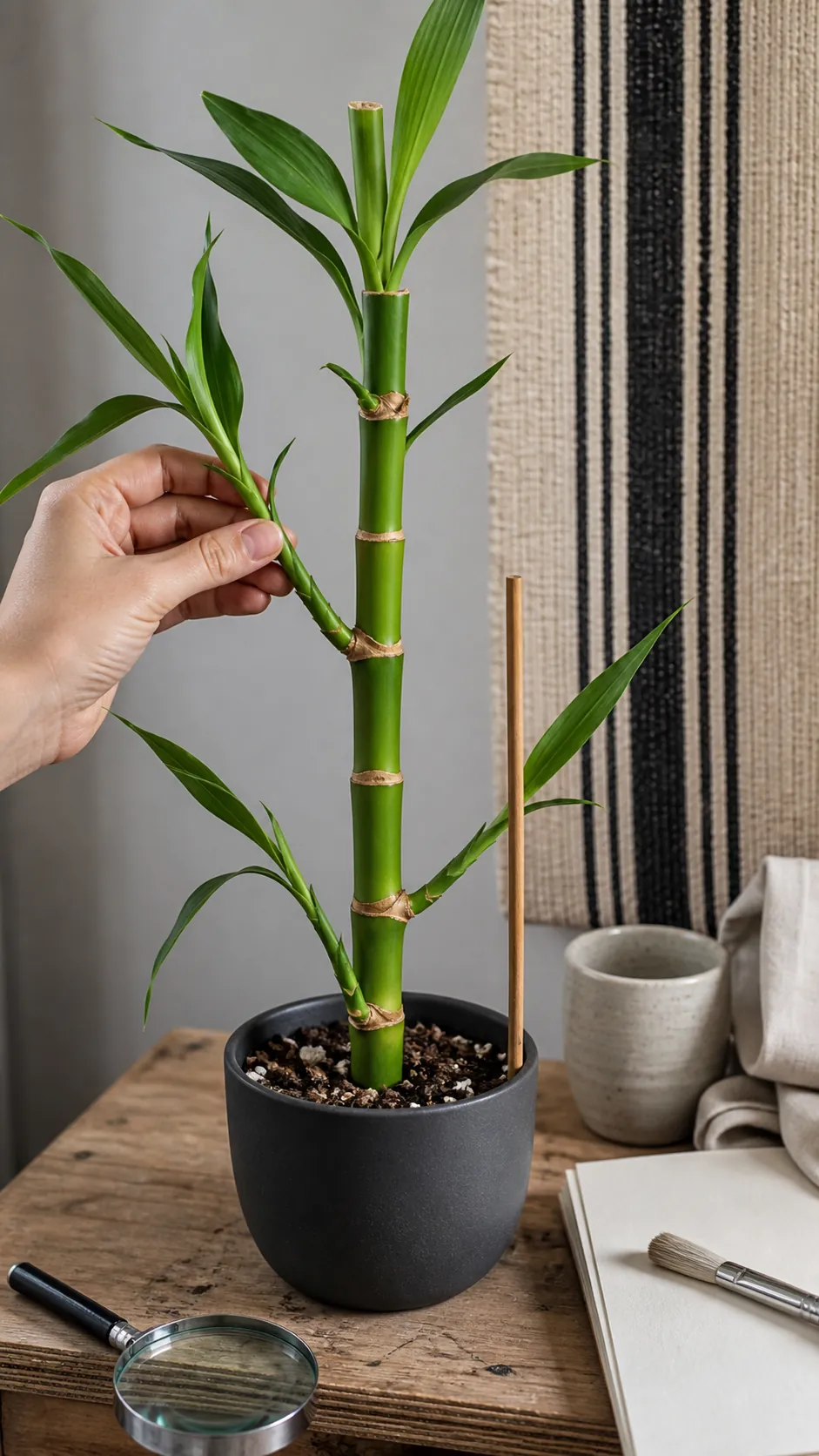
A leafy branch emerging from the side of a cane is a shoot, not another stalk for arrangement counting. The same cane may produce two or three shoots after pruning, but its count stays at one. Leaves also do not affect the total, no matter how many crowns or layers are visible.
Trace a questionable shoot downward. If it joins a thicker cane above the roots, it belongs to that cane. If it rises separately from the vessel base and has its own rooted cane section, include it as another stalk. The connection point is more reliable than the amount of foliage.
Count Spiral and Layered Arrangements the Same Way
A spiral is a trained shape within one continuous cane, not a series of stalks. Start at its base and follow the segmented stem through every bend to confirm continuity. Wax on the top, a cut surface, or a new side branch does not add another stalk.
Tiered arrangements often combine many cut canes of different heights. Count each separate cane at the base, including short pieces hidden behind tall ones. Decorative ribbon counts for nothing, and a circular ring of foliage does not reveal the total unless you can trace the stems below it.
Decide Whether Separate Containers Form One Display
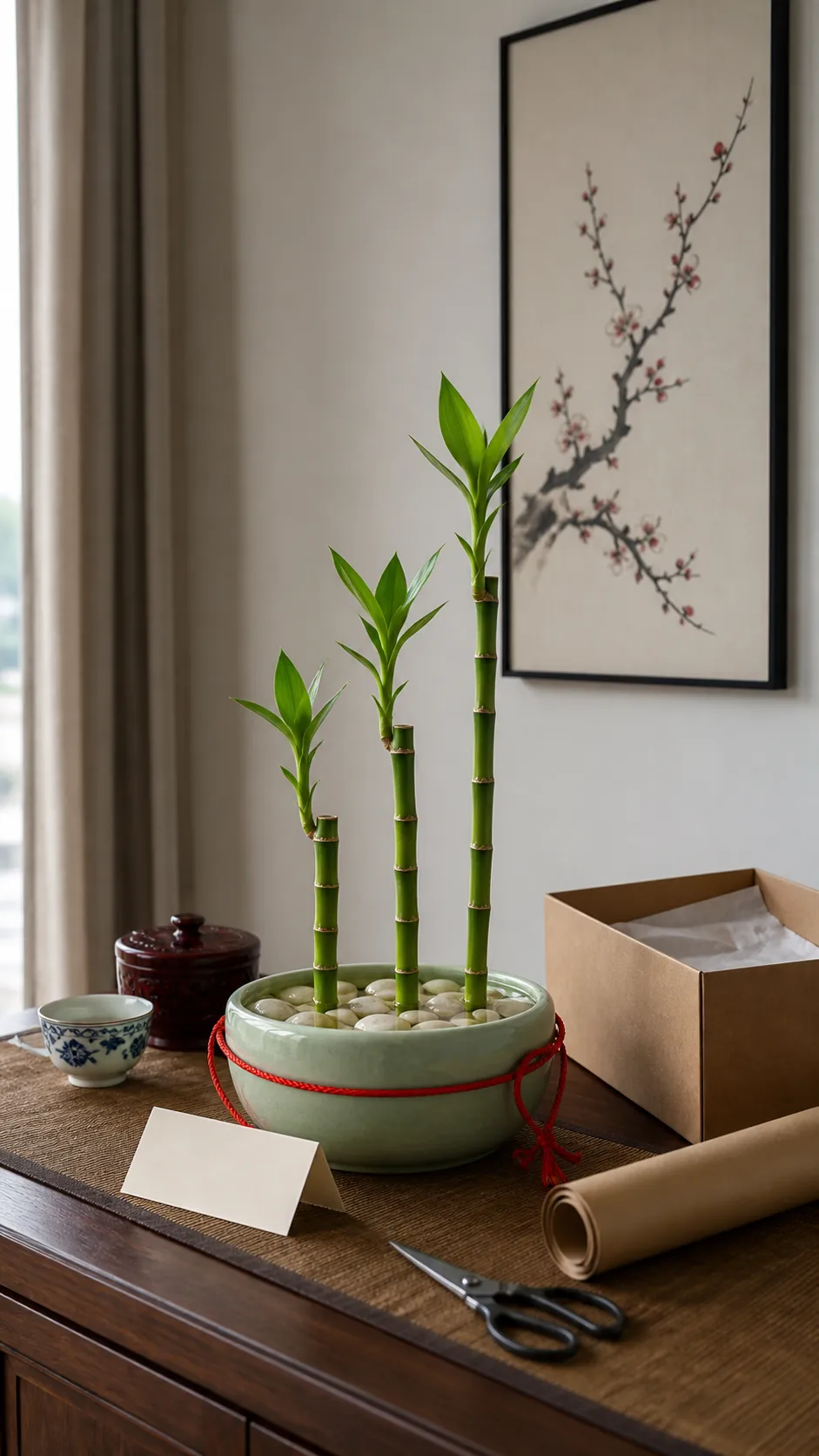
For plant inventory, count every rooted cane you own, regardless of container. For symbolic gift counting, the intended arrangement usually matters more than every lucky bamboo elsewhere in the room. Three canes tied together in one vase are naturally read as a three stalk gift, while a single unrelated cane on another shelf is a separate plant.
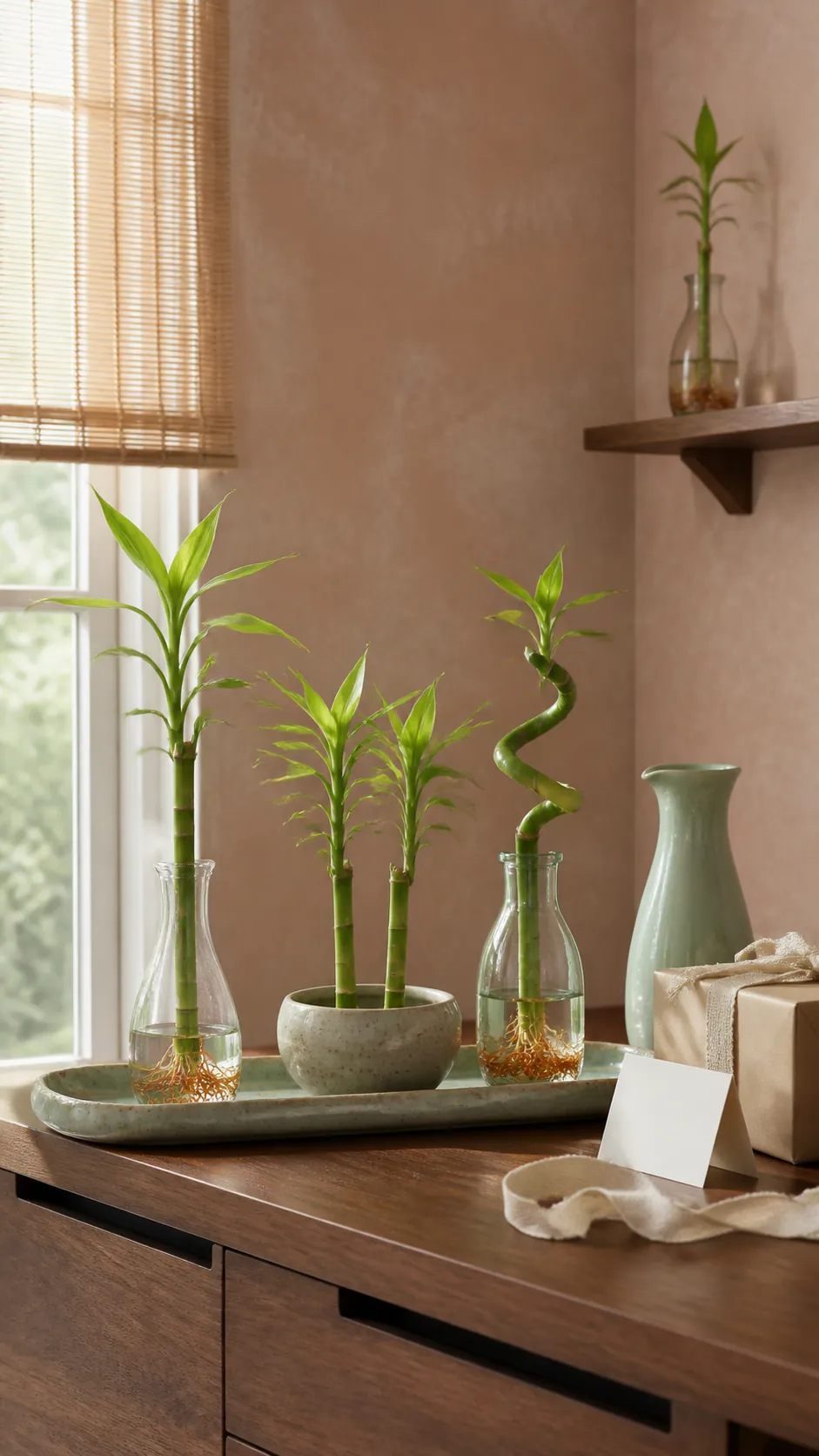
If several small vessels are presented together on one tray, decide whether the giver or owner treats them as one grouped display. Record both facts when clarity matters: the number of containers and the total number of canes. This avoids forcing a decorative layout into a rule it was never designed to follow.
Understand Common Stalk Number Meanings
Popular gift traditions often associate two stalks with love, three with happiness, wealth, and long life, five with balanced areas of life, six with good fortune, seven with health, eight with prosperity, nine with great luck, ten with completeness, and twenty one with a strong blessing. Four is commonly avoided because its pronunciation resembles the word for death in several Chinese languages.
These are cultural and commercial conventions, not botanical laws or guaranteed outcomes. Meanings vary across sources, languages, families, and schools of practice. Treat the number as an intentional message when giving a plant, and include a short note explaining what you mean instead of assuming every recipient uses the same list.
Keep the Arrangement Healthy After Counting
Do not force an unhealthy plant to keep a preferred number. Remove a yellow or soft cane from shared water so decay does not sit beside healthy roots, even when that changes the symbolic total. You can rebuild the arrangement later with a healthy rooted cutting or a new cane.
Keep roots in clean water, leaves above the water line, and the arrangement in bright indirect light. Avoid tying canes so tightly that stems are compressed or airflow disappears. A living, well cared for arrangement carries a clearer gift message than a precise count held together at the expense of plant health.