
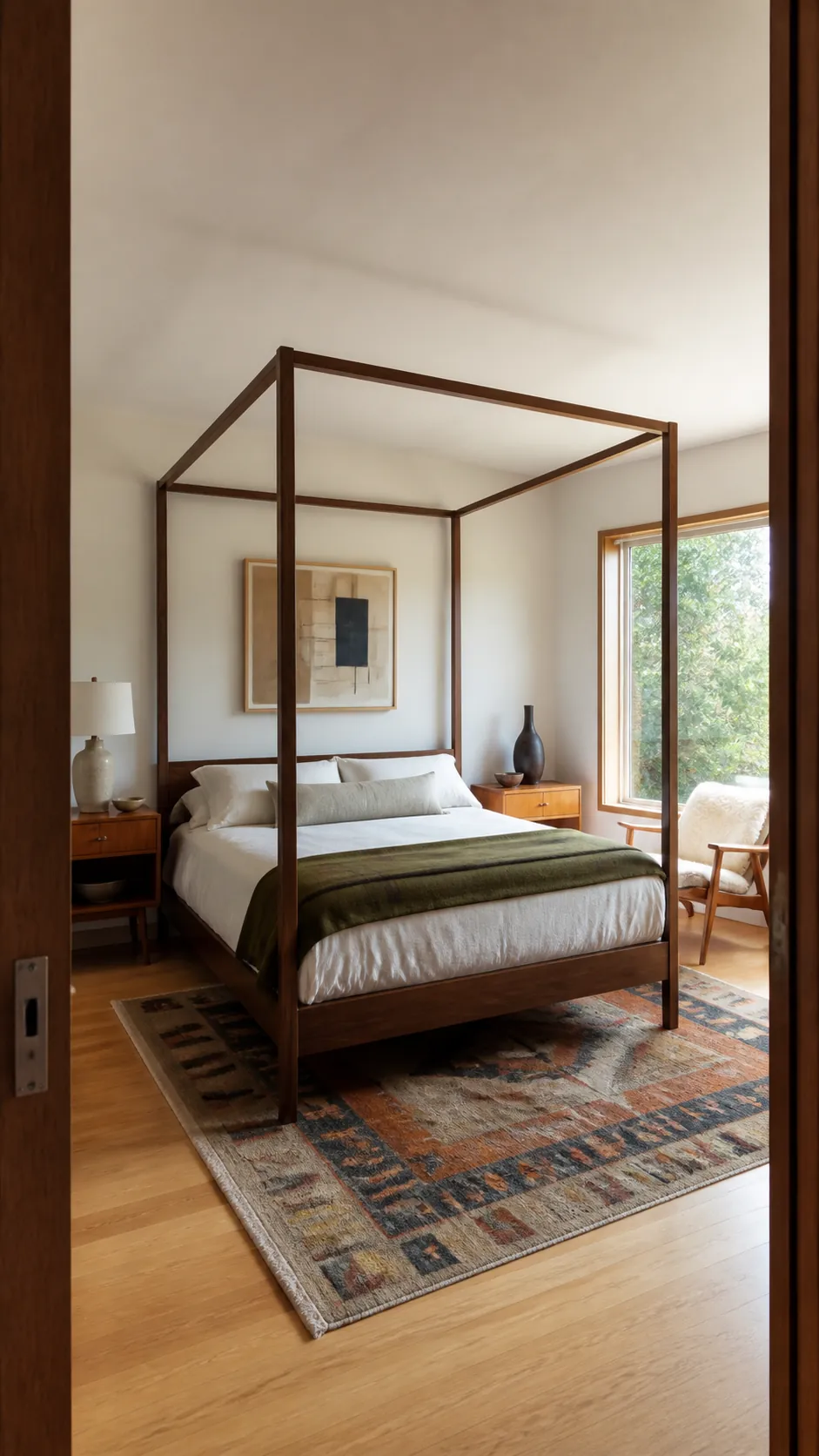
A canopy frame can suit a midcentury room when its lines feel architectural rather than ornate. The challenge is not finding enough period inspired decor, but deciding which shapes, woods, metals, and textiles deserve attention. A restrained room lets the bed create structure while softer materials keep it comfortable.
Let the Frame Supply the Architecture
Look for straight rails, slender posts, honest joinery, and a low visual profile at mattress level. A mid century modern canopy bed should echo the clean geometry of the room without resembling a carved traditional four poster. Leave the top open at first, because the bare outline often provides all the drama the bedroom needs.
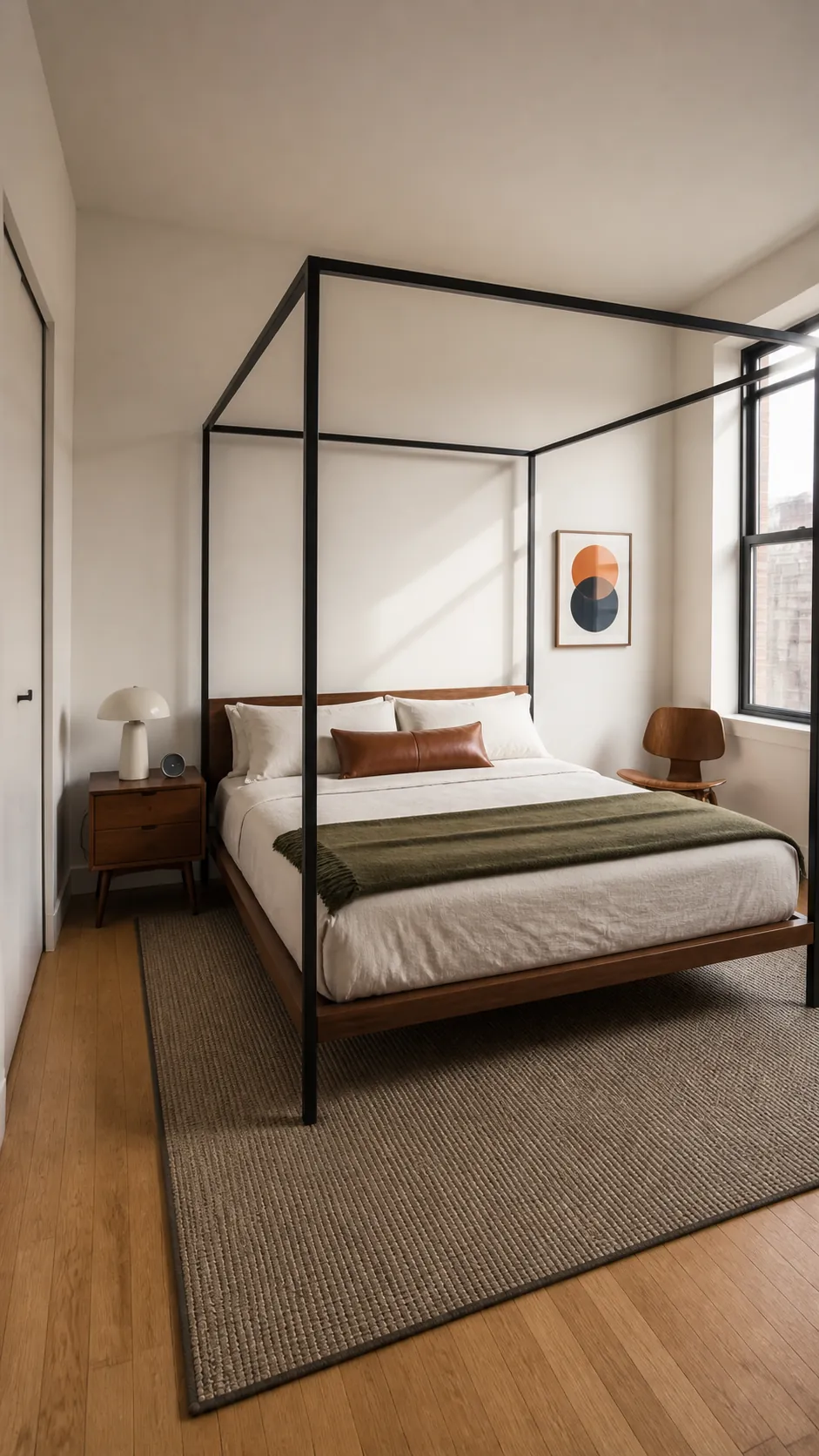
Balance Wood Tones Instead of Matching Them
Walnut, teak, oak, and painted finishes can coexist when one tone leads and the others appear in smaller doses. Repeating the exact same brown across a bed, dresser, nightstands, and floor makes the room feel heavy, so introduce ceramic, upholstery, metal, or painted surfaces between them. A rug with both warm and cool notes can connect different woods without pretending they match.
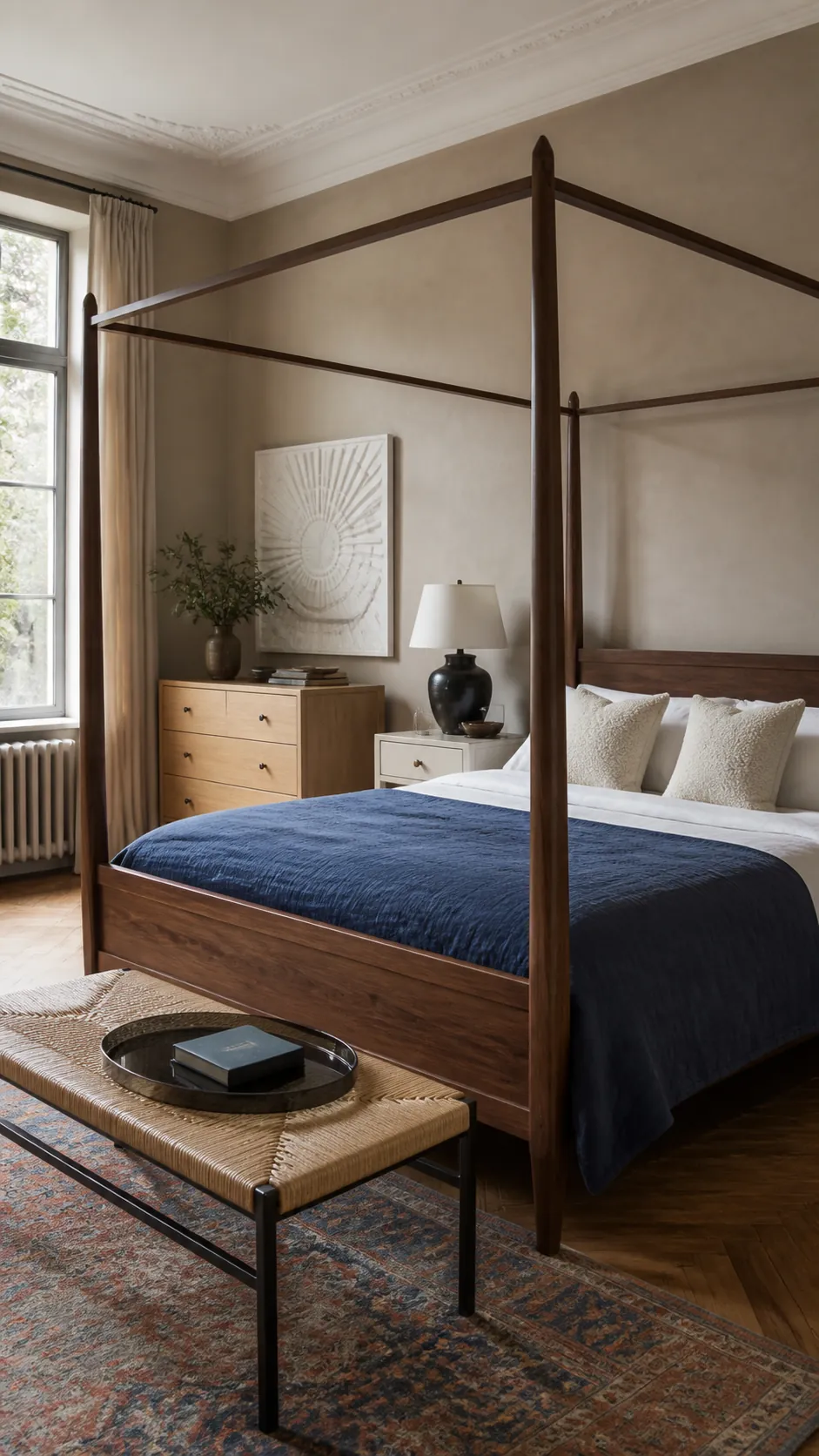
Use Color in One Confident Move
The midcentury modern bedroom aesthetic becomes clearer when a single earthy color carries the composition. Olive bedding, rust curtains, ochre upholstery, or deep blue walls can each work, but using all of them at equal strength weakens the frame. Repeat the chosen accent once or twice in smaller details and give it room to breathe against cream, warm gray, or natural wood.
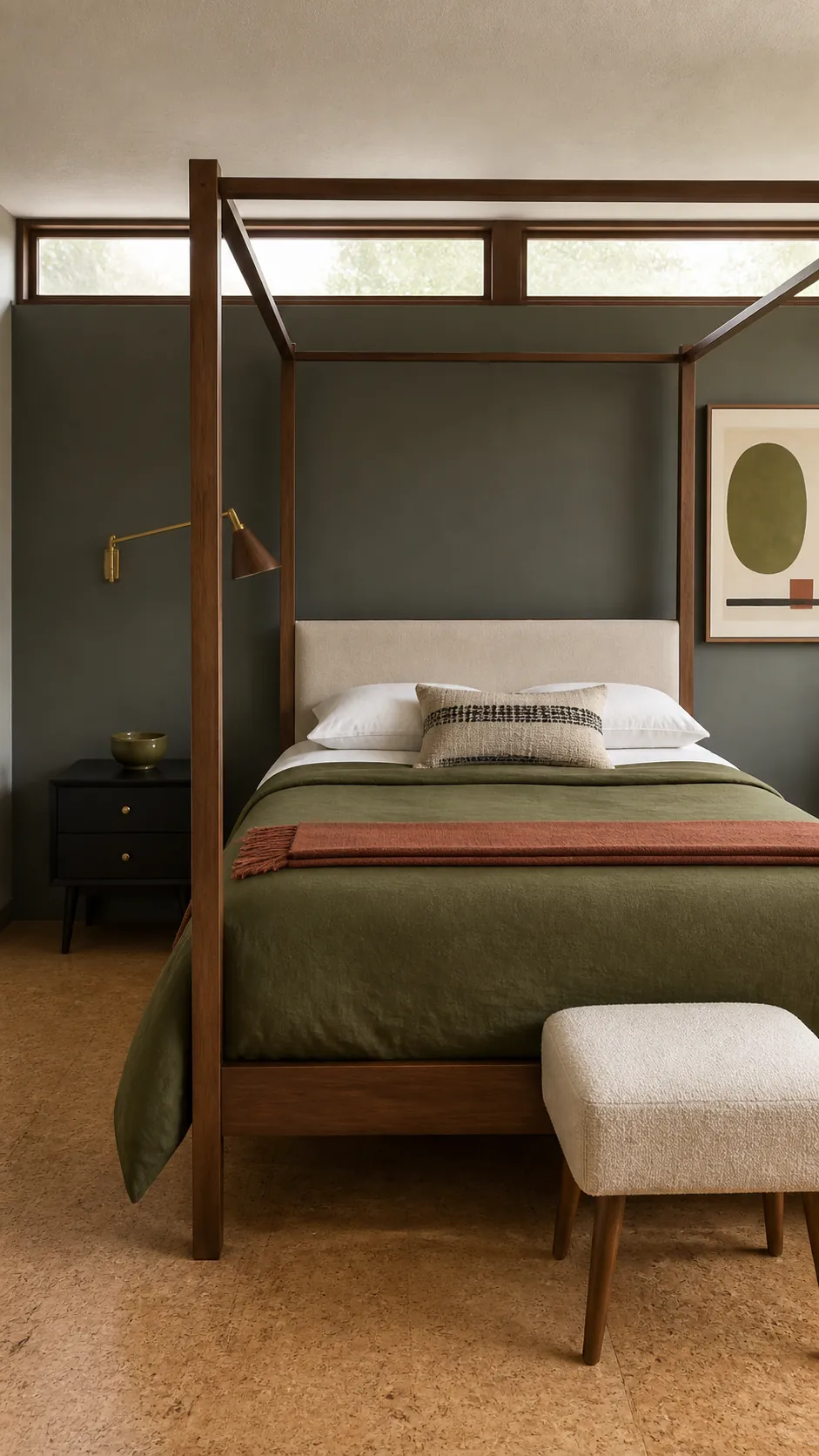
Choose Lighting That Does Not Compete With the Posts
An elaborate hanging fixture can collide visually with an already tall bed, especially under a standard ceiling. A low flush mount, sculptural bedside lamp, or compact wall light gives the frame more breathing room and keeps bulbs safely away from any canopy bed drapes. Warm bulbs reveal walnut and textiles beautifully, while a shade diffuses glare at pillow height.
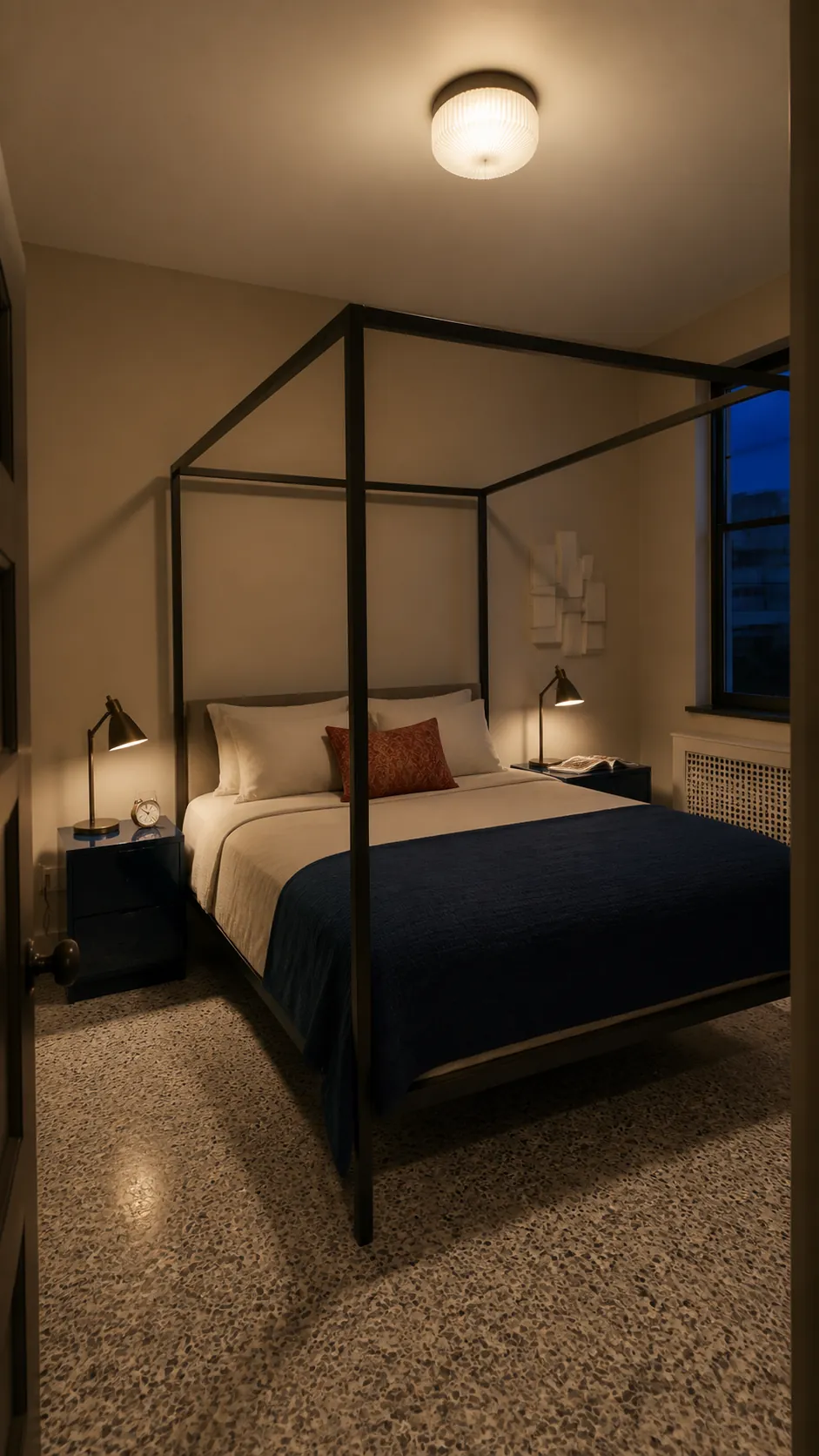
Ground the Bed With Tailored Textiles
Place a rug far enough under the bed that its lower legs sit securely on it and a useful border remains visible at the sides and foot. Tailored bedding, a plain coverlet, and a small number of patterned cushions reinforce the clean frame more effectively than ruffles or piles of pillows. If a metal canopy bed exposes storage or a basic base, a corner pleated bed skirt looks sharper than a gathered one.
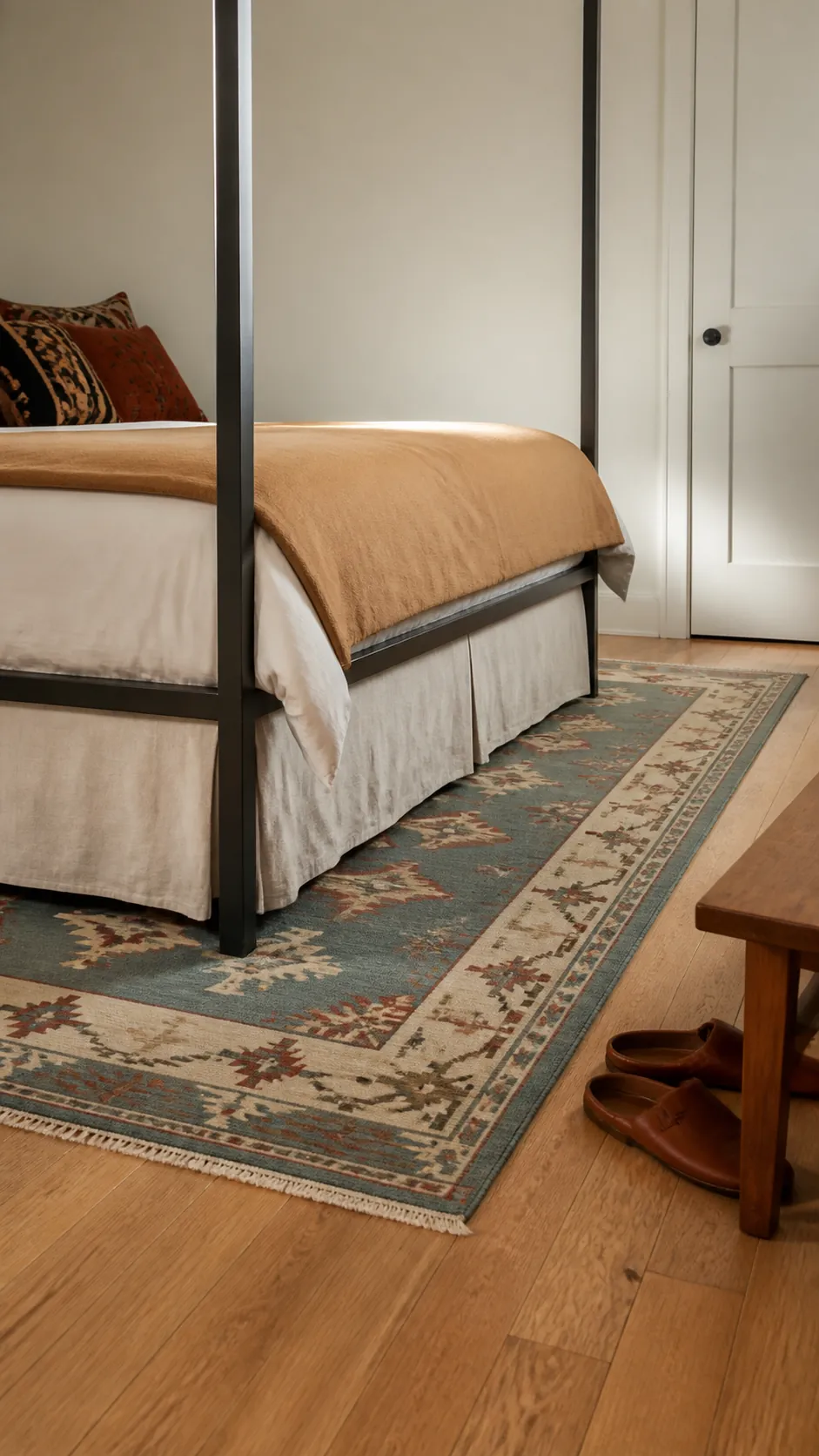
Add Drapes Only When They Solve a Problem
Fabric can soften an iron canopy bed, improve privacy, or filter an awkward window, but it should not be automatic. Choose panels with a plain weave and a controlled fall, then keep the corners open enough to preserve the frame’s geometry. Removable rings or sewn loops make cleaning easier and allow the room to shift between an open daytime look and a more sheltered evening mood.
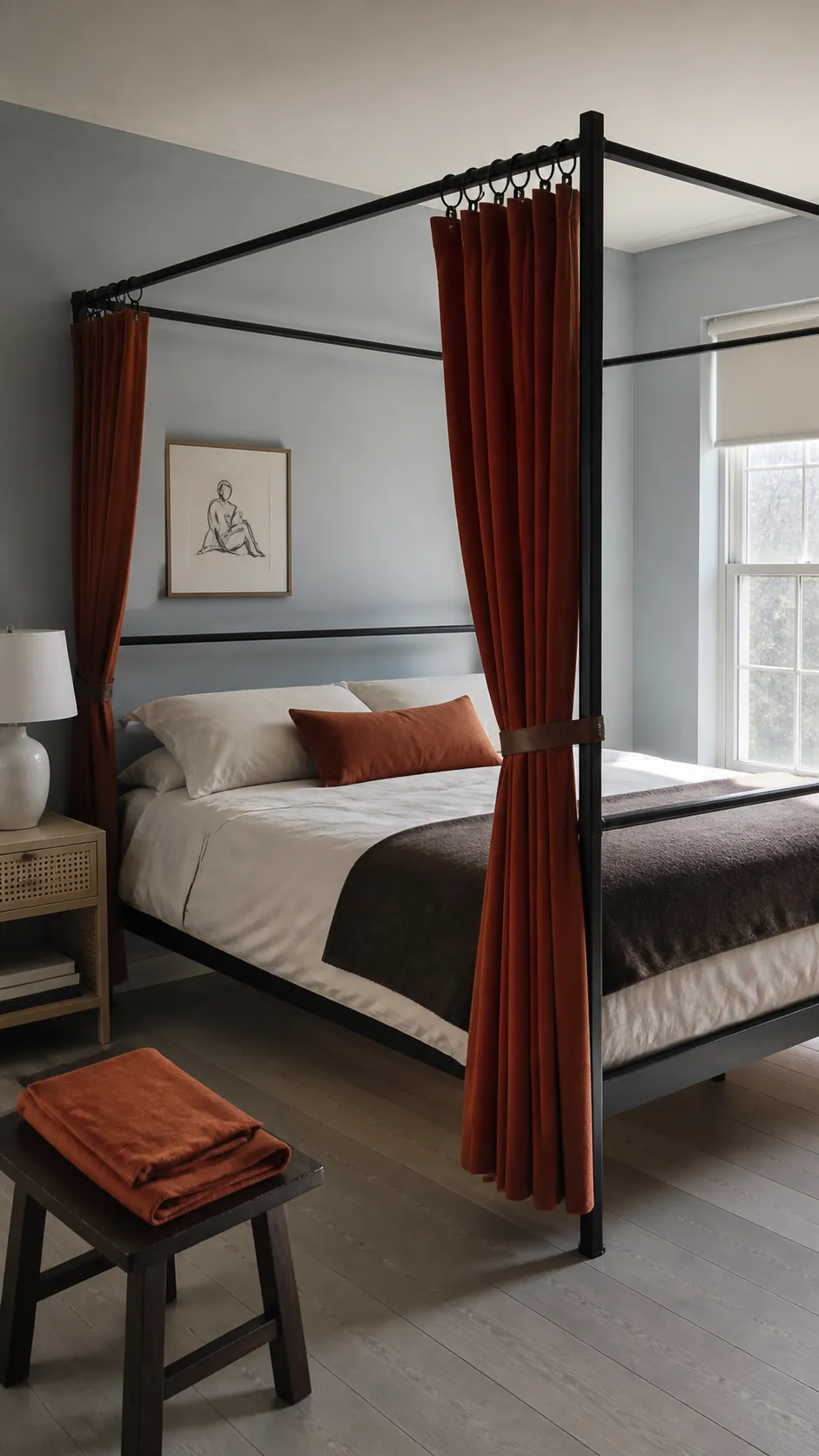
Keep the Rest of the Room Selective
One credenza, one useful chair, and one substantial work of art usually communicate the style more clearly than many small period references. Check that drawers open, paths remain comfortable, and the canopy does not block a fan, vent, or window before adding accessories. The strongest MCM bedroom ideas treat empty space as part of the design.
The frame should feel confident in daylight and calm at night. When materials are varied, color is controlled, and lighting stays below the upper rails, the bed becomes a graceful structure rather than a theme. That balance makes the room recognizably midcentury and genuinely comfortable to use.