
A compact workout area can be both practical and polished, whether you have a spare room, a narrow alcove, or just one open corner. These mini gym at home ideas show how thoughtful layouts, streamlined equipment, and clever storage can make limited space work harder.
Focus on equipment you will use consistently, preserve clear floor space, and take advantage of vertical surfaces. From strength stations and walking-pad setups to dual-purpose rooms, these examples offer adaptable inspiration for creating a gym that suits your home.
Build Beautifully Organized Storage Around a Neutral Cubby
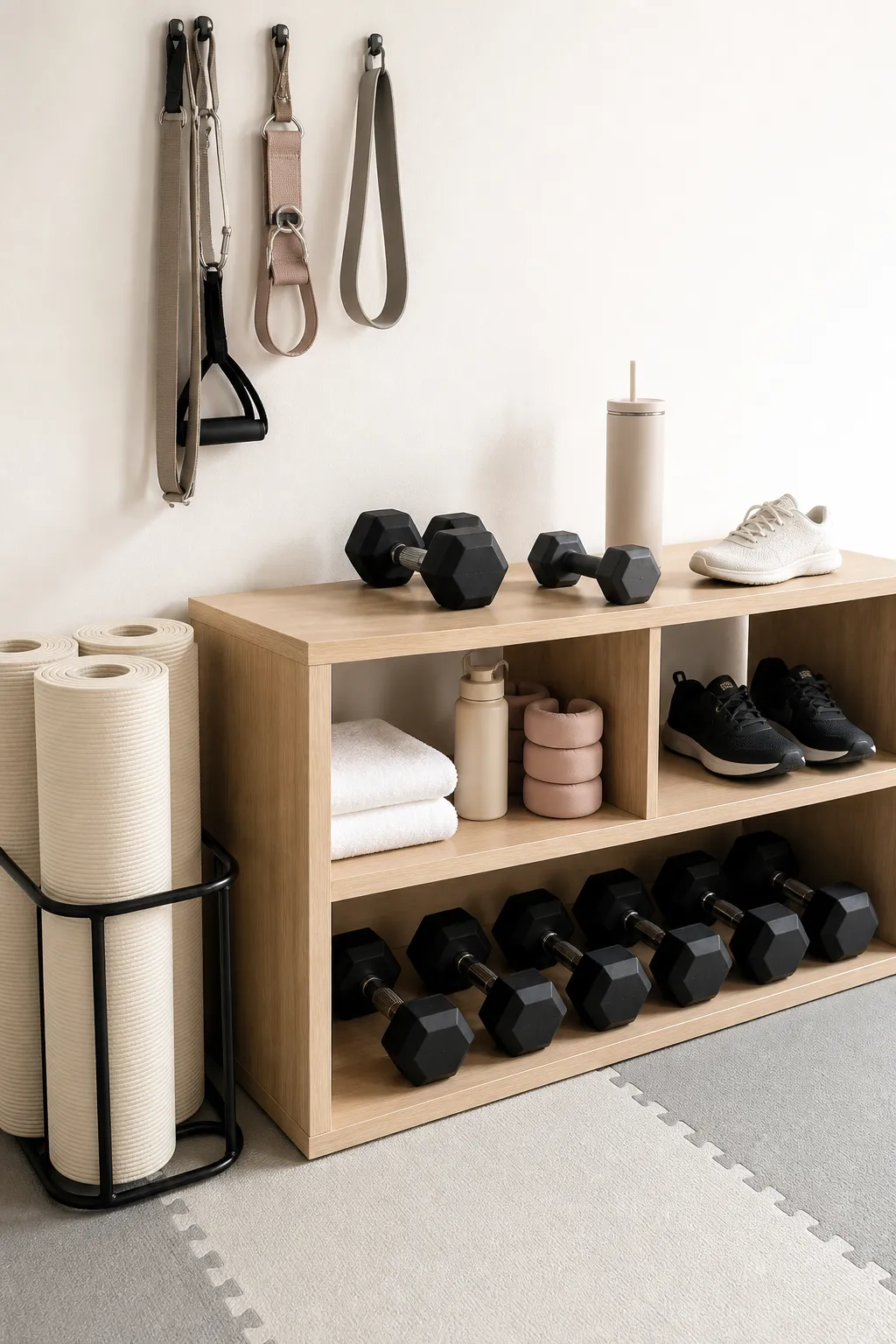
Make a simple cubby the room’s organizing anchor by assigning compartments to towels, bands, blocks, and small accessories. Matching baskets conceal visual clutter while keeping everyday gear within easy reach.
Choose beige, cream, or light wood finishes to create calm, cohesive storage. Leave a few compartments open for attractive equipment so the arrangement feels styled rather than crowded.
Pair Matte Black Equipment With Warm Wood Finishes
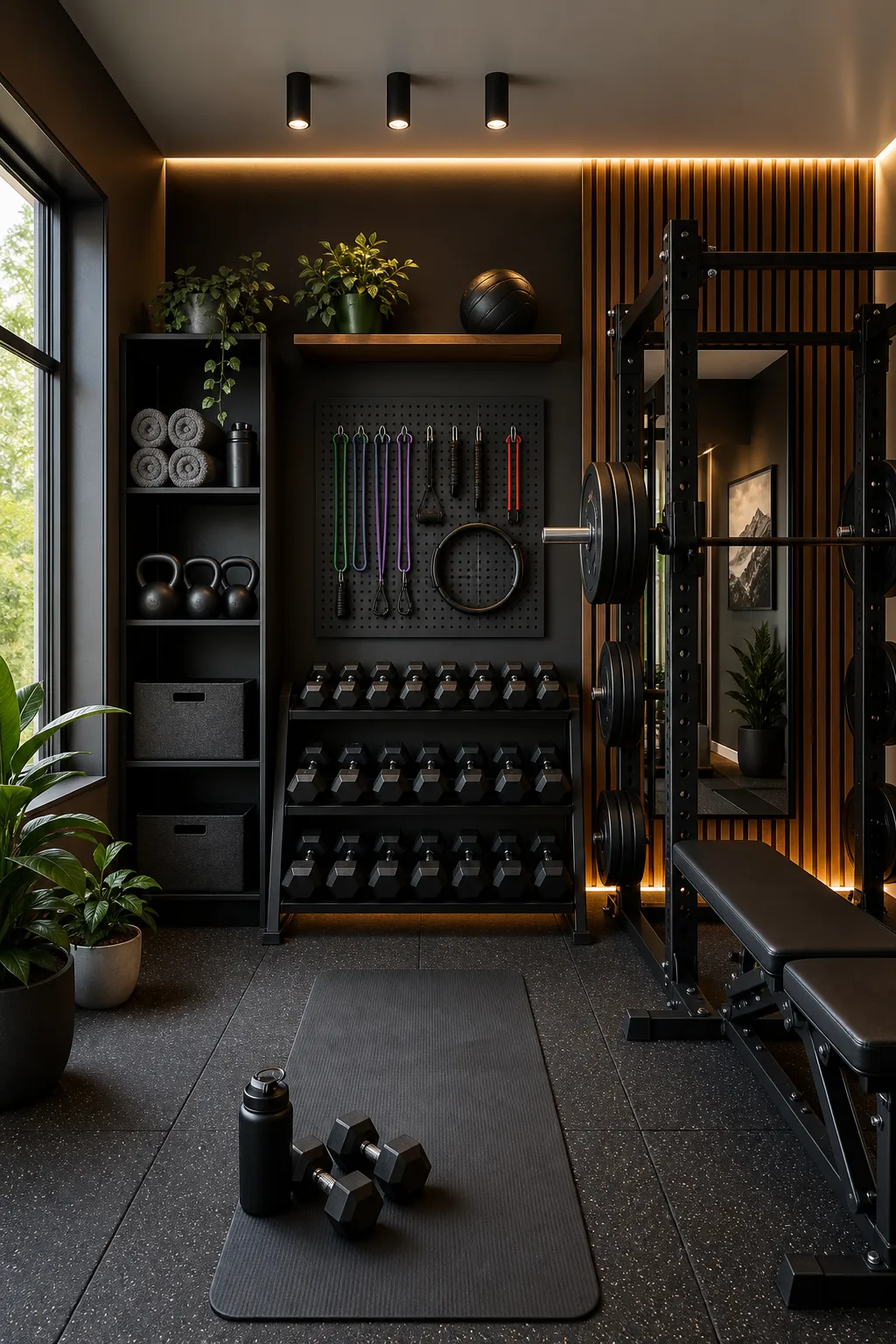
Matte black weights and machines give a small gym a crisp, modern foundation. Warm wood shelves, flooring, or cabinetry soften that industrial edge and help the equipment blend into the home.
Repeat both finishes throughout the room for intentional contrast. A restrained palette also makes a compact workout area look more polished and less visually busy.
Arrange a Treadmill in a Long, Narrow Multipurpose Room
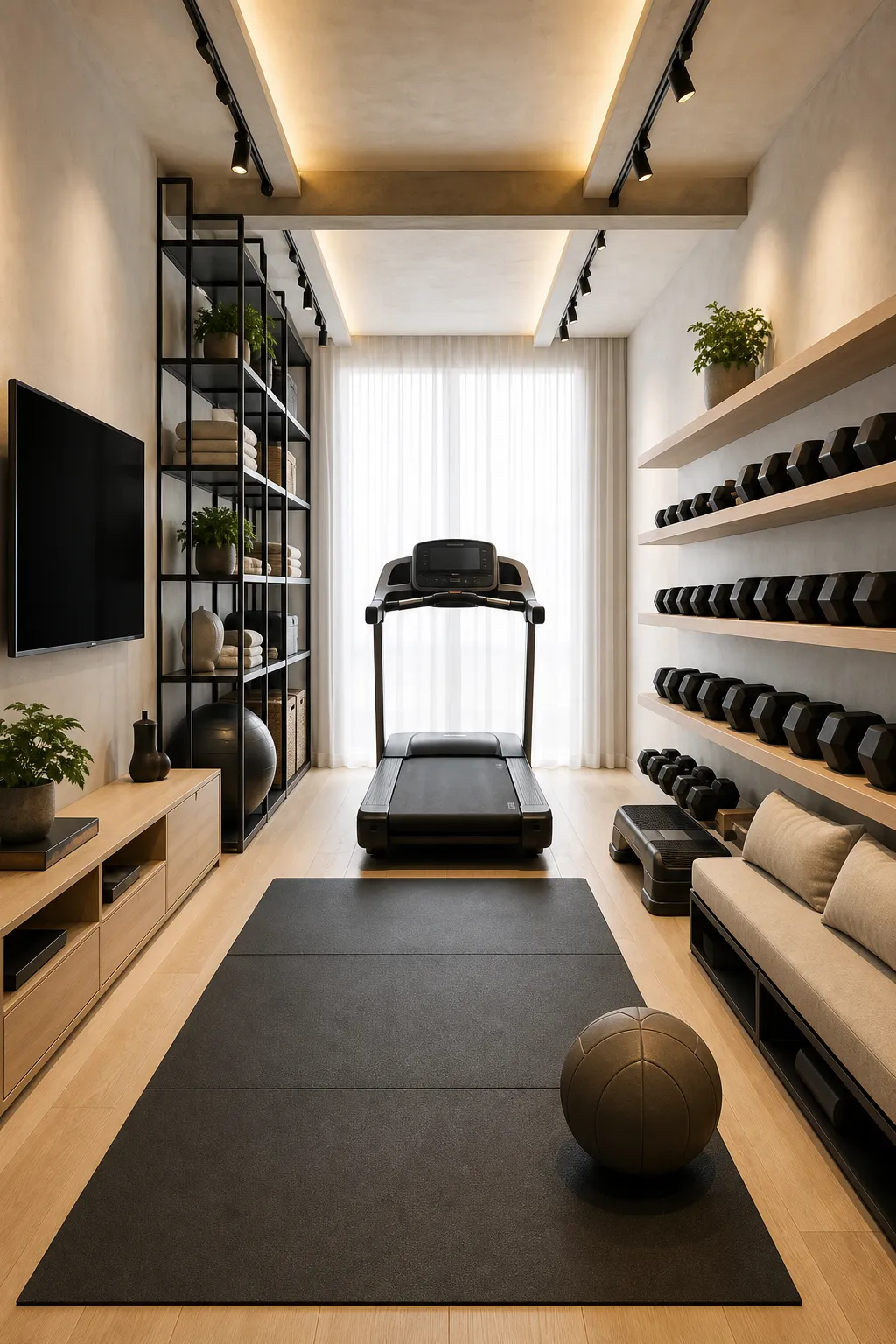
Place the treadmill parallel to the longest wall so the central walkway remains open. Positioning it near a window can improve ventilation and make indoor sessions feel less confined.
Use the opposite wall for shallow storage or a compact work surface, creating clearly defined functions without obstructing movement. Keep the treadmill’s required safety clearance free of furniture and loose accessories.
Turn a Bedroom Corner Into a Simple Weight-Training Zone
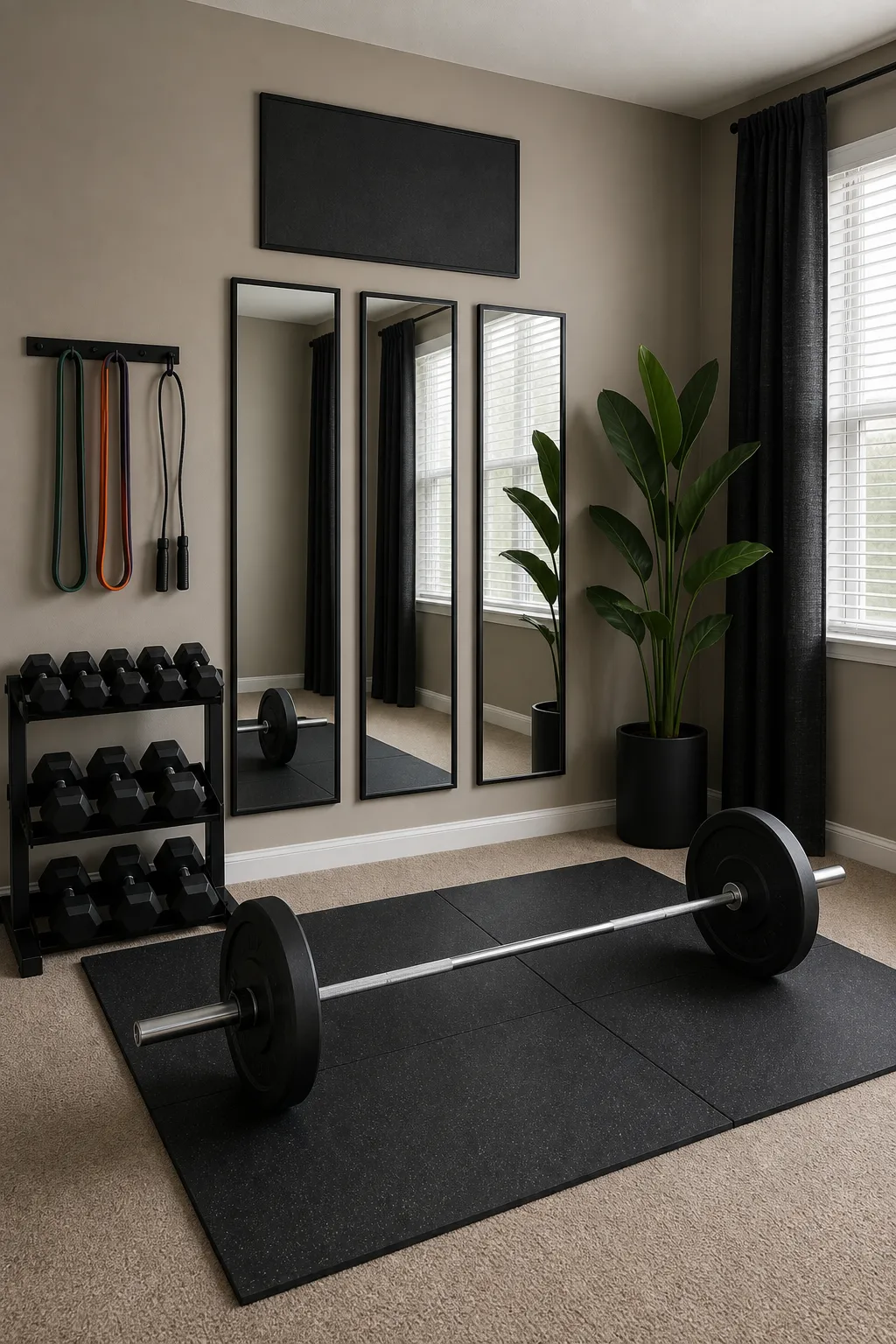
A bedroom corner can accommodate effective strength training with an exercise mat, adjustable dumbbells, and a compact bench. Select equipment that folds or stores vertically when the workout is over.
Protect the floor with a fitted mat and contain accessories in one basket or slim stand. This small equipment footprint preserves the bedroom’s restful character while making regular exercise convenient.
Free the Floor With Wall-Mounted Equipment Storage
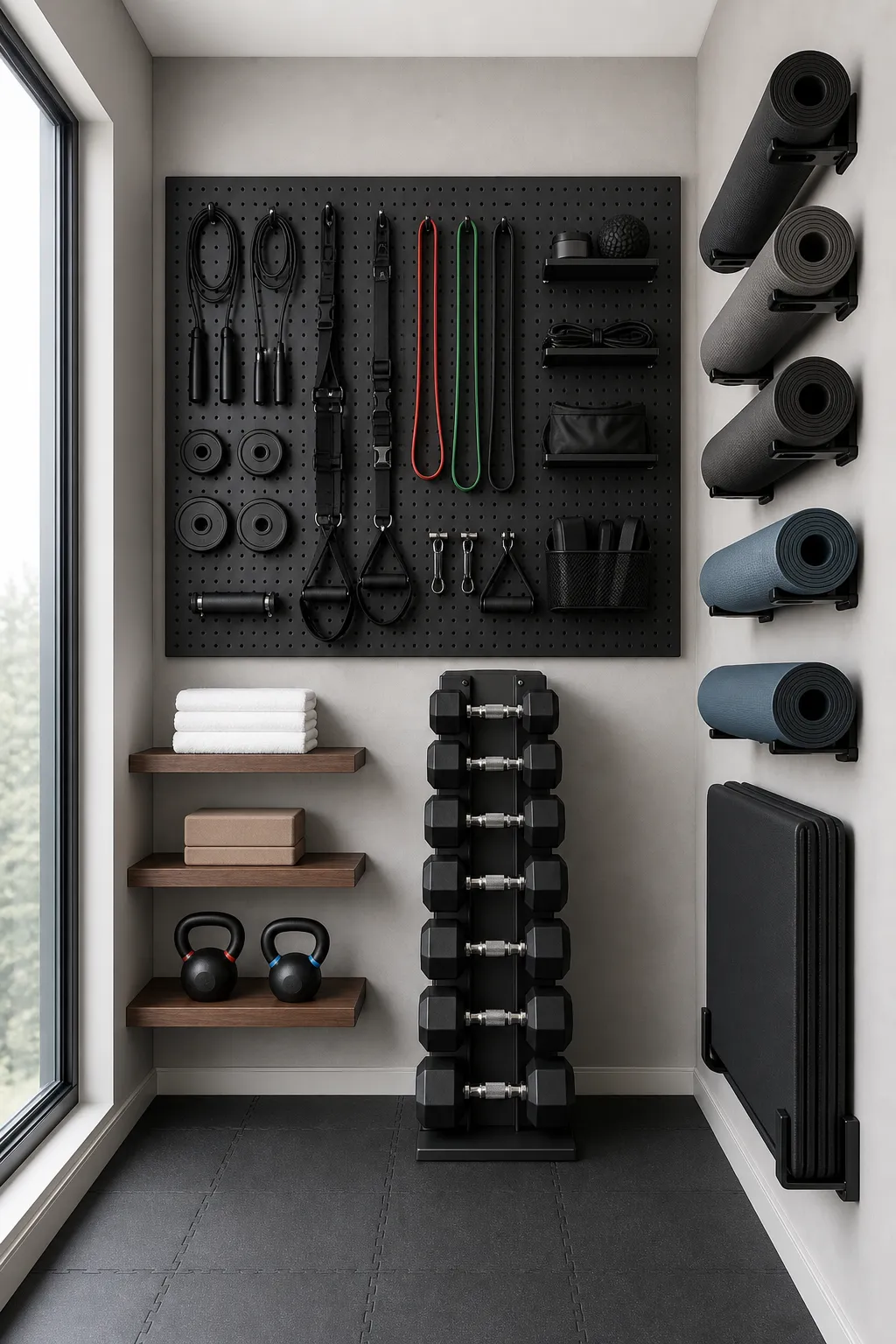
Mount hooks, rails, and sturdy shelves for resistance bands, mats, jump ropes, and lighter weights. Moving gear onto the wall creates more room for stretching, lifting, and bodyweight exercises.
Arrange items by frequency of use and keep heavier pieces at a comfortable, secure height. Vertical storage turns an overlooked wall into an efficient and easy-to-scan equipment station.
Use Natural Light to Brighten a Compact Workout Corner
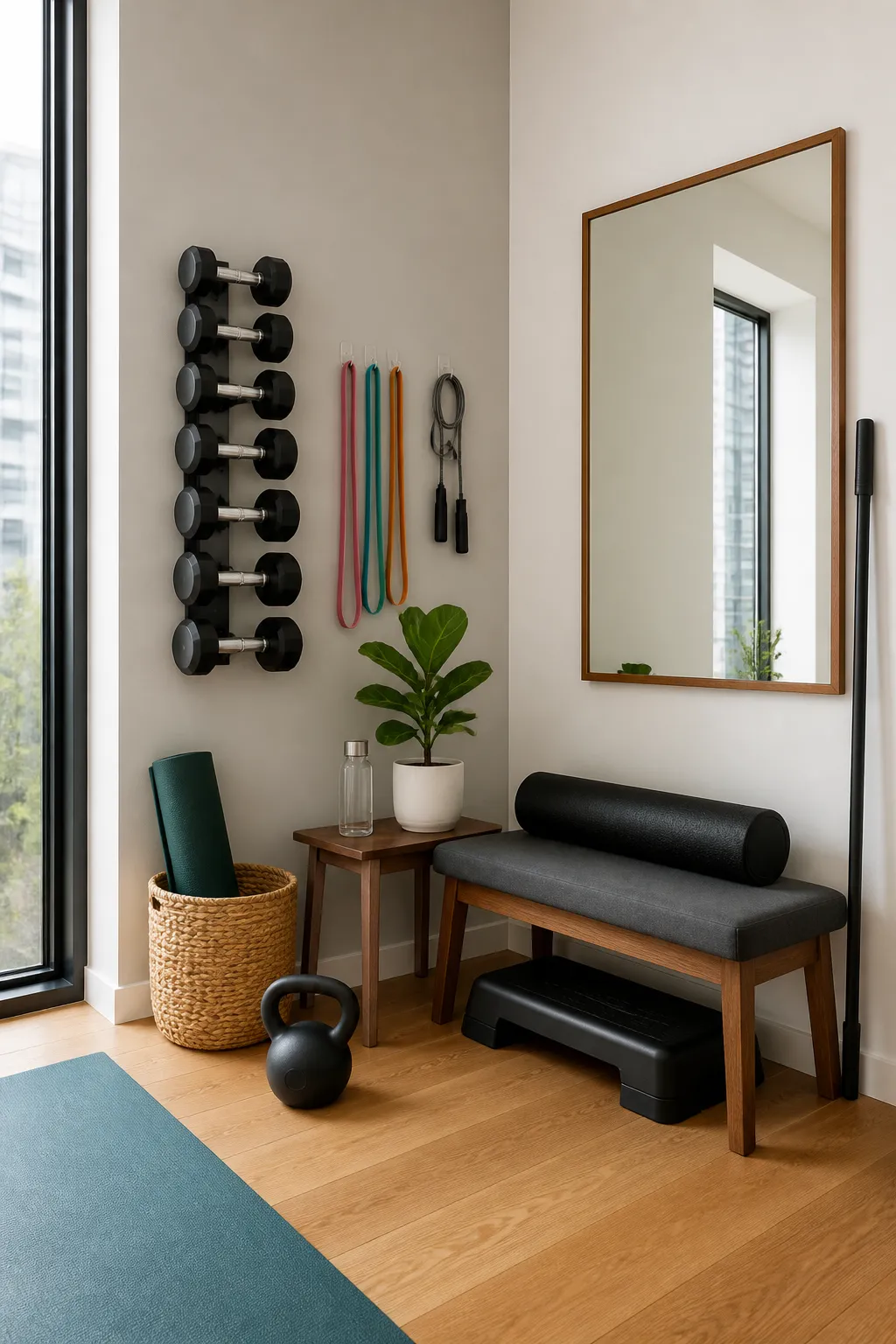
Set up the workout zone beside a window to make a small footprint feel brighter and more inviting. Daylight also reduces the need for bulky decorative lighting during daytime sessions.
Keep window treatments simple and use pale walls or a mirror to distribute light around the space. Avoid blocking the glass with tall equipment so natural brightness remains the room’s defining feature.
Create Order in a Narrow Fitness Room With Dedicated Zones
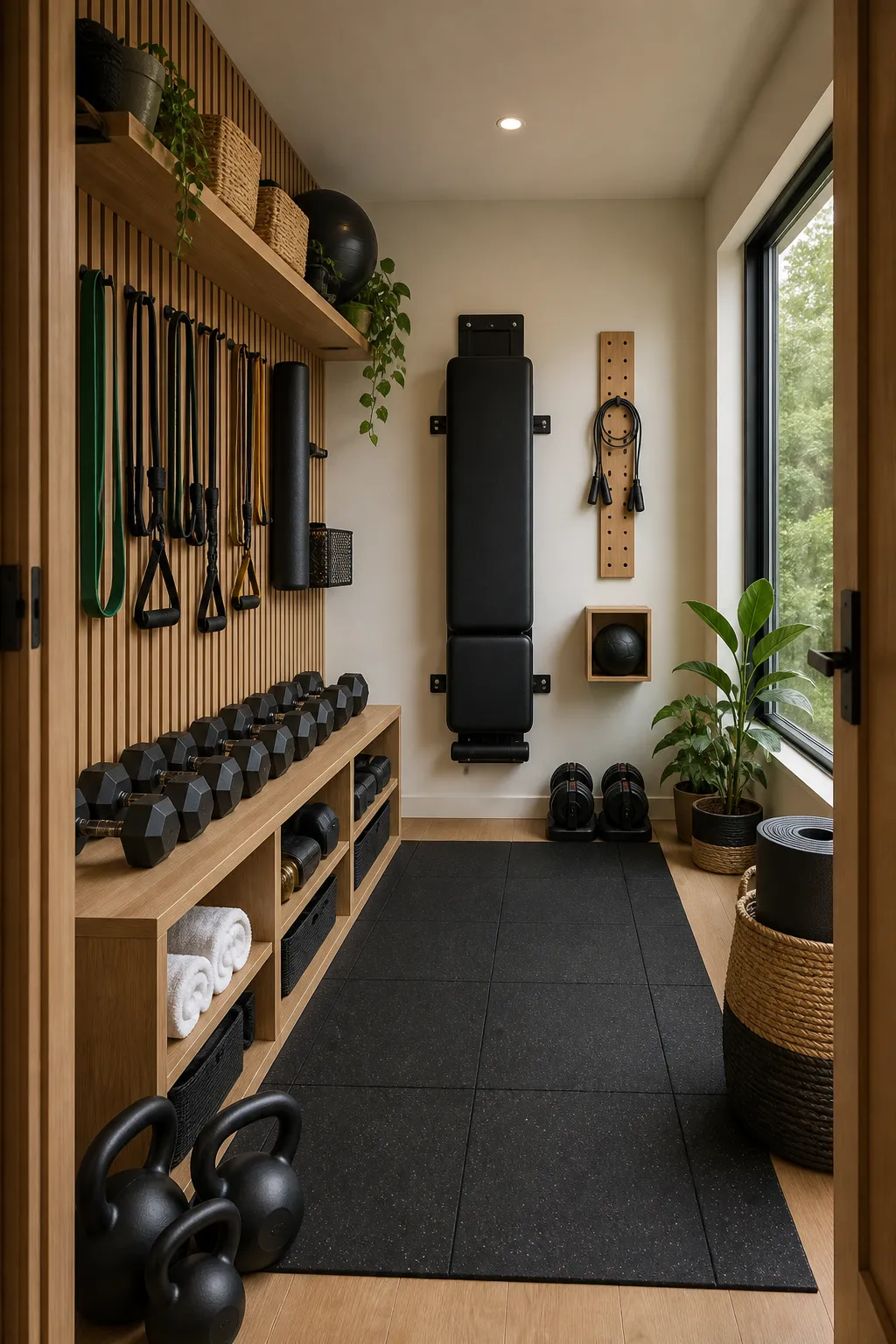
Divide the room lengthwise into dedicated areas for cardio, strength work, and recovery. Place large machines at one end, weights along a wall, and an open mat area where circulation is easiest.
Consistent flooring and coordinated storage will connect the zones visually. A clear layout reduces setup time and helps every available section of the narrow room serve a purpose.
Install a Wall-Mounted Half Rack for Focused Strength Training
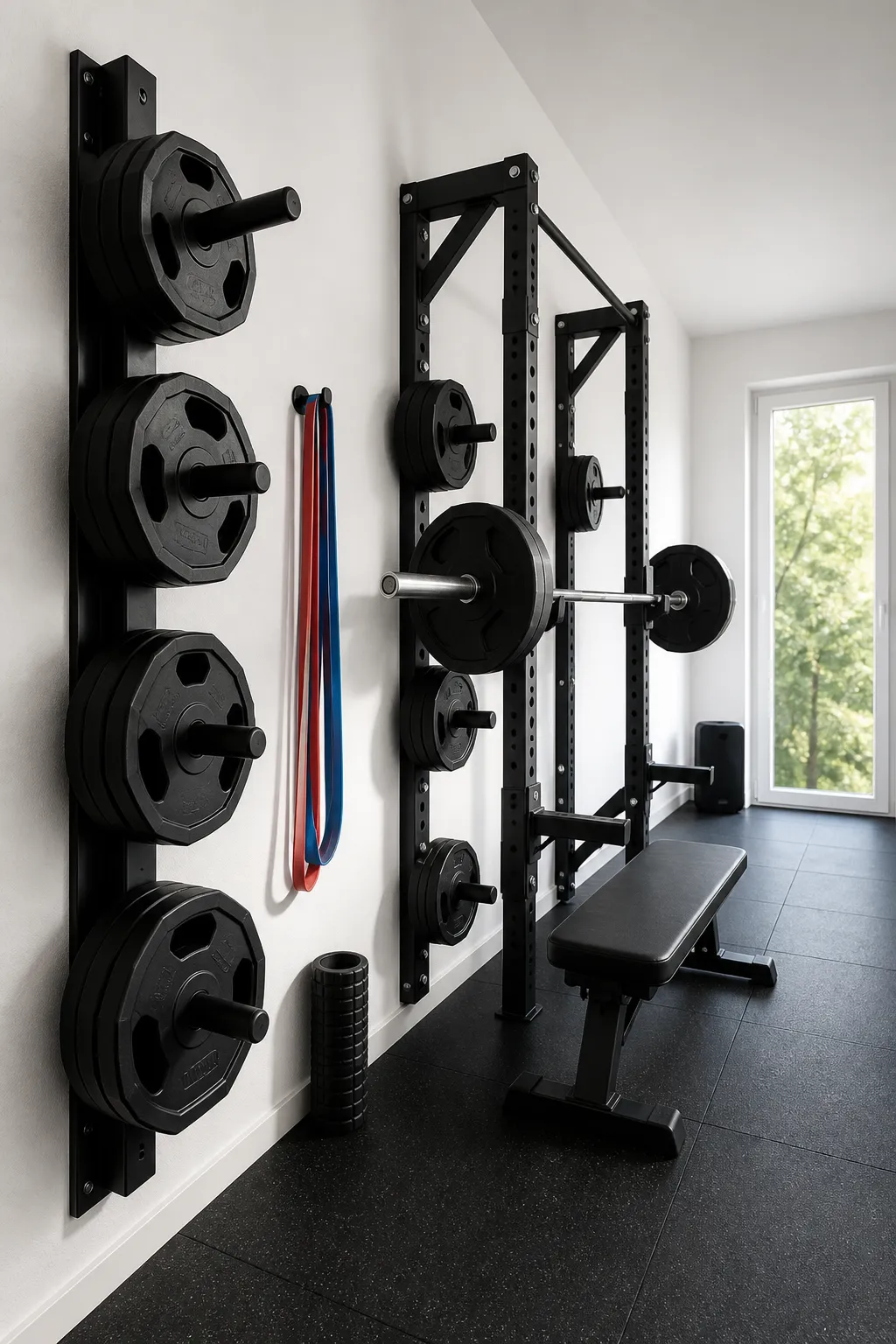
A wall-mounted half rack provides a stable station for squats, presses, and barbell work without the footprint of a full cage. Install it on a structurally suitable wall and follow the manufacturer’s anchoring specifications.
Store plates on integrated pegs and keep the surrounding floor clear for safe loading. This compact strength hub concentrates essential equipment in one focused training area.
Design a Space-Saving Strength Gym for Apartment Living
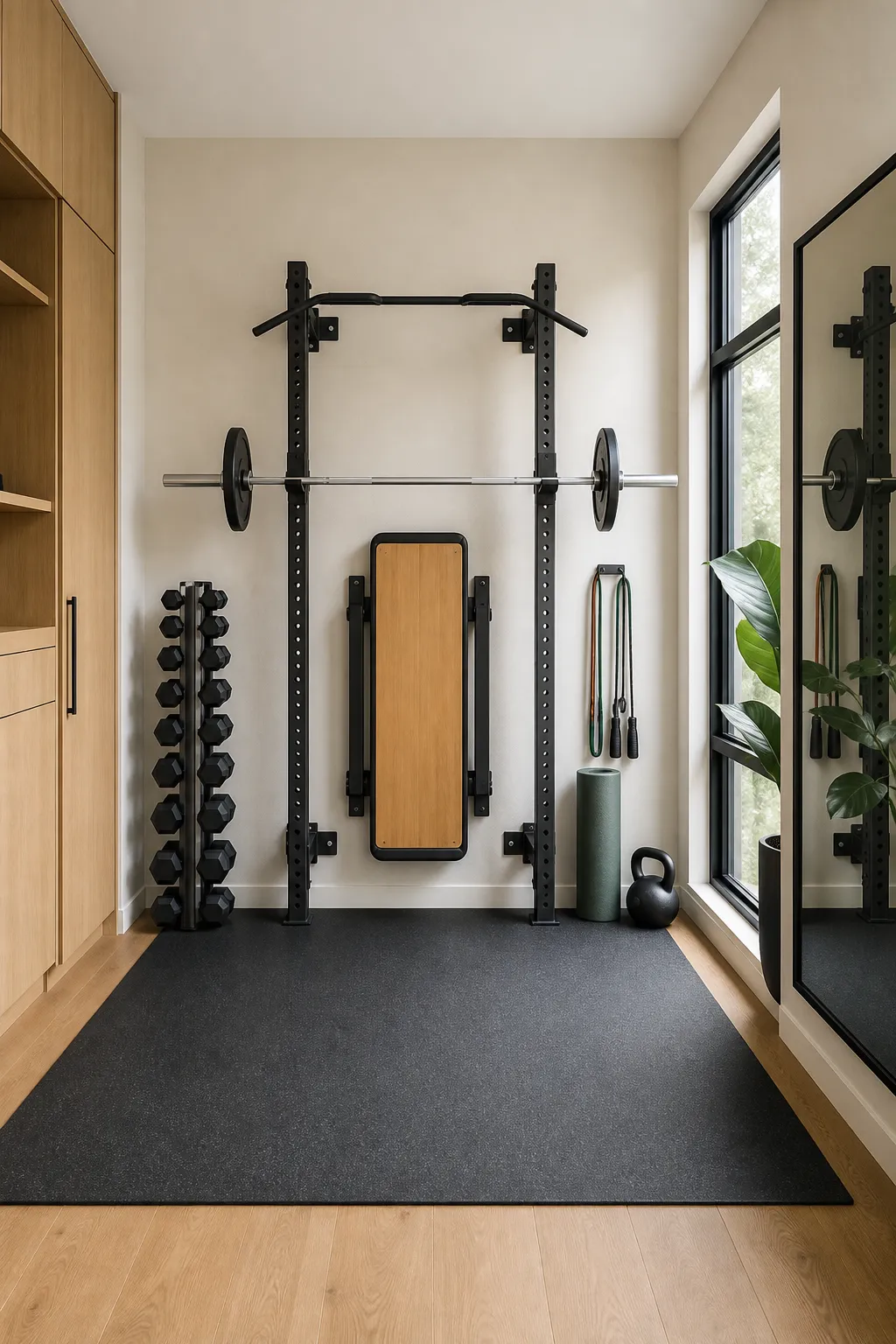
Build an apartment-friendly setup around adjustable dumbbells, resistance bands, and a folding bench. These versatile pieces support full-body training while occupying far less space than multiple fixed machines.
Choose protective flooring and equipment with quiet, controlled operation to reduce disturbance. Multipurpose gear can be stored against a wall or inside cabinetry when the room returns to everyday use.
Blend a Cozy Workout Zone Into the Living Room
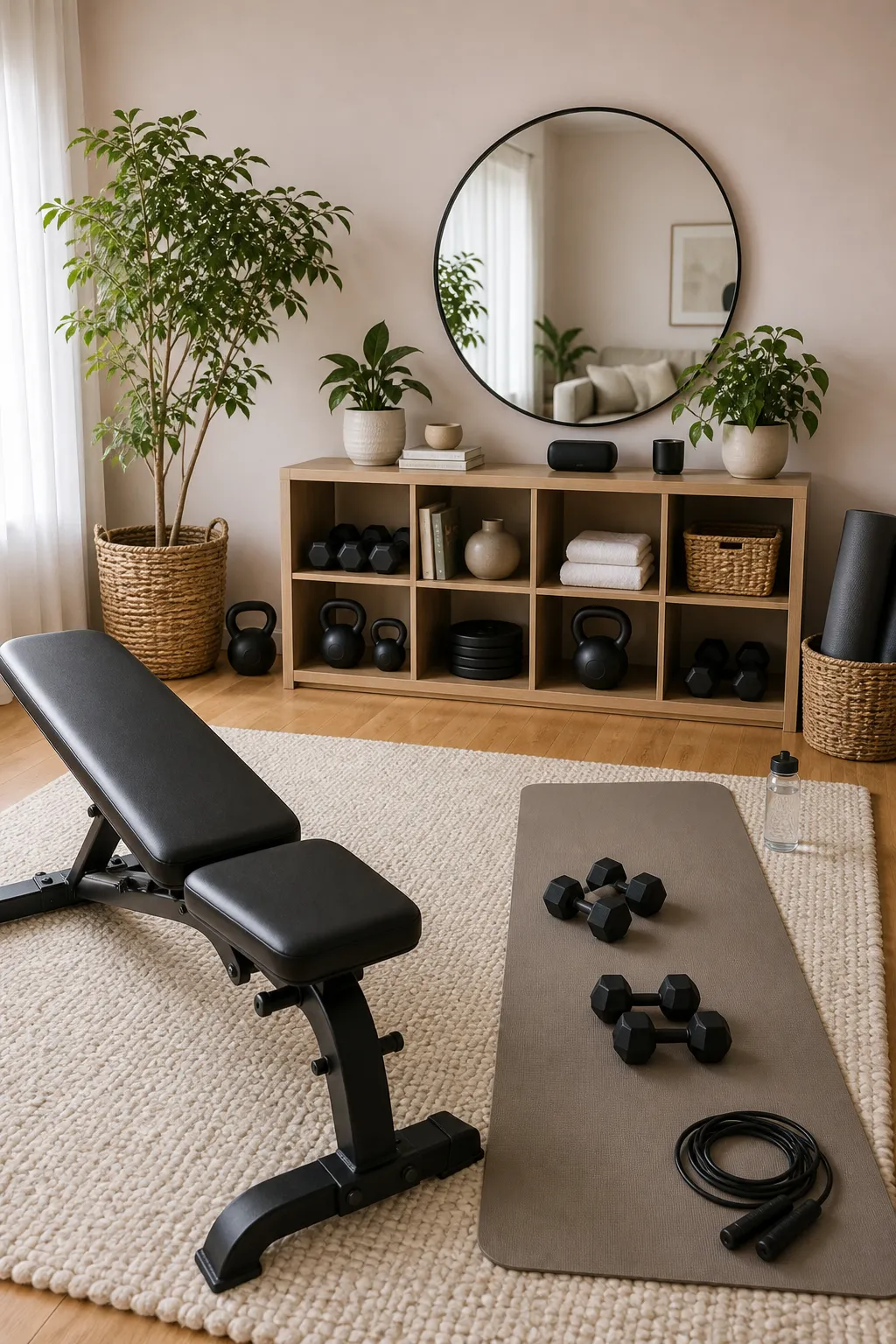
Integrate fitness equipment by matching its colors and materials to the existing living-room scheme. A rolled mat, compact weights, and a small basket can sit discreetly near a console or bookcase.
Define the workout spot with a washable rug or open patch of floor, then conceal accessories after use. Furniture-style storage keeps the room comfortable and ready for both exercise and relaxation.
Soften a Living-Room Gym With Pastel Colors and Textiles
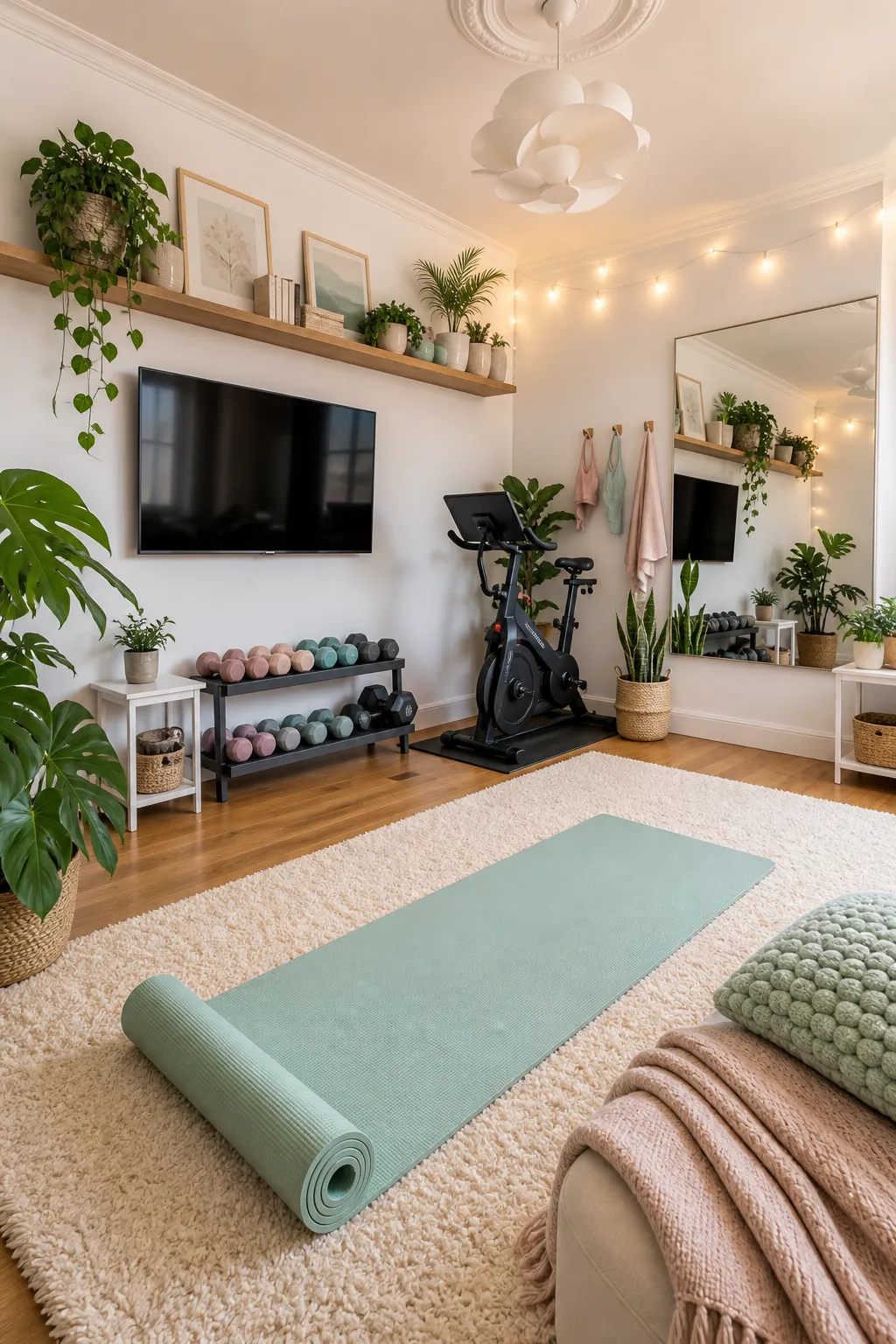
Pastel accessories can make a visible workout setup feel lighter and more compatible with a living room. Repeat soft shades through mats, storage baskets, cushions, or small equipment for a coordinated effect.
Curtains, upholstery, and woven textiles balance the hard surfaces of weights and machines. Use fabrics outside active movement paths to preserve a soft, welcoming atmosphere without creating trip hazards.
Warm Up a Modern Compact Gym With Natural Materials

Introduce wood, cork, rattan, or woven baskets to offset the sleek appearance of modern fitness equipment. Even a small shelf or cork exercise mat can add warmth without consuming valuable floor space.
Keep the material palette limited and repeat it in storage and decorative details. Natural texture gives the compact gym a comfortable residential quality while maintaining its clean design.
Transform a Lush Patio Into an Outdoor Mini Gym
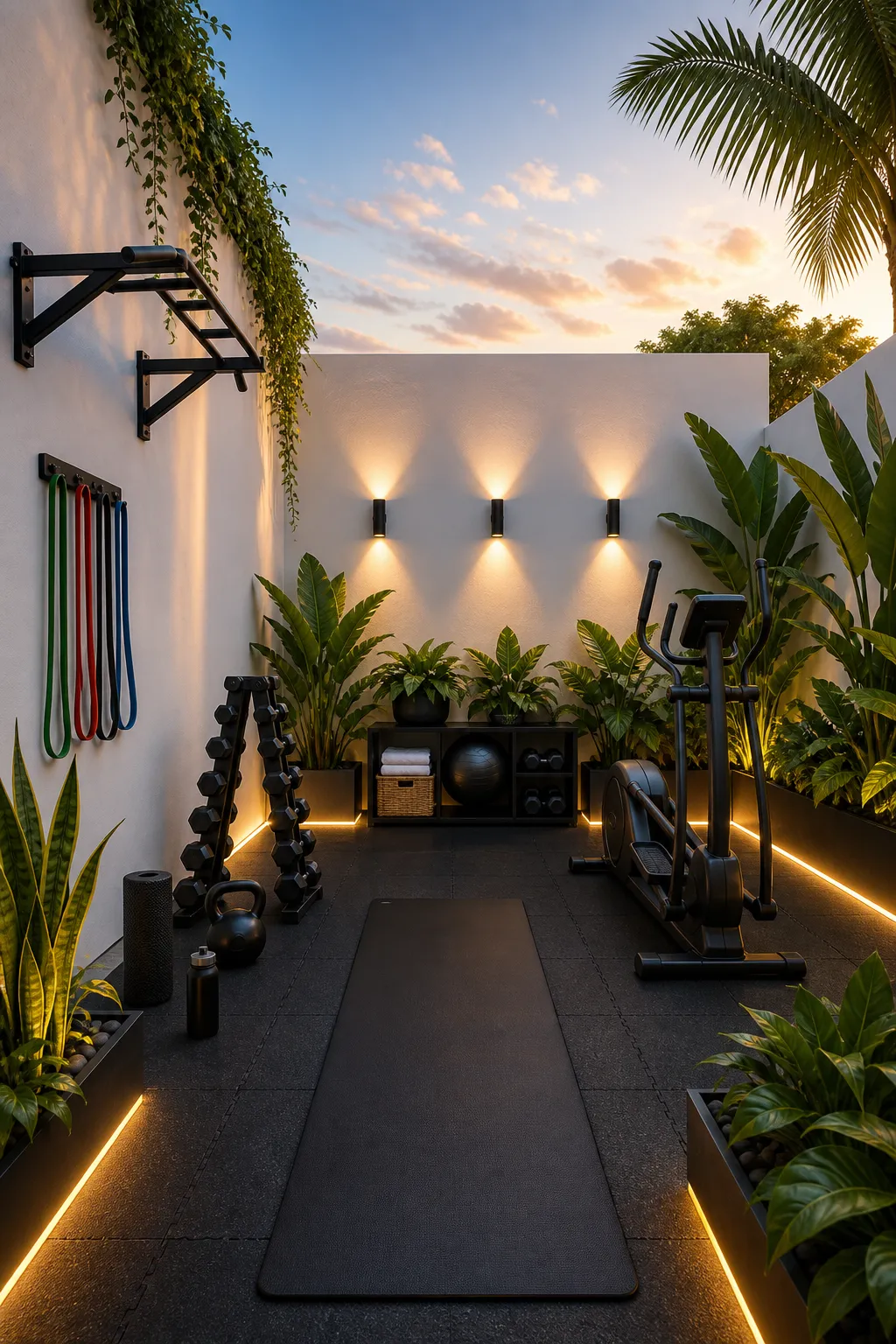
Use an open section of patio for a weather-resistant mat, portable weights, and resistance bands. Surrounding greenery creates a refreshing setting while preserving space for the patio’s usual seating or dining function.
Select equipment rated for outdoor conditions, or store it indoors in a sealed container after each session. Portable fitness gear makes the area easy to reset and protects valuable equipment from moisture and sun exposure.
Combine a Home Office With a Small Cycling and Fitness Area
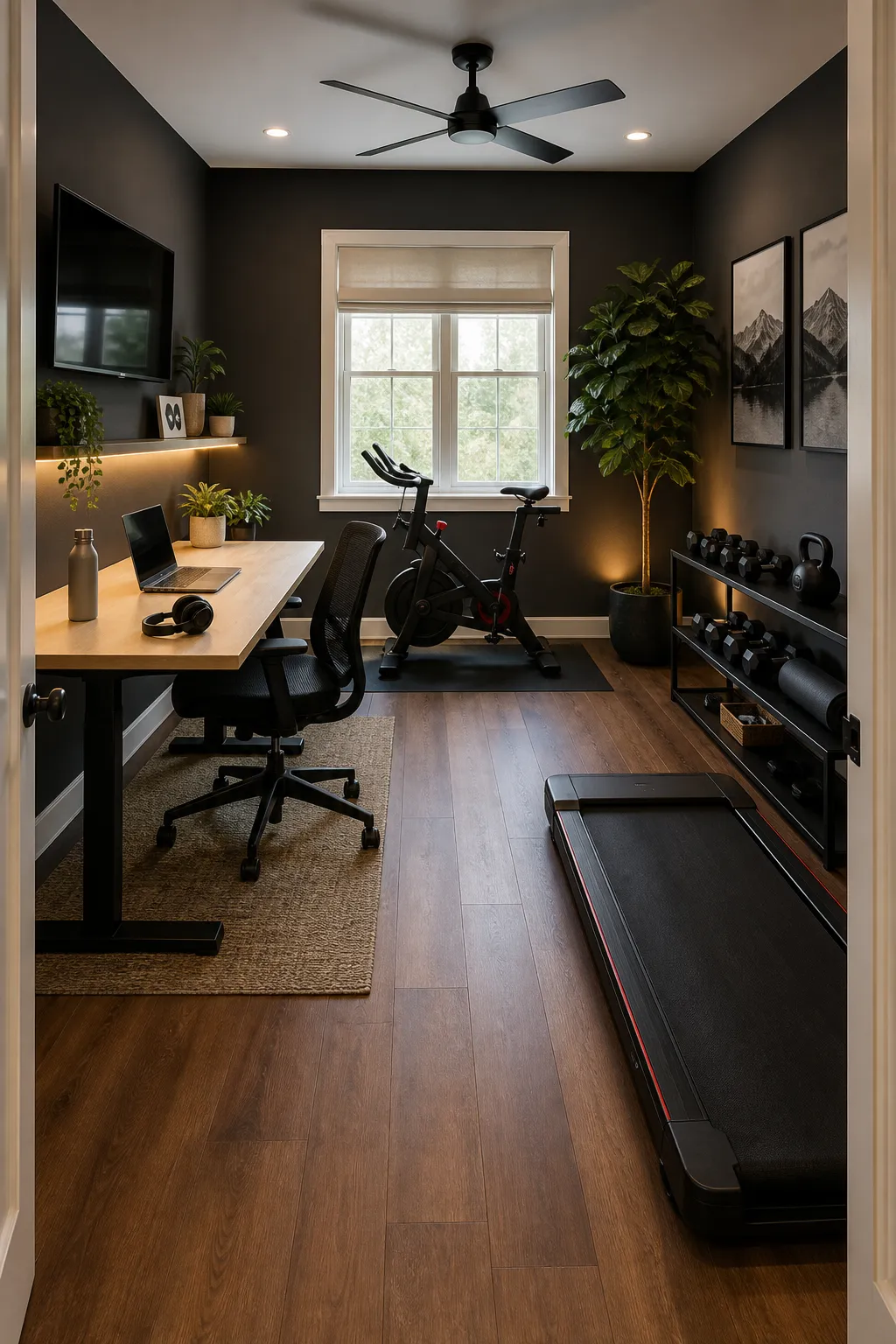
Place a compact exercise bike beside the desk or along an unused wall, leaving the main work path unobstructed. A slim mat and a few resistance bands can expand the exercise options without overwhelming the office.
Use closed storage to separate work supplies from fitness accessories and maintain a professional background for calls. Distinct work and workout zones help the shared room transition smoothly between tasks.
Fit Full-Body Equipment Into a Bright Minimalist Room
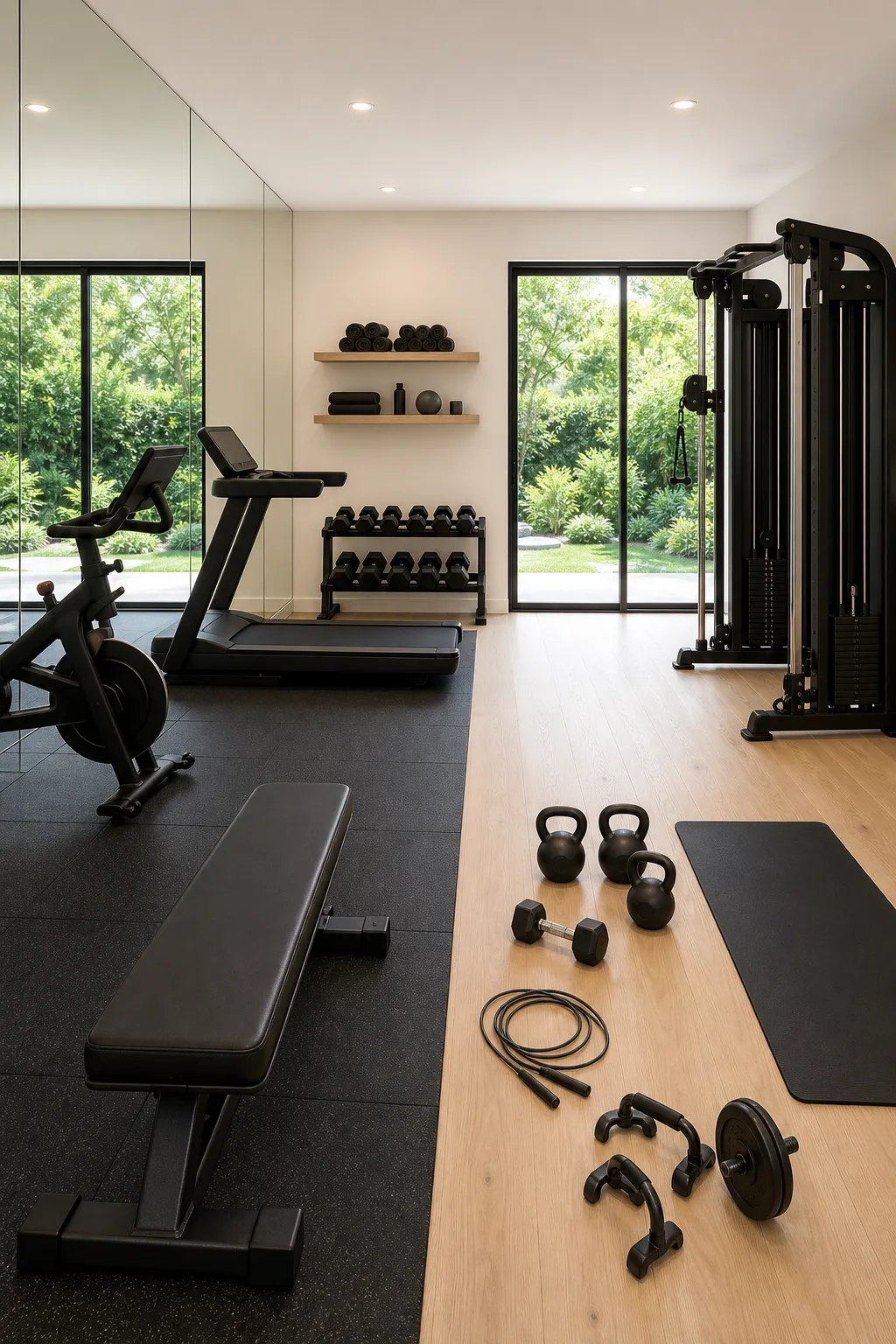
Prioritize versatile equipment such as an adjustable bench, cable station, and compact dumbbell set. Position the largest piece against a wall so the center remains available for lunges, mobility work, and floor exercises.
Pale finishes, streamlined storage, and minimal decoration keep the room visually spacious. Full-body functionality comes from carefully chosen multipurpose pieces rather than filling every open surface.
Style a Walking-Pad Gym With Warm Neutral Tones
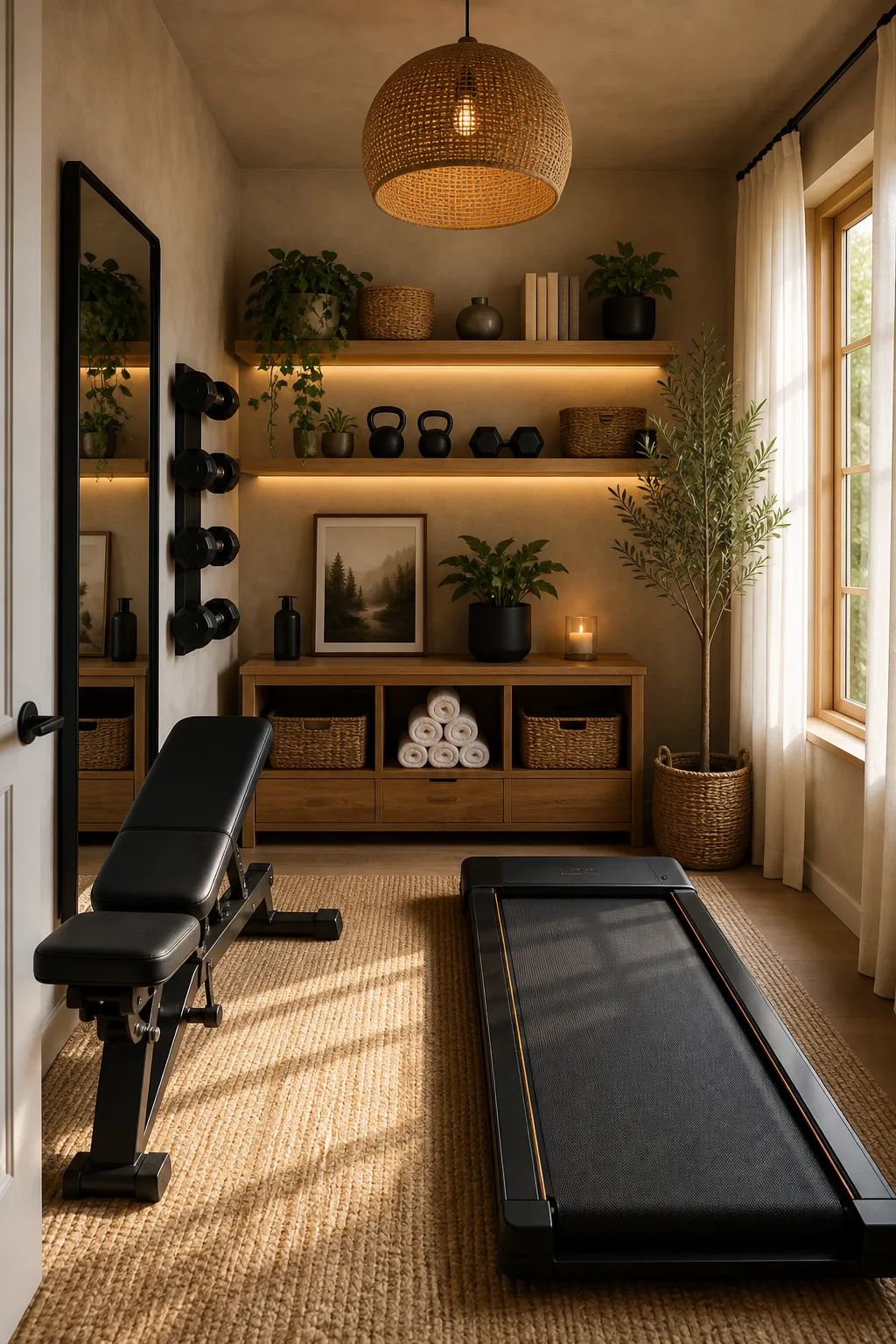
Build a calming workout area around sand, cream, taupe, and light wood. These warm neutral tones help practical equipment feel integrated with the room instead of visually intrusive.
Keep accessories in coordinated shades and use woven storage for bands, towels, or small weights. A soft rug beside the walking pad can add comfort while leaving its moving surface safely unobstructed.
Combine a Strength Rack and Spin Bike in a Narrow Room
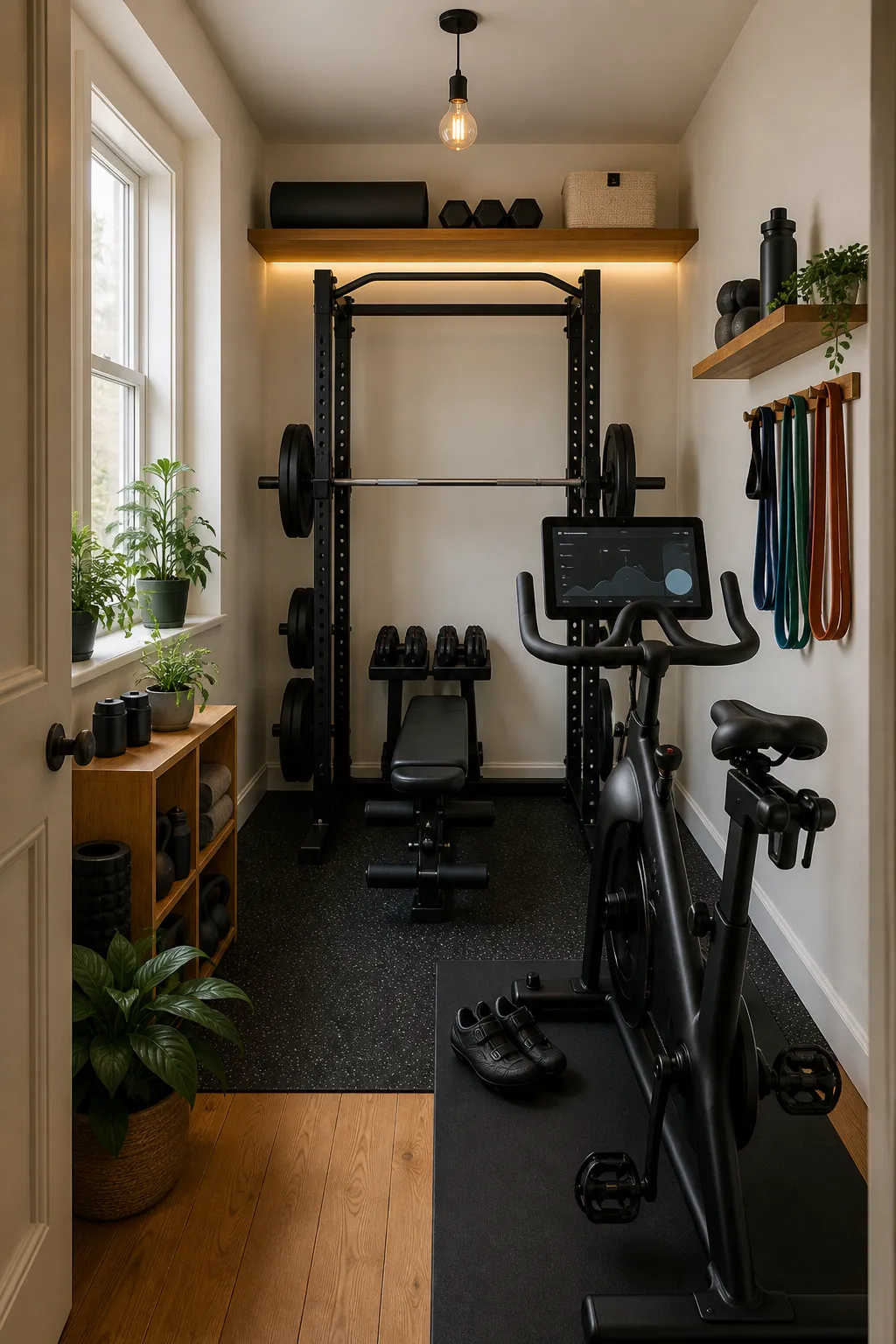
Place the strength rack against the widest uninterrupted wall, then position the bike near one end of the room. This linear layout preserves a clear central path and makes a slim space easier to navigate.
Use wall-mounted storage for plates, bands, and smaller accessories. Before fixing the arrangement, confirm that both stations have enough clearance for lifting, pedaling, and safe entry.
Let a Compact Dumbbell Rack Anchor a Soft Neutral Gym
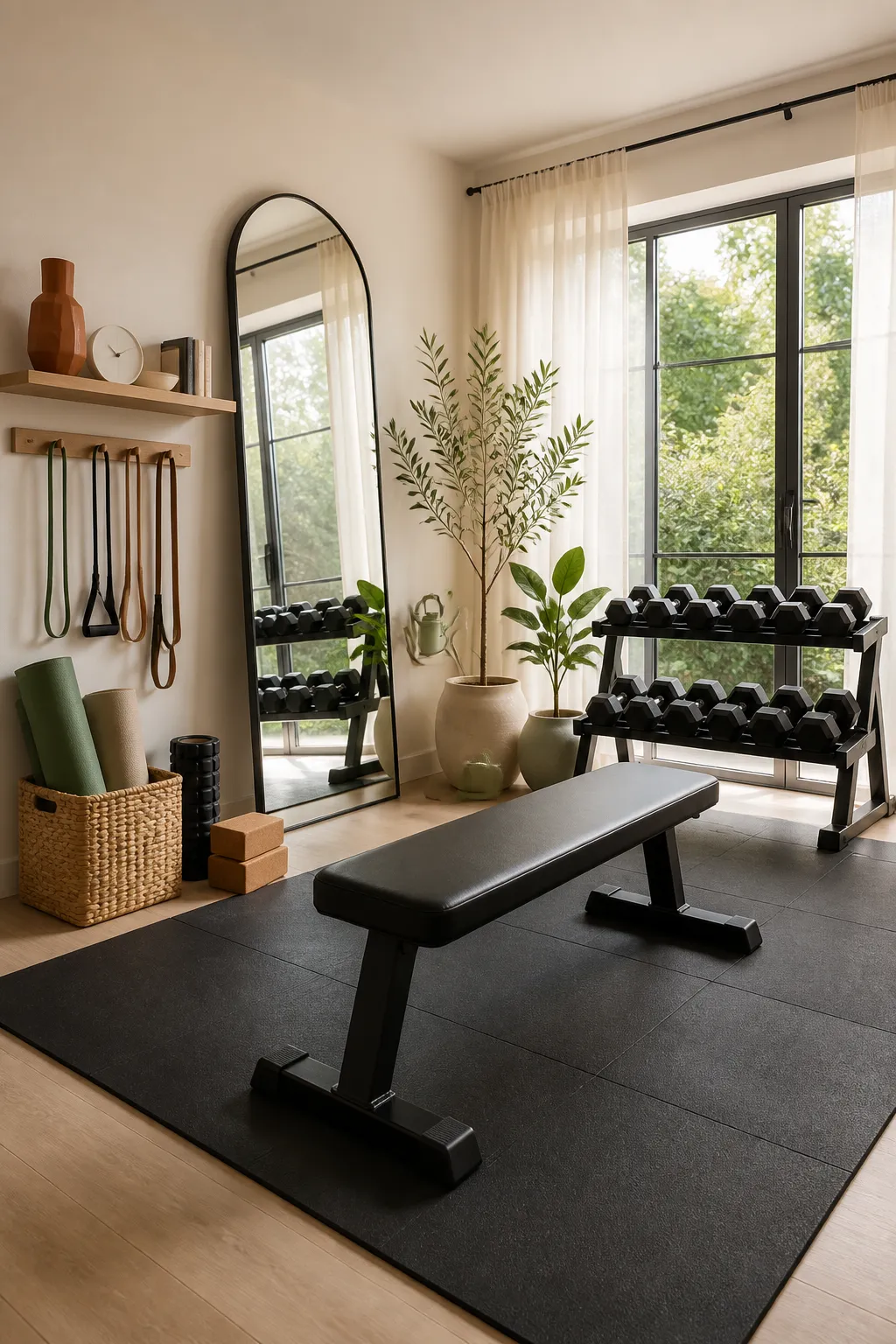
A low, compact rack can become the visual and functional anchor of a small gym. Center it on a clear wall and surround it with soft neutral finishes for a polished, uncluttered look.
Limit the palette to warm white, beige, pale gray, and natural wood, then repeat those tones in mats and storage. Keeping the floor around the rack open also creates a ready-made strength-training zone.
Refresh a Walking-Pad Setup With Pastel Gear and Greenery
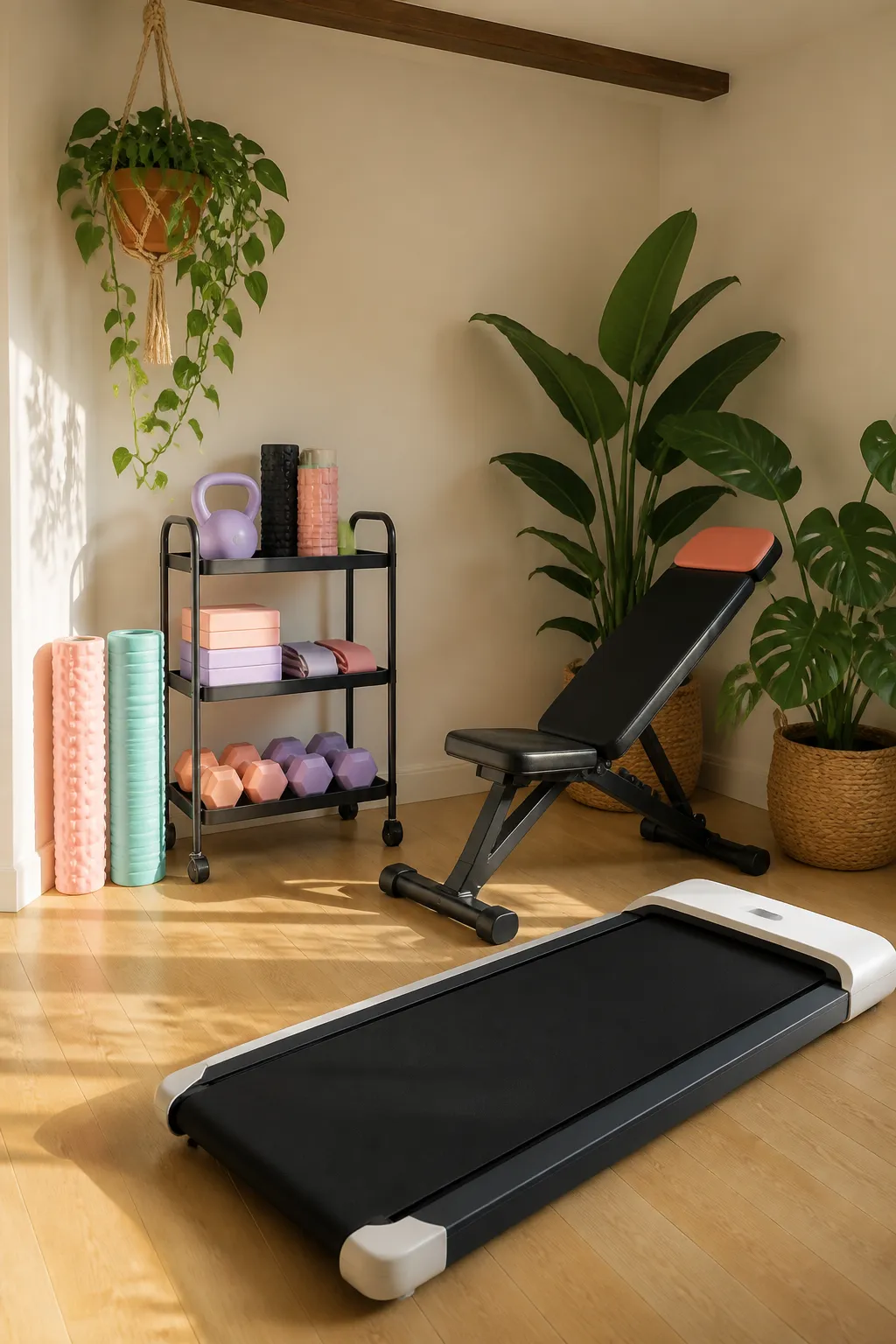
Give a basic walking-pad station a lighter personality with pastel dumbbells, resistance bands, or a coordinated water bottle. A few soft color accents add energy without making the setup feel busy.
Place greenery beside the equipment or on a nearby shelf, safely away from the belt and controls. Choose easy-care plants and simple planters to keep the corner fresh, balanced, and practical.
Use Swedish Wall Bars in a Sunlit Narrow Training Zone
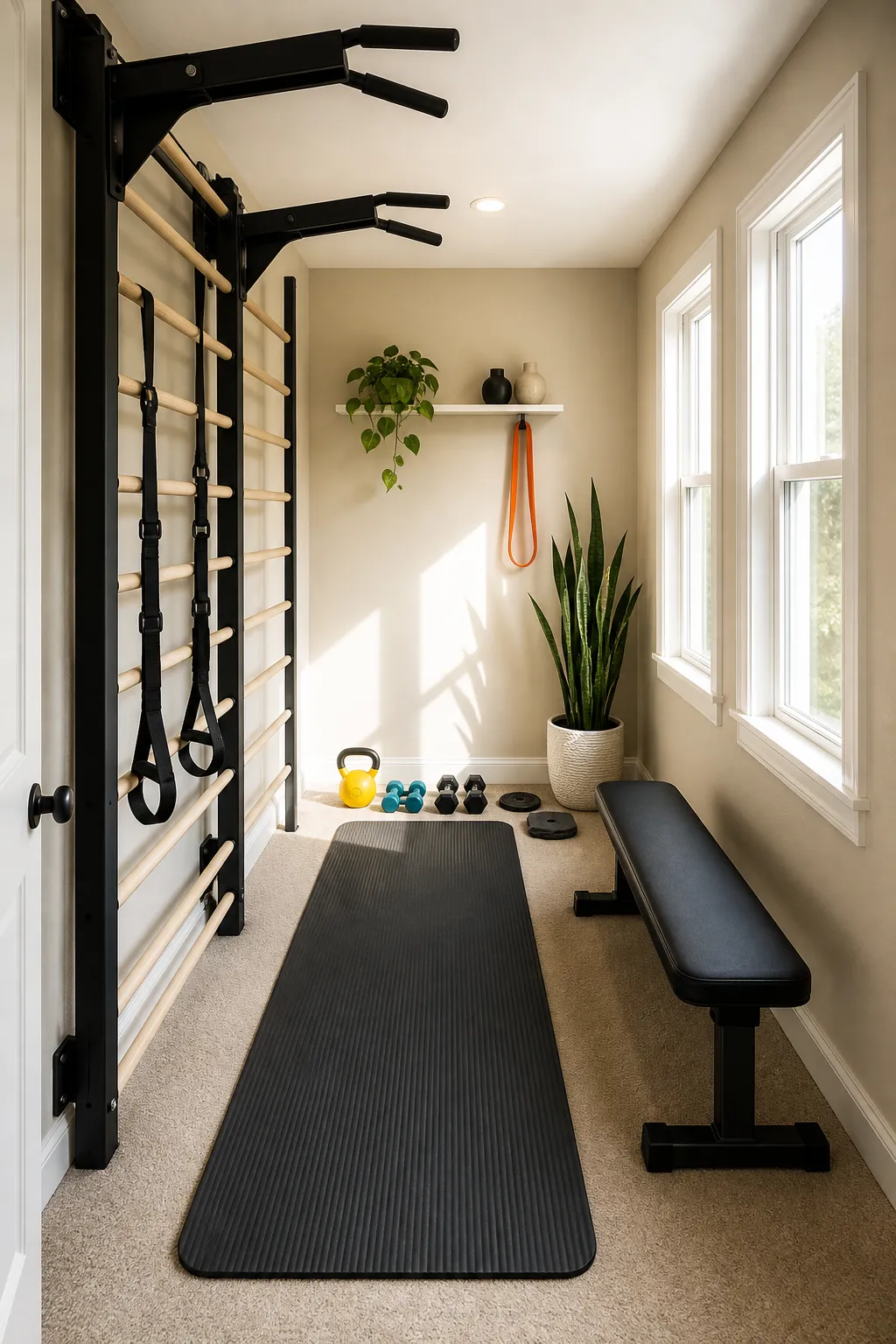
Swedish wall bars make excellent use of vertical space in a slim workout area, supporting mobility, stretching, and bodyweight exercises. Position them where natural light can brighten the zone without causing glare.
Keep the floor clear with wall-mounted hooks or a narrow storage bench nearby. Secure the bars to an appropriate structural surface and preserve enough clearance for safe, unrestricted movement.
Define a Stylish Workout Corner Without Overcrowding It
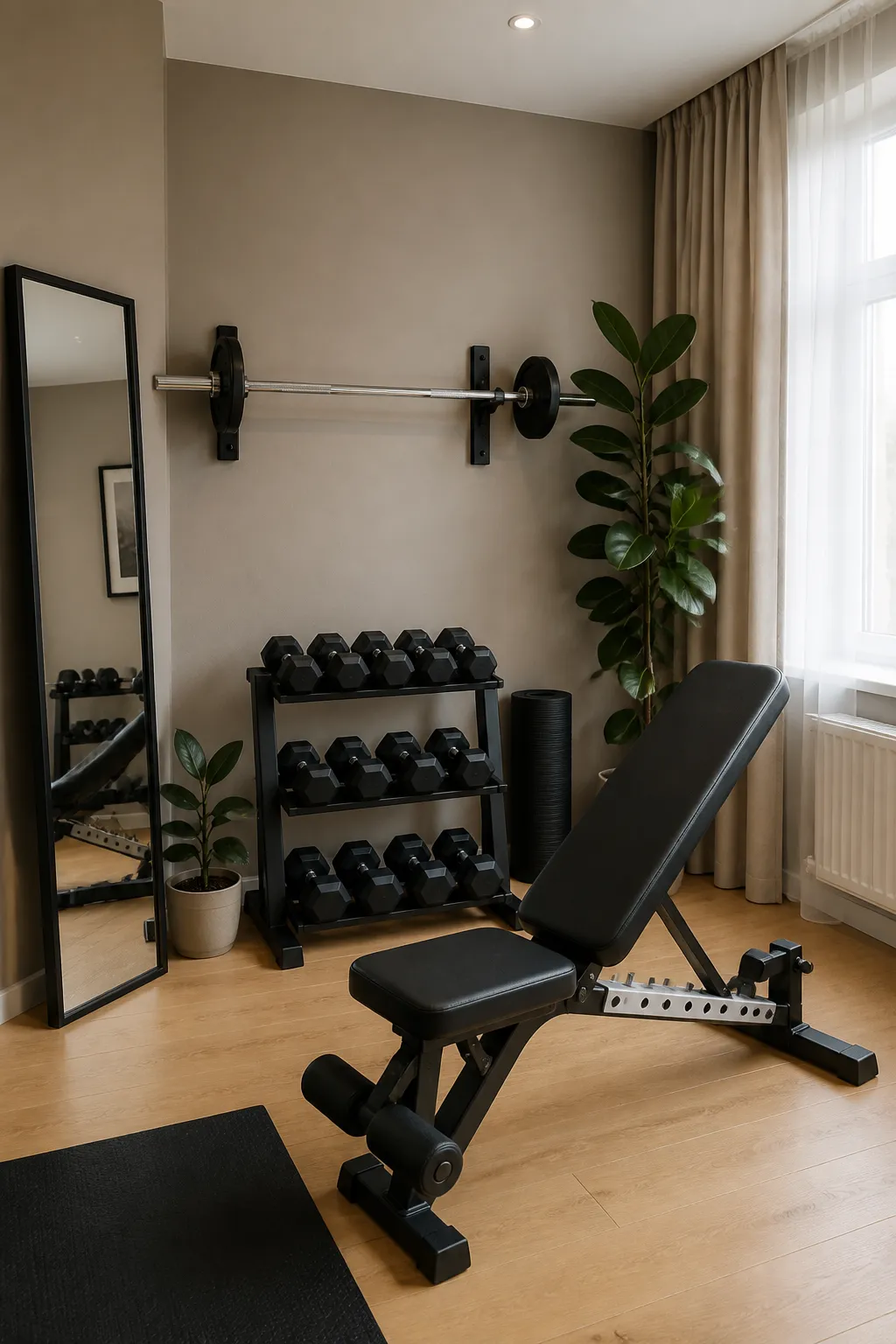
Define the corner with one visual cue, such as a slim mirror, an accent wall, or a neatly framed floor mat. This creates a clear workout zone without adding bulky dividers.
Choose only the equipment used most often and store smaller pieces vertically or inside closed baskets. Matching finishes and a restrained color palette will make the space feel intentional rather than crowded.