
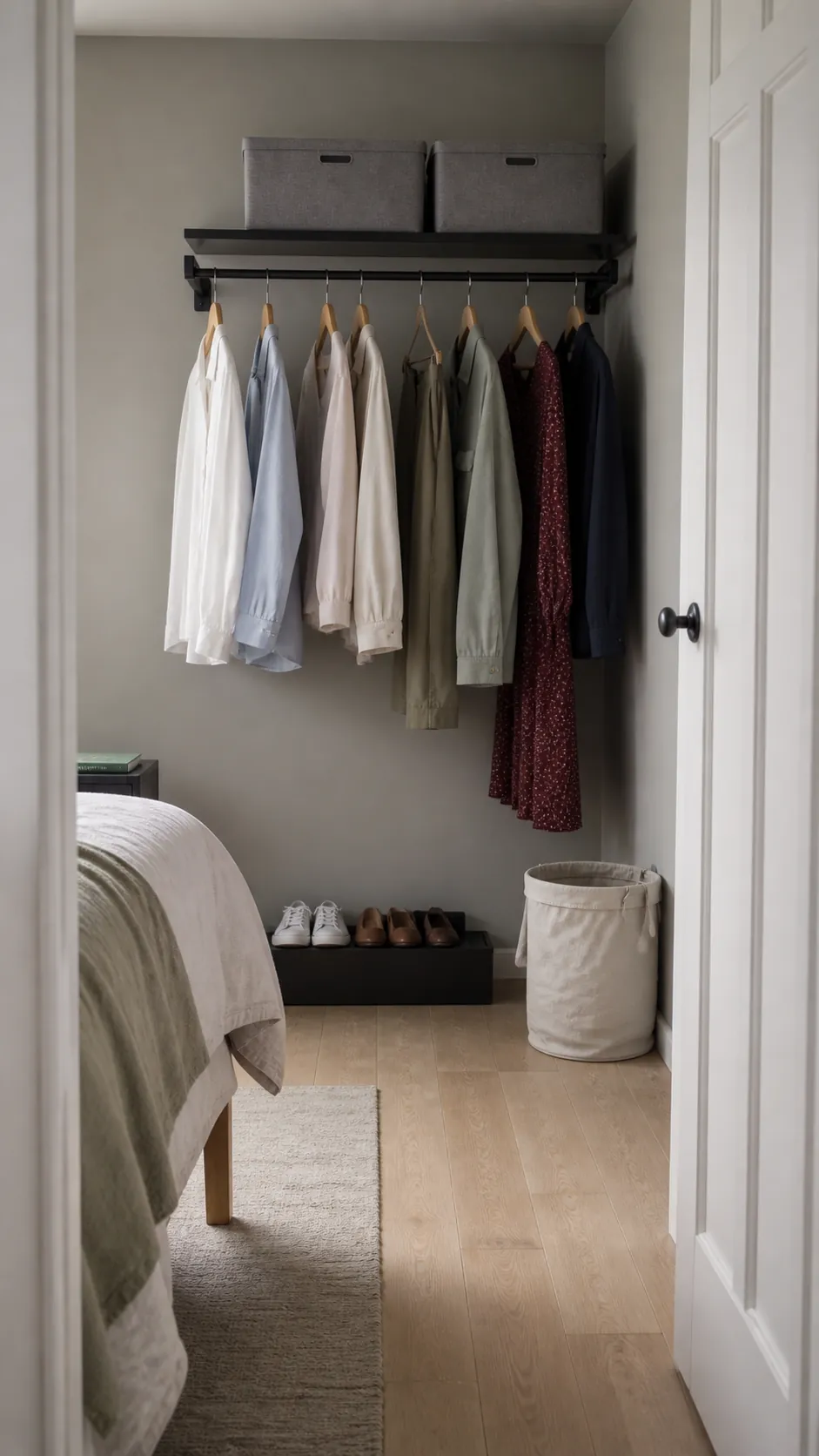
A clothing rack only saves space when it stays upright, leaves a clear walking path, and lets you find what you need. In a tight bedroom, adding more hanging hardware without measuring can replace one problem with wobble, blocked doors, and a wall of visual clutter.
Begin by sorting garments by length, weight, and frequency of use. Keep only clothing that benefits from hanging on the rail, then assign folded storage to knits, exercise wear, and other pieces that tolerate it. This reduces the load and makes vertical wardrobe ideas work in a genuinely small footprint.
Measure the Garments and the Walking Path
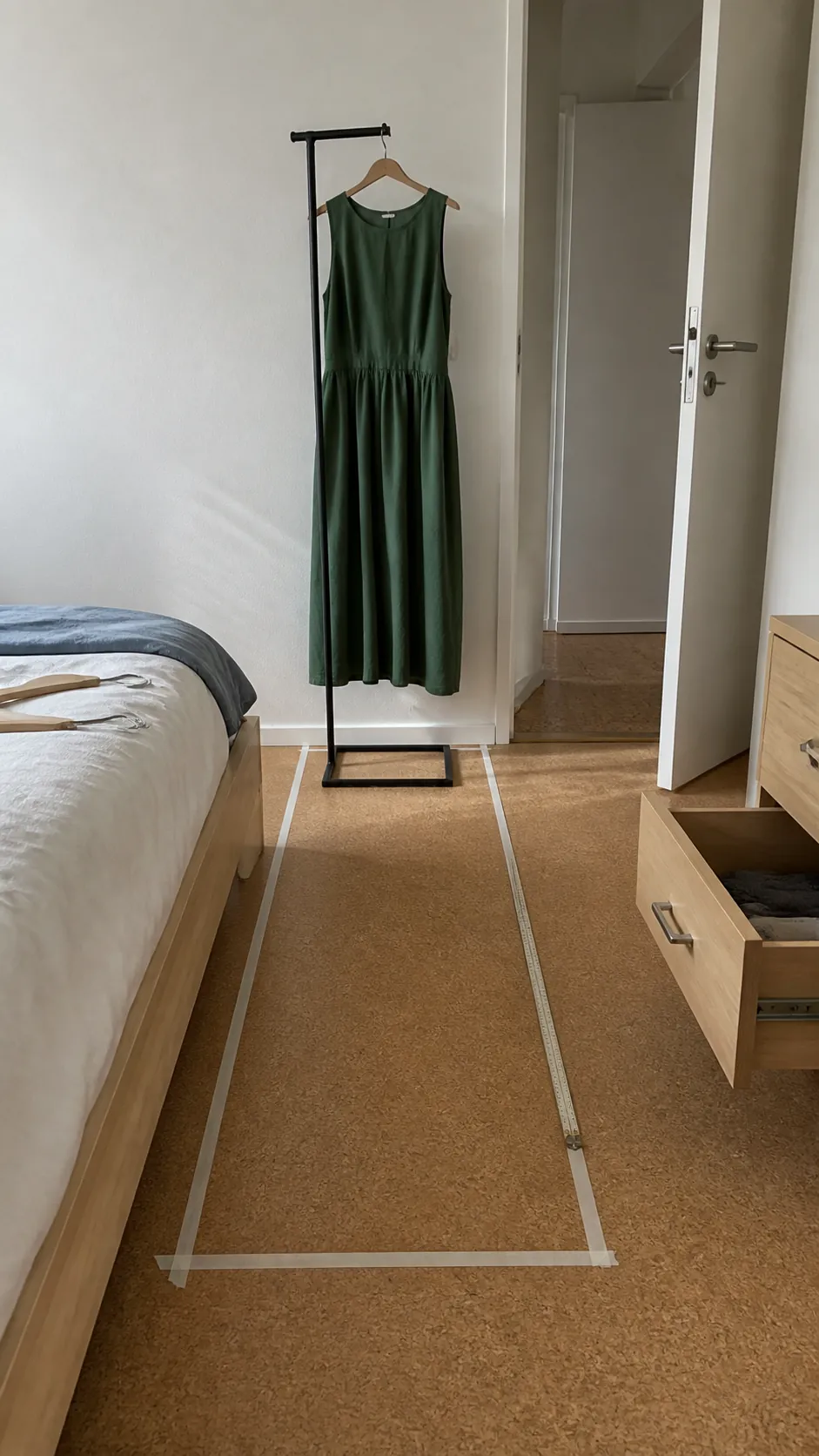
Measure the longest garment from hanger hook to hem, then add a little clearance beneath it. Mark the proposed rail depth on the floor with removable tape and walk past it, open nearby doors, and pull out drawers. A useful hanging zone should not force you to turn sideways or brush clean clothes every time you cross the room.
Count the hangers that must fit and allow space between delicate fabrics. Check the rated load of every rack, bracket, door, and anchor before installation. Heavy coats should never be concentrated on hardware designed for a few shirts.
Use a Shallow Wall Rail for Daily Clothes
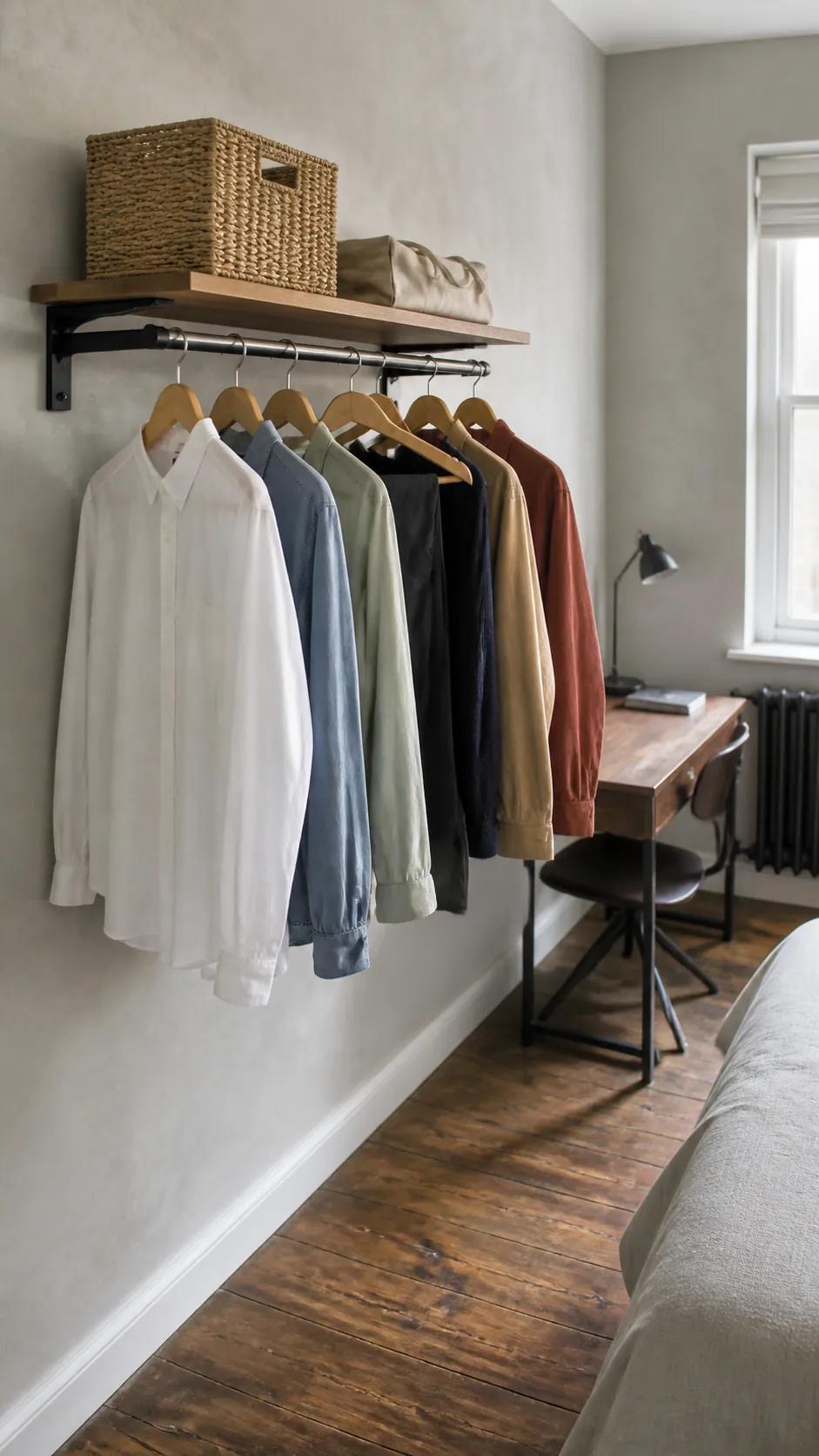
A wall mounted clothes rail can occupy less floor depth than a wardrobe, but the wall structure matters more than the style. Fasten brackets into suitable framing or use anchors approved for the wall and expected load. If the lease prohibits holes, choose a tension system or a stable freestanding alternative instead of improvising with adhesive hooks.
Limit the rail to a small working wardrobe of shirts, trousers, and light jackets. Match hanger width and face every hook in the same direction to reduce tangles. A shallow shelf above can hold light bins when its own support is rated for them.
Turn a Corner Into a Narrow Garment Zone
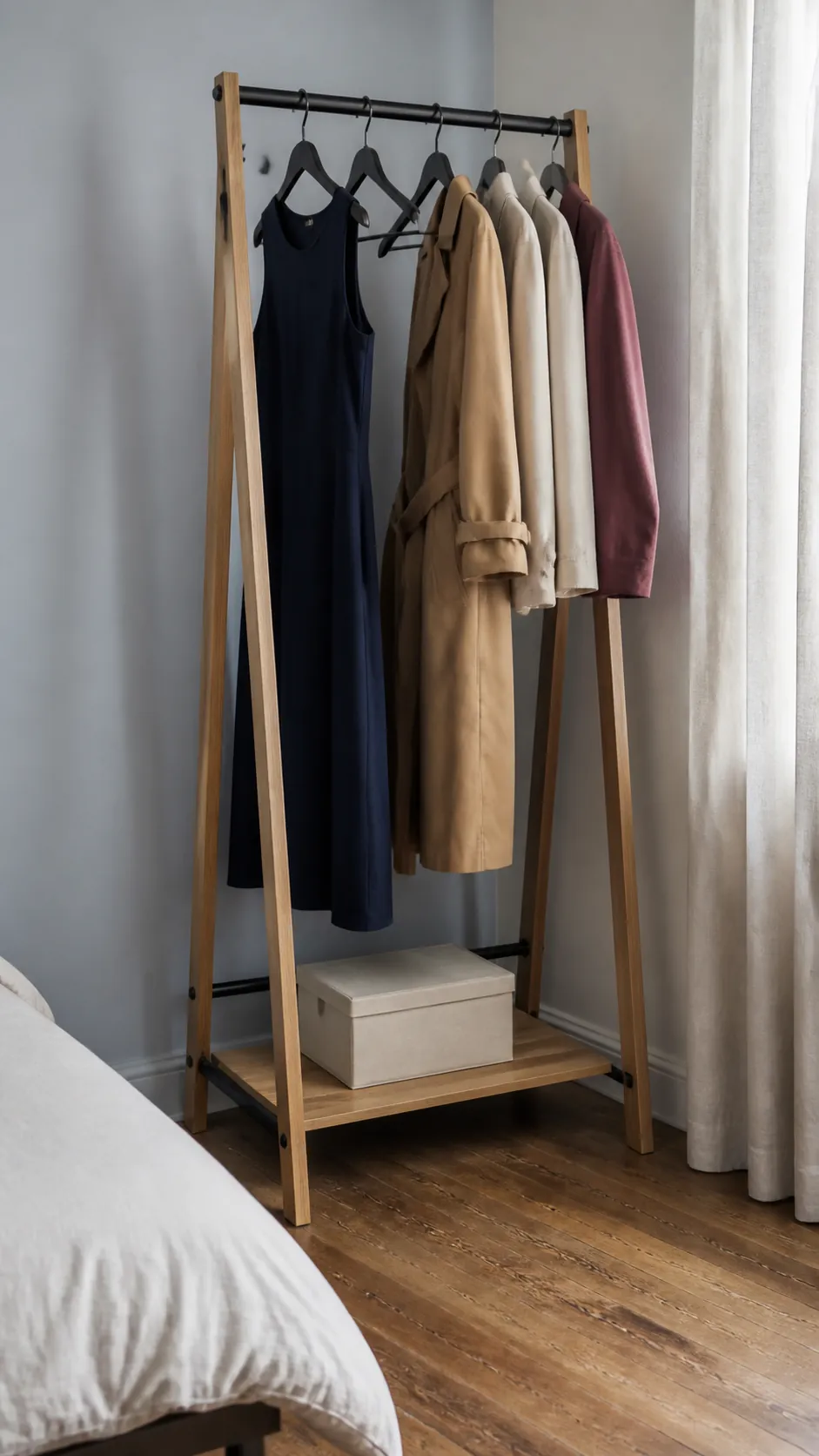
An unused corner clothing rack can hold longer pieces without occupying the center of the room. Choose a narrow rack with a broad, stable base and position it where garments will not rub a heater, curtain, or damp exterior wall. Place shoes or a weighted storage box low on the frame only when the manufacturer permits it.
Keep long dresses and coats together so their full drop uses one tall zone. Short garments waste the space below them unless a shelf or drawer unit is designed to fit there. Leave a visible gap around the rack so air can move and cleaning remains practical.
Claim the Back of a Door for Light Pieces
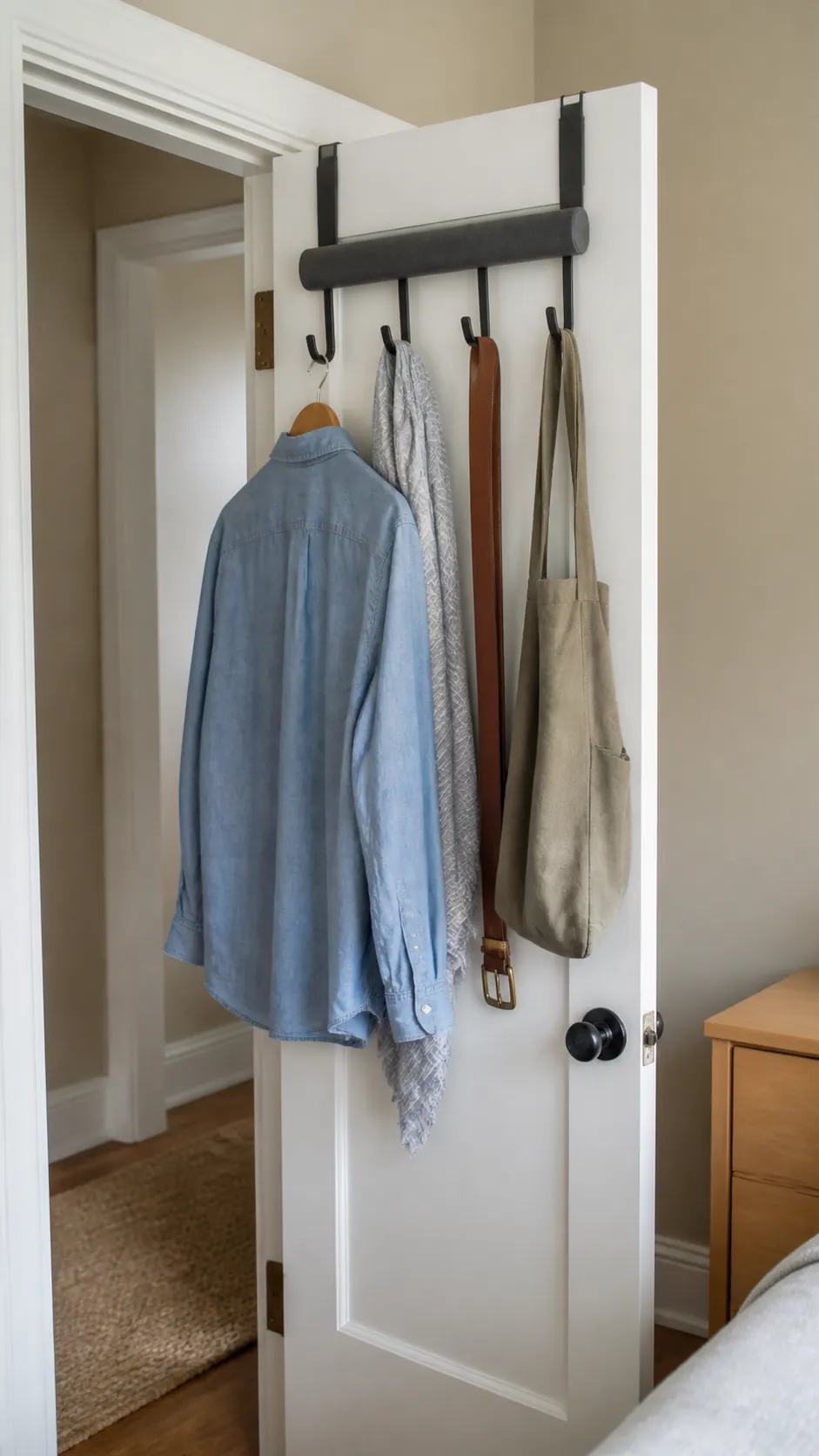
Over door garment storage is best for tomorrow’s outfit, belts, scarves, and a few light layers. Confirm that the organizer clears the top frame and does not prevent the latch from closing. Add soft pads where metal touches paint, then test the door slowly before loading it.
Distribute weight across several hooks rather than hanging everything from one point. Keep garments away from the hinge side so fabric cannot be pinched. If the door drags, twists, or stops closing cleanly, remove weight immediately and use another zone.
Choose a Slim Rack That Will Not Wobble
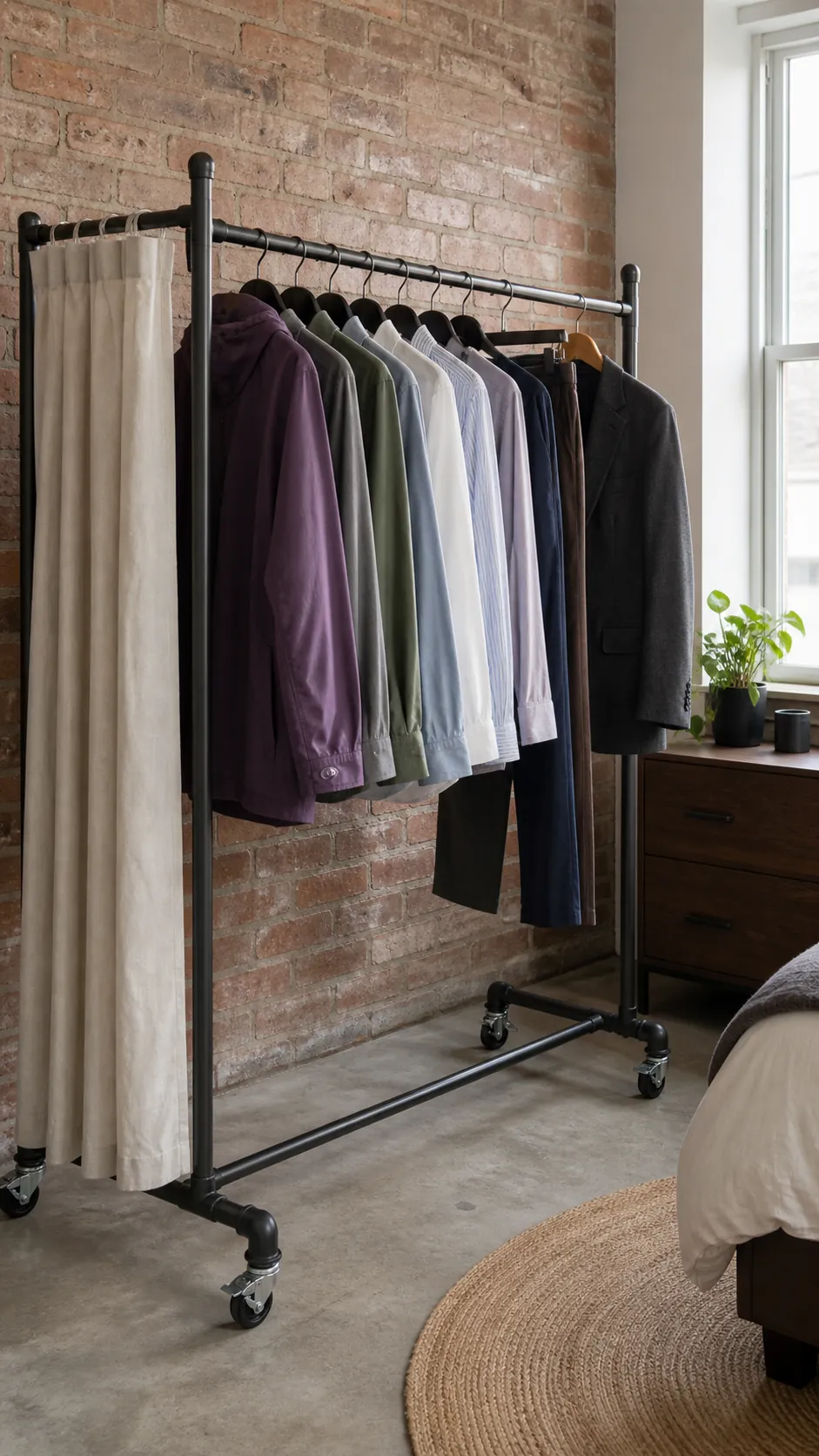
A slim garment rack should be judged by its joints, base width, wheel locks, and load rating rather than by how many clothes fit in a product photo. Tighten fasteners after assembly, lock the wheels, and load evenly from the center outward. Stop before hangers become compressed into one solid row.
Use matching slim hangers for ordinary shirts, but retain supportive shaped hangers for tailored jackets. Store the heaviest pieces near upright posts when the design allows it. A breathable curtain can soften visual clutter only if it does not interfere with stability or trap damp clothing.
Reserve Ceiling Height for a Specialist System
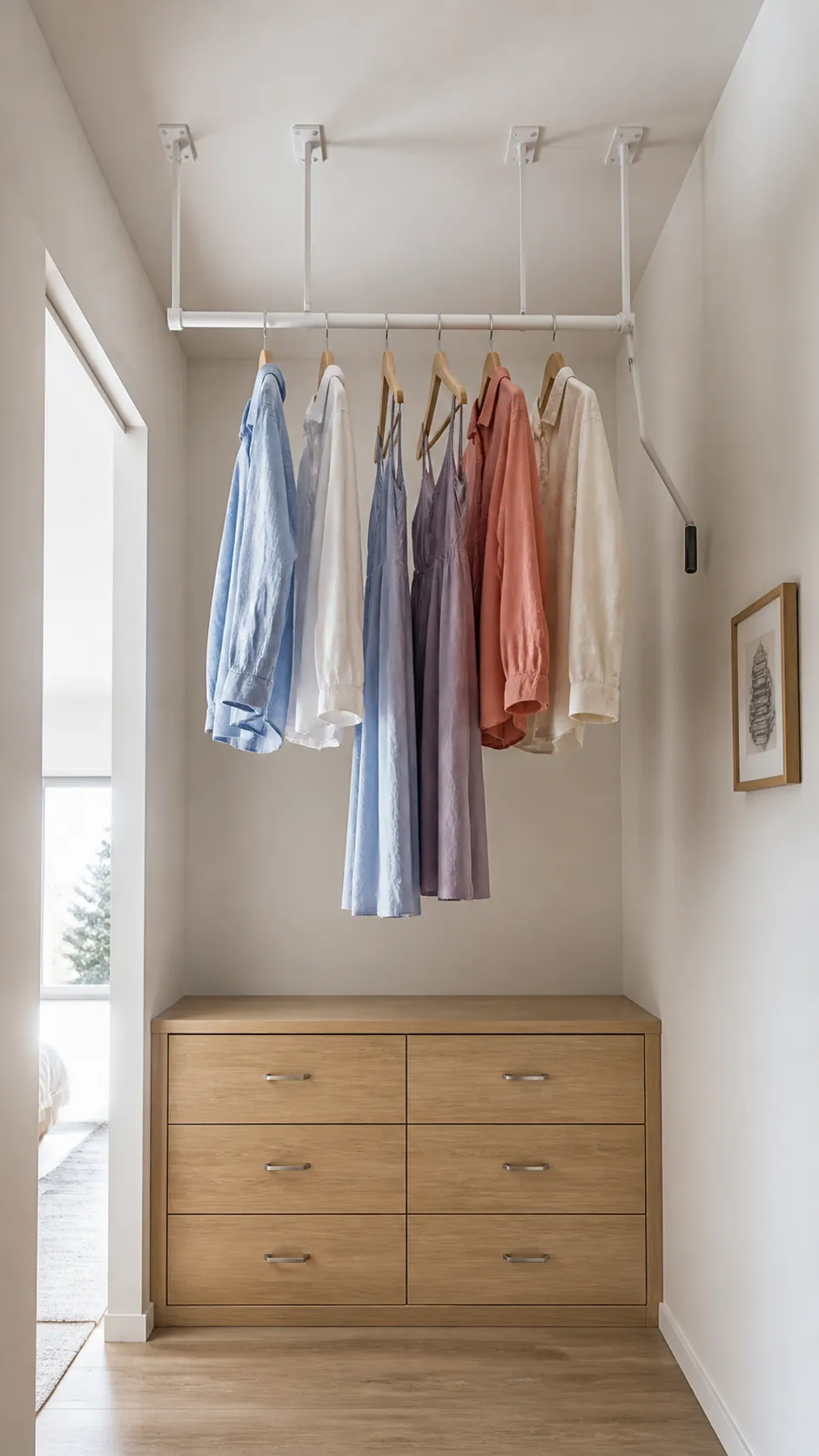
A ceiling hanging clothes rack can free the floor, yet it is not a casual do it yourself shortcut. Ceiling structure, fasteners, garment weight, movement, and safe head clearance all require proper assessment. Use a system designed for clothing and have installation completed or checked by a qualified professional when structure is uncertain.
Place a high rail only where a lowering mechanism or secure step gives safe access. Keep it away from fans, sprinklers, lights, and doors. Because the clothing remains visible above eye level, a limited seasonal capsule usually looks calmer than a densely packed overhead row.
Keep the System Lighter Than the Room
Review the hanging area each season and remove empty hangers, damaged hardware, and clothing that belongs in folded storage. Leave breathing room between garments, keep the floor beneath accessible, and return each item to a defined zone after wearing it. The best small space clothes storage is not the arrangement that holds the most pieces, but the one that remains safe, calm, and easy to use every day.