
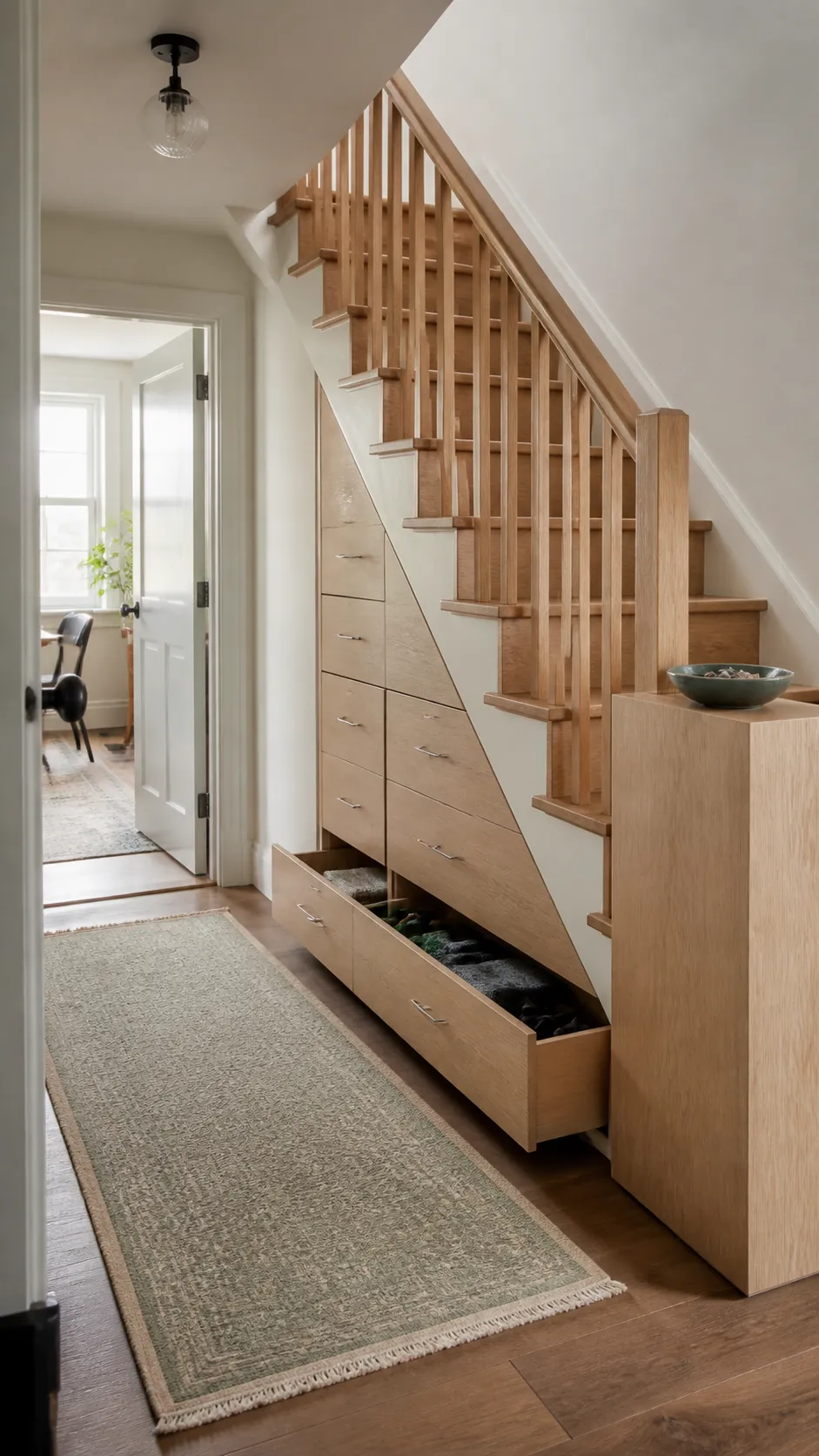
An empty stair void can look generous in a photo and still become an awkward landing place for bags, boxes, and dust in daily life. The useful question is not what can physically fit there, but which missing function deserves the space and can remain easy to clean. Start by checking headroom, stair structure, nearby power and plumbing, and the path people use through the room.
Fit drawers to the changing stair height
Deep pull out drawers turn the lowest part of the stair slope into accessible storage without asking anyone to crawl into a dark cupboard. Give tall items the high end, shallow shoes or linens the low end, and use full extension hardware so the back of every drawer stays reachable. Flush fronts painted to match the wall keep built in stair storage visually calm, while simple labels inside each drawer prevent the space from becoming another mystery cabinet.
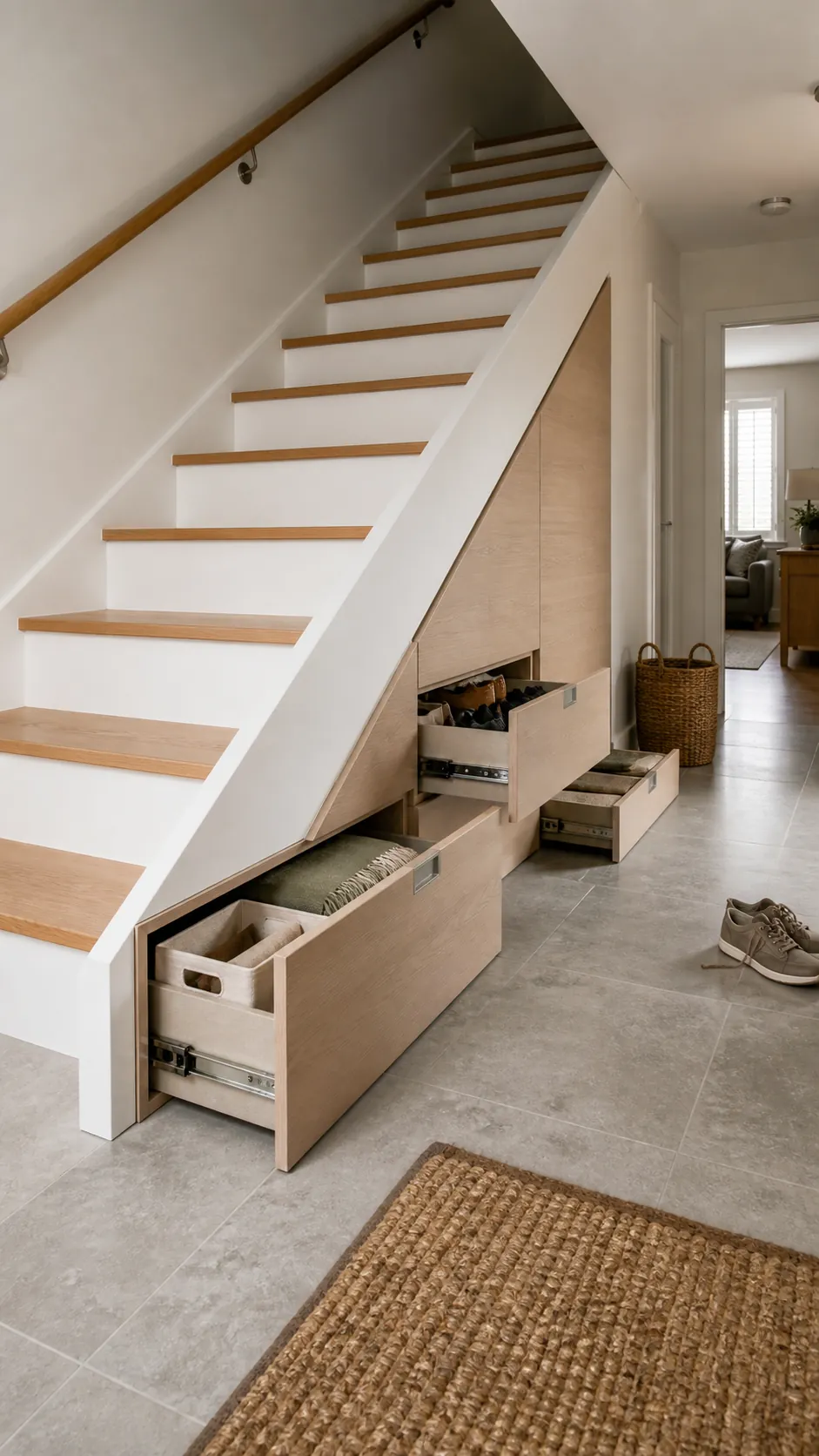
Create a focused home office at the tall end
An under stairs home office works best when the chair and screen occupy the highest section rather than the cramped point. A wall mounted desk preserves knee space, a slim drawer controls cables, and a task light prevents the sloping ceiling from feeling gloomy. Keep the passage behind the chair clear and add doors or a curtain only if you can close them without trapping heat around the equipment.
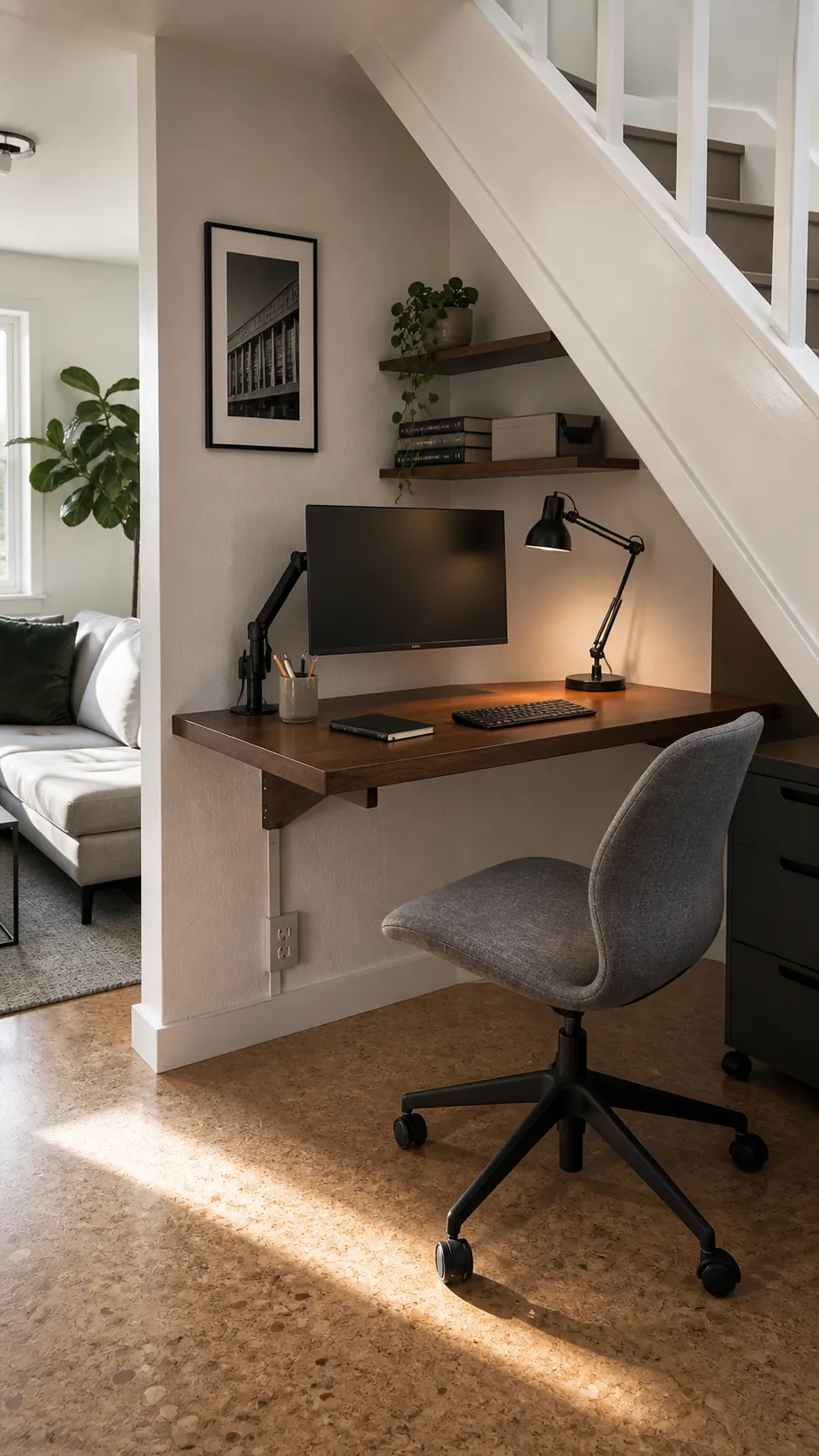
Build a reading nook around a proper seat
A staircase reading nook feels inviting when the seat depth, back support, and light are planned before the decorative cushions. Place the sitting position where an adult can rise without meeting the stair underside, then use the lower wedge for books or a soft armrest. Washable upholstery and a nearby sconce make the nook practical for daily reading instead of a pretty corner that nobody uses.
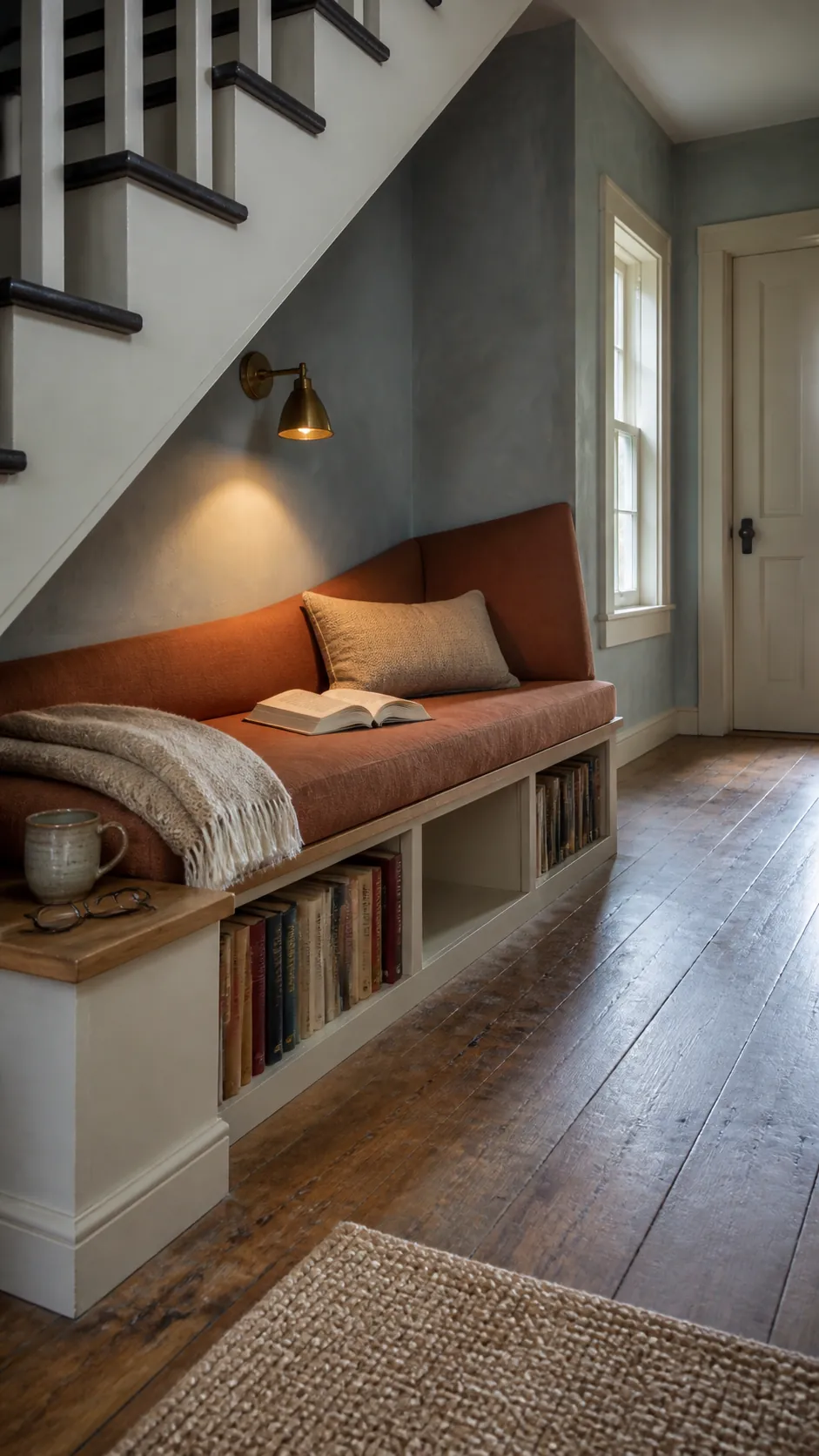
Organize a pantry by reach and weight
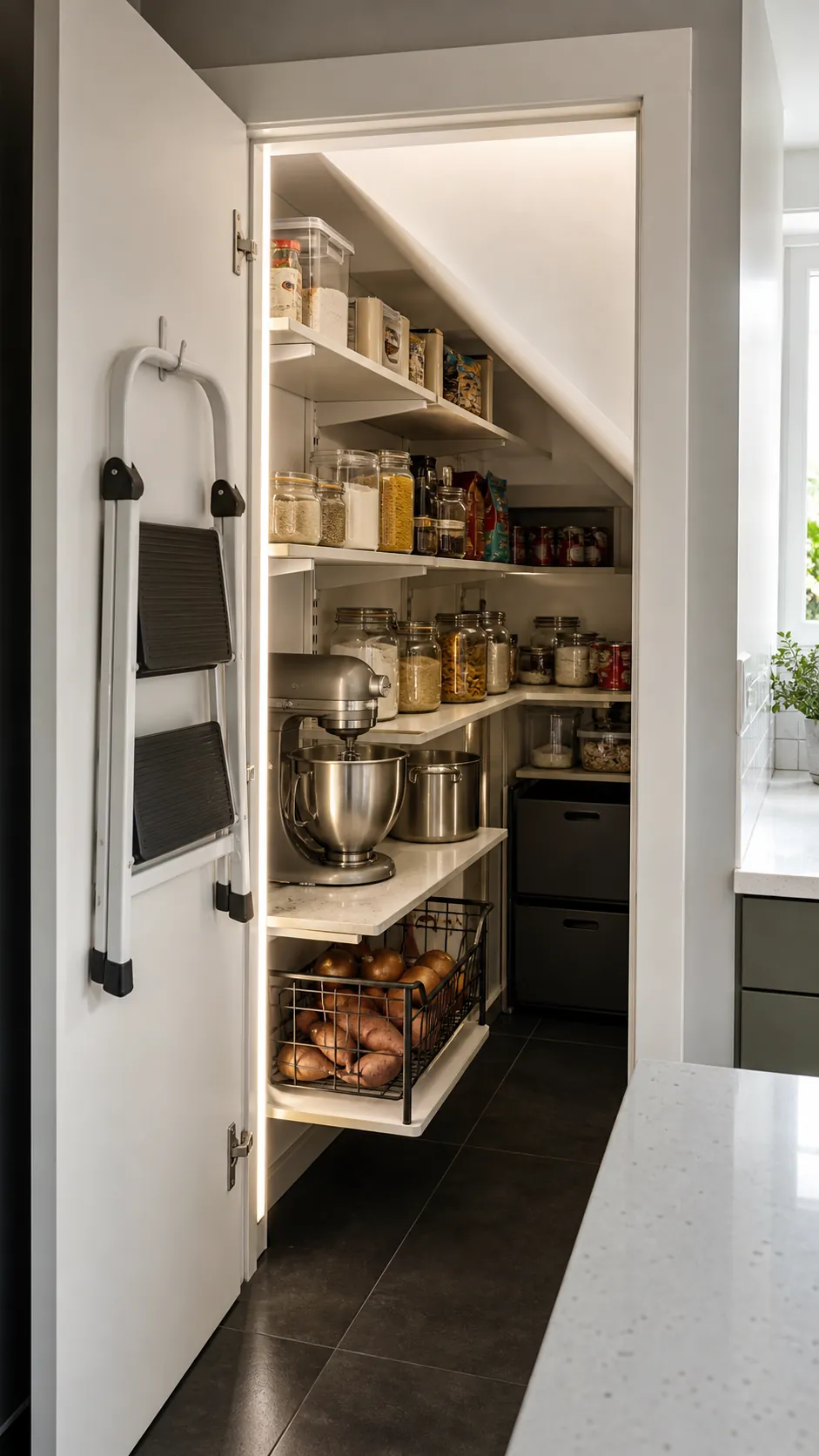
An under stairs pantry can relieve a crowded kitchen, but irregular depth makes ordinary fixed shelves frustrating. Put heavy appliances and bulk food near the tall entrance, keep everyday jars between waist and eye level, and reserve the lowest section for labeled pull out bins. Ventilation, wipeable surfaces, and a bright door activated light matter more than squeezing in one extra shelf.
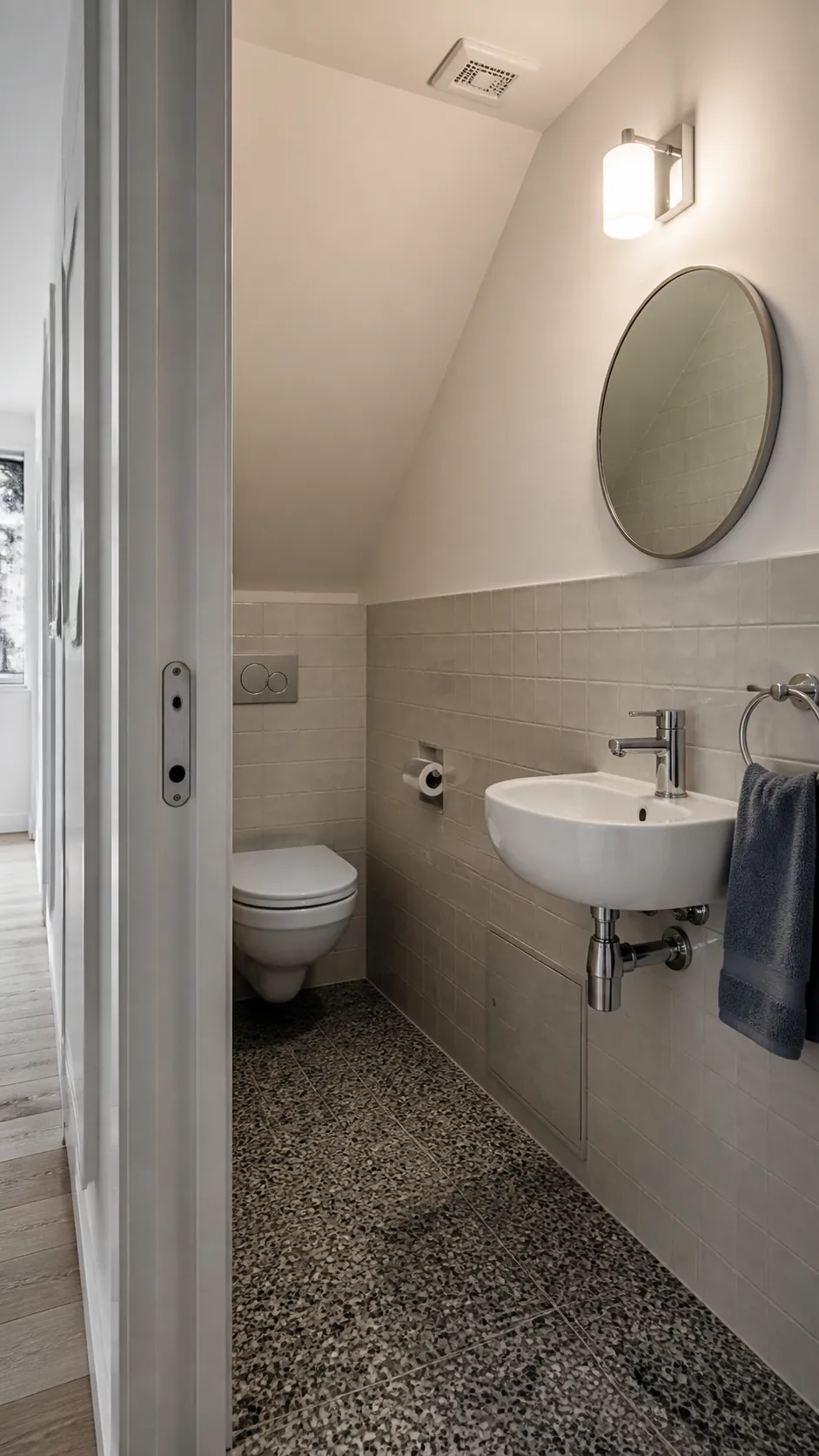
Plan a powder room only after measuring services
A small powder room under stairs can add real value when plumbing, ventilation, clearances, and local rules cooperate. Position the toilet where the stair is highest enough for comfortable standing, use a compact basin that does not block the door, and keep valves accessible for repairs. This conversion needs professional review because moving waste lines or weakening stair framing can erase the benefit of gaining the room.
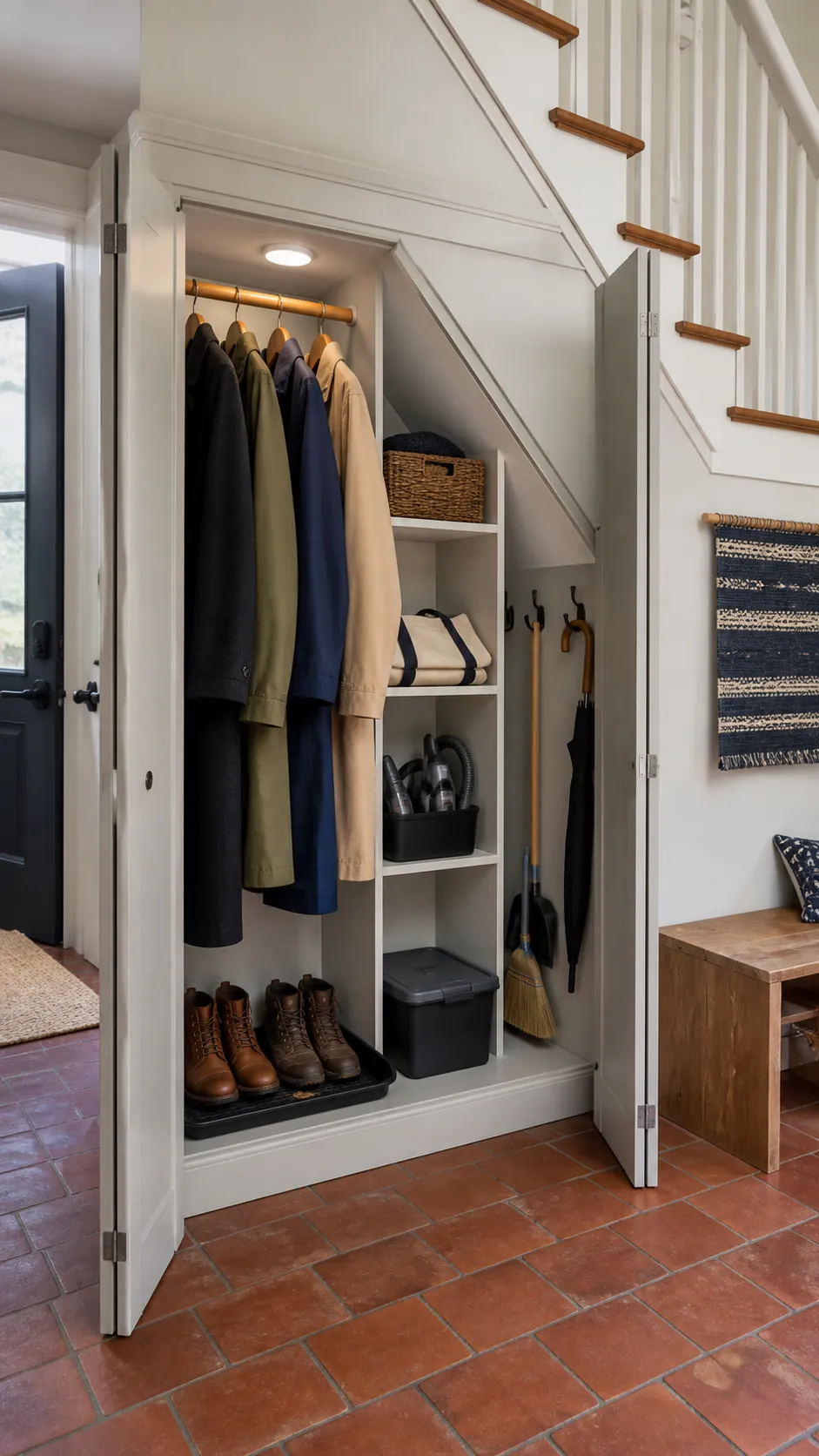
Turn the void into an entry closet
A staircase closet earns its footprint when it captures the coats, shoes, cleaning tools, or seasonal boxes already gathering nearby. Install hanging space only where garments can fall freely, use the narrow end for hooks or shelves, and protect the floor with a durable washable finish. A solid lining below open stair treads also keeps grit from dropping onto clean belongings.
Shape a playroom that can change with age
An under stairs playroom can give children a defined retreat without filling the main room with toys. Round exposed corners, secure shelving to the wall, keep the entrance visible to adults, and avoid any latch that could trap a child inside. Use movable baskets and a plain floor cushion so the same area can later become book storage, a homework corner, or a household cupboard.
Reserve a washable station for a pet
A pet bed, feeding station, or crate can suit the low part of the stair void when the animal already chooses that quiet location. Provide airflow, keep food away from household chemicals, and place bowls on a removable tray that catches splashes. The best setup leaves enough room for cleaning and lets the pet enter or leave freely, so the corner feels sheltered without becoming confined.