
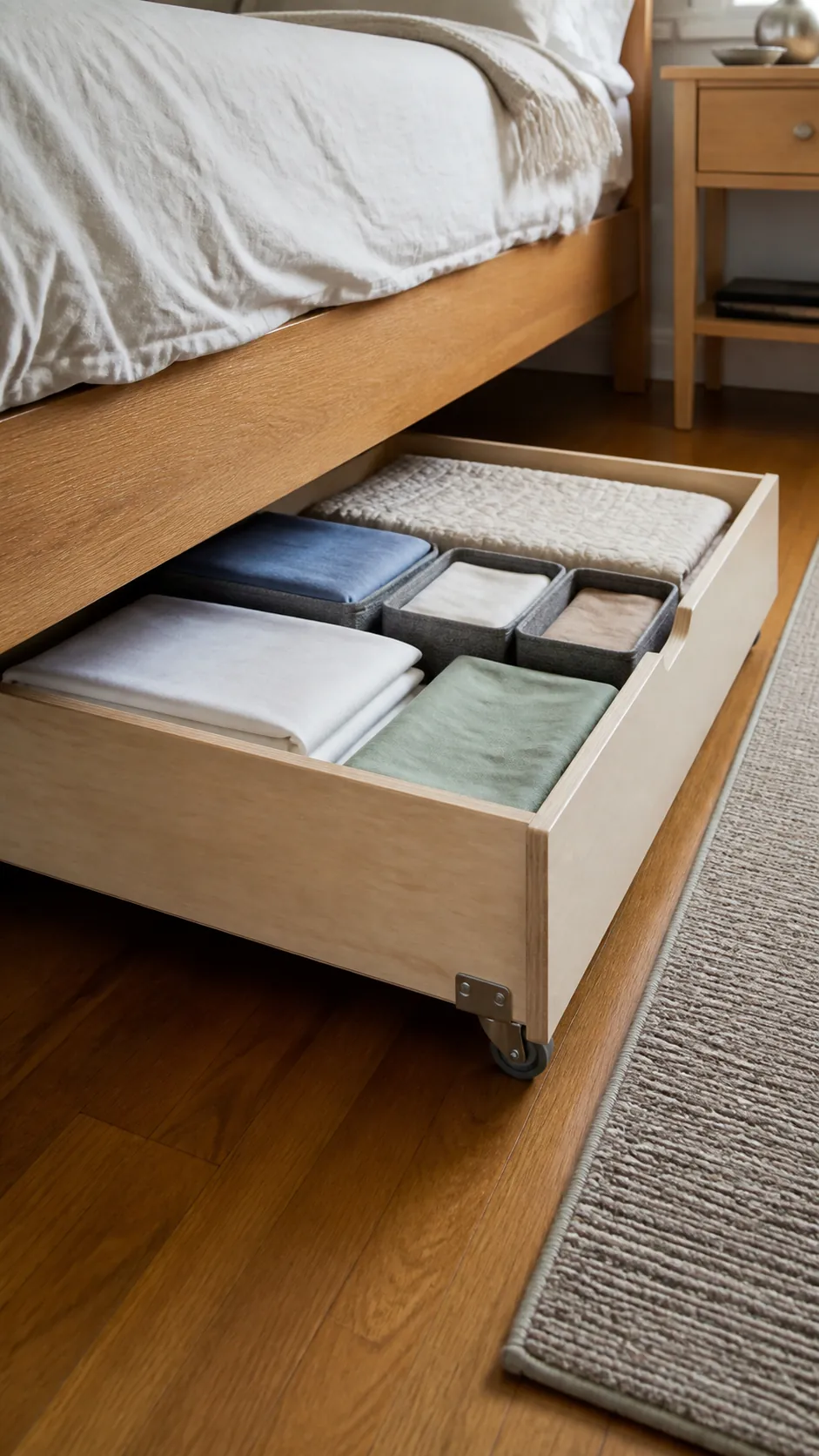
The empty space below a bed looks generous until wheels, a rug edge, and the bed frame consume the clearance. A rolling box that is even half an inch too tall becomes a lifting problem instead of hidden bedroom storage. Build from the tightest real measurement, then choose every part around smooth access and a supported load.
Measure the Full Travel Path
Measure from the floor to the lowest rail, slat, bolt, or center support beneath the bed. Check near the head, middle, and foot because floors and frames are not always level. Subtract at least half an inch for easy movement, then remember that the plywood bottom, caster height, side walls, and any lid must all fit inside what remains.
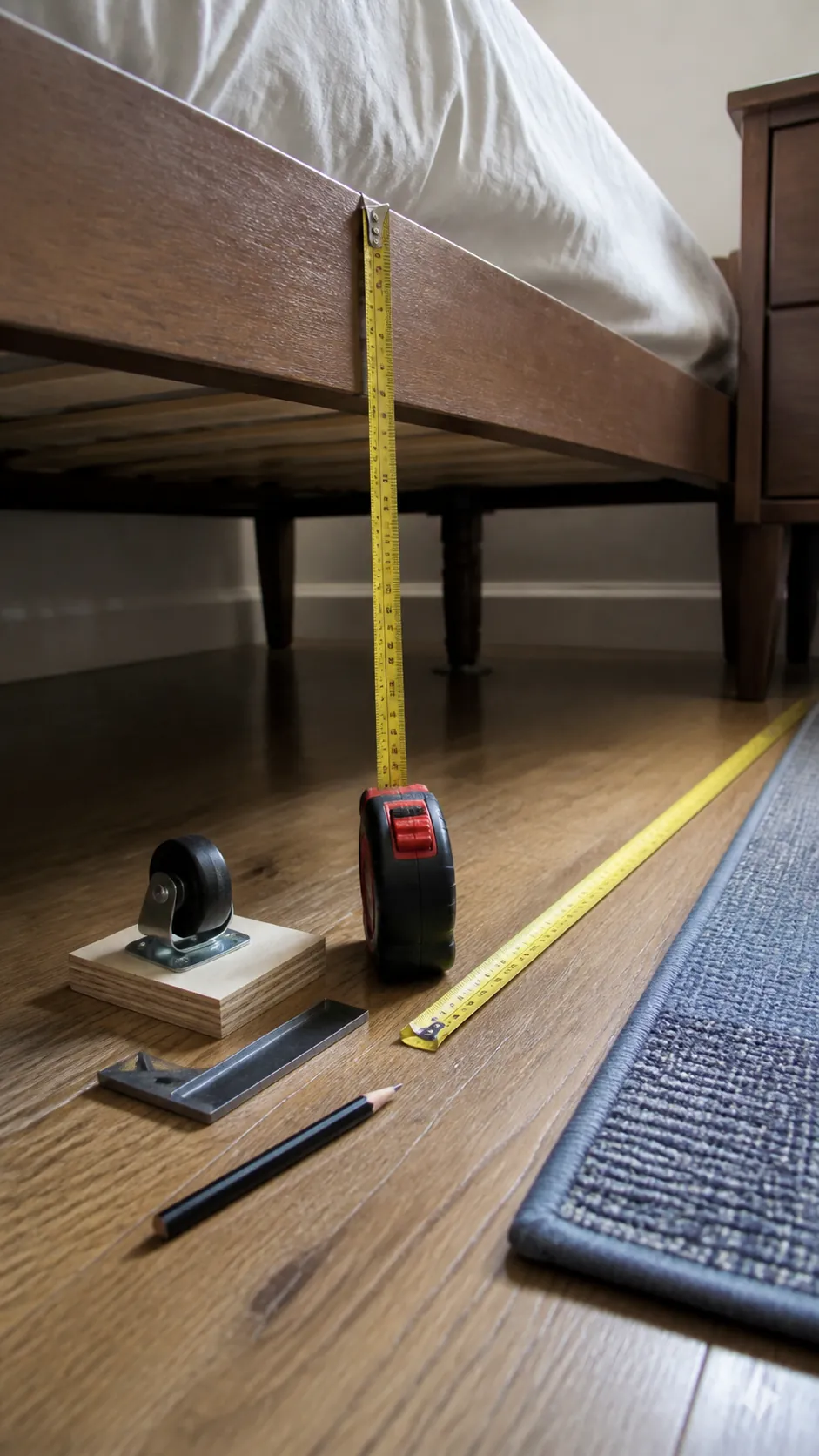
Pull a tape from the storage position to the open room as well. A caster storage box must clear a rug, bed skirt, nightstand, and nearby wall during its entire trip. If a thick rug begins beside the bed, select larger wheels or keep the drawer path on the hard floor rather than planning to lift it every time.
Choose a Low Profile Box Design
A shallow plywood drawer is lighter and stronger than a box built from thick boards. Use a plywood bottom with narrow solid wood sides, or use quality plywood throughout and cover exposed edges. Divide a very wide drawer or add a center runner so the bottom does not bow under shoes, toys, or folded linens.
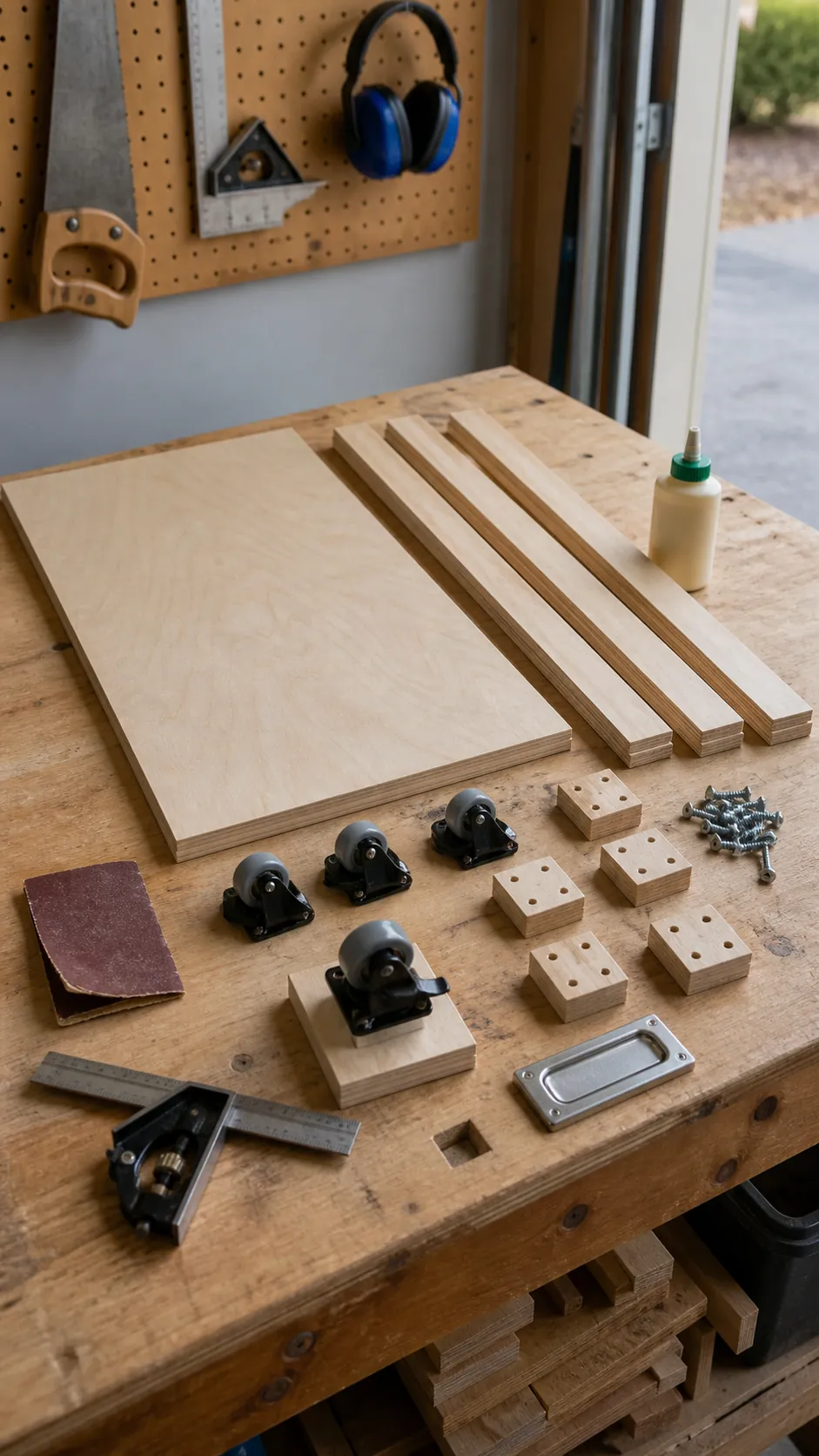
Choose casters by total height, load rating, wheel material, and mounting style. Small hard wheels roll well on smooth floors but catch more easily at a rug edge, while slightly larger soft wheels protect wood and cross minor gaps better. Add the weight ratings for every wheel and keep a comfortable margin above the filled drawer weight.
Cut the Base and Sides Square
Size the drawer several inches narrower than the usable opening so it can enter without striking bed legs. Cut the bottom first, then cut paired side pieces to equal lengths. Dry fit everything on a flat surface and compare both diagonal measurements before drilling.
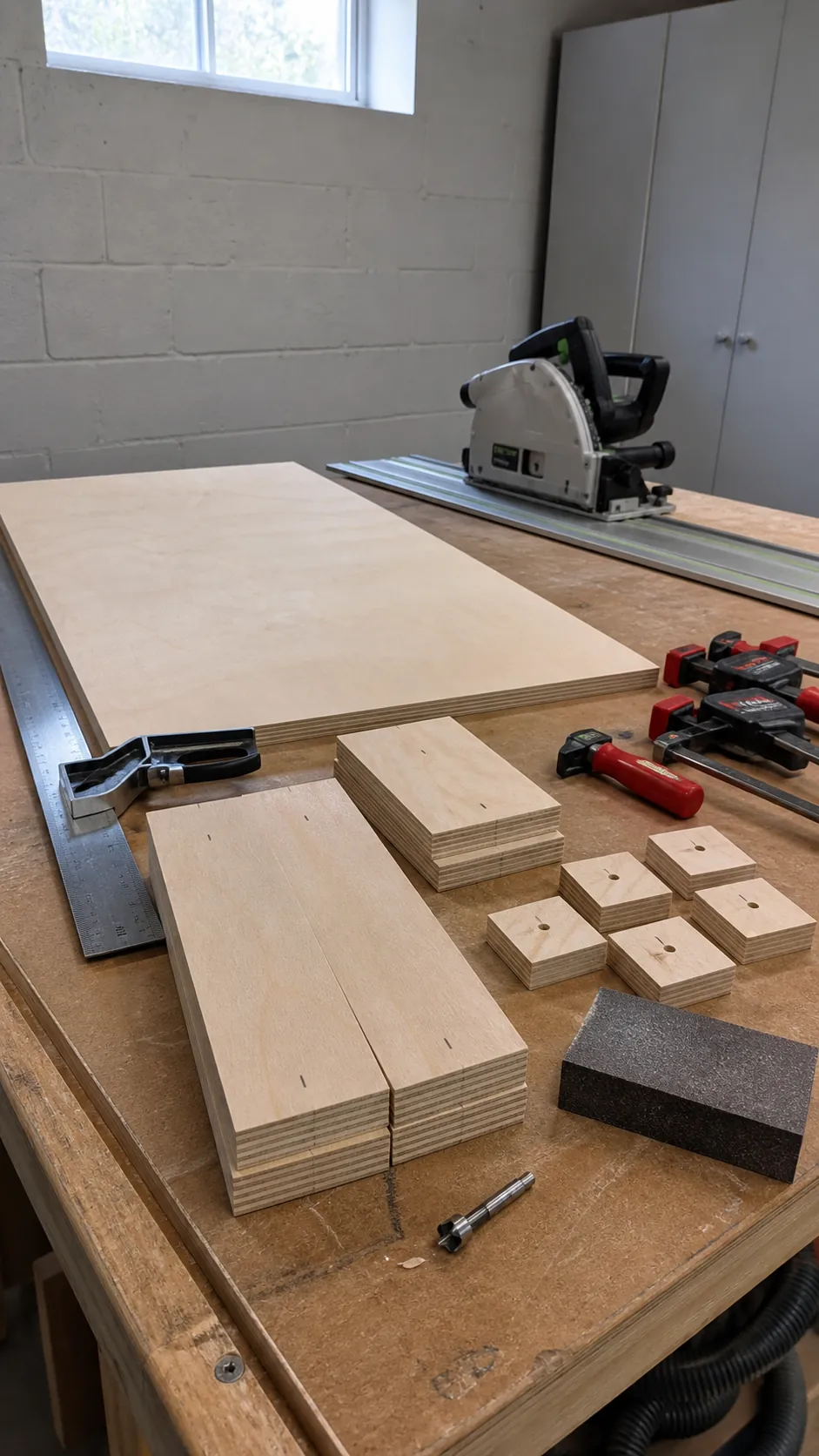
Sand the upper edges and every hand contact point before assembly. Drill pilot holes to prevent narrow sides from splitting, and keep screws away from the future caster fasteners. If you want a rolling shoe storage tray, confirm that the tallest shoes still sit below the side height and the bed frame.
Assemble and Reinforce the Drawer
Glue and fasten the sides around the bottom while the box rests on a level floor or bench. Clamp lightly, measure the diagonals again, and adjust until they match. A square box tracks straighter and is less likely to rub a bed leg.
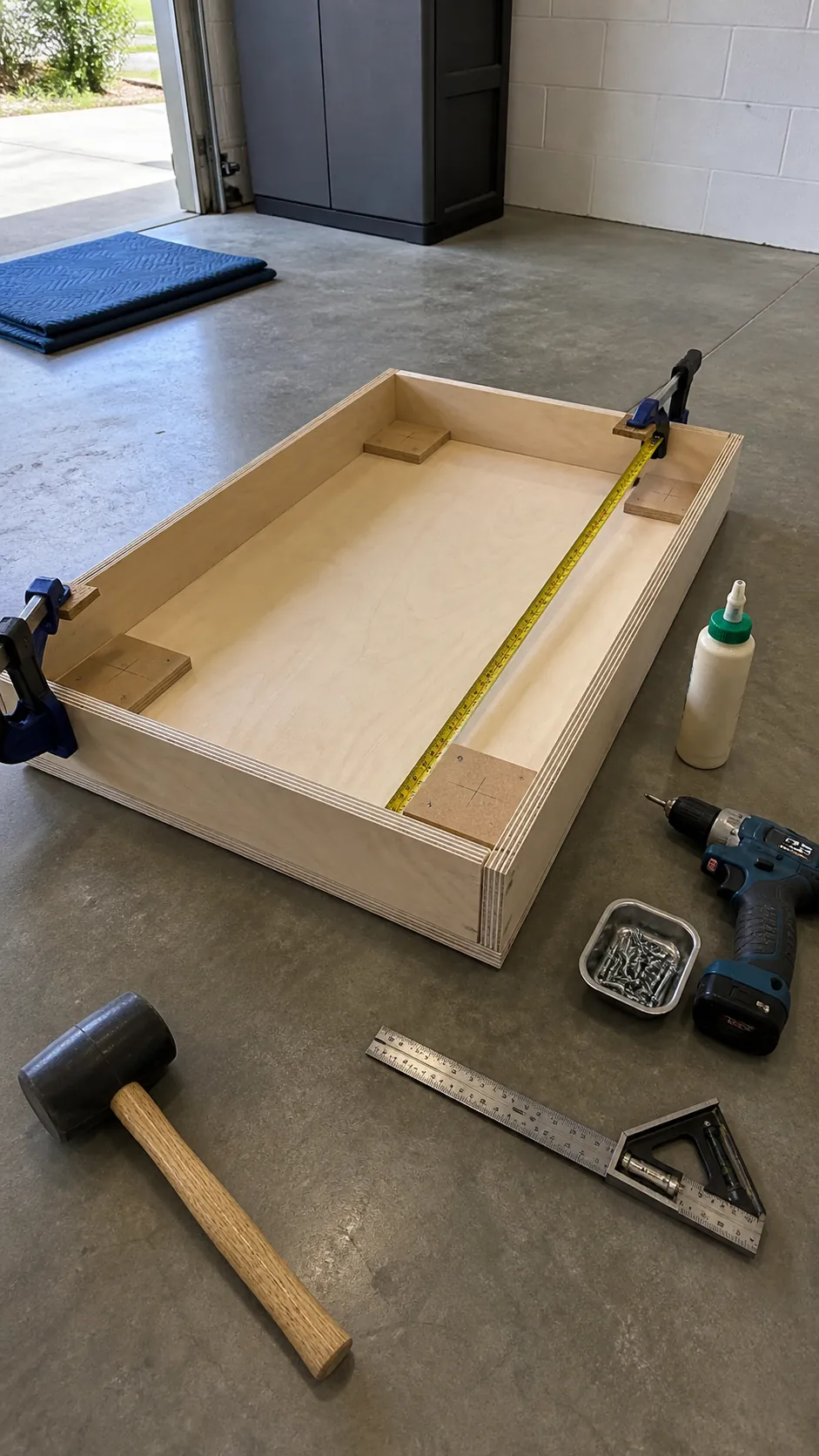
Reinforce each caster location with a wood block or a second plywood pad bonded above the bottom. Thin sheet material alone can loosen around screws as the drawer changes direction. A wide drawer carrying dense items may also benefit from a fifth wheel near the center, provided that wheel shares the same installed height.
Mount the Wheels and Front Pull
Mark caster plates from the actual hardware and drill pilot holes that stop short of the box interior. Place the wheels near the corners without crowding side fasteners, then confirm that every wheel touches a flat floor. Test the empty drawer in every direction before adding a recessed pull, fabric loop, or smooth hand opening.
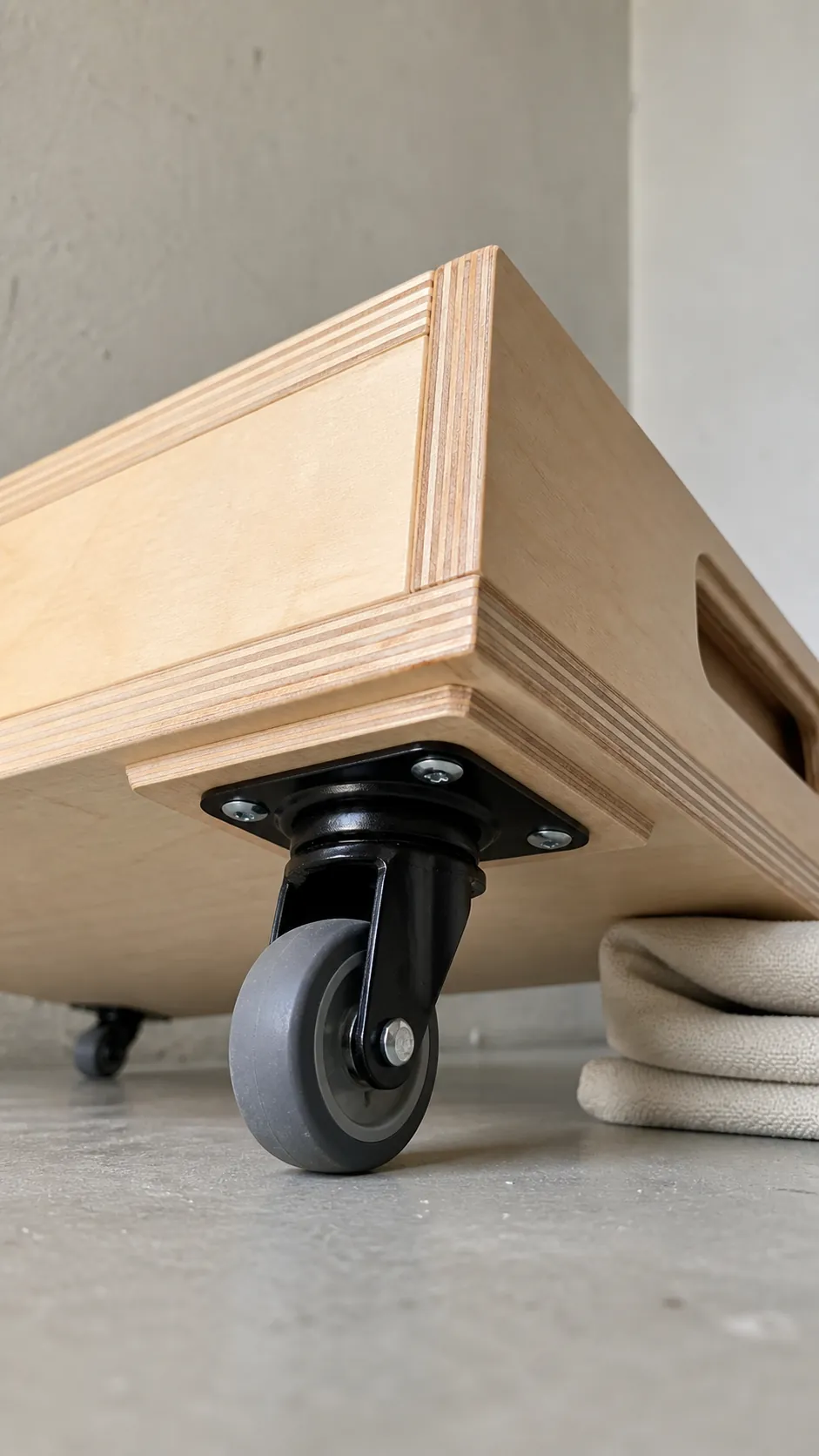
A projecting knob can catch a bed skirt or shin, so low profile hardware is safer. Set the front pull high enough to reach but low enough to avoid the bed rail. If the drawer crosses a rug, test that transition now and change the wheels before finishing the wood.
Finish, Load, and Test the Storage
Seal bare wood with a low odor finish and let it cure completely before storing fabric. Add a breathable liner or removable bins when the drawer will hold seasonal clothes. Avoid packing damp textiles or sealing moisture beneath the bed.
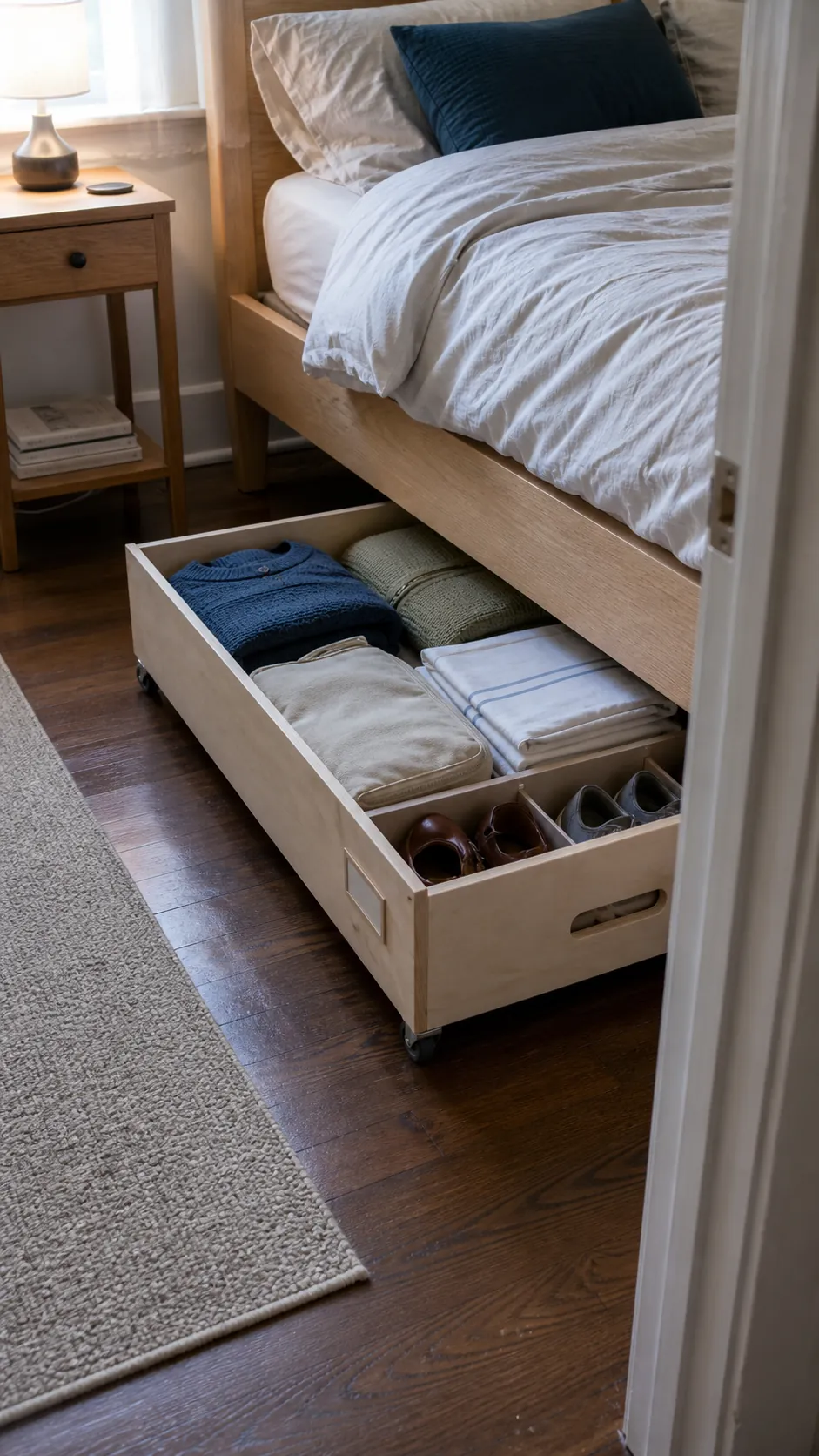
Load the drawer gradually and watch the bottom, caster mounts, and rug transition. Keep dense items near supported zones and distribute weight rather than piling it at the front. The finished low profile drawer box should roll out with one steady pull, stop without twisting, and disappear beneath the bed without scraping anything above it.