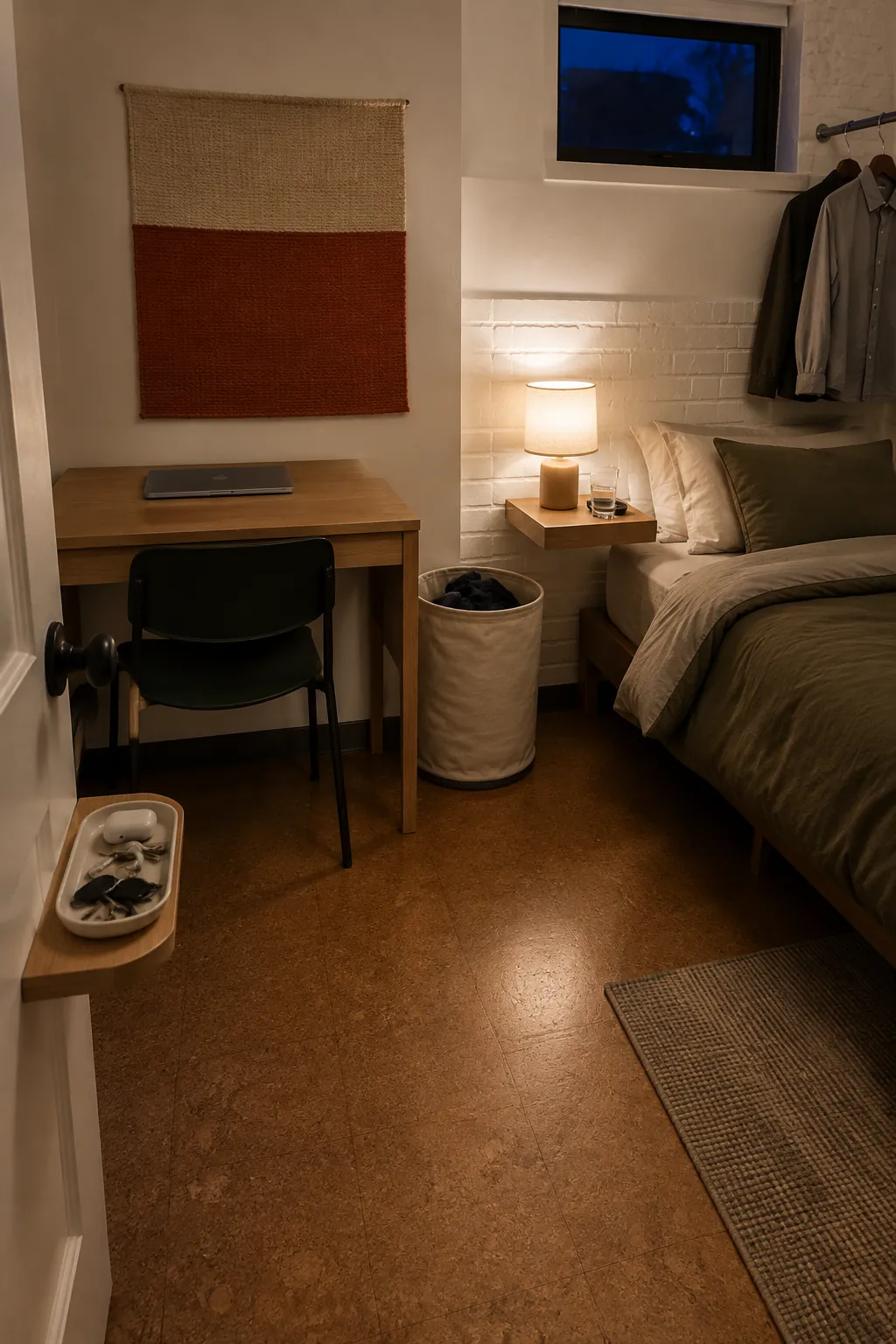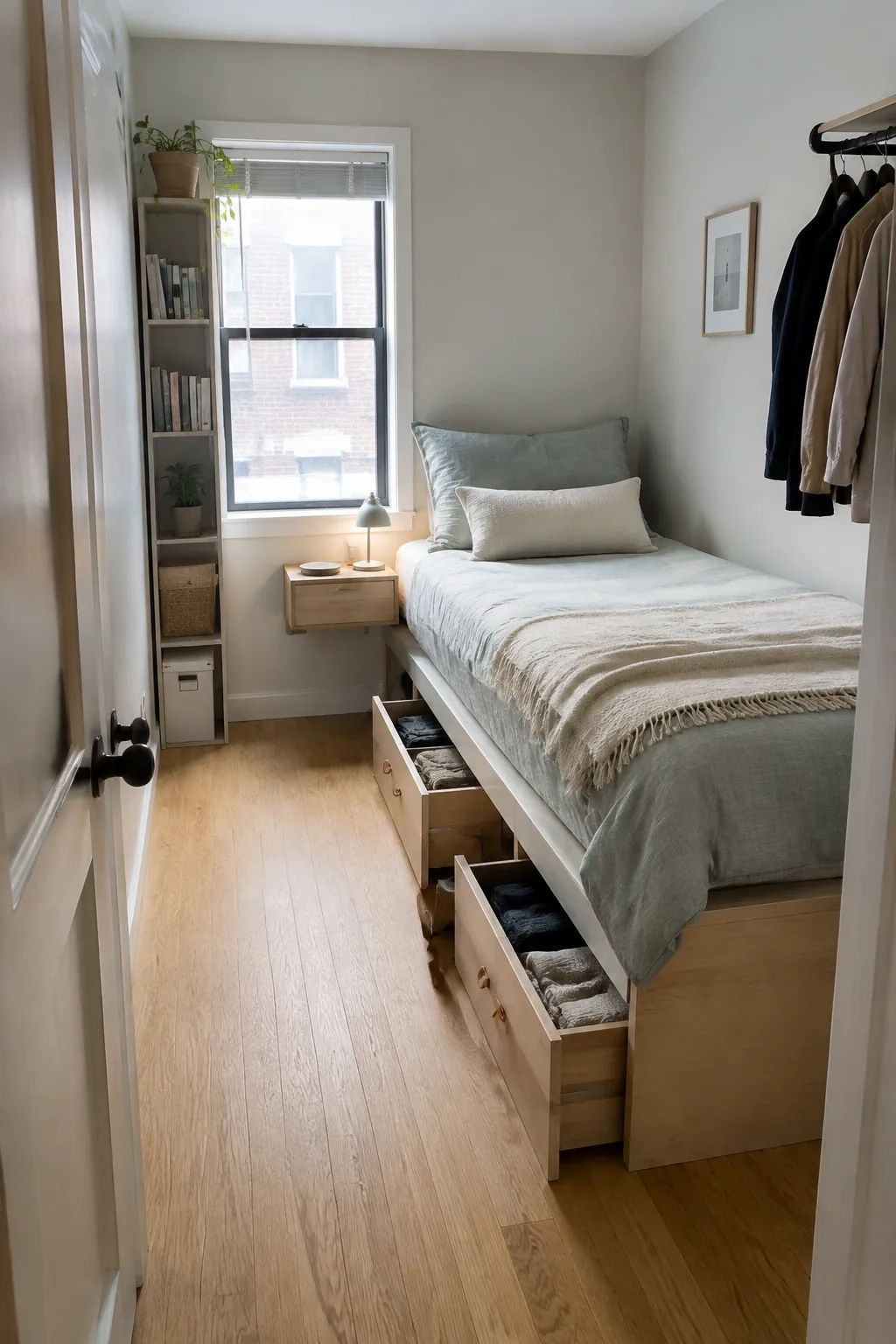
A tiny bedroom can feel impossible to organize because every sorting pile blocks the only walkway and every new storage unit steals more floor. The useful goal is not maximum capacity. It is a room where the door opens freely, the bed is easy to reach, daily items have close homes, and one clear surface remains available.
Protect one clear path first
Start at the doorway and clear a comfortable route to the bed, closet, and window. Work in one armful at a time so sorting does not bury the room again. Anything without a home can wait in one temporary basket outside the path, but the floor route itself stays nonnegotiable.
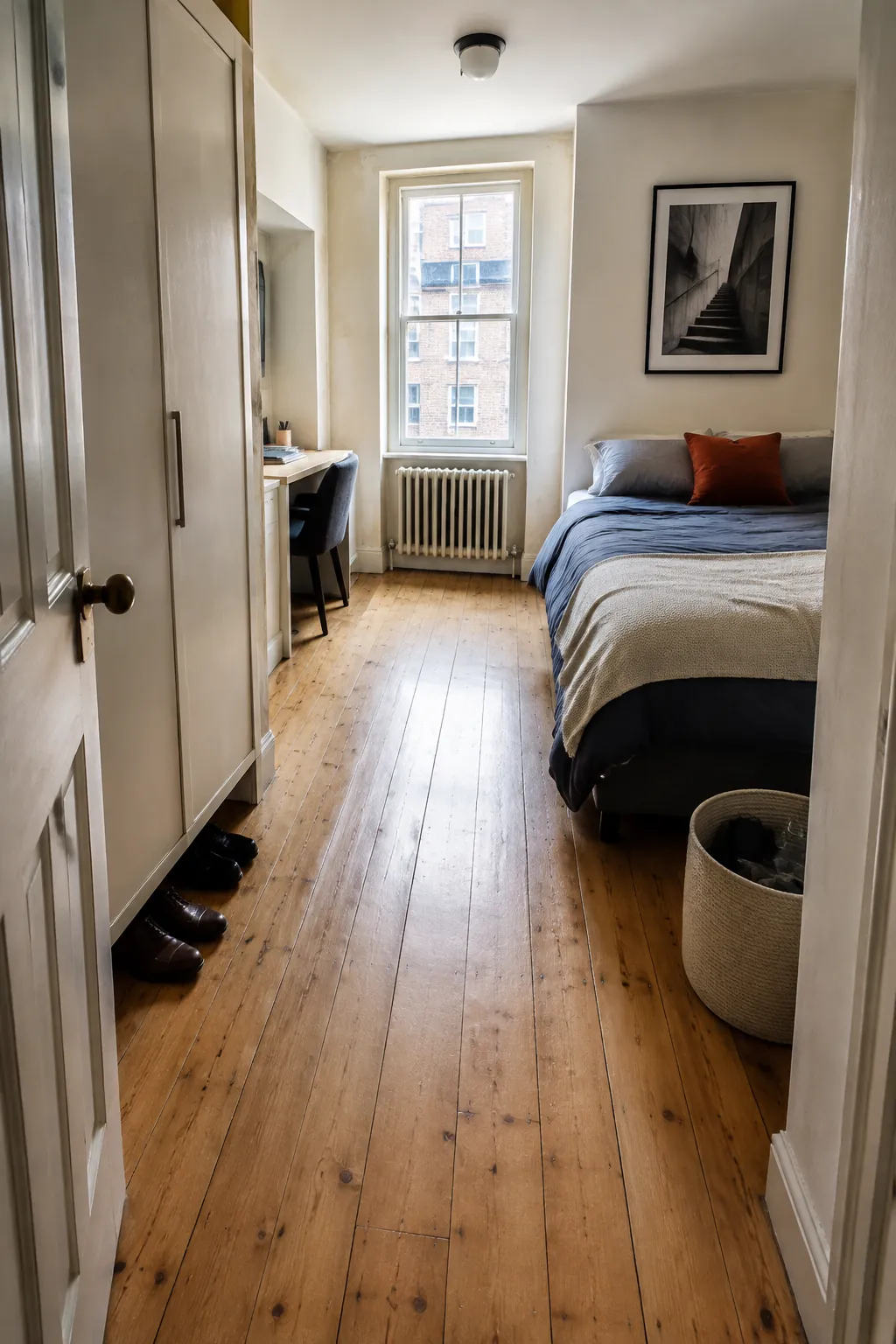
Choose furniture by the jobs it replaces
Minimal bedroom furniture should earn its footprint twice. A storage bed can replace a dresser, a compact desk can serve as a grooming station, and a narrow bench can hold both bedding and a laundry basket. Measure drawer swing and walking clearance before buying because useful storage becomes useless when another object blocks it.
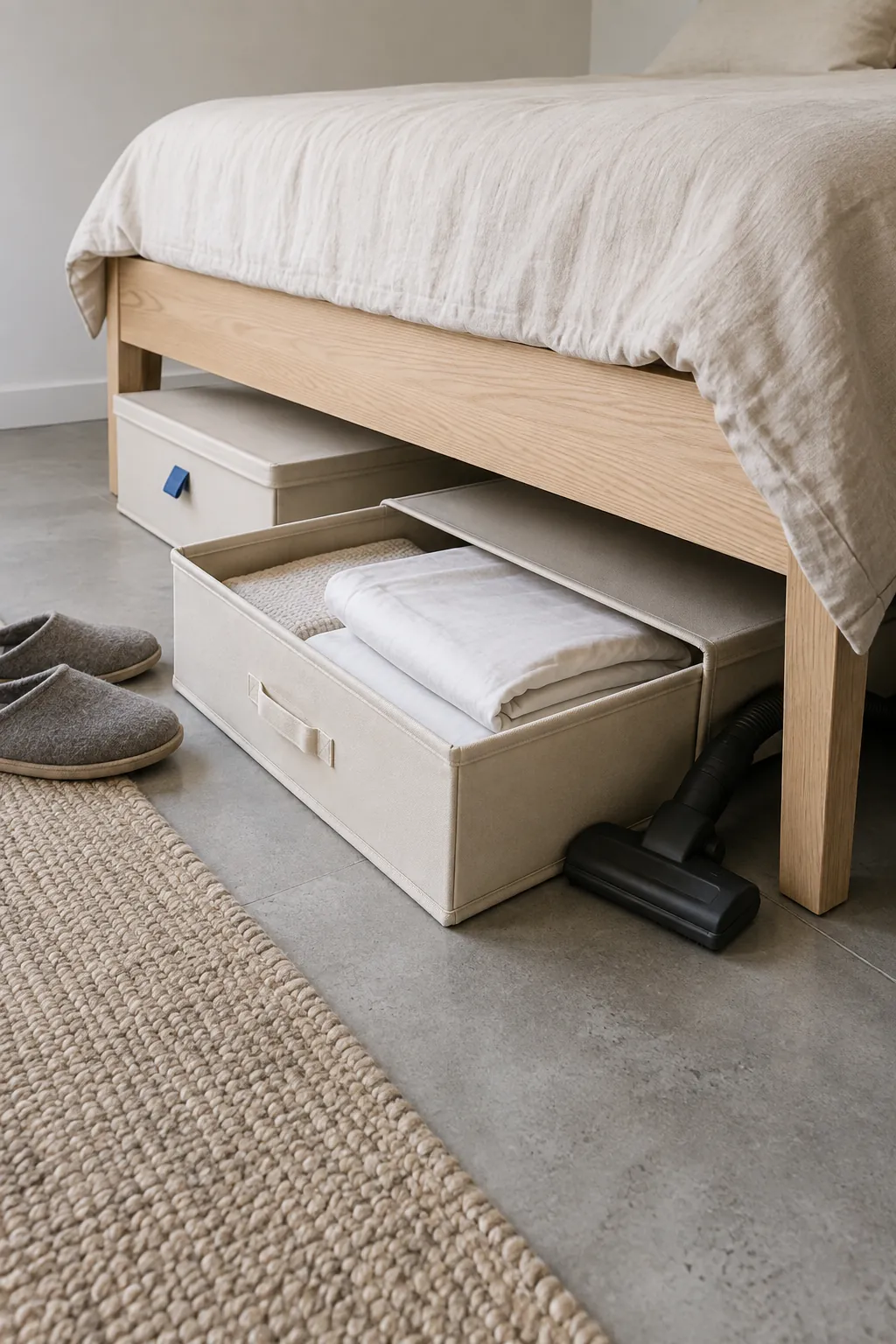
Use the full space beneath the bed
Under bed storage works best for categories that are bulky but not needed every hour. Choose matching low containers that pull out from the accessible side, then reserve one for spare bedding and another for seasonal clothing. Avoid loose bags because they snag, hide contents, and turn cleaning into a larger project.
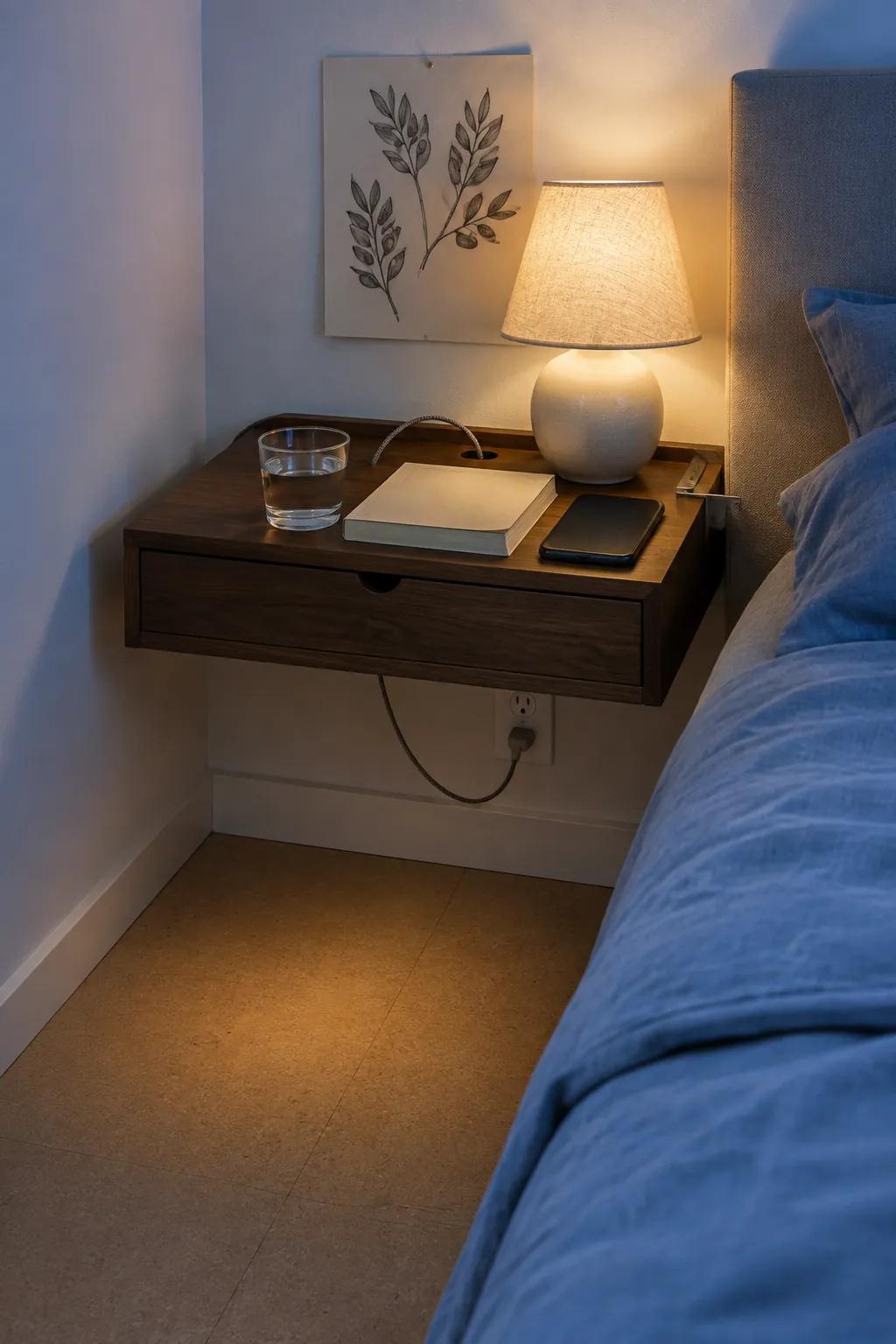
Move the nightstand off the floor
A floating nightstand returns a patch of visible floor and makes cleaning easier. Keep it just large enough for a lamp, phone, water, and one current book. Add one shallow drawer or a small wall pocket for charging cables so the top does not become the room’s default landing zone.
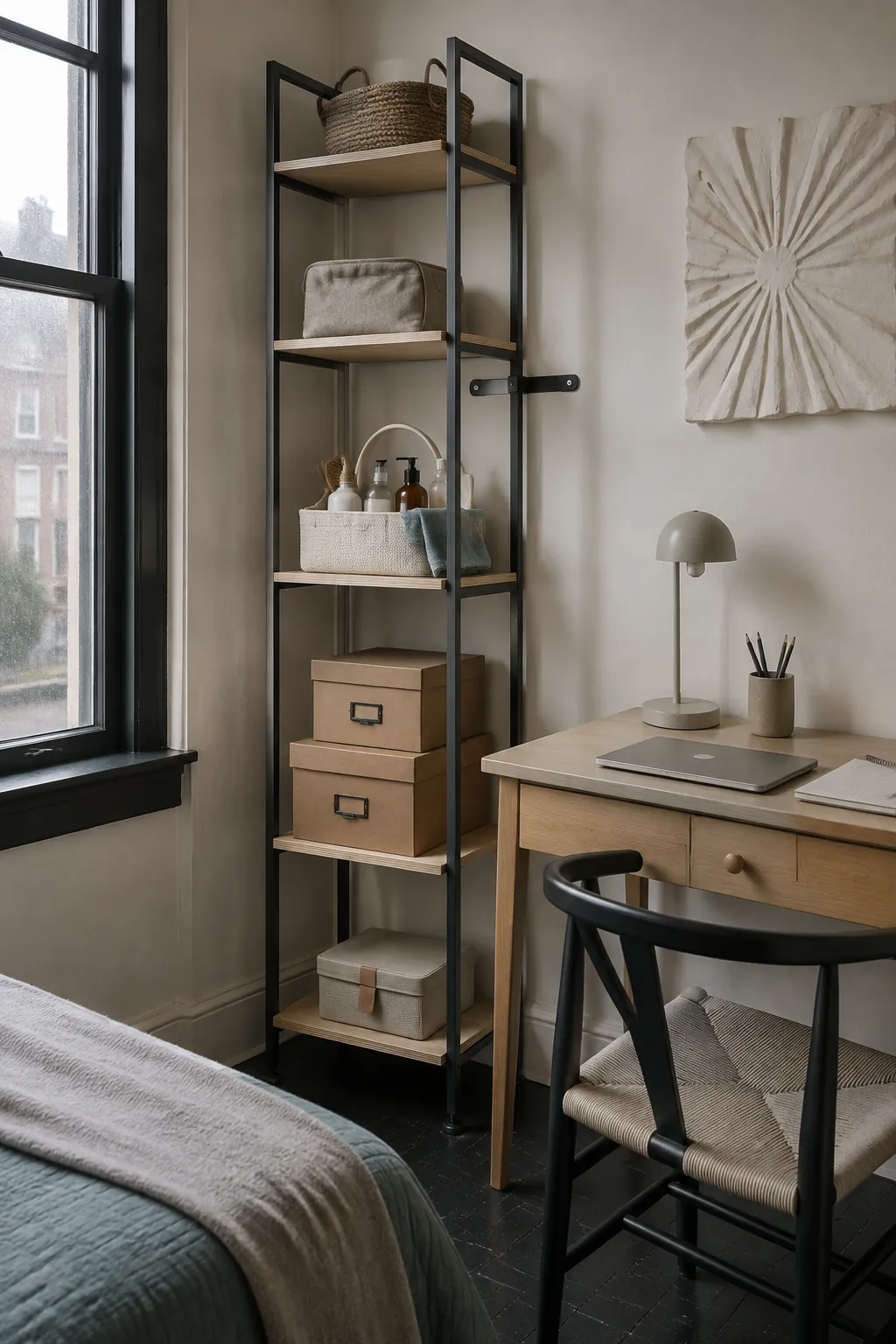
Build vertical storage around one real need
Vertical bedroom storage is helpful only when it holds items used in that exact zone. A narrow shelf near a desk can contain papers and grooming supplies, while a high shelf above the door can hold light travel items. Leave some wall visible between storage pieces because a completely covered wall makes the room feel crowded and complicates access.
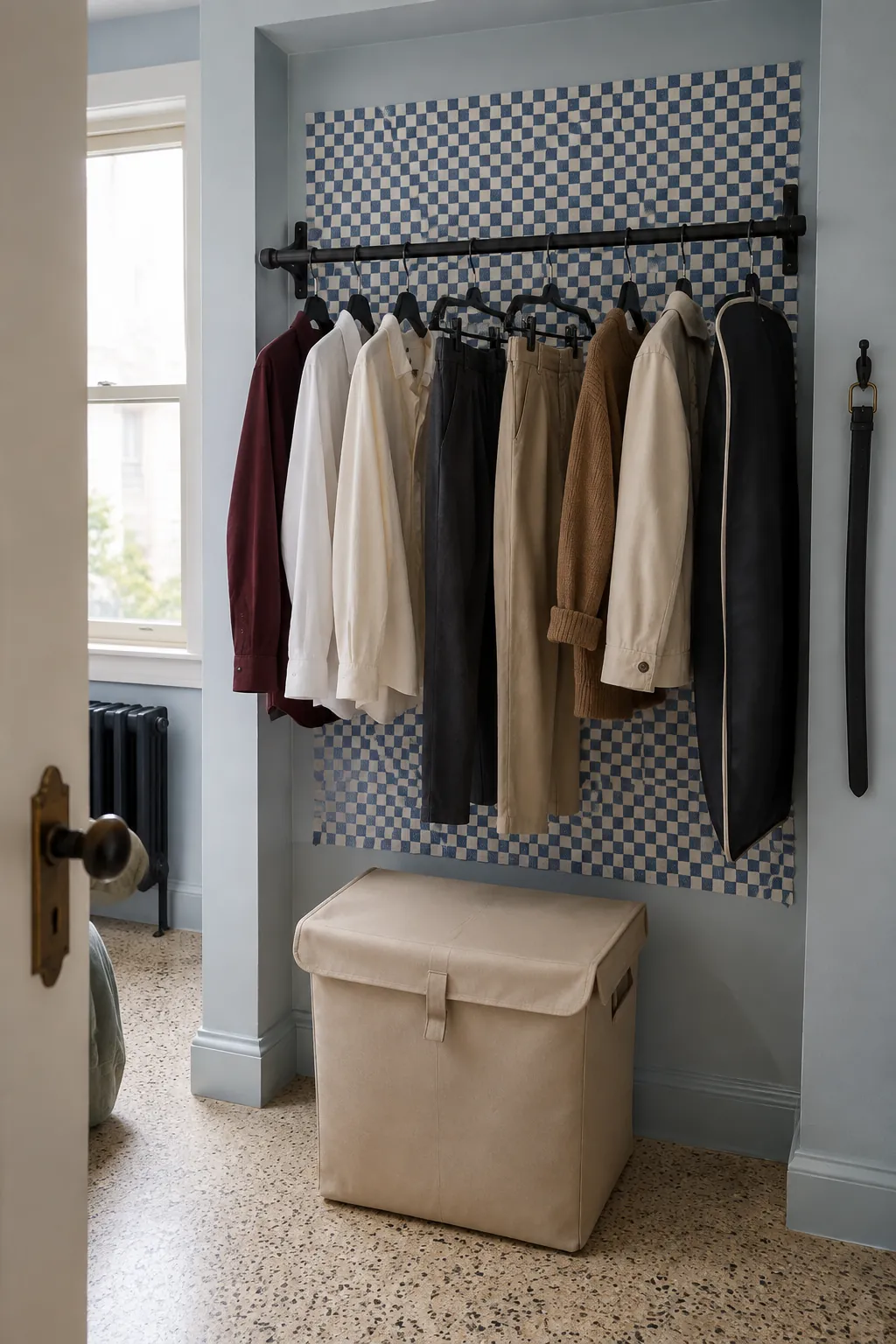
Create a clothing station when the closet is not enough
A wall mounted clothes rack can hold the small rotation worn this week without introducing another wardrobe cabinet. Limit it to a deliberate set of outfits and place a slim hamper directly below. If drilling is not allowed, use a tension system or over door rail that can carry the real garment weight safely.
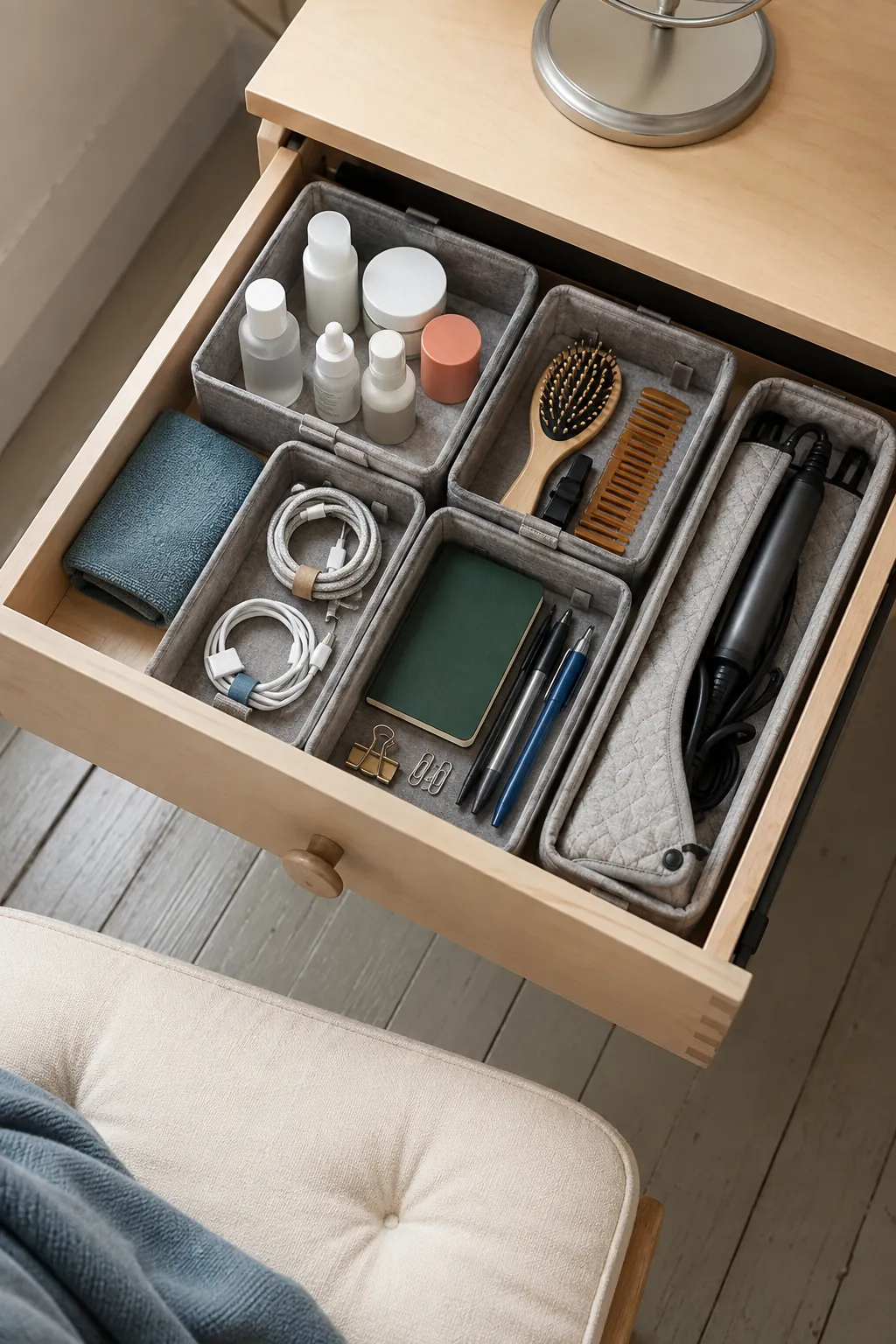
Give small loose items closed homes
Toiletries, chargers, stationery, and hair tools make a room look chaotic because each category contains many small shapes. Group them by task in shallow drawers, handled bins, or zip cases. Keep only the current routine near the point of use and store backups together elsewhere so duplicate bottles do not occupy every surface.
Reset the room from the doorway each evening
Stand at the entrance and return anything interrupting the clear path before handling smaller details. Put clothes into the closet or hamper, place bedside items in their assigned drawer, and clear the one surface you decided to protect. A clutter free bedroom is not one with no possessions; it is one where the important routes and routines can work every day.