
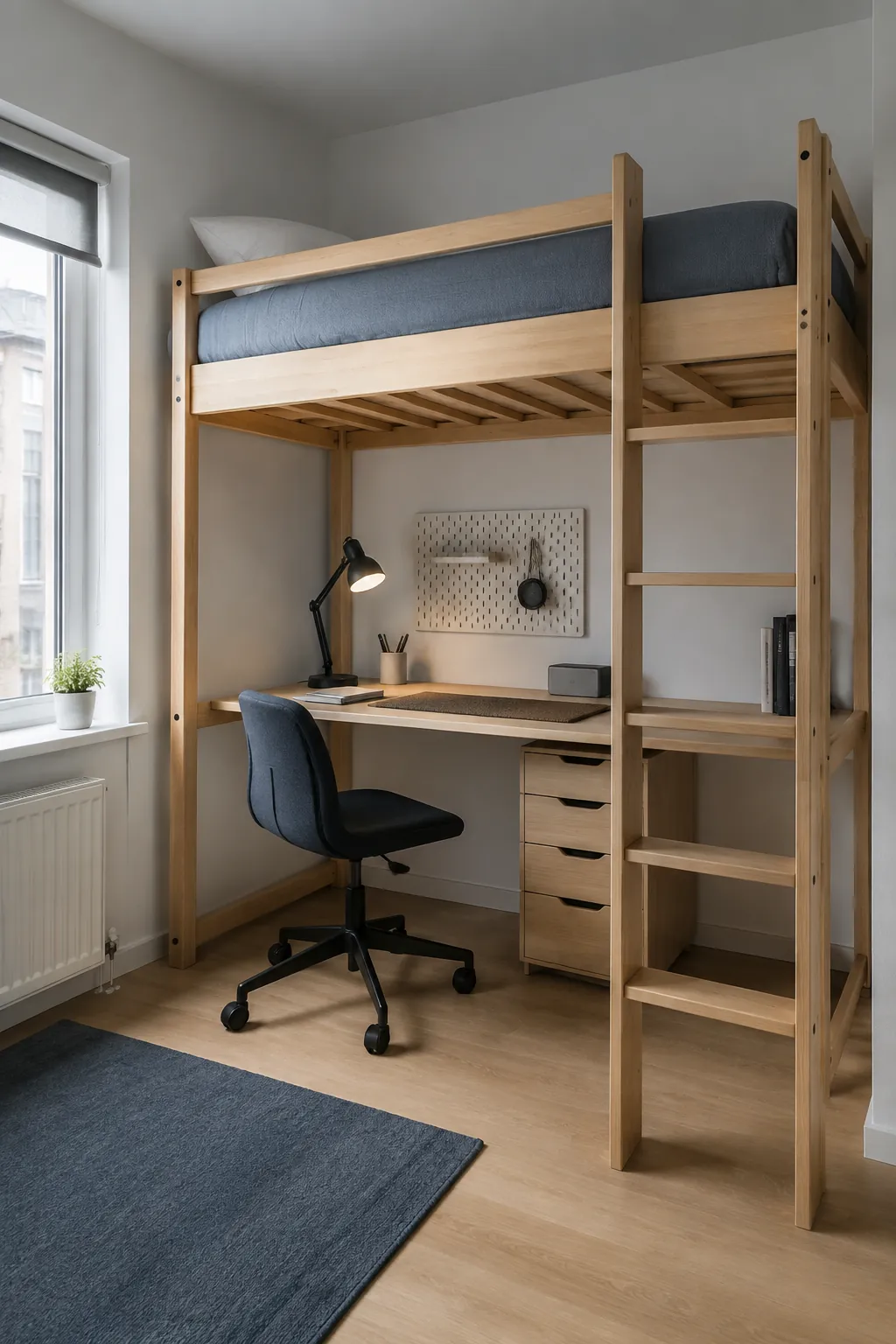
The open floor beneath a loft bed looks like a free room, yet its low ceiling, ladder, posts, and shadows change what will actually feel comfortable there. A desk can save space but fail if the chair cannot move. Storage can add capacity but become exhausting when a loaded unit is hard to pull out. The best use starts with clearance, light, circulation, and the person who will use the zone every day.
Measure the seated and standing clearance
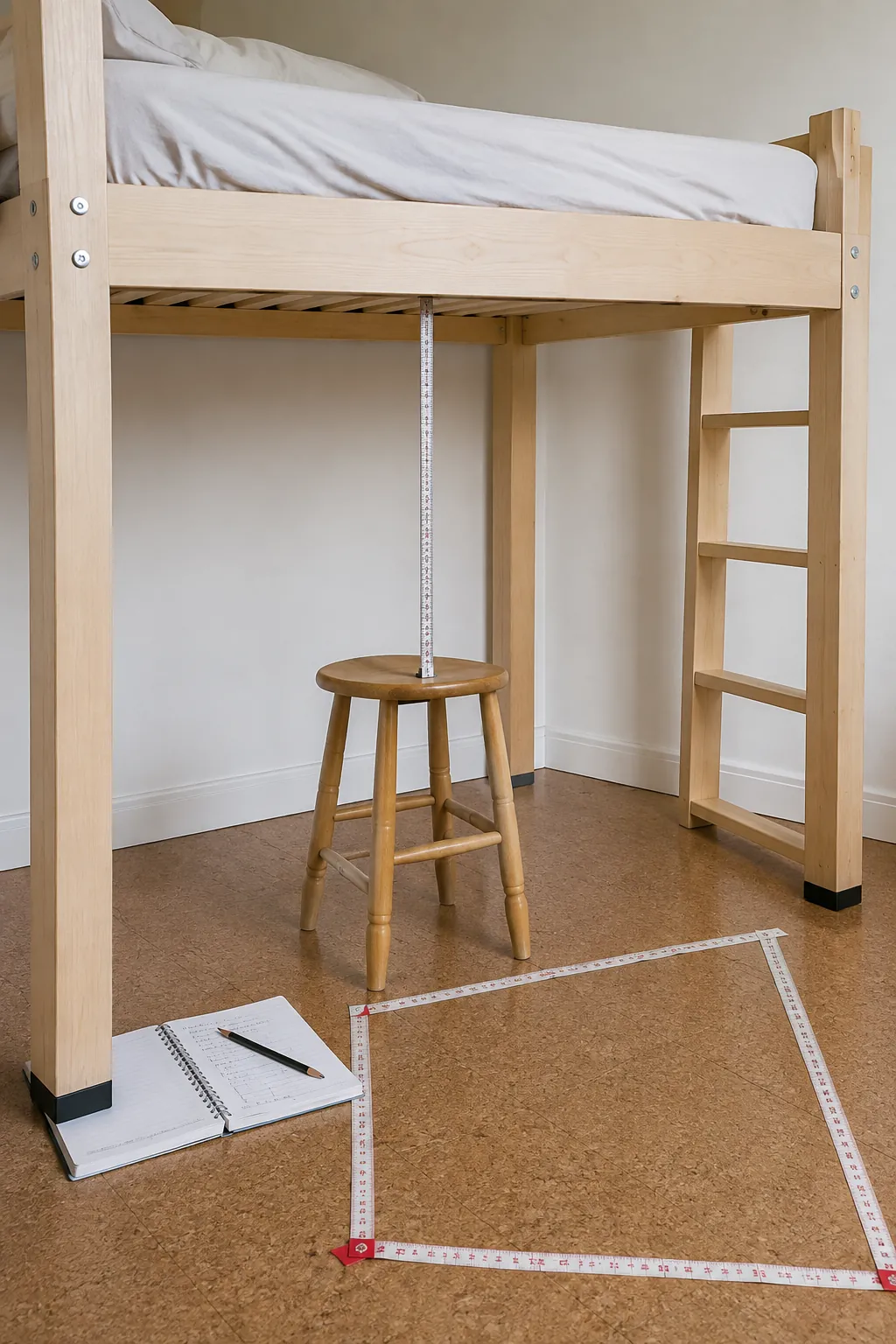
Measure from the floor to the lowest rail, brace, or slat, not just to the mattress platform. Sit in the chair or cushion you plan to use and check headroom while upright, leaning forward, and standing. Mark the ladder footprint and leave a clear landing that never becomes storage. Indexed discussions about desks under loft beds often focus on a cave like feeling, which is usually a clearance and lighting problem rather than a styling problem.
Create a focused desk under the loft bed
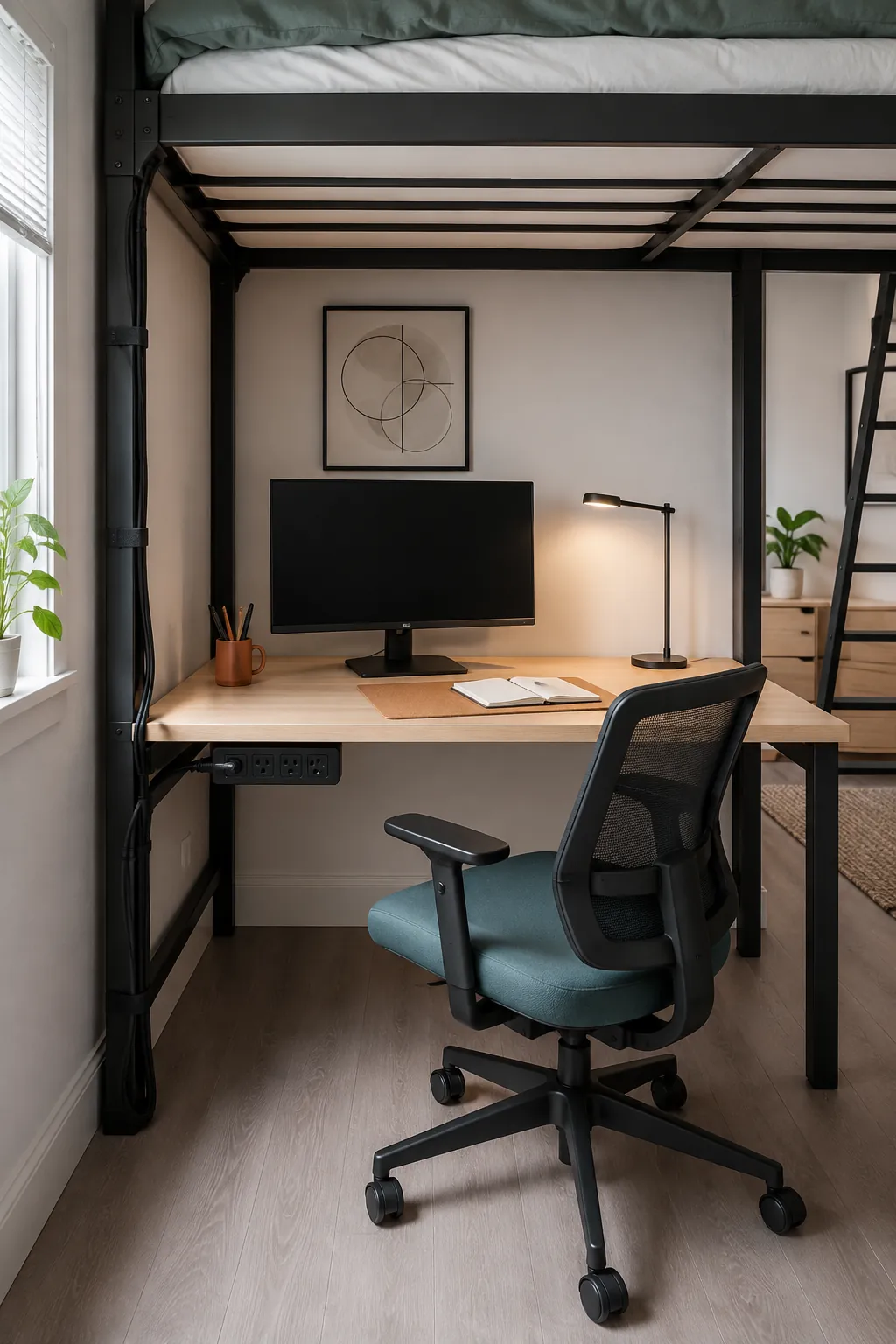
A desk under loft bed works best when its shallow depth leaves space for the chair and ladder route. Place the screen so the upper bed frame does not force you to hunch, and add a task light that illuminates the work surface without glare. Route cords along a fixed post with removable ties, keep power strips off the floor, and preserve ventilation around electronics. If the zone is too low for an adult chair, use it for short study sessions rather than a full working day.
Build a reading nook that does not feel cramped
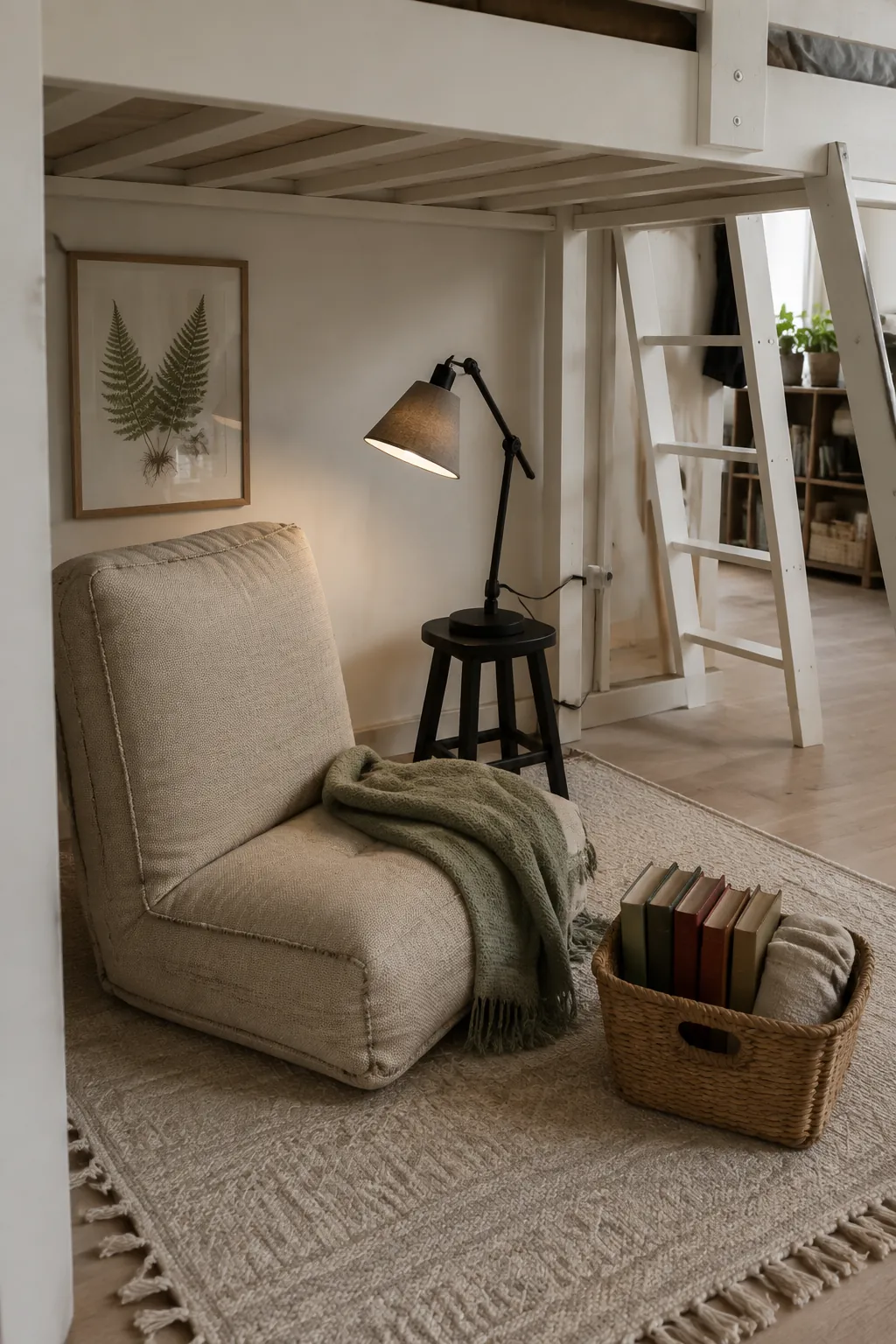
A reading nook under bed needs less headroom than a desk and can make an awkward low loft feel intentional. Use a firm floor cushion or compact chair that supports getting up, then place a shaded lamp where it cannot heat bedding or be knocked by the ladder. Keep a small book basket within reach instead of lining the whole perimeter with shelves. Light colors and an open side preserve sight lines, which helps the nook feel calm rather than enclosed.
Fit a wardrobe where doors can open fully
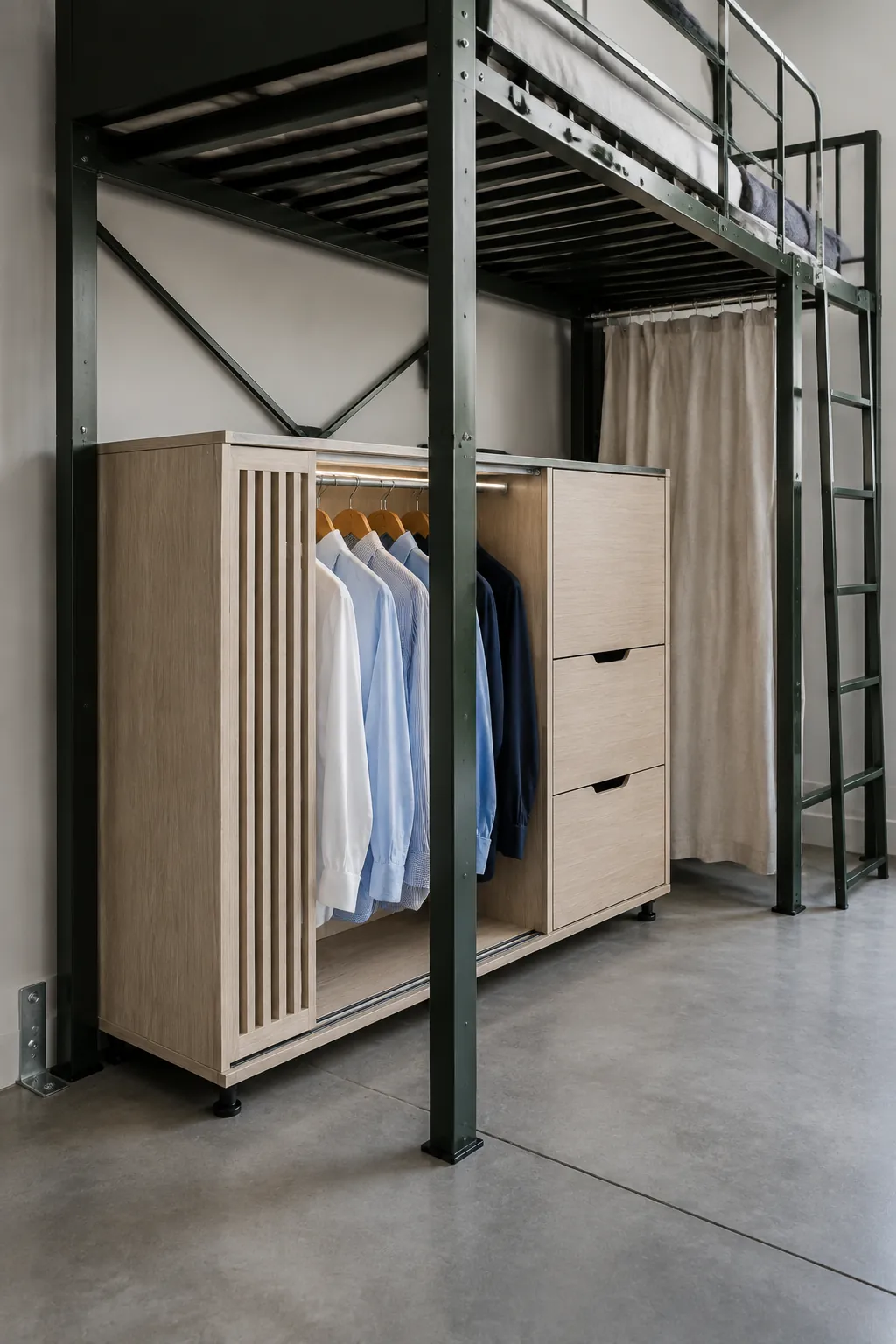
A loft bed wardrobe can combine a short hanging rail with drawers, but the arrangement must respect the bed braces and ladder. Use the tallest clear end for shirts or jackets, and place low drawers where their handles remain easy to reach. Sliding panels or a curtain need less aisle space than hinged doors, though any fabric should stay away from lights and moving ladder parts. Anchor freestanding units as their manufacturer requires and never attach extra loads to the bed without approval.
Keep toy storage low and visible
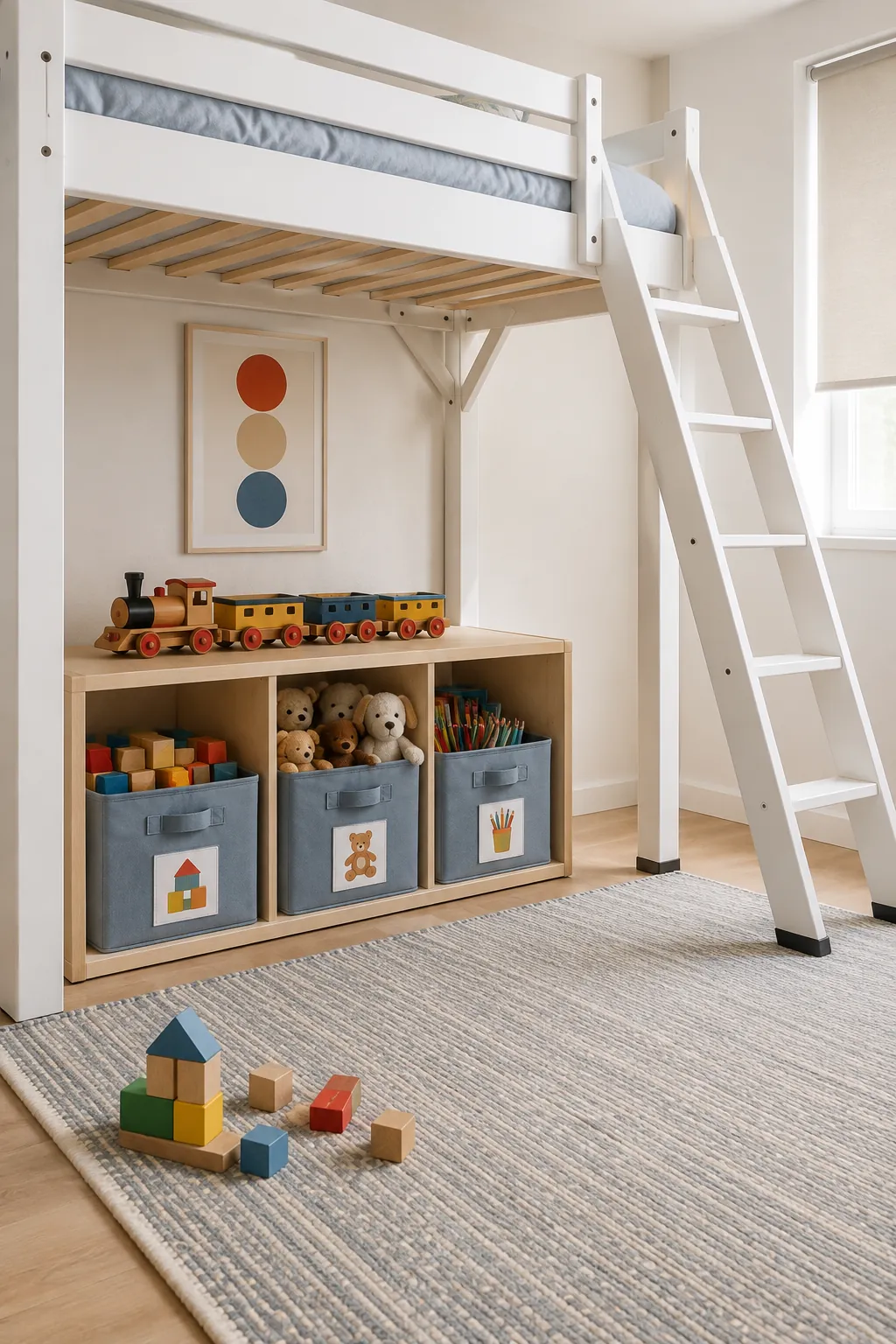
Toy storage under loft bed should let a child see categories and return items without climbing or pulling a heavy cabinet. Low open cubbies with soft bins work for light toys when each unit is stable and does not narrow the ladder landing. Put the most used items near the open edge and reserve deeper bins for larger pieces. Avoid tall stacks, sharp corners, and rolling chests heavy enough to trap fingers or strike the bed posts.
Use compact seating for conversation or gaming
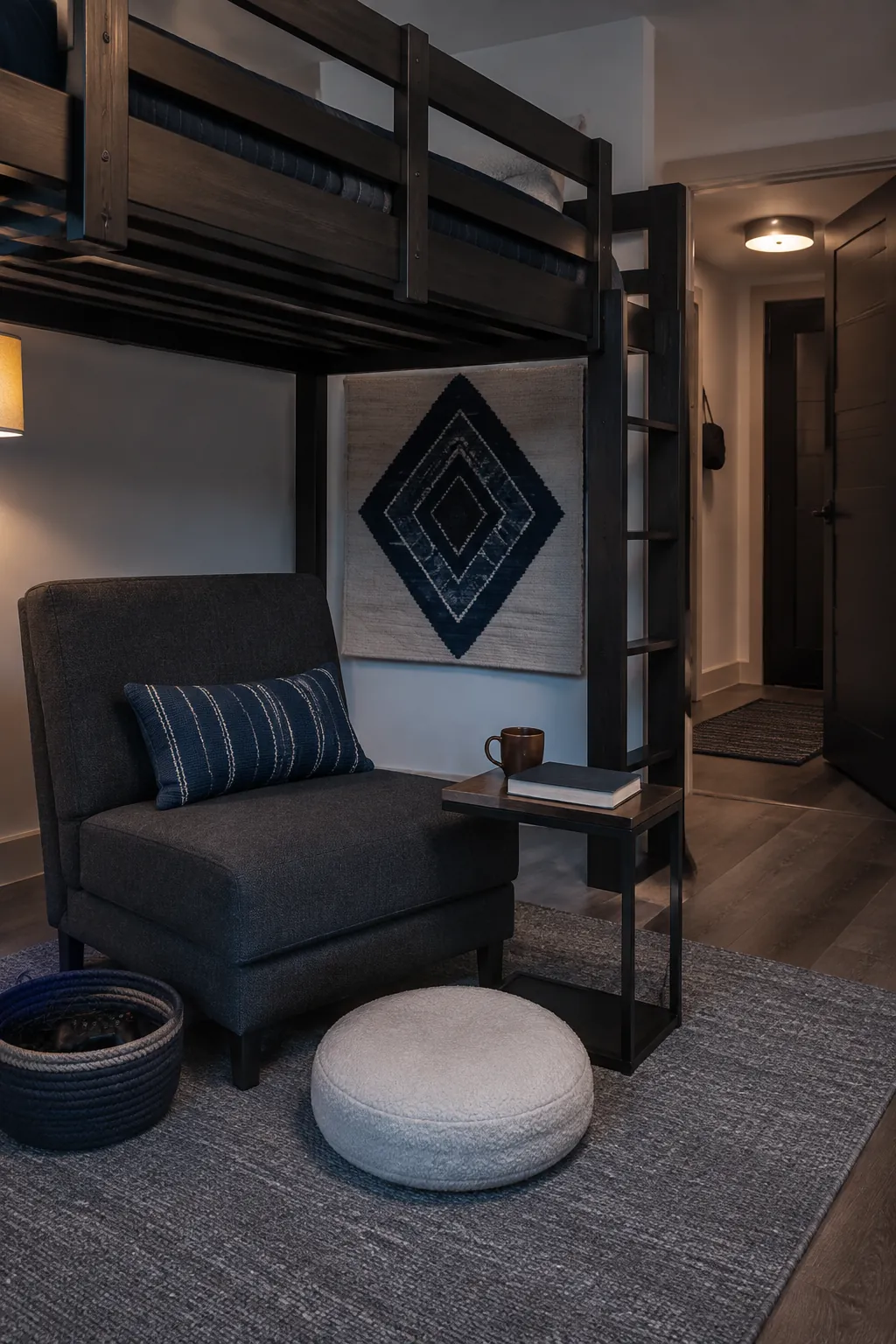
Loft bed seating works when the back height fits beneath the rail and the seat does not block the room entrance. A floor chair, compact armless chair, or two firm cushions can create a flexible zone that clears quickly. Add a small tray table instead of a bulky coffee table, and keep drinks away from electronics and ladder rungs. Check that anyone can rise without hitting the frame, especially guests who are taller than the usual room occupant.
Protect the structure and the escape route
Whatever function you choose, follow the bed maker instructions for load, anchoring, guard rails, mattress thickness, and age limits. Keep vents, outlets, windows, and the ladder landing accessible, then secure cords so they cannot become loops or trip hazards. Do not use bed posts as improvised shelving supports unless the system is designed for it. The most successful space saving kids bedroom or adult loft layout is the one that remains easy to enter, clean, light, and change as needs evolve.