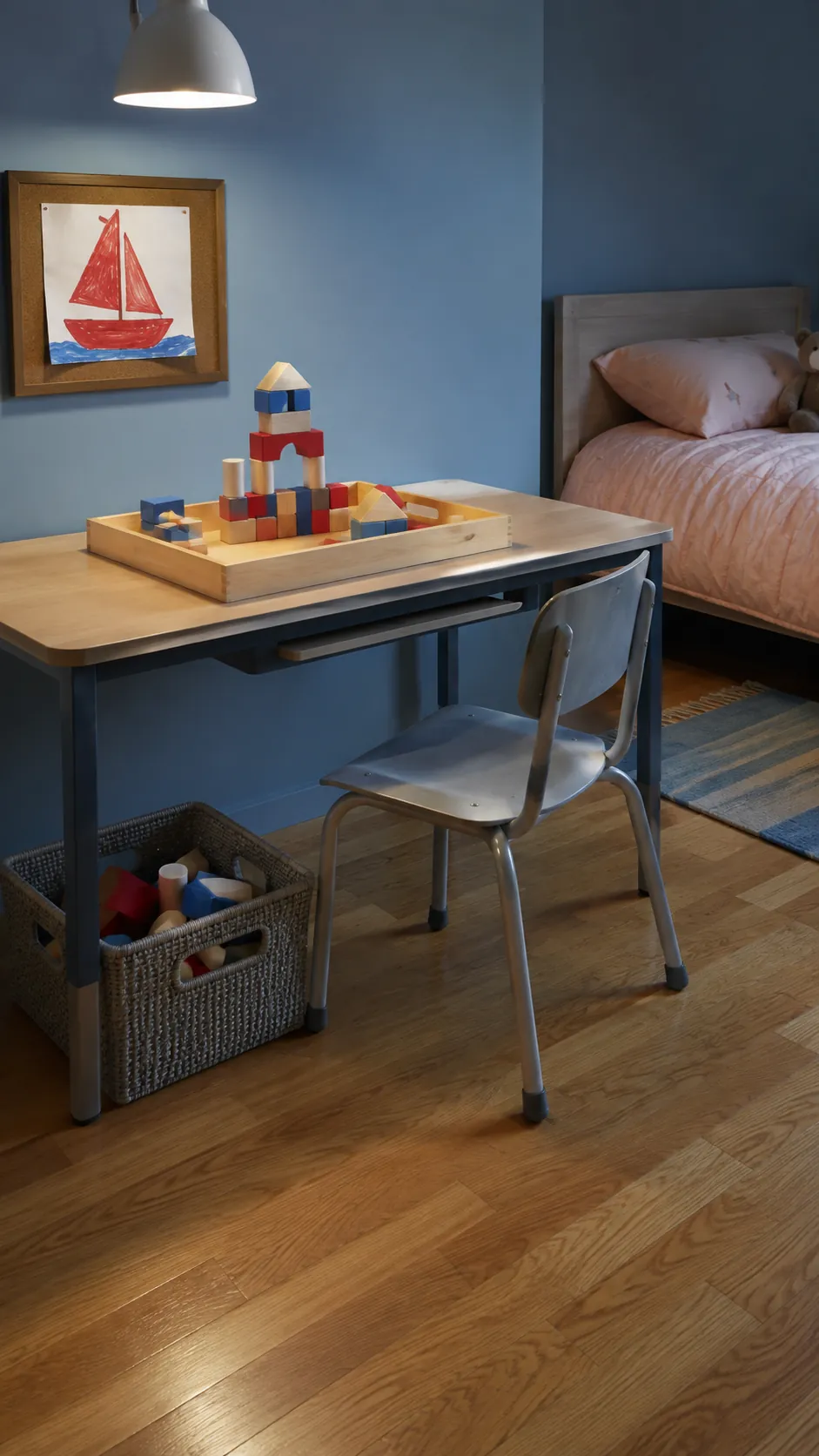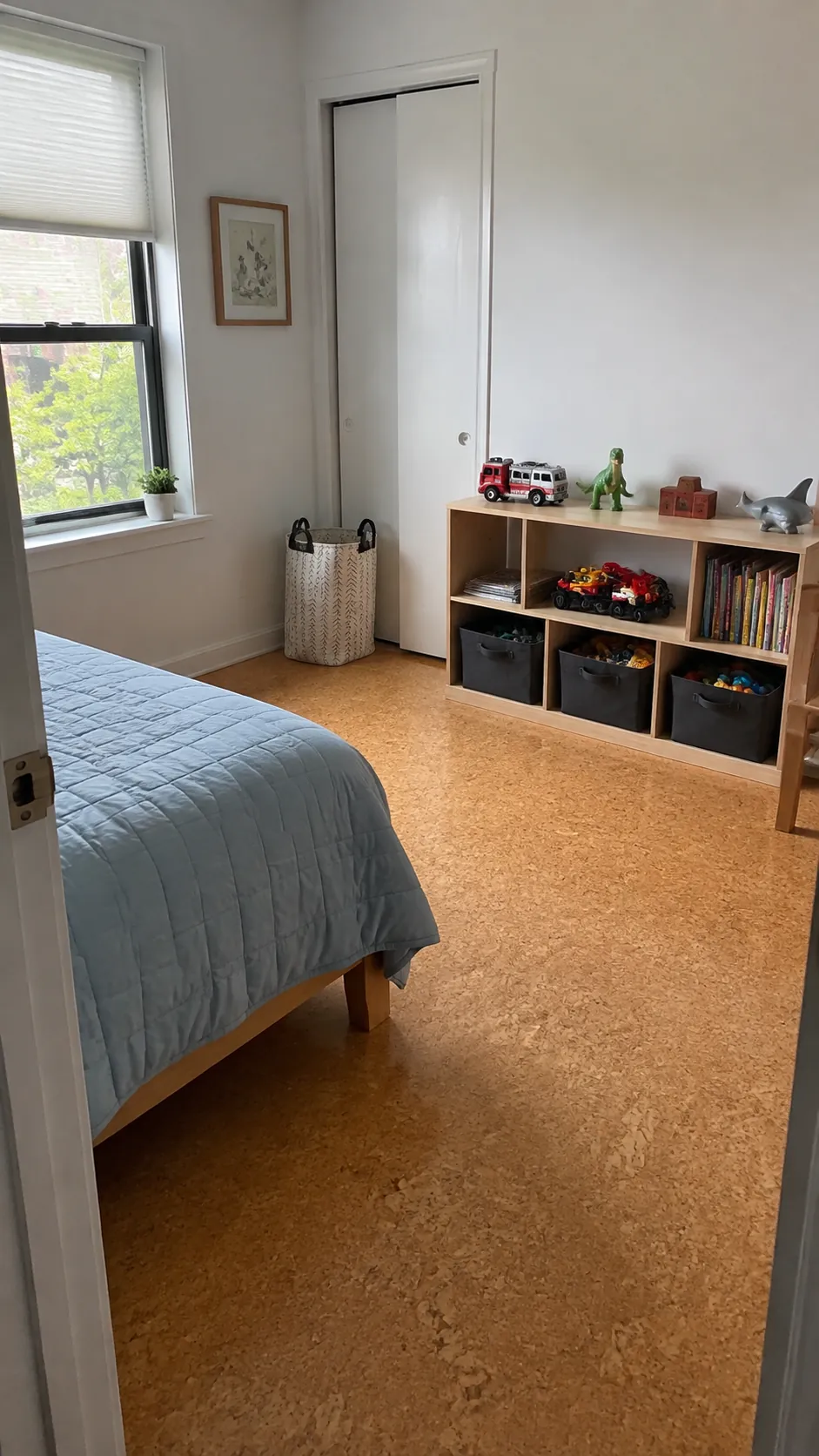
The toys are sorted at lunchtime and back across the floor before dinner. A useful bedroom system has to make sense to the child doing the playing, with fewer decisions and reachable places to put things. Begin with safe walking space and a bed ready for sleep, then solve one everyday task at a time.
Start with space to sleep and move
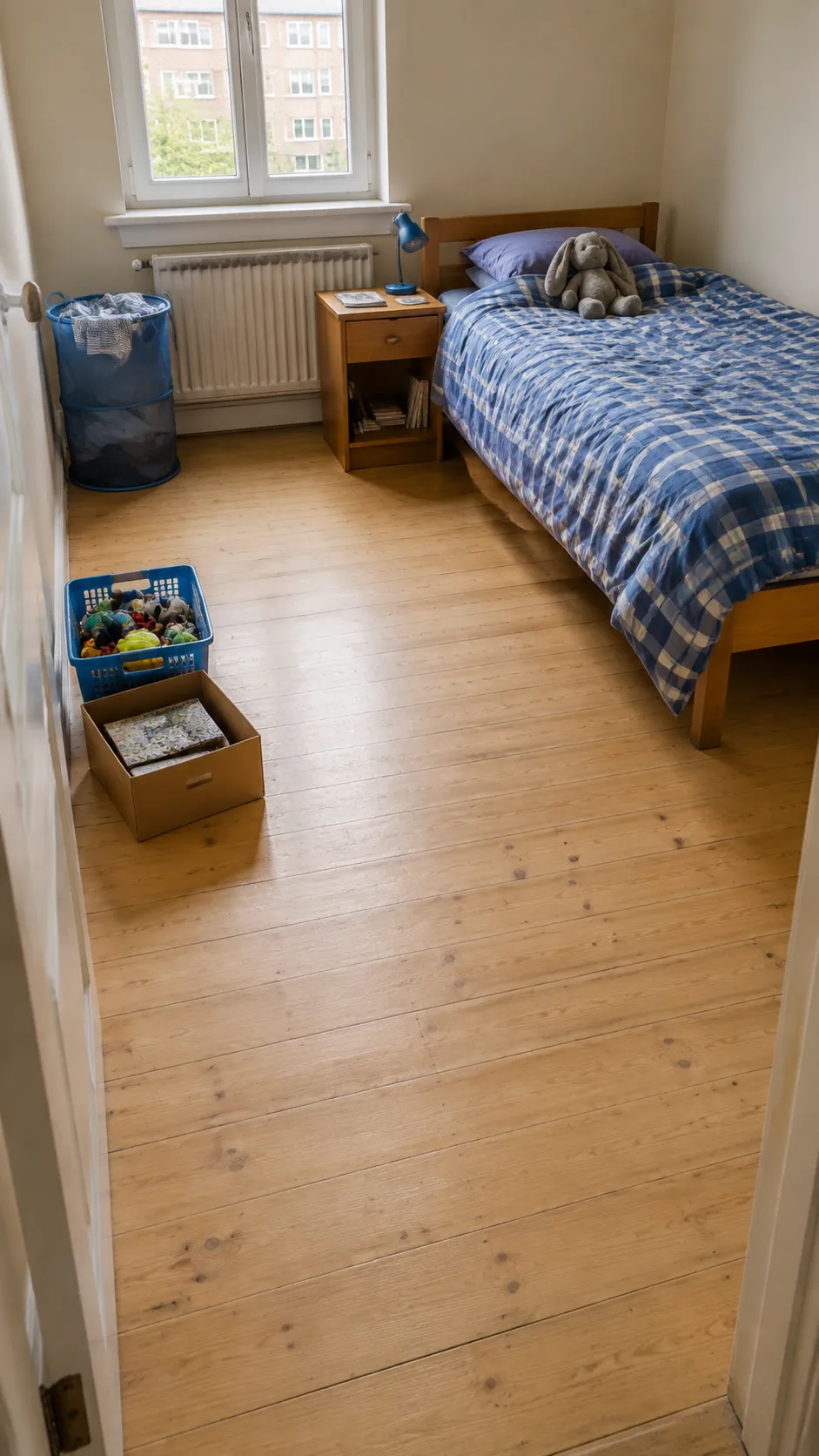
A clear route from the door to the bed matters more than perfectly sorted toys. Remove rubbish, take dishes to the kitchen, and put laundry in a hamper before opening cupboards. Keep the bed available throughout the job so bedtime does not depend on finishing a large declutter. Work on one surface or container at a time if you have only a short window.
Invite your child to choose the toys and books they most want to reach. Keep favorites visible while putting broken items aside for an adult to assess. Discuss donations rather than quietly removing treasured belongings. An undecided box can hold a few disputed items temporarily, with a review date and an agreed place to keep it.
Kids bedroom organization should fit the child who uses the room now. A preschooler may need an adult beside them for every sorting decision; an older child may want privacy and control over collections. Judge the system by whether belongings can be found and returned, not by whether every shelf looks alike.
Use toy bins with categories a child understands
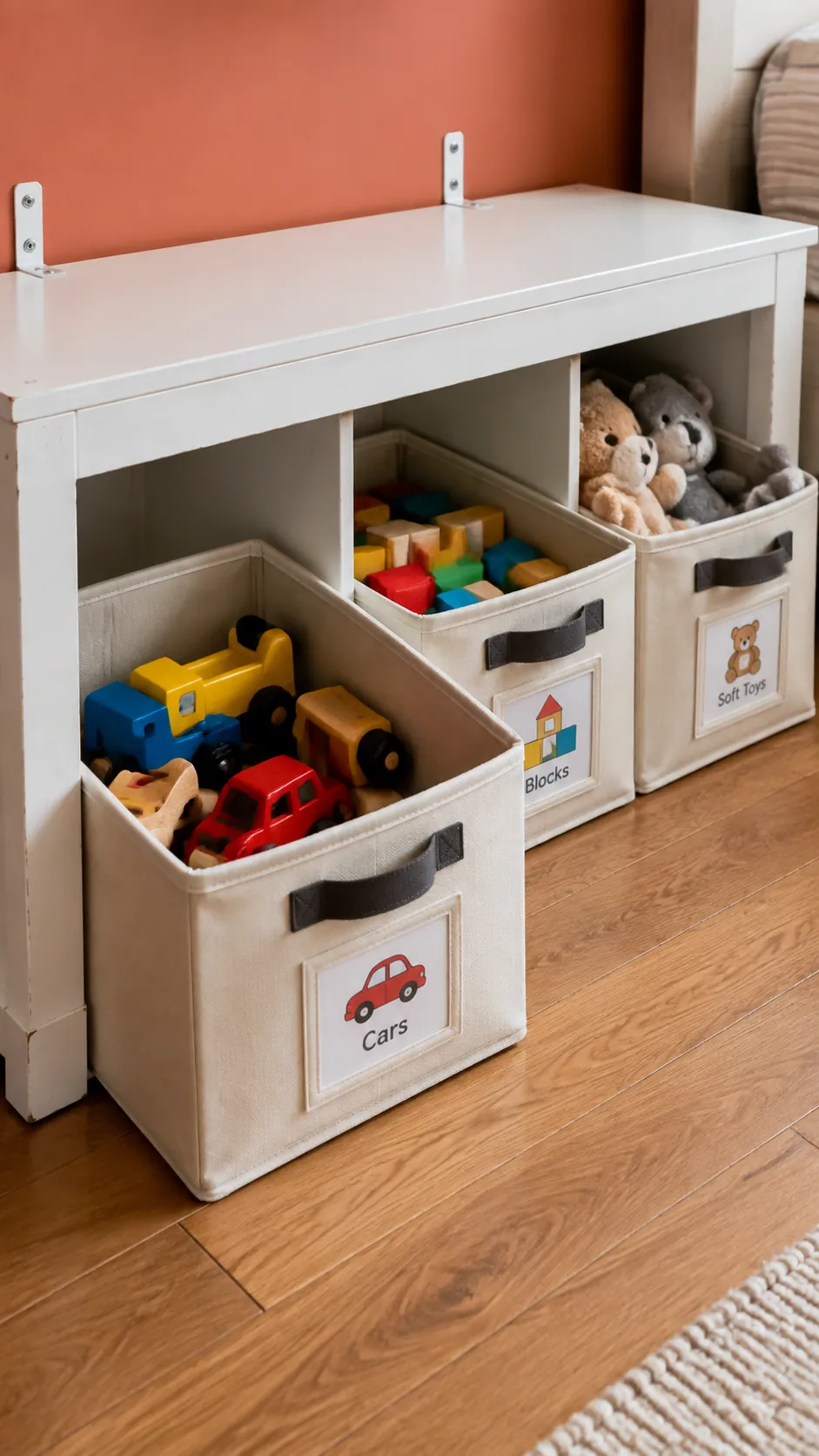
Choose broad groups such as blocks, vehicles, pretend play, and soft toys. A child who cannot distinguish several nearly identical labels will probably empty several bins to find one object. Let the favorite activity have the easiest destination. Keep sets together when their pieces must work together, but do not separate ordinary blocks by color unless that genuinely helps your child.
Toy storage bins should be light enough to move when filled and easy to open without pinching fingers. Avoid deep boxes that hide everything beneath the top layer, and choose appropriate lids or open bins for the child’s age. Place the heaviest contents on the lowest level. Anchor shelving and dressers according to the manufacturer and wall requirements, even when furniture seems too low to tip.
Try a picture plus one plain word on each bin. Photograph or draw the actual category rather than choosing a decorative symbol only an adult understands. When a container cannot accept its contents easily, reduce what is available or divide a genuinely oversized category. Extra sorting rules will not fix a bin that is physically too full.
Make books easy to choose and return
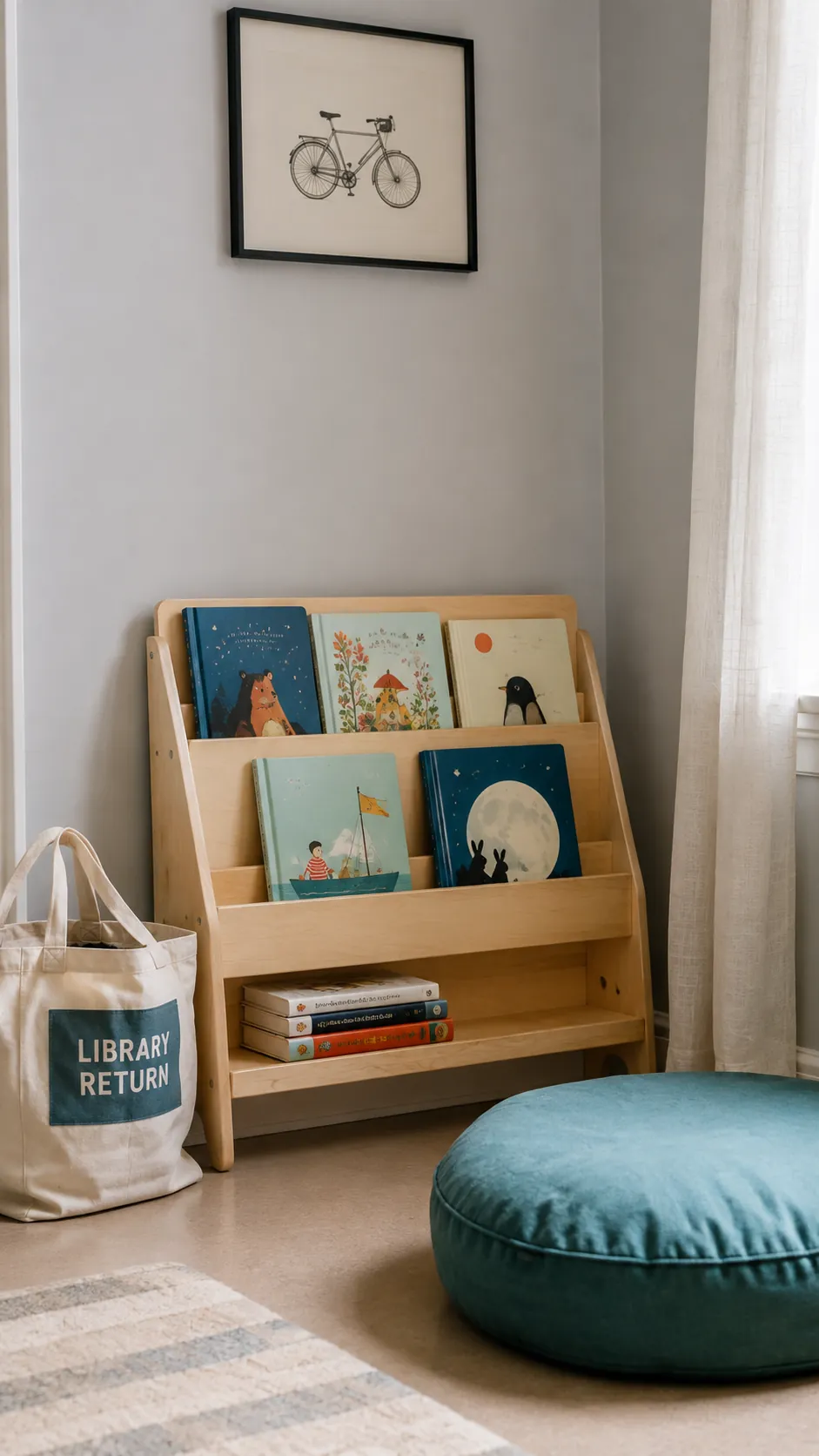
Book storage for kids works best when a child can identify the next book without pulling out the entire collection. A low display ledge can show a small selection of covers, while a sturdy shelf holds the remaining books upright. Board books often work in a shallow open bin. Leave enough space for fingers to lift a book without dragging its neighbors down.
Put the reading supply beside the place reading happens, with comfortable light and a clear floor. A small library returns basket can keep borrowed books separate from the household collection. Store heavy books low and check shelves and mounting hardware for the load they carry. Keep furniture away from accessible window hazards and secure blind cords out of children’s reach.
Rotate the displayed books when interest changes rather than on a demanding calendar. Favorites can stay indefinitely. An older reader may prefer spines sorted by series instead of visible covers; ask what makes finding a book easiest. The best shelf is the one they can restore after choosing something to read.
Build a clothing system around getting dressed
Before looking at children’s closet ideas, remove clothes that no longer fit or suit the current season. Keep a small labeled place for items awaiting a fit check so they do not return repeatedly to the clean clothing pile. Separate hand me downs being saved for another child from the clothes available to wear today. Let the everyday selection occupy the easiest drawers or hanging space.
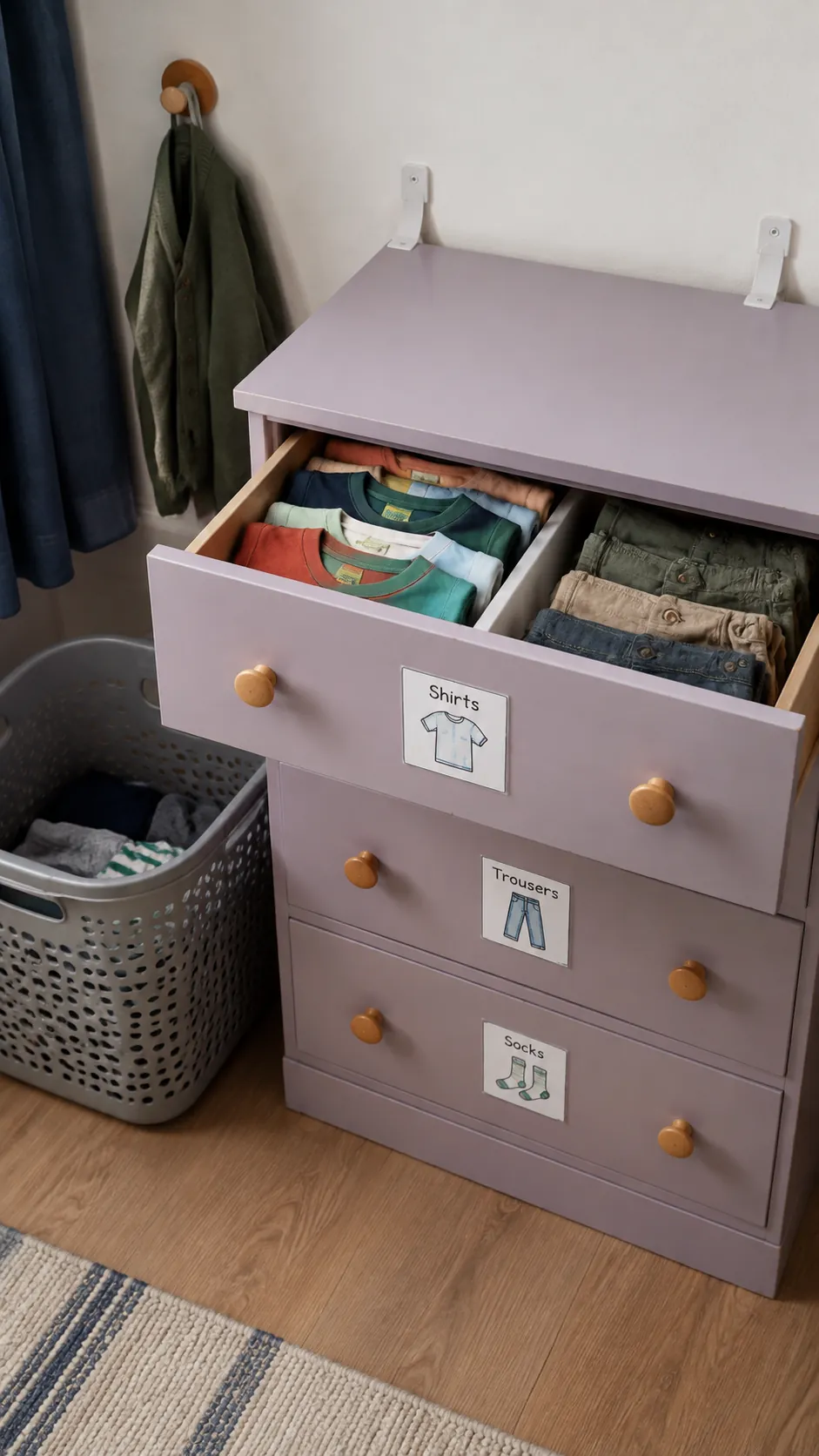
A labeled drawer system can use a shirt picture, a trousers picture, and a socks picture for a younger child. Choose a simple folding method that leaves the contents visible and accepts imperfect folds. Keep enough room for newly washed clothes instead of filling every corner. An older child can decide whether hanging uniforms or grouping outfits is more useful.
Place a hamper near the undressing spot and give clothes suitable for another wear one limited hook or shelf. This prevents a chair from becoming an unofficial wardrobe. In a shared bedroom, assign separate drawer space so ownership is clear. Adults should handle high storage; a child should not need to climb furniture to reach everyday clothes.
Use the space under the bed selectively
Under bed toy storage can help a small room, but only if the container can come out without rearranging furniture. Measure the clearance, including the bed frame, feet, and any rug beneath it. Check the space needed to pull a tray fully into the room. A thin box that fits under the bed but cannot open is not useful storage.
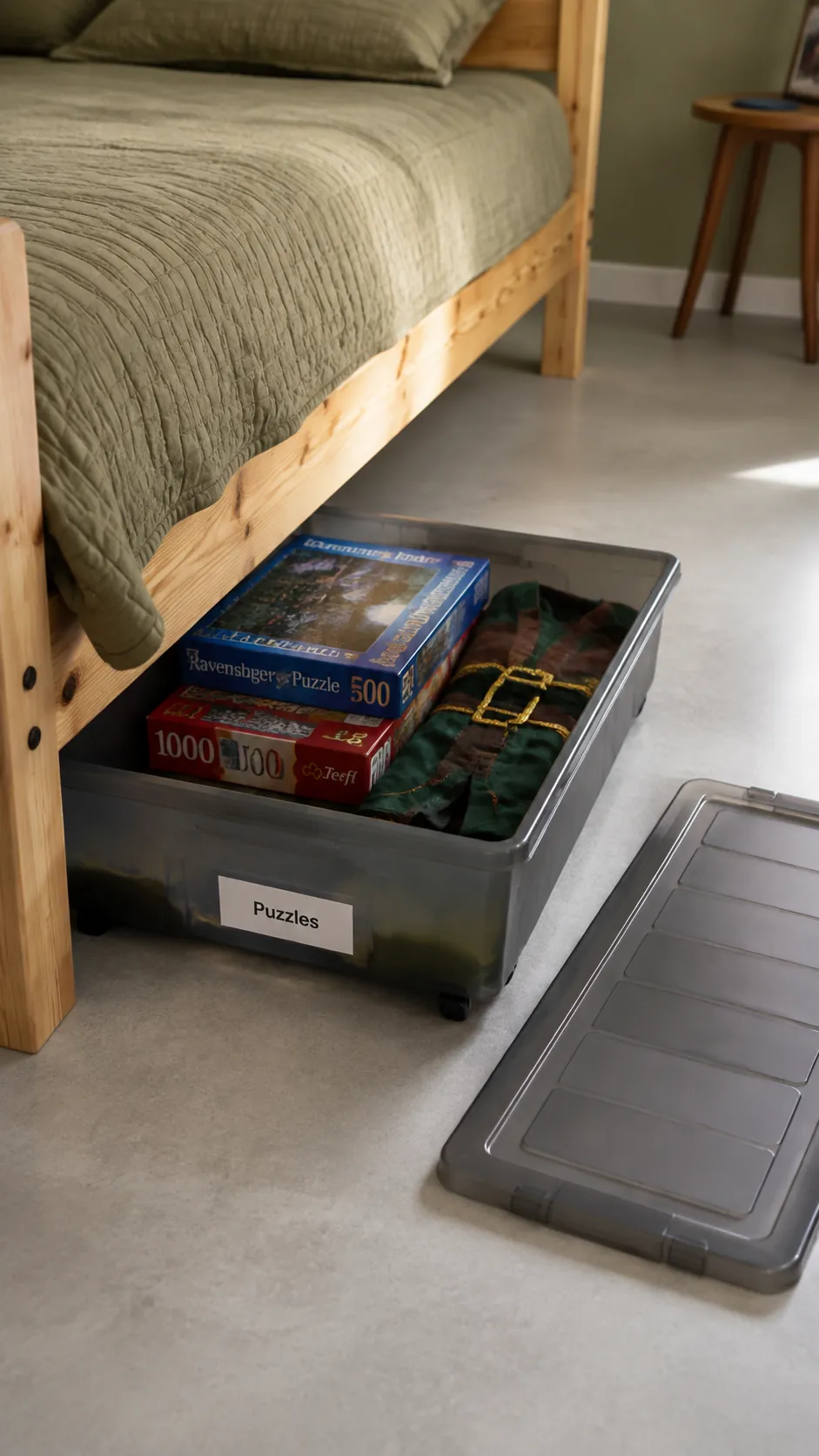
Choose shallow containers for flat puzzles, a limited building set, or occasional costumes. Keep them light enough for the intended user and suitable for the child’s age. Avoid sharp handles, damaged wheels, heavy lids, and loose parts accessible to younger siblings. Follow bed manufacturer guidance, and keep ventilation and any mechanisms unobstructed.
Use a simple label on the end that faces outward. Keep daily bedtime essentials elsewhere so retrieving them does not become a floor level search. Pull the container out periodically to clean and check for missing pieces. If under bed access is awkward, one accessible shelf may serve the room better than filling the hidden space.
Practice the reset together before expecting independence
Teach the room’s system through a small task with a visible finish. Ask for vehicles in the vehicle bin, then books on the shelf, instead of giving the broad instruction to clean everything. Work alongside a younger child and gradually hand over steps they can manage. A short familiar song or a timer can mark the session if it helps, but it should not turn cleanup into a stressful race.
Choose what counts as done: walking route clear, toys contained, clothes in their destinations, and bed ready for sleep. A model or unfinished project can have one agreed tray or shelf so it does not need to be destroyed each night. Small kids room storage works better when ongoing play has a defined place and the rest of the floor remains usable.
Review the difficult part after several ordinary days. If the child repeatedly leaves one category out, check the container’s weight, location, lid, and label before adding reminders. Reduce the available selection if cleanup consistently exceeds the help and time the household can give. Tonight, practice putting away one favorite toy together and see whether its home makes sense to both of you.