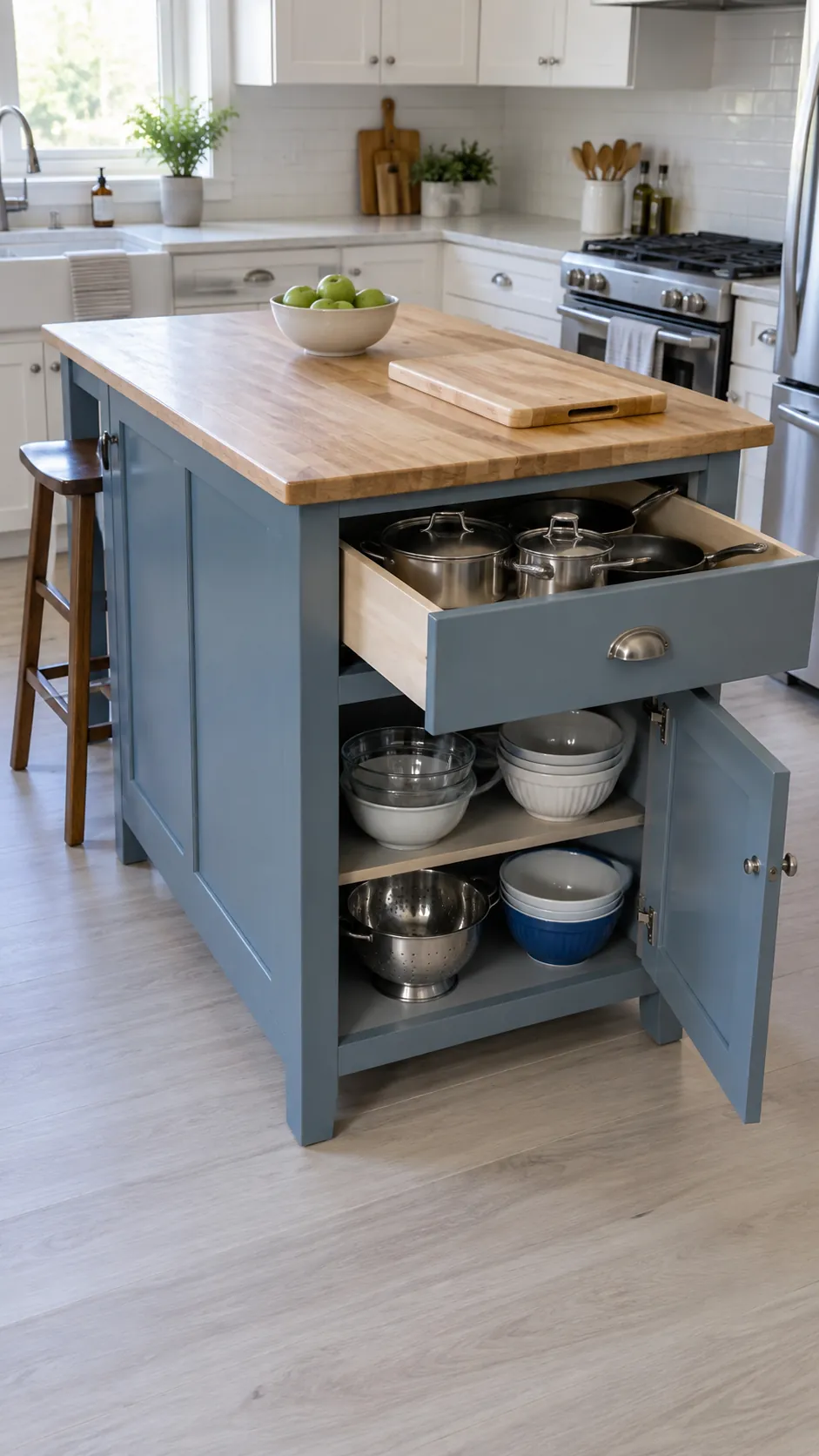
The island has plenty of room inside, yet the pan you need is buried behind a blender and a stack of serving bowls. That is an access problem. Give each side a clear job, then choose storage that lets you retrieve an item without emptying the space in front of it.
Assign storage to the side where you use it
An island often serves several people at once. The cook faces the range, someone else packs lunch at the end, and another person sits on the opposite side. Giving every cabinet the same purpose sends all three through the same narrow working aisle.
Stand where you normally prepare food and identify the storage you can open without walking around the island. Put mixing bowls, preparation tools, and the boards you use there on that side. Reserve cabinets behind stools for occasional serving pieces or table linens, since daily access may require moving the seating.
If your island includes a sink or cooktop, account for plumbing, ventilation, wiring, and the appliance installation requirements before assigning the enclosed space. Do not remove panels or alter services to gain a few inches. Start with what the cabinet can safely hold as built.
Measure the opening before buying an insert
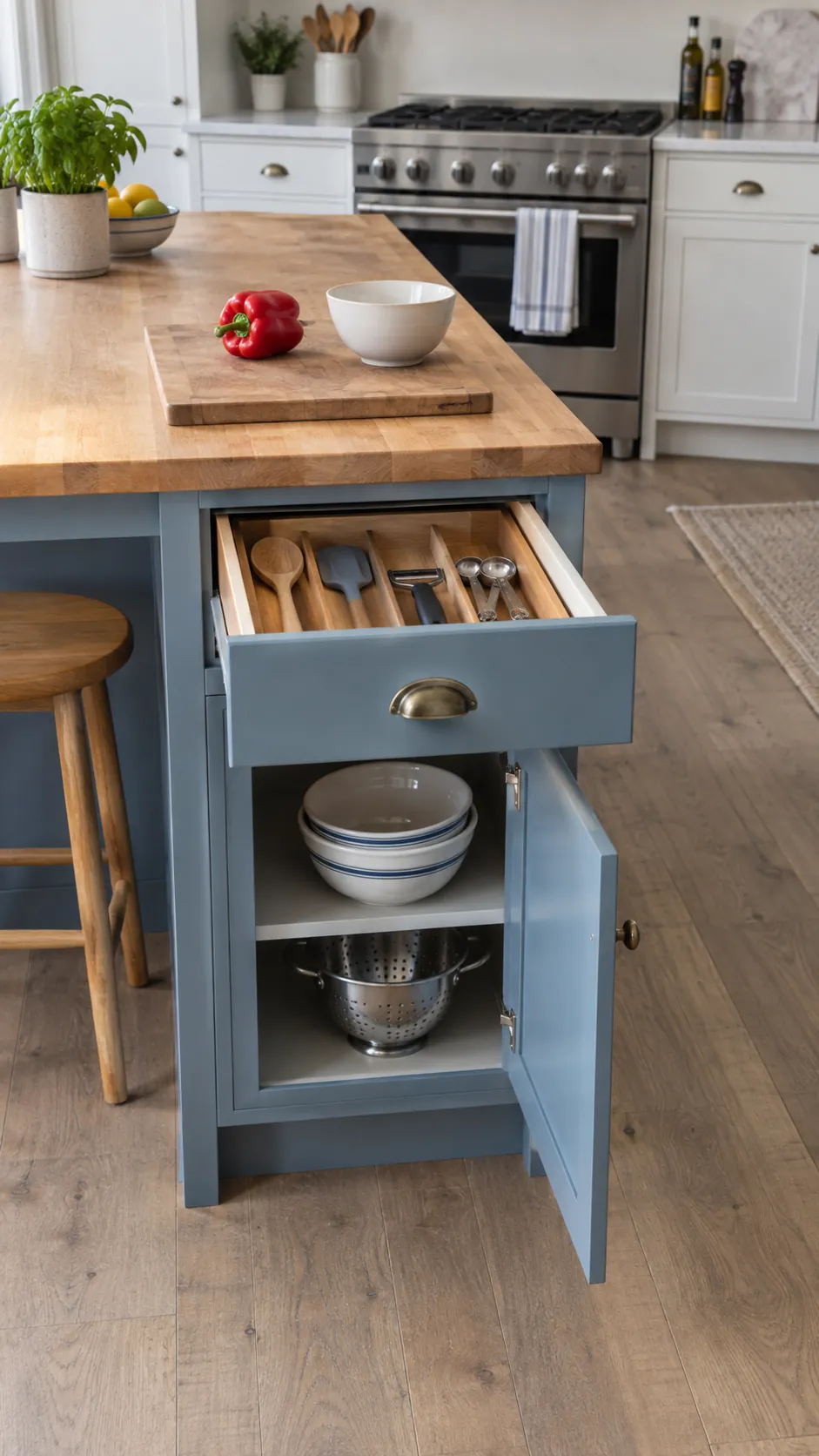
Empty one cabinet and measure its usable width, depth, and height. Then measure the actual doorway, including any center stile and the space taken by hinges. A bin that fits inside the cabinet can still be too wide to pass through the opening.
For kitchen island pullouts, compare the manufacturer’s required installation clearances with those measurements. Check whether the unit fastens to the base, sides, or a fixed shelf, and whether the cabinet construction can support it. Do not remove a center support or shelf that may be structural simply because an organizer needs more room.
Open the opposing dishwasher or oven door and check the movement path. A fully extended drawer should not trap you in the aisle. For an existing island, test a cardboard footprint or an empty bin before committing to hardware; for a remodel, have the designer verify operating clearances and applicable requirements.
Keep cookware visible in deep drawers
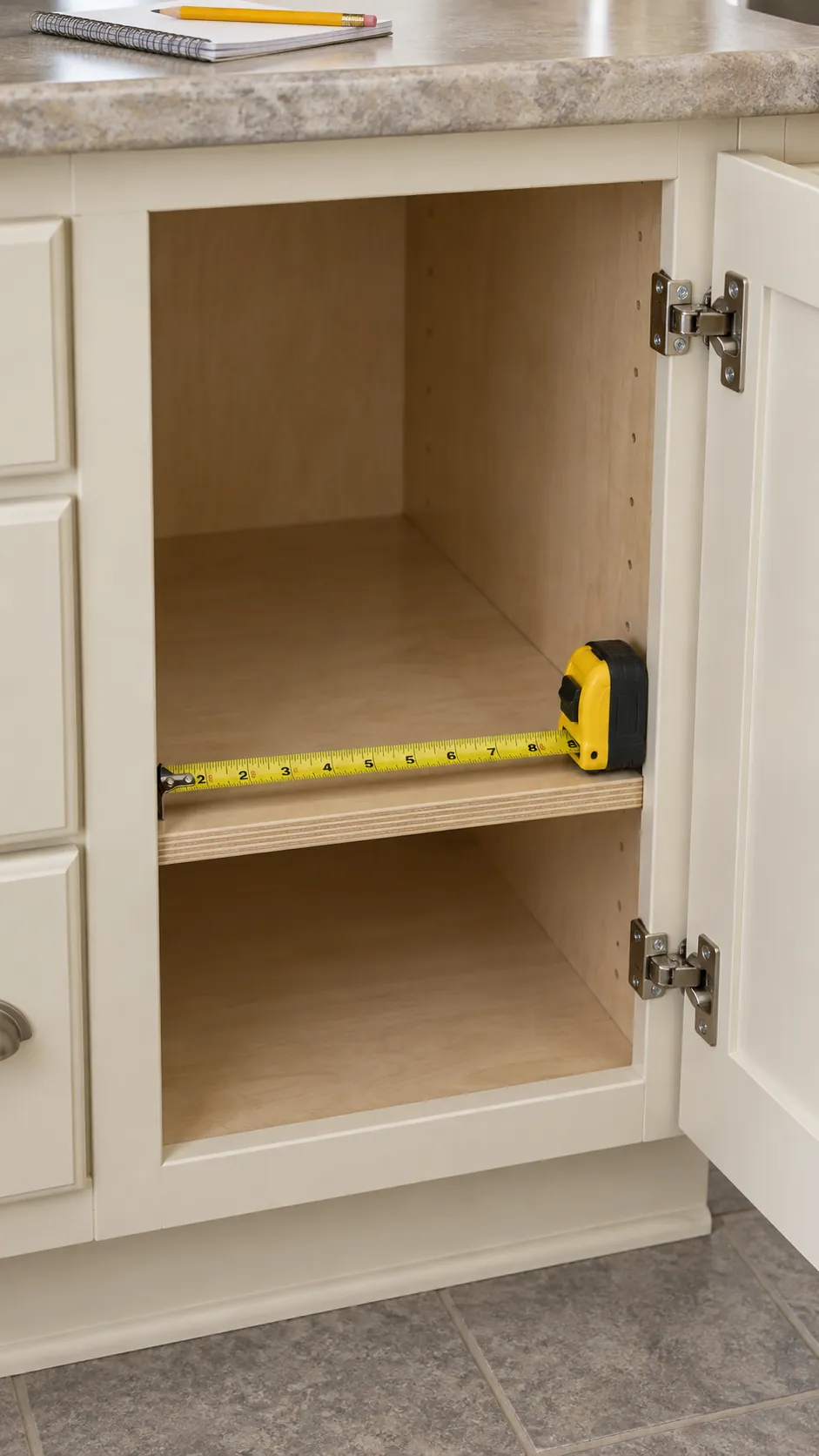
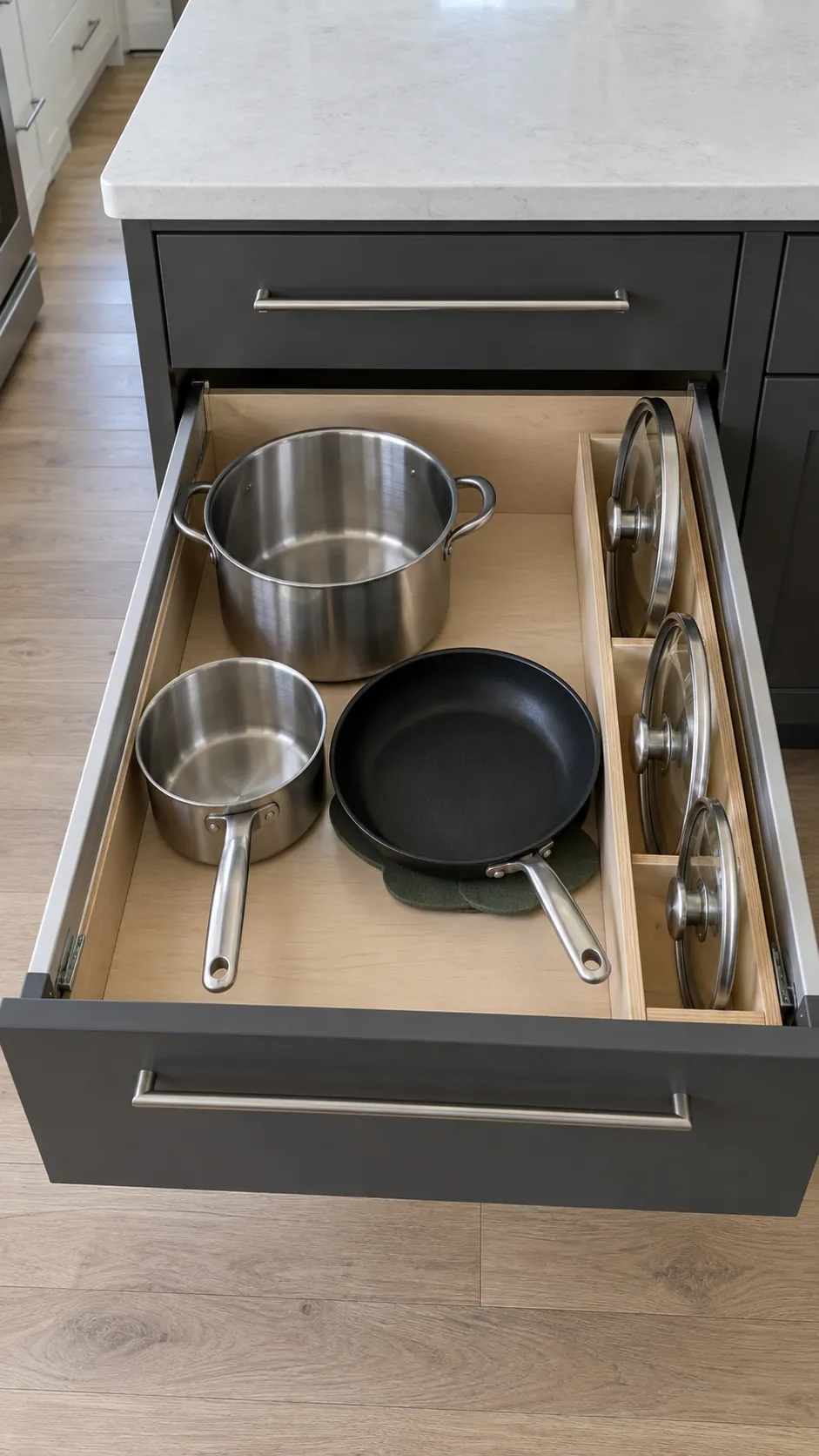
Deep island drawer organization is easiest when each heavy item has a stable footprint. Arrange frequently used pots in a single layer where possible, or nest only a short group that you can lift comfortably. Turn handles into free space rather than allowing them to catch the drawer front.
Place lids in a secure divider beside the pots when the drawer has enough height. Check clearance with every lid knob before closing it. Baking sheets can stand vertically in a tall compartment, but a low drawer may need flat storage instead.
Cookware storage in an island puts considerable weight on its runners. Follow the drawer hardware’s load rating, including the drawer and any organizer as specified by the manufacturer. A crowded drawer that drags or racks needs its load reduced and the hardware checked, not a stronger pull on the handle.
Keep sharp knives in a purpose made protective insert that fits the drawer, especially when several people share the kitchen. An open tray of loose blades is not a useful shortcut to saving space.
Use shelf bins for light categories
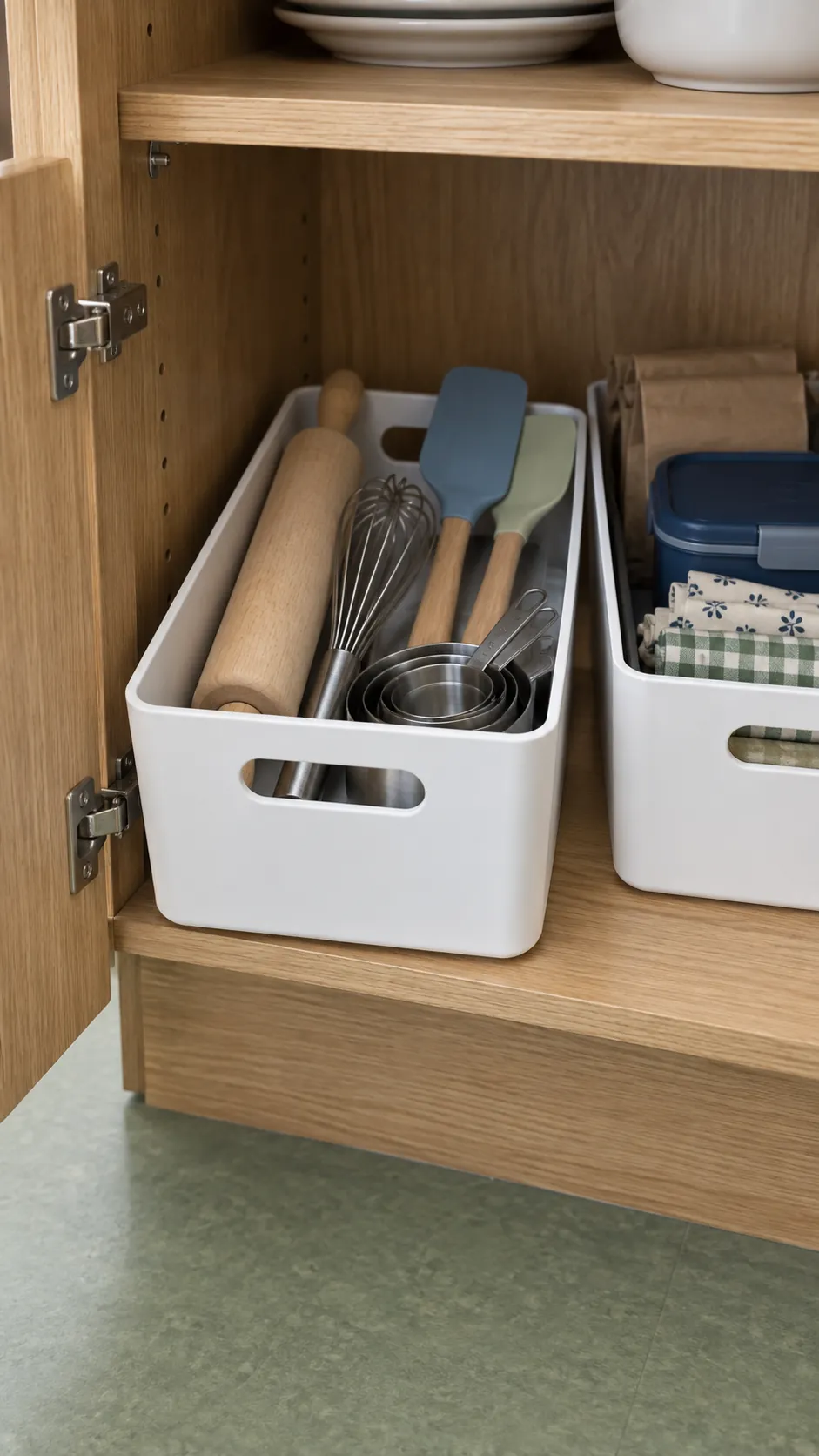
Fixed shelves can work well with a few shallow, easy to lift containers. Give one bin a complete lightweight job, such as lunch packing supplies or baking tools. Kitchen island shelf bins are most useful when the front handle brings the whole category into view without requiring a second stack to be moved.
Choose a shape that clears hinges, and leave enough room above the contents to grip the bin. A large container packed with appliances defeats the purpose if lifting it becomes difficult. Keep the heaviest items individually supported near the front, and avoid stacking loose objects on top of a bin you need daily.
Store appliances without creating a lifting problem
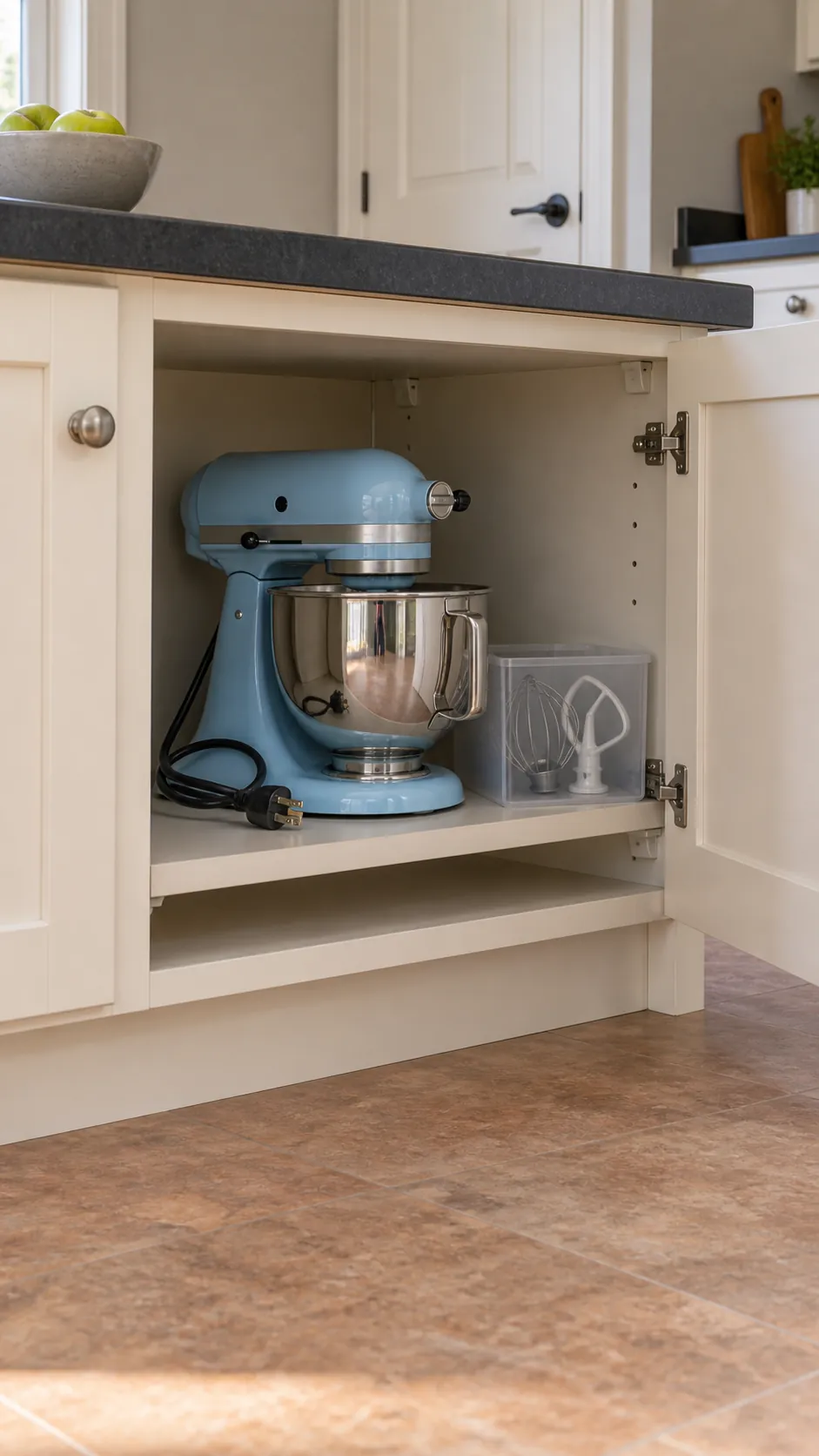
An appliance storage cabinet needs more than a footprint that fits the machine. Check the height with its lid or attachments in the stored position, the weight you can comfortably lift, and the route from shelf to work surface. A mixer that is awkward to raise from the floor may belong somewhere else.
Keep cords loosely secured and attachments in a small adjacent container. Store appliances clean, dry, cool, and unplugged unless their installation instructions specifically provide otherwise. Move portable cooking appliances to a suitable open operating surface with the required clearances; an ordinary cupboard is not an appliance garage designed for use.
A rated appliance lift can help in the right cabinet, but it requires compatible dimensions, secure mounting, and attention to pinch points. Use the hardware instructions and qualified installation where needed. Do not improvise a sliding shelf under a heavy machine and assume it is safe to operate there.
Give cleanup its own space, then test a meal
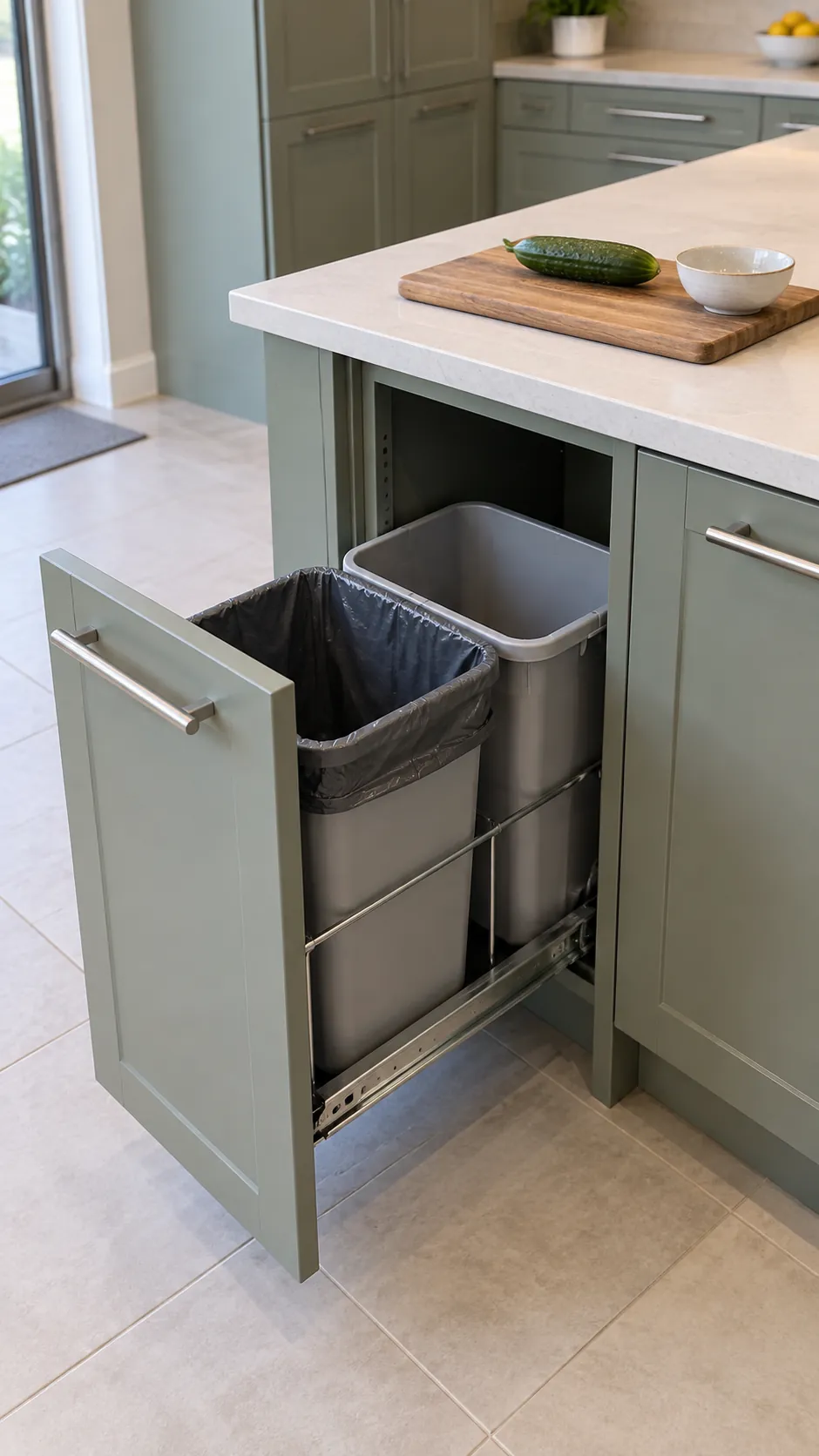
If the island is your main preparation zone, a properly fitted trash pullout nearby can shorten cleanup. Keep it in its own washable compartment, separate from loose food and clean linens. Check that the bin lifts out for cleaning and that its lid, liner, and runners work without interference.
Leave cleaning products in appropriate secured storage, particularly where children can reach lower cabinets. If the island has no suitable waste compartment, a nearby freestanding bin may serve the task better than sacrificing useful cookware storage. Small kitchen island organization is a choice about priorities, not a requirement to fit every function into one piece of furniture.
Cook a familiar meal before adding more organizers. Notice whether you have to circle the island for a spatula, move a stool for a daily bowl, or unload a shelf to reach the blender. Move the category causing the detour. Keep the arrangement that shortens the work you actually do, even if another cabinet remains partly empty.