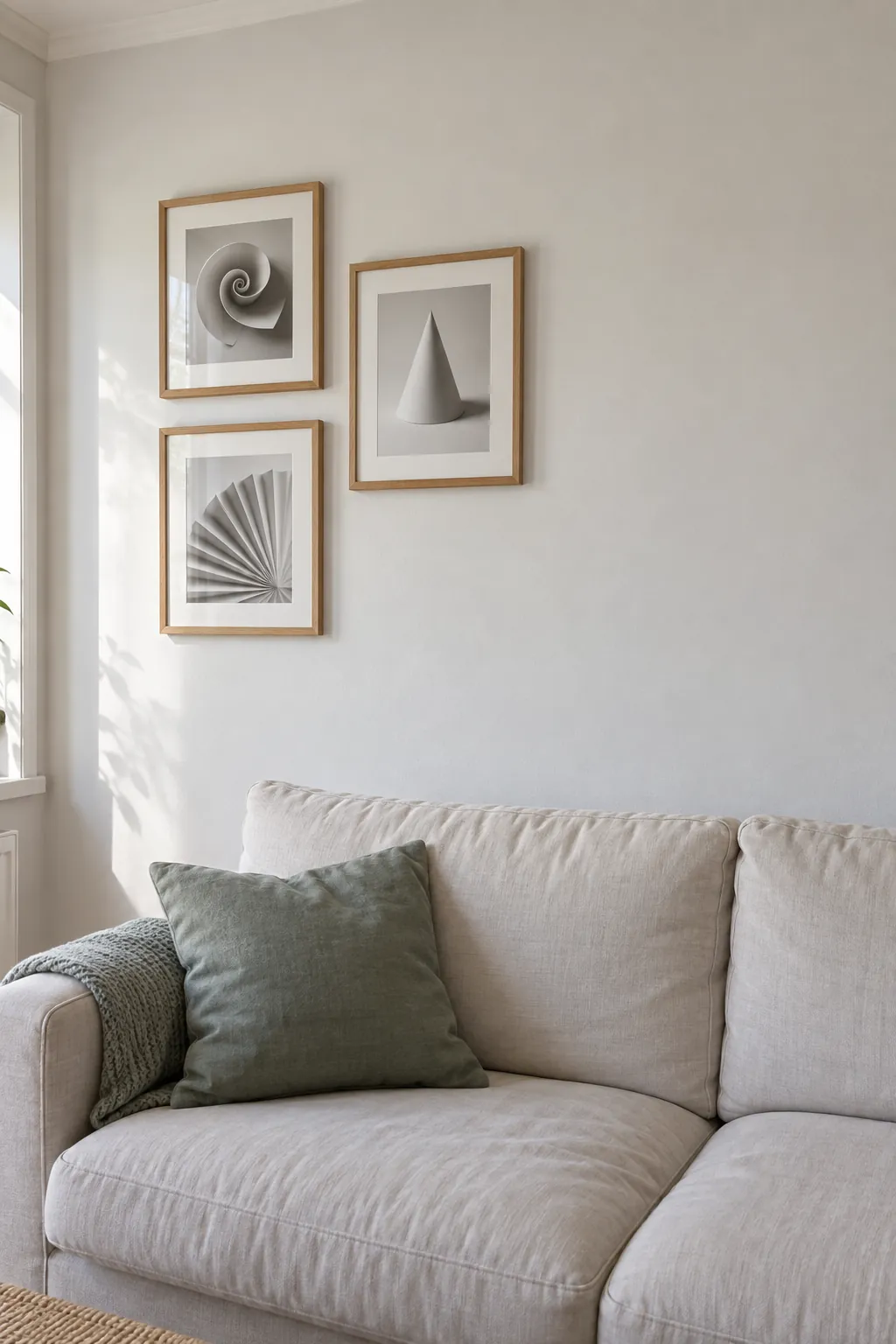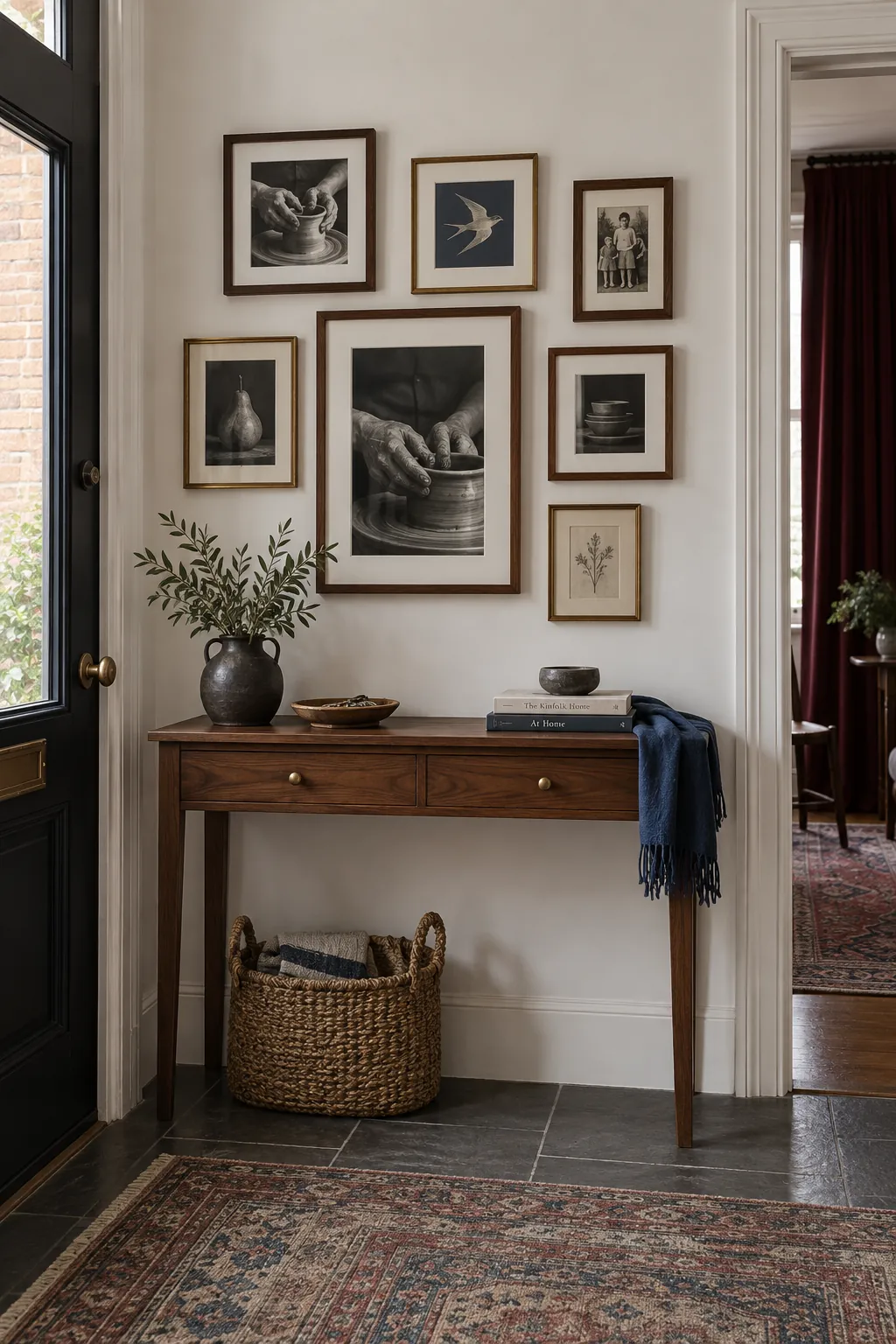
A pile of favorite pictures is easier to collect than to arrange. The most useful starting point is one decision about what should stay consistent: the frame finish, the mat color, or the spacing. That gives personal photographs room to differ without making the wall feel unsettled.
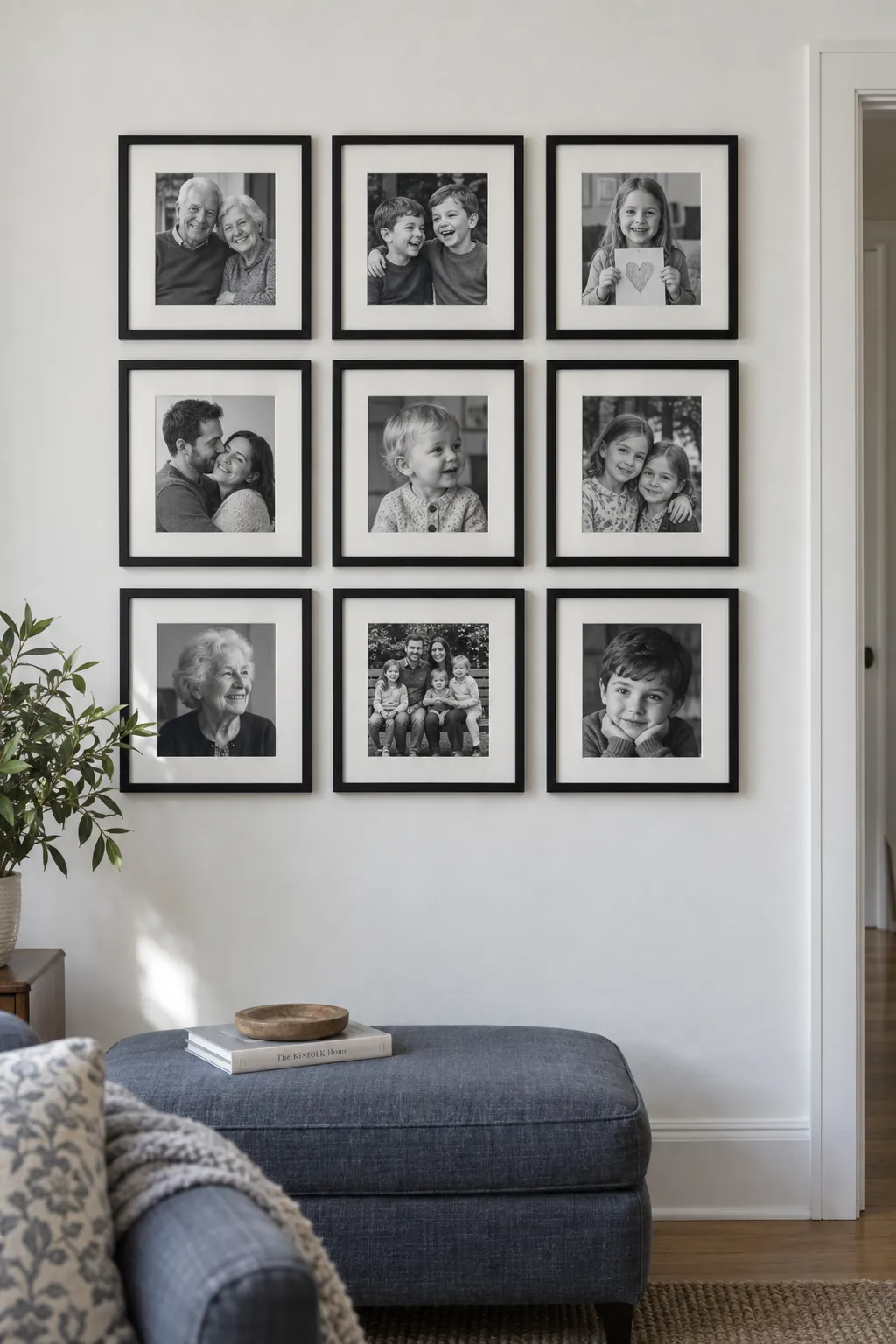
A precise grid of family photographs
Matching outer frame sizes make a family photo wall feel calm even when the photographs span different decades. Use matching mats to accommodate smaller originals rather than enlarging every photograph until it loses detail. Cut paper templates to the outside dimensions and test the whole rectangle before making holes. Keep the gaps consistent, measuring between frame edges rather than between the hanging hooks.
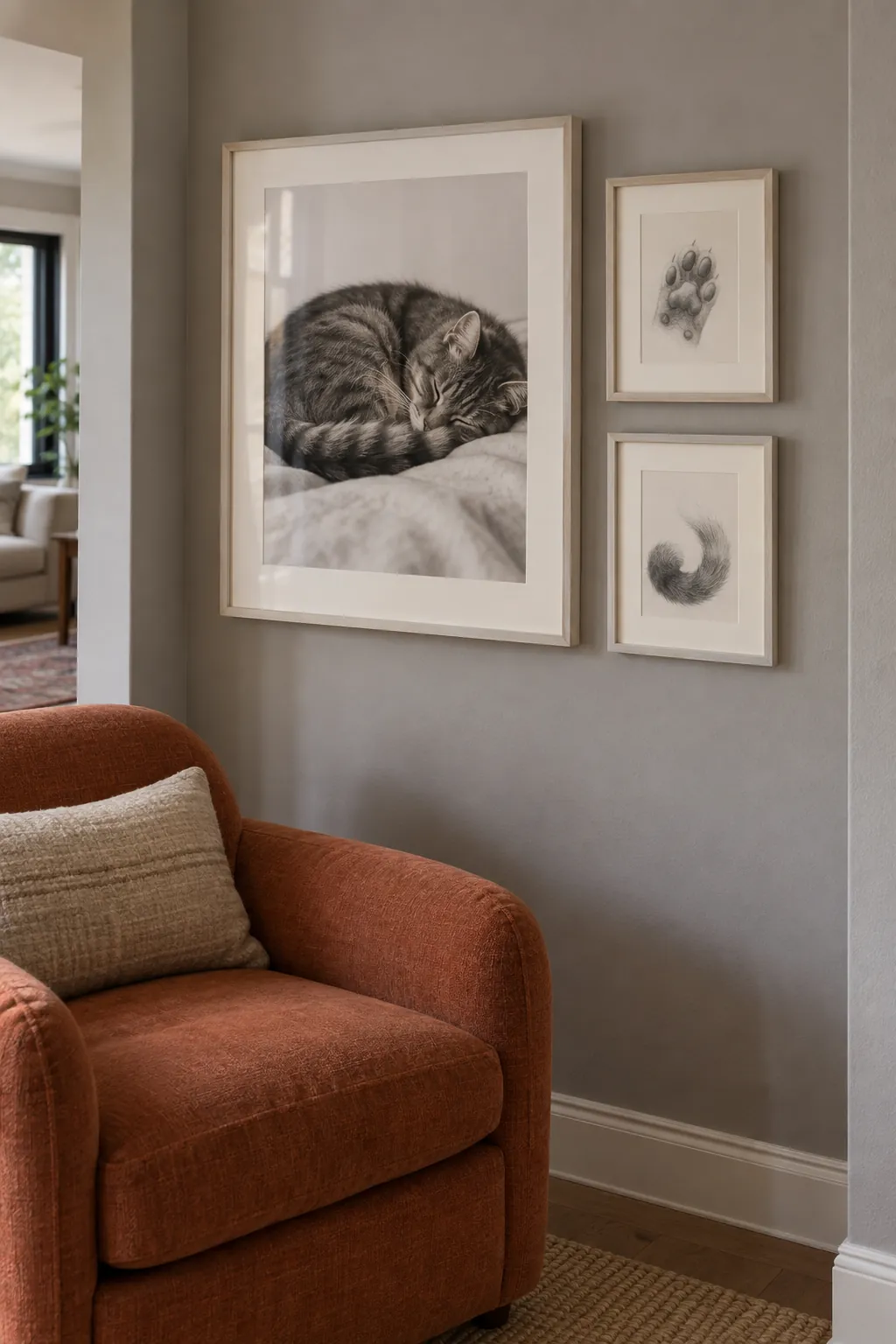
One large photograph with smaller companions
Start with the photograph you would choose even if you could only hang one. Position two smaller companions beside it so the largest image remains the clear focal point. This approach suits a collection with one strong portrait and several quieter snapshots. Give the large frame a little breathing room instead of filling every available pocket of wall.
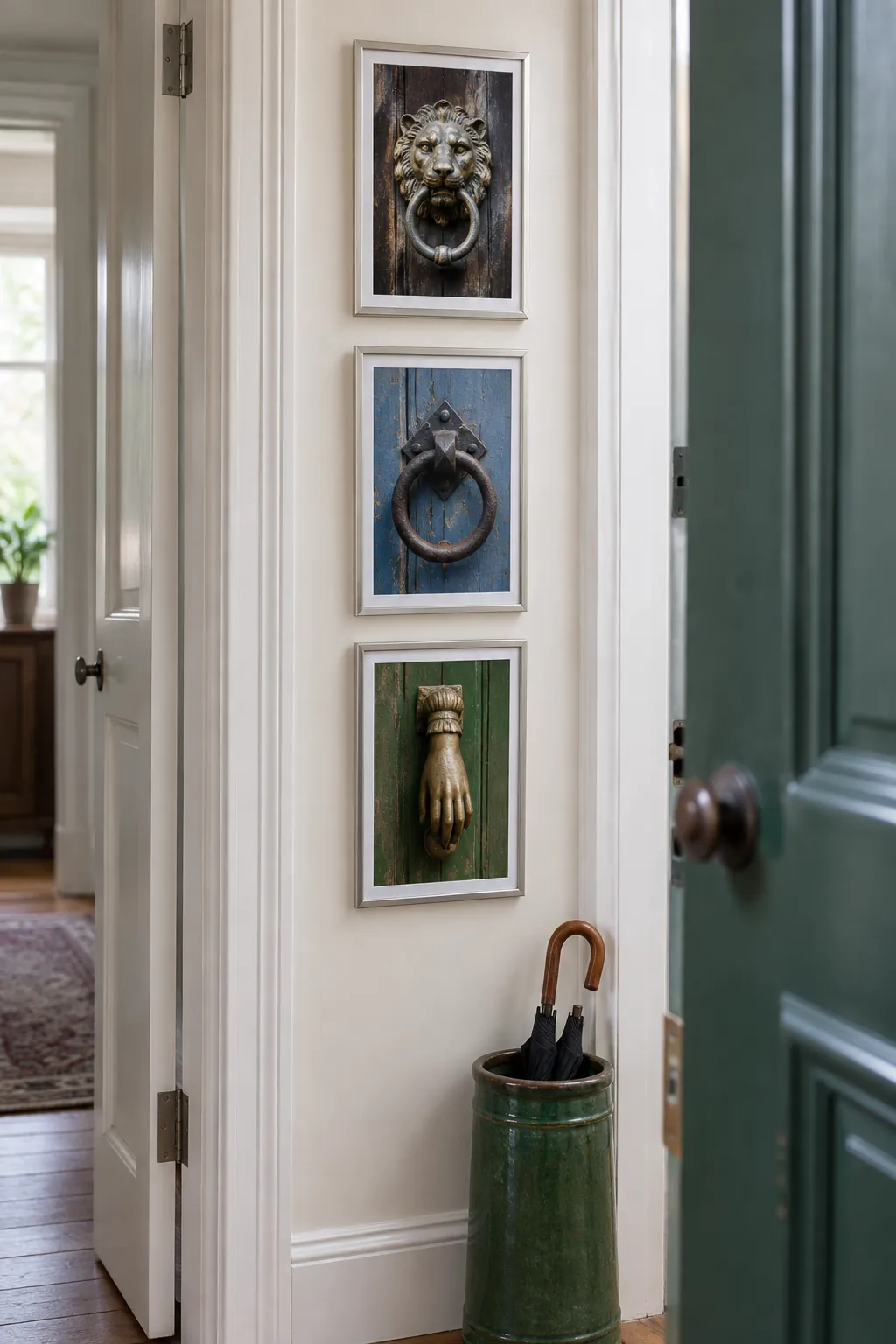
A narrow column beside a doorway
A slim strip of wall can hold a vertical sequence of three small pictures without crowding the doorway. Choose subjects that reward a close look, such as tiny architectural details or family keepsakes. Check that an open door cannot strike the frames before committing to the position. Align the centers when the frame widths differ, which keeps the column legible from the adjoining room.
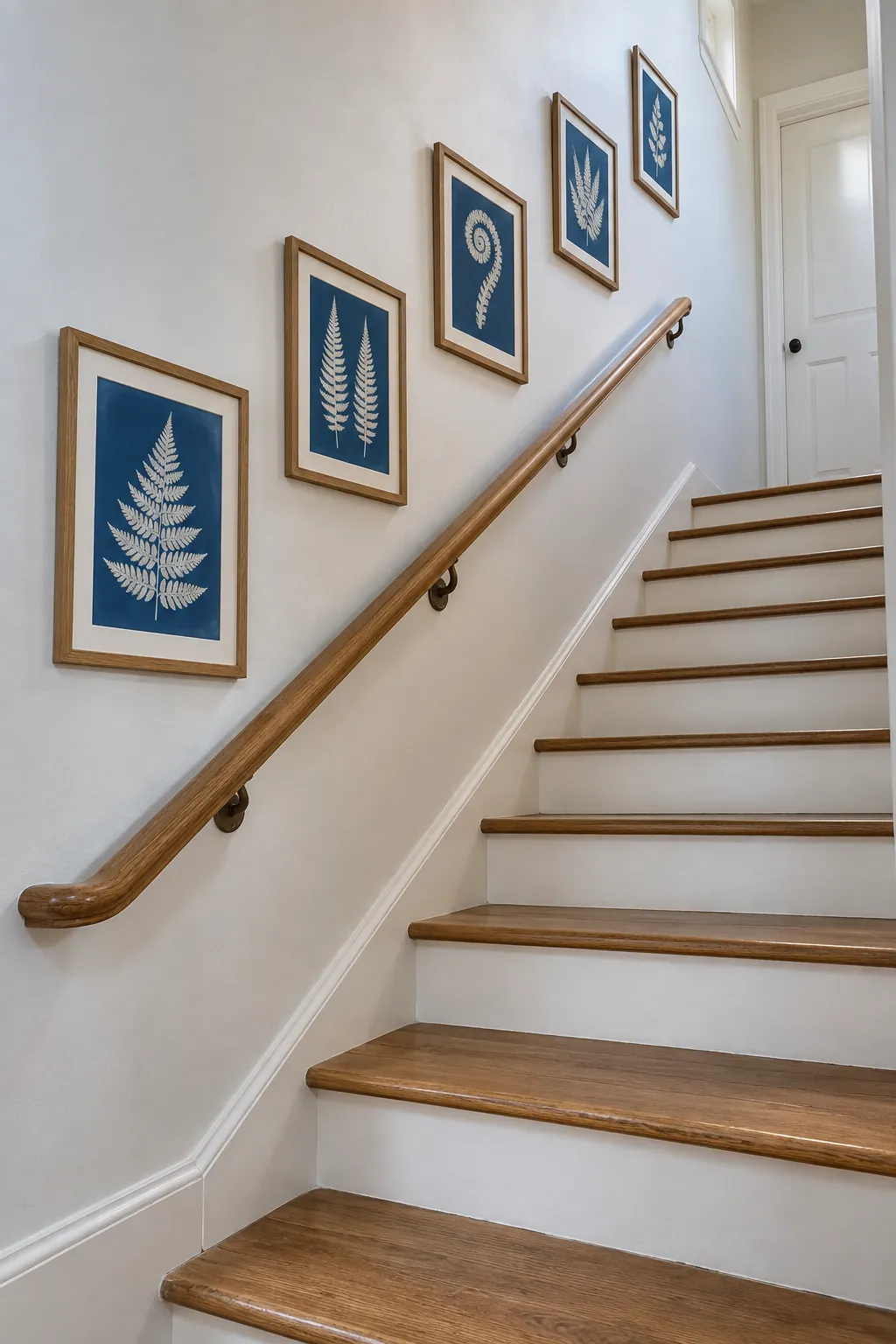
A staircase arrangement that follows the climb
Let the collection rise with the stairs while keeping the spacing between neighboring frames reasonably steady. View the layout from the bottom landing and from halfway up, because both angles expose awkward jumps. Paper templates help reveal whether a large frame crowds the handrail. Hang each piece with fixings suited to its weight and the wall construction, leaving the rail fully usable.
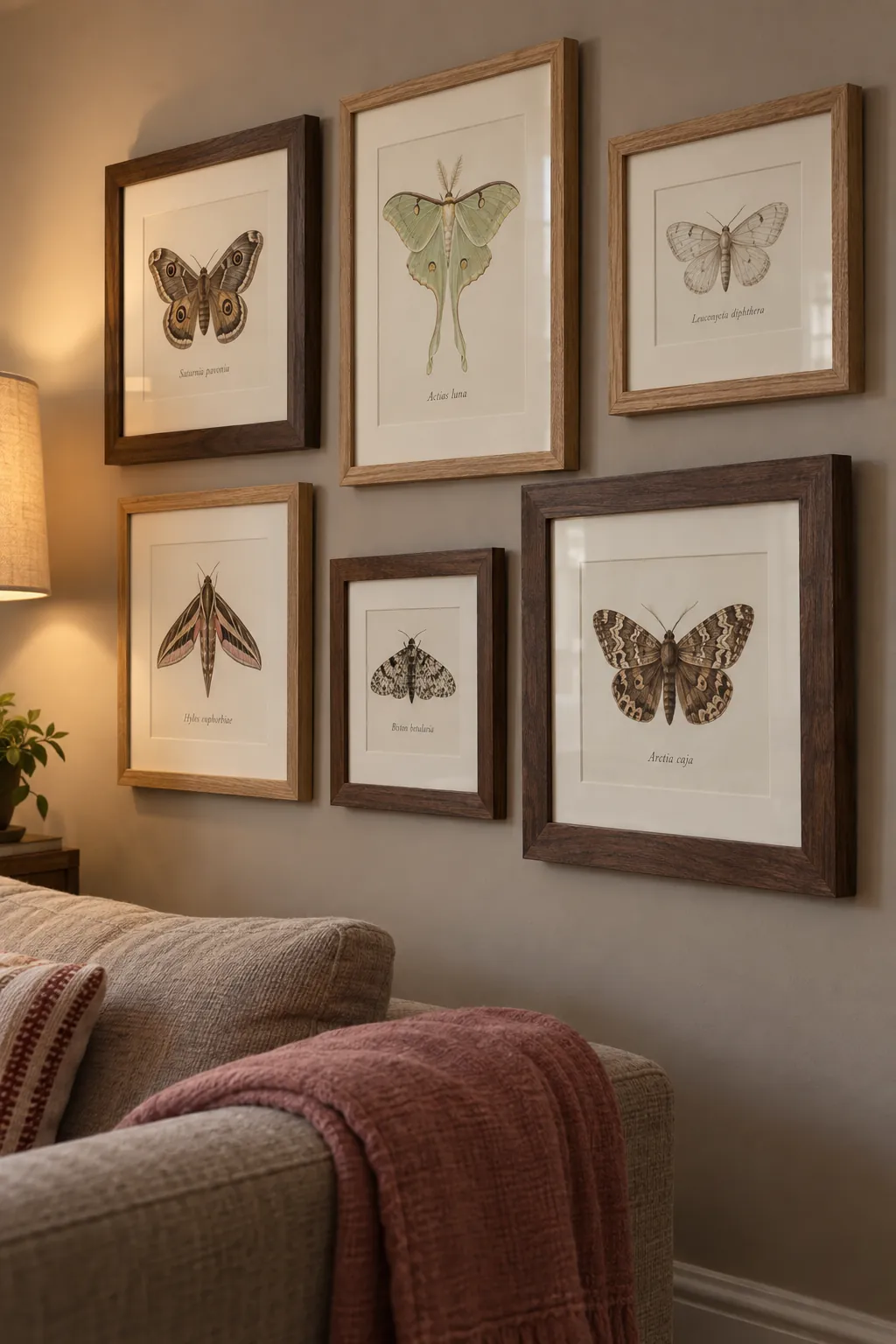
Mixed wood frames with a shared mat color
Different timber finishes can look collected when the mats provide a consistent border. Keep the range intentional, perhaps pale oak alongside walnut, rather than buying every available shade. Arrange darker frames across the composition so one corner does not become visually heavy. This is a useful way to incorporate inherited frames without pretending they came from a matching set.
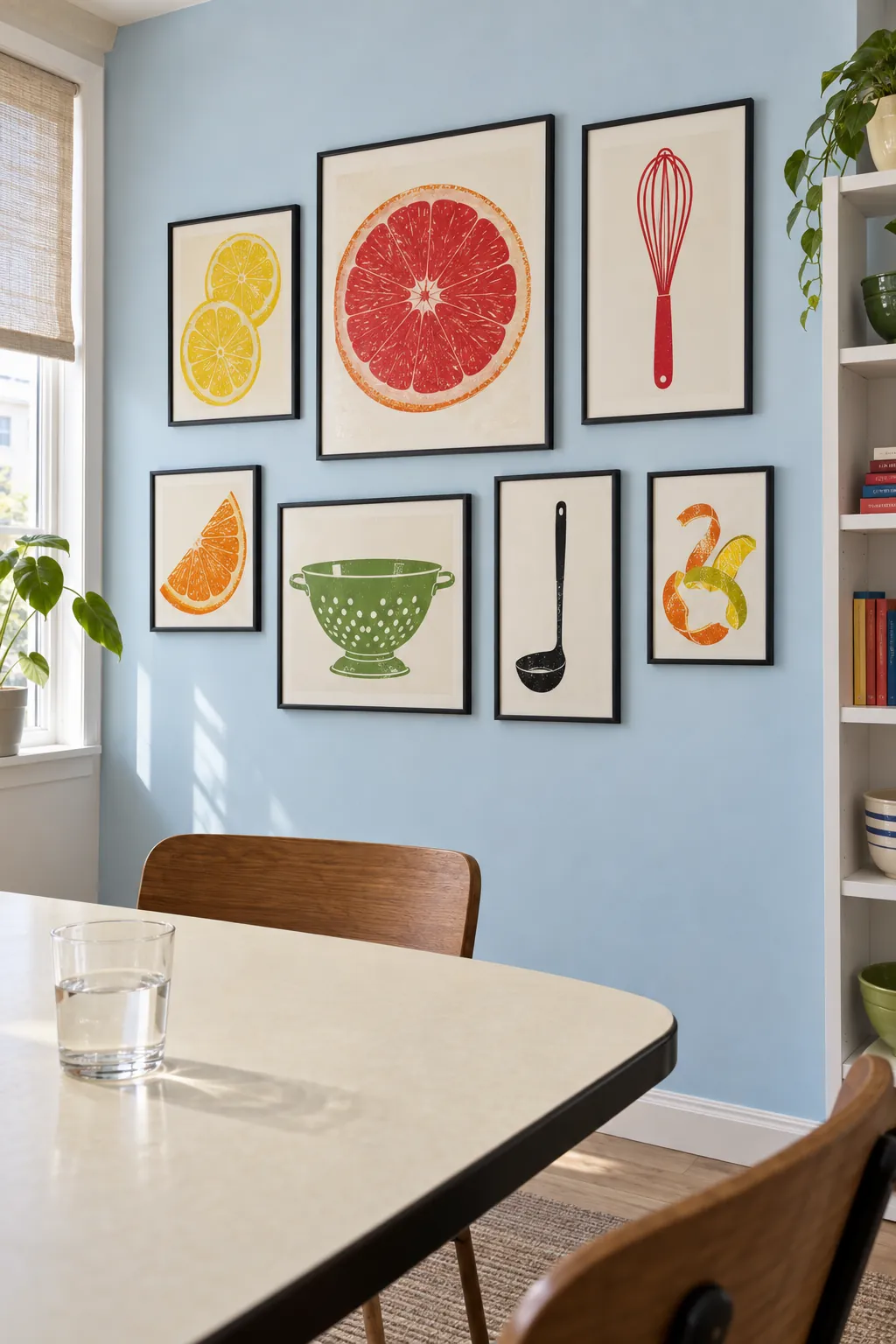
Black frames around colorful prints
Thin black frames give vivid pictures a crisp boundary without adding another strong color. Repeat the frame profile while varying the print sizes for an informal gallery wall design. Leave some quieter prints between dense or saturated images so the whole group remains readable. A pale wall makes the outlines more visible, so test the arrangement at room distance before hanging.
A picture ledge for changing favorites
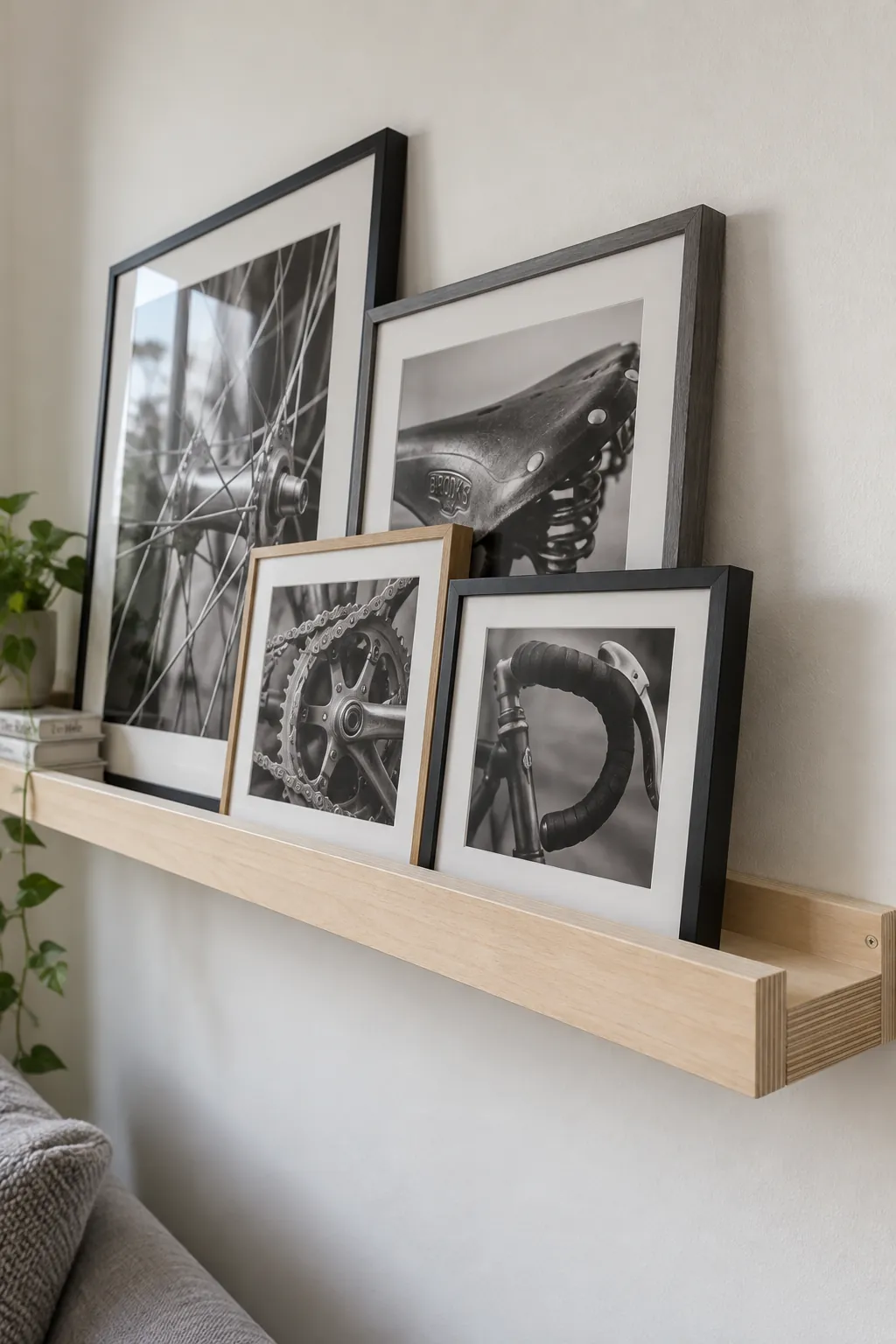
A shallow ledge lets you swap photographs without making a new hole for each frame. Overlap only the borders, keeping faces and important details visible. Follow the ledge manufacturer’s fixing and load guidance, and secure pieces where a fall could cause injury. Leave a stretch of empty shelf at one end so the display feels easy to edit.
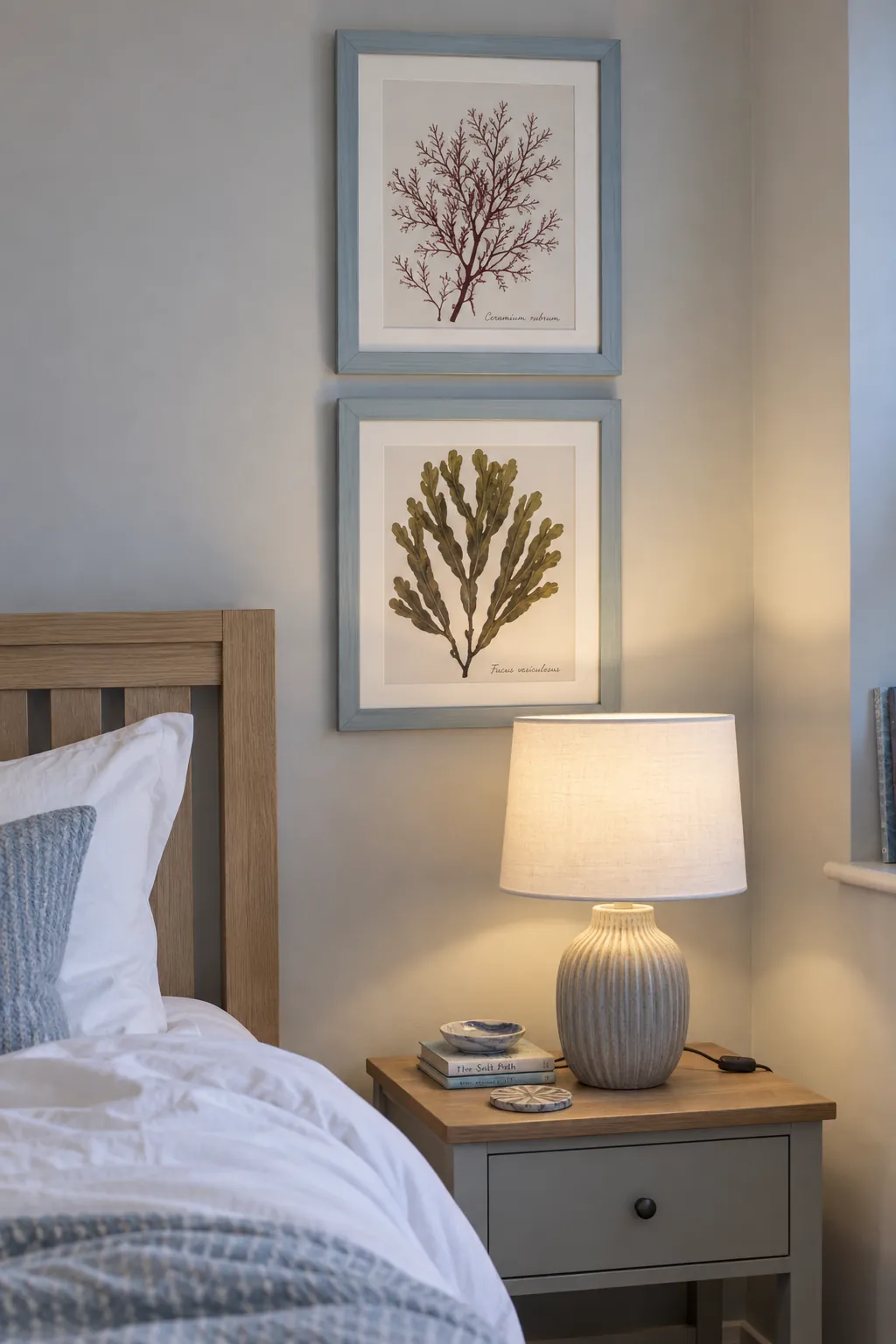
A symmetrical pair above a bedside table
Two related prints can give a small bedroom a finished corner without filling the space above the bed. Stack them with an even gap and center the pair on the bedside table rather than on the whole wall. Check the relationship to the lamp, which should not obscure the lower picture during ordinary use. Choose low glare glazing if a nearby window creates distracting reflections.
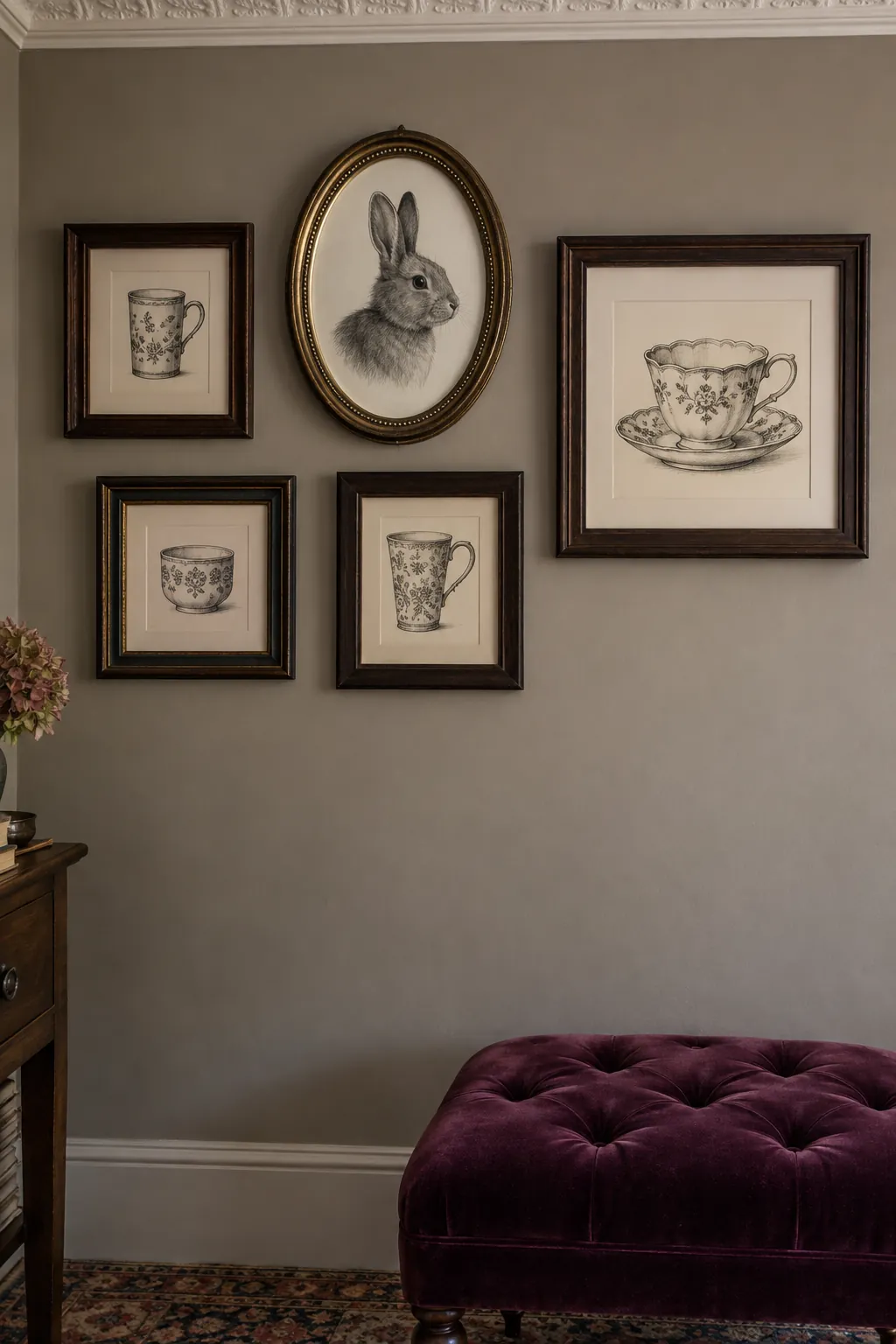
A salon arrangement around an oval frame
An oval frame introduces a different rhythm among square and rectangular pieces. Set it slightly away from the exact center and balance its visual weight with a larger rectangular work nearby. Build the group on the floor first so you can move pieces freely. Repeat one finish in several places to keep the mixture from feeling accidental.
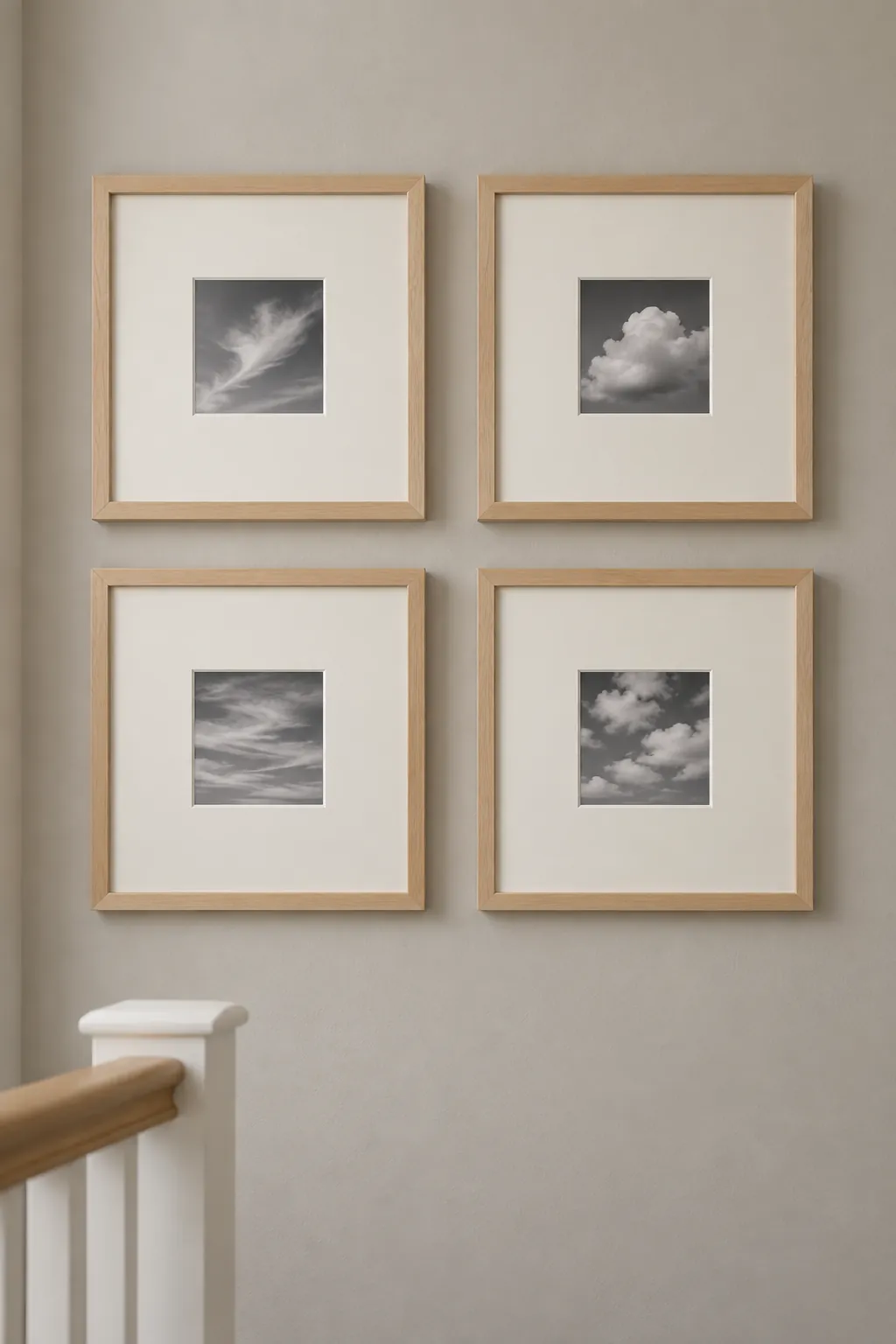
Matching square frames with generous mats
Wide mats turn modest photographs into a substantial display without enlarging the prints. Choose the mat opening to suit the picture and confirm that the backing holds it safely in place. A row of squares works particularly well with images that share a similar tonal range. Avoid cropping away the small details that made the original photograph worth keeping.
A gallery above a working desk
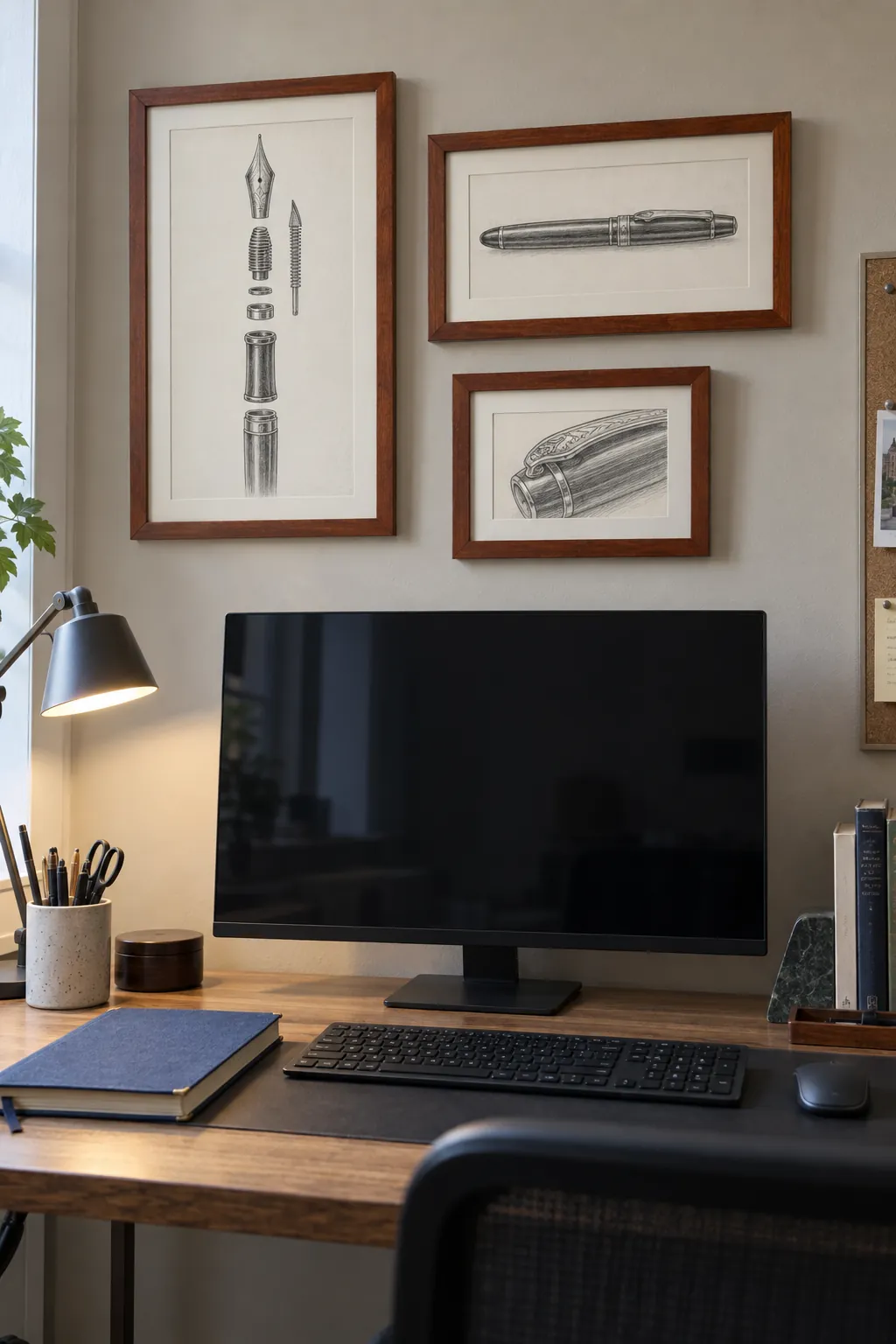
Choose a compact arrangement that sits above your normal monitor height. Small drawings and reference photographs can make a home office personal while leaving enough blank wall for visual rest. Look at the group from your actual seated position before you decide how high it belongs. Keep the busiest picture away from the spot directly behind your main screen if it distracts you.
Children’s drawings in grown up frames
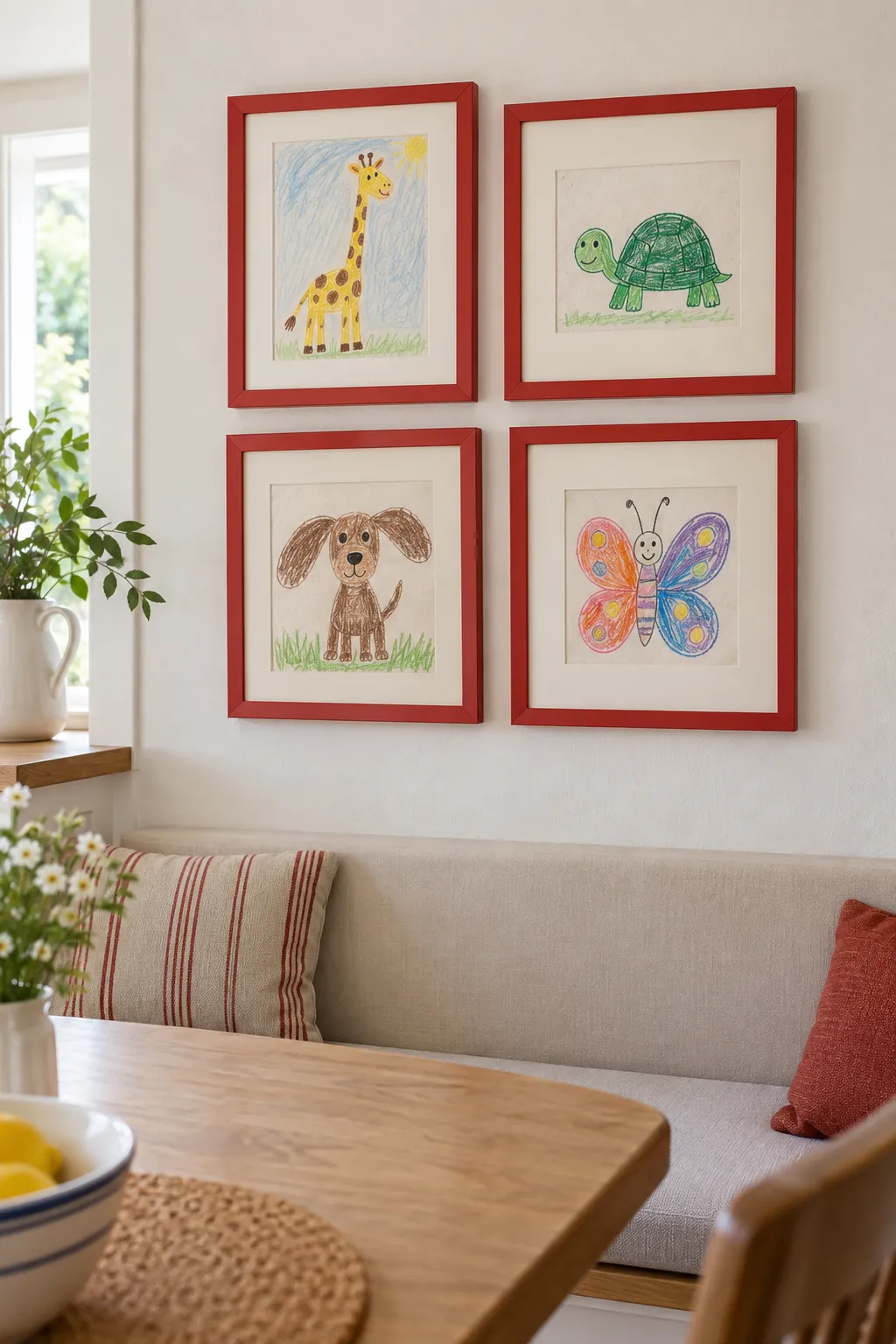
Simple frames can make children’s pictures feel like part of the room instead of temporary clutter. Use accessible backs so the selection can change as new favorites arrive. Photograph fragile originals before displaying them, and keep irreplaceable pieces out of direct sun. Consistent mats allow bold drawings in different paper sizes to share the same wall comfortably.
A horizontal line through different sizes
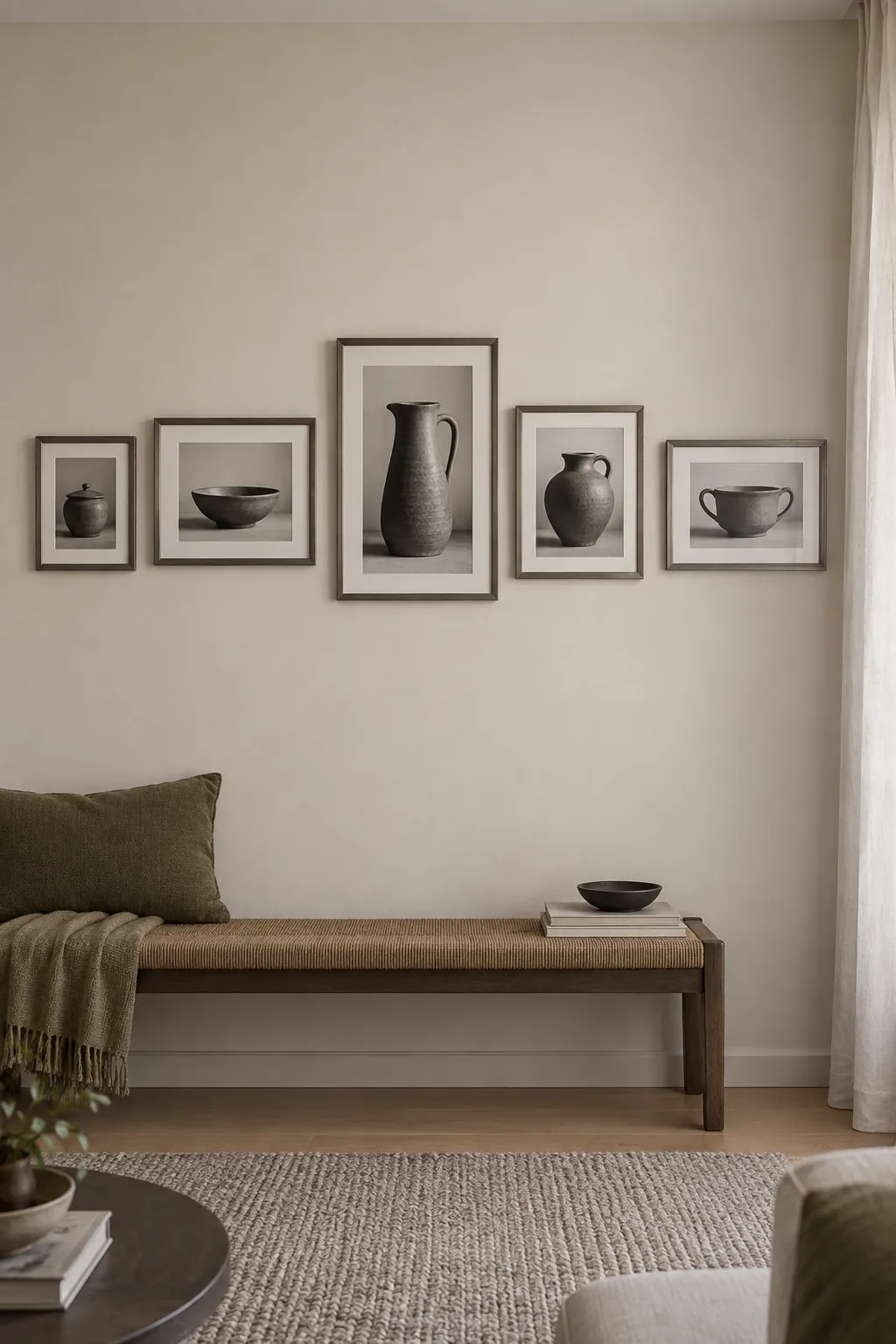
Align the centers of varied frames along an imaginary horizontal line for a gallery that feels orderly but relaxed. This works best when you can see the full group from a few steps away. Start with the largest piece, then alternate smaller and medium formats rather than forming a predictable staircase. Measure the center of the frame itself because hanging hardware may sit at different heights.
A corner that connects two walls
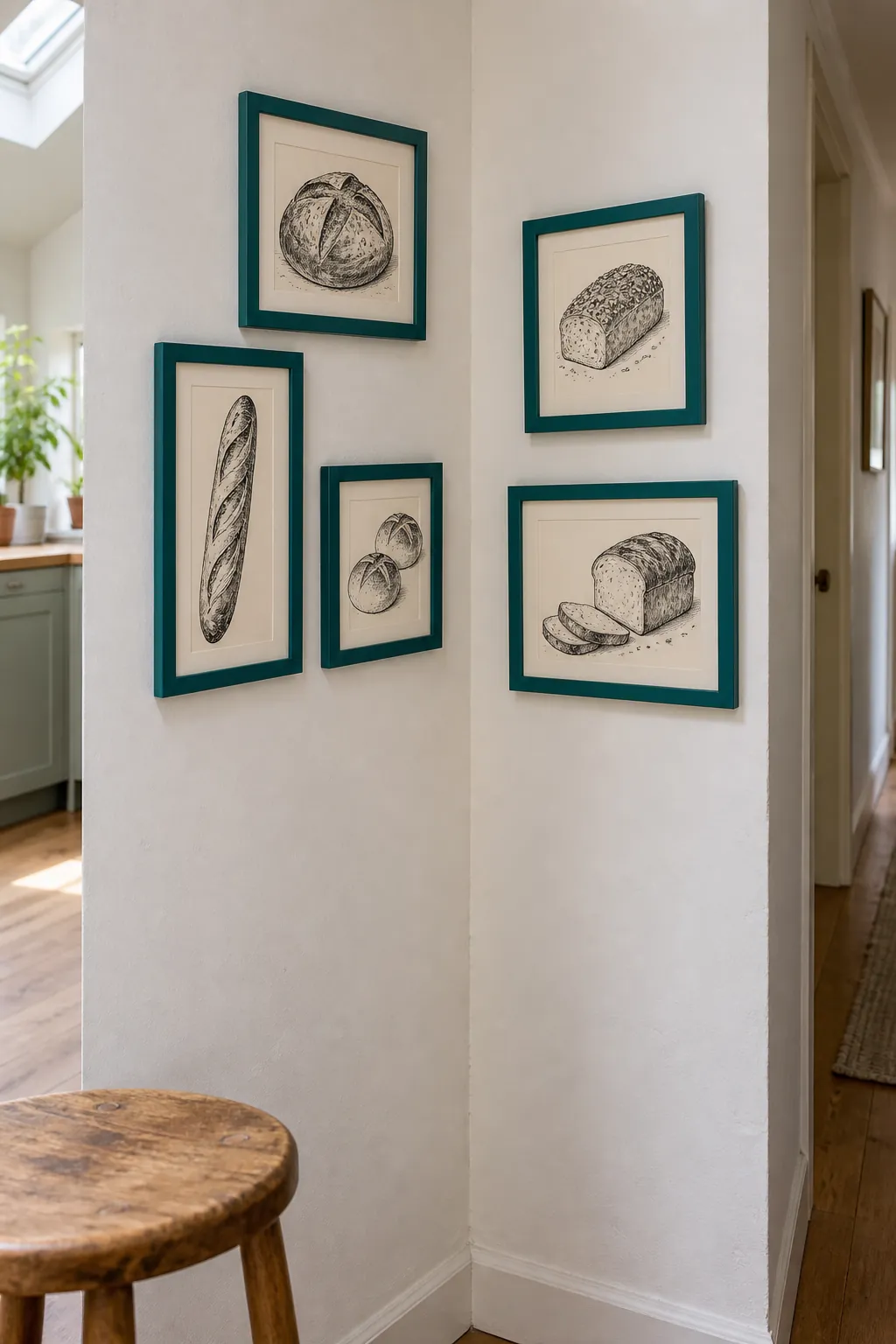
Carry a small collection around an inside corner to connect two parts of a room. Keep the closest frames far enough from the corner that their edges remain easy to see. A shared finish or subject creates continuity without requiring identical layouts on both walls. Walk through the room to check that one side does not disappear behind a tall piece of furniture.
A quiet trio over a dining bench
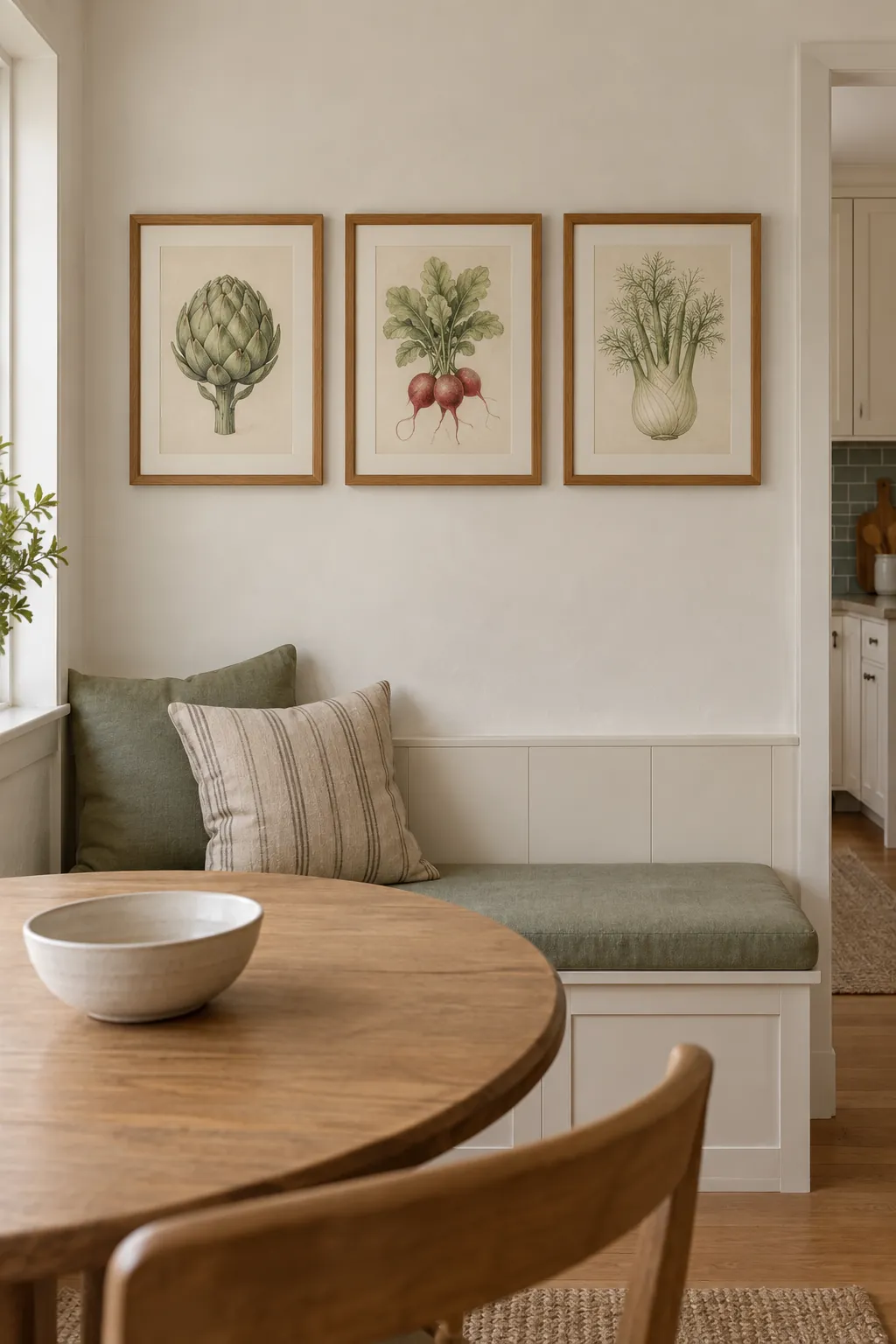
Three related images can define a dining nook more clearly than a large scattering of tiny pictures. Center the overall group above the bench and allow comfortable clearance for seated heads. Botanical studies or simple food illustrations bring detail without dominating a small eating area. Wipeable frame surfaces are practical near food, though valuable works still belong away from steam and splashes.
Vintage frames with modern abstract prints
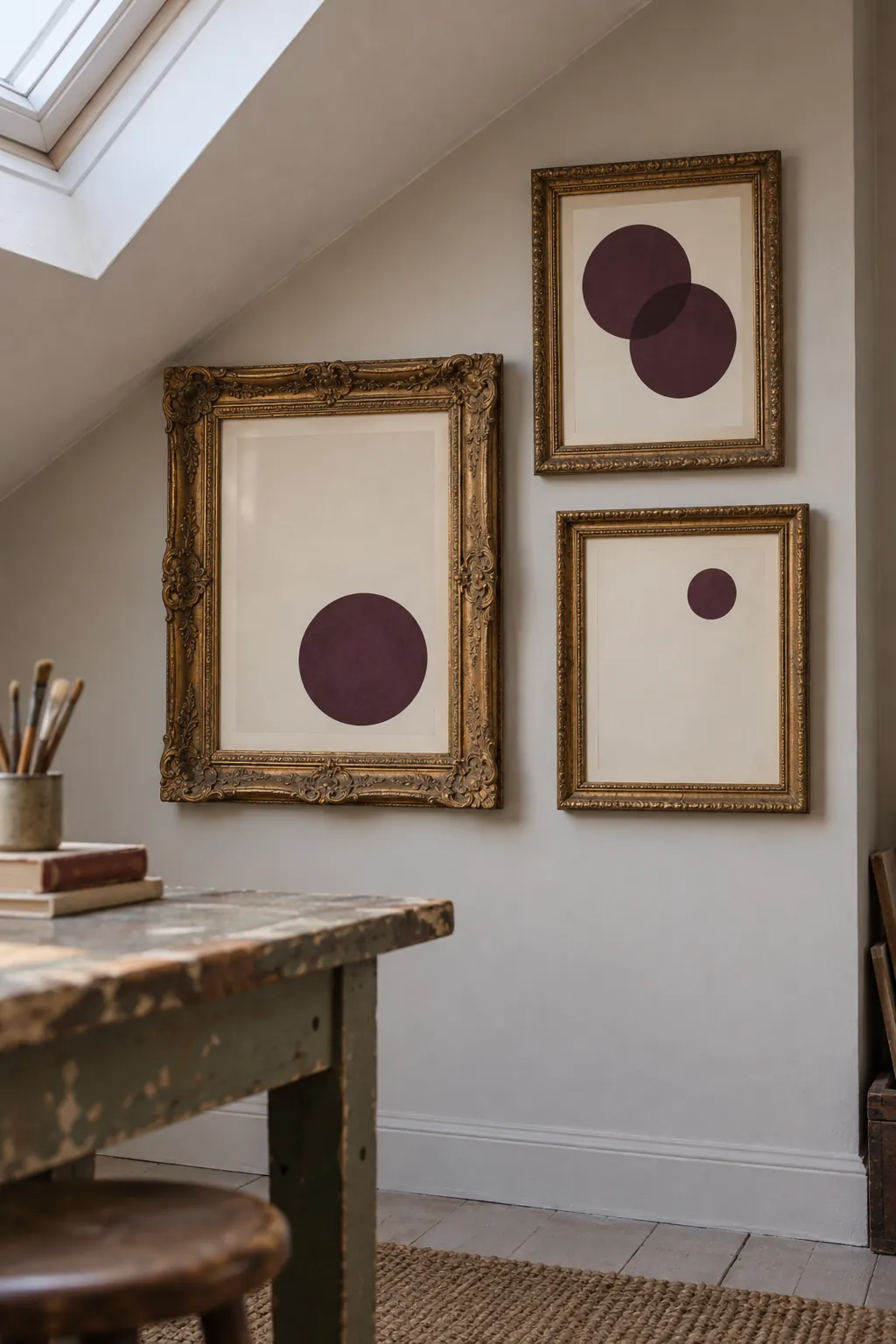
An ornate frame can sharpen the impact of a simple contemporary print. Let the difference in style be the point, using a restrained print palette so the carved edges remain visible. Inspect older frames for loose joints and replace unsuitable hanging hardware before mounting them. Repeat a color from one print elsewhere in the room to connect the display with everyday furnishings.
A travel wall built from small details
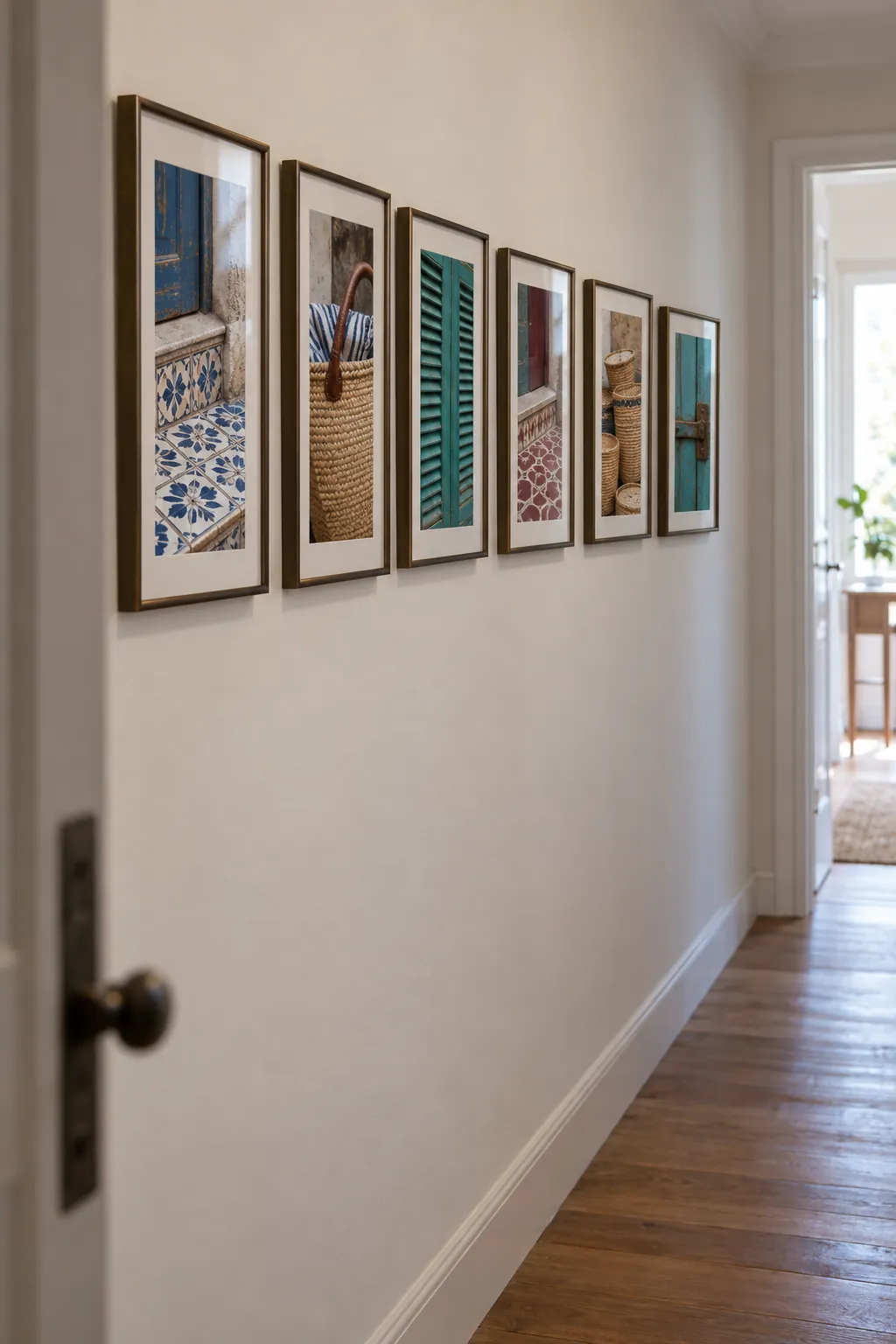
Travel pictures become more personal when they show the doorway, market label, or tiled floor you remember. Group photographs by a shared color or visual rhythm rather than forcing every destination into one large collage. Leave the most detailed pictures at a height where visitors can approach them comfortably. Save tickets or fragile souvenirs in suitable archival storage if a sunny wall would damage them.
A single oversized frame on a slim wall
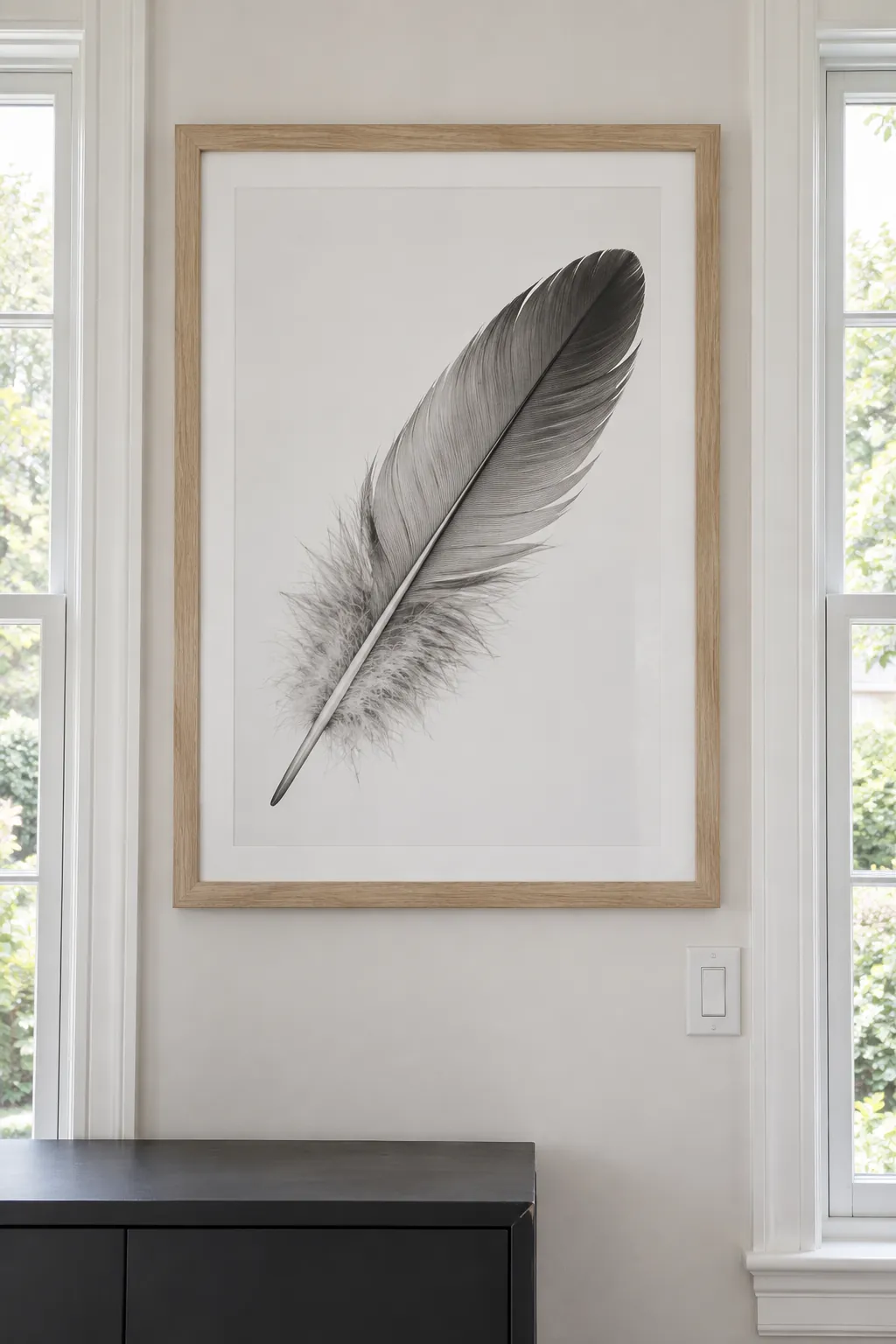
One substantial frame often gives a narrow wall more confidence than several miniature ones. Choose an image with enough open space that its scale does not make the corner feel crowded. Check the outer dimensions against nearby switches and trim before ordering. A full size paper outline is a better guide than guessing from the picture dimensions alone.
A soft color story for a restful bedroom
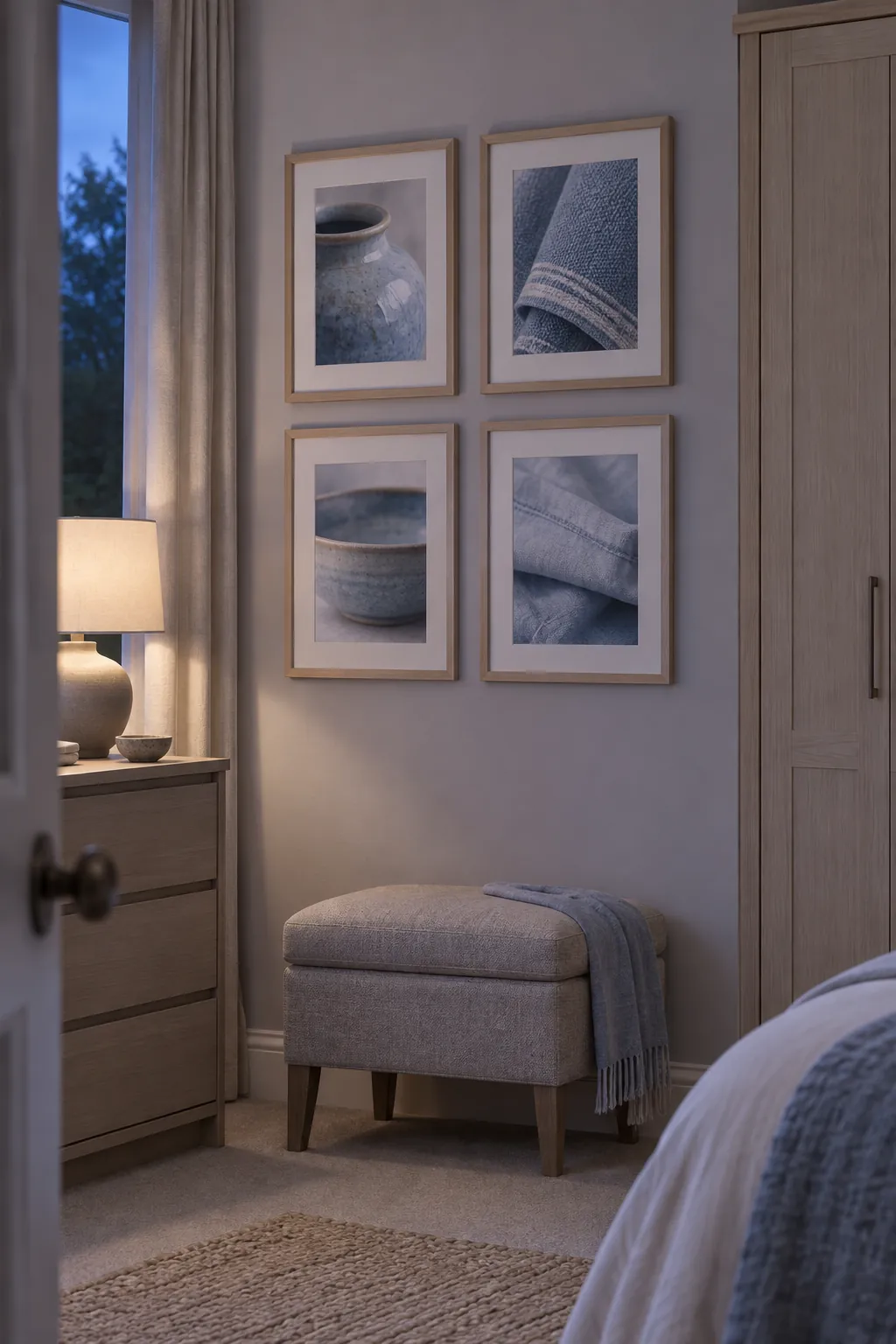
Choose photographs and prints that share muted colors while allowing their subjects to vary. The relationship can be subtle, such as dusty blue appearing in a fabric study and a close photograph of pottery. Lighter frame finishes keep the edges from dominating a quiet room. Test the arrangement under your evening lamps as well as in daylight because the colors may shift noticeably.
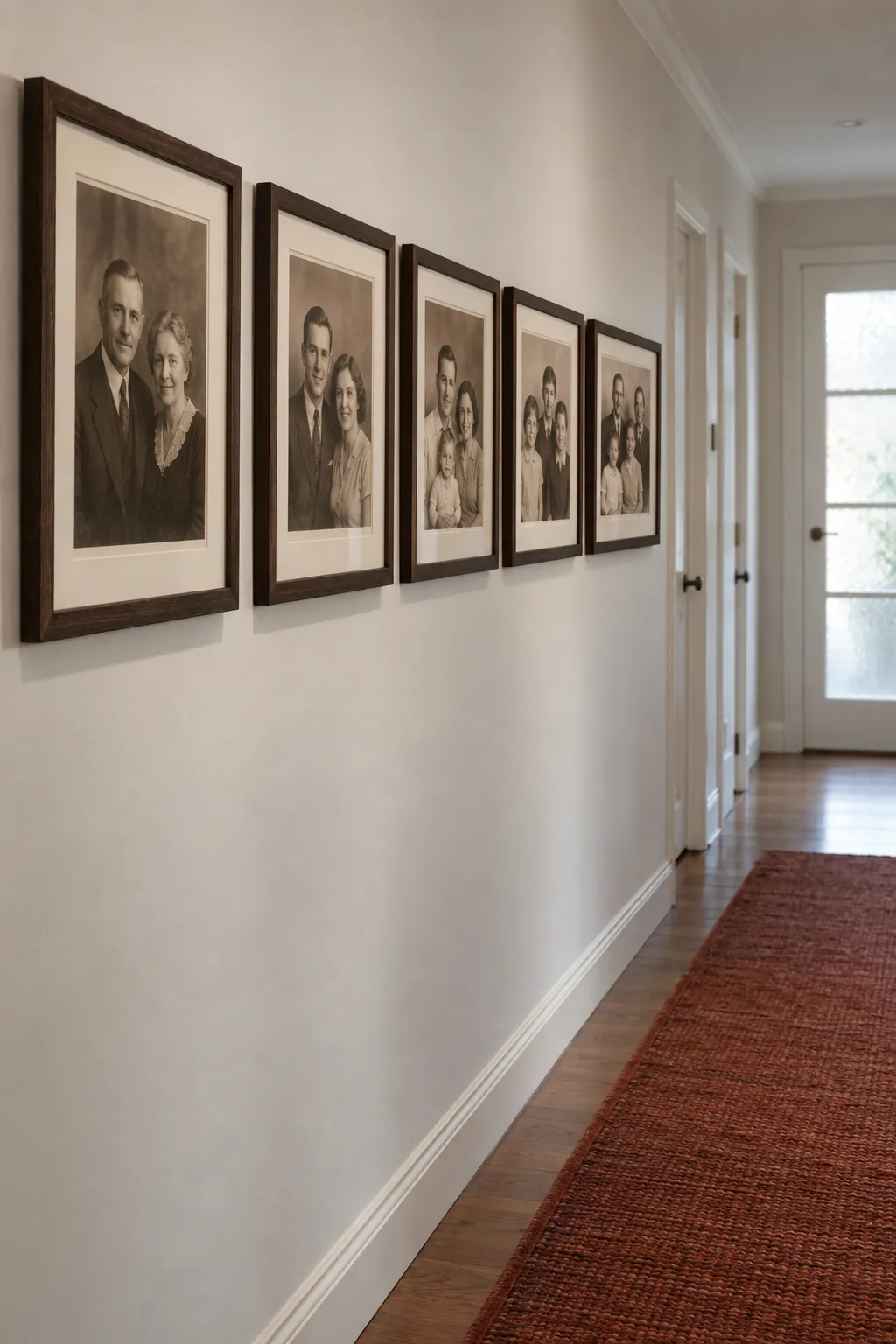
A family timeline along a hallway
Arrange family photographs in a clear chronological direction so the hallway tells a story as you walk. Similar frame sizes help viewers follow the images without stopping to decode the layout. Keep original photographs protected and display copies when light exposure is a concern. If you add dates, use small readable labels that do not compete with faces.
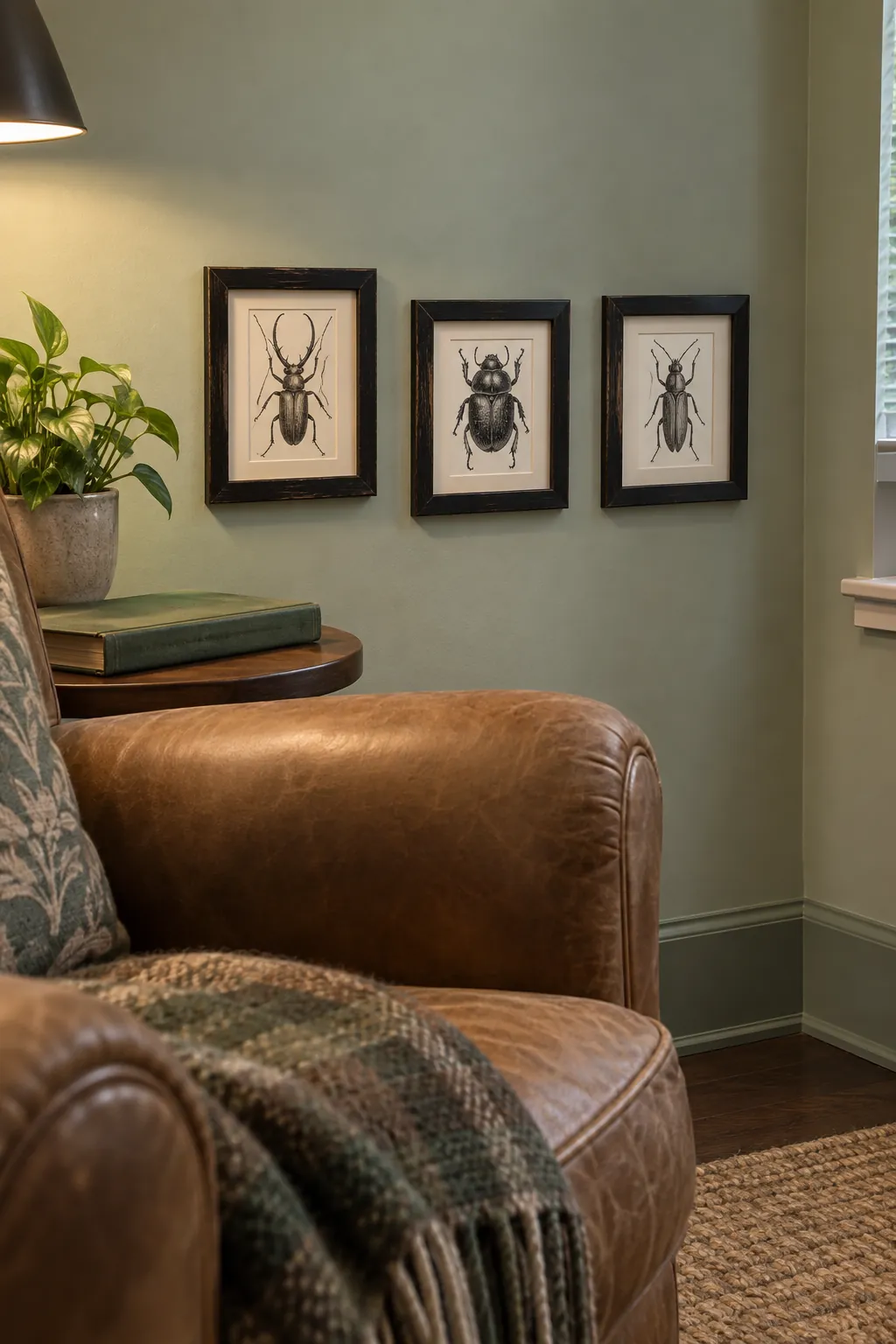
A low arrangement beside a reading chair
A small group beside a chair can be hung for seated viewing instead of following the height of a formal hallway gallery. Choose pictures with close details, such as an ink study or a treasured book illustration. Keep the frames clear of the chair back and anyone leaning into the corner. Adjust the reading lamp so its reflection does not cover the main image.
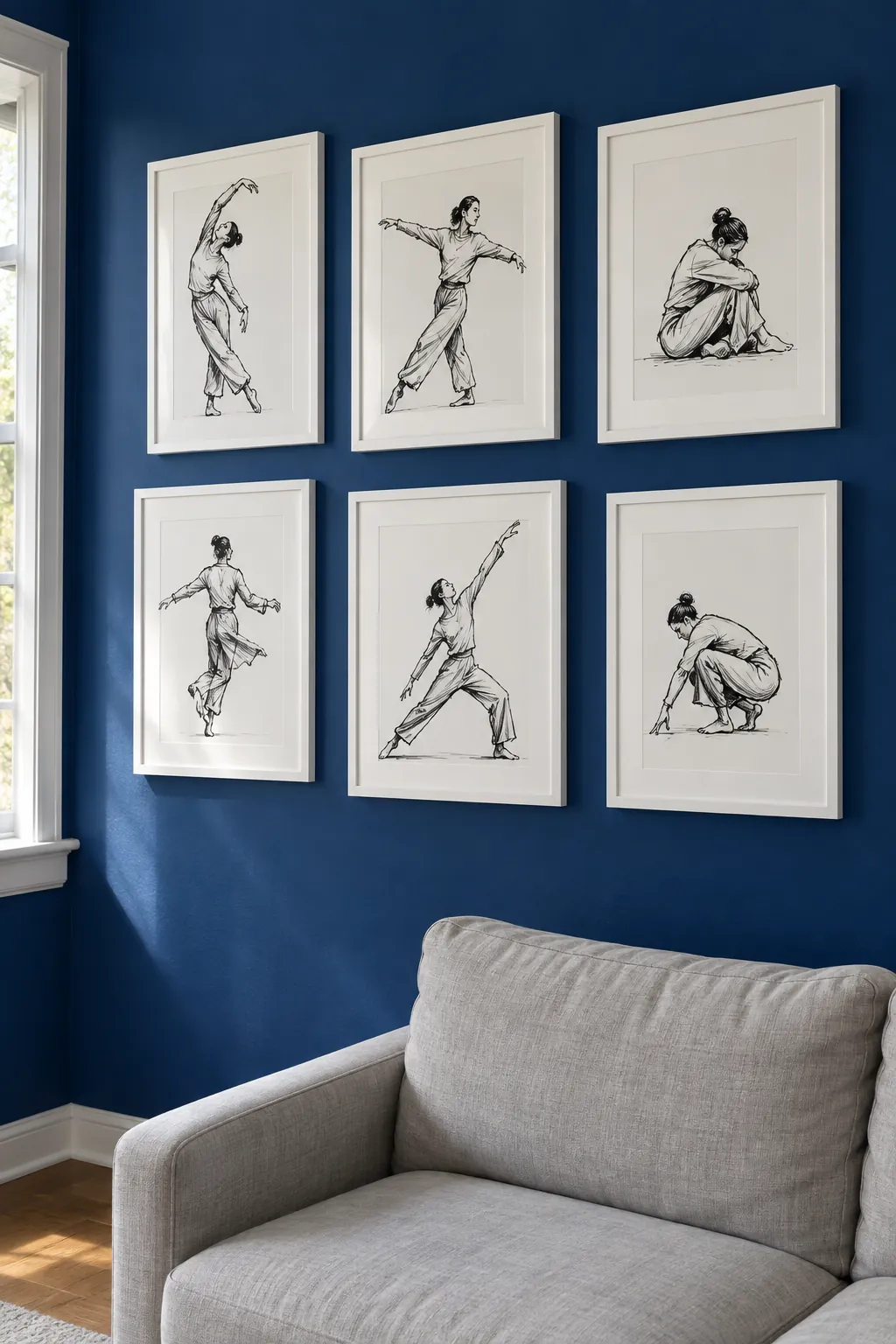
White frames on a deep colored wall
White frames create a clear outline against a saturated painted surface. Use a consistent white finish because creamy and bright whites can look unintentionally mismatched side by side. Leave enough visible wall between pieces for the paint color to act as part of the composition. Try the frame and mat samples against the actual wall before buying a complete set.
A large rectangle made from assorted frames
Different frames can still create a disciplined outer shape when their edges collectively describe a rectangle. Map the outside boundary first and fit the smaller pieces within it. Keep interior gaps similar enough that the collection reads as one group rather than several clusters. This arrangement takes more planning, so photograph the floor layout before transferring it to the wall.
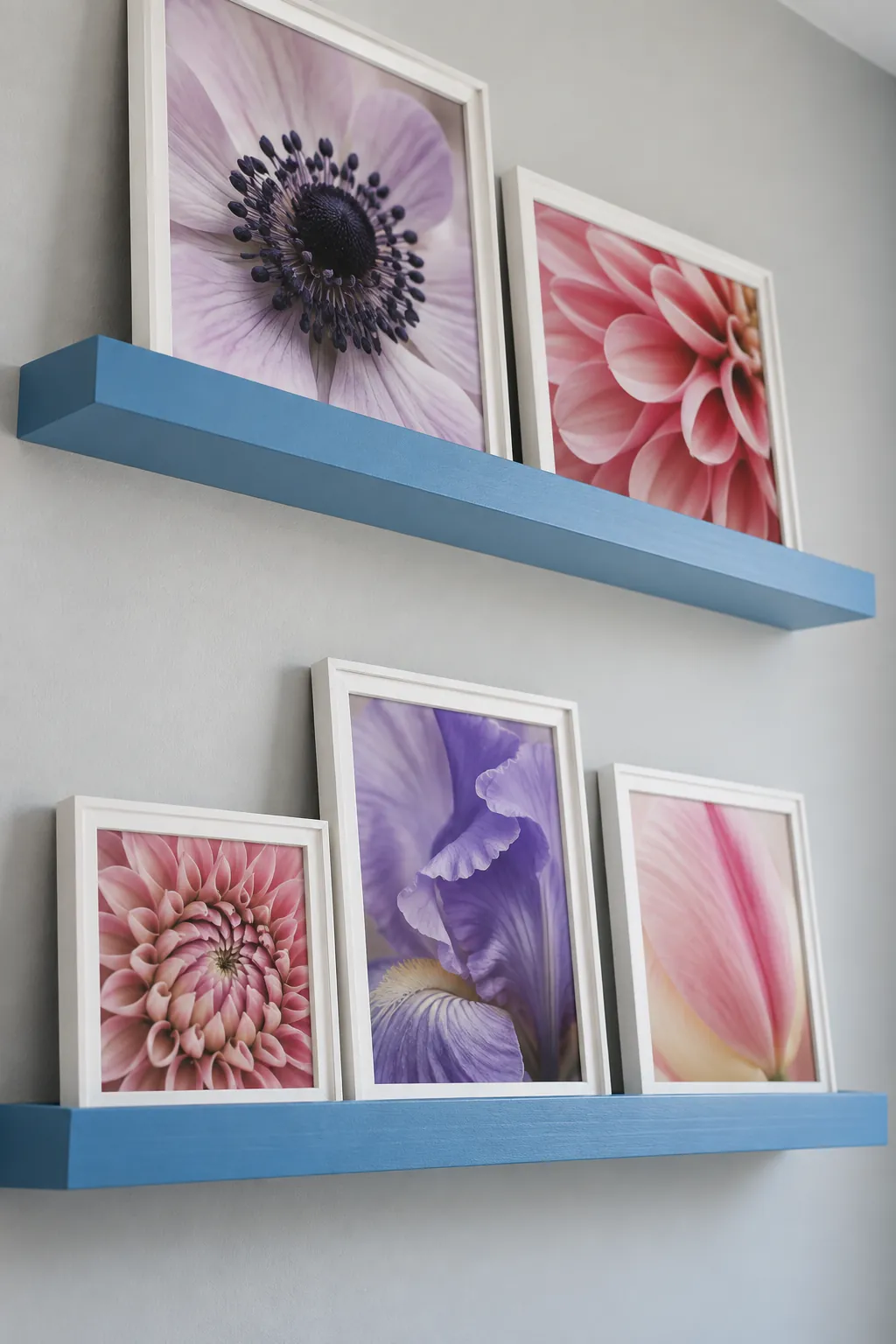
A pair of shelves for rotating photographs
Two picture shelves offer separate layers for photographs in a space where the collection changes often. Allow enough vertical clearance to lift the tallest frame out easily. Put smaller frames forward without hiding important portions of the pictures behind them. Follow the rated load for each shelf and avoid placing loose heavy frames above a sleeping or busy play area.
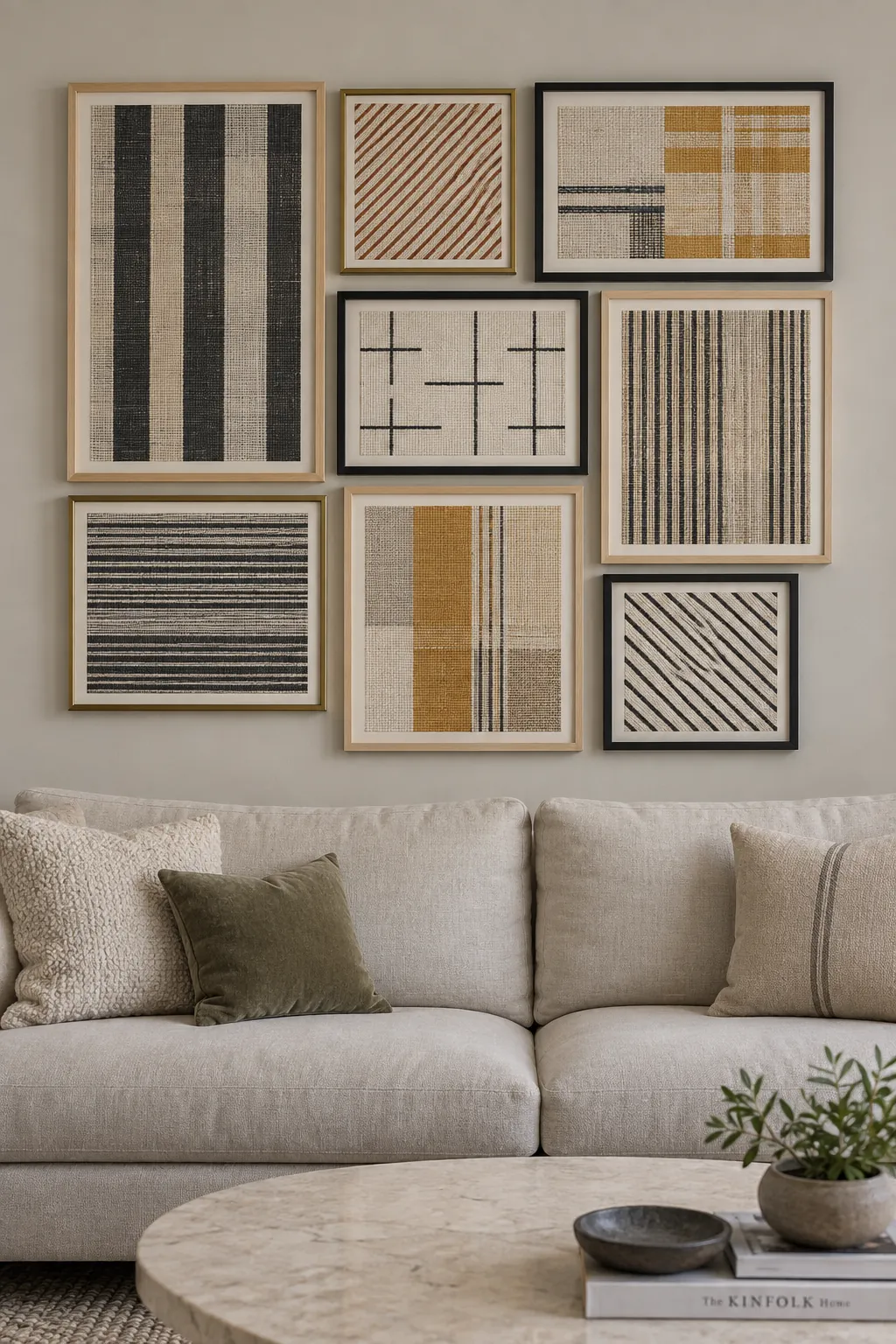
A small collection with room to grow
Begin with a few pictures you enjoy and leave a deliberate open edge for future additions. Repeat one practical rule, such as the same mat color, so new pieces have a way to belong. Photograph the current arrangement and note the frame measurements before shopping for another piece. The wall should serve the collection you actually have, with enough freedom for the next photograph that matters.