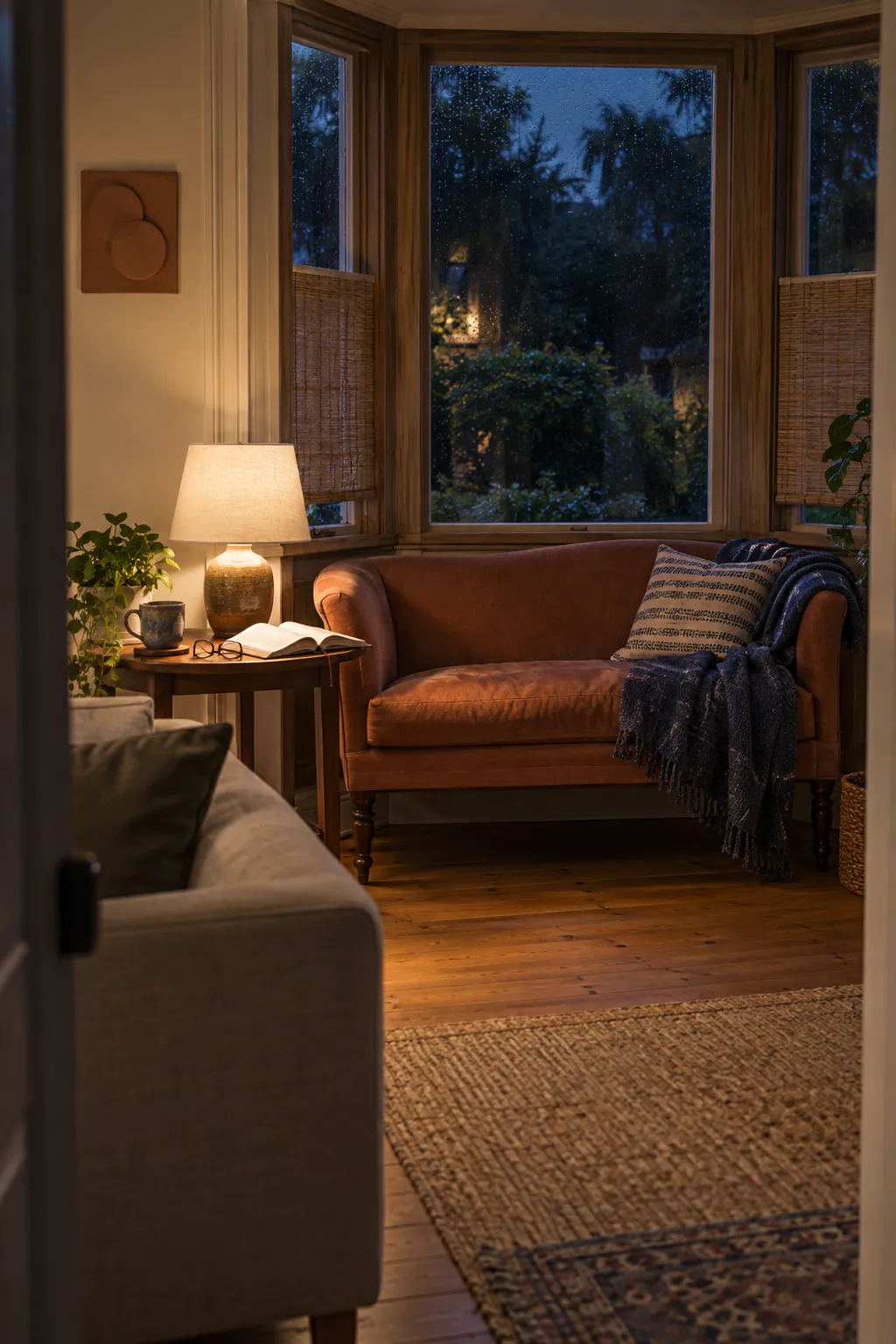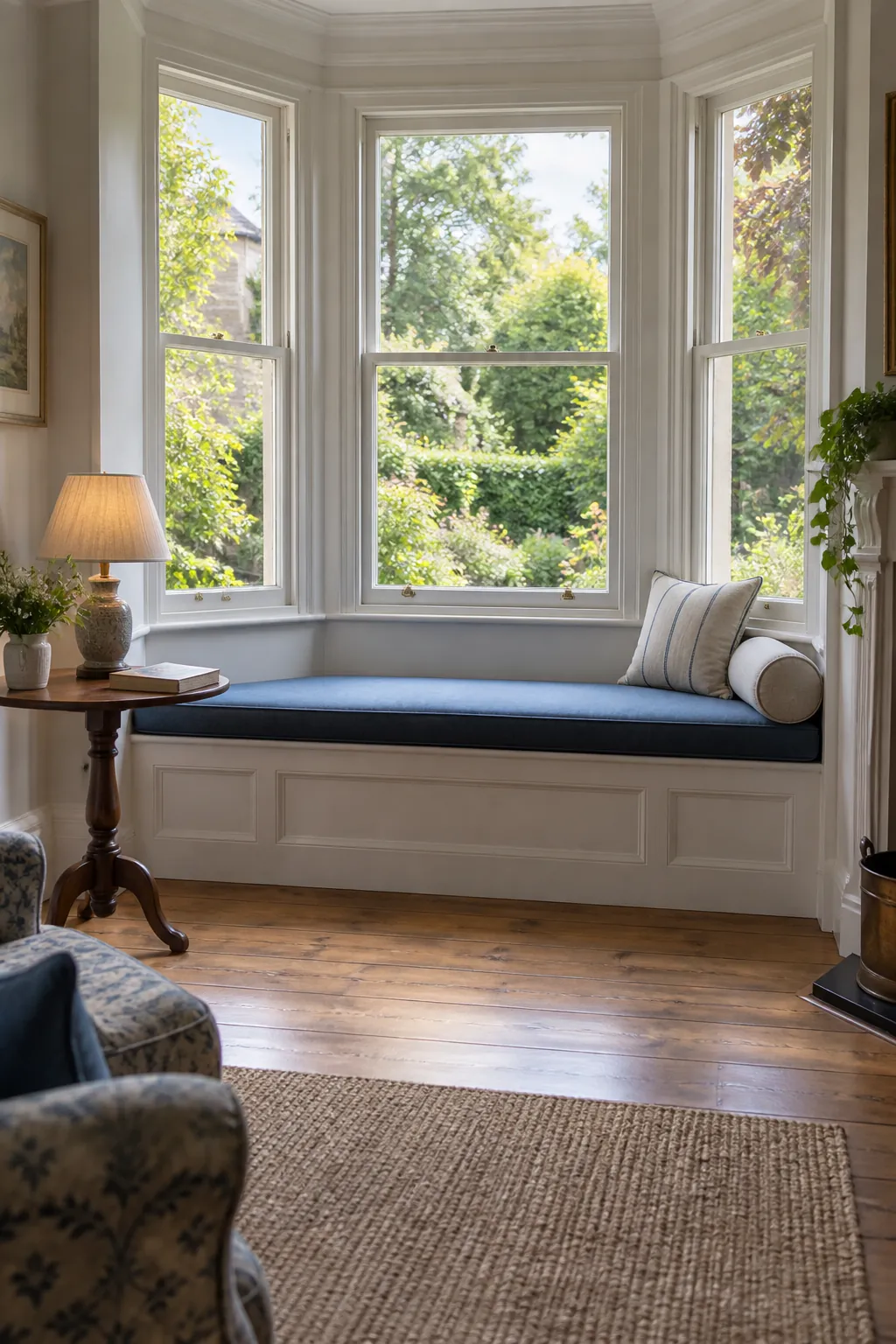
The light is lovely, but ten minutes into your book you are shifting against the window frame. A comfortable corner starts with somewhere reliable to lean, enough space for your legs, and a place to set down the book. Get those decisions right before spending on cabinetry or another pile of cushions.
Choose your reading posture before your seat
A bench can look inviting while leaving you searching for somewhere to put your back. Before ordering cabinetry, sit near the bay with the book you normally read and notice your position after twenty minutes. Feet on the floor, legs tucked up, and legs stretched along a cushion each need a different amount of usable space.
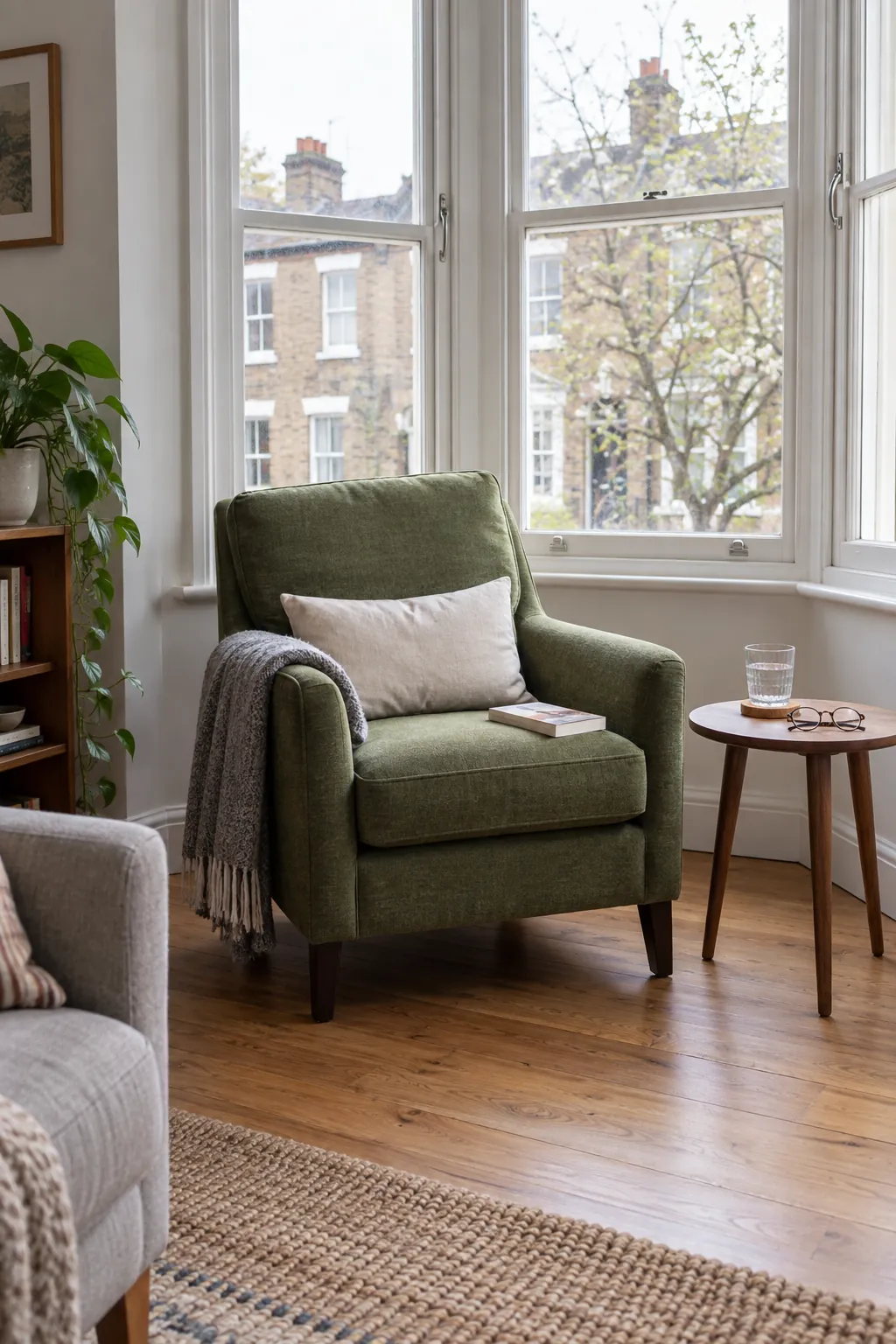
For upright reading, an armchair may give you better support than a fitted seat. Angle it toward the room so daylight arrives from one side, then check that the chair still clears the window handles and curtains. In a rental, this also lets you create a cozy window nook without committing to permanent joinery.
A built in reading nook makes more sense when you enjoy sitting sideways and have a solid end against which to lean. Count the room taken up by back cushions before deciding the seat is deep enough. The useful dimension is the space your body can occupy after the upholstery is in place.
Measure the space you can actually use
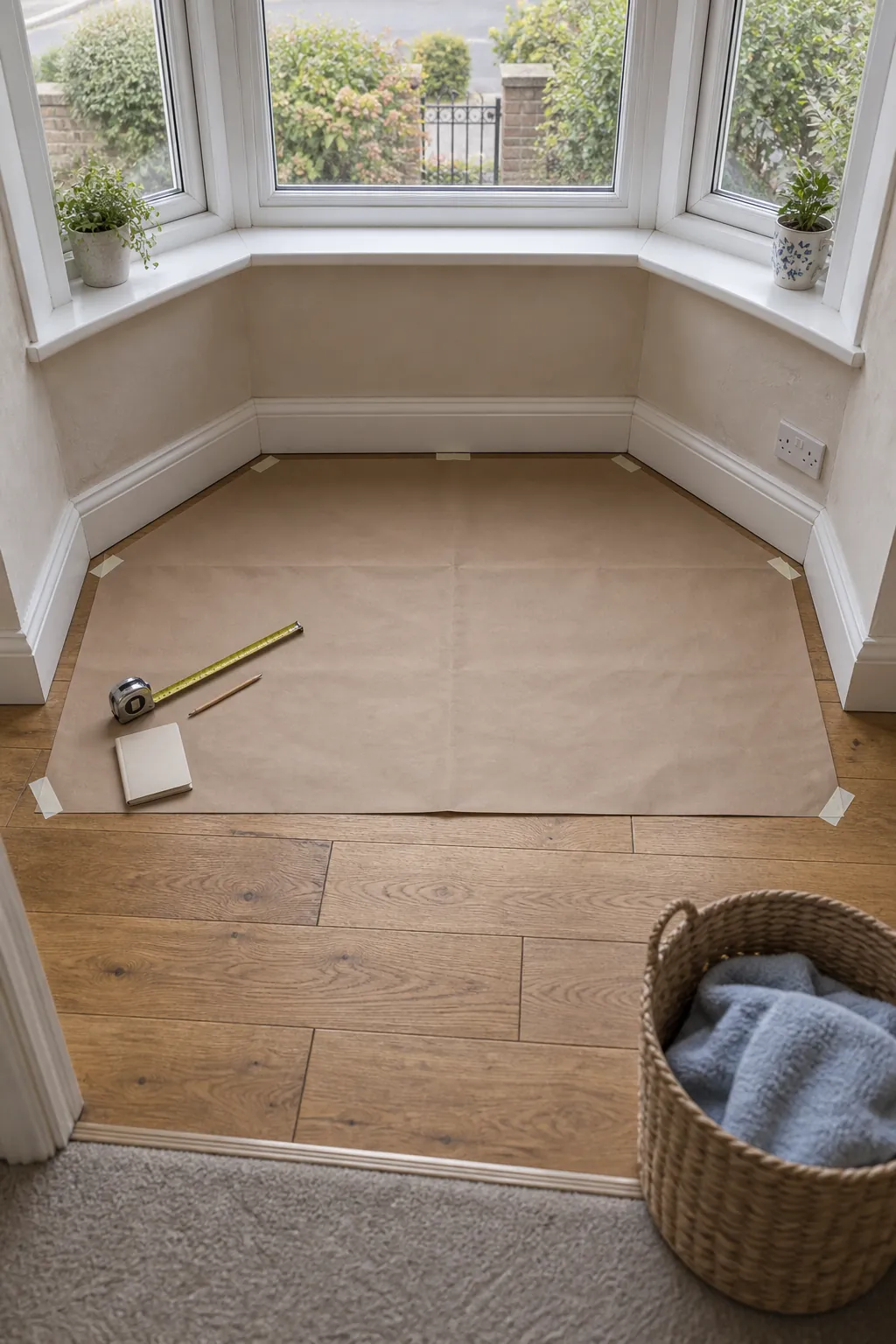
Bay windows rarely behave like a simple rectangle. Measure the front opening, the middle depth, and each angled return separately, then record any sill overhangs or skirting that intrude into the footprint. Mark a proposed seat outline with paper or removable tape before buying anything, and walk past it carrying a laundry basket. A shape that fits the glass line can still crowd the route through the room.
Check the window operation with the full proposed cushion height represented. Handles, inward opening panels, vents, and curtain hems need working room, while radiators and outlets may rule out an enclosed base. If the bay contains heating equipment or the proposed work affects the building, have the relevant professional check the design before construction. Small window seat ideas work best when the surrounding room stays easy to use.
Make the cushion fit the way you sit
Treat the seat cushion and the back support as separate decisions. A comfortable seat needs enough resilience to avoid bottoming out, but adding thickness also raises your feet and moves you closer to the sill. Try upholstery samples under your own weight, and use a full size paper template when asking a maker to fit an angled bay. For sideways reading, place a supportive wedge at a solid end and add a smaller cushion only if it improves your posture. Do not lean your weight directly against the glazing.
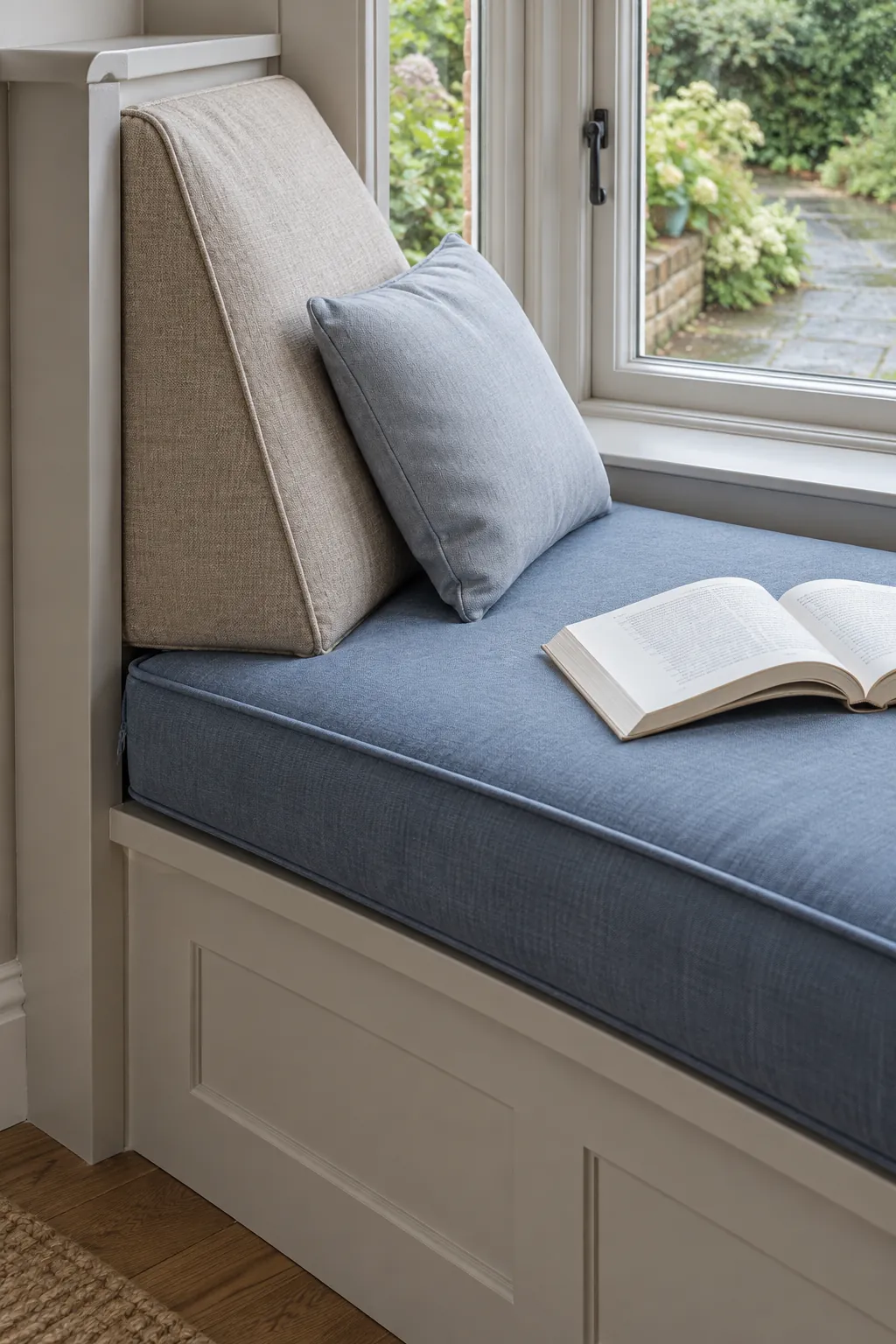
Keep the view and soften the glare
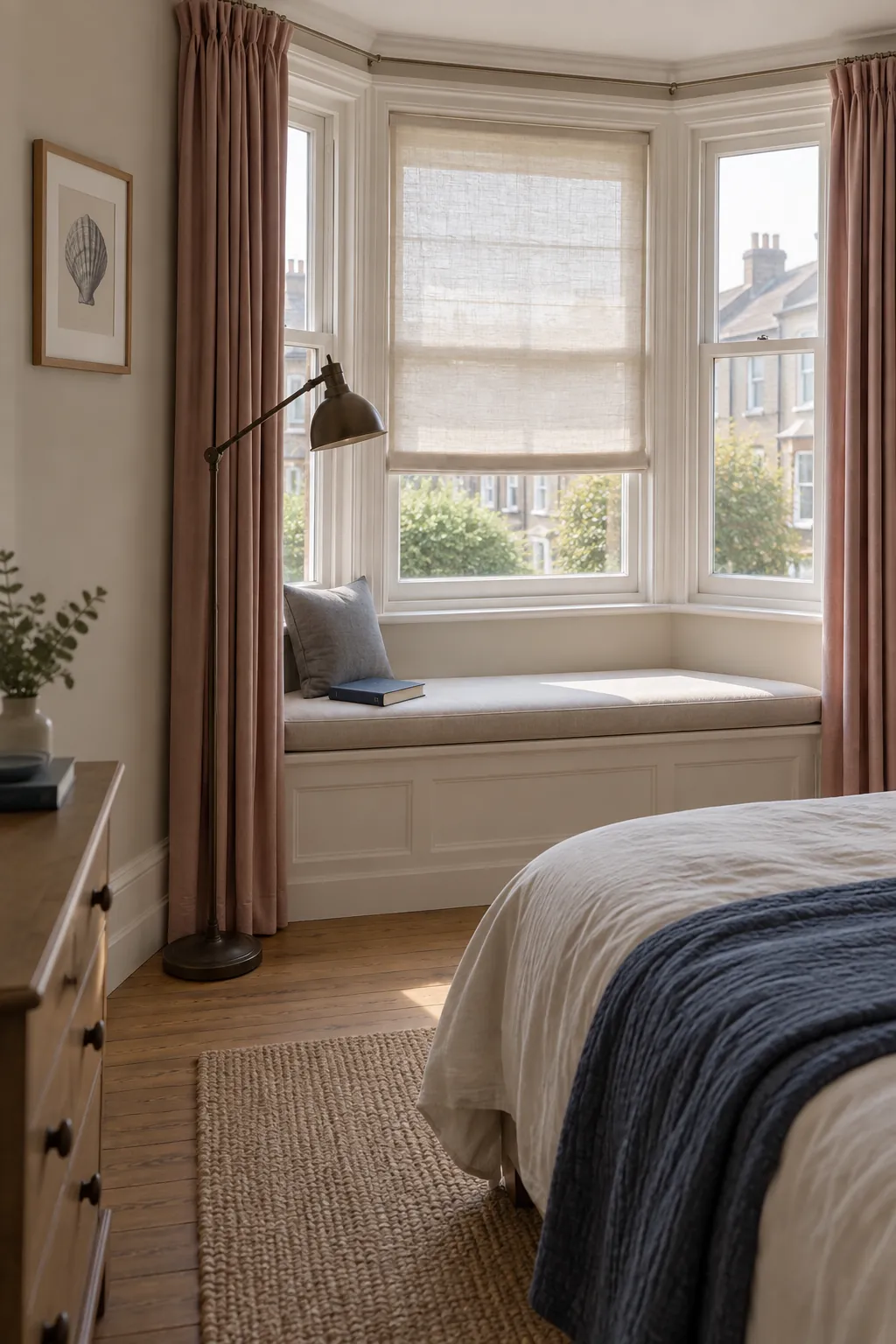
A bright window behind a page can become tiring even when the room looks beautiful. Turn the seat slightly so daylight falls across the book, and test the arrangement at the time you usually read. A translucent blind can soften strong sun while leaving the bay visually open.
Fit treatments so they operate without catching on the seat or piling up behind your shoulders. In a window nook bedroom, privacy may call for a separate opaque layer at night. Choose cordless controls where possible and keep fabric clear of heaters.
After sunset, a shaded task light should illuminate the page without exposing a bright bulb at eye level. Try its position while seated before fixing a wall fitting. A modest amount of background light can keep the book from feeling like a bright island in an otherwise dark room.
Give storage enough room to open
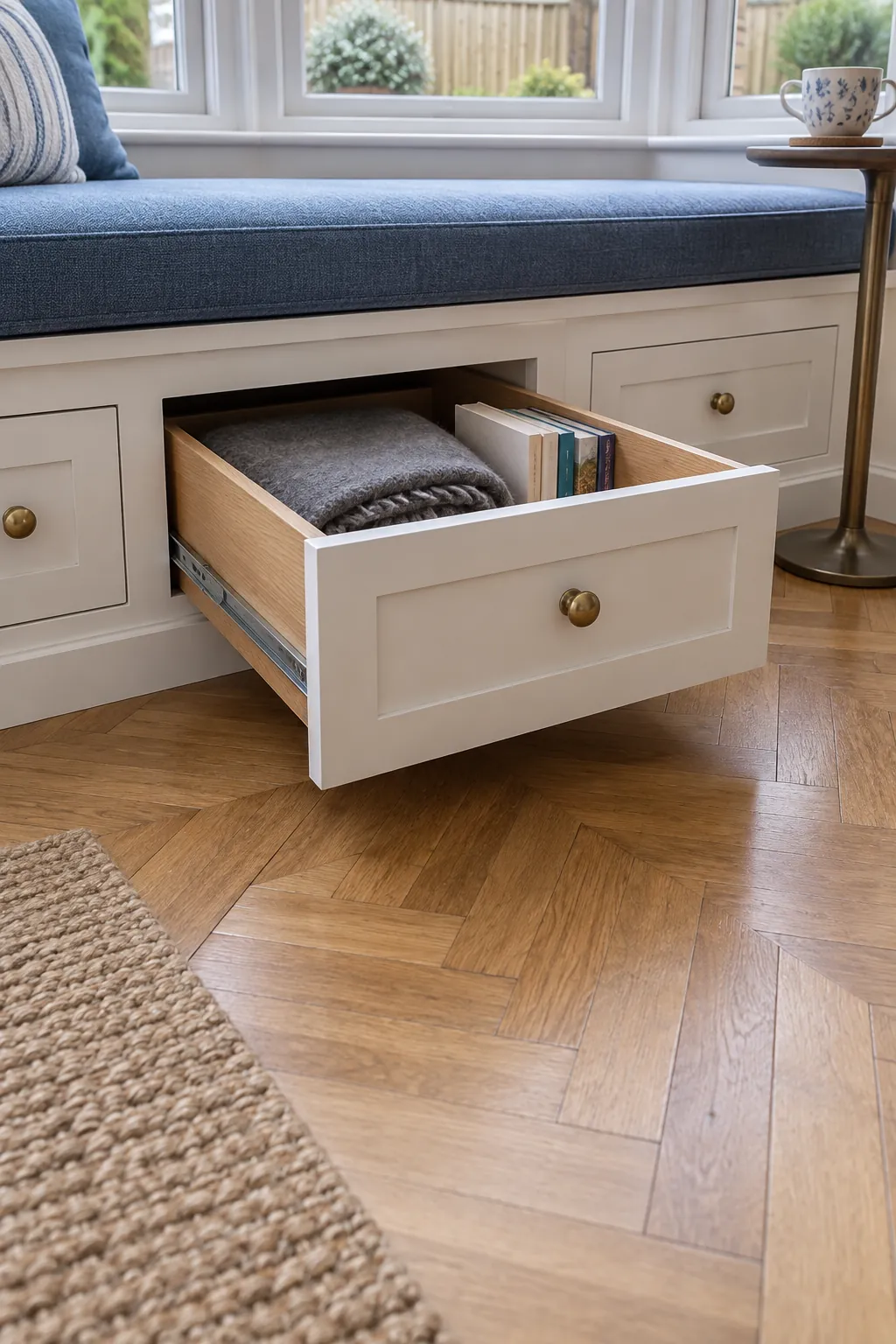
Storage beneath a bay window sitting area is useful only when you can reach it. A drawer needs clear floor in front, whereas a lifting lid means moving cushions and books every time. Choose drawers for items you use daily and reserve awkward compartments for occasional storage.
Keep the current book close enough to pick up without twisting or leaning across the seat. A small table beside the opening can hold a mug more securely than a soft cushion, provided it does not block a drawer or walkway. Leave access to sockets, service points, and any required ventilation instead of enclosing them behind an attractive front.
Test the nook with a real reading session
Finish the practical setup before adding decorative layers. Bring a book, switch on the evening light, and sit long enough to notice whether your shoulders relax or your feet keep shifting. Adjust the support that causes the problem instead of adding another pillow everywhere.
A washable cover and a small blanket are often enough to make the space feel personal. Keep the glass and the area behind the cushion accessible for cleaning, and investigate dampness rather than hiding it under fabric. The best bay window styling leaves room for the ordinary objects you actually use.
Before calling the nook finished, stand up, open the window treatment, and put your book away. If each movement is easy and you want to sit back down, the arrangement has earned its place. That is a better test than whether every cushion stays perfectly aligned.