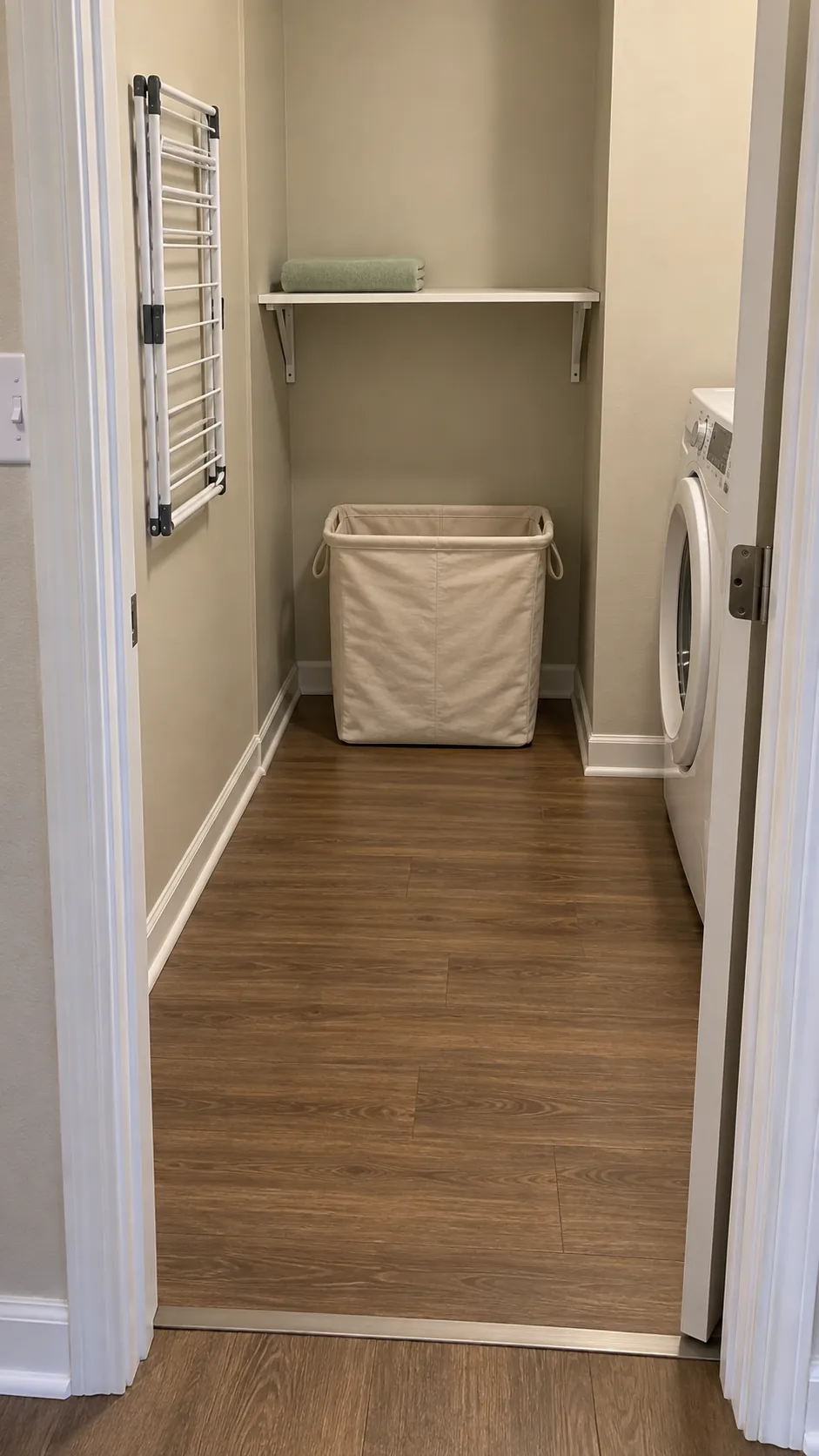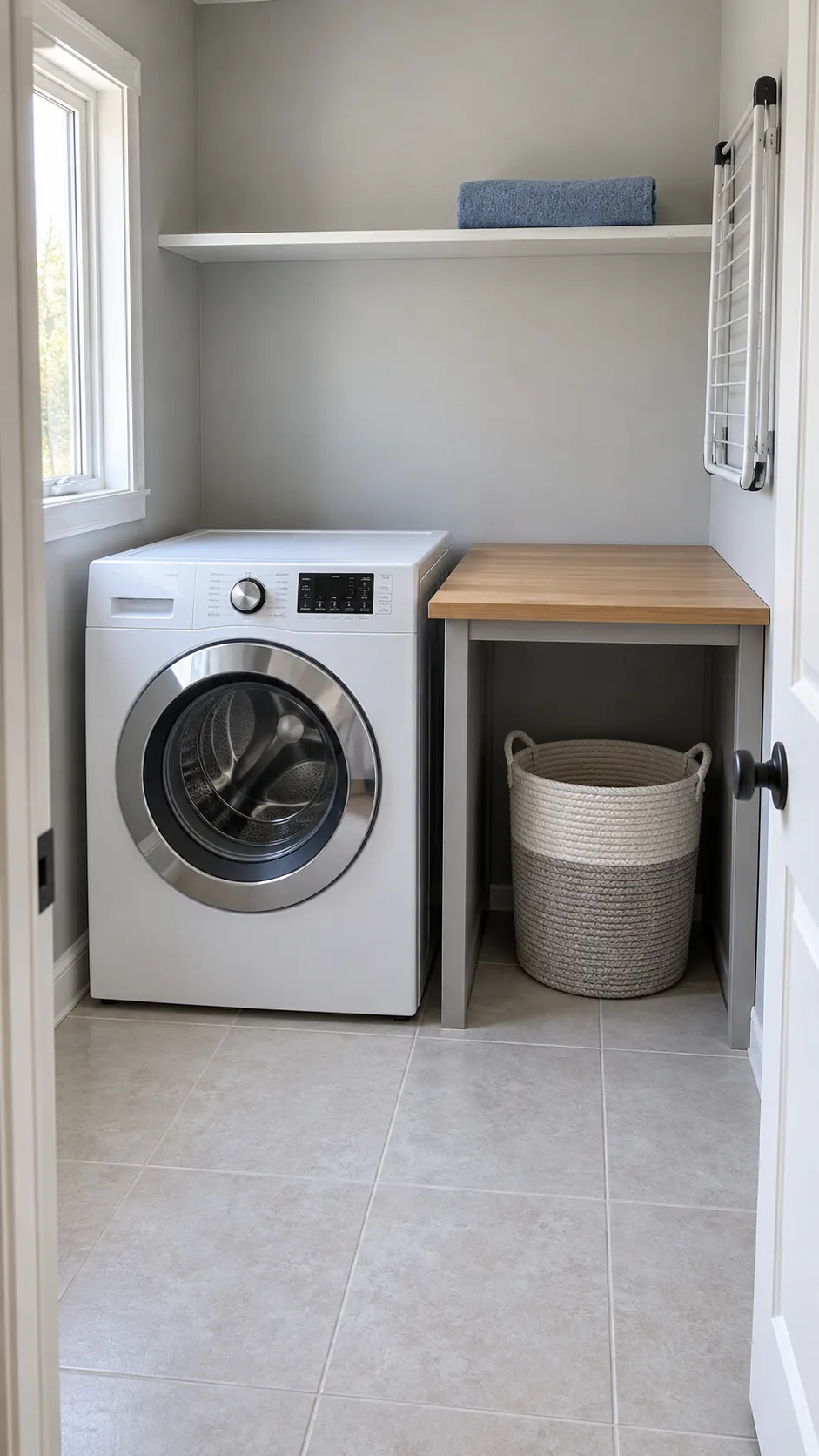
If a basket blocks the door and a drying rack blocks the washer, more storage may make the room harder to use. Start by giving each stage of a load somewhere to happen. The goal is to move clothes through the space without repeatedly moving the furniture first.
Trace one load through the room
Carry your usual basket into the room and go through sorting, loading, unloading, drying, and folding. Notice where you have to turn sideways, set clothing on the floor, or reach across an open door. Those interruptions tell you more than an empty room photo.
Measure the doorway, appliance footprints, open door swings, and the standing space you need while carrying a basket. Check installation manuals for service and ventilation clearances. Include hoses and dryer ducting in the real appliance depth; the cabinet dimension alone is not the installed footprint.
Give the floor a clear route before choosing another cabinet. If the room cannot hold sorting bins without blocking that route, sort in a bedroom or bathroom and bring in one load at a time. A small laundry room layout works better when it handles a realistic job rather than every household storage problem.
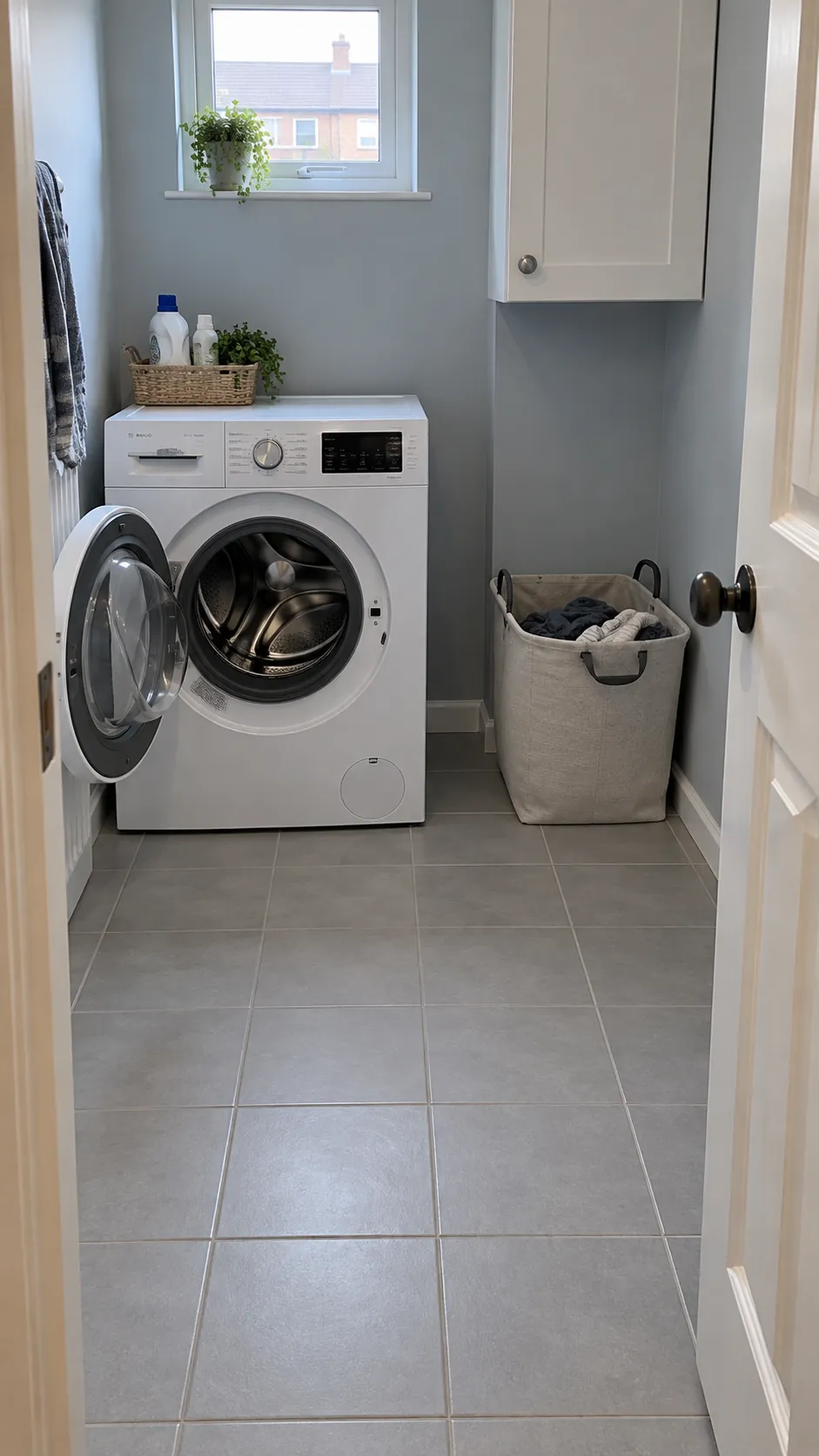
Choose the appliance arrangement around your reach
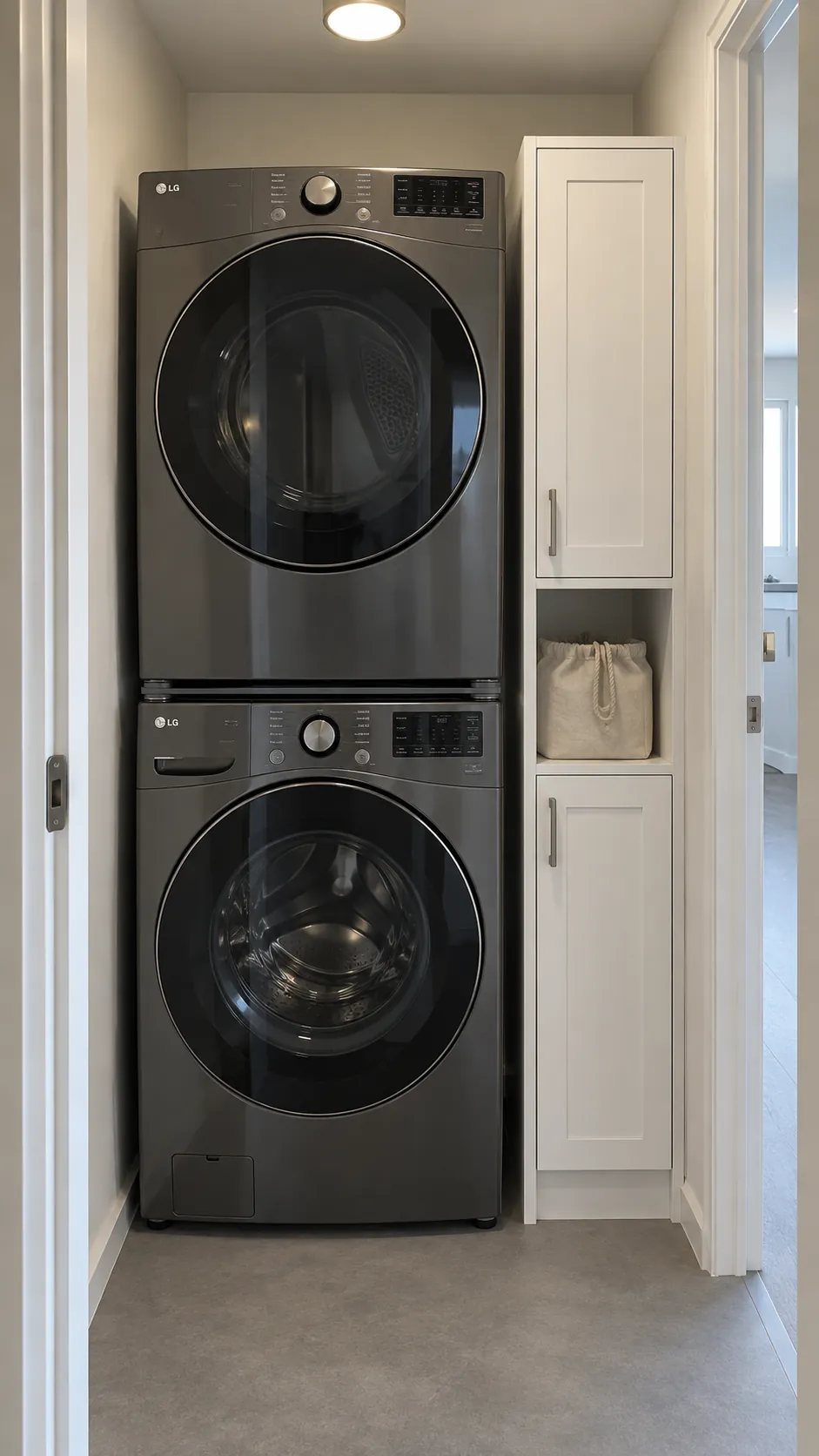
Stacking can free floor width for a cabinet or hamper, but only stack models approved to work together using the specified stacking kit. Follow the manufacturers’ installation requirements, and have the installation handled appropriately. Never place a dryer on an improvised shelf above a washer.
Before committing to stacked washer dryer storage, check whether everyone who uses the room can reach the upper controls and drum comfortably. Compare that gain in floor space with the folding counter you might have above machines placed beside each other. Door hinges, overhead obstructions, and the route for removing an appliance during repair matter too.
You may not need to rearrange the machines at all. If they already fit and work well, a better hamper location can solve the immediate problem at much lower cost. Move plumbing, electrical connections, or a dryer exhaust only through suitable qualified work and applicable local requirements.
Give clean laundry a temporary landing place
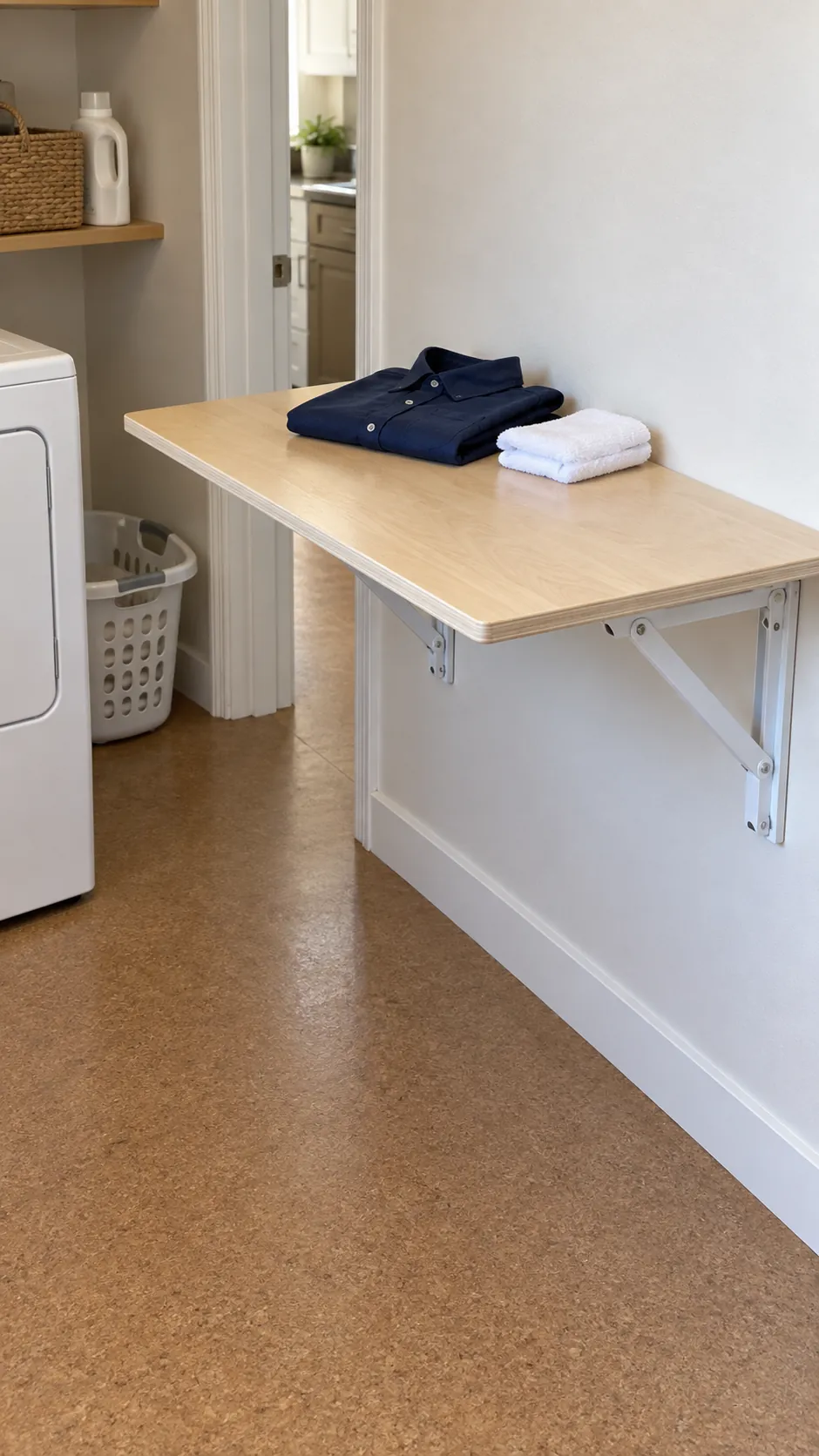
A laundry folding station does not have to be a permanent counter. A sturdy table that folds against the wall can work when it opens into clear space and has an appropriate installed load rating. Test its full footprint with the appliance doors open before buying it.
Above front loading machines, an independently supported counter can provide a useful landing place if it preserves required clearances and can be removed for service. A washer with a top lid needs its full opening arc and loading space instead. Do not balance a loose board on vibrating machines to create a worktop.
If neither option fits, keep a clean basket ready and fold on a nearby table. Protect that table from laundry products and return the basket after putting clothes away. A convenient surface outside the room is better than a cramped one that blocks the next load.
Plan drying space while the rack is open
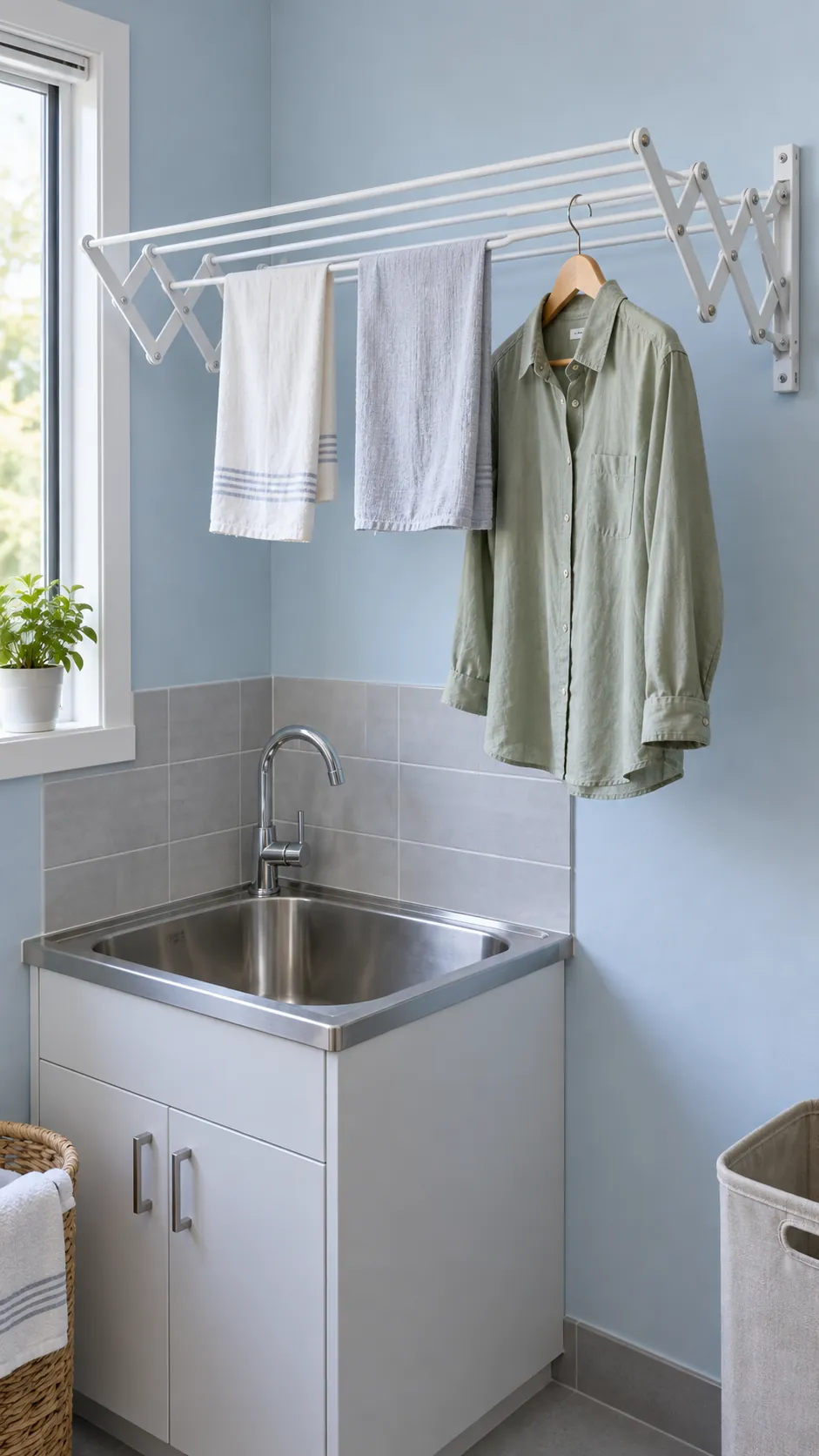
A wall mounted drying rack saves floor space only if its open position works with the room. Check where hanging sleeves and longer garments will fall, not just the empty rack’s depth. Keep clothing clear of doors, appliance vents, heaters, and electrical equipment.
Choose hardware and fixings rated for the installed surface and wet laundry load. A rack above a utility sink can be useful for drips when the sink remains accessible, but not every room has that geometry. Renters can use a suitable folding rack elsewhere and store it flat when dry, subject to their space and lease.
Air drying releases moisture into the room. Use appropriate ventilation and leave space between garments; persistent condensation or slow drying is a reason to reduce the load or move drying to a better ventilated area. A tiny closed closet is not automatically a good drying room simply because a rack fits inside it.
Put supplies where they can return easily
Keep the supplies for current laundry within a sensible reach, while following each product’s storage directions. Store cleaning chemicals in their original labeled containers and secure them away from children and pets. Open baskets are useful for cloths and mesh bags, not a replacement for safe chemical storage.
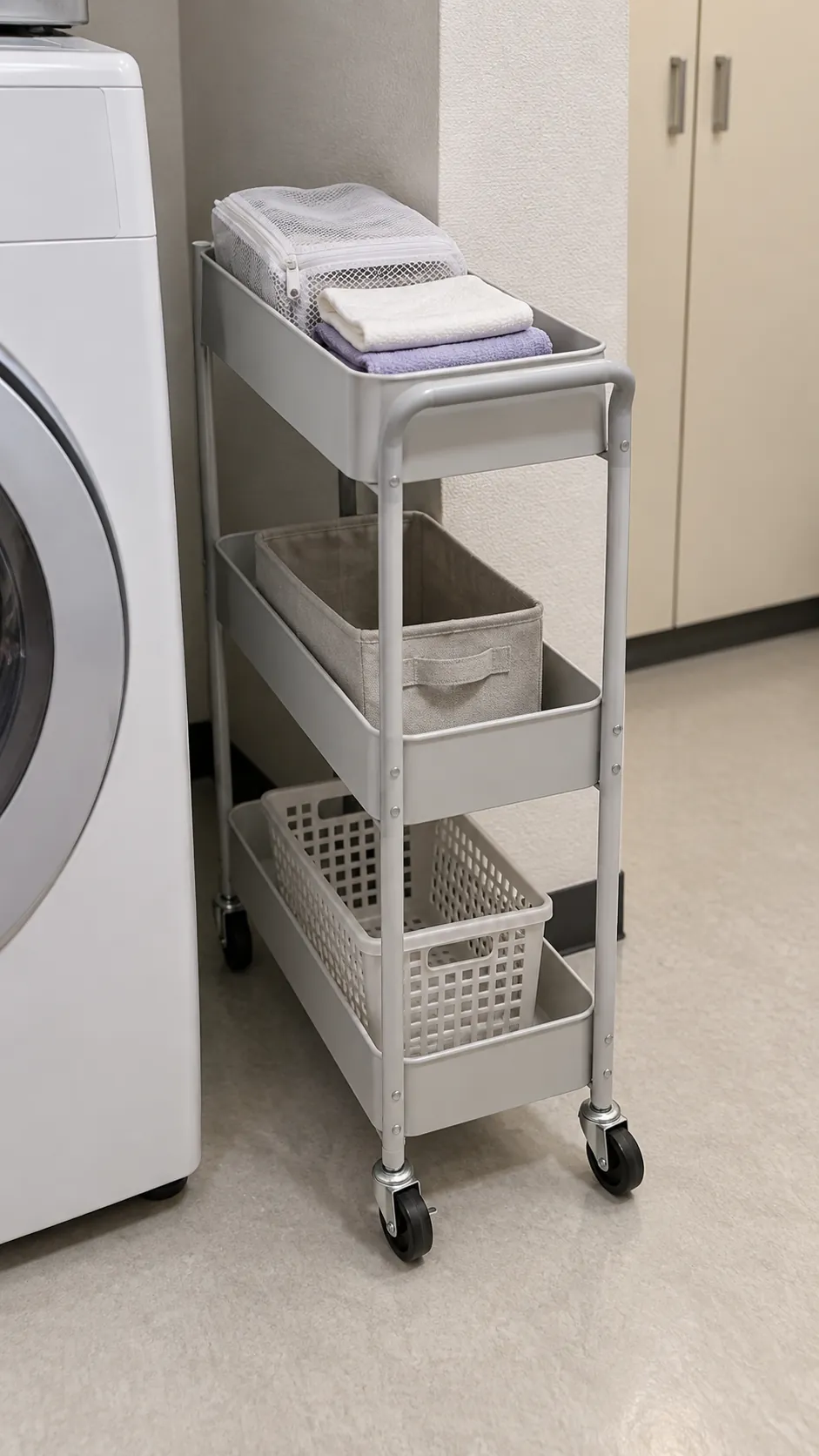
A slim laundry cart can use a spare gap, but measure the full cart width, handles, and wheels. Roll it out and check whether it blocks the doorway or catches a hose. Do not squeeze it into a clearance the appliance needs, and avoid tall unstable loads.
Over washer shelves suit light items when properly supported and positioned clear of lids, controls, and service access. Limit backup supplies to what you can store without crowding the work area. Laundry supply organization becomes simpler when you stop asking a narrow shelf to hold the entire household stockpile.
End each load with a clear room
Give clean laundry an exit rather than a permanent pile. Carry the finished basket to the rooms where the clothes belong, put away dry items, and return the empty basket to its assigned spot. A large sorting system helps only if your household actually empties it.
Keep lighting good enough to see stains and read care labels. Clean the dryer lint filter as its manual requires, maintain the exhaust system appropriately, and leave service points accessible. Storage should make these routine jobs easier to notice and perform.
After a week, remove or relocate the item you keep stepping around. Fold away the dry rack and temporary table when they are no longer needed. The best laundry room makeover is the one that leaves you able to walk in with the next basket and start.