Country character can come from a useful rack, a familiar material, or one well chosen piece with a story. The strongest kitchen walls still leave room for cleaning, safe access, and the work the room has to do. Choose the wall treatment that fits your light and routine, then let surrounding surfaces stay quiet.
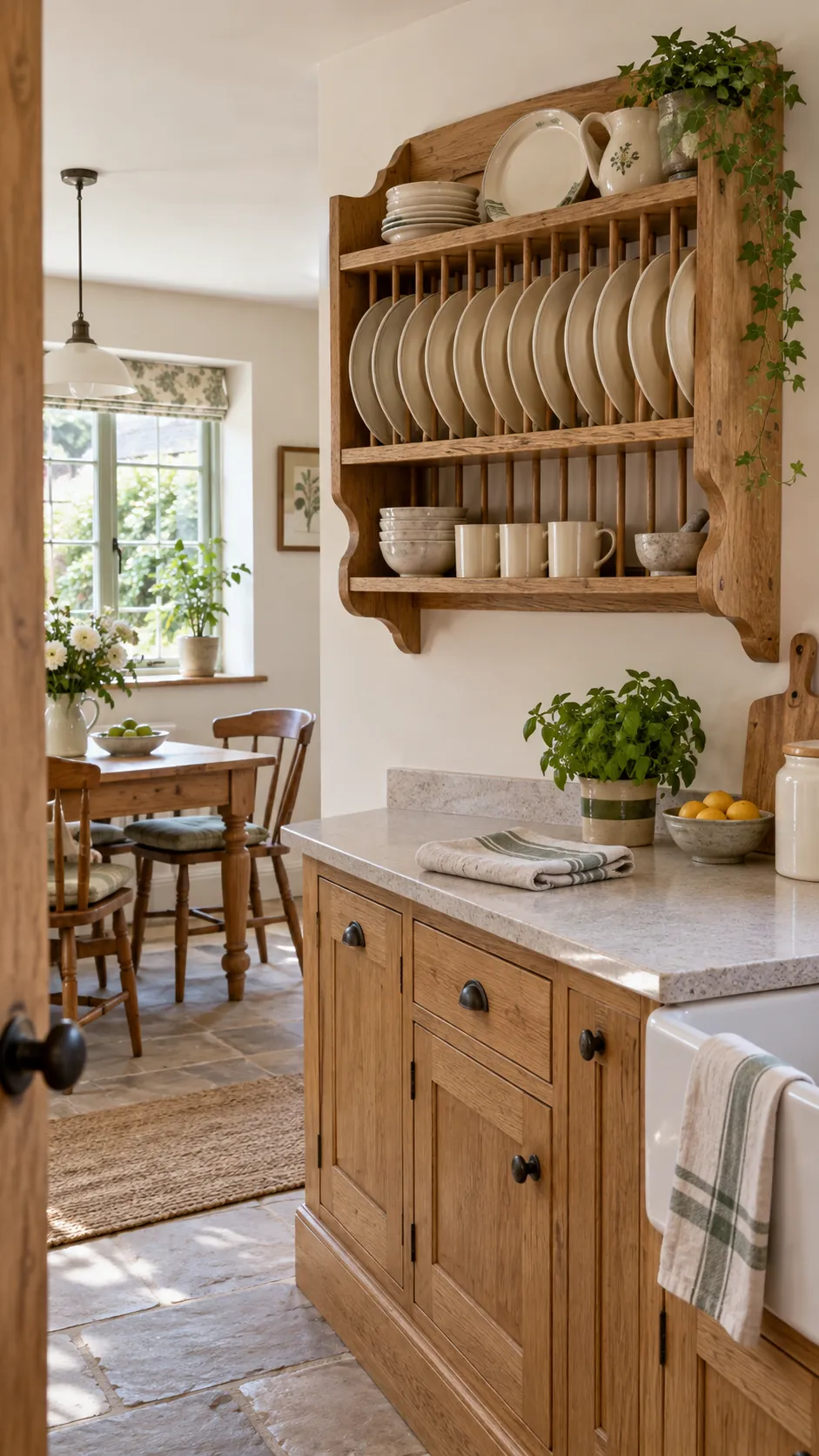
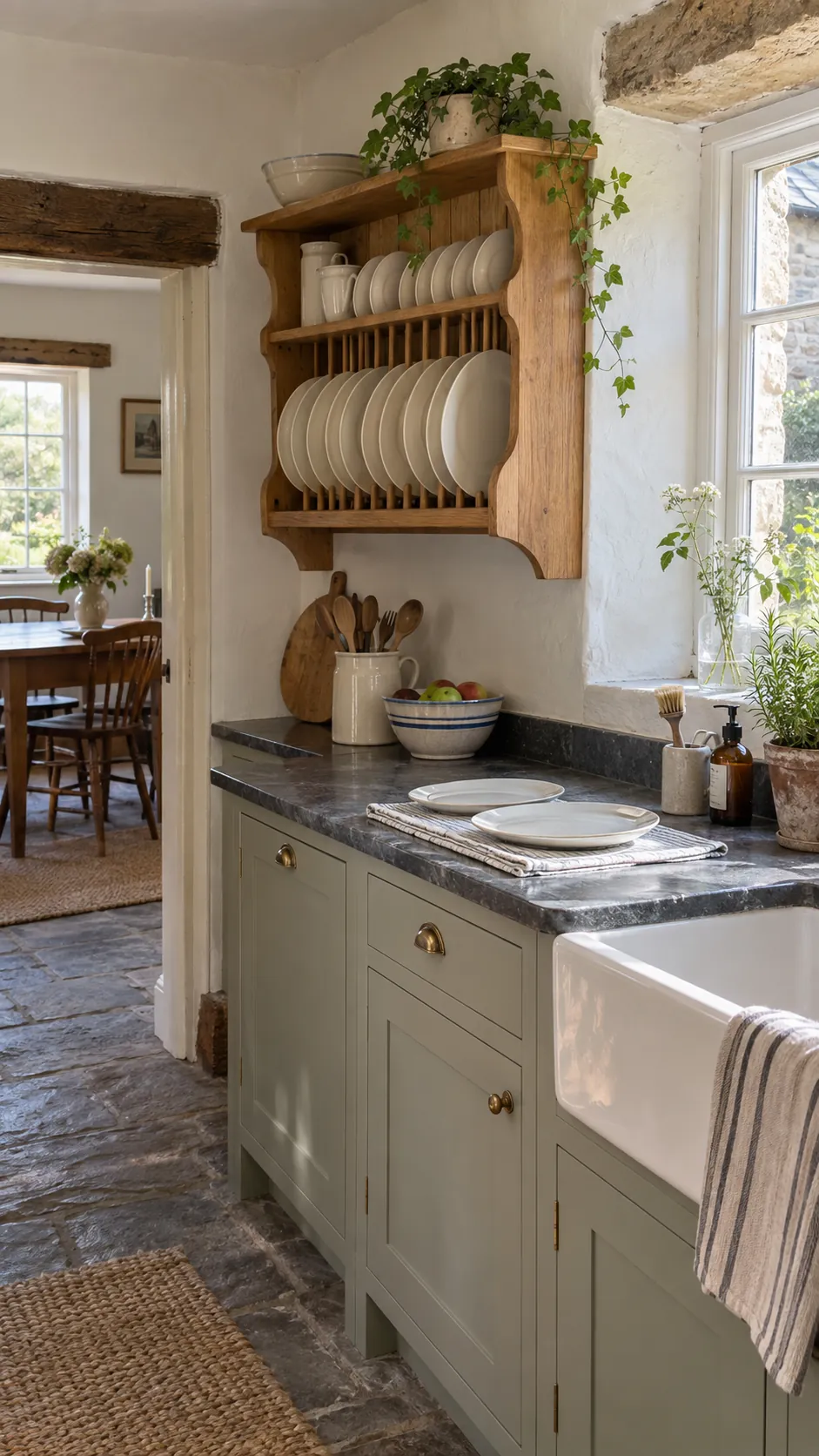
Open Plate Rack
An open plate rack can turn everyday dishes into useful wall decor. Choose a size that suits the wall and secure it for the weight of the dishes. Keep it far enough from splashing and cooking grease that routine cleaning remains manageable.
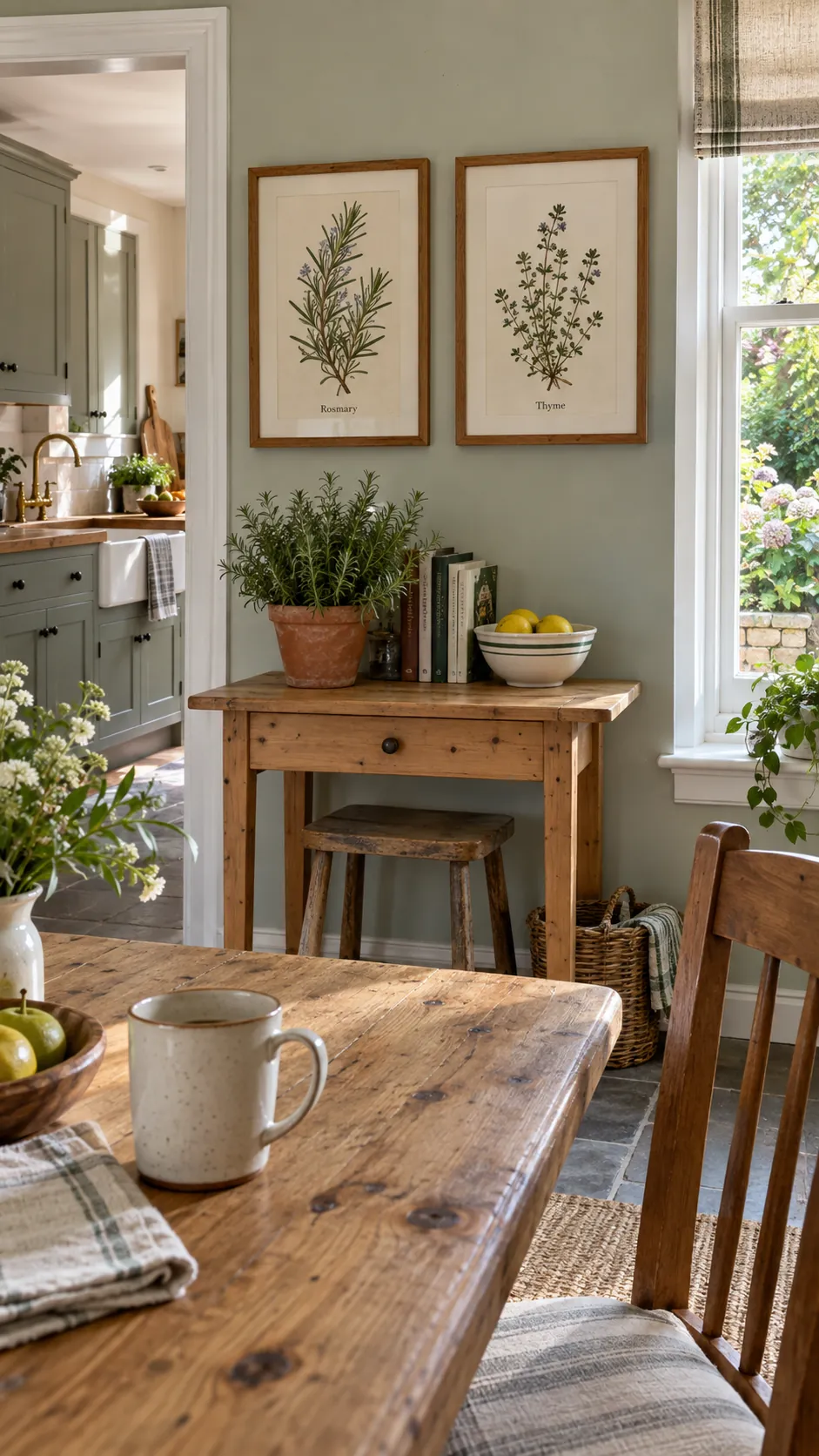
Herb Botanical Prints
A pair of framed herb studies brings a quiet garden reference into the kitchen. Choose distinct subjects, such as rosemary and thyme, rather than a row of generic signs. Simple wipeable frames and generous wall space make the prints feel considered.
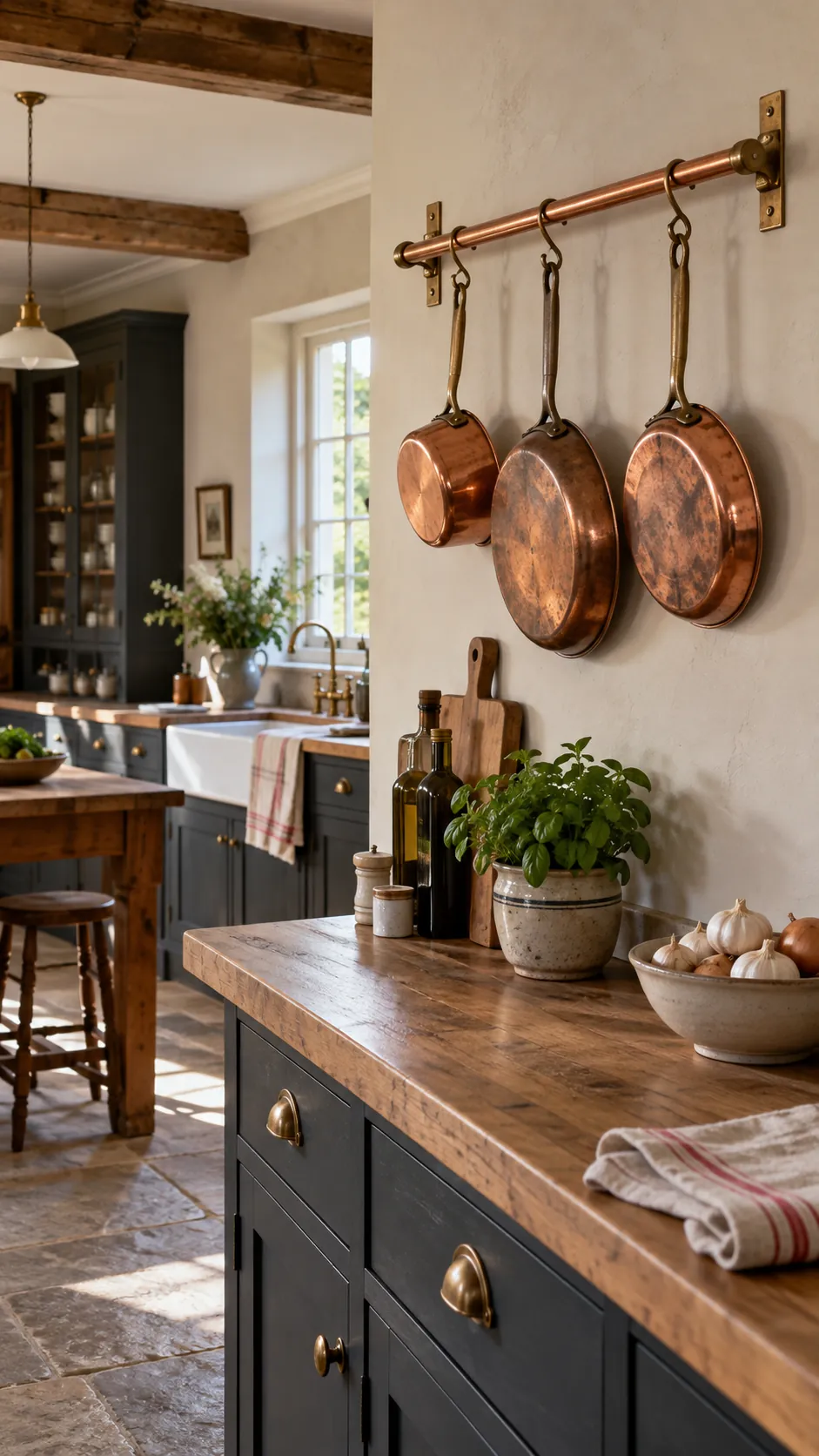
Copper Pan Rail
A copper pan rail can warm a plain wall while keeping cookware close to hand. Hang only pans the rail and fixings can support, with handles clear of the walking route. Use the arrangement where the cookware can be cleaned easily and safely reached.
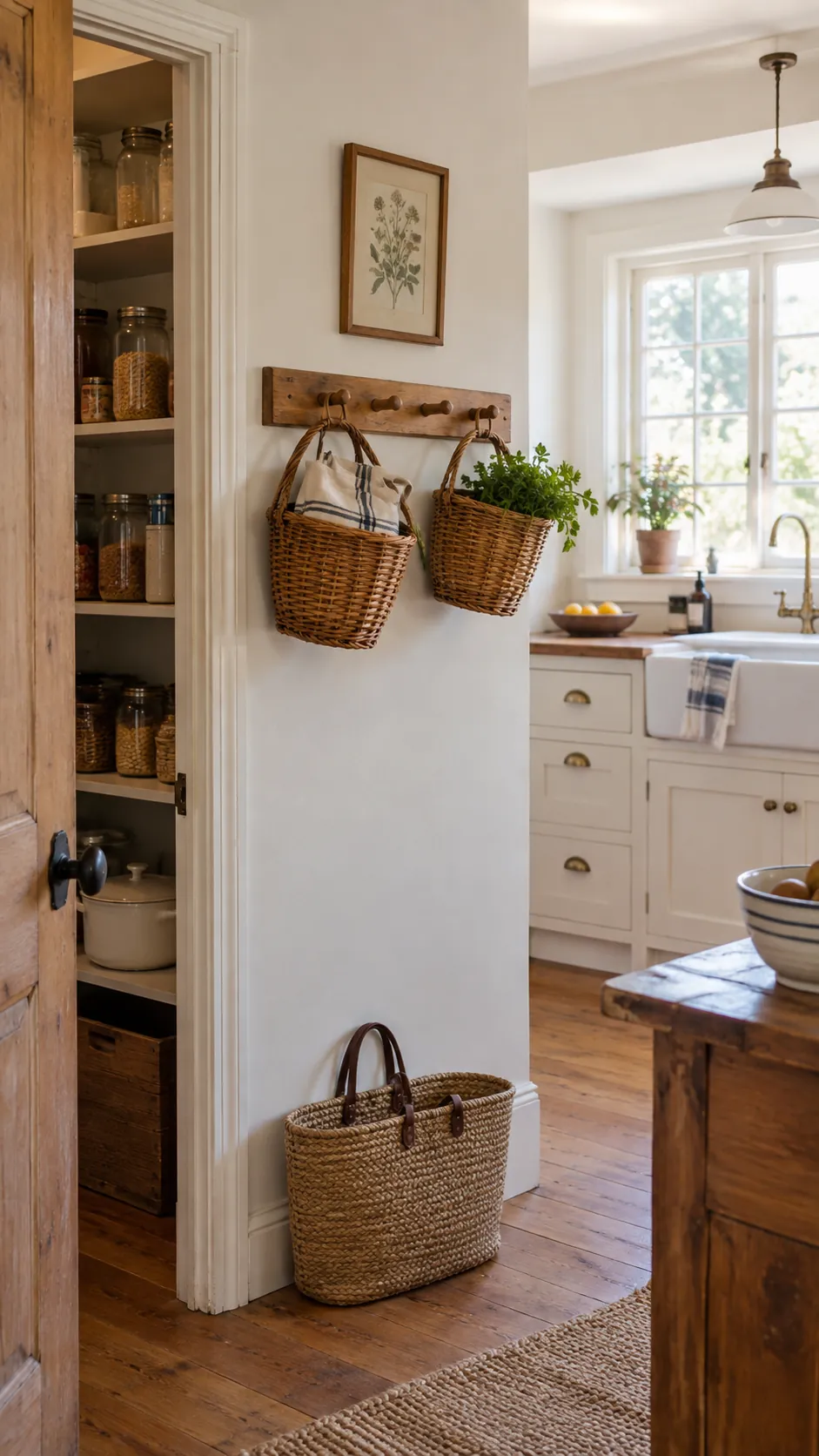
Peg Rail With Market Baskets
A timber peg rail can hold two small market baskets near a pantry door. Leave enough gap that each basket can be lifted off without disturbing the next. Keep the contents light and useful, such as cloth bags or napkins, rather than treating the rail as a heavy shelf.
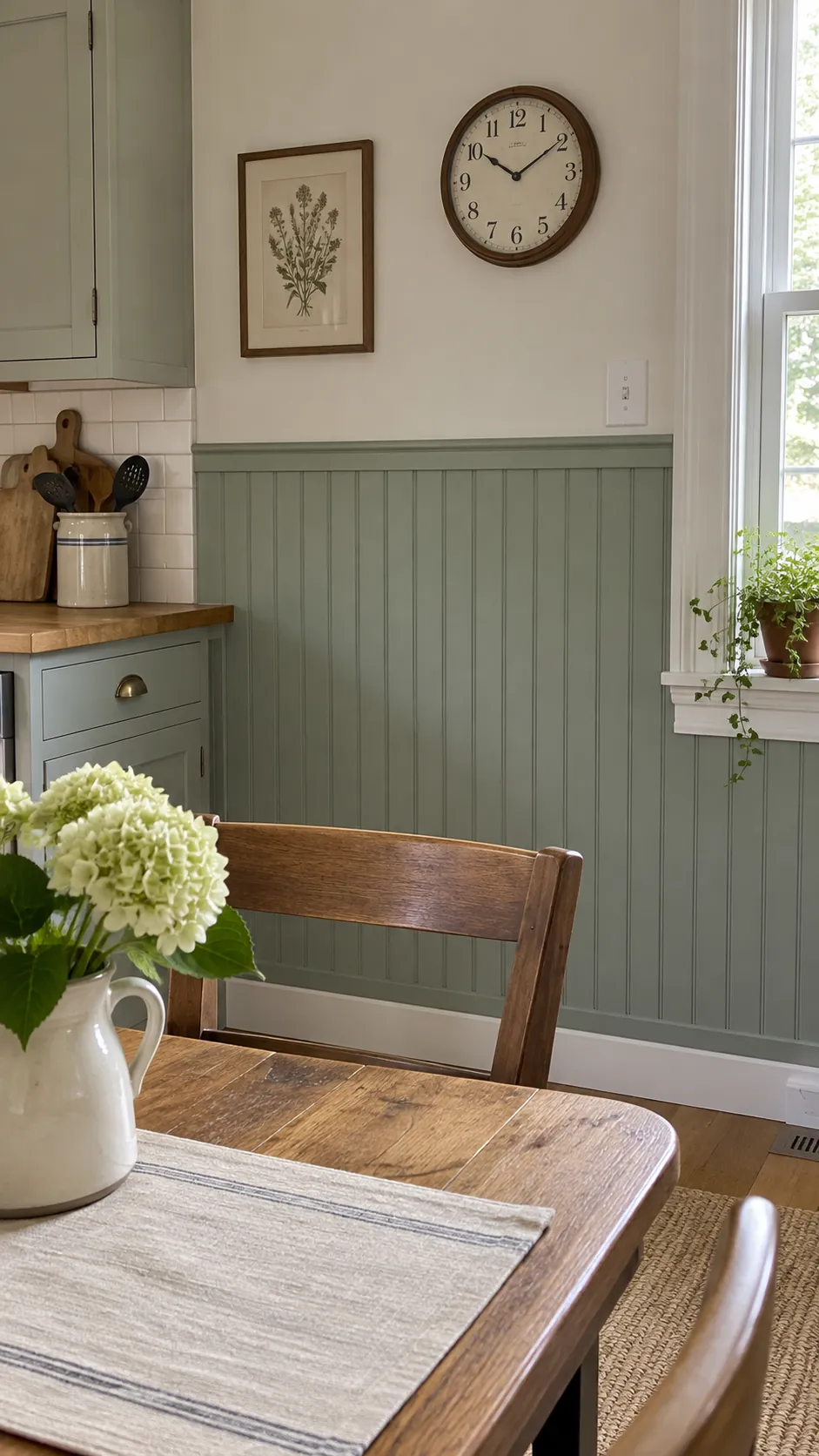
Painted Beadboard Wainscot
Beadboard can add subtle country rhythm to an otherwise blank kitchen wall. Paint it in a durable finish that can be wiped near a dining or preparation area. Stop it at a deliberate height and finish the top edge cleanly so it looks built in.
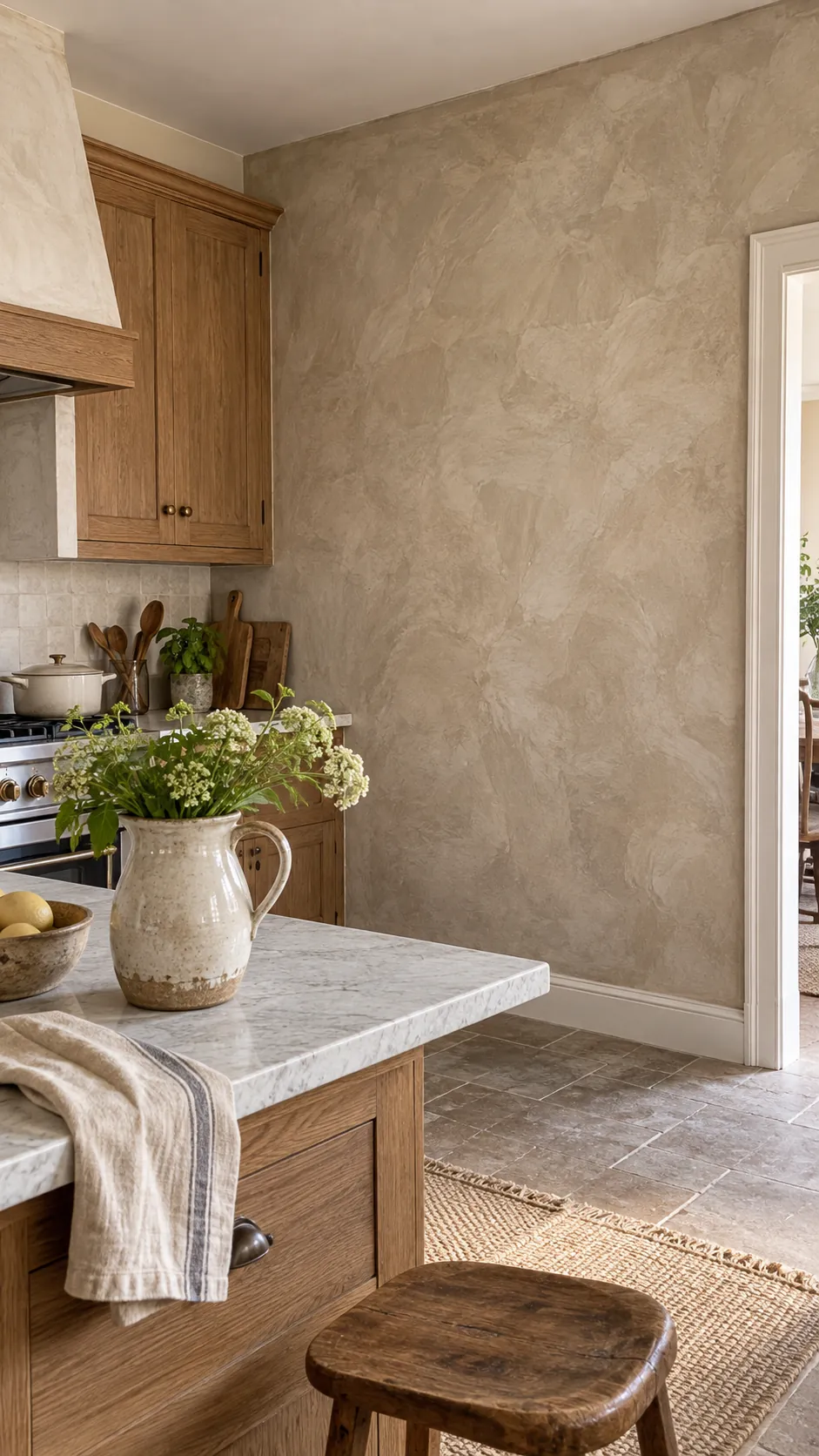
Soft Limewash Finish
A matte limewash finish adds depth without hanging another object on the wall. Sample its movement and colour on the actual surface, since it changes with light and application. Check whether the chosen finish is appropriate for the wall’s cleaning needs.
Muted Gingham Wallpaper
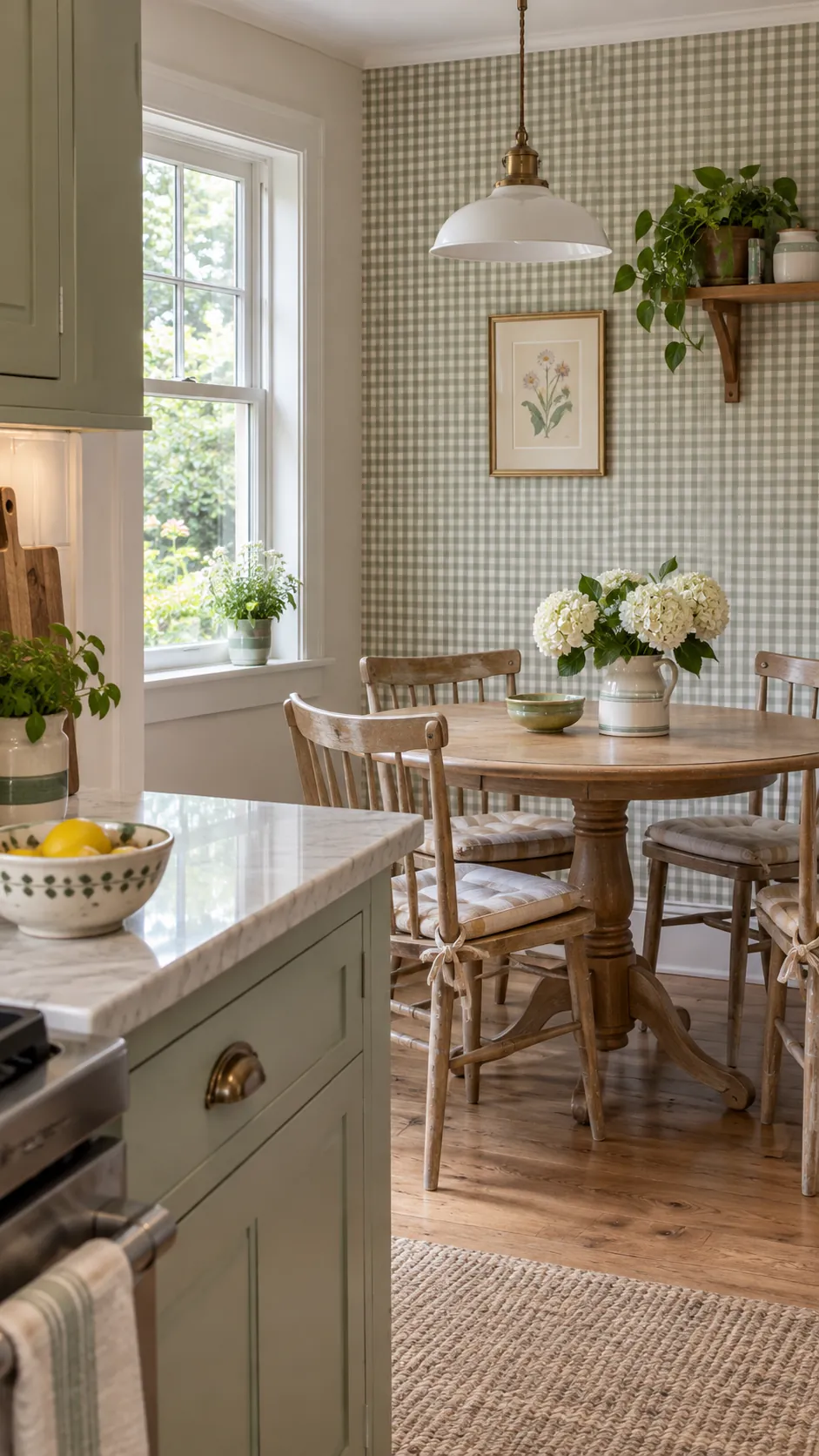
A small scale gingham wallpaper can give a breakfast corner a gentle country pattern. Choose a washable product suited to the kitchen and keep adjacent textiles simple. Use the pattern on one wall so it defines the nook without overwhelming cabinets.
Oak Shelves With Stoneware
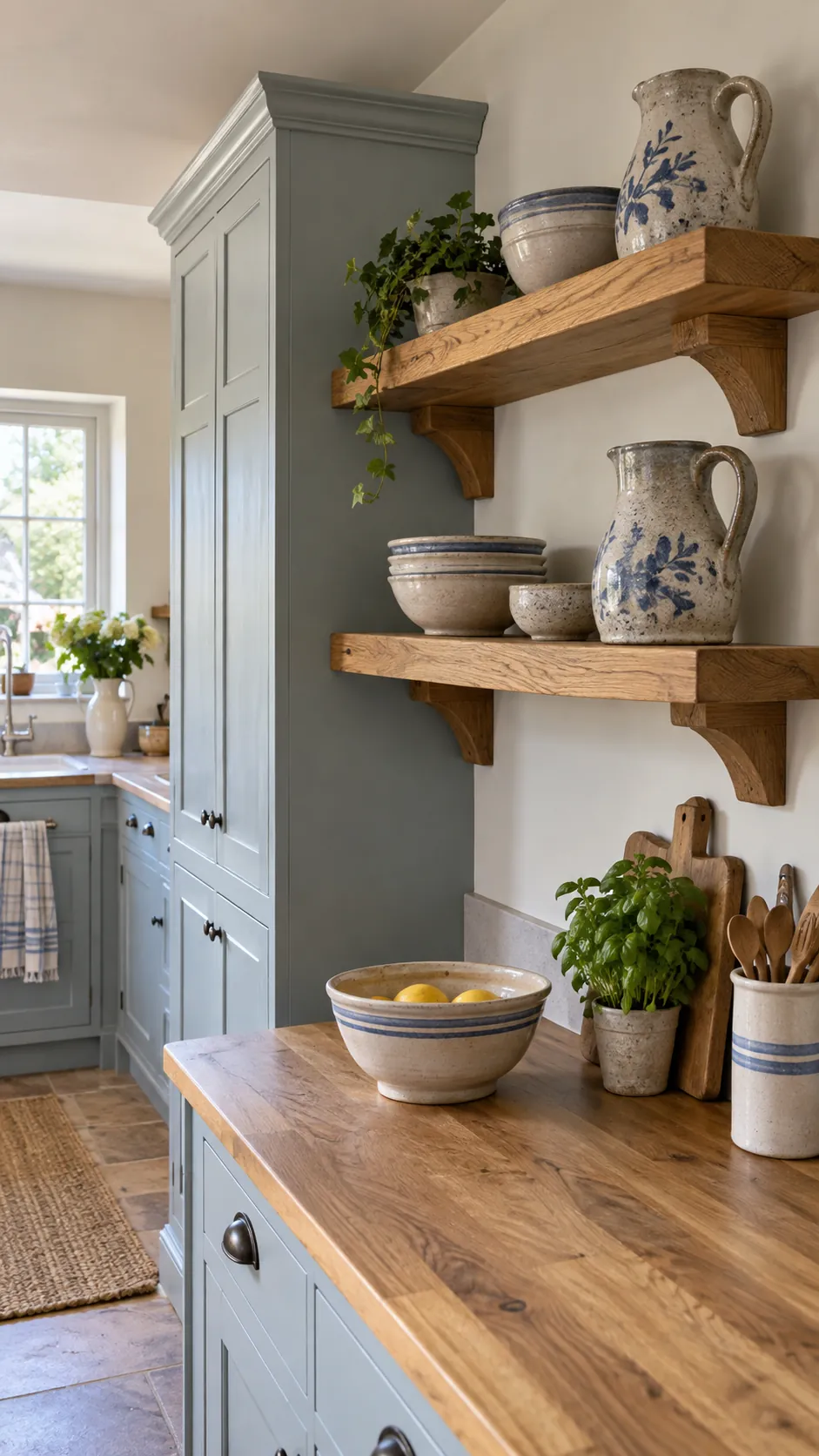
A pair of sturdy oak shelves can display a few useful stoneware pieces. Leave space around each bowl or pitcher so the collection reads clearly. Mount shelves for the real load and place them where objects can be reached without leaning over a hot surface.
Cutting Board Cluster
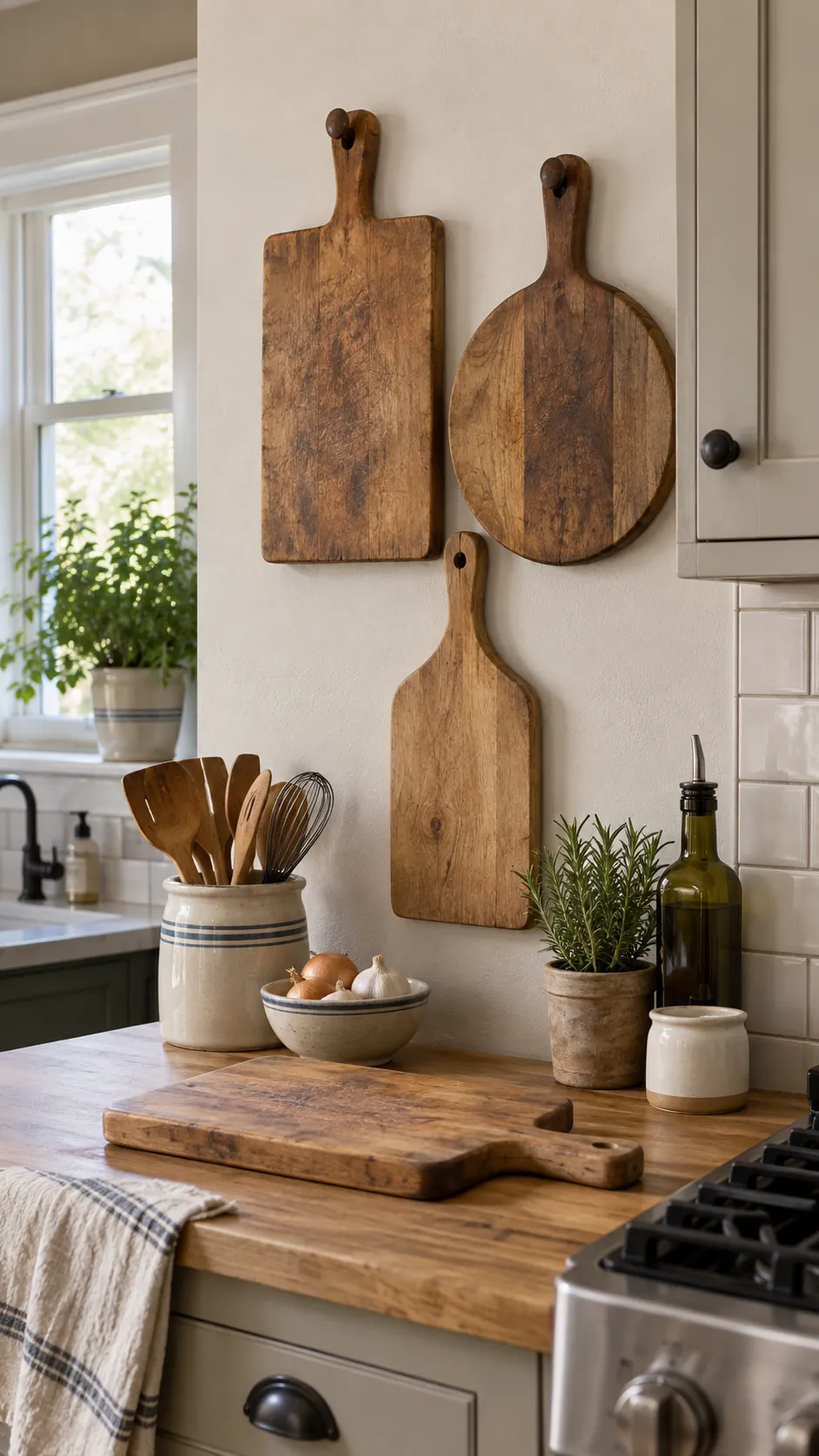
Wood cutting boards of different shapes can bring warm grain to an empty wall. Use boards with sound hanging holes and dry them fully before display. Keep the group tight enough to feel intentional while leaving the main work area accessible.
Vintage Market Clock
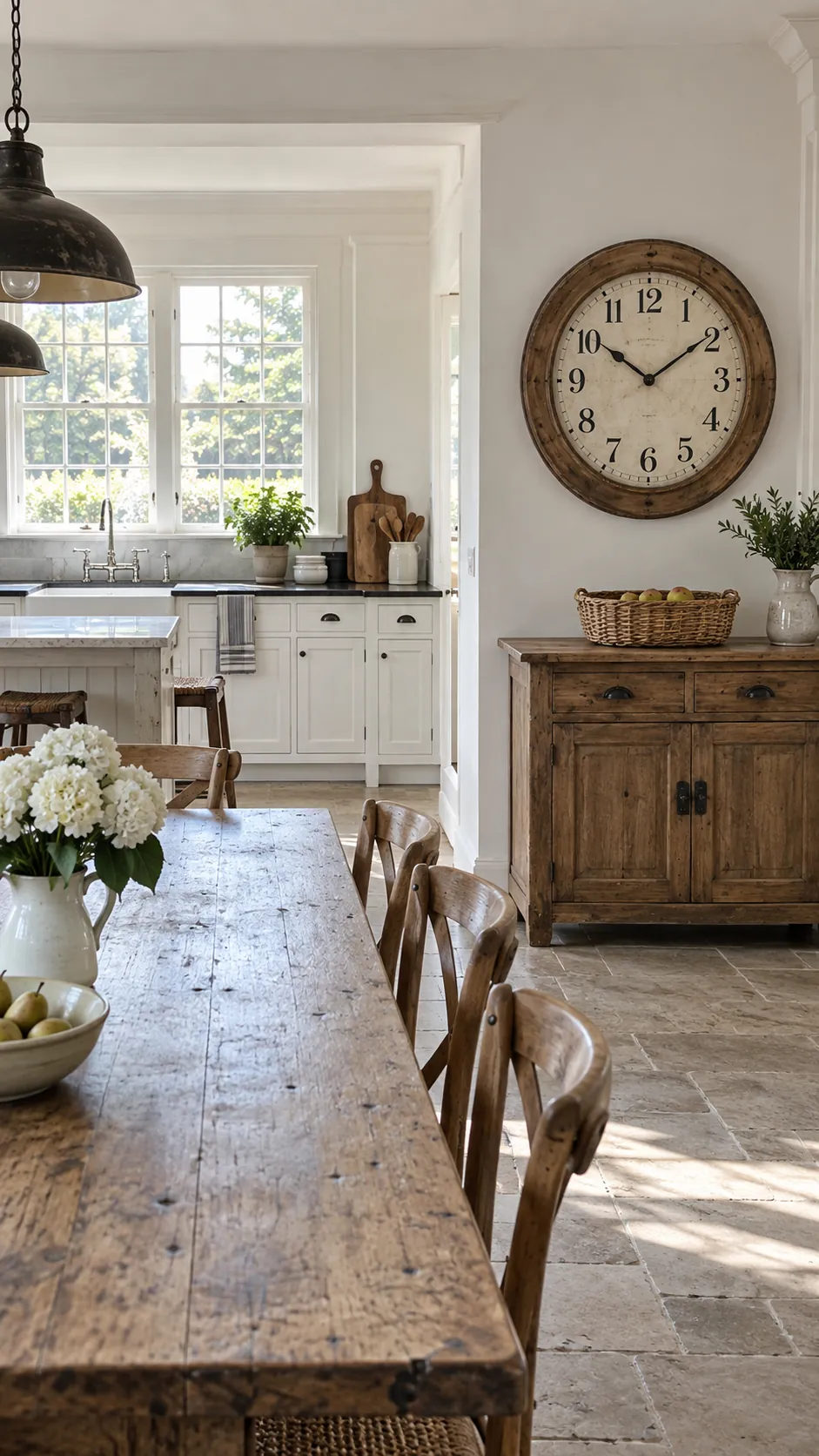
A vintage style clock can lend character to a kitchen wall without adding visual clutter. Choose a readable face and let it stand alone above a small table or shelf. Check its size from across the room before hanging.
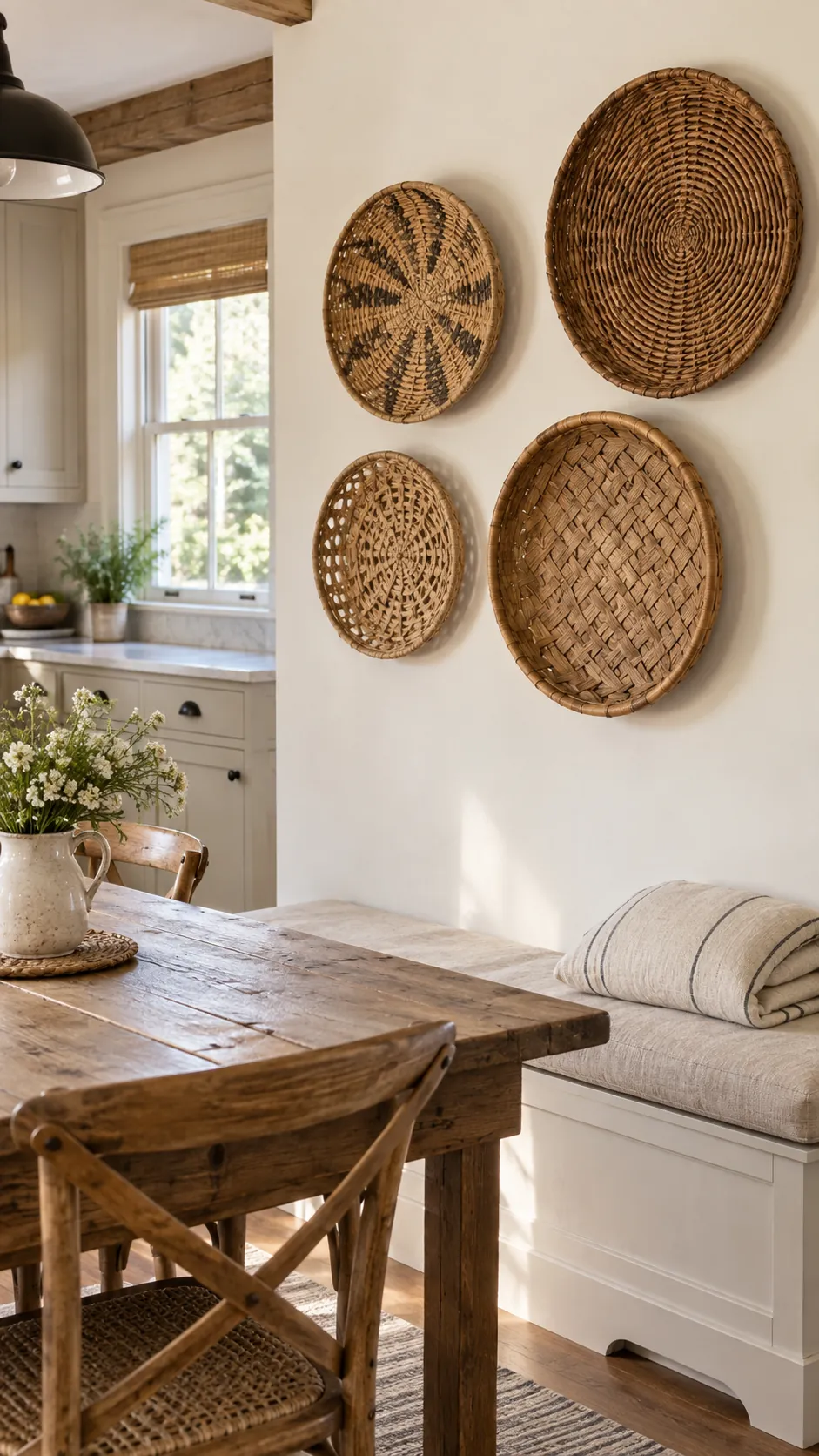
Woven Basket Wall
A few shallow woven baskets can add gentle texture to a country kitchen. Vary the weave and diameter while keeping the overall palette restrained. Mount each basket securely and choose a wall where dust can be removed easily.
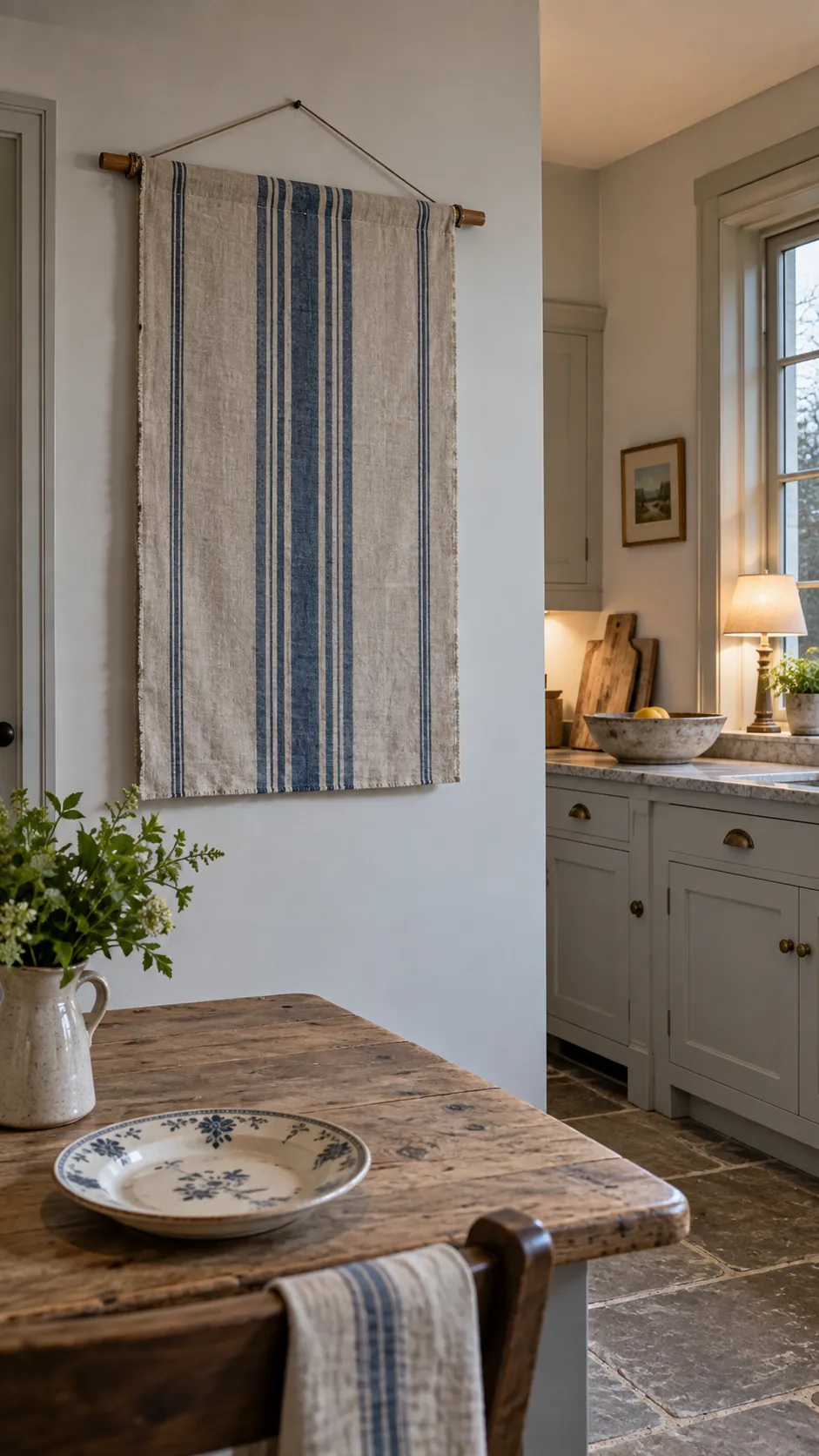
Linen Textile Panel
A flat linen panel with simple woven stripes can soften a hard kitchen corner. Keep it away from cooking heat, steam, and splashes. Select a piece that can be removed and cleaned according to its fabric care instructions.
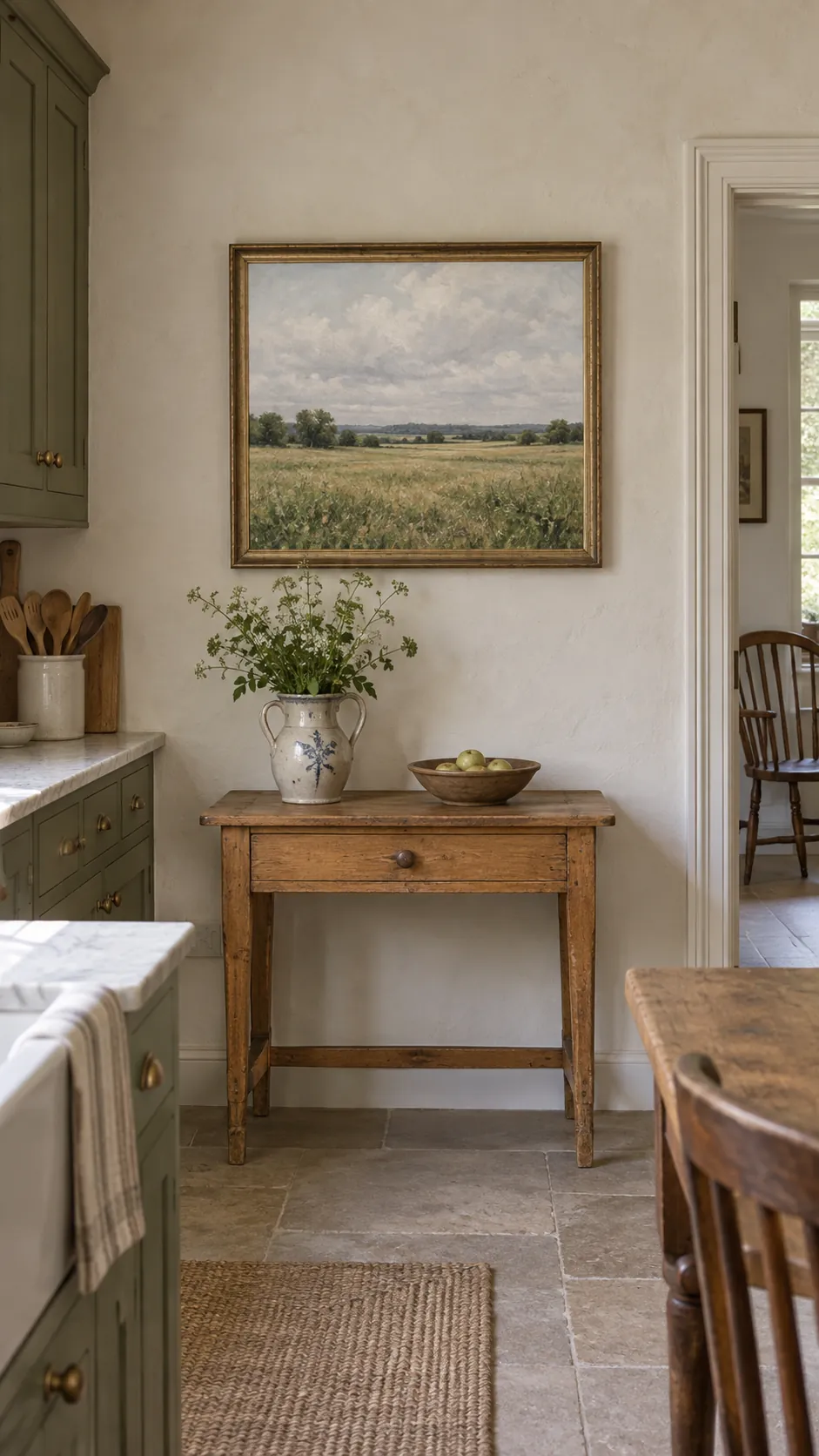
Framed Field Painting
A modest painting of an open field can bring a specific rural view into a kitchen dining area. Let the subject be clear and give its frame breathing room rather than surrounding it with themed objects. Hang it where steam and food splashes will not shorten its life.
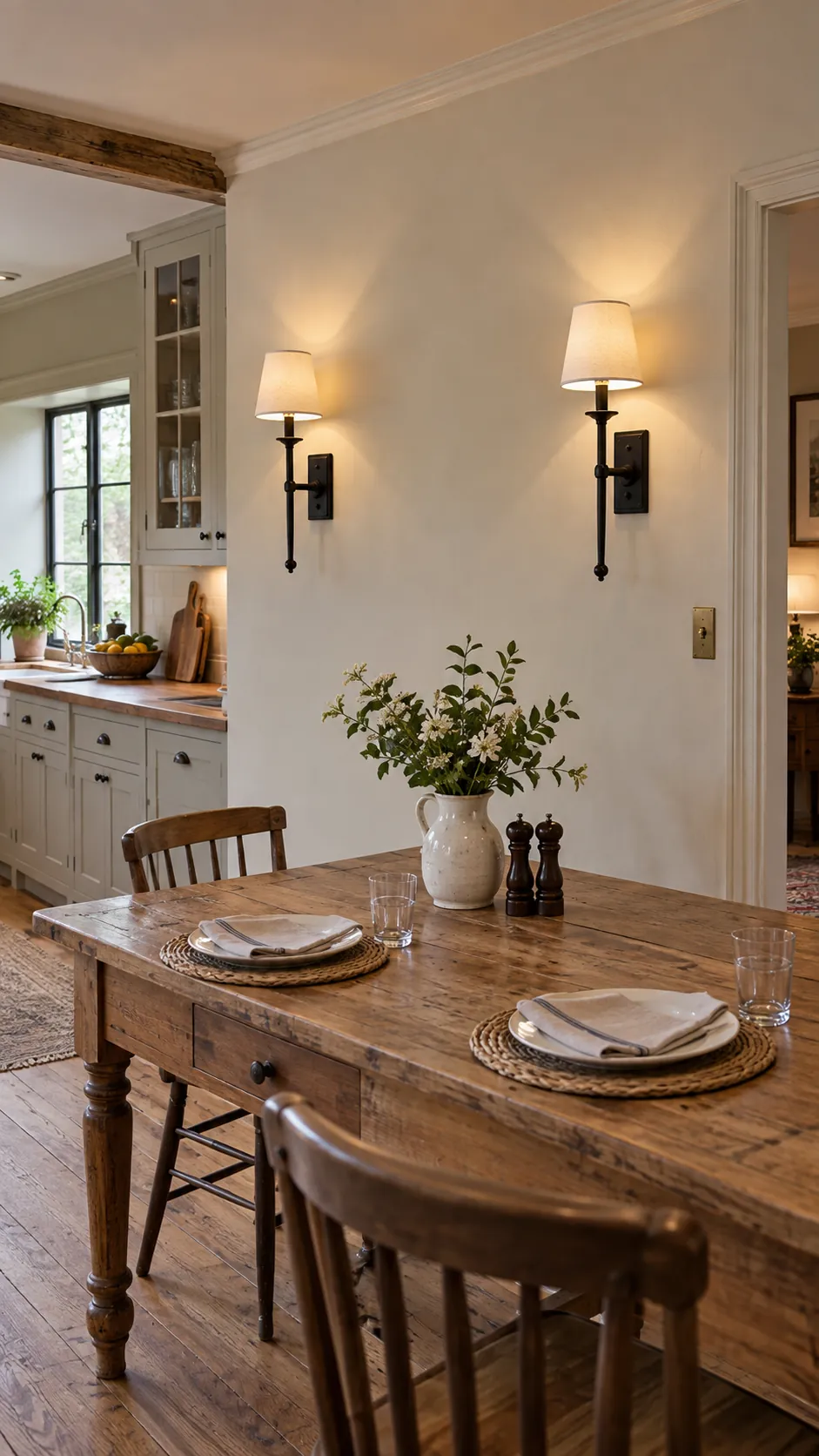
Pair of Iron Sconces
Two modest iron sconces can give a long kitchen wall shape and useful evening light. Place them so the light reaches a table or work zone without glare. New wiring should follow local requirements and be handled by a qualified professional where needed.
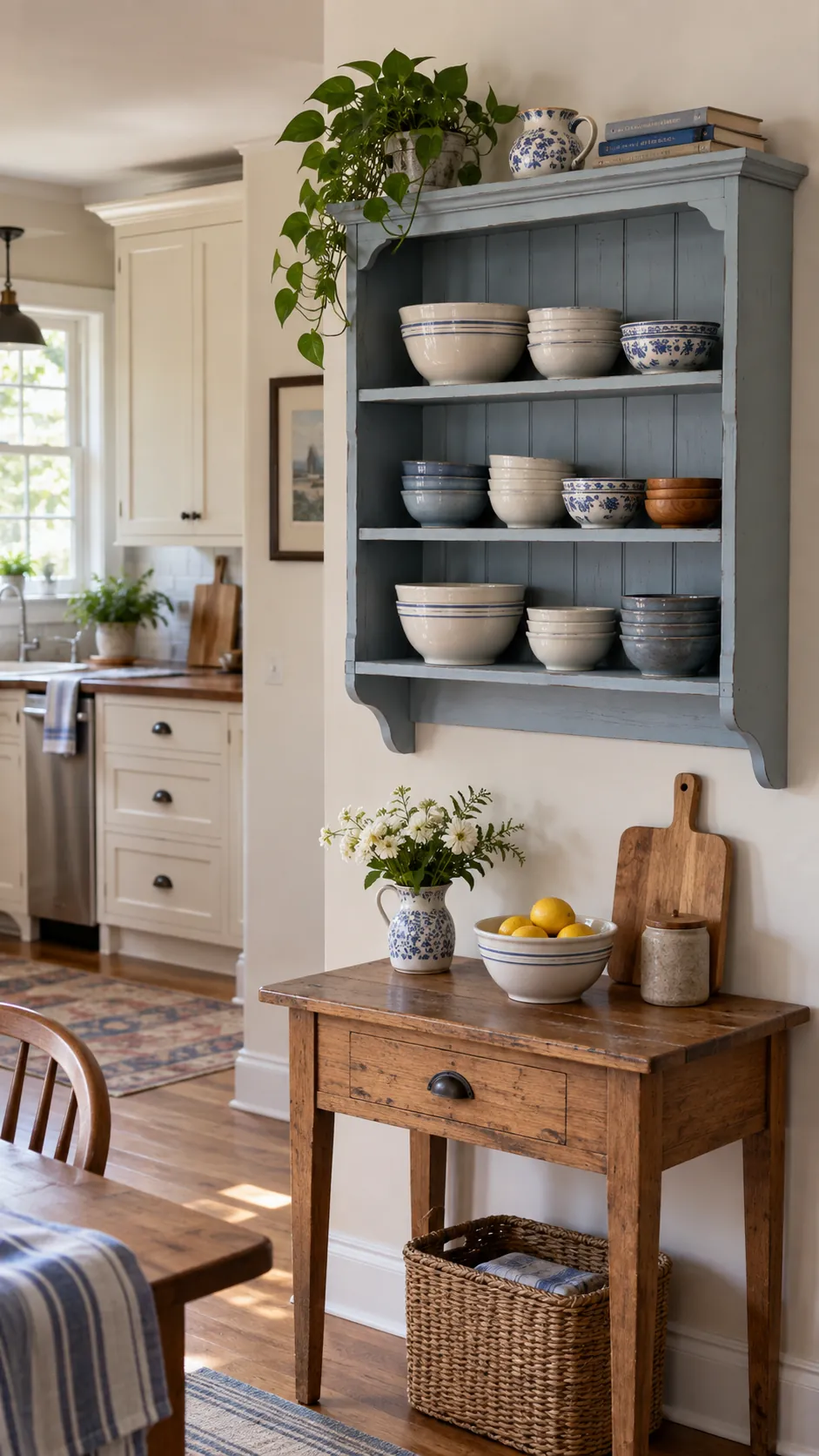
Painted Wall Hutch
A shallow wall hutch can display everyday bowls while providing extra storage. Paint it in a colour drawn from the kitchen cabinets so it feels related to the room. Confirm the unit and its contents are supported by suitable wall fixings.
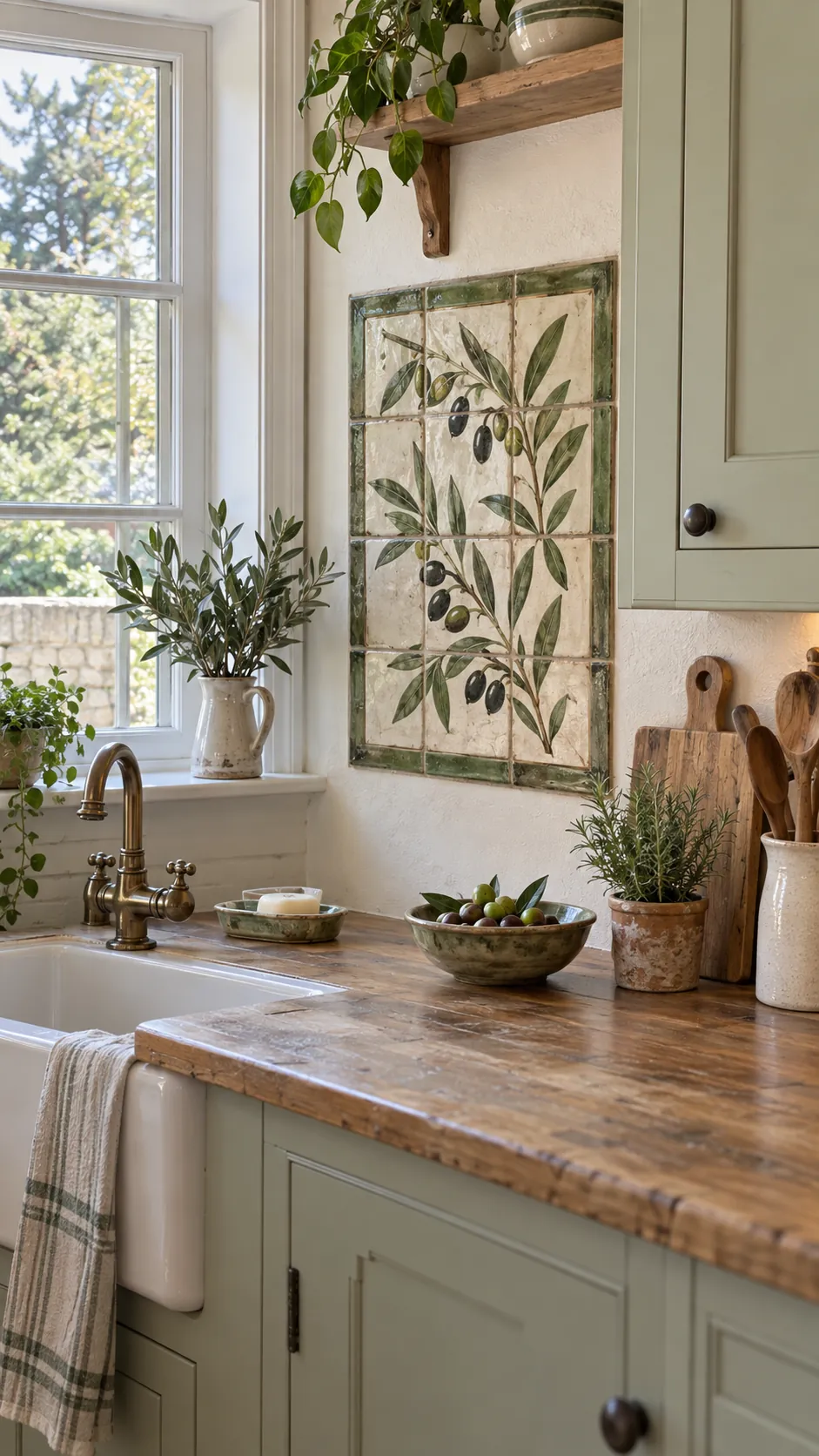
Handmade Tile Panel
A compact panel of handmade tiles can be an attractive and cleanable wall feature. Choose a simple specific motif, such as olive leaves, and let the imperfect glaze provide character. Use materials and installation details suited to the wall and any nearby water or heat.
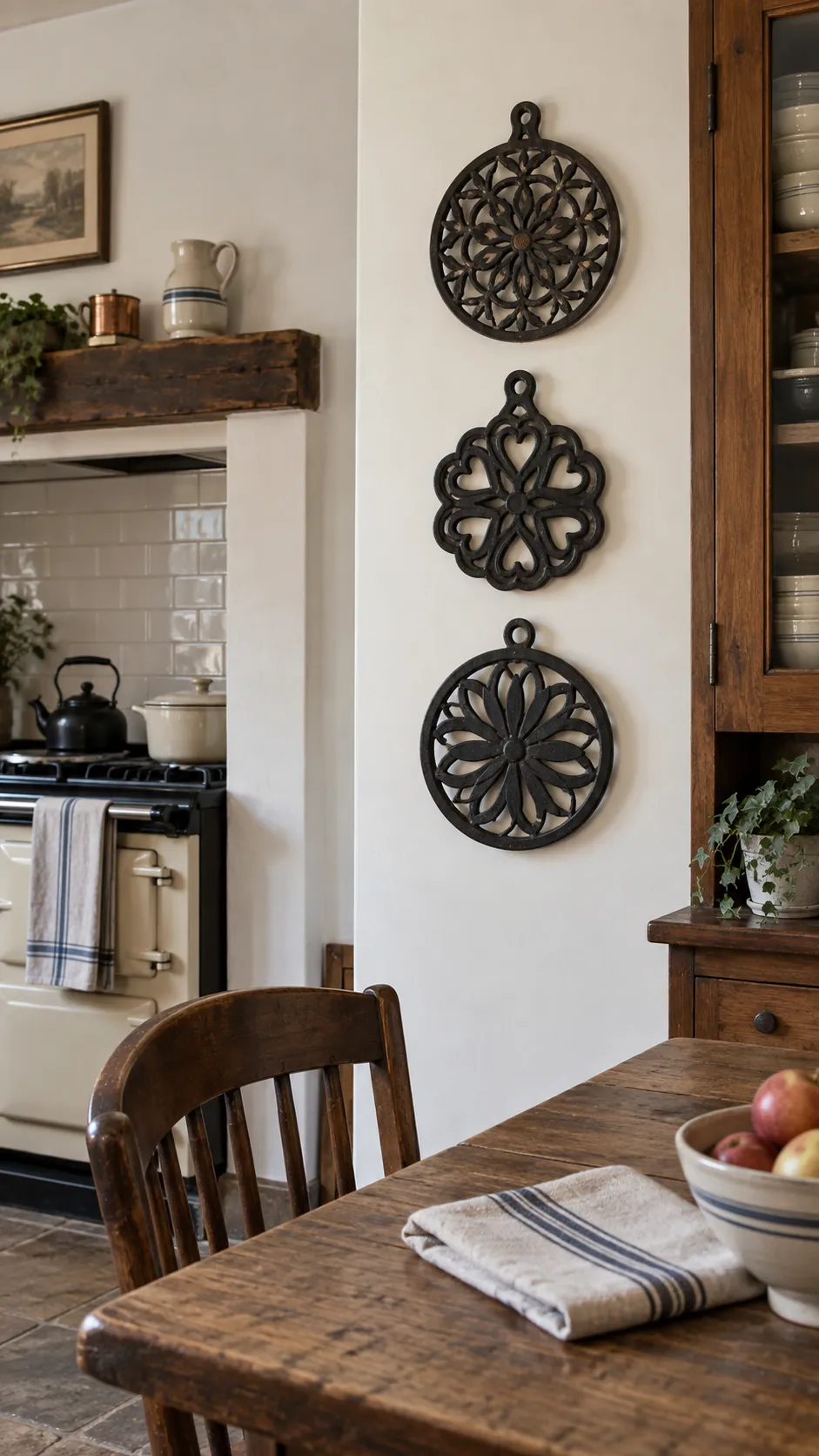
Antique Iron Trivets
A small group of antique iron trivets creates a sculptural pattern on a pale wall. Arrange their shapes before drilling and keep enough space between pieces for each outline to show. Check for rough edges and hang them securely beyond easy bumps.
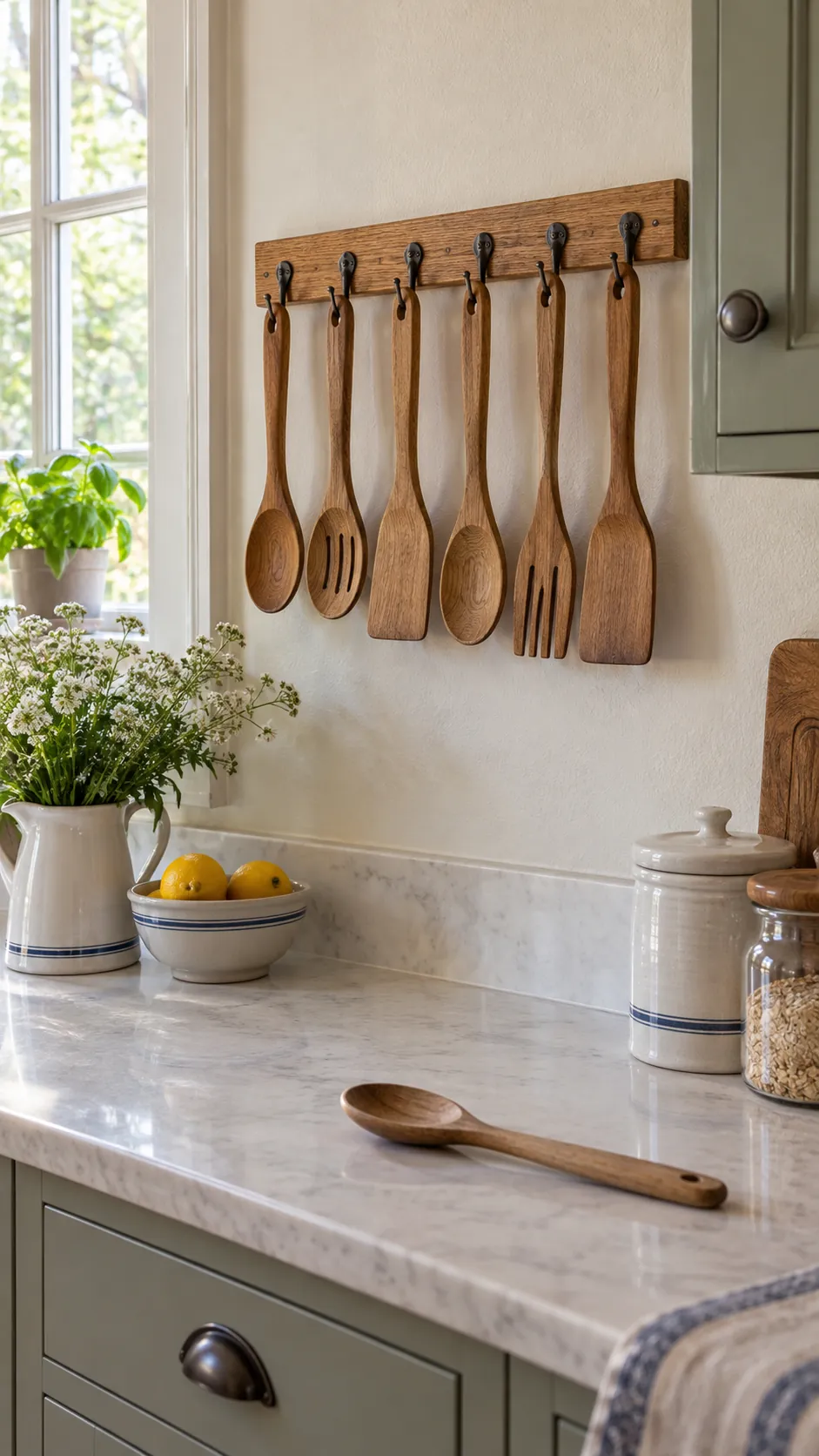
Wooden Utensil Rack
A slim wall rack can keep frequently used wooden spoons visible and close. Give each utensil a place so the arrangement stays useful rather than decorative clutter. Position it outside direct heat and wash the utensils as normal.
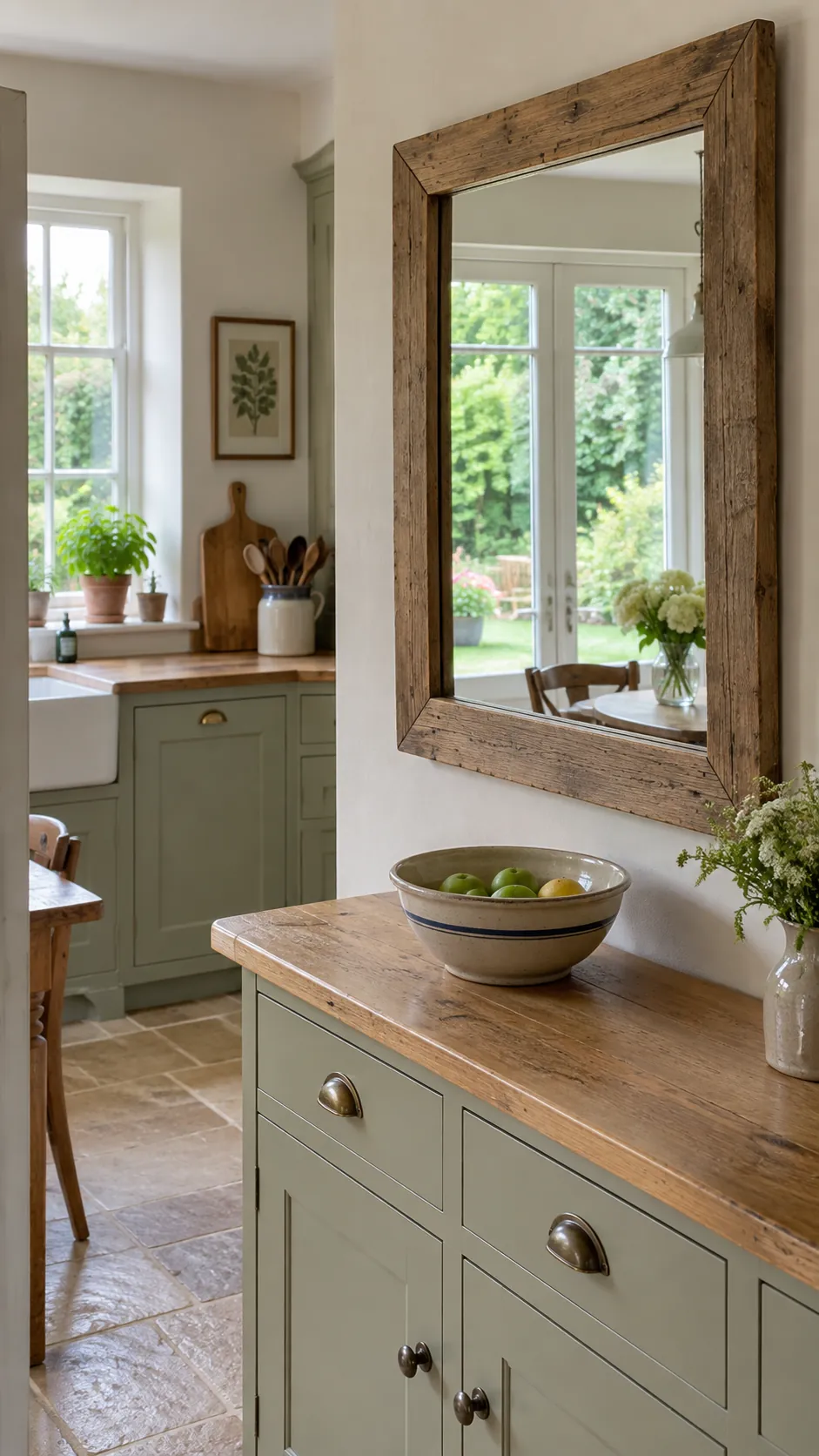
Rustic Wall Mirror
A mirror in a restrained reclaimed wood frame can reflect a garden window into the kitchen. Check what it shows from the table before choosing the wall. Keep the frame shallow where people move past it and mount it securely.
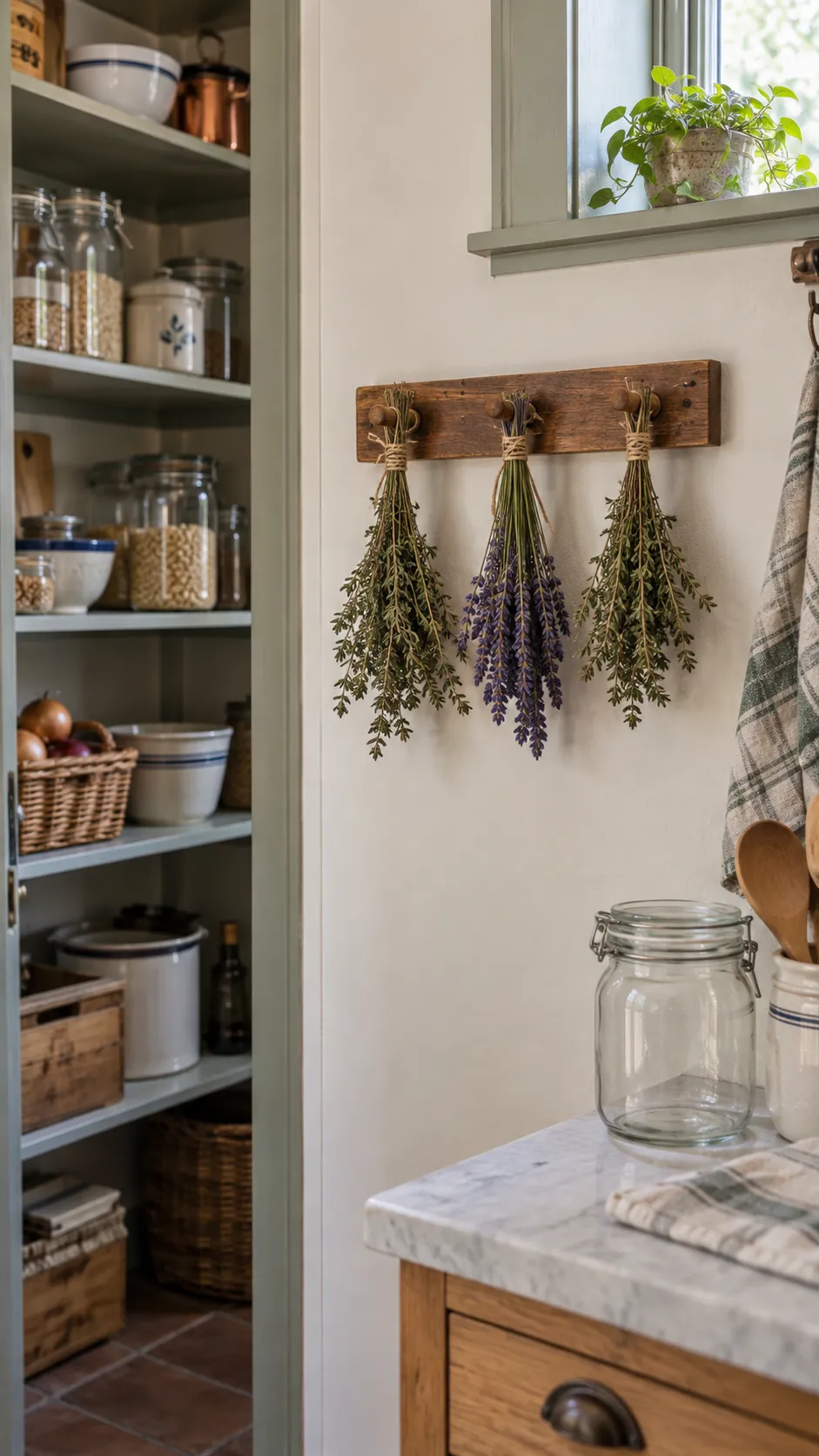
Dried Herb Rail
A short rail with small bunches of dried herbs can bring a real pantry feeling to a wall. Use it away from heat, grease, and moisture, and replace bunches when they gather dust. Keep the display modest so it remains easy to maintain.
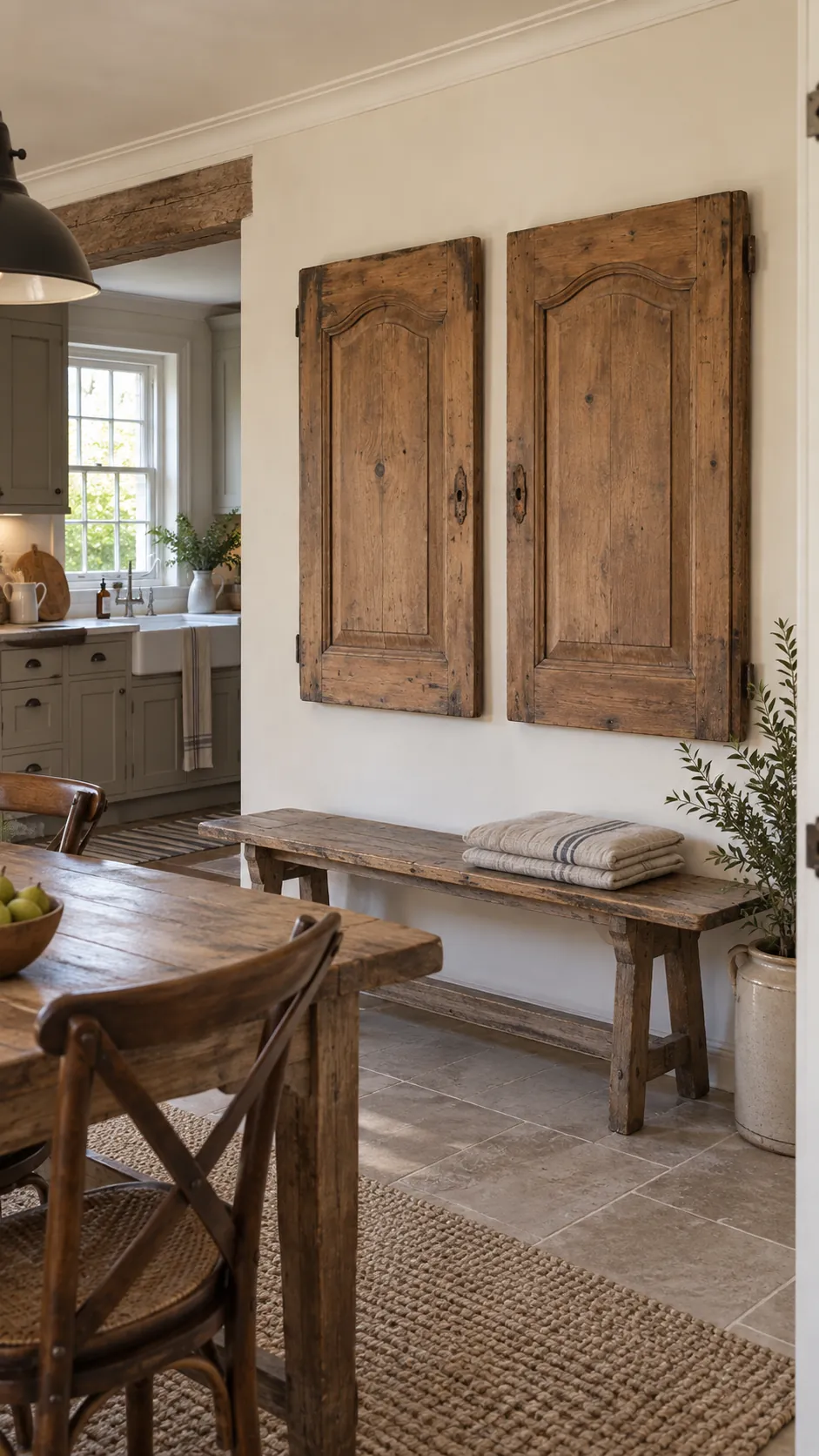
Vintage Cabinet Door Panels
A pair of salvaged cabinet door panels can add carved detail to a broad blank wall. Clean and seal old finishes appropriately before display, especially if paint history is unknown. Hang them with hardware suited to their weight rather than balancing them on a narrow ledge.
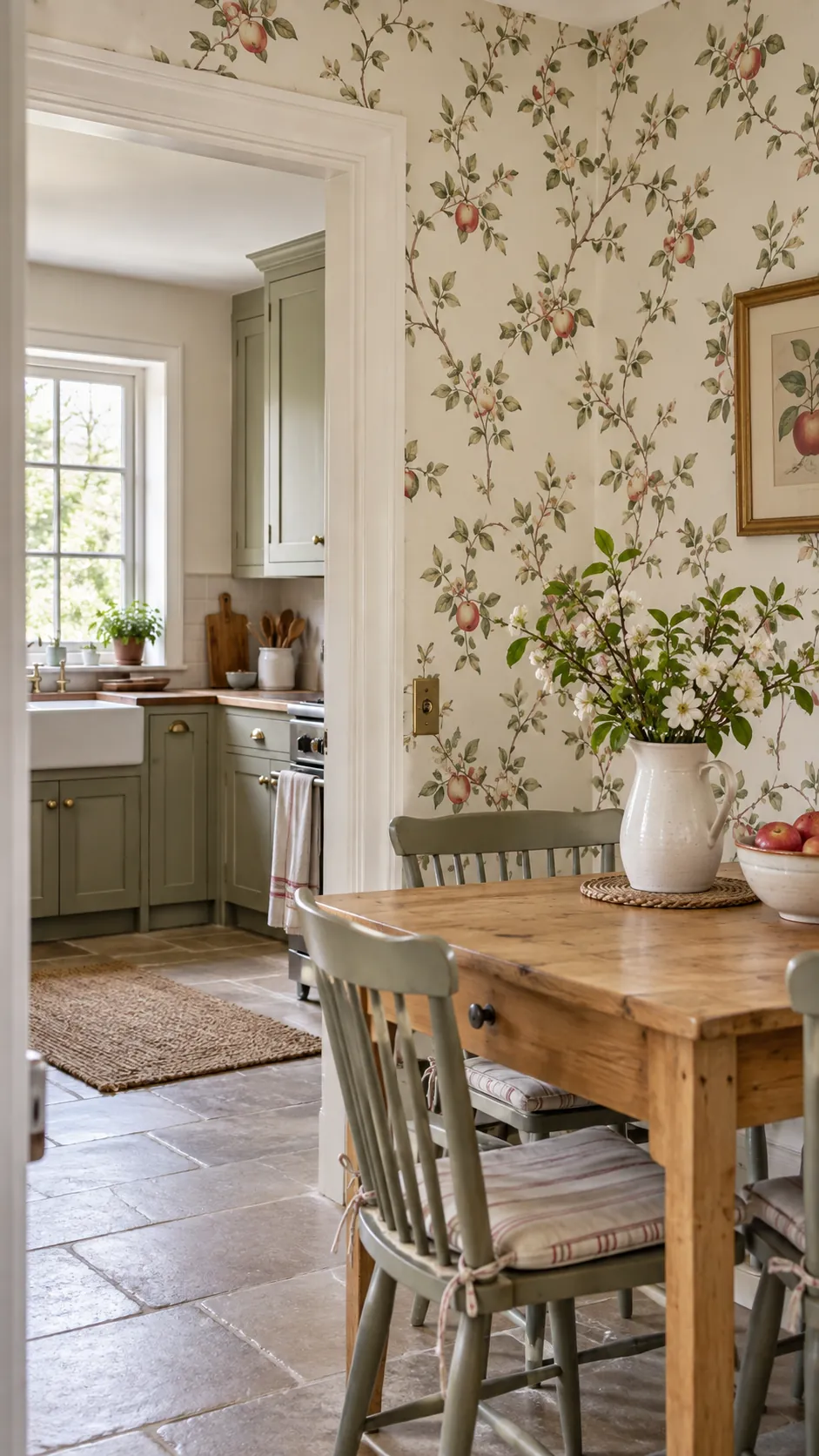
Orchard Branch Wallpaper
A wallpaper of spare orchard branches can give a country kitchen a specific botanical motif. Keep the branch scale related to the wall size and choose a cleanable finish. Let the pattern be the main feature instead of adding several more framed pieces over it.
Copper Mold Collection
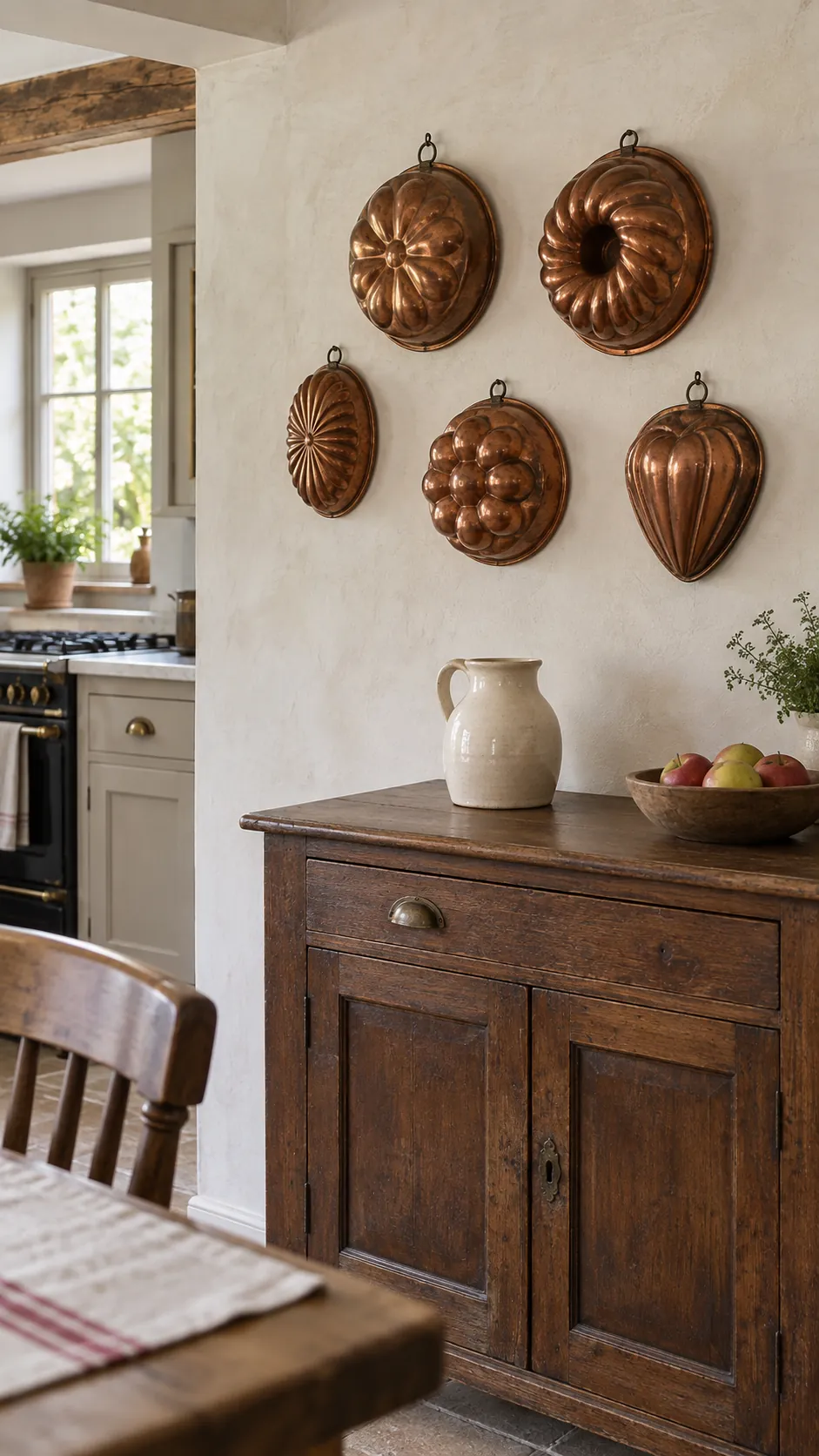
A few copper baking molds can make a warm sculptural grouping near a dining area. Arrange them by size so their shapes remain distinct. Mount each piece securely and keep them out of a cramped food preparation zone.
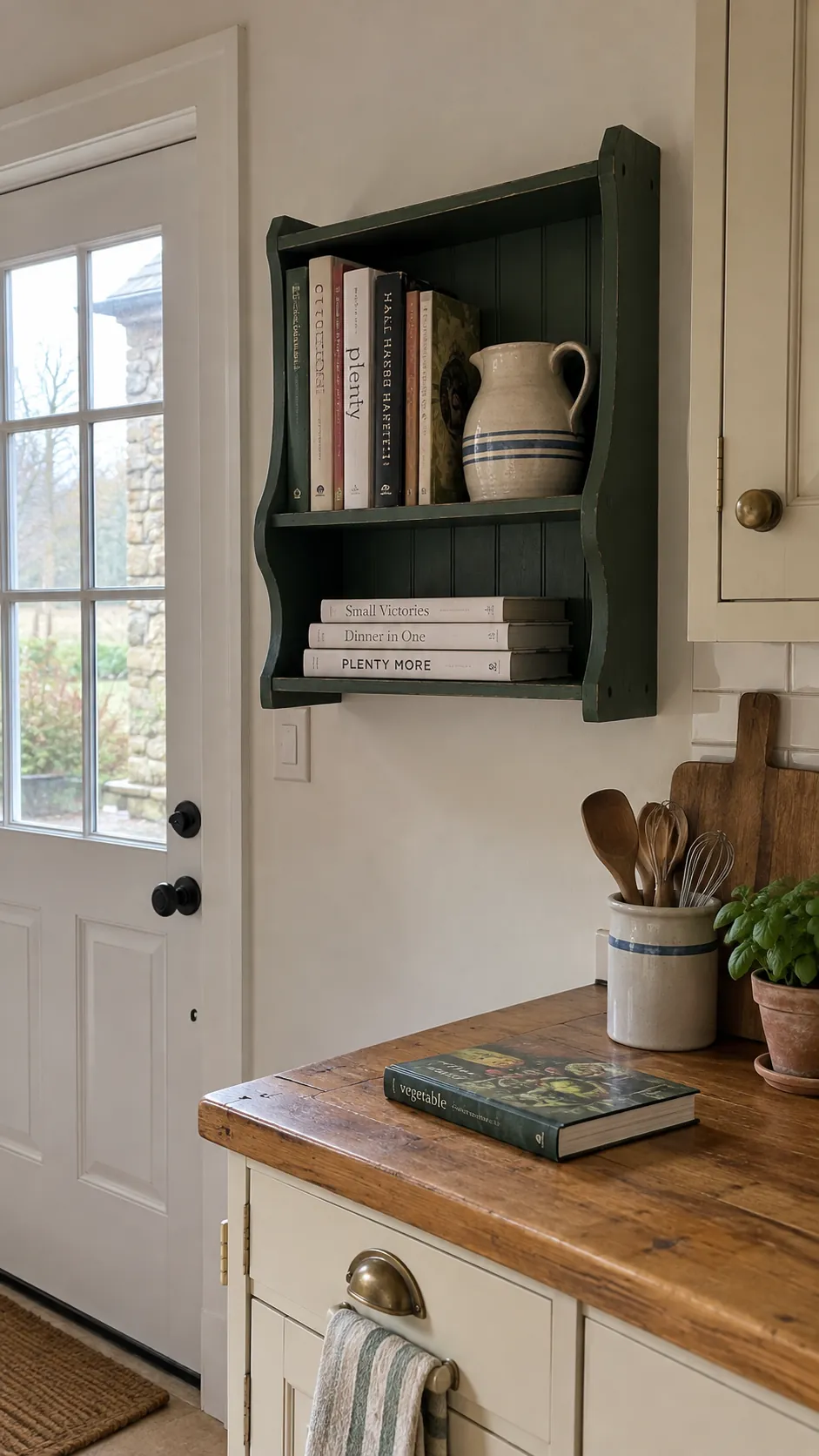
Schoolhouse Wall Shelf
A compact schoolhouse style shelf can hold a few cookbooks and a ceramic vessel. Choose a depth that will not intrude into chairs or the doorway. Fasten it for the combined weight of books and objects, not just the empty shelf.
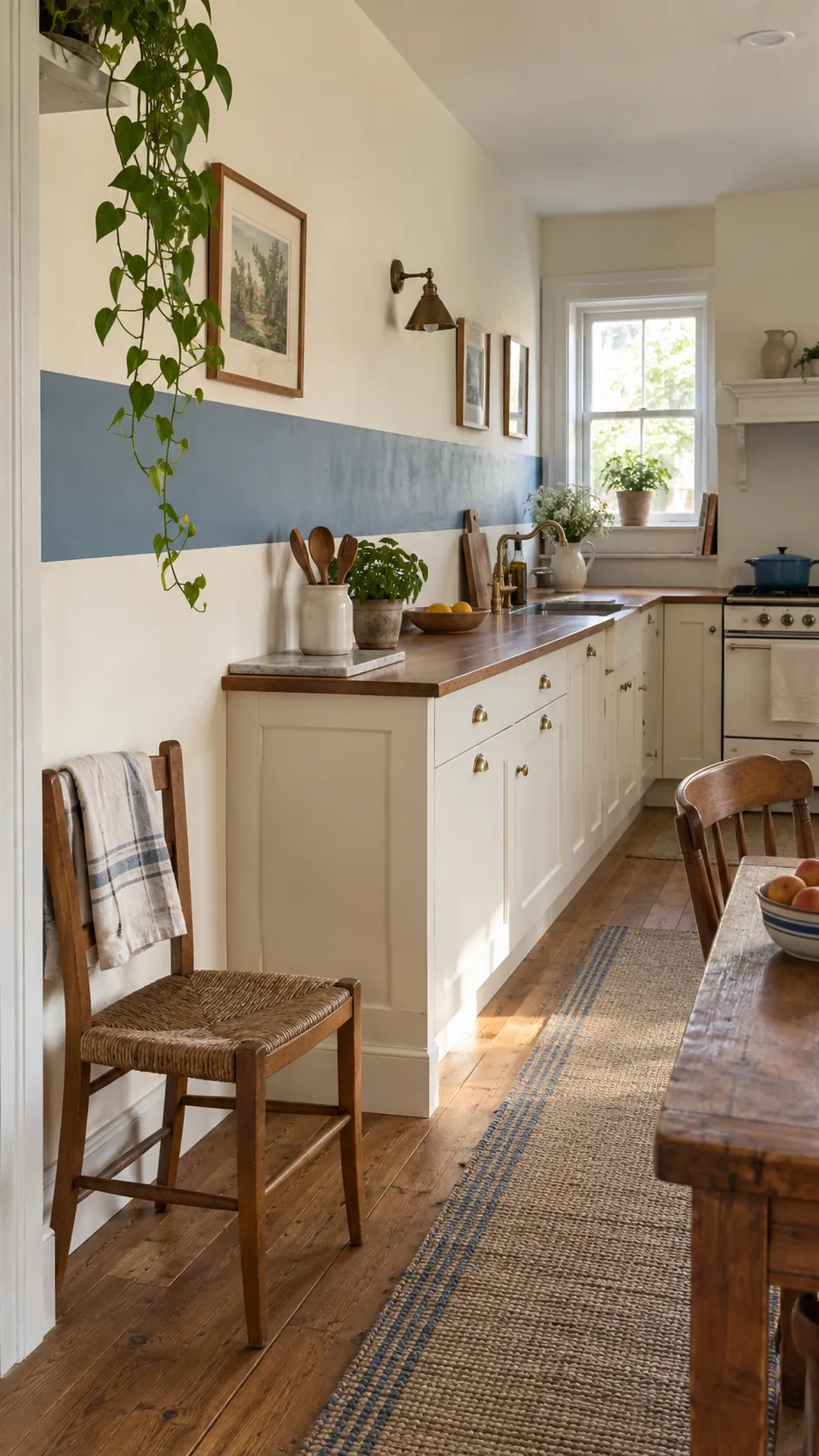
Narrow Painted Stripe
A single painted stripe can tie a long kitchen wall to the colour of nearby cabinets. Keep its width and height deliberate rather than adding several competing bands. Test the paint on the wall before committing to a bold contrast.
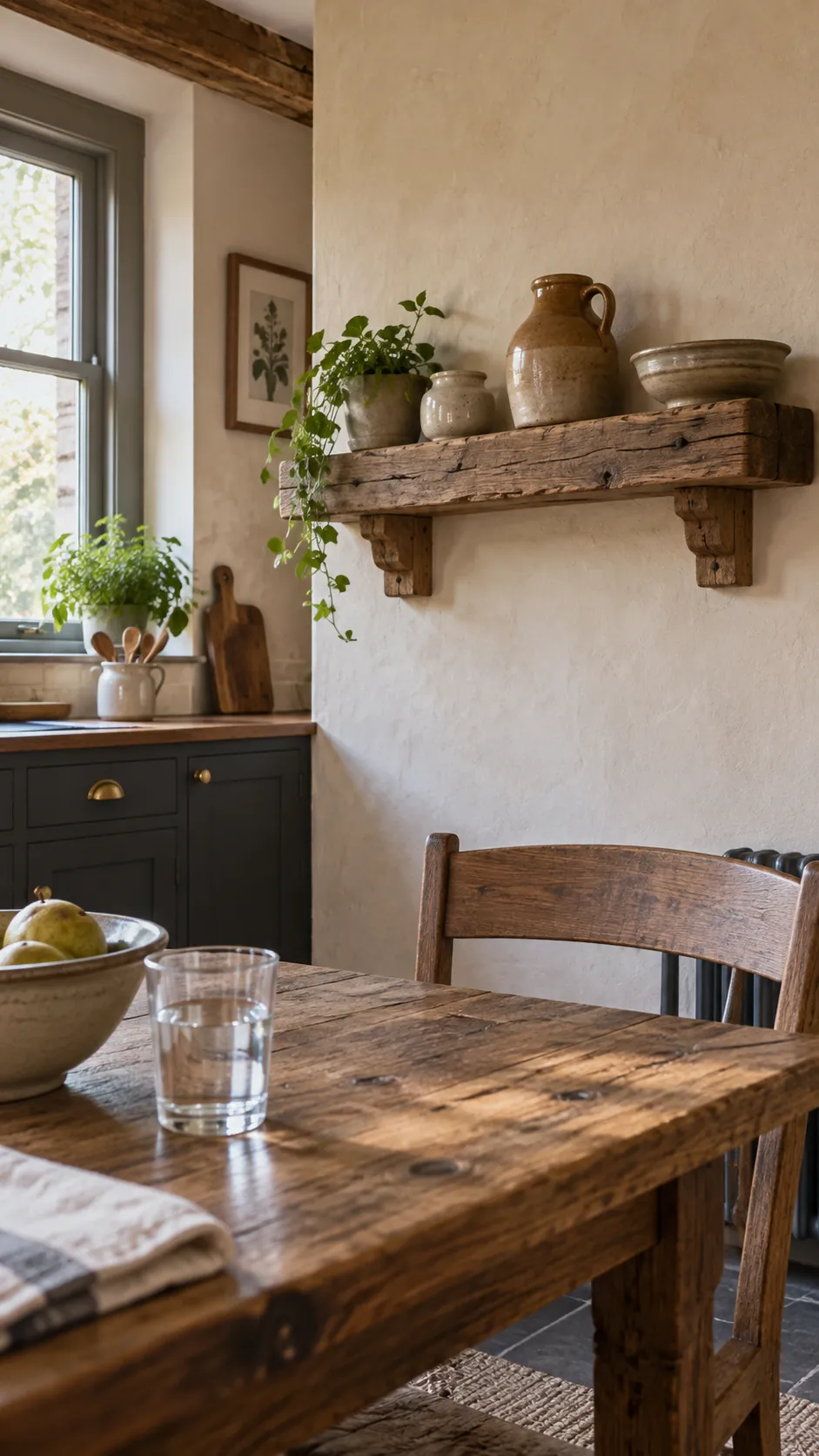
Salvaged Timber Ledge
A sound salvaged timber ledge can bring old wood texture above a kitchen table. Sand and finish it appropriately for splinters and cleaning, while preserving useful character. Keep the display light and the ledge clear of chair movement.
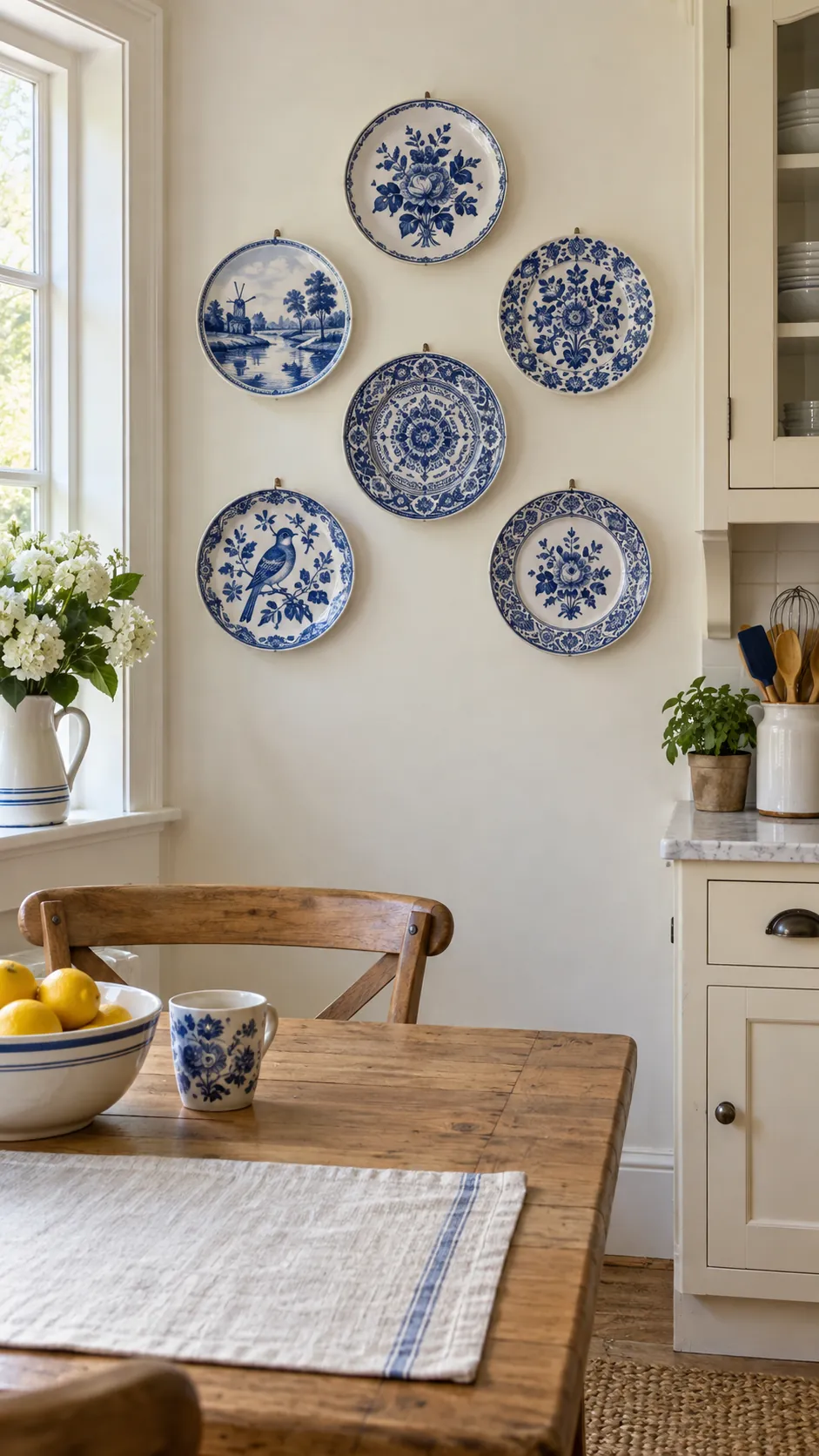
Blue and White Plate Gallery
A small gallery of blue and white plates can add pattern to a pale wall. Mix a few different designs within the same colour family, then lay out the grouping before mounting. Use proper plate hangers and leave space for cleaning between them.
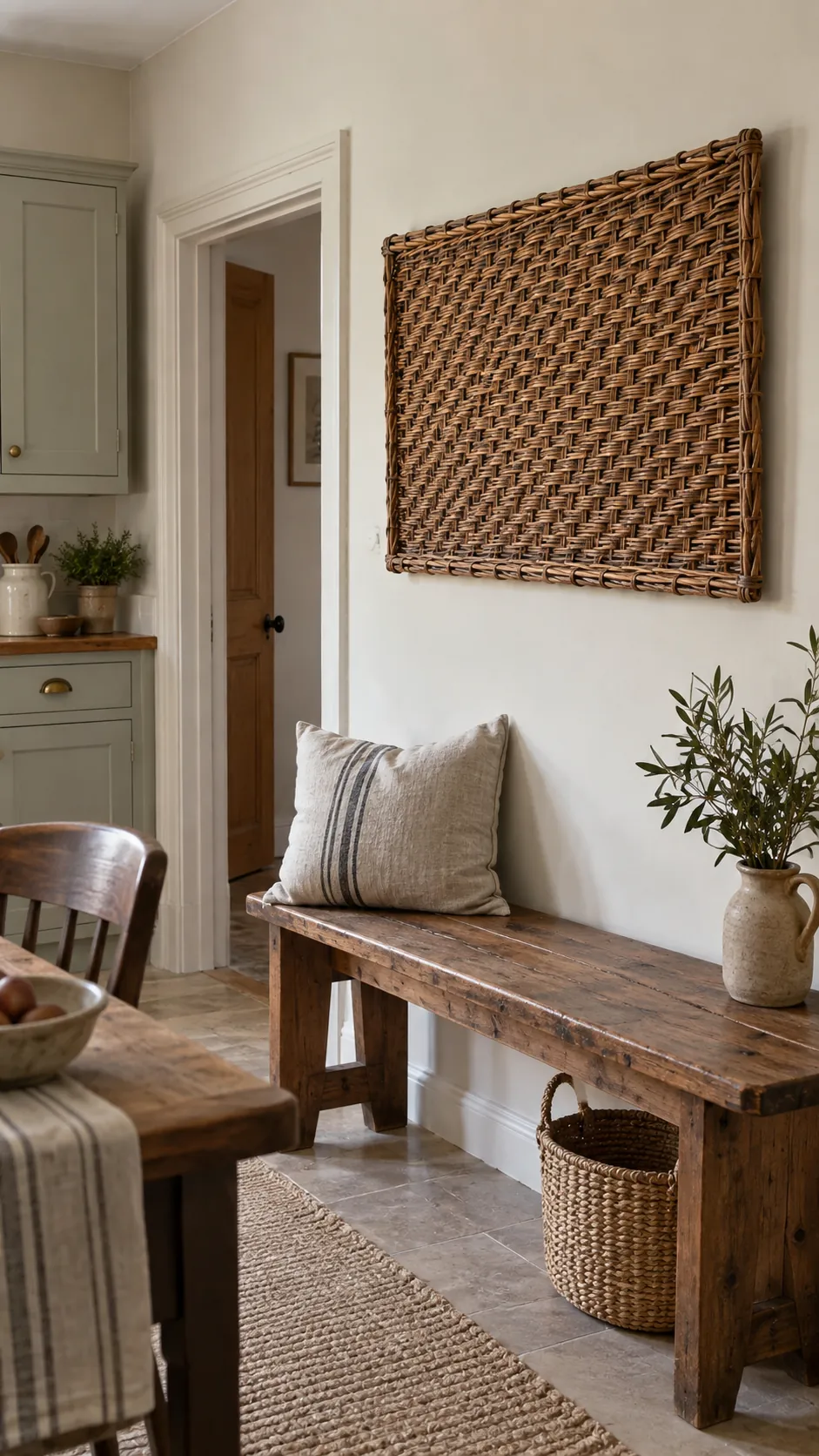
Woven Willow Panel
A flat woven willow panel offers country texture without filling the wall with objects. Choose a tight, durable weave and keep it away from grease and moisture. Its simple outline works best when cabinets and textiles nearby are quiet.
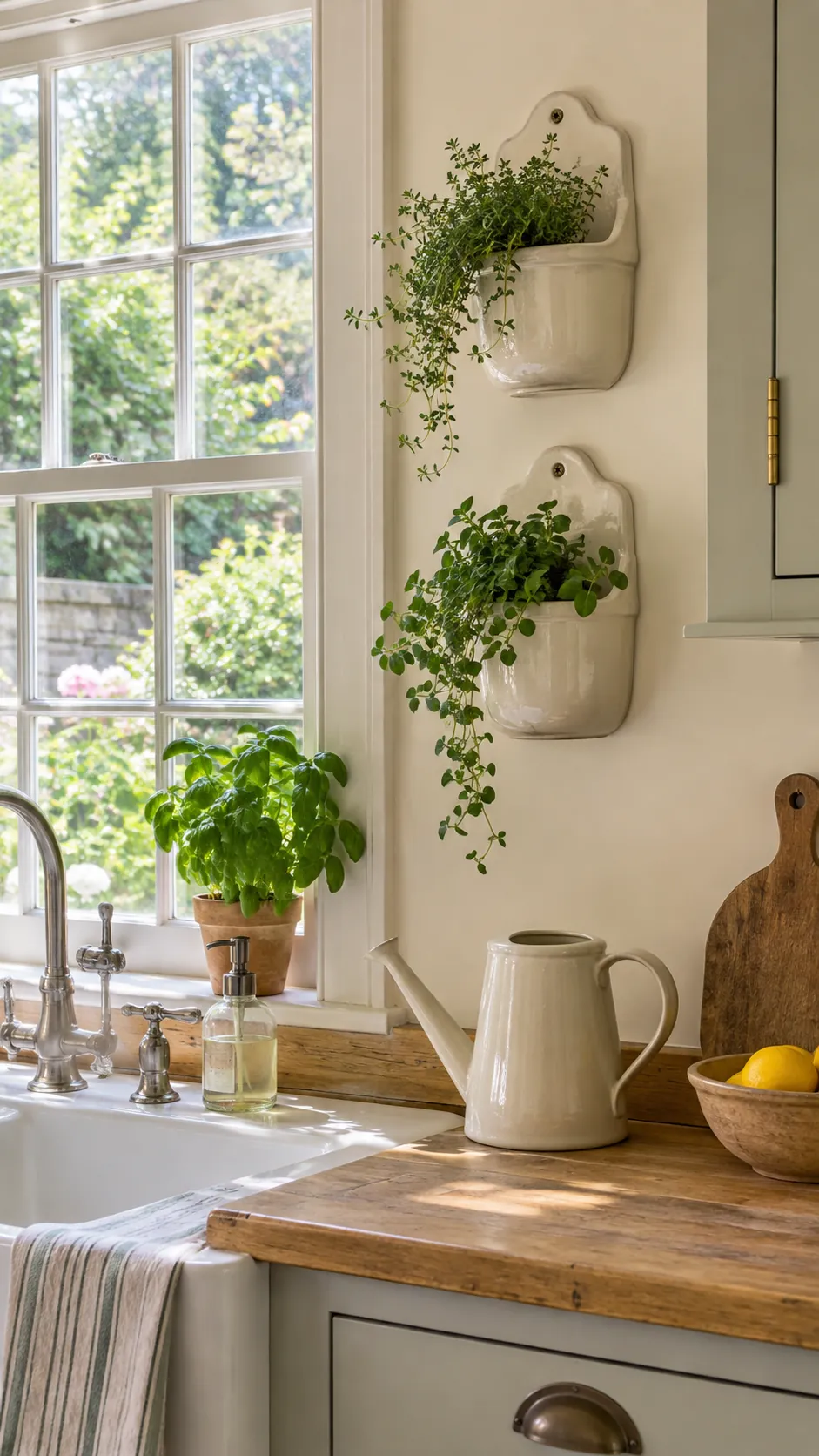
Wall Pockets With Greenery
A pair of sturdy ceramic wall pockets can hold small trailing plants in a bright kitchen. Use plants suited to the light and protect the wall from water during care. Mount the pockets securely and place them where leaves will not brush food or flames.
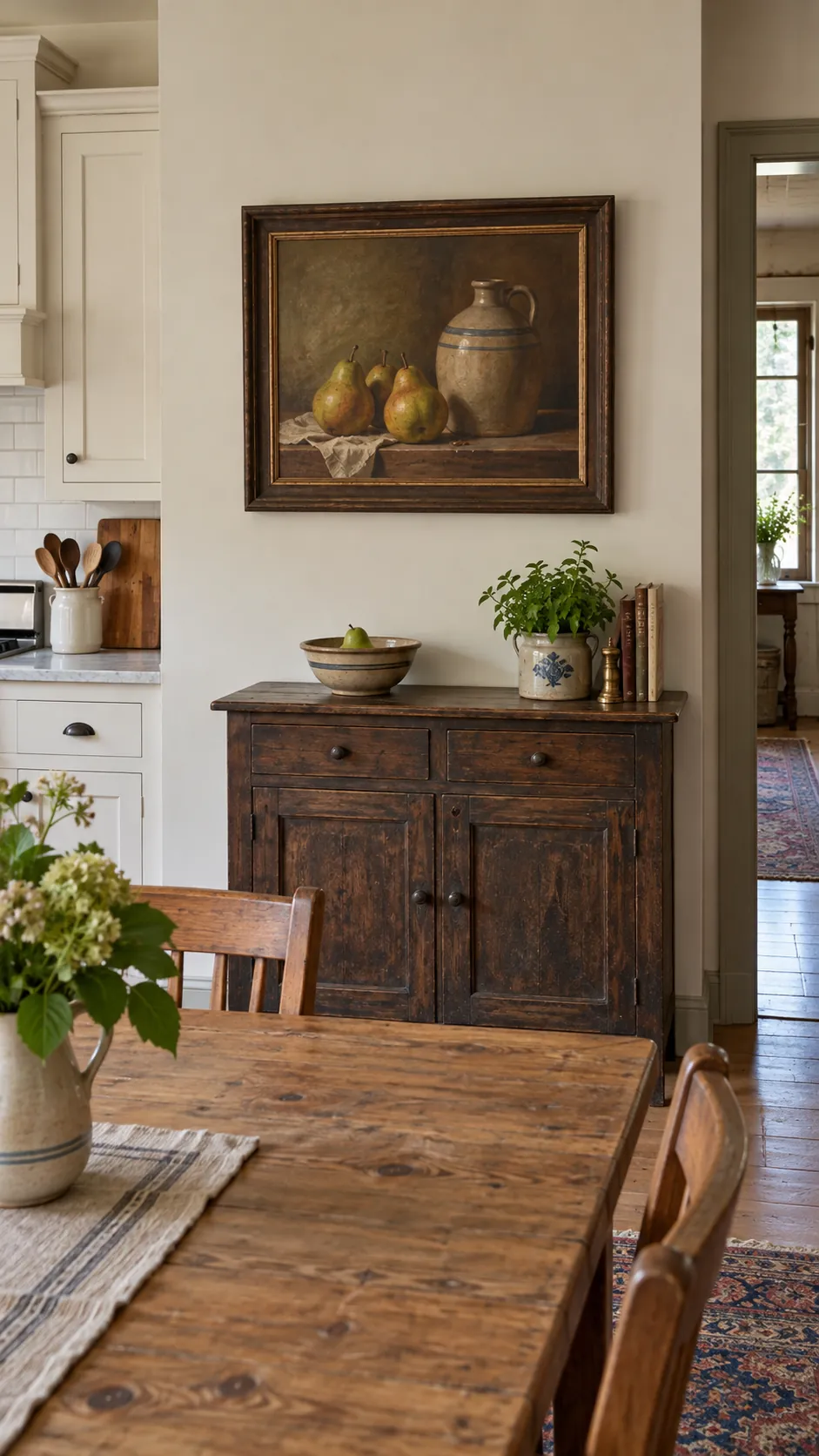
Framed Pear Still Life
One still life painting of pears and a ceramic jug can give a large wall a clear focal point. Choose a frame that relates to the table or cabinet wood and leave surrounding wall open. Place it where daylight reveals the colours without exposing it to frequent splashes.